-
-
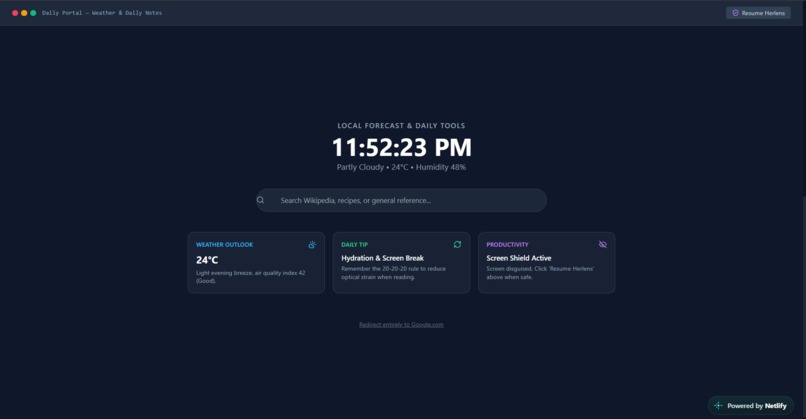
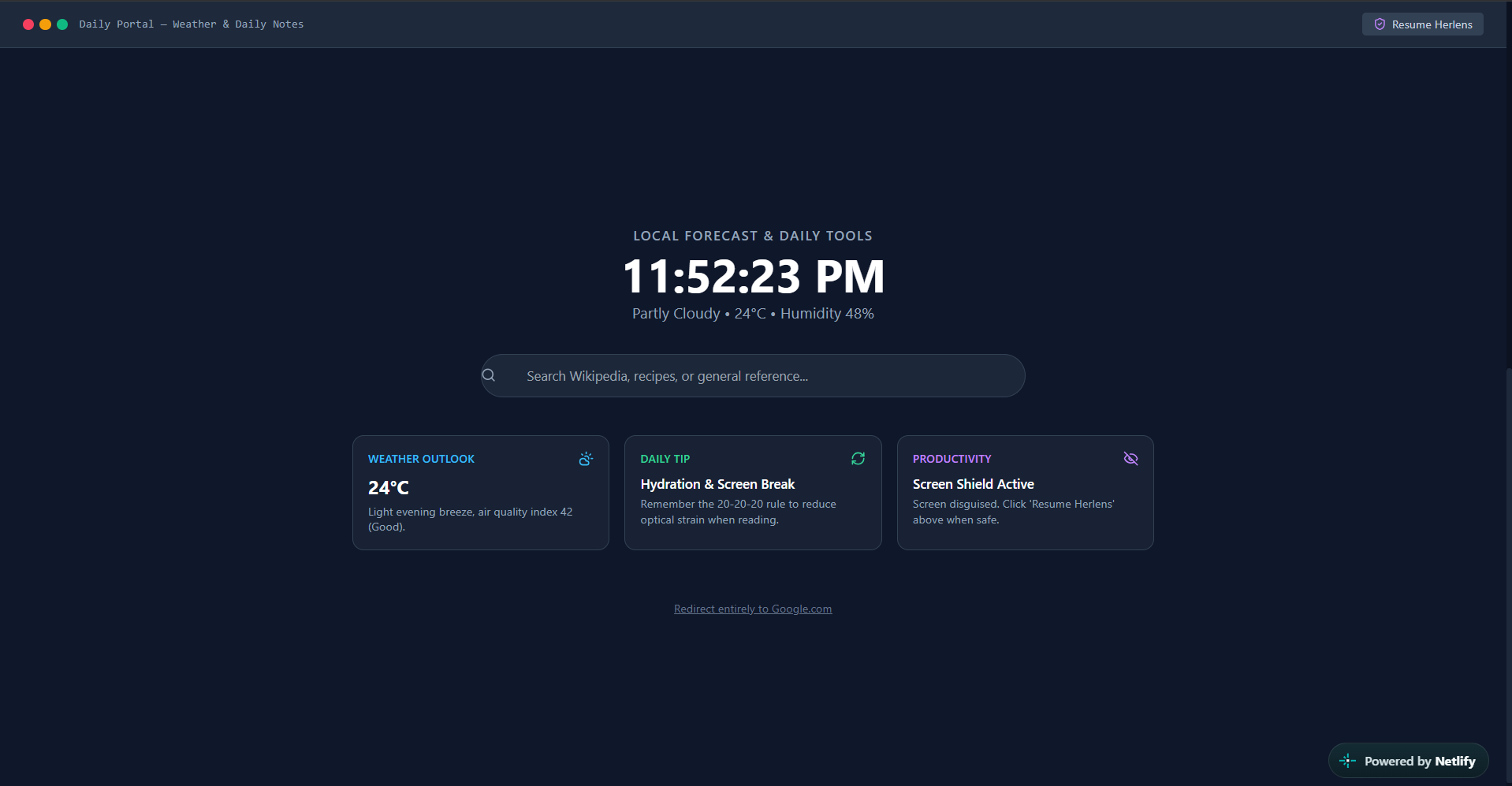
Daily portal disguised utility view showing local weather, daily productivity tips, and a screen shield active toggle.
-
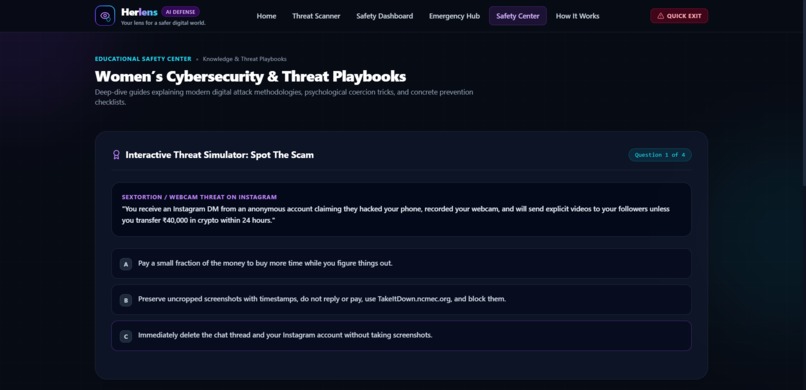
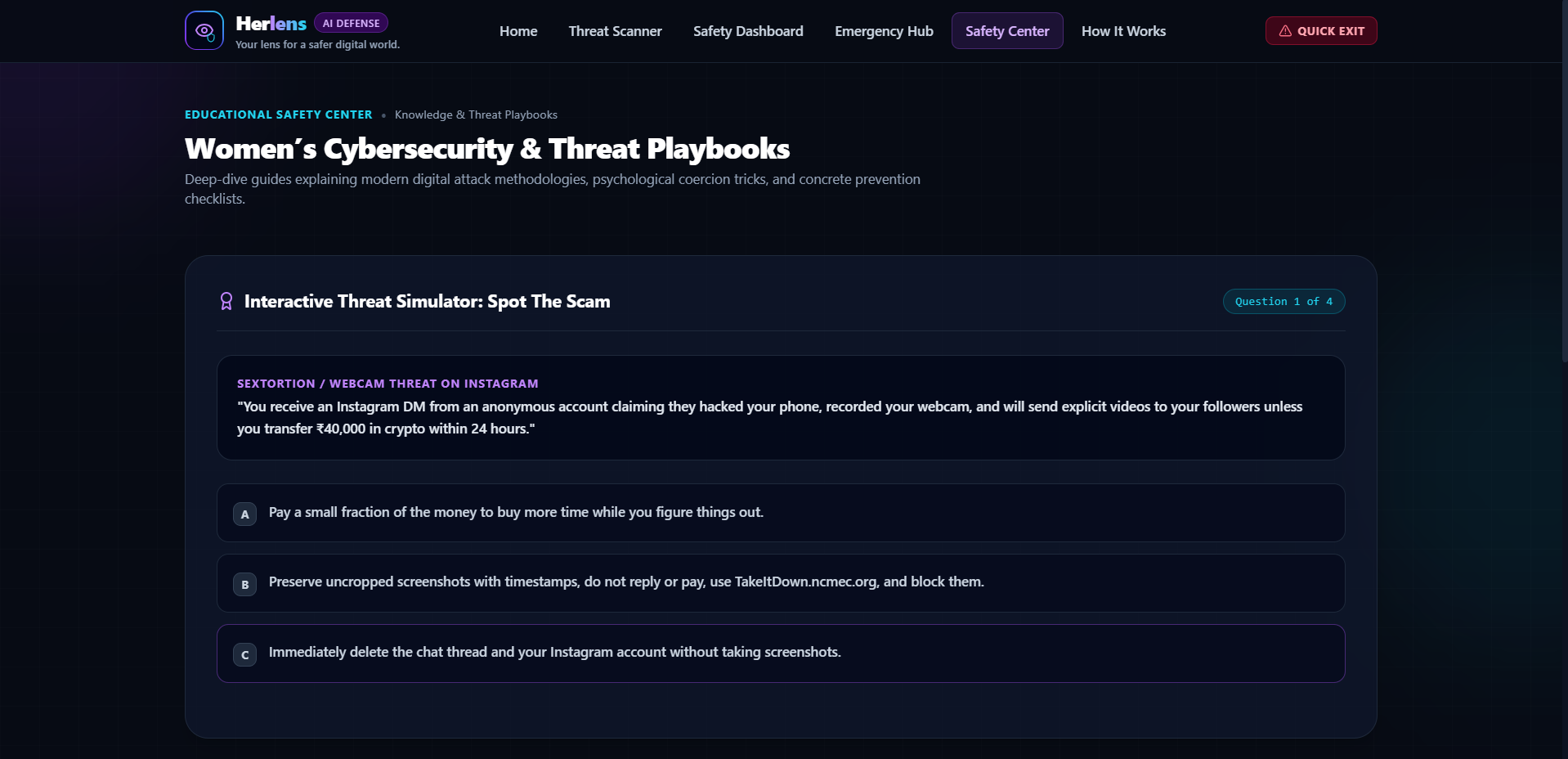
Educational safety center featuring an interactive threat simulator to help users spot scams.
-
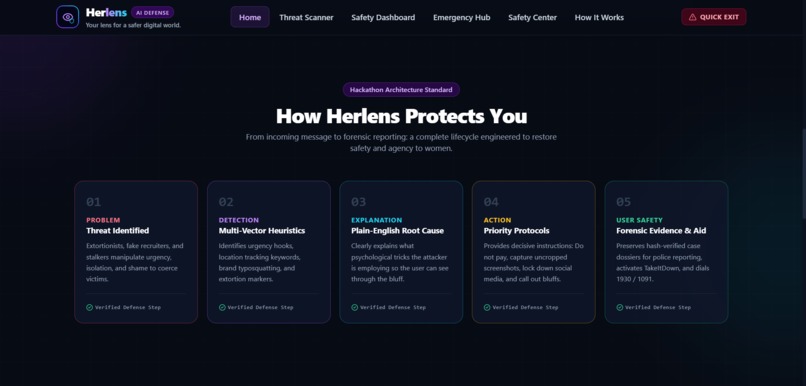
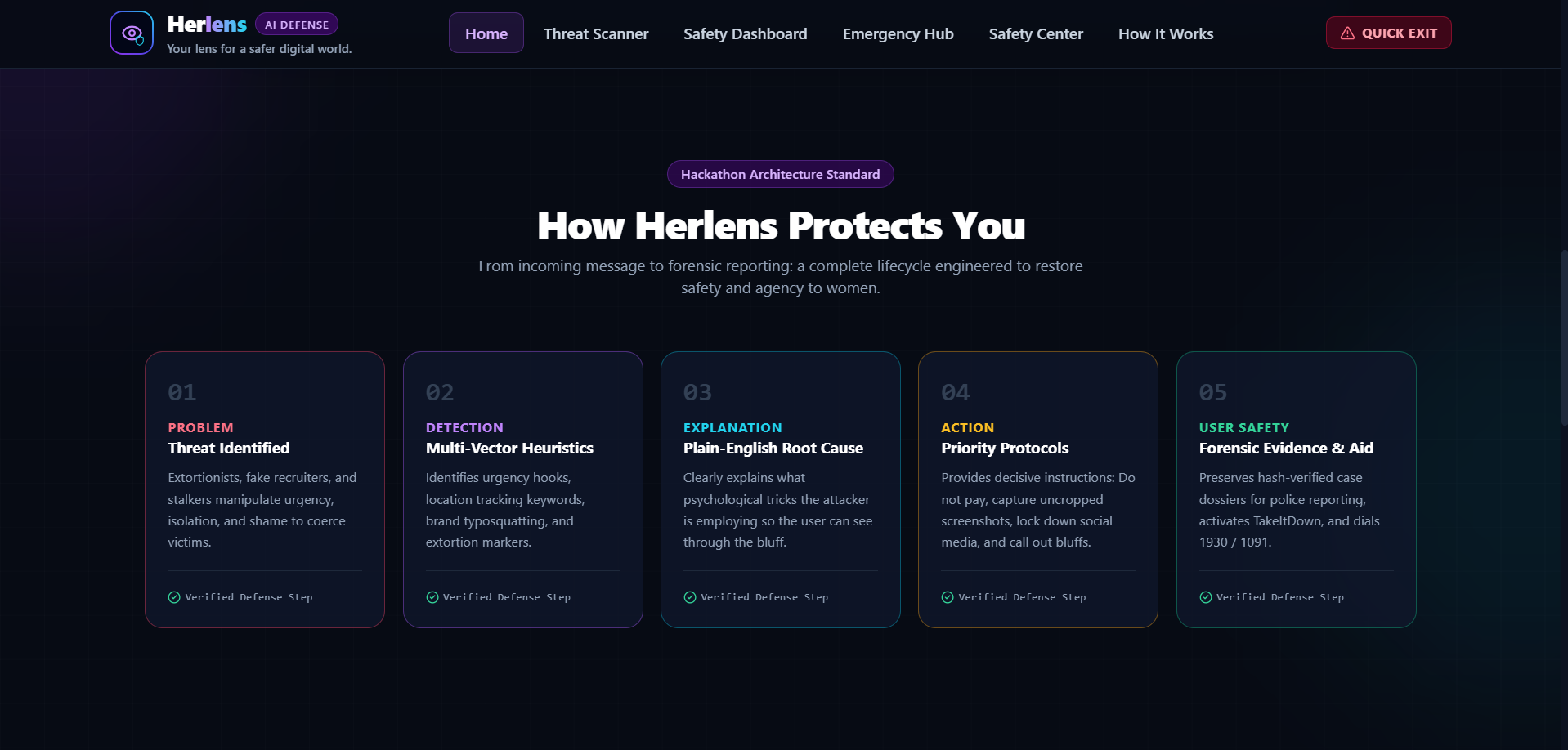
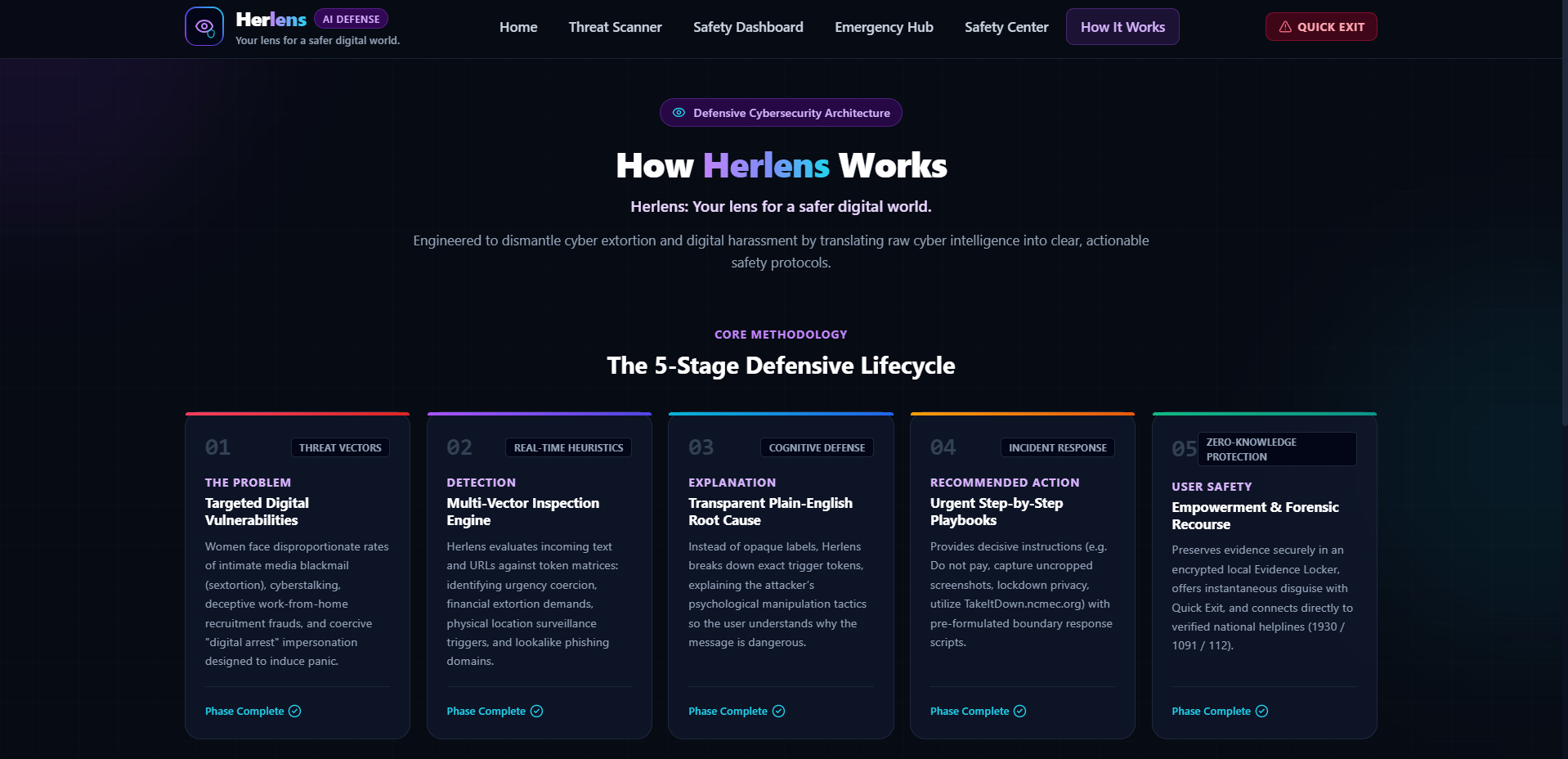
Five-step defense architecture explaining how Herlens handles threat identification, heuristics, and user safety.
-
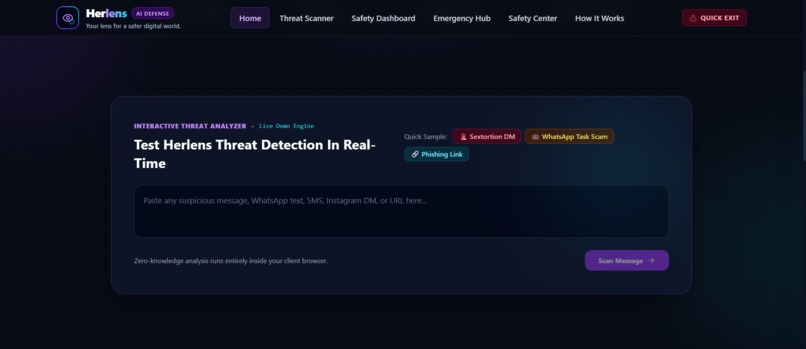
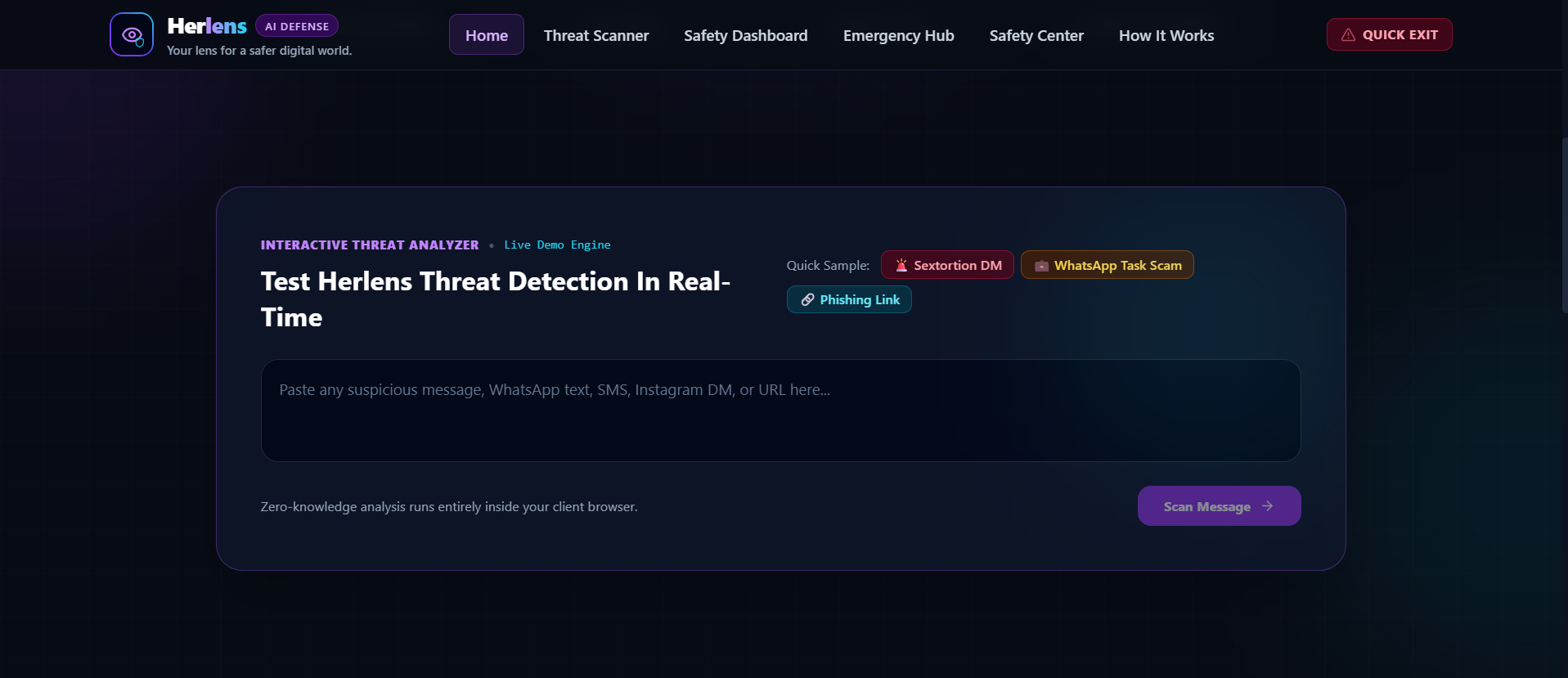
Interactive threat analyzer for testing suspicious messages, WhatsApp texts, or URLs in real-time.
-
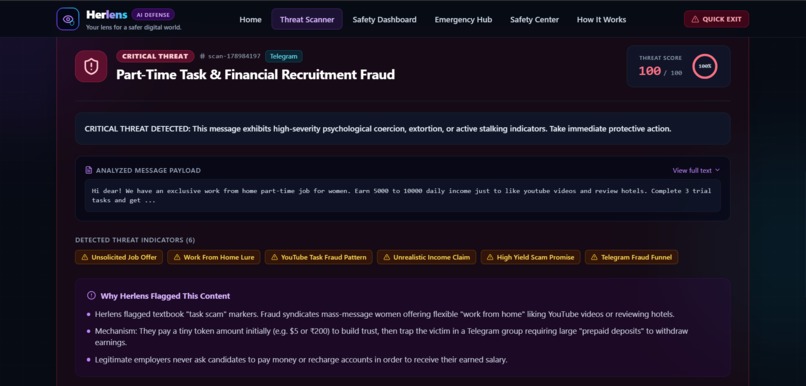
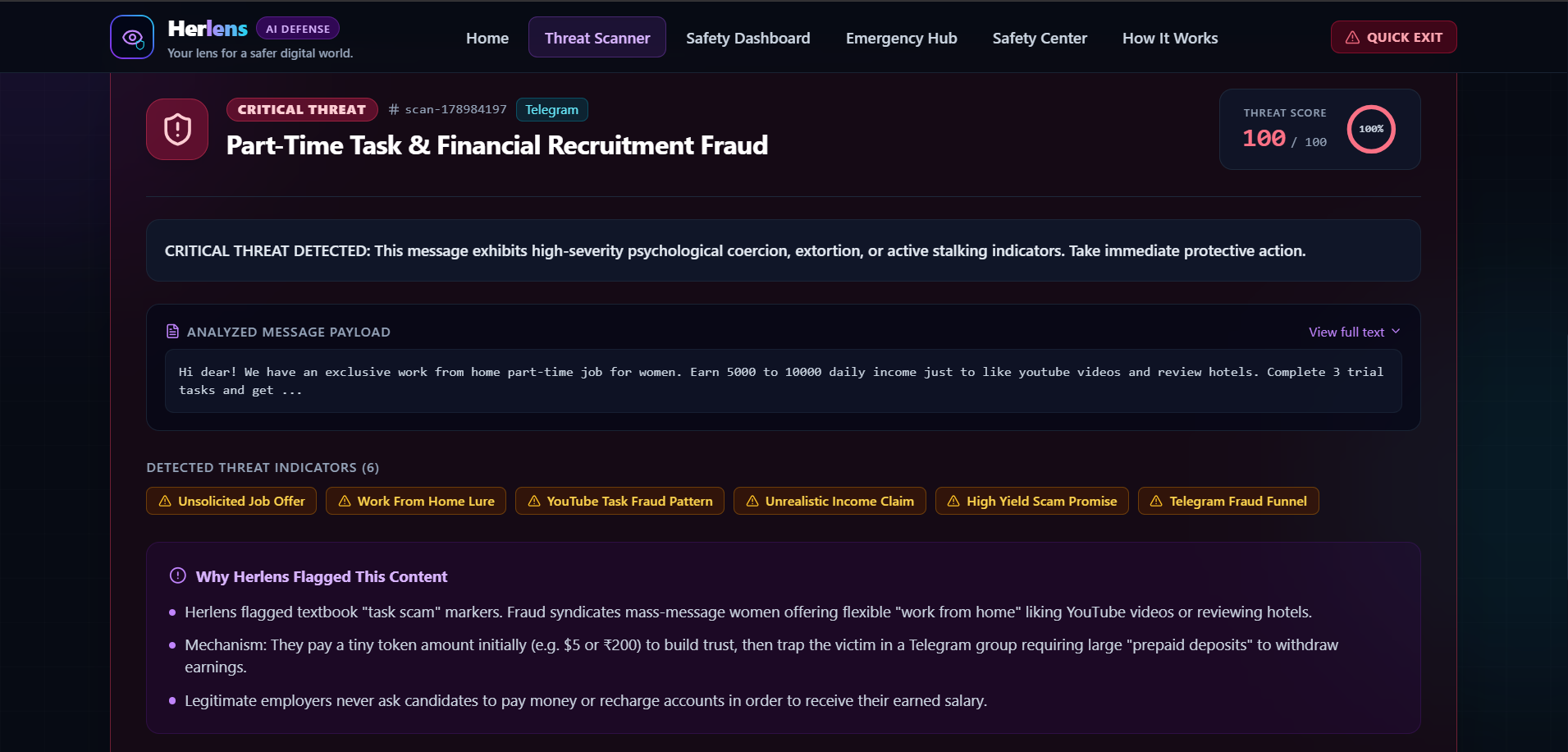
Critical threat scan results showing a 100/100 score for a financial recruitment fraud message.
-
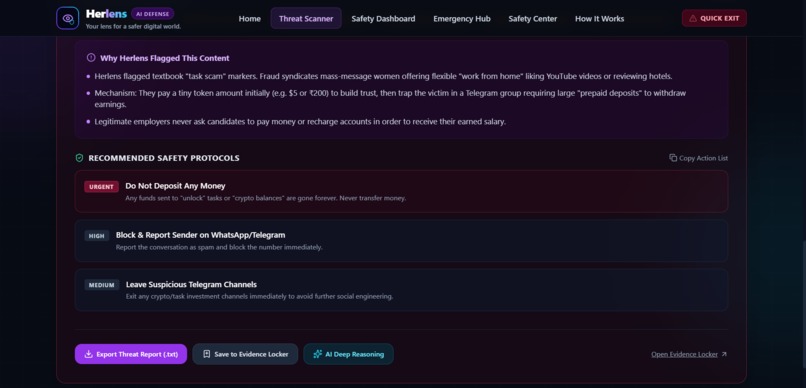
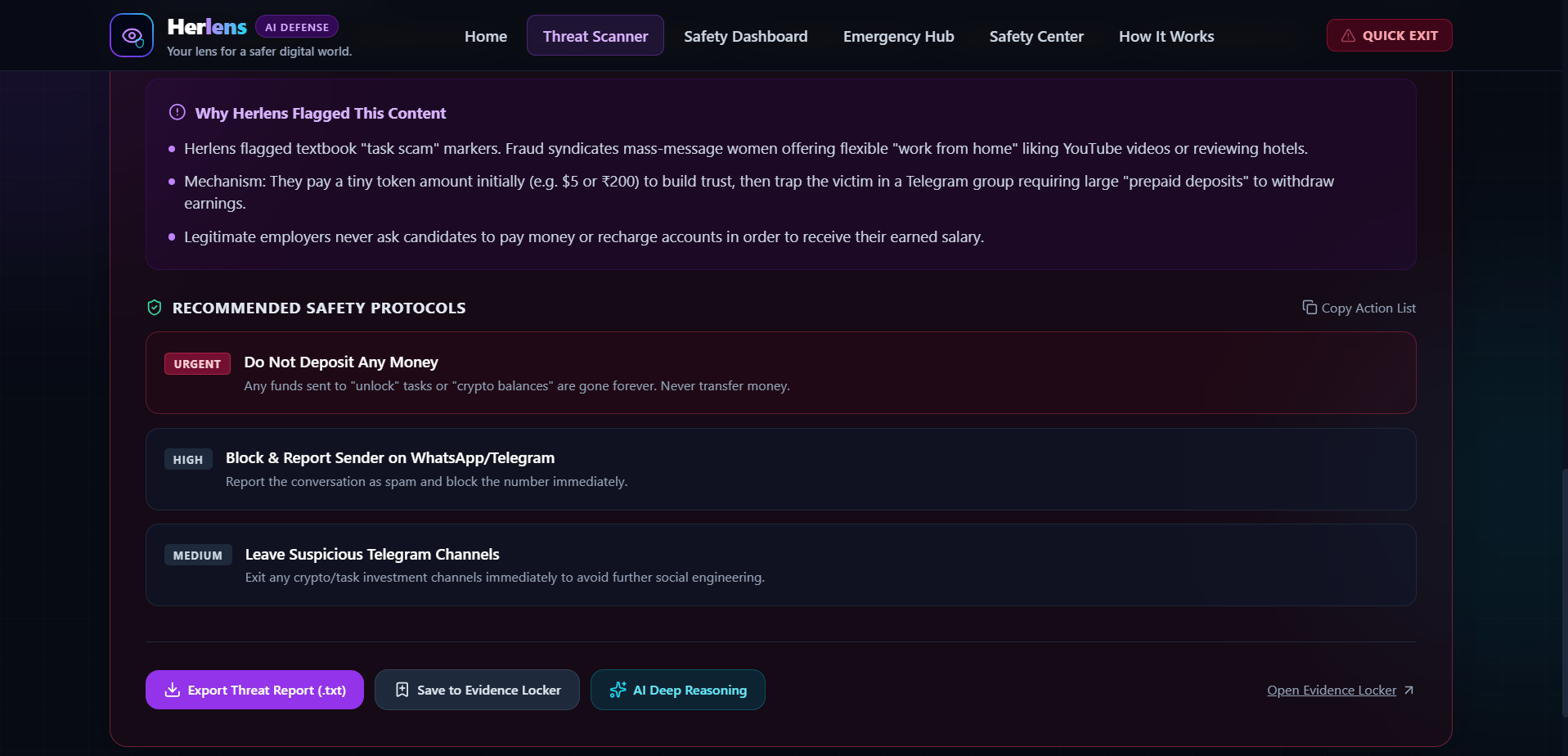
Actionable recommended safety protocols and options to export threat reports or save evidence.
-
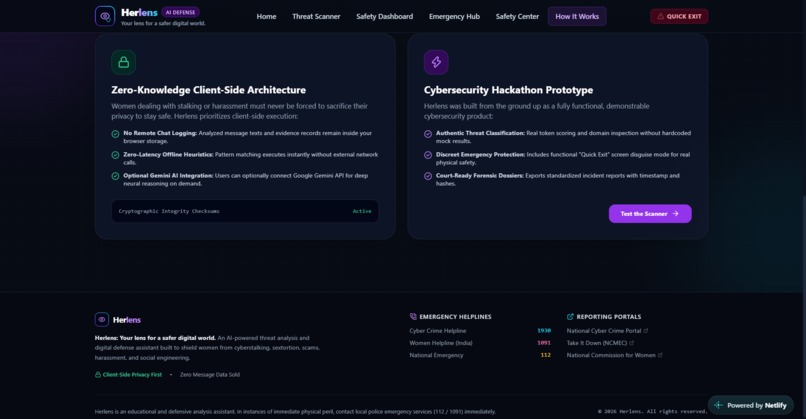
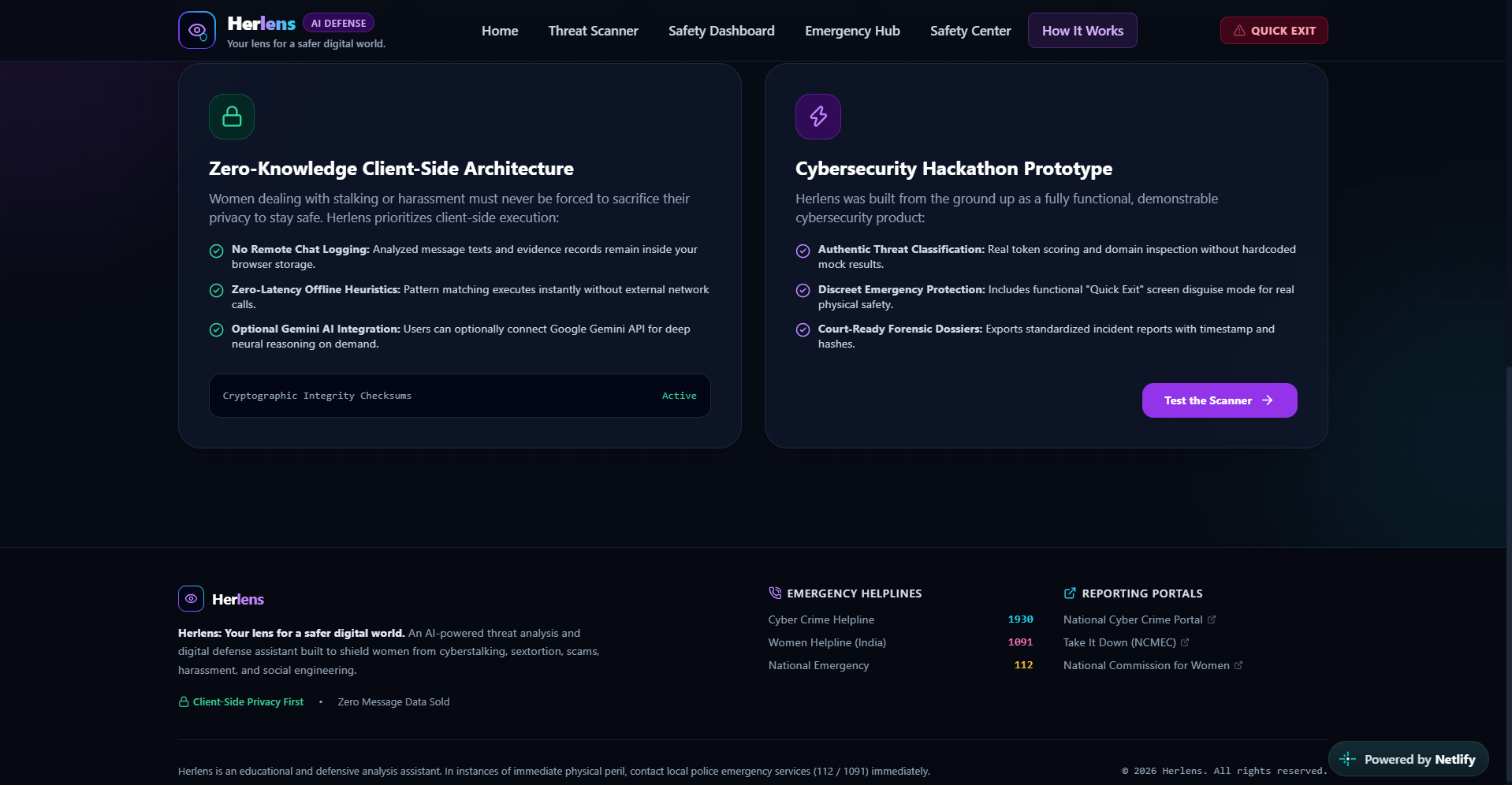
Architecture overview detailing zero-knowledge client-side protection and hackathon prototype features.
-
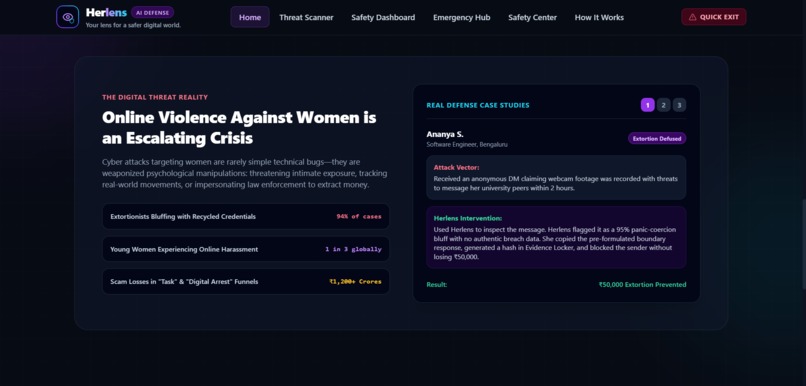
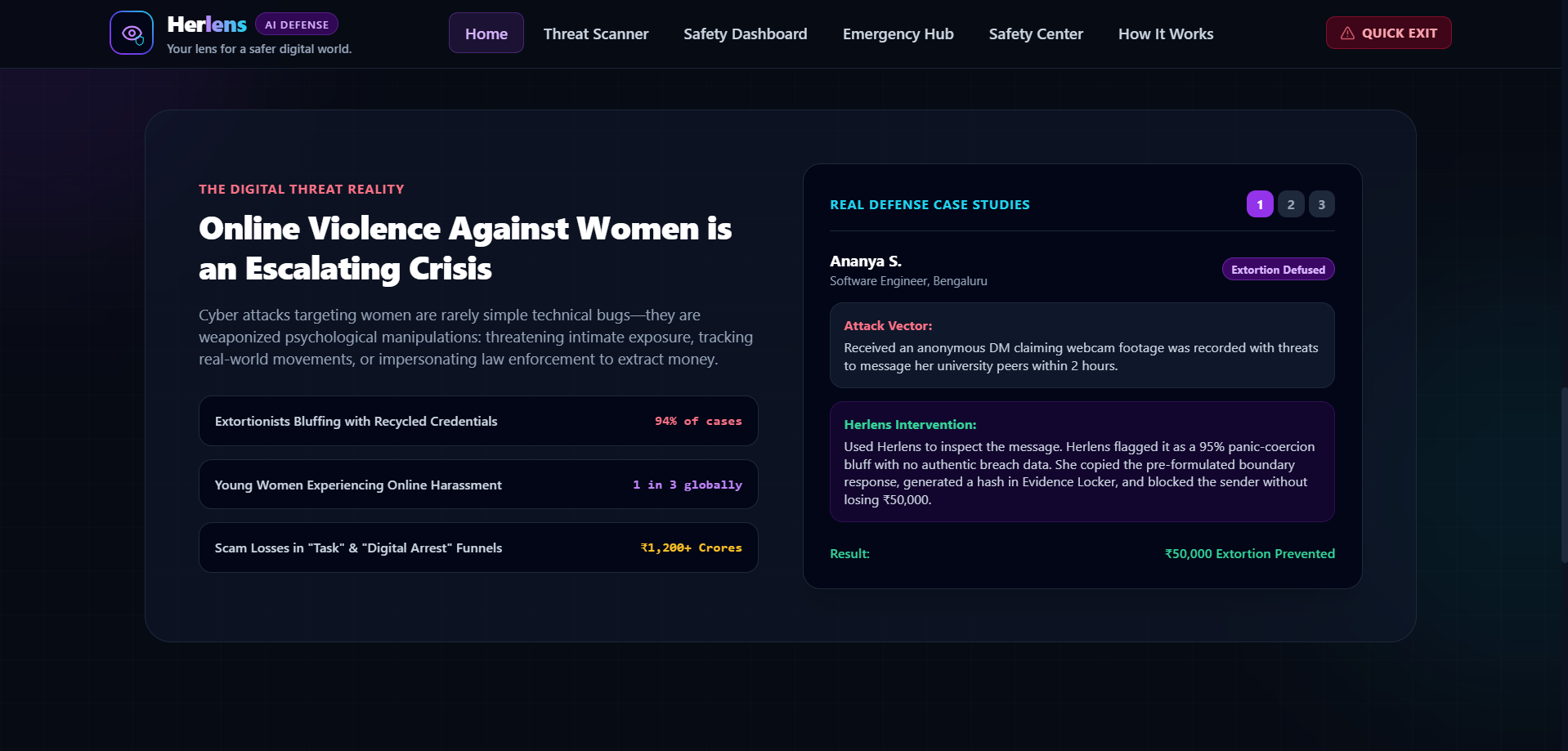
Overview of digital threat realities and a real defense case study showing a defused extortion threat.
-
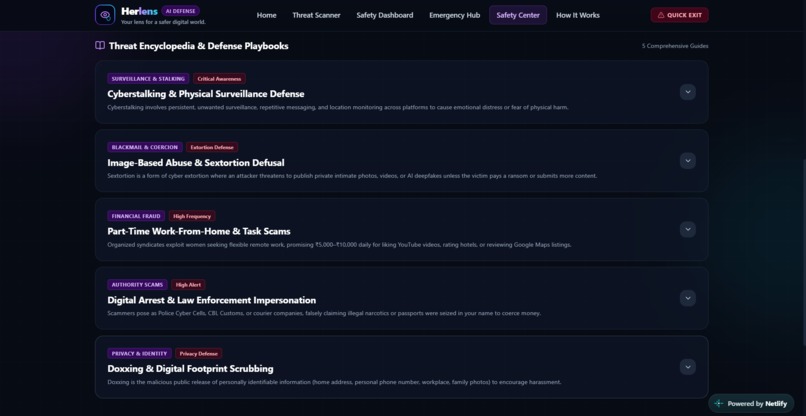
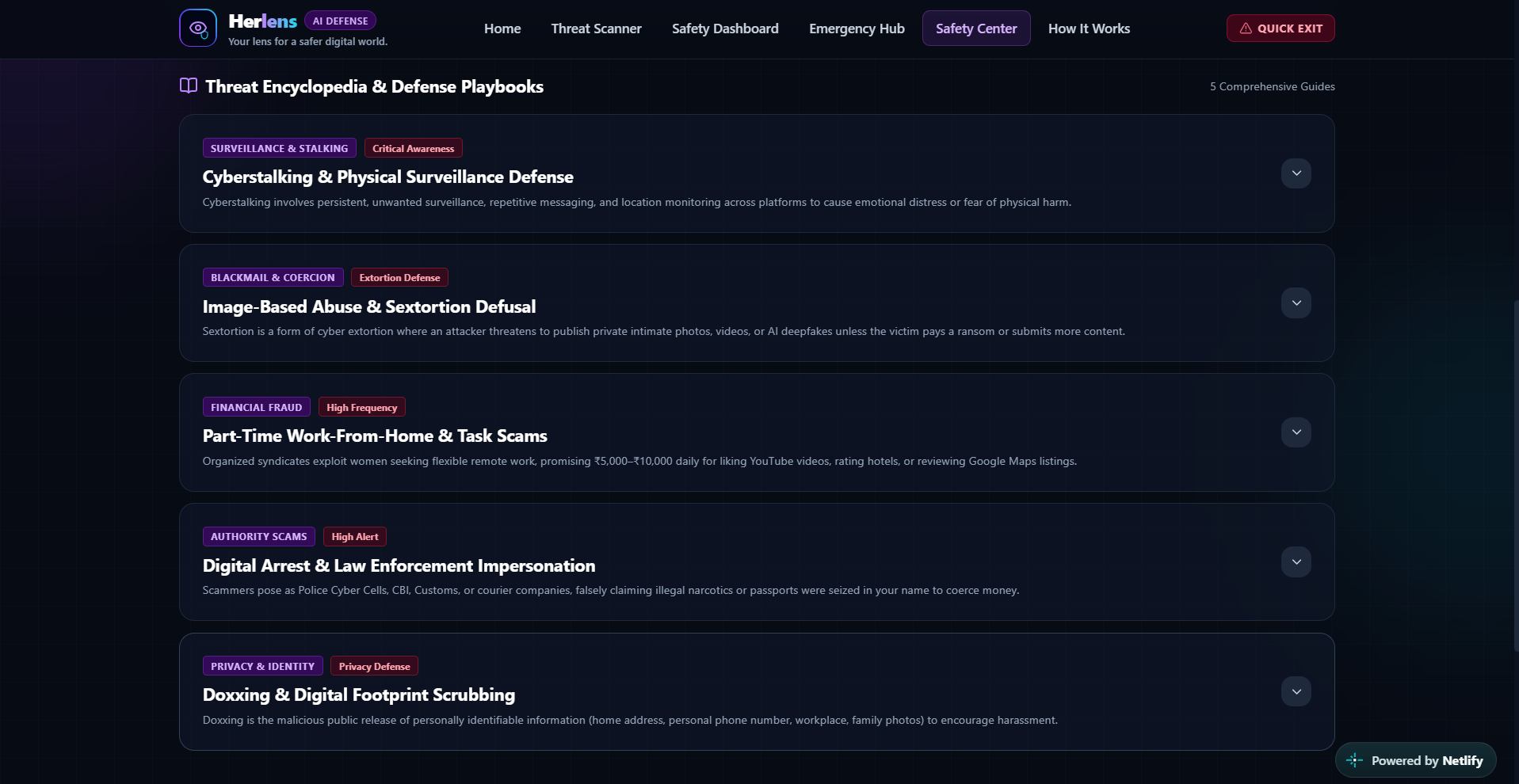
hreat encyclopedia and comprehensive defense playbooks covering cyberstalking, sextortion, and task scams.
-
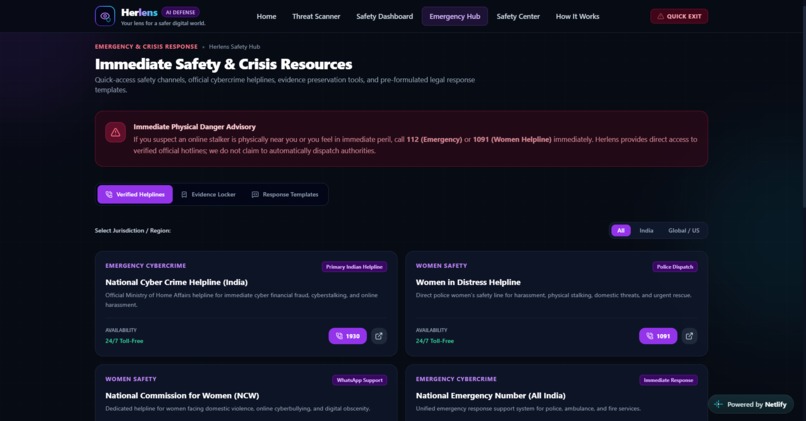
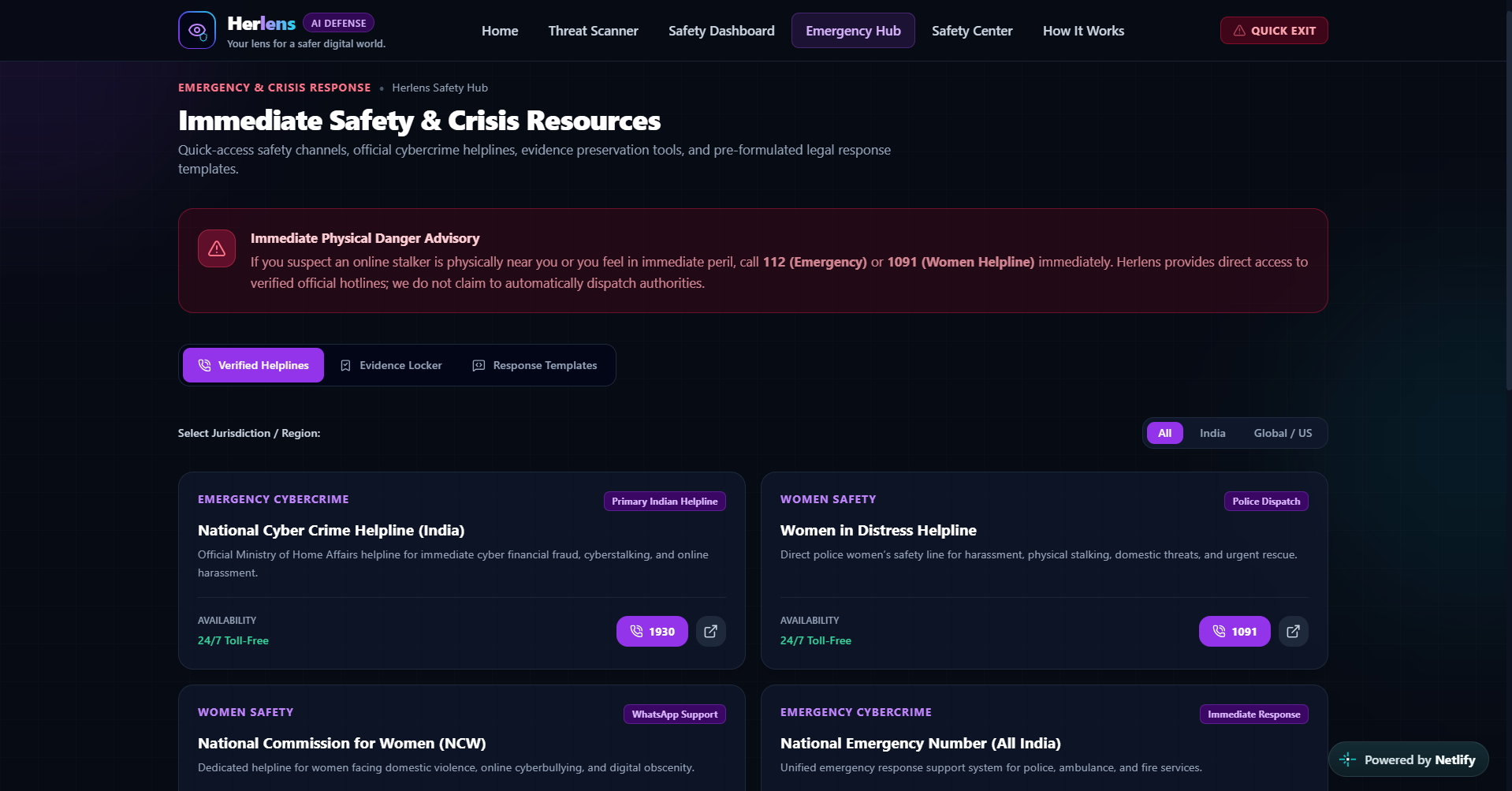
Emergency hub displaying immediate safety resources, physical danger advisories, and official cybercrime helplines.
-
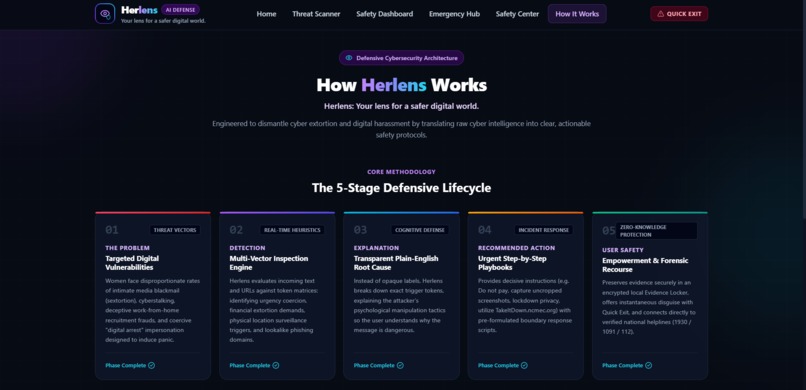
Detailed breakdown of the five-stage defensive lifecycle explaining core methodologies.
-
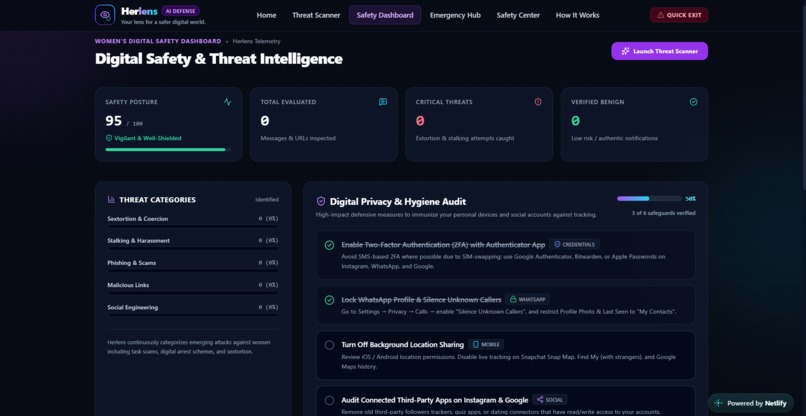
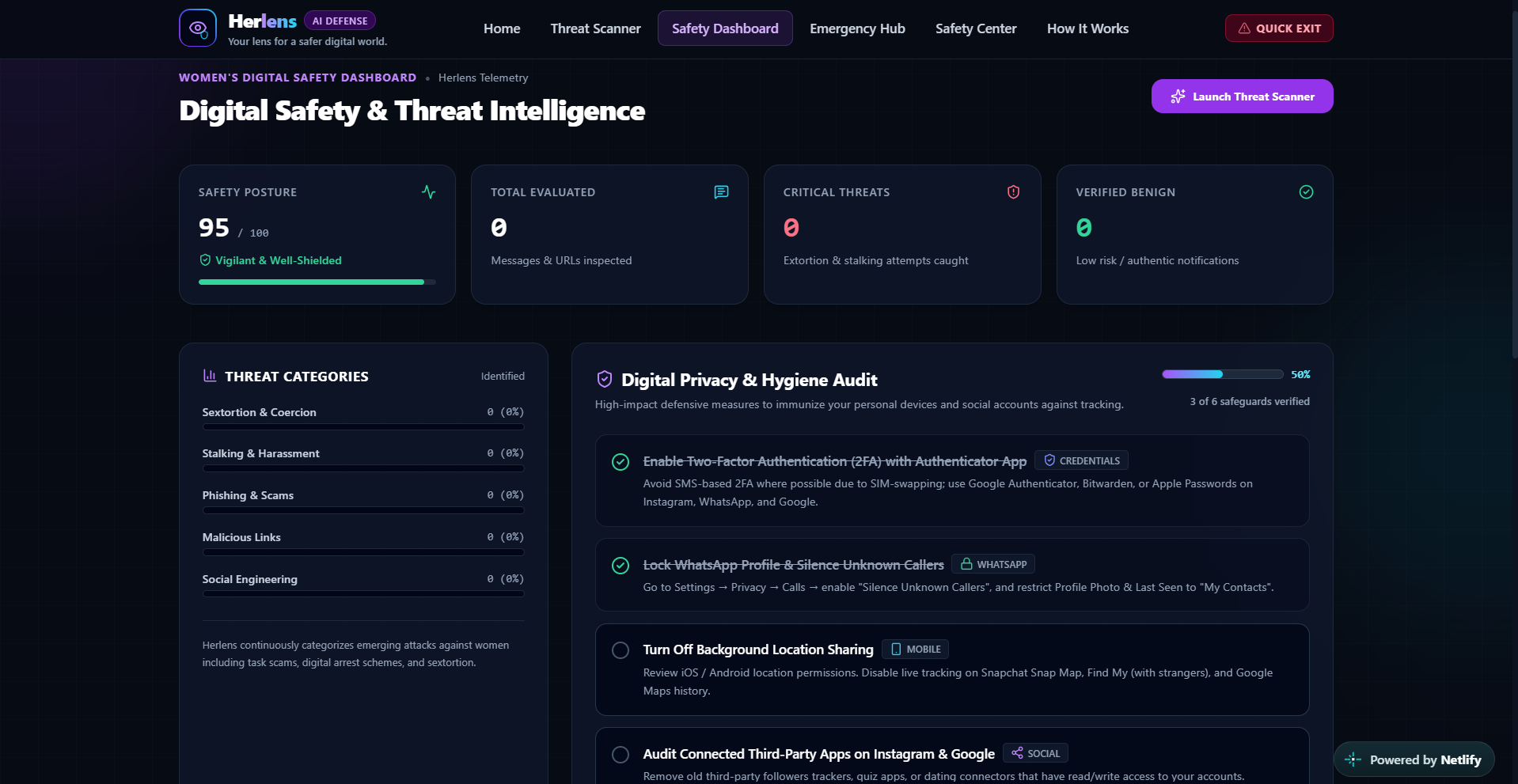
Digital Safety Dashboard tracking security metrics, threat categories, and a privacy audit checklist.
-
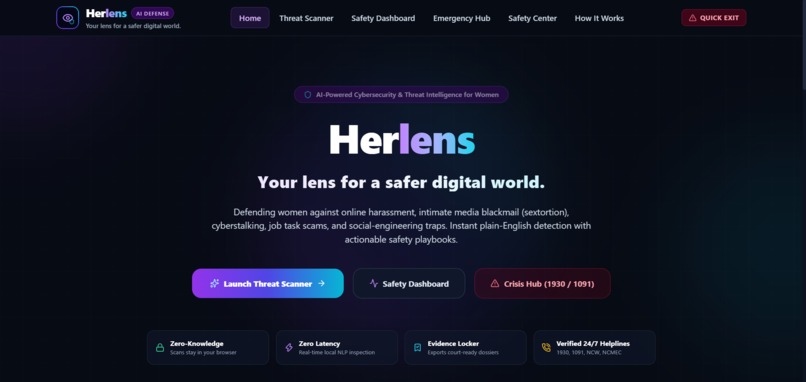
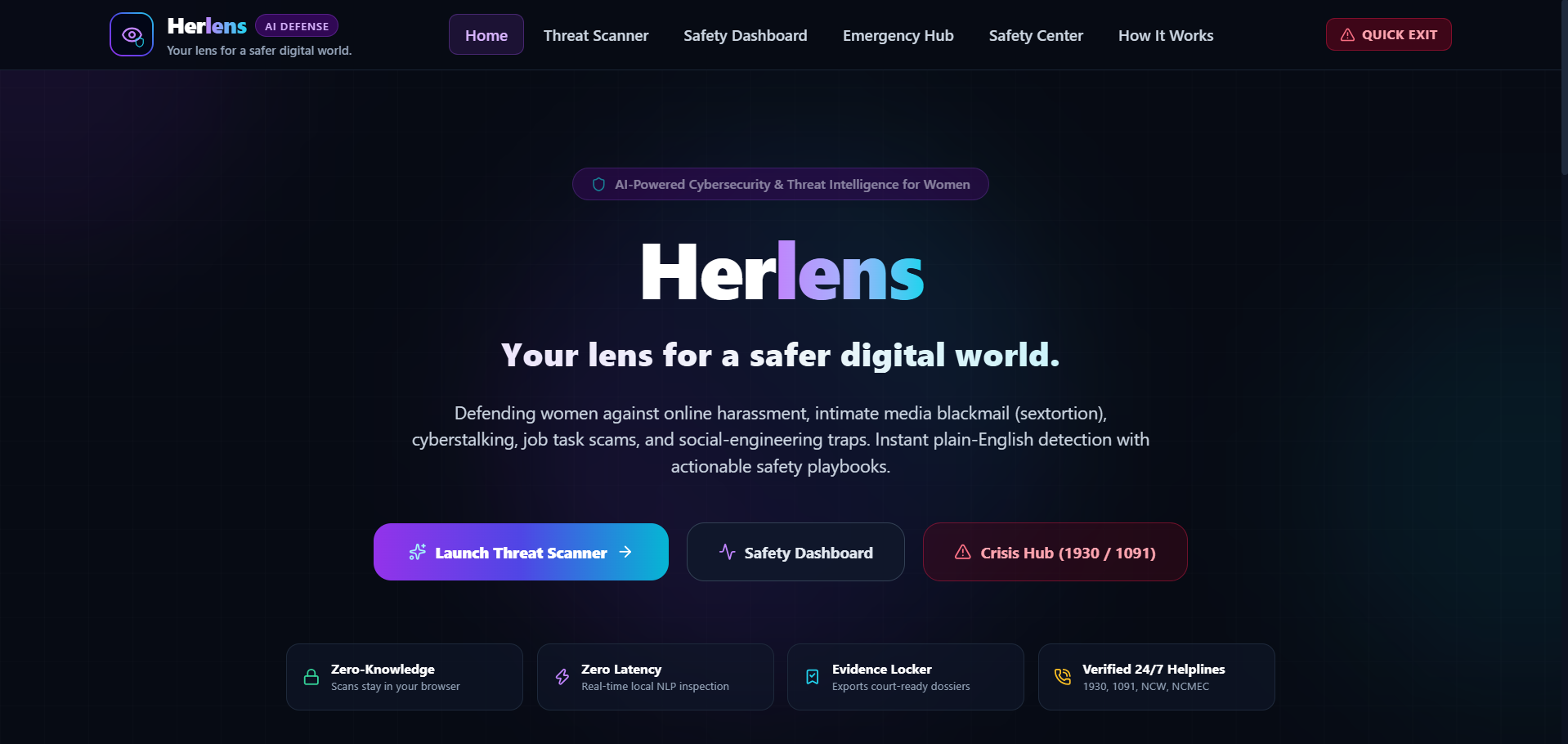
Homepage of Herlens, an AI-powered cybersecurity platform defending women against online harassment, sextortion, and scams.
-
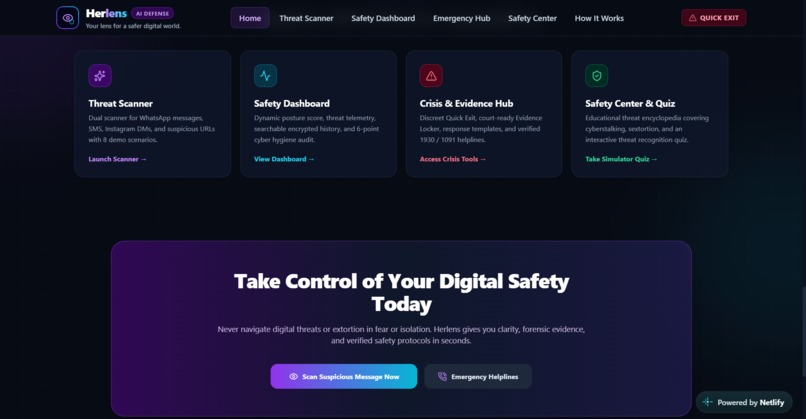
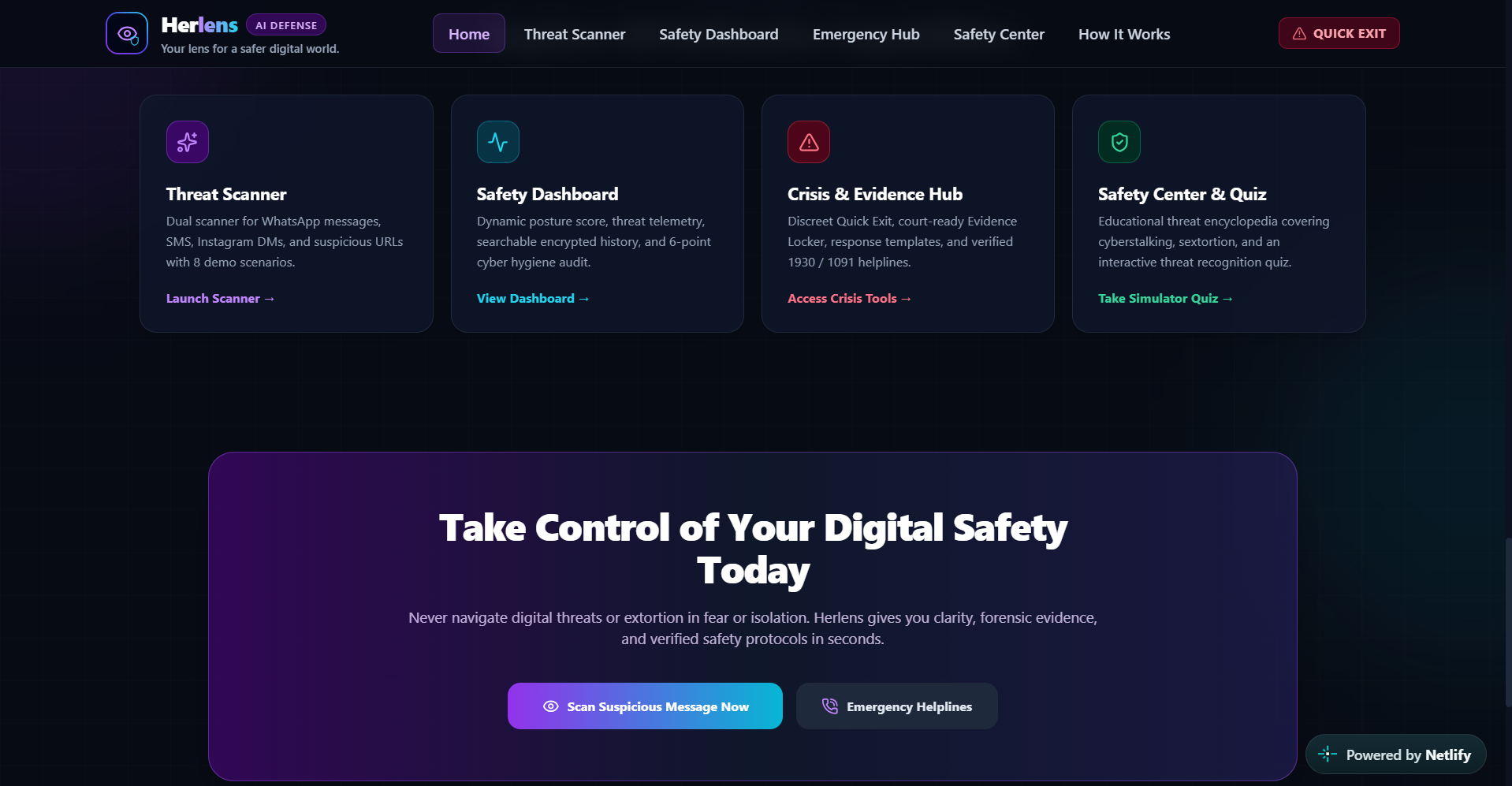
Feature summary highlighting the Threat Scanner, Safety Dashboard, Crisis Hub, and Safety Center.
🚀 Project Overview
Herlens - Your lens for a safer digital world is an AI-powered digital safety assistant that helps users detect and understand online threats such as phishing, scams, harassment, social engineering, and suspicious links. Users can scan a message or URL and receive a clear risk level, threat explanation, detected indicators, and recommended safety actions — turning complex cybersecurity analysis into simple, actionable guidance.
Inspiration
Online scams, phishing, harassment, and social engineering are becoming harder to recognize. We wanted to help users understand suspicious content before they act on it.
🔍 What It Does
- Scans: Suspicious messages and URLs
- Detects: Phishing, scams, harassment, threats, and social engineering
- Explains: Why the content was flagged
- Recommends: Practical safety actions
- Reports: Generates a clear threat report
- Educates: Provides a digital Safety Center
🛠️ How We Built It
Built using React, Tailwind CSS, Node.js, Express.js, and OpenAI API, with GitHub for version control.
Workflow: Input → AI Analysis → Threat Detection → Explanation → Recommended Action
📚 What We Learned
- Full-stack AI application development
- API integration
- Responsive cybersecurity UI/UX
- Explainable AI
- Responsible handling of sensitive content
🚧 Challenges
- Reducing false positives
- Making AI results easy to understand
- Handling sensitive situations responsibly
- Connecting the frontend, backend, and AI
Accomplishments that we're proud of
Built a functional AI-powered threat scanner Created an interactive cybersecurity dashboard Added explainable threat detection instead of simple risk labels Designed a responsive, user-friendly interface Combined detection with actionable safety guidance
🔮 What's Next
- Screenshot and QR-code analysis
- Browser and mobile integration
- Multilingual threat detection
- Real-time threat intelligence
🌟 Our Vision
Your lens for a safer digital world. Make digital safety simple, understandable, and actionable.
Built With
- antigravity
- api
- artificial
- css
- express.js
- git
- github
- html
- intelligence
- javascript
- natural-language-processing
- node.js
- openai
- react
- rest
- tailwind


Log in or sign up for Devpost to join the conversation.