-
-
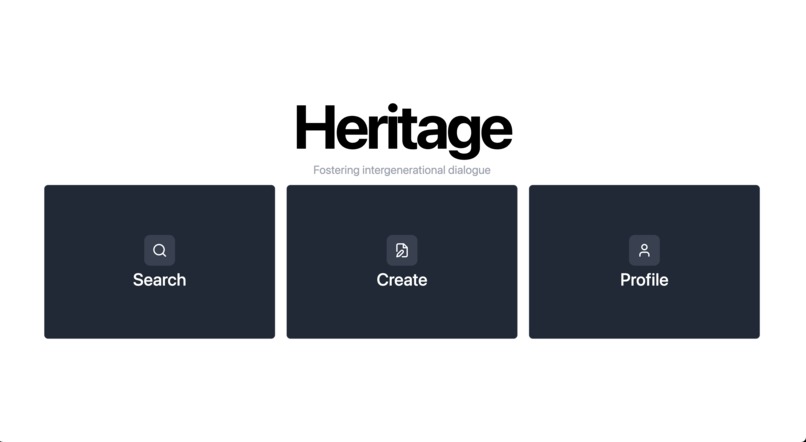
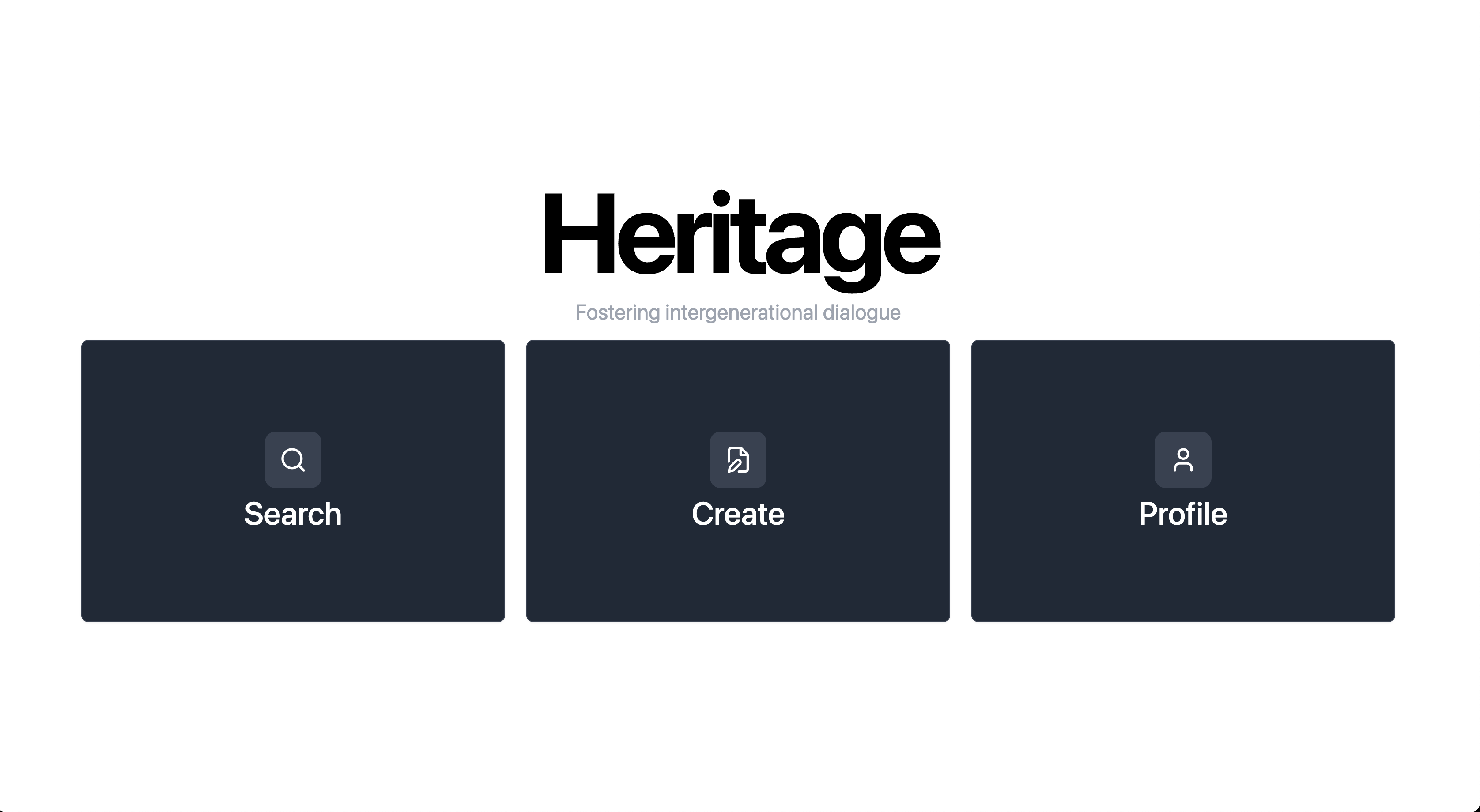
Home page
-
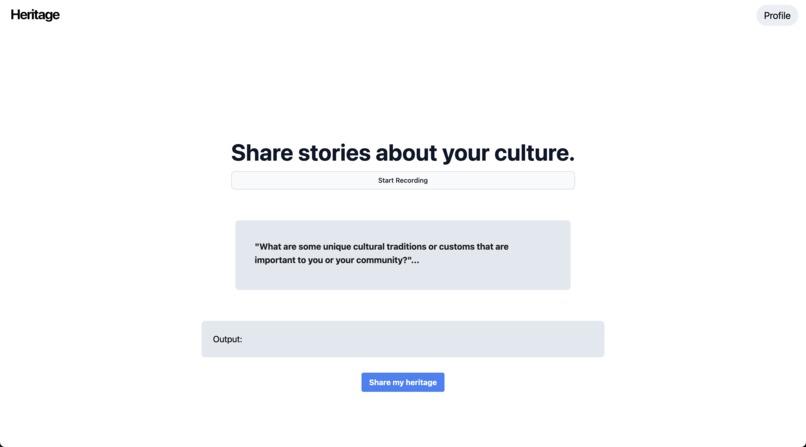
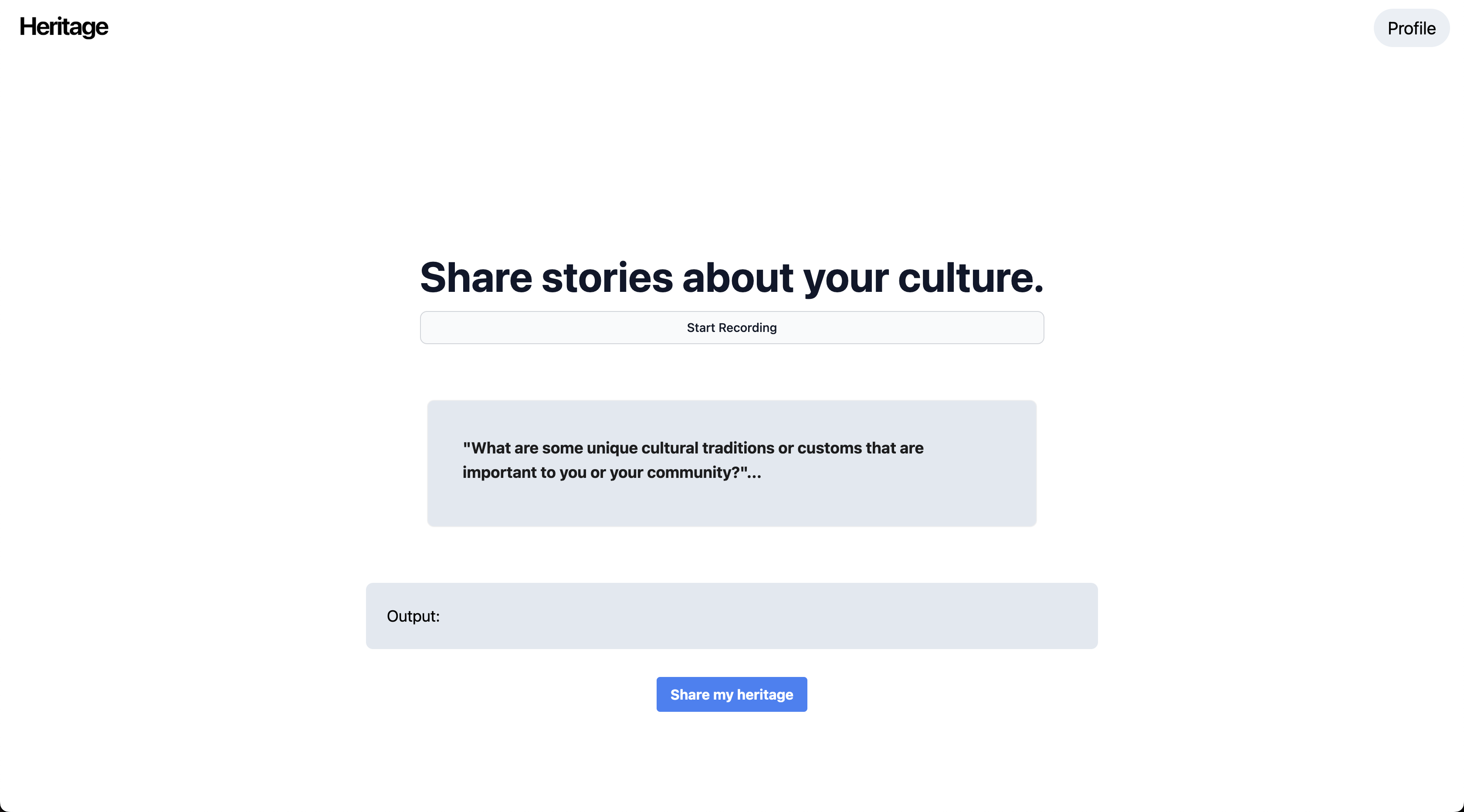
Record page with live auto transcription
-
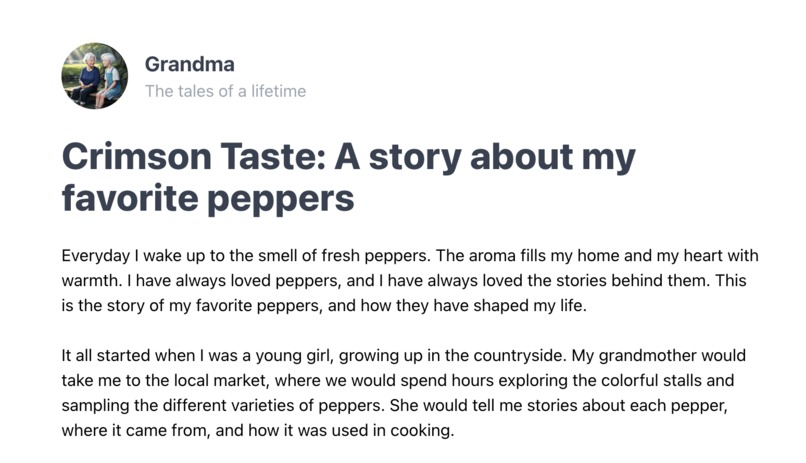
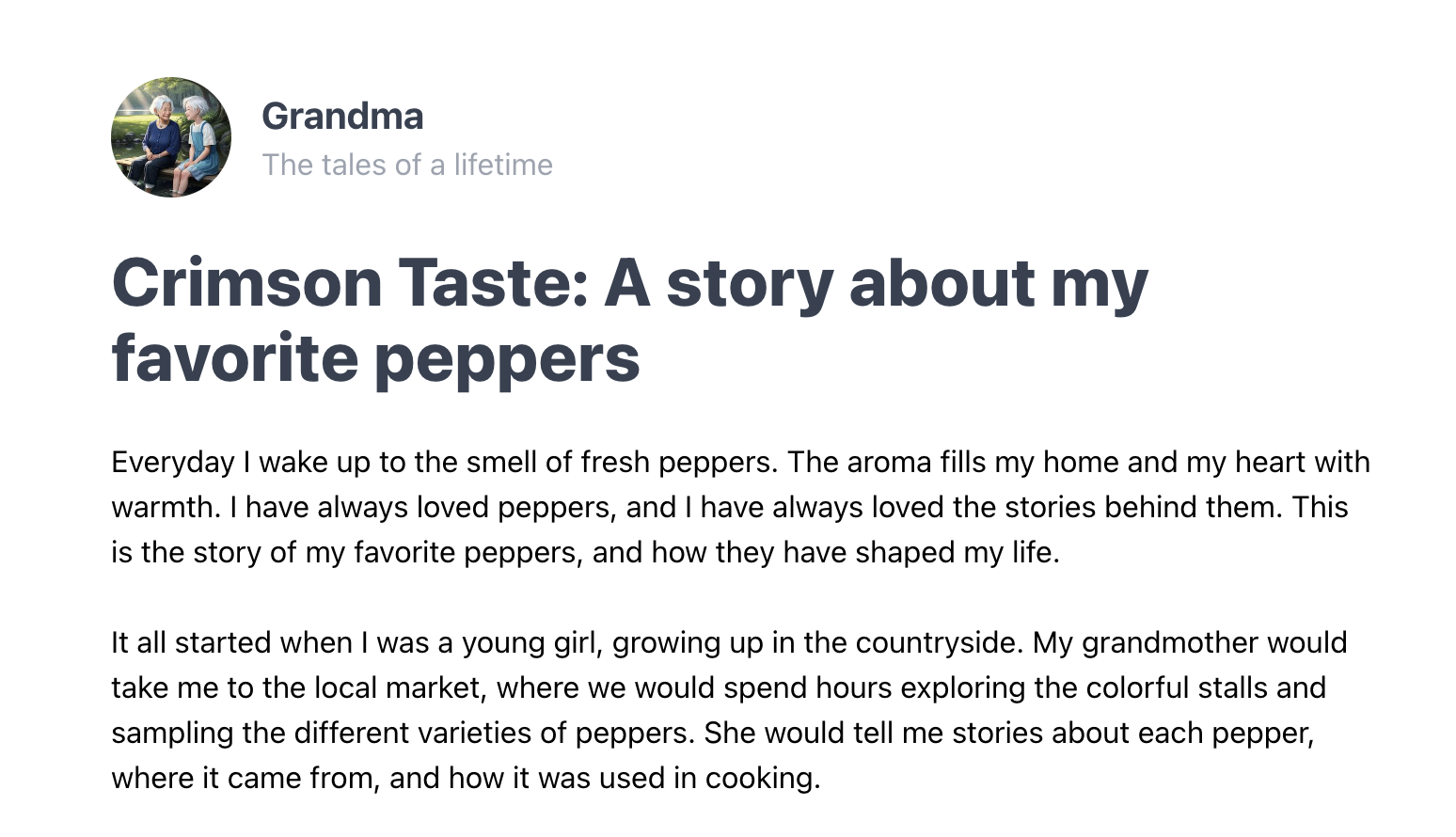
Example blog post generated based on transcription
-
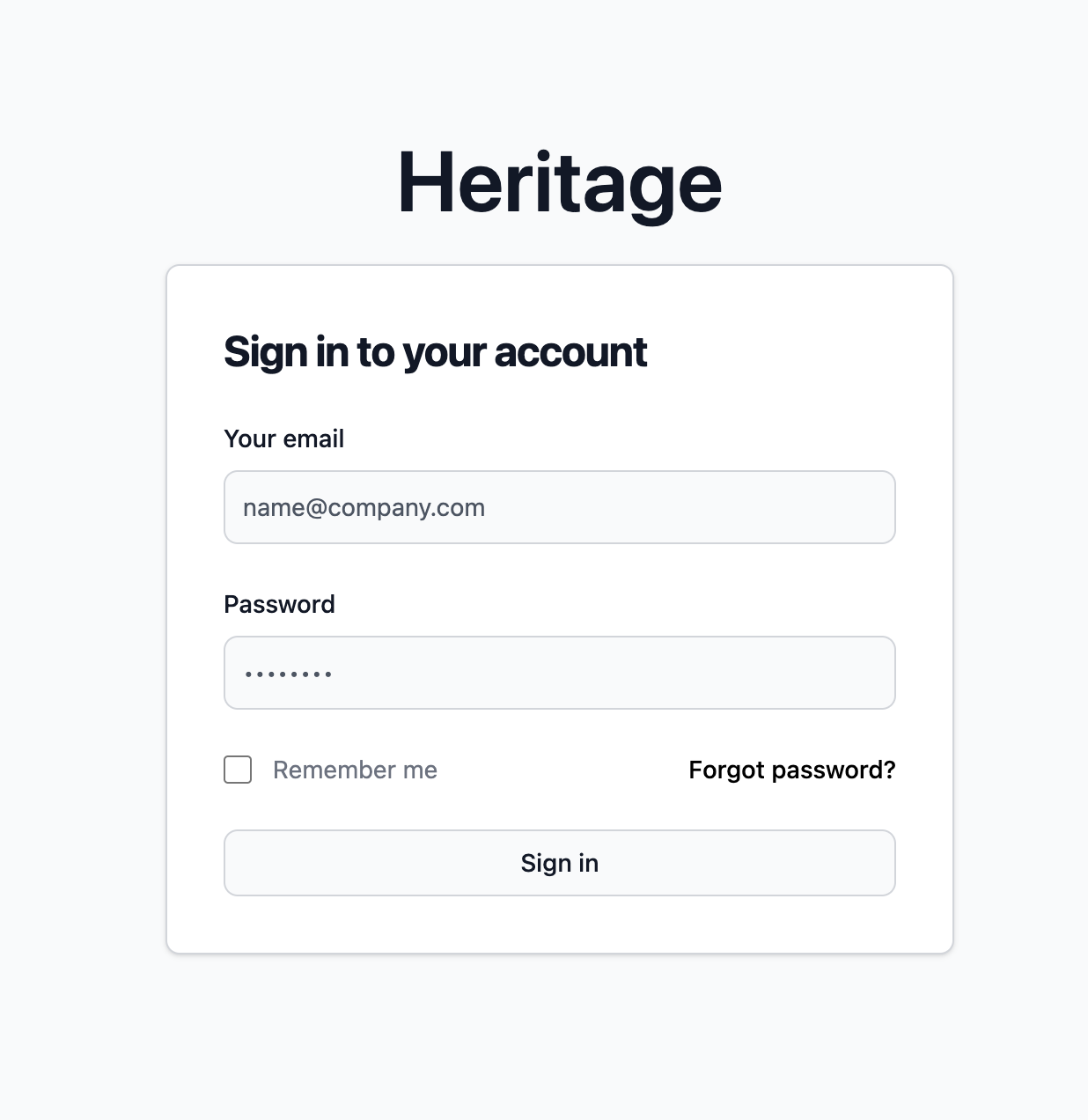
Login page
-
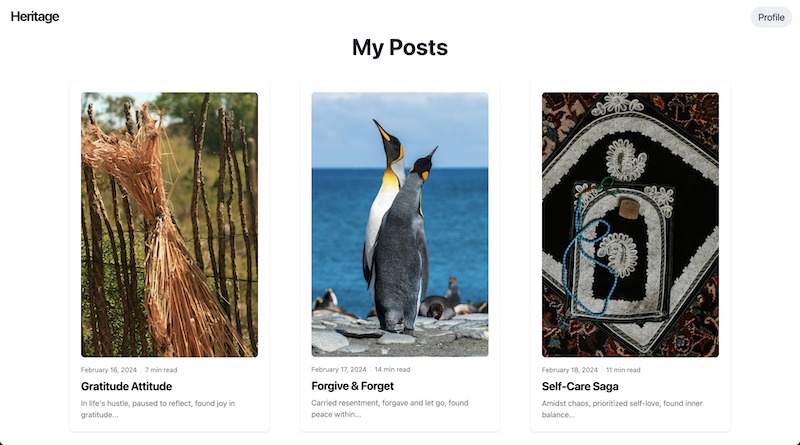
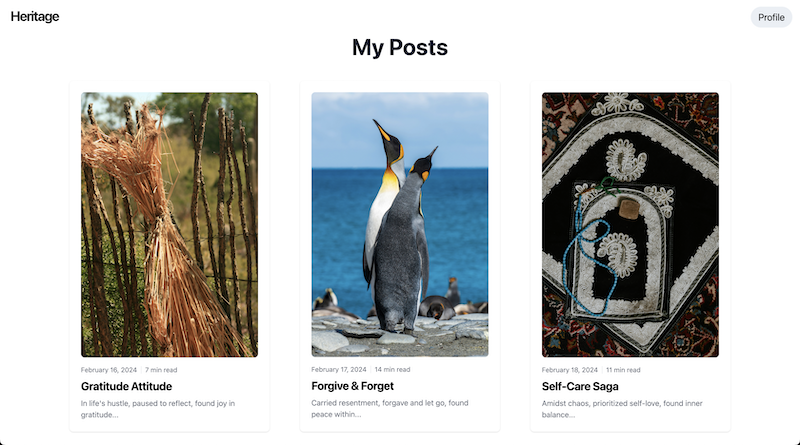
Blog post gallery in profile page
Inspiration
Recently, a conversation with one of our grandparents about their experience growing up low income in China and the lessons learned, inspired our project. Our elders are libraries of living history, but many of their stories remain untold. As we did more research, we found that in today’s fast-paced digital world, there is a glaring lack of accessible platforms for them to share their life experiences that are intuitive for them to navigate. As a consequence, the bonds and interactions among various generations wither. Moreover, many younger individuals, some without older figures in their lives, want to seek advice from older adults who offer an enriched perspective on the world. As Asian Americans ourselves with long cultural roots, we find ourselves longing to learn more about our heritage and traditions by connecting with older individuals from similar backgrounds. We were inspired to create a community where these valuable life lessons and experiences are not just preserved, but celebrated. And with one in three adults aged 50-80 reporting feelings of loneliness, it was important to us that our project worked to break the chains of isolation and build empathy across generations. For the younger generation, we hope this platform will provide a unique opportunity to gain personal advice, learn about historical events through firsthand accounts, deepen one’s understanding of their cultural identity, and understand the world from a perspective only decades of experience can provide.
What it does
Heritage is an easy-to-use platform, where older adults answer questions submitted by younger individuals. It uses speech-to-text translation and AI to create coherent blog posts with images, highlighting their insight. Our goal was to make this website as simple as possible for them to navigate, with an intuitive user interface. So, instead of a traditional blog where users type out the post (which is inconvenient for some seniors as motor skills decline with age), Heritage utilizes voice recording, and performs live speech-to-text translation to make the blog posts. This allows older individuals to focus on what they want to convey, instead of facing the obstacle of having to type out their thoughts, enabling them to effortlessly share their wisdom and experiences with the younger generation. To further improve senior-friendly accessibility, we made sure to choose a readable font, high contrast throughout the website, and large text and button size. We also chose to make a website over a mobile app because even typing on a keyboard is easier for seniors than typing on a mobile phone.
How we built it
We built Heritage using React as our frontend, Convex for our database, Tailwind CSS for styling, GitHub to manage our version set, Vercel for seamless hosting, and GPT4 for creating blog posts based on the transcription.
Challenges we ran into
One of our team’s primary challenges was using Google Cloud Platform’s speech-to-text and spent ~12 hours on it only to pivot to a different library. We faced challenges with improving our idea, understanding the customer to the best of our knowledge and coming up with a way to provide high value to our customers. The main focus for our design was making it easy to use for our target market, people over the age of 60. This challenge was something that required a change in our designing mindset and making our user flow. While this was a challenge we were able to change our way of thinking, ideas and at the end built something with the ability for people to share their culture and their wisdom seamlessly.
Accomplishments that we're proud of
After hours of debugging, we were finally able to implement the speech-to-text functionality and introduce voice recording capabilities! This marked a leap forward in our project’s accessibility and user experience. We were all eagerly anticipating the challenge of building something entirely new from scratch. Along the way, we discovered interests we never knew we had. We take pride in not only bringing this website to life, but also in our commitment to the project. We learned new tools, honed new skills, pushed ourselves to our physical limits, and made many new friends! Most importantly, we didn’t give up despite facing challenges because our passion for the project kept us motivated and focused. This was also Fiona’s first hackathon, and she had a blast working on a project she’s passionate about.
What we learned
From using speech-to-text, Convex database, and creating a more dynamic UI, our team gained the ability to take products from ideation to MVP faster and make them more reliable. With the expansion of new AI tools, we learned how to make more dynamic and real-time projects that have an ability to scale. In addition to expanding our technical abilities, our team fostered connections with company sponsors, reigniting our passions toward the field of technology and development! This experience also gave us the opportunity to learn more about ourselves and our individual interests and strengths. Building Heritage posed some challenges that pushed us to grow as a team, expand our technical abilities and through attending talks and actively developing during the hackathon, we gained insight into designing an application for our user base that is easy to use and provides an ecosystem never seen before. This customer-centric mindset guided us to think more expansively about how to create additional value. By persevering through obstacles, we have a greater understanding of how to construct tools with the end-user experience at the core.
What's next for Heritage
In the future, we hope to implement a feature that allows seniors to turn posts private; this way, they will be able to choose to share their posts with certain people, such as family members or “friends.” To enhance the user experience for older adults navigating our app, we will implement comprehensive onboarding screens and help tutorials. These will guide users through various functionalities, ensuring they feel confident using the app. Other features we can include a dedicated memories page and personalized recommendations for topics and blogs will further enhance user experience. We also aim to further facilitate interaction with others and content through features like likes, video responses, and discussions. It would also be exciting to integrate Wispr AI to our website, so users could create blog posts even more seamlessly, simply by just thinking about them.
Built With
- convex
- javascript
- openai
- react
- tailwind
- typescript
- vercel

Log in or sign up for Devpost to join the conversation.