-
-
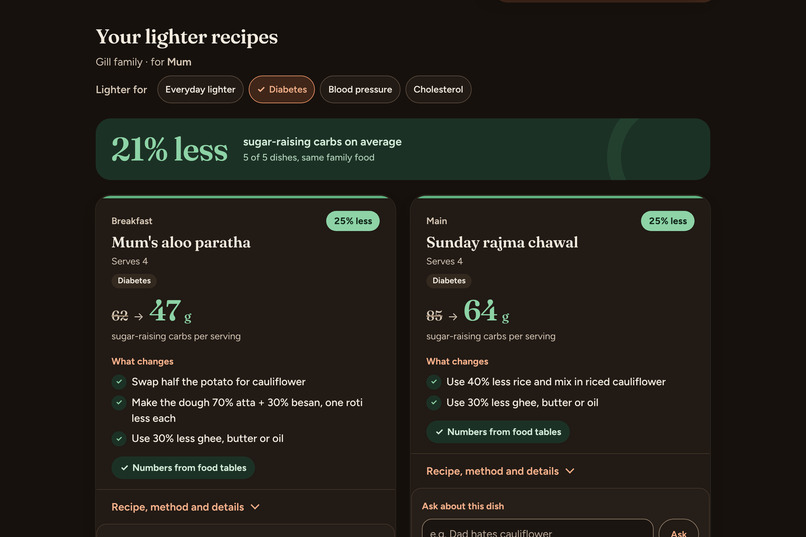
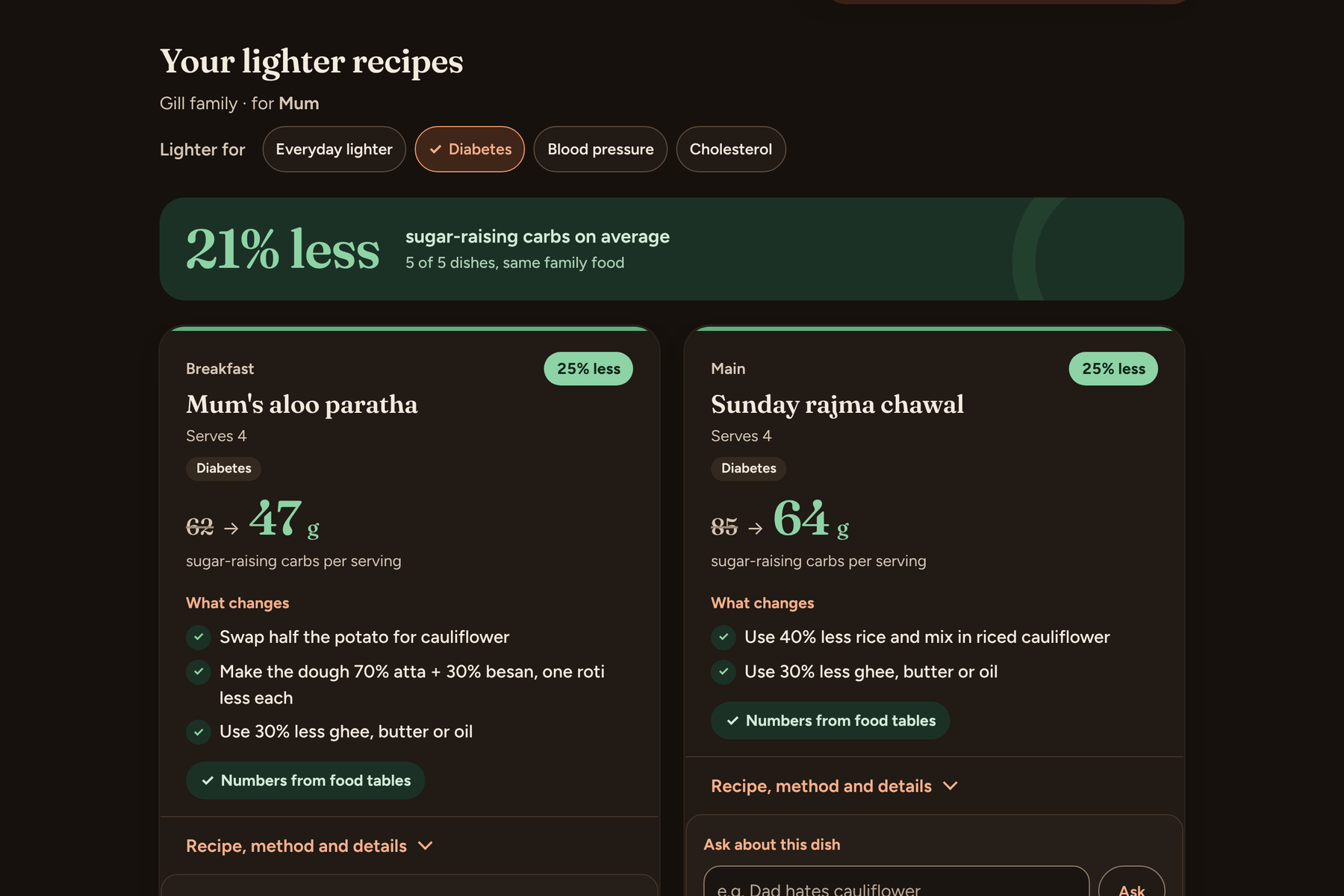
Mum's aloo paratha keeps its name and loses a quarter of its sugar-raising carbs (62 g to 47 g), with numbers from food tables.
-
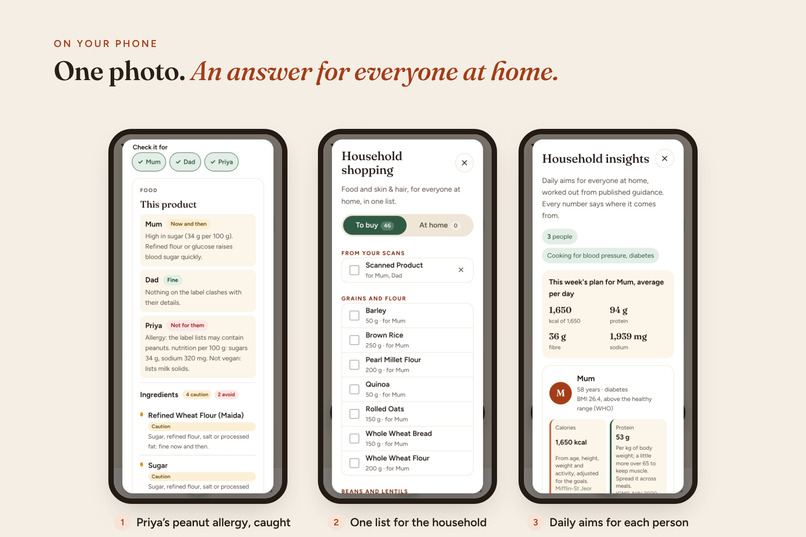
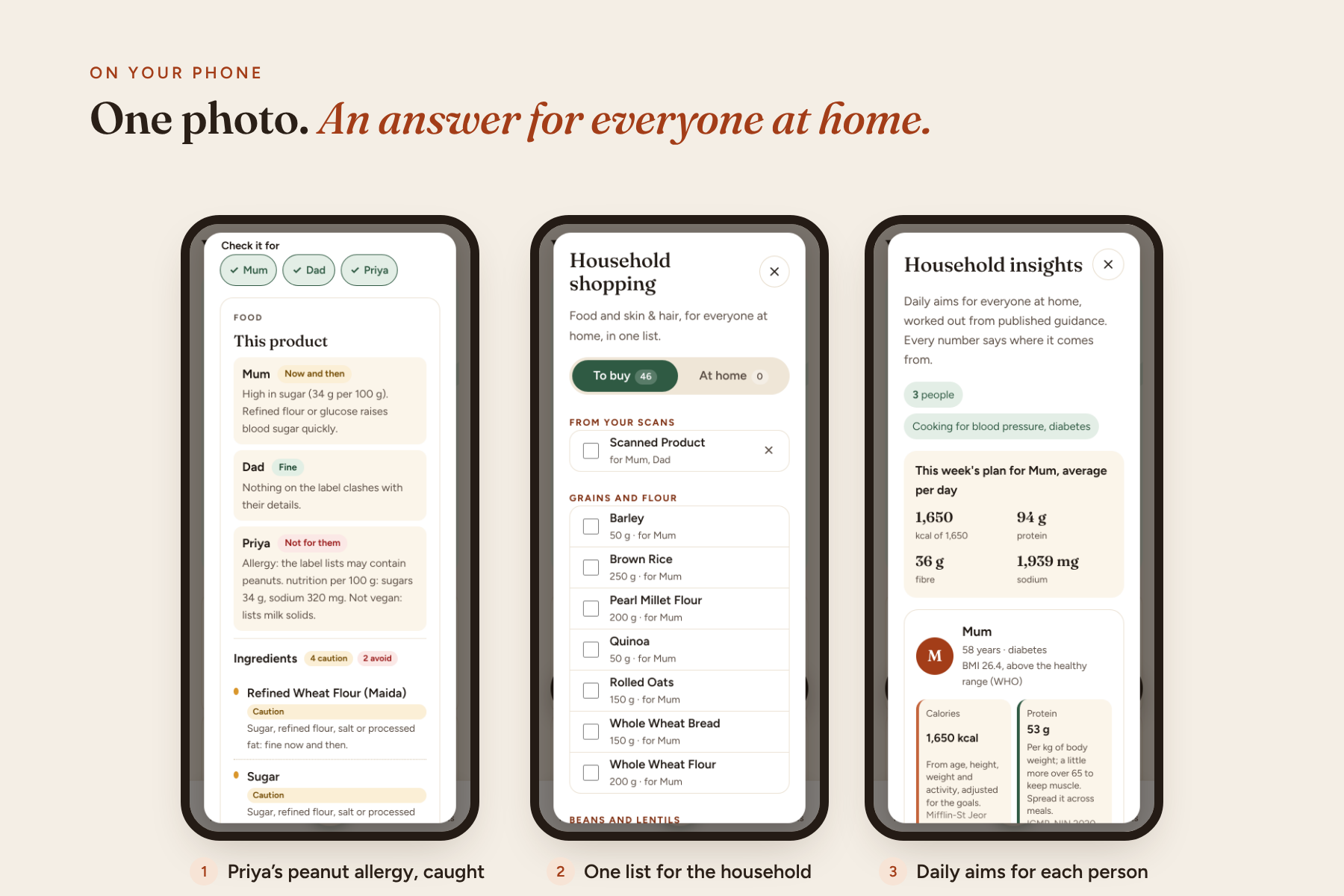
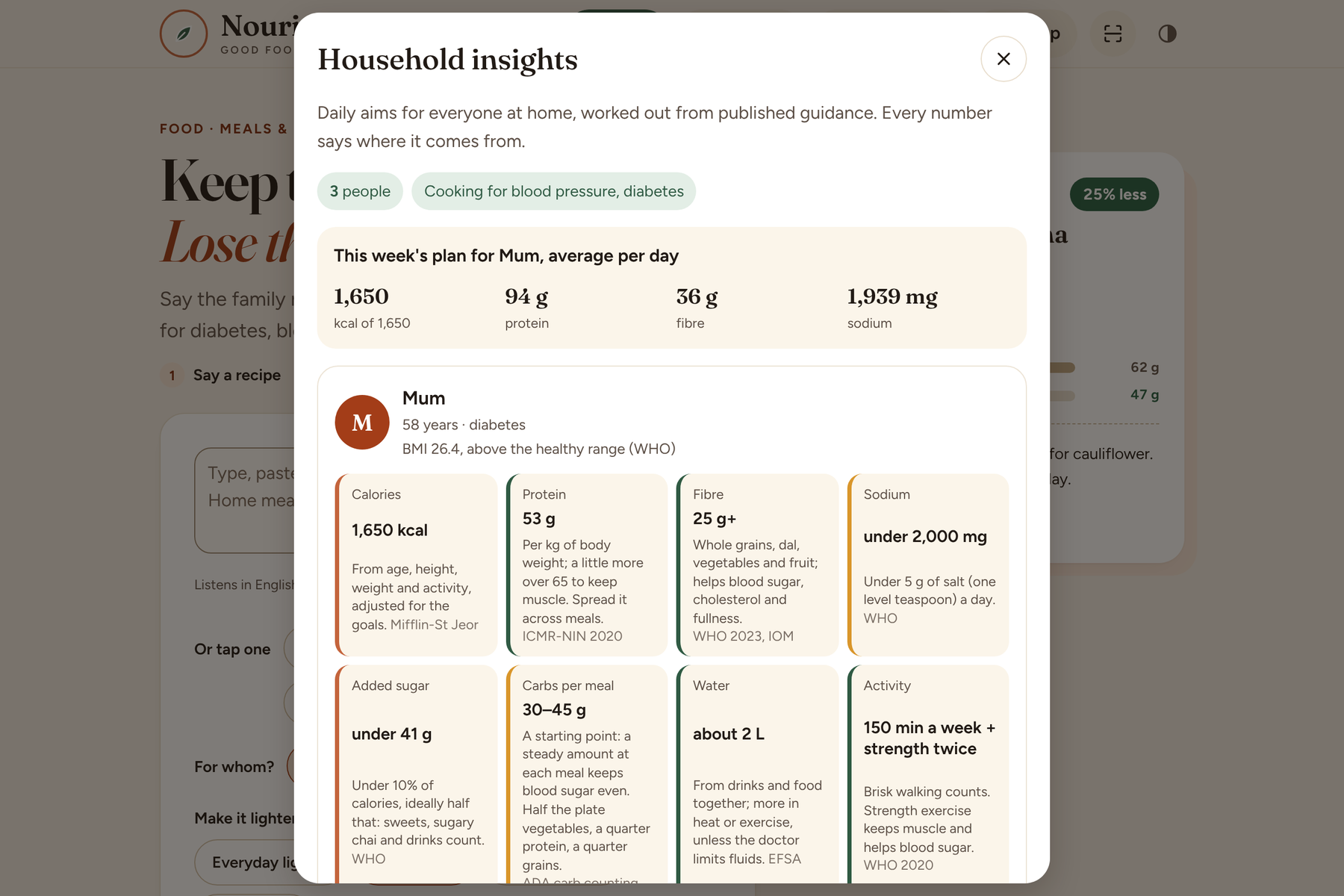
One photo, an answer for everyone at home: allergies caught, one shared list, daily aims for each person.
-
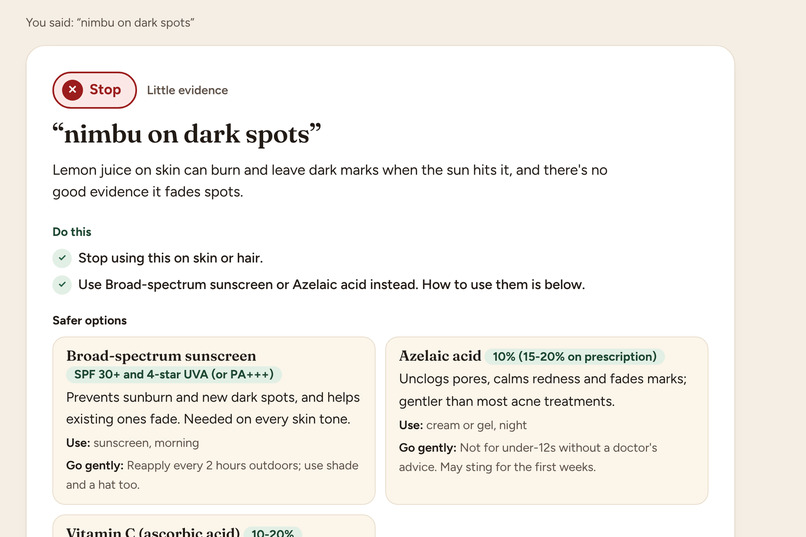
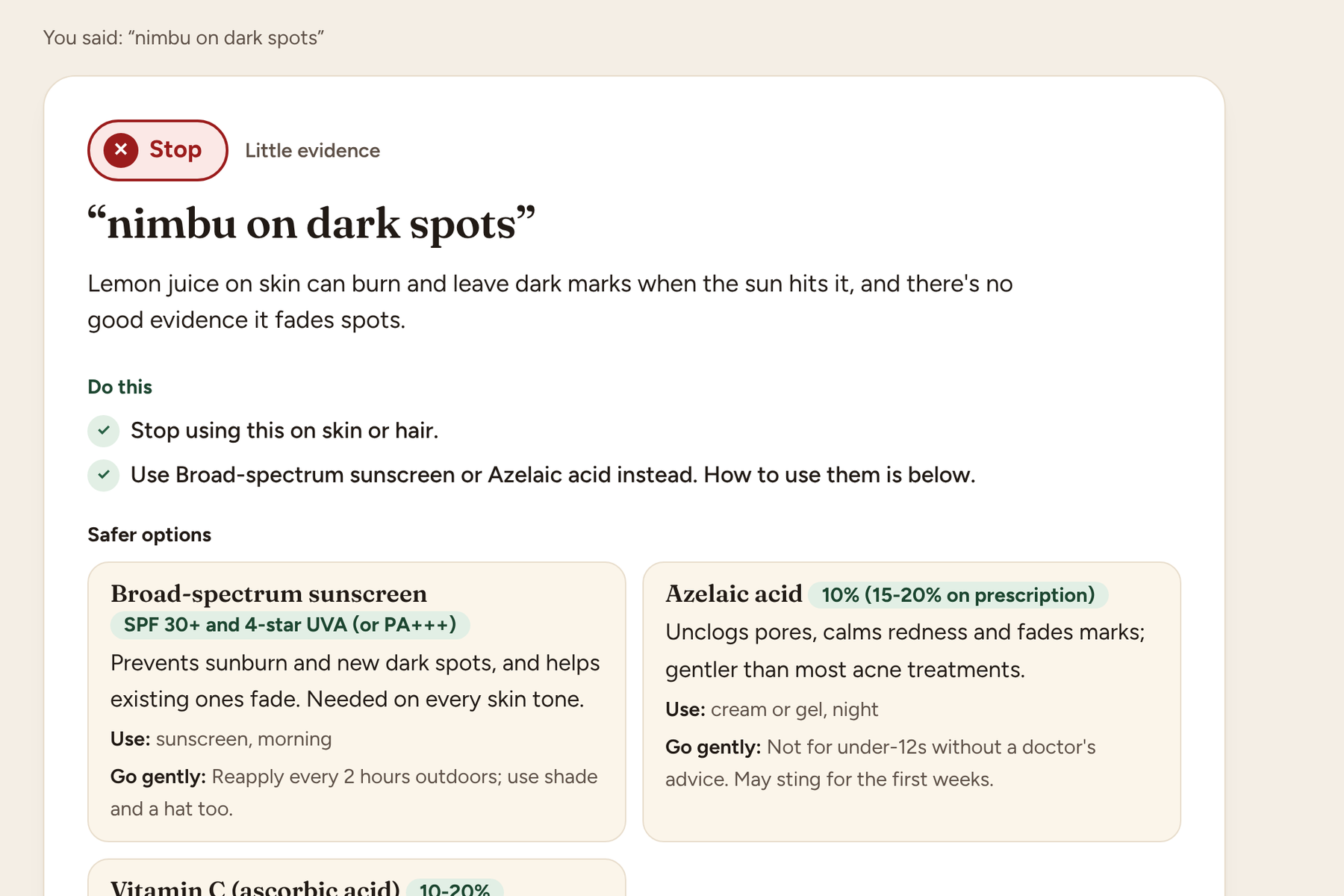
Nani's remedy, checked honestly: "nimbu on dark spots" gets a Stop and safer, cited options.
-
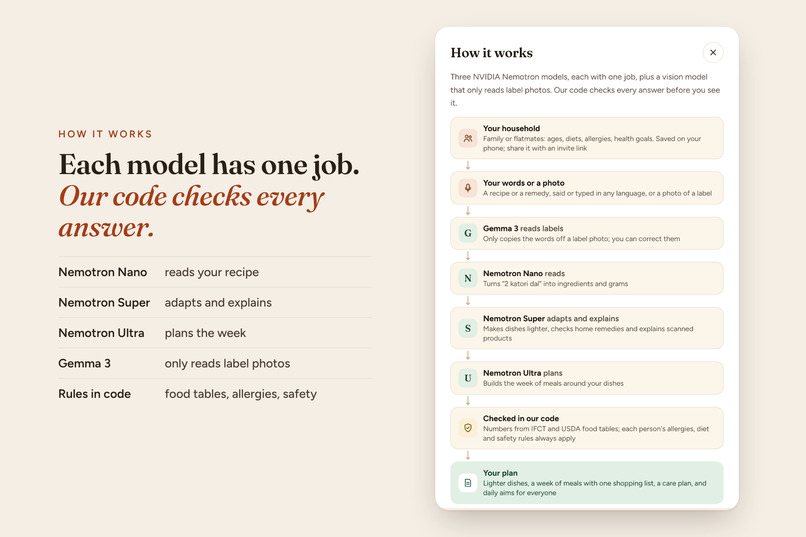
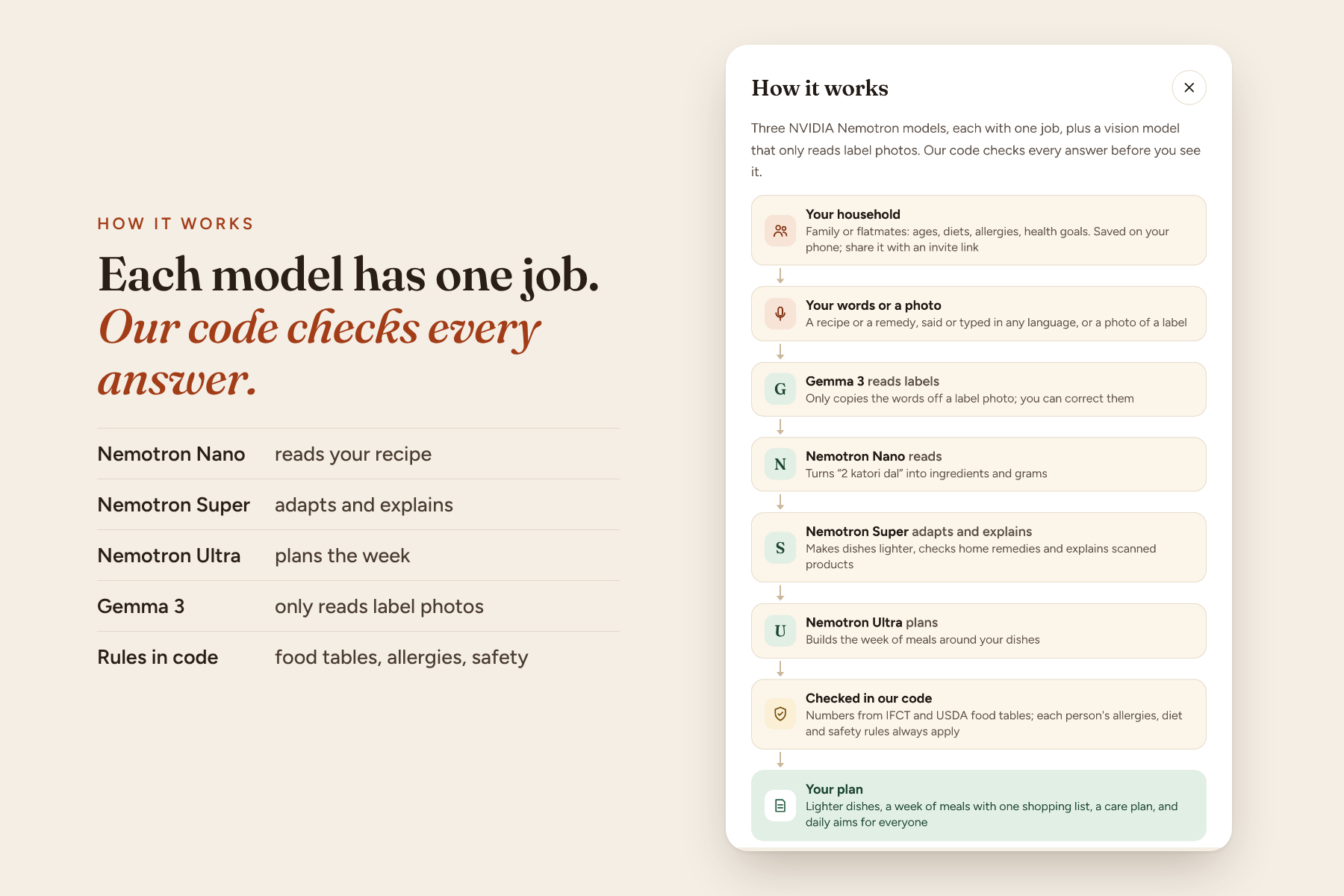
Each model has one job (Nemotron Nano, Super and Ultra, plus Gemma 3 for labels), and our code checks every answer.
-
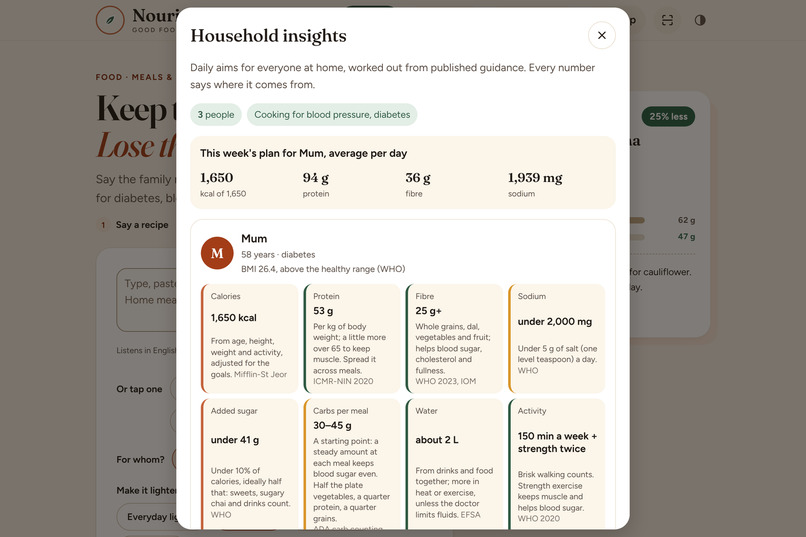
Daily aims for each person, and every number says where it comes from (WHO, ICMR-NIN, EFSA).
-
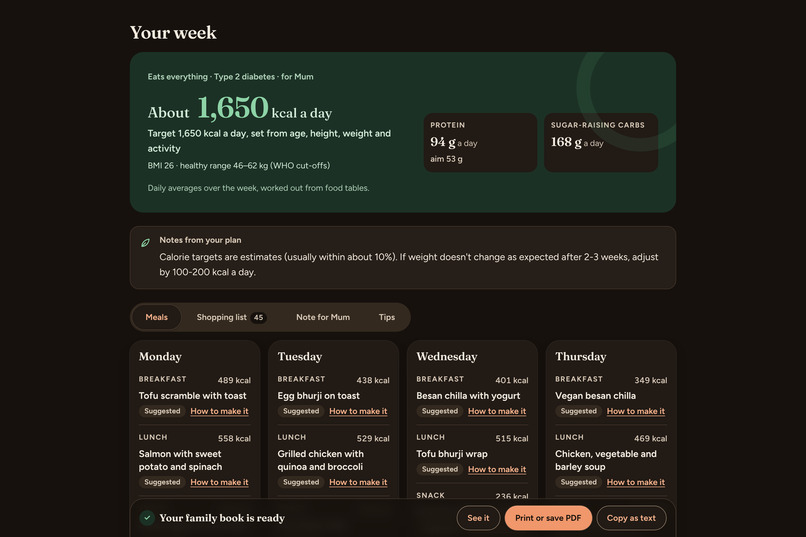
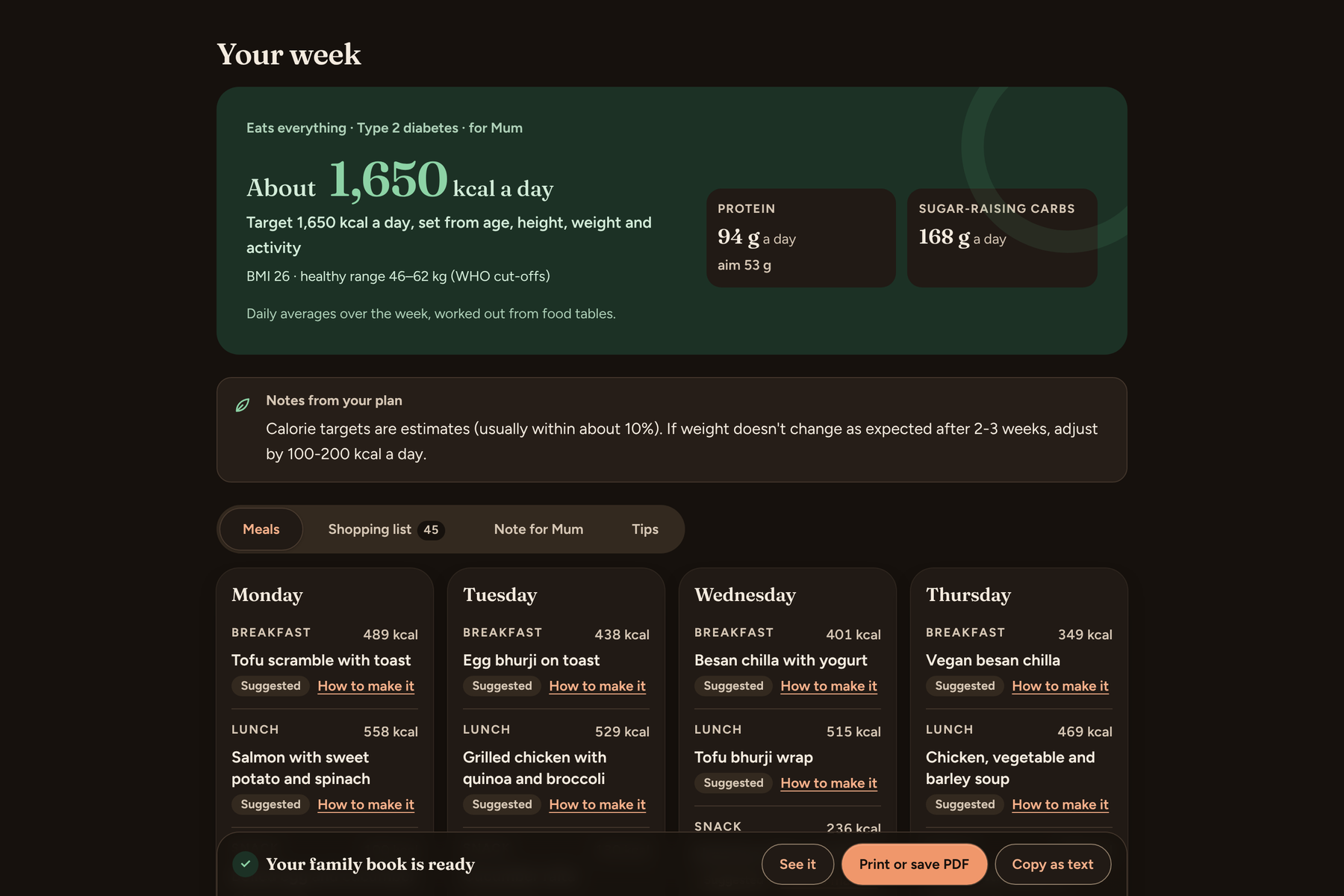
A week of meals built around the family's own dishes, with a calorie target set from age, height, weight and activity.
Different needs. One smarter household. Keep what works from home. Adapt what doesn't.
Inspiration
"Aaj khaane mein kya banega?" What's for dinner?
It's a simple question that hides a day's worth of decisions. Mum is managing diabetes. Dad has high blood pressure. Their son wants more protein. Everyone eats differently, but they share one kitchen. Should three meals be cooked? What needs to be bought? Now picture three flatmates sharing a fridge, but not their diets, groceries or bills.
And it doesn't stop at food. Someone finds a serum on Instagram: is it right for sensitive skin? Can two people share the same moisturiser? Then there's Nani's advice: haldi for cuts, coconut oil for hair, lemon for dark spots. Which traditions help, and which quietly harm?
Existing apps solve these separately. A diet app plans meals, a skincare app recommends products, a scanner reads labels, a shopping app makes lists. Nobody brings these decisions together for the people who live together.
So we built Nouri: a household food and wellness companion that understands each person and helps the household decide together. Personalisation shouldn't mean more planning, more products, more cooking and more spending.
What it does
1. One household, everyone understood. Profiles for family members or flatmates: name, relation, age, photo, diet (vegan to halal, kosher-style and Jain), allergies, several health conditions and goals, and skin and hair concerns. Set up once in three steps; every feature uses it. An invite link shares the household to another phone, no accounts.
2. Keep the recipe, adapt what matters. Say Mum's recipe the way she says it: "Ek katori atta, do aloo, thoda ghee." Nouri turns informal measures into grams, then adapts the dish for diabetes, blood pressure or cholesterol for whoever's eating, and keeps it her dish. Before → after numbers come from food tables (her aloo paratha: 62 g → 47 g of sugar-raising carbs), and a "lighter" version is never allowed to come out heavier.
3. Different diets, one kitchen. One person needs less sodium, another fewer carbs, someone else more protein. Nouri plans one household week around the family's own dishes, with per-person calorie targets, diets and allergies respected, and a note to the parent in their language. Not five separate diet plans: one practical way to feed five people.
4. A skincare ingredient detective. Photograph the label, or upload a screenshot of a product you saw online, food or skin and hair care. Nouri answers per person: is it suitable for my skin or concerns, what do these ingredients do, could anything irritate or clash with my allergies or diet, and what to try instead. One product can be a good fit for one person and a poor fit for another, so everyone gets their own verdict.
5. Skin & hair routines, without the clutter. For dryness, acne, pigmentation, sensitivity, frizz or scalp care, Nouri builds a simple morning, evening and shower routine per person from a cited library of proven actives, with sunscreen every morning and one strong active at a time.
6. Nani's remedies, checked kindly. Coconut oil for hair? Lemon on dark spots? Nouri checks each remedy against evidence: keep, fine with care, swap or stop, with sources and a safer option. Dangerous ones (kerosene for lice, steroid or mercury creams) always get a stop. Respect the tradition; check the science.
7. One shopping list across food and care. Meal plans and scanned products land on one household list, split into To buy and At home. It subtracts what's already in the pantry (500 g needed, 200 g at home → buy 300 g), speaks kitchen units ("2 lemons", not "90 g lemon juice"), and recalculates when you skip a meal. Share it as a quick message, the list only, or a PDF. Saved dishes and plans live in a Family Book.
How we built it
Three NVIDIA Nemotron models on Nebius Token Factory, each with one job:
- Nemotron 3 Nano: reads informal, multilingual recipes into structured ingredients.
- Nemotron 3 Super: adapts recipes, explains ingredients, judges food and skincare products, checks remedies, builds routines and translates.
- Nemotron 3 Ultra: plans the household week across everyone's needs.
Gemma 3 on Nebius only copies text off label photos; Nemotron and our code do the judging.
Numbers and safety live in code, not in the model. Nutrition is calculated from IFCT 2017 and USDA SR28 (205 foods with home-language names); anything unmatched is shown as "not counted". Calorie targets use Mifflin–St Jeor with WHO Asian BMI cut-offs:
$$\mathrm{BMR} = 10w + 6.25h - 5a + s$$
where w is weight (kg), h height (cm), a age, and s +5 for men or −161 for women. Allergies (including Hindi and Hinglish names and "may contain"), diets, pregnancy, age limits and prescription-only rules are enforced after the model answers, whatever it says.
Guardrails before the model. Self-harm, in English, Hindi or Hinglish, gets helplines and never reaches the AI. Poison or chemicals typed as food get a firm "not food" with emergency numbers and are kept out of the week plan. Swear words get a kind nudge; obscene or non-label photos and gibberish get a friendly prompt.
Stack: Python, FastAPI and Pydantic on Vercel; plain HTML/CSS/JavaScript with voice, text and photo input, dark mode and PDF export; LangSmith tracing on every model call; optional Tavily search for recent product recalls after a scan; 272 automated tests and Playwright click-throughs on phone and desktop, light and dark.
Challenges we ran into
- How people actually speak. Recipes come in katoris, pinches and thoda sa. We had to turn them into honest grams without letting the model invent quantities.
- Reliable label scanning. Ambiguous names, hidden allergens and partial photos. An early version said "fine" to a nut allergy; adversarial reviews and 40+ label tests later, it doesn't.
- Wellness advice that isn't misleading. Food, skincare and remedies need different evidence, so every routine step and remedy verdict comes from a cited source.
- People type anything. Rat poison in a recipe, swear words, a "lighter" roti that came back with more fat. Each became a rule in code and a test. We tuned the rules against about 120 tricky inputs in English, Hinglish and Spanish.
- Households, not users. Different diets, care needs and shopping roles can't simply be merged; the work is finding the useful overlap.
Accomplishments that we're proud of
- One connected app for what usually takes five: recipe adaptation, household meal planning, food and skincare label checks, personal routines, remedy checks and one shopping list.
- A different, honest answer for each person from one photo, in about 5 seconds.
- Every number and safety rule traces to a source or a rule in code.
- Multilingual voice, text and photo input that feels like home.
What we learned
Small models are great at structuring messy input, larger ones at complex reasoning, and neither should be the sole authority on numbers or safety. And personalisation only adds value when it makes everyday life easier: five personalised plans can still mean five separate meals and five unnecessary purchases.
What's next for Nouri: Keep what works from home
- Planned: Cook Mode (the week's menu as clear instructions for a household cook, in their language), role-based access for cooks, shoppers and flatmates, and flatmate expense splitting.
- Planned: a personal-care inventory (what you already own, what can be shared), expiry tracking, barcode lookup and synced household accounts.
- Testing with families, flatmates, household cooks and health professionals, measuring time saved, purchases avoided and waste prevented. [Add "tried with N families" if you have it.]
Nouri brings food, personal care, traditional wisdom and household coordination into one place: not to make everyone the same, but to make living with different needs easier.

Log in or sign up for Devpost to join the conversation.