-
-
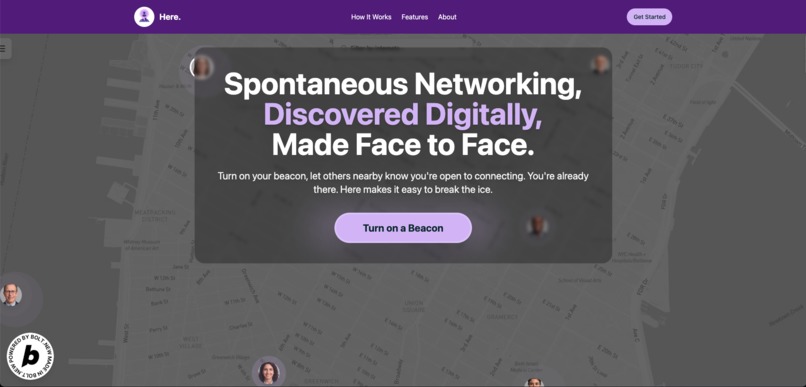
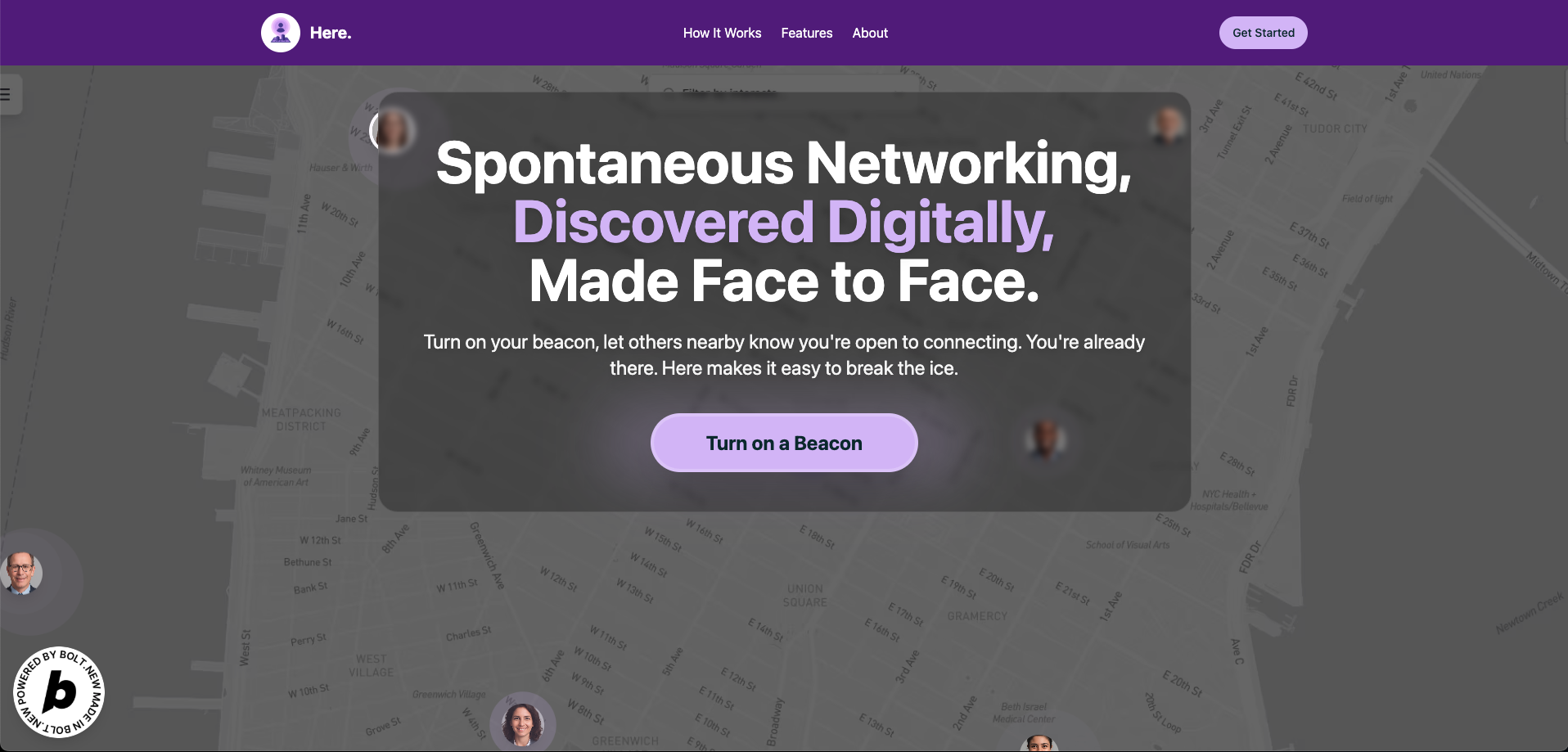
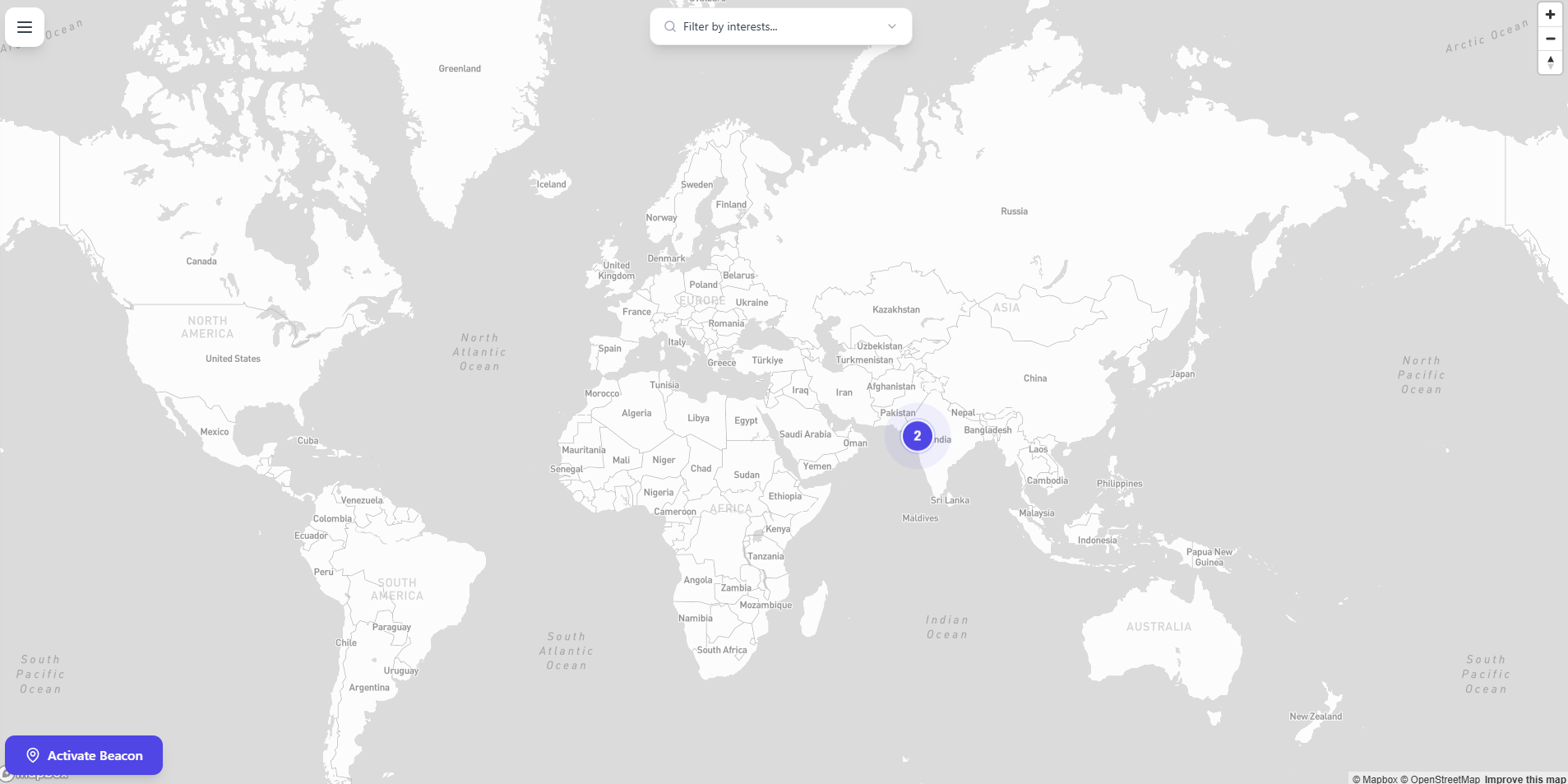
Landing page
-
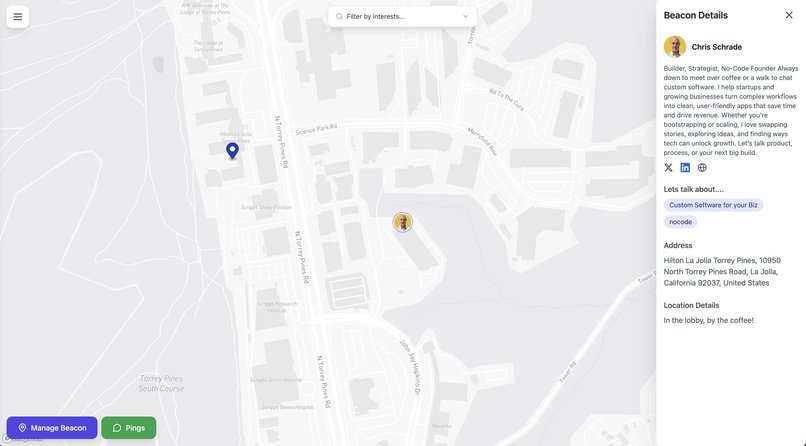
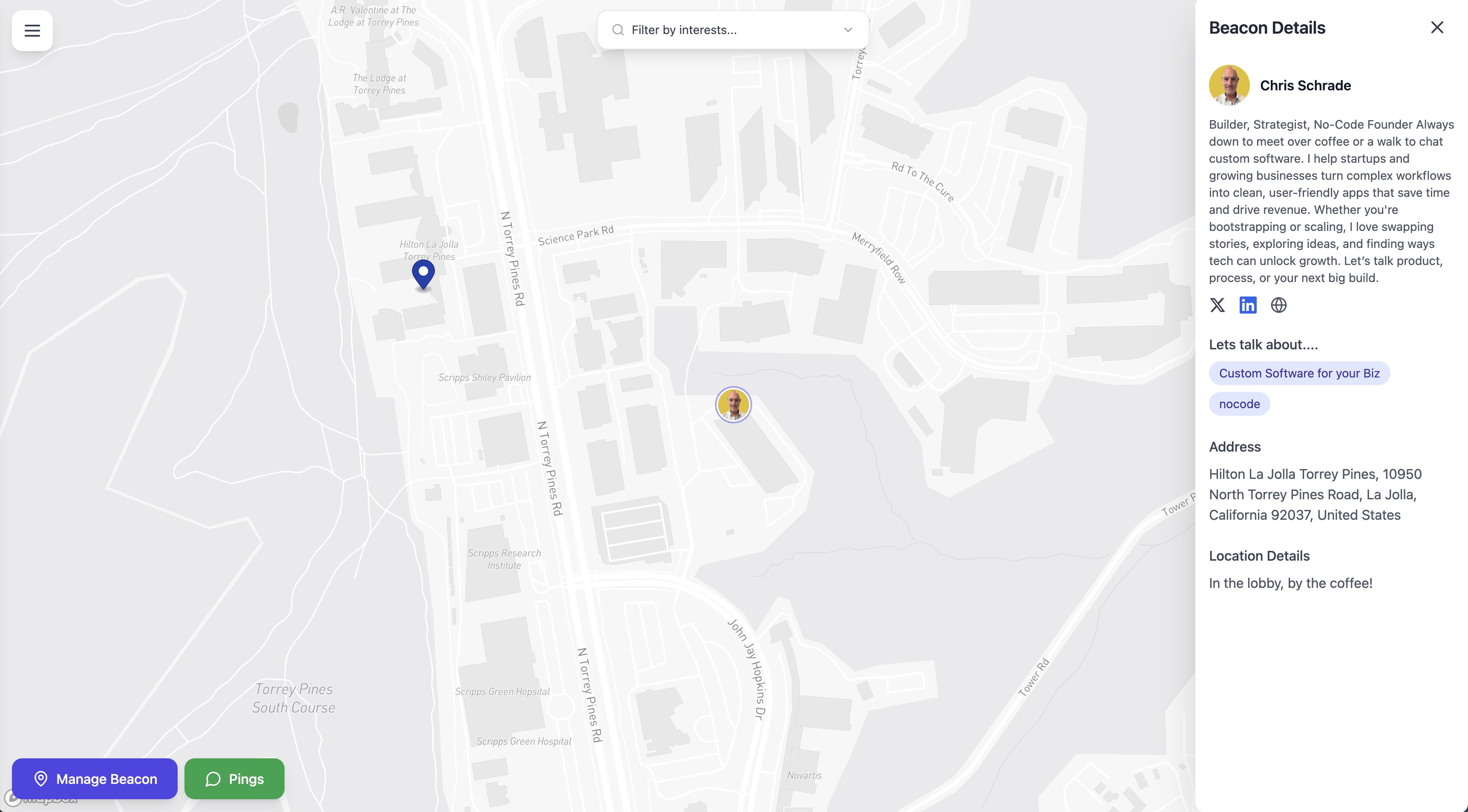
1st beacon sent out by one of the creators
-
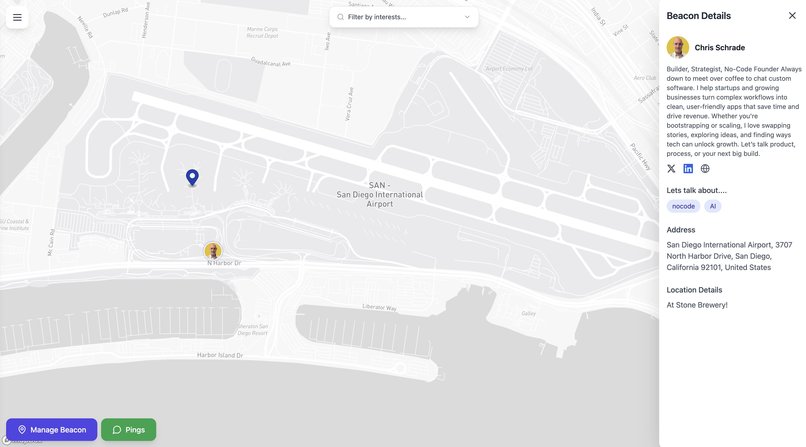
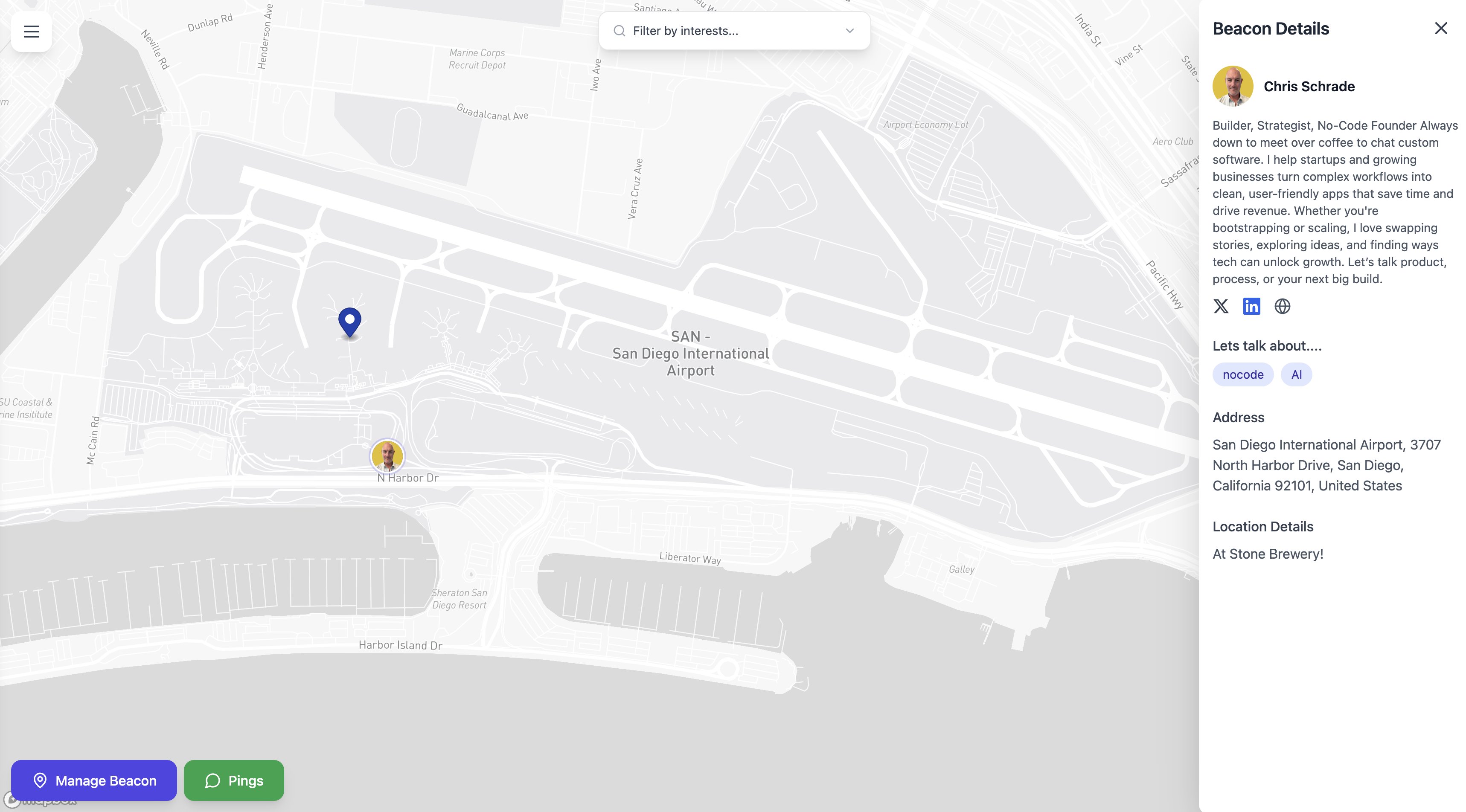
Beacon at the airport!
-
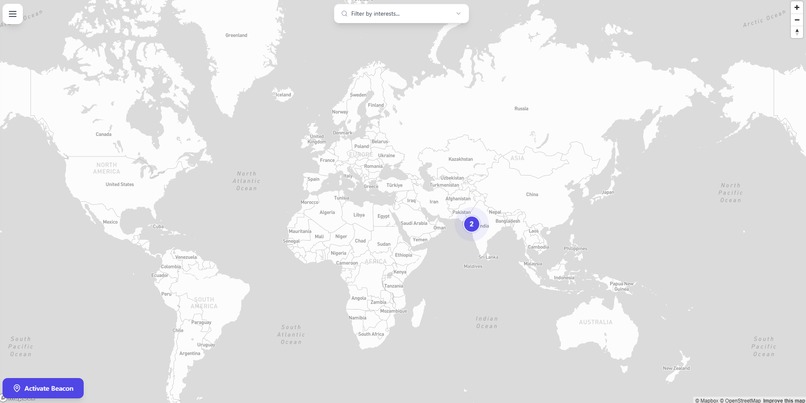
Organic beacons starting to pulse in India!
-
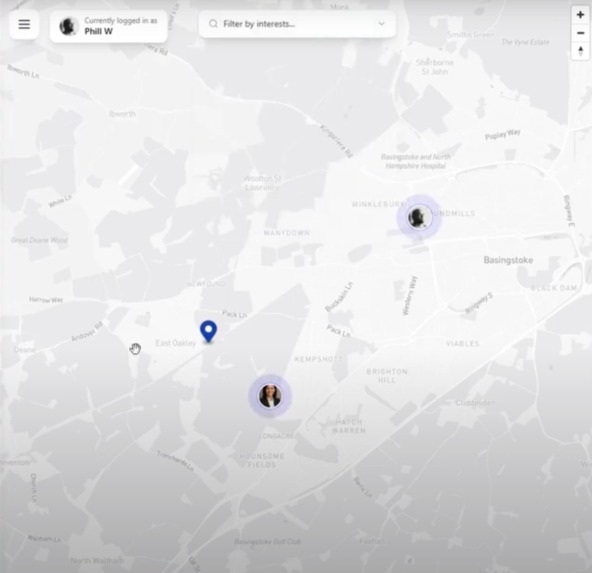
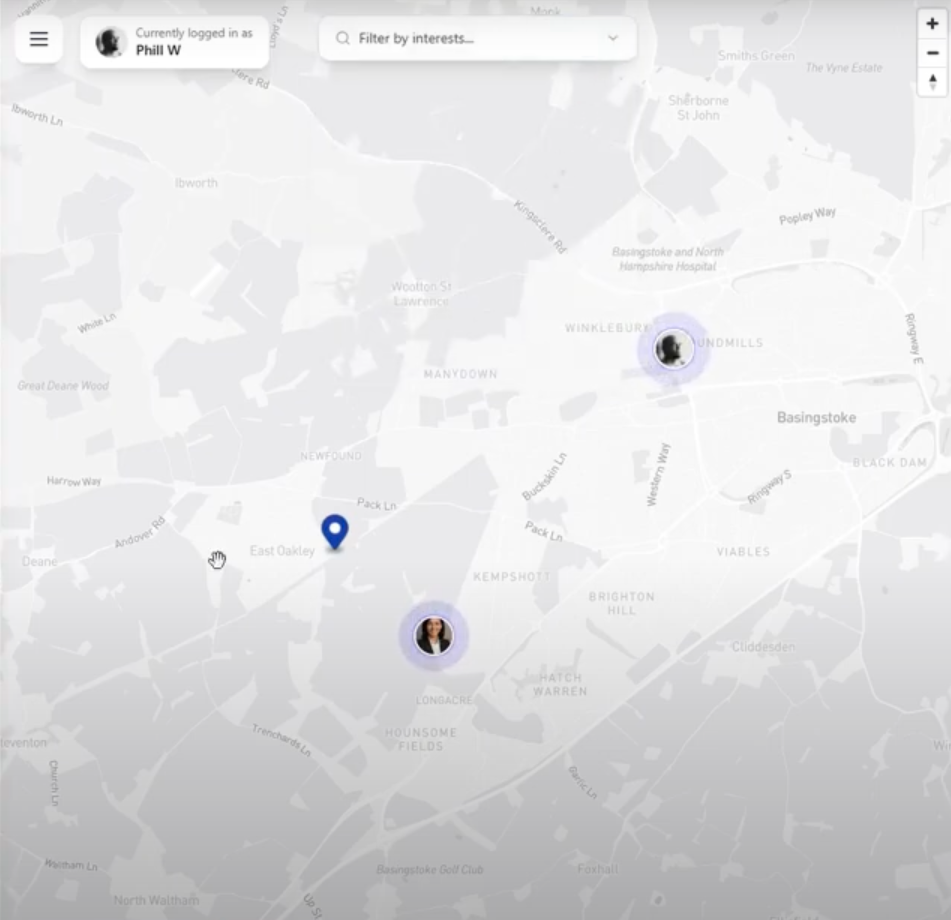
People in the area!
About the Project
We built Here. to solve a familiar problem. Whether you are working in a café, studying in a library, or attending an event, it is often hard to meet the people around you. We wanted to make that easier. Here. creates quick, in-person networking opportunities by letting users broadcast a beacon that says, “I am open to connect.”
What Inspired Us
The idea came from everyday experiences. We found ourselves in shared spaces filled with like-minded people, but with no easy way to break the ice. Social platforms are great for digital connection, but we were after something more human. We wanted to create an app that bridges the gap between the digital and physical worlds—starting online and ending in real life.
What We Learned
Designing for real-world interaction taught us a lot about simplicity, privacy, and intent. We learned how to:
Respect user comfort
Real location data is only shared after both sides agree to meet.
Keep things fast and friendly
Beacon creation takes seconds. There is no heavy profile setup or chat history to manage.
Build trust from the start
Social links, short bios, interest tags, and a post-meetup feedback system help users make informed decisions.
We also paid close attention to how different personality types engage in public. Introverts, neurodiverse users, and first-time networkers helped shape the flow and tone of the product.
How We Built It
Frontend
We used React with Vite and Tailwind for a fast, lightweight user experience.
Backend
Supabase handles authentication, data storage, and all core logic.
Maps and Places
Mapbox and the Google Places API allow users to select locations without exposing their exact coordinates.
Deployment
The app is deployed with Netlify and fully aligned with the Bolt hackathon stack.
Challenges We Faced
Privacy without complexity
We did not want to expose anyone’s real-time location. Instead of live tracking, we used a randomized radius so that beacons show up within one kilometer of the actual meetup point. The real location is only shared after acceptance.
Managing beacon states
Users can pause, cancel, or complete beacons at any time. If a meetup includes more than two people, the logic gets more complex. Making that feel seamless required careful planning.
Getting AI to cooperate
It helped with speed, but it was not always smooth. Sometimes it ignored instructions. Sometimes it overwrote working code. We had to keep a close eye on its output and learn where to trust it, and where to take the lead ourselves.
Building something that feels human
We intentionally avoided the patterns of dating apps or social feeds. There is no infinite scroll, no algorithm, no long-winded messaging. Just a beacon, an invitation, and a real-world meetup.
Built With
- mapbox
- react
- tailwind
- typescript
- vite


Log in or sign up for Devpost to join the conversation.