-
-

Hera App logo ( The Virtual Doctor)
-

Home App the VIrual Doctor
-
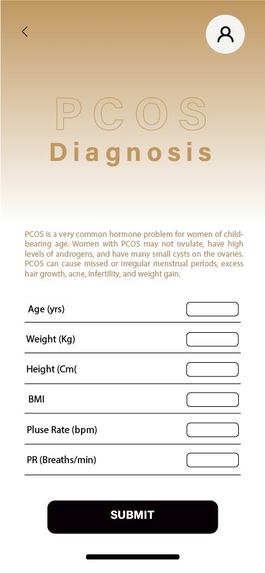
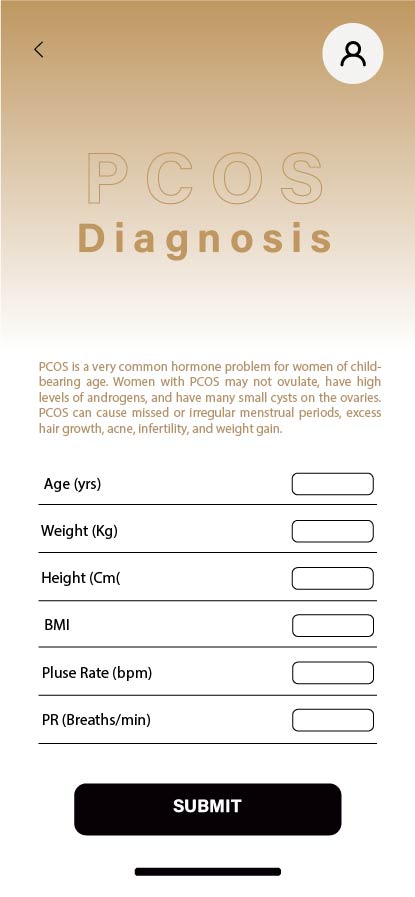
Example for some of date required
-
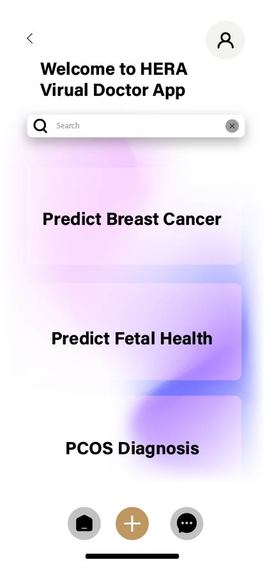
Choose one of this problems



Inspiration:
The inspiration for this project stemmed from the desire to address the gender-specific health disparities faced by women worldwide. The goal was to harness the power of AI and machine learning to improve women's health outcomes, specifically focusing on breast cancer detection, fetal health assessment, and self-diagnosis of Polycystic Ovary Syndrome (PCOS).
What it does:
The project aims to develop accurate and reliable machine learning models for early detection of breast cancer, predicting fetal health issues using CTG data, and empowering women to self-diagnose PCOS from home. These models leverage modern technology and AI to provide timely interventions, convenience, and peace of mind to women.
How we built it:
The project utilized a machine learning approach, specifically the random forest algorithm, to build the models. Relevant datasets containing data on breast cancer, PCOS, and fetal health were collected from various sources. The data was preprocessed by cleaning, normalizing, and splitting it into training and testing sets. The random forest algorithm was then implemented to train the models using the training data. The performance of the models was evaluated using metrics such as accuracy, precision, recall, and F1-score. The models were fine-tuned by adjusting hyperparameters, and validation was performed using independent test sets.
Challenges we ran into:
The project faced several challenges throughout its development. One significant challenge was the limited availability of suitable datasets with the required data. Another challenge was achieving high accuracy while dealing with the unique characteristics and complexities of breast cancer, PCOS, and fetal health. Additionally, ensuring ethical considerations such as privacy, data protection, and informed consent posed challenges that had to be addressed.
Accomplishments that we're proud of:
The project achieved significant accomplishments, including high accuracy rates in the developed models. The breast cancer detection model achieved 96% accuracy, enabling early prediction of malignancy and effective treatment. The fetal health assessment model attained 95% accuracy, facilitating early identification of potential issues and reducing risks to the fetus. The self-diagnosis model for PCOS obtained 93% accuracy, empowering women to screen for PCOS at home and aiding timely intervention. The project also raised awareness of technology's potential in women's health and contributed to the advancement of medical technology.
What we learned:
Throughout the project, the team gained valuable insights and knowledge. They learned about the importance of collecting relevant and diverse datasets for training machine learning models. The preprocessing of data, including cleaning and normalization, was crucial for model performance. The team also learned about the benefits and challenges of using the random forest algorithm. Ethical considerations, such as privacy and informed consent, were highlighted and addressed during the project.
What's next for HERA:
For future development, the project team aims to further optimize and refine the models to enhance their accuracy and usability. They plan to explore feature extraction techniques and seek additional datasets to improve the models' performance. Additionally, they intend to continue promoting awareness of technology's potential in women's health and work towards early intervention strategies for gender-specific diseases.
Built With
- amazon
- aws)
- azure
- cloud
- gcp)
- ibm
- keras
- machine-learning
- microsoft
- mongodb
- mysql
- platform
- postgresql
- python
- pytorch
- scikit-learn
- services
- sqlite
- tensorflow
- web

Log in or sign up for Devpost to join the conversation.