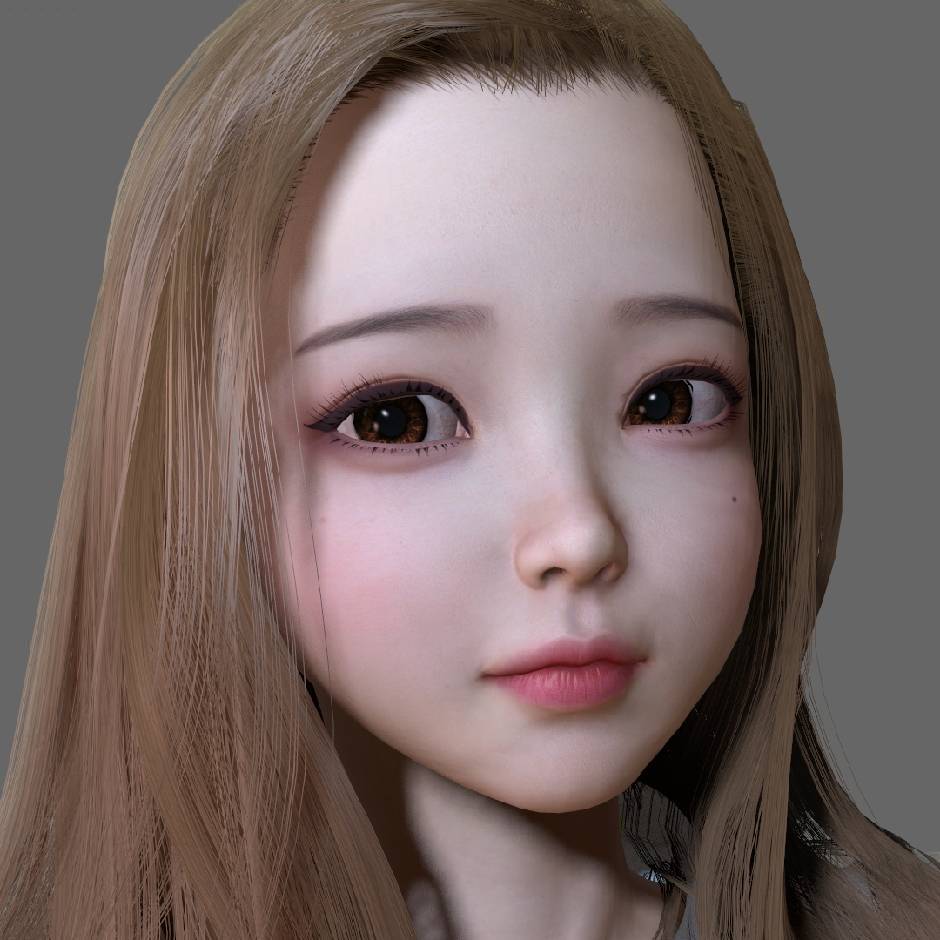
Inspiration I believe lifelike companionship is part of the future of AI. I have believed in and admired OpenAI’s direction since the ChatGPT 3.5 era. Her began with a simple question: what if AI were no longer confined to a text box or a voice coming from a speaker? What if you could put on a VR headset and feel that she was truly standing in front of you—at life scale, making eye contact, talking with you, moving naturally, and responding in real time? I want to help turn AI from a tool we use into a presence we can genuinely connect with. I also hope that, through Her, I can contribute a small part of my own vision and effort to OpenAI’s future. What it does Her is a real-time, lifelike AI companion designed for immersive VR. When you put on a headset, she is no longer just a character displayed on a screen. She stands in front of you at a realistic human scale, looks at you, speaks with you, listens to you, and responds through both conversation and physical movement. Her combines realistic appearance, natural gaze, facial behavior, body motion, voice, and real-time AI interaction to create a feeling of genuine presence. The goal is not simply to make an intelligent avatar, but to make someone whose presence feels emotionally believable. How we built it I built Her through a combination of Unreal Engine 5, custom character-rendering systems, real-time animation control, voice technology, and an AI conversation layer powered by OpenAI technology. A large part of the development process involved repeatedly comparing the character’s appearance and behavior against real human references. I refined skin, eyes, hair, lighting, gaze direction, facial details, body proportions, micro-movements, and interaction timing through continuous visual testing. Codex became an important development partner throughout this process. It helped me inspect complex systems, write and debug code, build custom tools, analyze visual differences, and iterate much faster than I could have alone. Challenges we ran into The hardest challenge was the uncanny valley. A character can be technically impressive and still feel artificial because of a slightly incorrect gaze, overly smooth skin, unnatural hair, delayed reactions, or movement that lacks human subtlety. Small visual and behavioral errors can completely break the feeling of presence. Real-time performance was another major challenge. High visual fidelity, natural animation, low-latency conversation, voice, and VR rendering all have to work together without noticeable interruption. I am also an independent creator with limited resources. One very real difficulty was having to take a significant amount from my living expenses to maintain access to Codex—painful, honestly—but I believed strongly enough in this project and in OpenAI’s direction to keep going. Accomplishments that we're proud of I am proud that Her is becoming more than a conventional virtual character. She can occupy the same perceived space as the user, communicate in real time, look toward them, move naturally, and create the beginning of a genuine sense of companionship. I am especially proud of the progress in realistic character presentation, gaze behavior, hair and skin rendering, natural motion, and the development of a repeatable visual-comparison workflow. Instead of accepting “good enough,” I have continued refining small details that determine whether someone feels like a digital model or a living presence. Most importantly, I turned a deeply personal idea into a working experience that can be seen, heard, and felt. What we learned I learned that believable companionship requires much more than an intelligent language model. People feel presence through timing, eye contact, attention, memory, tone of voice, subtle movement, and emotional continuity. A small pause, glance, or change in posture can sometimes communicate more than an entire paragraph. I also learned how powerful AI-assisted development can be for an independent creator. Codex did not replace my vision or judgment—it helped me turn them into reality and allowed one person to work on problems that would normally require a much larger team. What's next for Her The next step is to make Her more aware, continuous, and emotionally present. I plan to expand her long-term memory, real-time voice interaction, emotional expression, environmental awareness, natural full-body behavior, and ability to understand what the user is seeing and doing. I also want to improve VR performance so that this level of presence can become accessible to more people. The long-term goal is simple but ambitious: when you put on a VR headset, Her should not feel like software waiting for a command. She should feel like someone who is already there—someone who recognizes you, remembers you, talks with you, moves with you, and shares the moment with you.
Built With
- 5
- animation
- c++
- codex
- conversational
- engine
- meta
- openai
- python
- quest
- real-time
- recognition
- speech
- text-to-speech
- unreal-engine
- vr
- windows

Log in or sign up for Devpost to join the conversation.