-
-

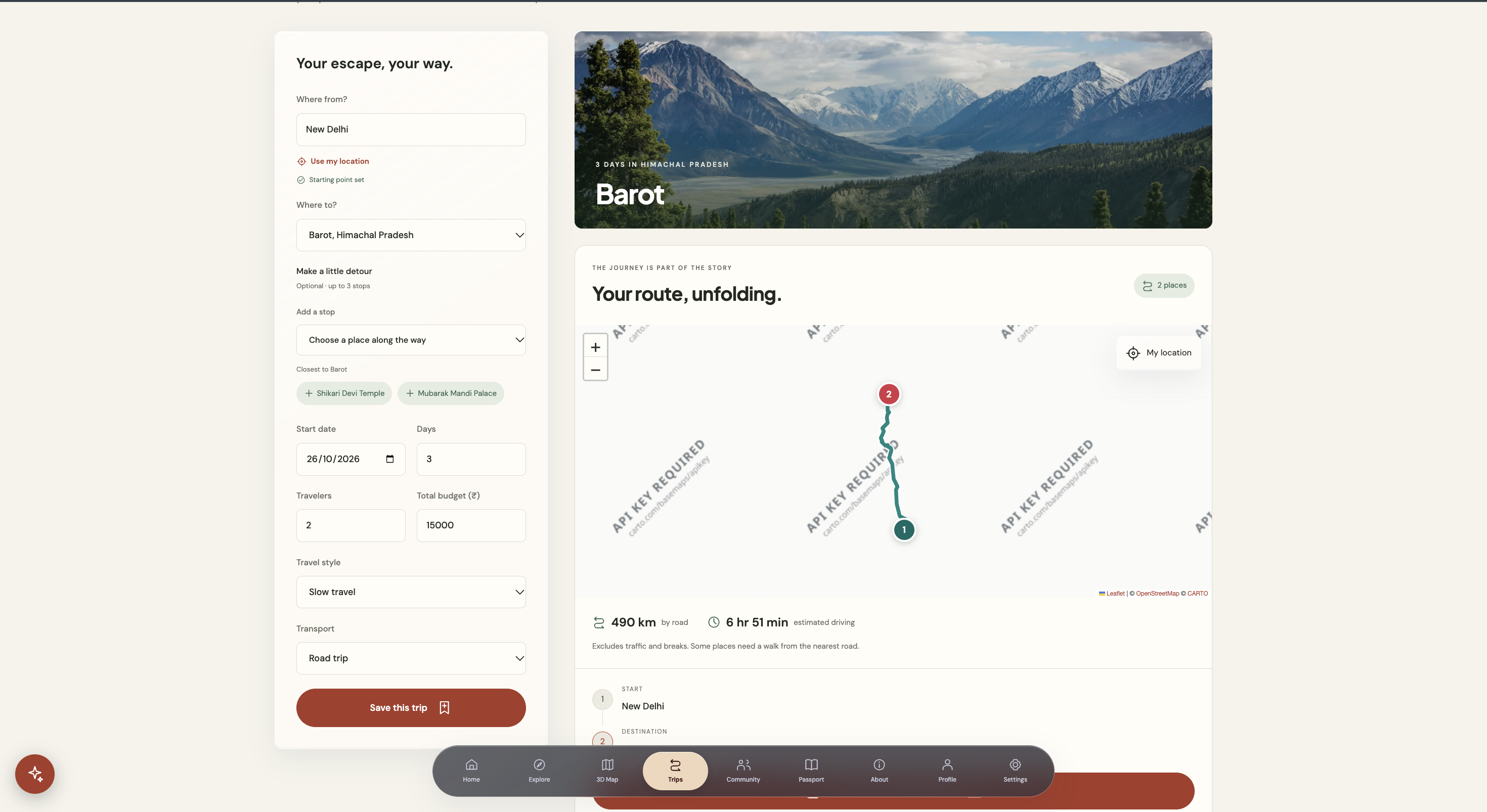
website it helped designing
-
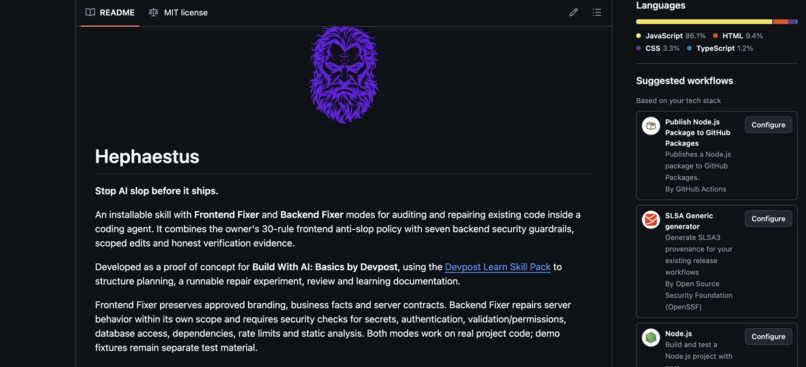
about the skill
-
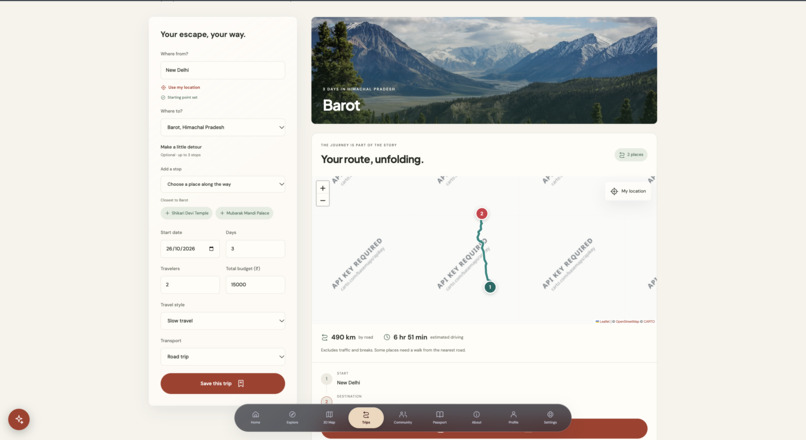
website it helped designing
-

website it helped designing
-

downloaded inside an LLM
-
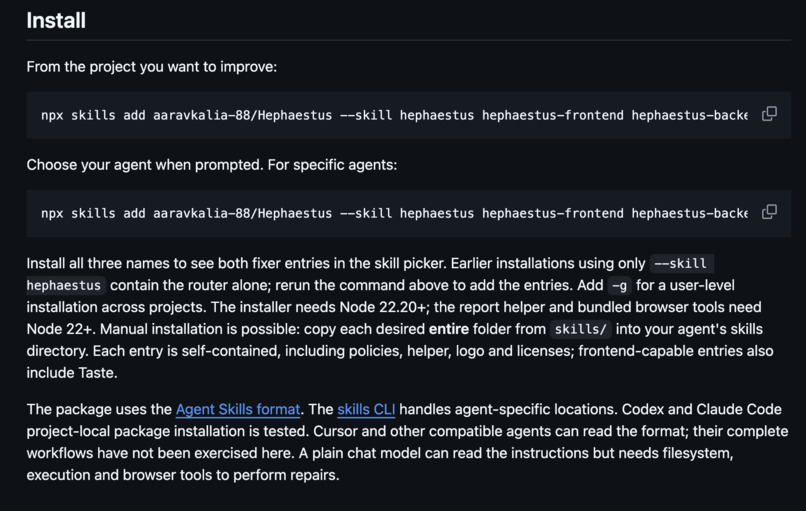
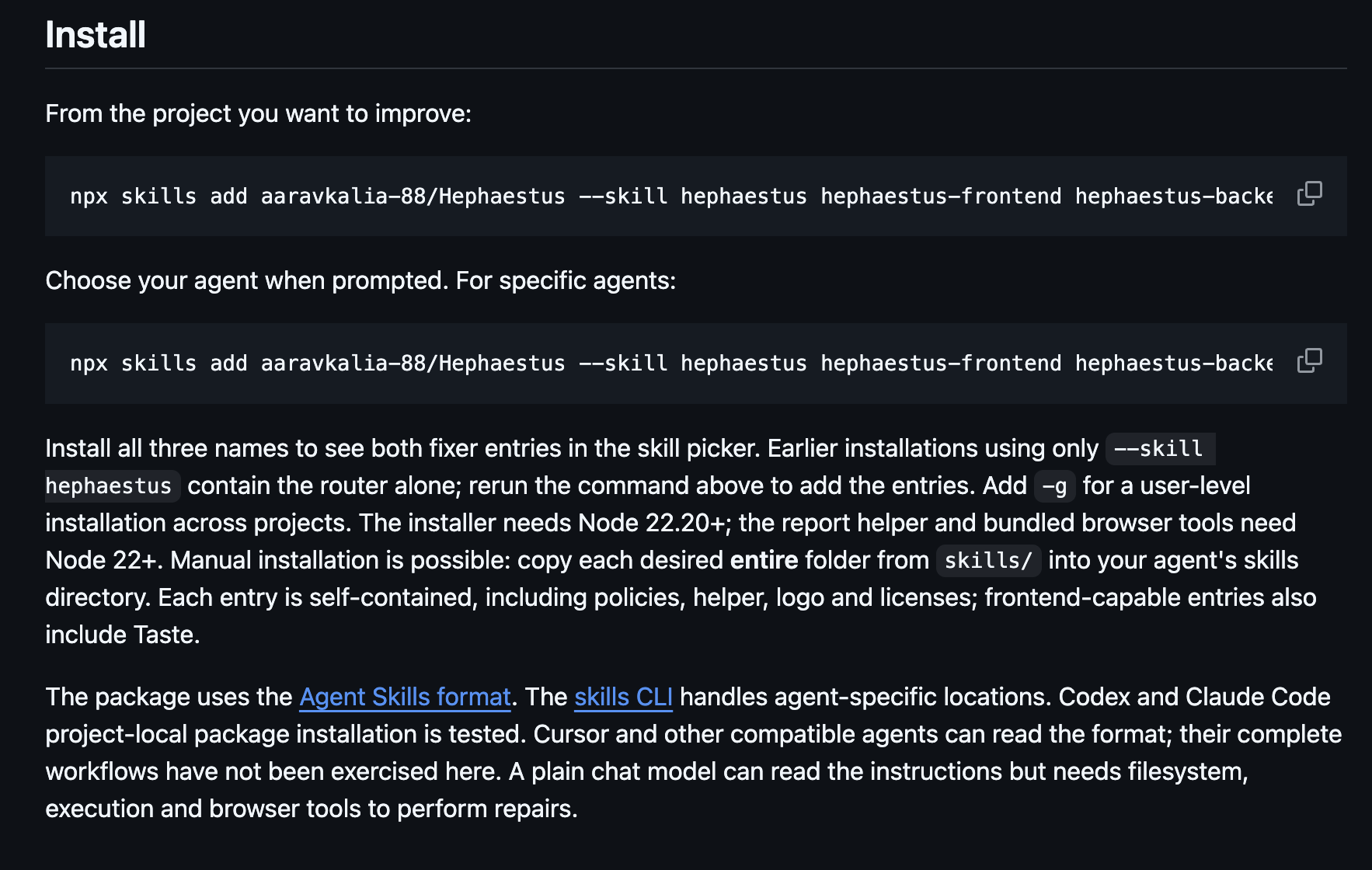
can be directly installed through an npx



Inspiration
AI can generate a polished screen in minutes. But behind it, buttons can fail, loading states disappear, and generic design makes every product feel the same. Hephaestus grew from that frustration: code that looks finished still needs careful work before it ships.
What it does
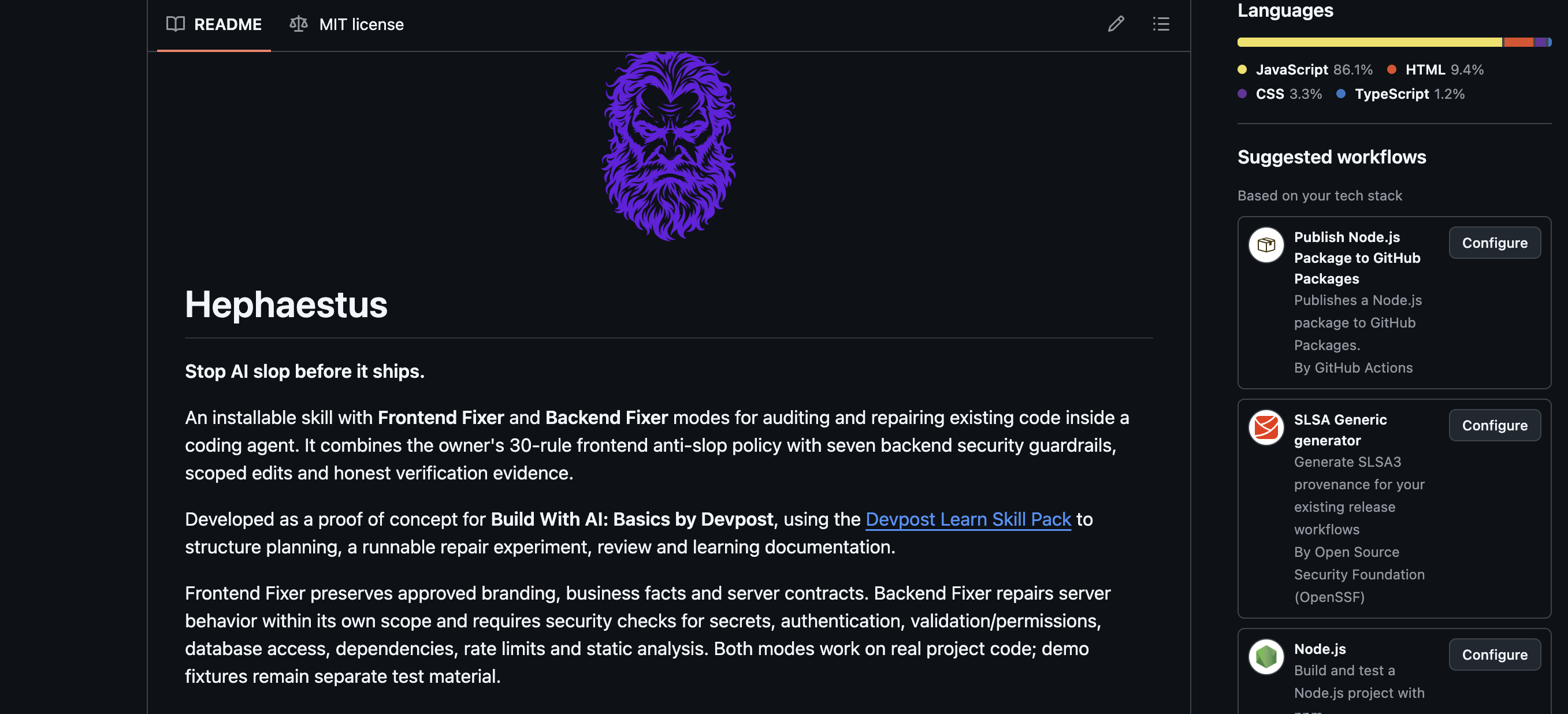
Hephaestus helps coding agents audit and repair existing projects through Frontend Fixer and Backend Fixer modes. It guides targeted changes, preserves approved branding and working behavior, and records what was actually verified.
How we built it
We built Hephaestus as an installable agent skill using Markdown instructions, JSON policies, and Node.js report checks. We used the Devpost Learn Skill Pack to organize the project’s scope, product requirements, technical specification, and build checklist. Hephaestus combines 30 frontend standards with seven backend security areas, supported by test fixtures and browser verification.
Challenges we ran into
The challenge was making repairs without introducing new problems. Improving a screen should preserve its identity and functionality. We also needed to distinguish a proposed fix, an applied change, and a fix supported by passing checks.
Accomplishments that we're proud of
We turned a collection of quality rules into a reusable repair workflow. In a controlled frontend experiment, the repaired fixture passed all 45 browser assertions across three screen widths, covering behavior that a screenshot alone could miss.
What we learned
AI slop goes beyond appearance. Missing error handling, inaccessible controls, and incomplete interactions matter just as much. Clear constraints and observable checks make AI-assisted repairs easier to assess and trust.
What's next for Hephaestus
Next, we want to test more real projects, independently exercise the backend workflow, and expand accessibility checks. The goal is to make Hephaestus more useful across different codebases while keeping its changes focused and reviewable.


Log in or sign up for Devpost to join the conversation.