Inspiration
While reading articles and watching videos about Thalassemia, one thing hit hard – blood transfusions are literally life support every few weeks. The stress families go through to find the right blood donors, especially during emergencies, is heartbreaking. What stood out even more was how many parents had no idea they were both carriers until their child was diagnosed with Thalassemia. That felt deeply unfair – and we knew technology could change that. That’s how HemoGenesis AI was born.
What it does
HemoGenesis AI solves two big gaps:
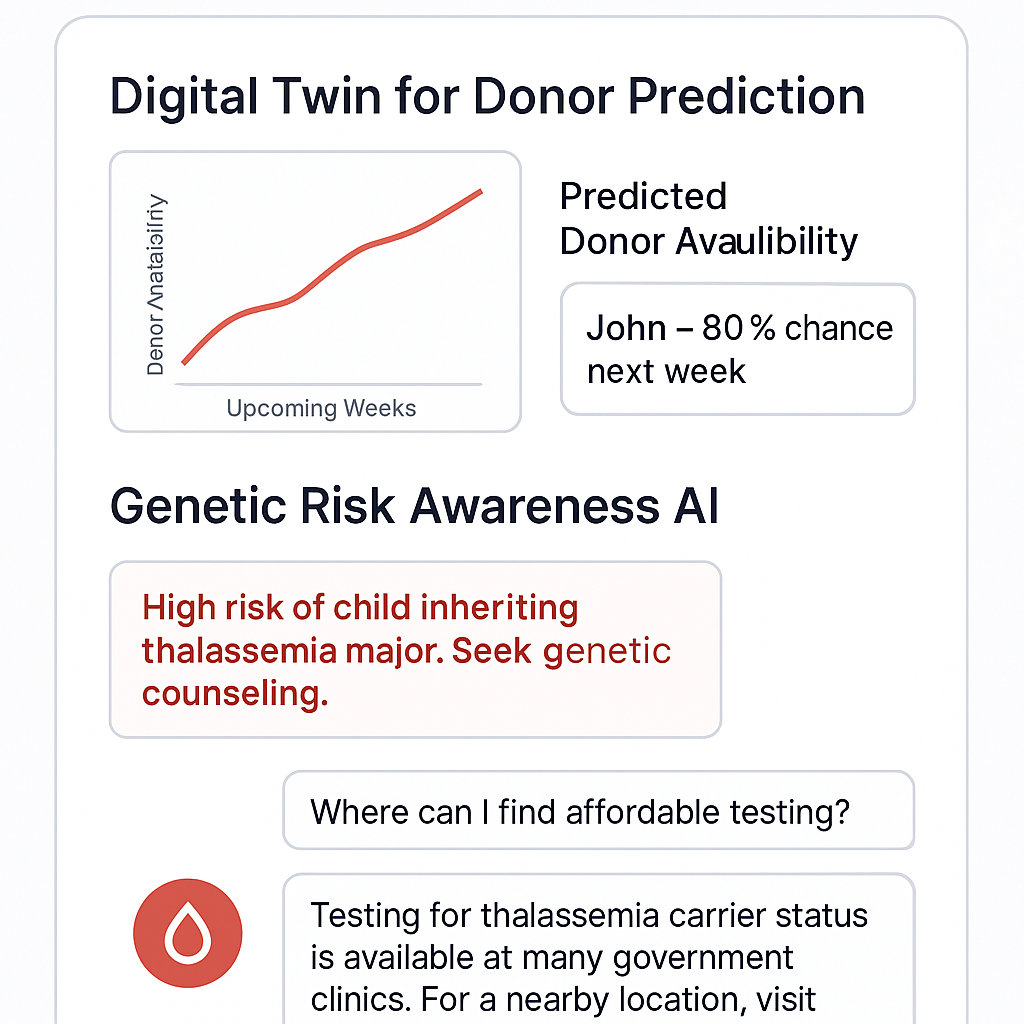
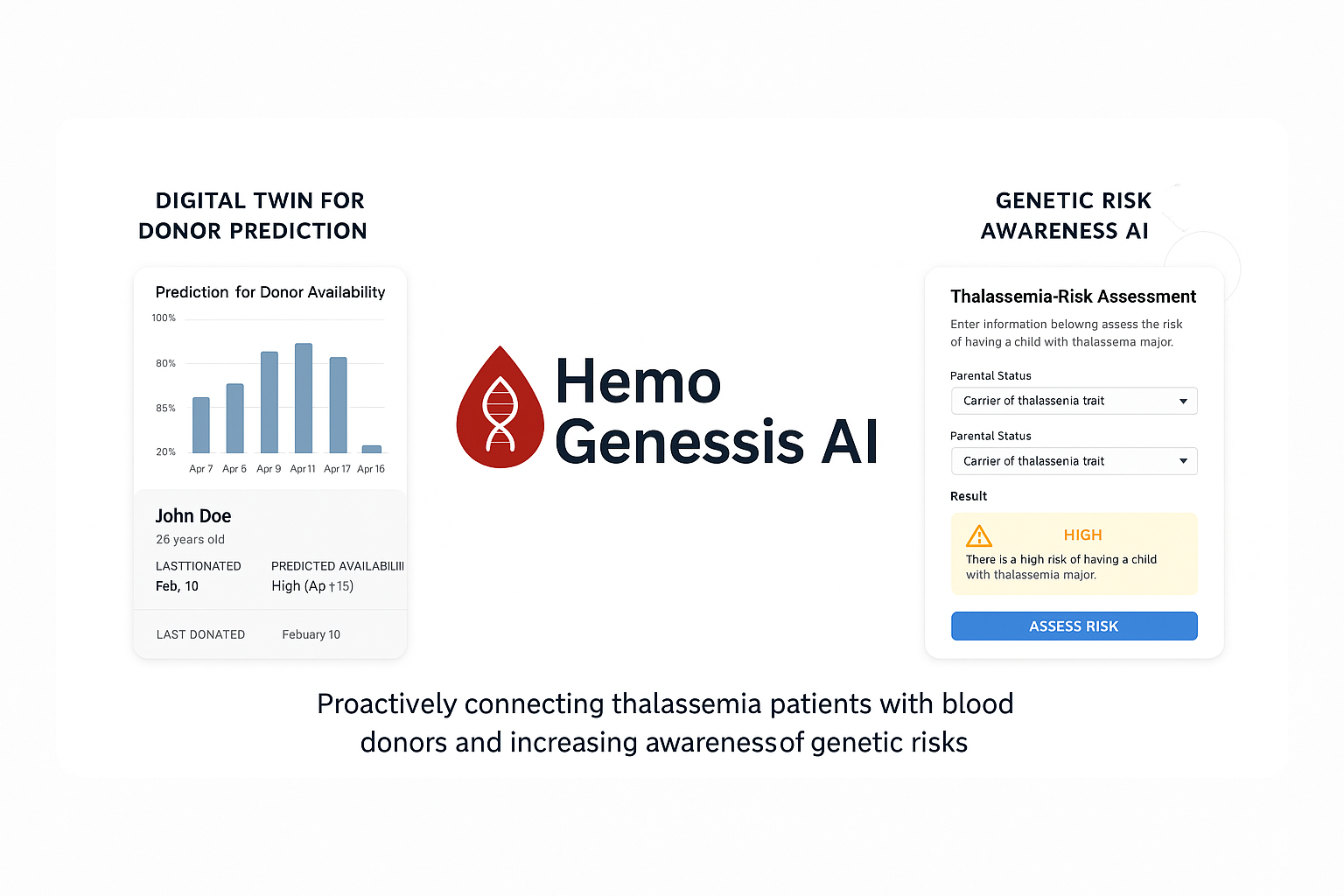
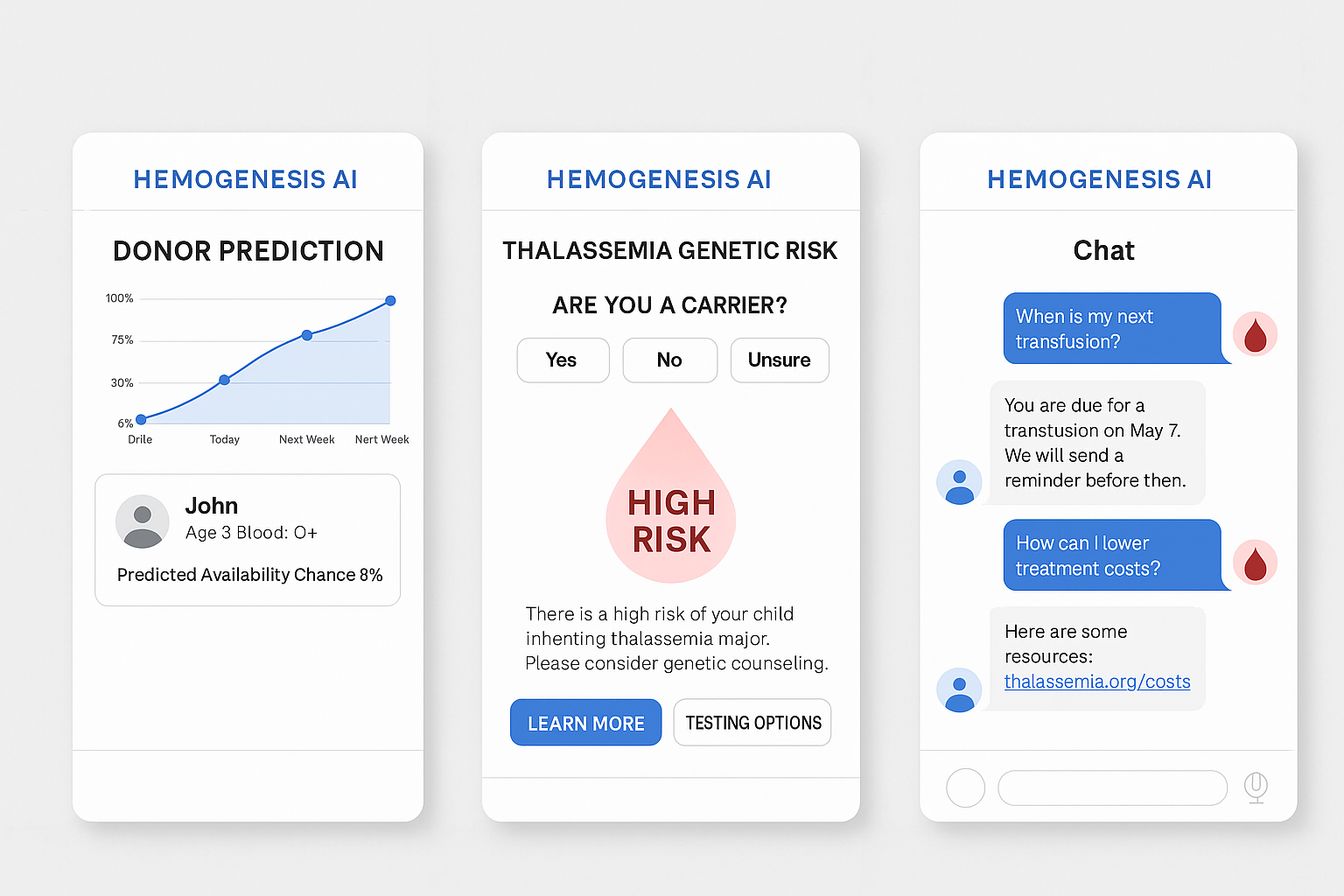
- Digital Twin for Donor Prediction – it builds a virtual profile of every blood donor and predicts when they are likely to donate again (like “John has 80% chance to be available next weekend”). So NGOs don’t need to panic last minute, blood is lined up in advance.
- Genetic Risk Awareness AI – helps couples (esp in rural areas) check Thalassemia carrier risk and know about low-cost testing & counselling. This can prevent next generation Thalassemia cases.
So its not just solving today’s blood problem but also reducing future burden.
How we built it
- We used Azure Machine Learning to train a donor availability model from dummy dataset we generated (donor history, location, health patterns).
- We designed a Genetic Risk calculator using open medical knowledge graphs + a simple rule based model for first prototype.
- Frontend is a small React based dashboard and a chatbot interface for patients & donors.
- For data privacy we used basic encryption (we plan to integrate blockchain in future).
Challenges we ran into
- Finding real donor data was very difficult due to privacy, so we had to simulate and anonymise a lot of sample data.
- Genetic risk prediction is a sensitive topic, so we had to spend time making sure the language is educative not scary.
- Time crunch (24 hrs) – balancing both features (donor + genetic) was tough, so we focused on making conceptual prototypes.
Accomplishments that we're proud of
- Built a working predictive model in under 24 hrs hack sprint.
- Created awareness module that actually made 2 people at the event ask about carrier testing (unexpected win!).
- Made something that looks beyond “just a donor finder app” – we tried to hit both present and future problem.
What we learned
- How predictive AI can be applied in social impact areas (not just business).
- Data sensitivity in healthcare is big challenge, specially when dealing with genetic risks.
- Sometimes hackathons are more about vision and impact than perfect code.
What's next for HemoGenesis AI
- Integrate with Blood Warriors’ Blood Bridge initiative to test donor prediction with real-time data.
- Partner with local hospitals to pilot Genetic Risk Awareness Chatbot for premarital counselling.
- Expand AI model with wearable data (like hemoglobin trends from smart devices).
- Long term vision: Make HemoGenesis AI an open source ecosystem so any NGO can adopt it.


Log in or sign up for Devpost to join the conversation.