-
-
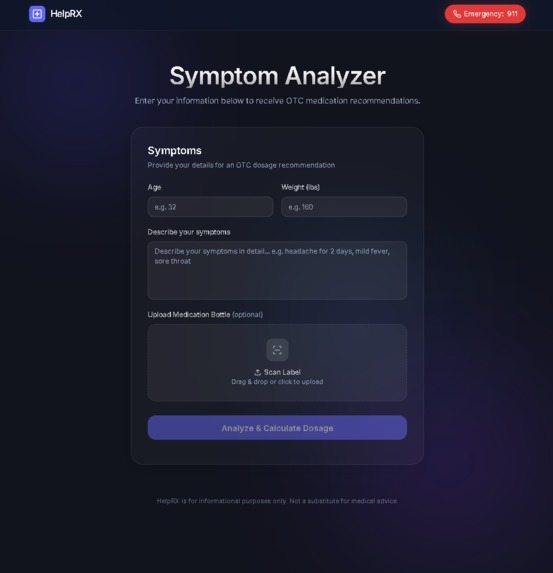
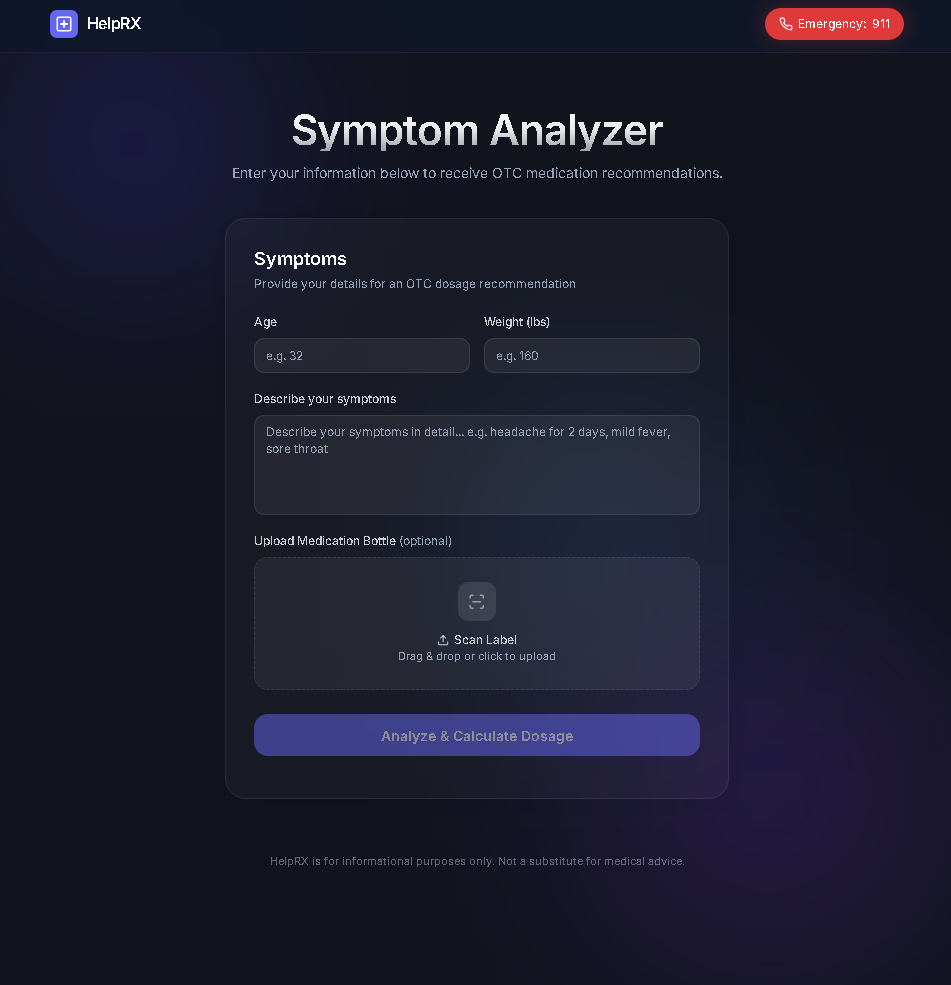
home page
-
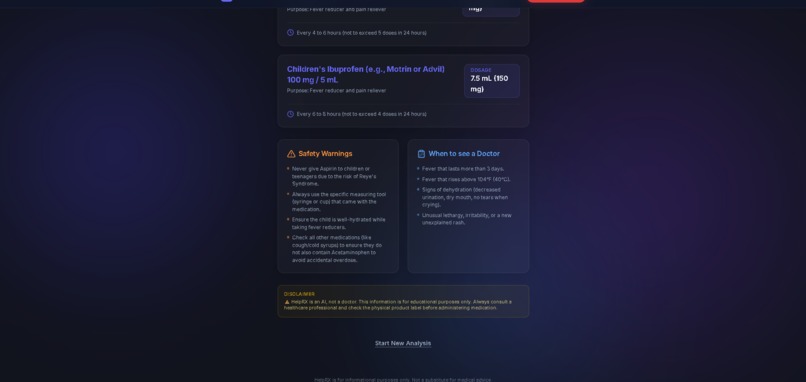
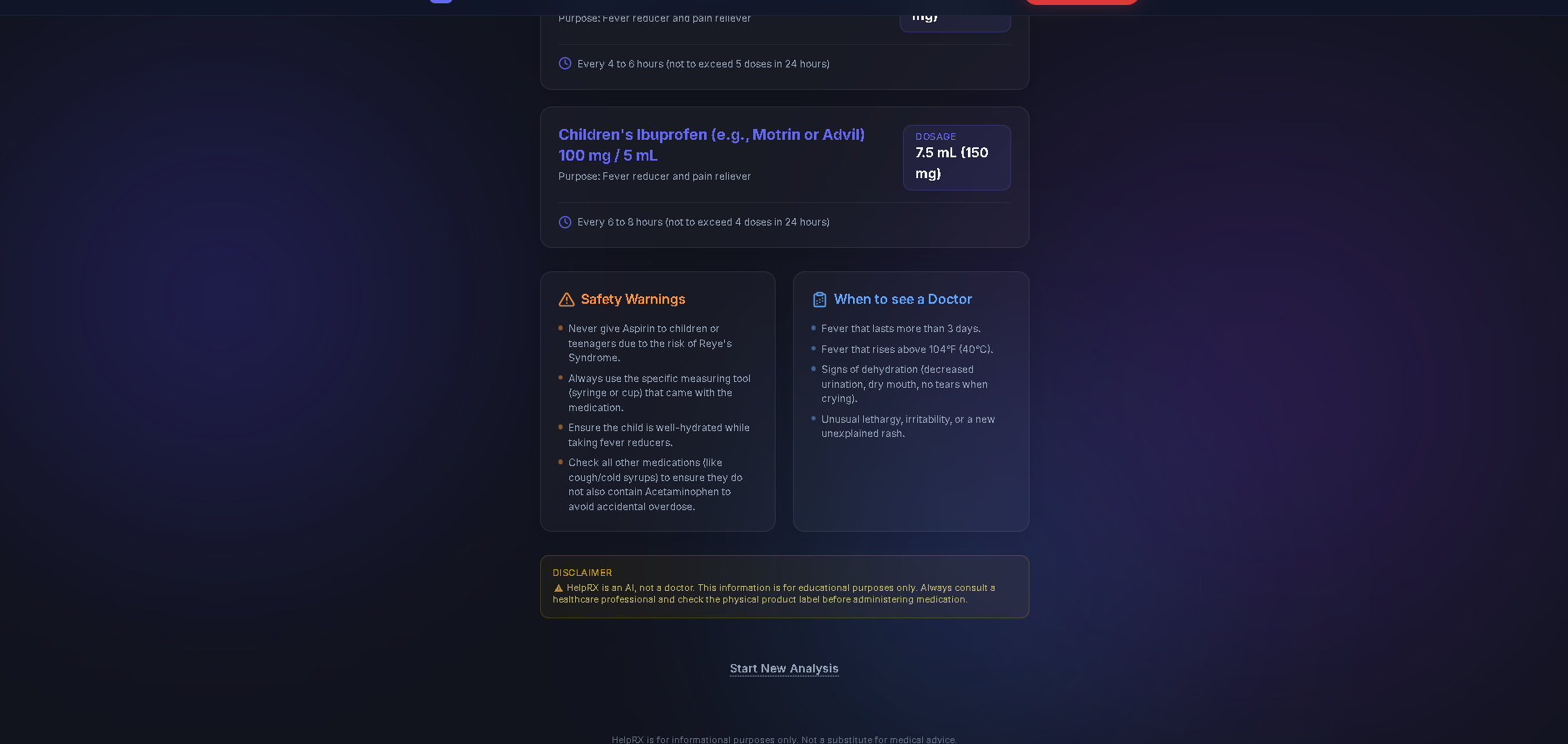
scan results
-
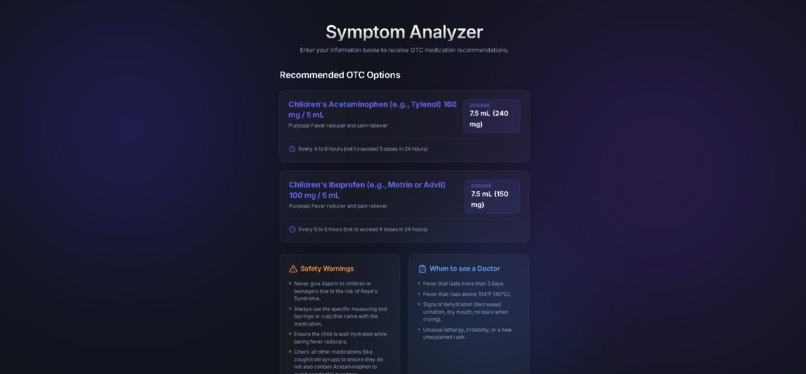
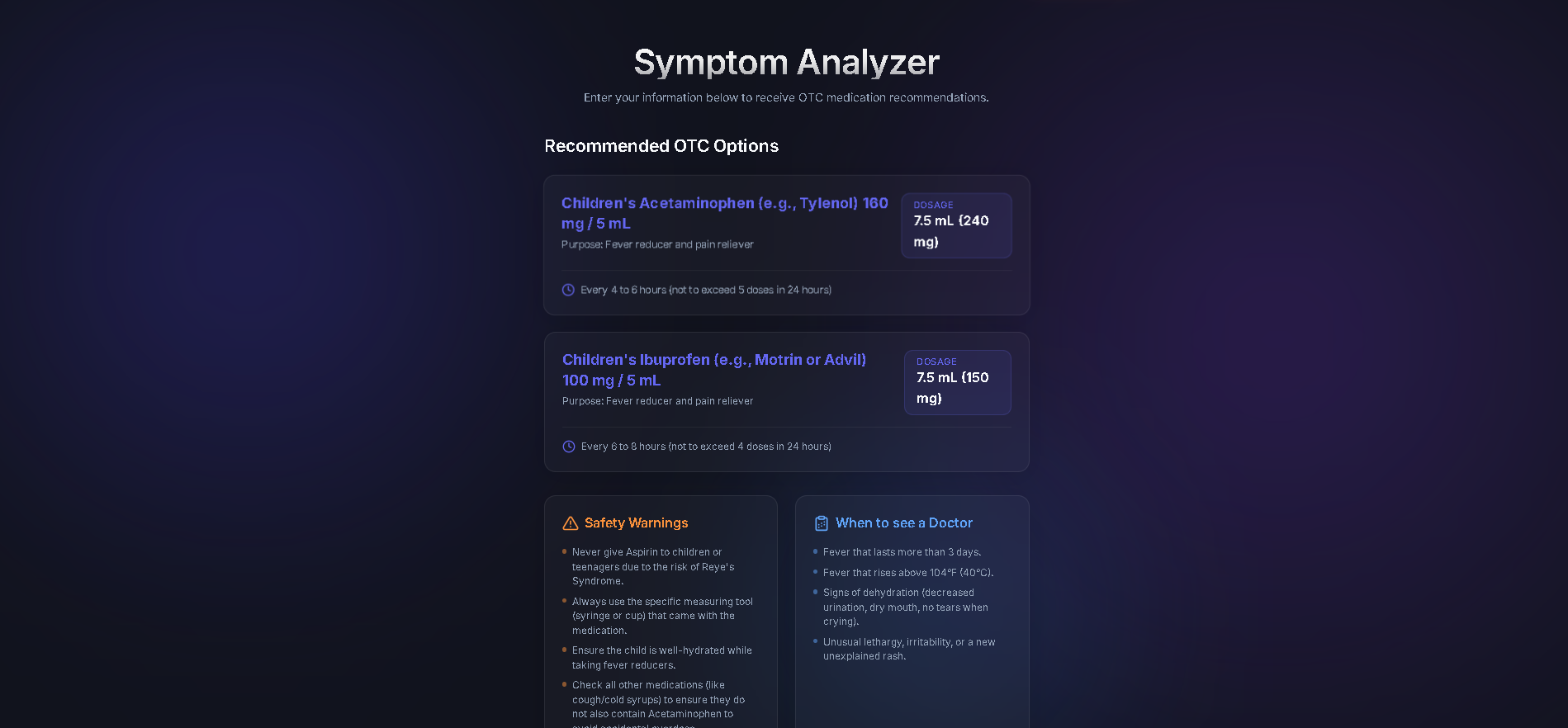
scan results
-
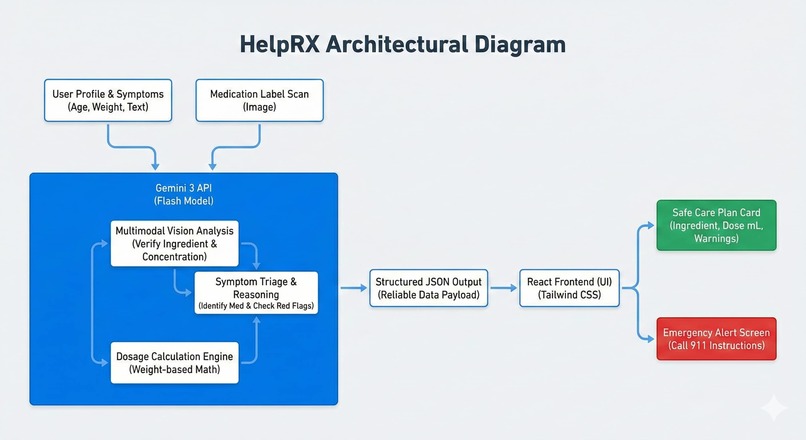
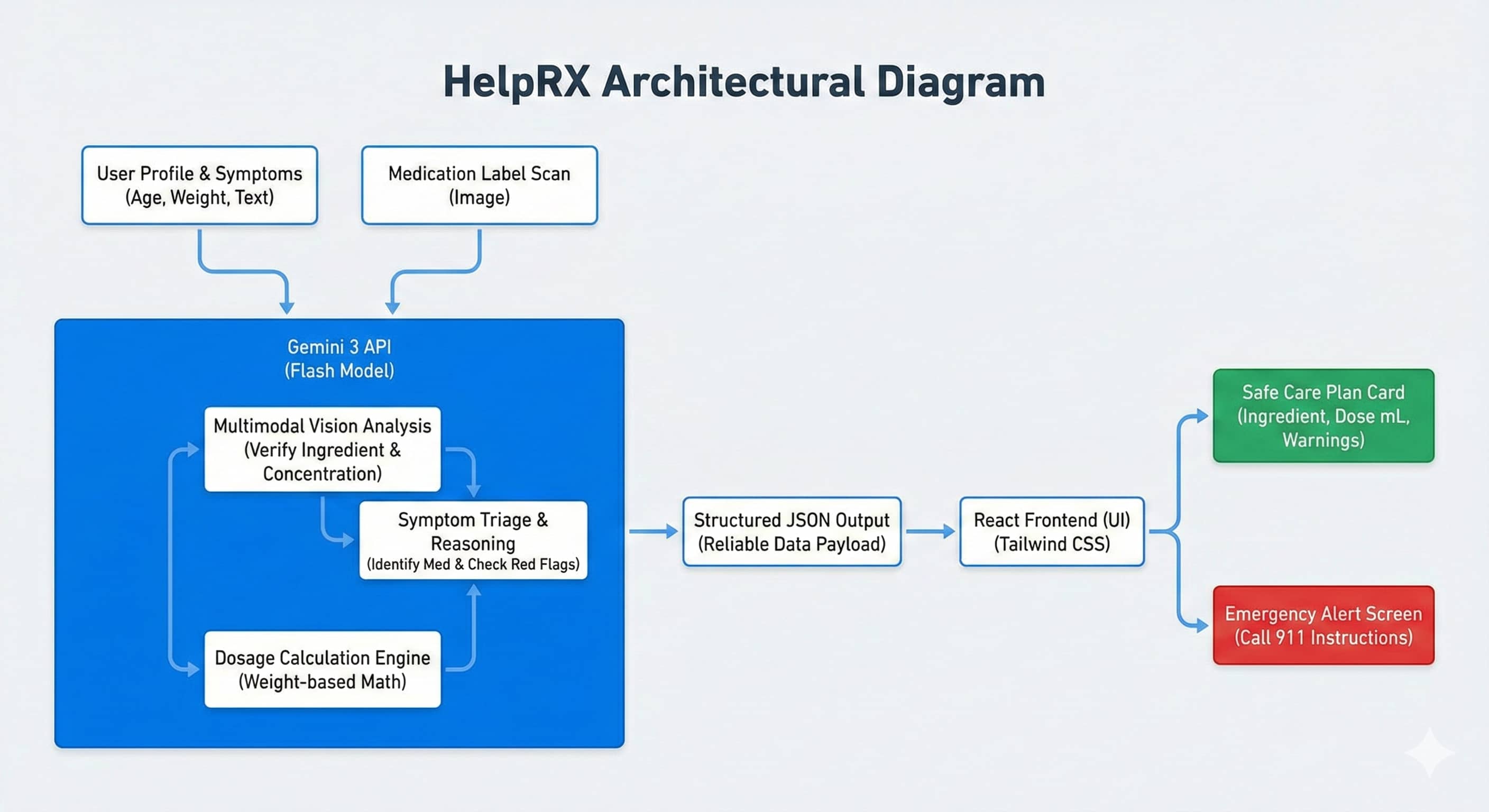
Architectural Diagram
Inspiration
Every eight minutes in the U.S., a child is rushed to the emergency room due to a medication error at home. This leads to over 60,000 pediatric ER visits annually. I wanted to solve this problem by creating a high-trust safety net that turns caregiver panic into precision, ensuring that the right medicine is given at the right dose every time.
What it does
HelpRX identifies the appropriate over-the-counter medication based on a user's symptoms, age, and weight. It utilizes the Gemini 3 API to perform multimodal vision analysis, allowing users to scan their medication bottle to verify active ingredients and concentrations. The app then calculates a precise, weight-based dose and provides essential safety warnings. It also includes an interactive triage system that scans for "red-flag" symptoms and triggers immediate emergency alerts when professional care is required.
How I built it
I built HelpRX using an AI-native stack centered on Google AI Studio. The frontend is developed with Tailwind CSS to create a high-trust interface that prioritizes clarity under stress. The core logic utilizes the Gemini 3 API for both text-based reasoning and multimodal vision processing. I implemented JSON mode to ensure that all medication data and safety instructions are delivered as structured, reliable output to the UI.
Challenges I ran into
One of the biggest challenges was ensuring the multimodal vision logic prioritized the physical label over general training data. I had to refine the system instructions to enforce a "Vision-First" reasoning path so the AI would accurately identify the bottle in the user's hand. I also worked through the complexity of creating a conversational triage loop that asks for missing data, such as weight or age, without breaking the user flow.
Accomplishments that I'm proud of
I am proud of successfully integrating multimodal vision to solve a real-world safety problem. Seeing the app accurately "read" a medication label and calculate a weight-based dose in real-time was a major milestone. I am also proud of the high-trust UI design, which makes complex medical information feel accessible and calm for parents and caregivers.
What I learned
I learned how to effectively use Gemini 3's structured output to connect complex AI reasoning with a frontend interface. I also gained a deeper understanding of "Chain of Thought" prompting to ensure safety guardrails are always the first priority in a medical application. This project taught me how to balance technical innovation with empathetic, human-centric design.
What's next for HelpRX
Next, I want to expand HelpRX to include a "Medication History" log to help parents track when doses were last administered. I also plan to add support for multiple languages to make the app accessible to a broader range of families and investigate integrating with digital health records for even more personalized safety checks.

Log in or sign up for Devpost to join the conversation.