-
-
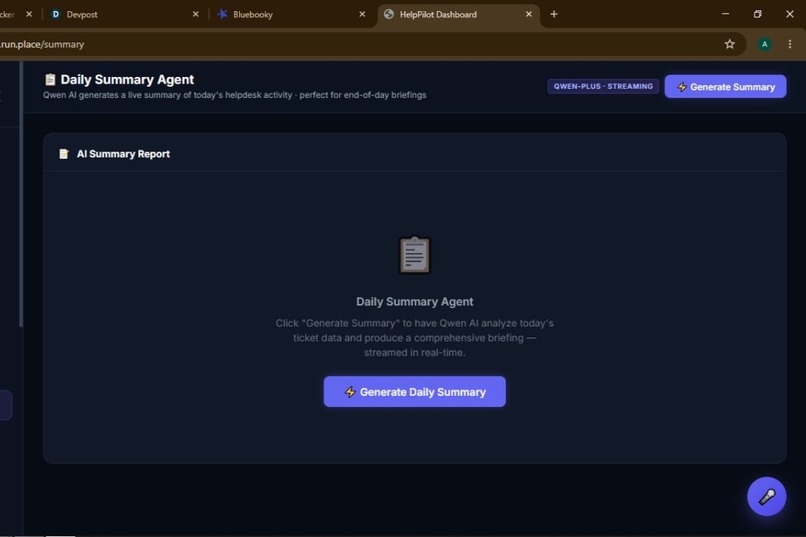
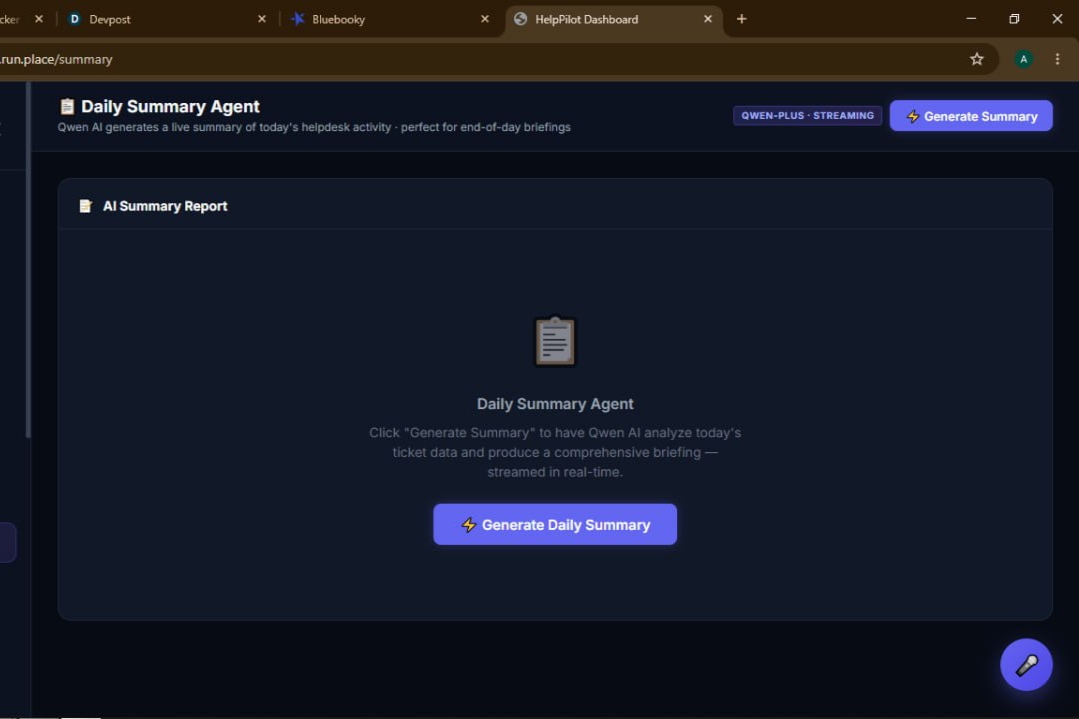
summary
-
-
-
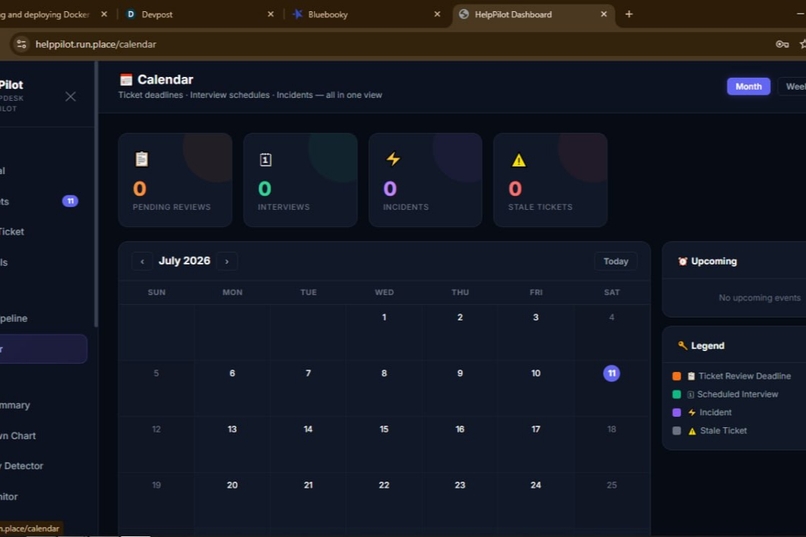
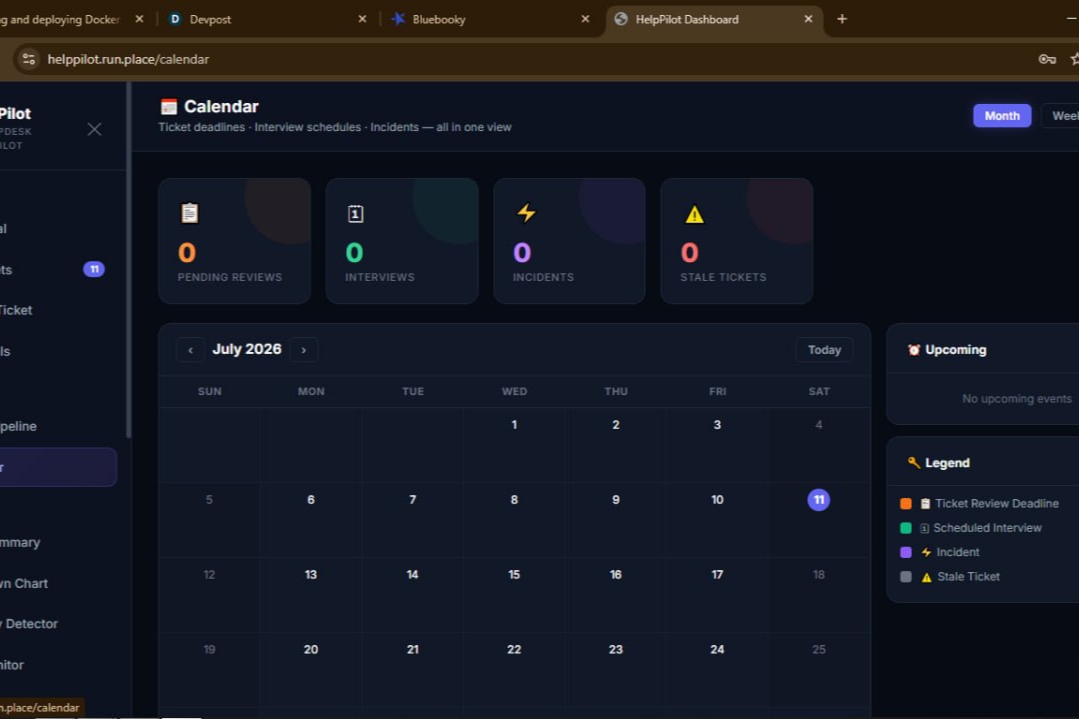
calendat
-
-
-
-
Inspiration
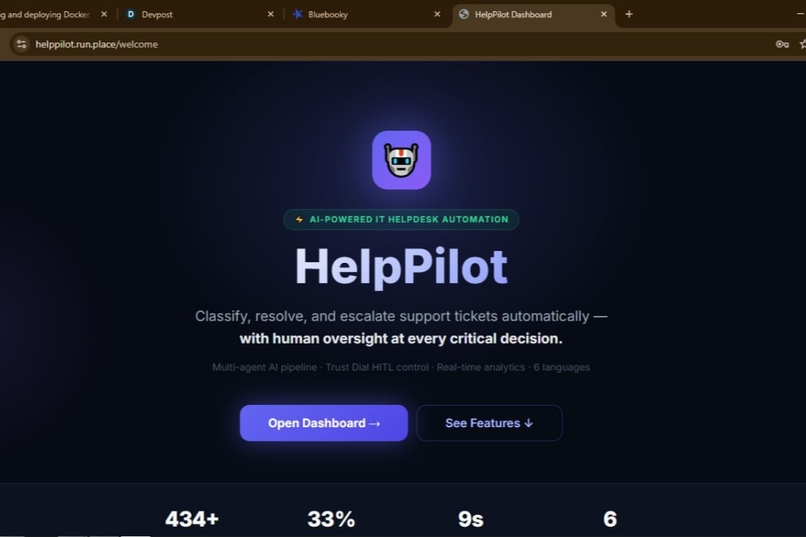
Support teams drown in tickets that all look the same on the surface — but underneath, some are angry VIP customers about to churn, some are written in a language nobody on the team speaks, and some are routine questions that could be answered instantly. We wanted to build something that reads a ticket the way an experienced support lead would: catching urgency, emotion, and context in seconds, not minutes.
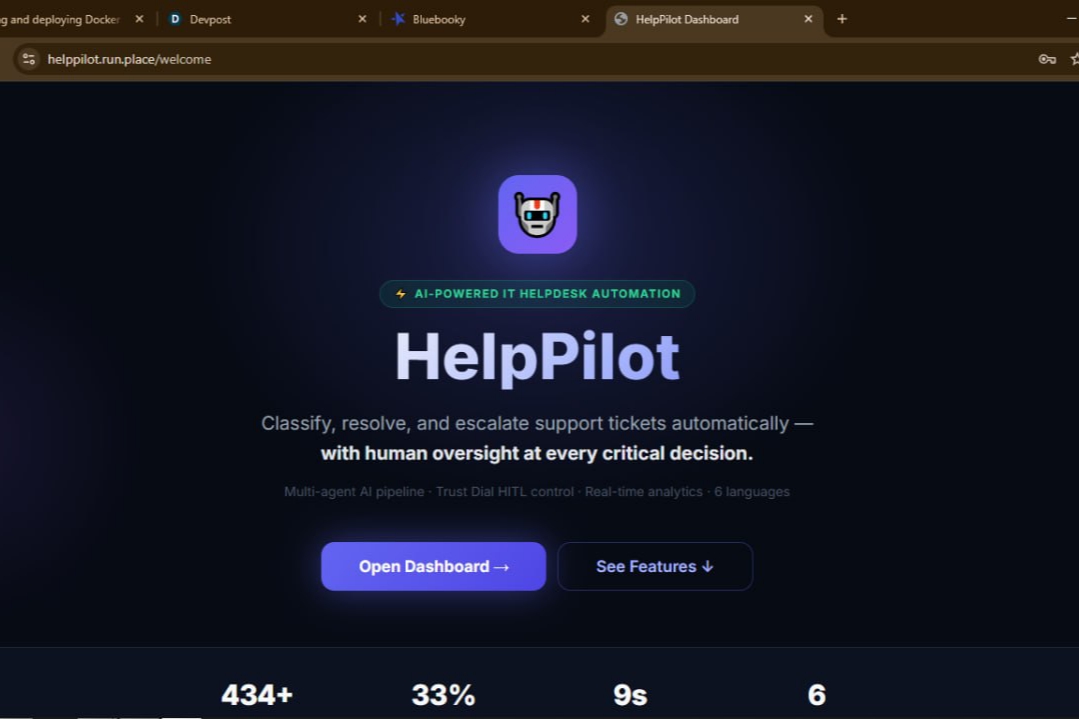
That's what became HelpPilot — an AI autopilot for support tickets.
What it does
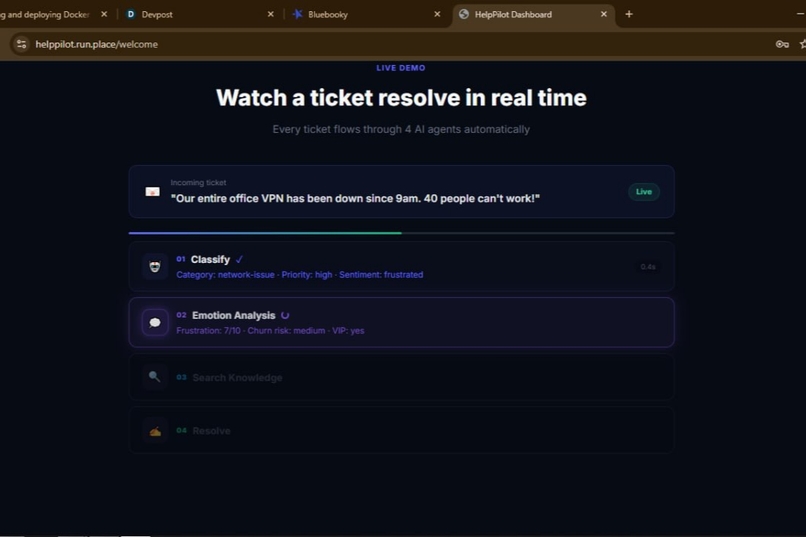
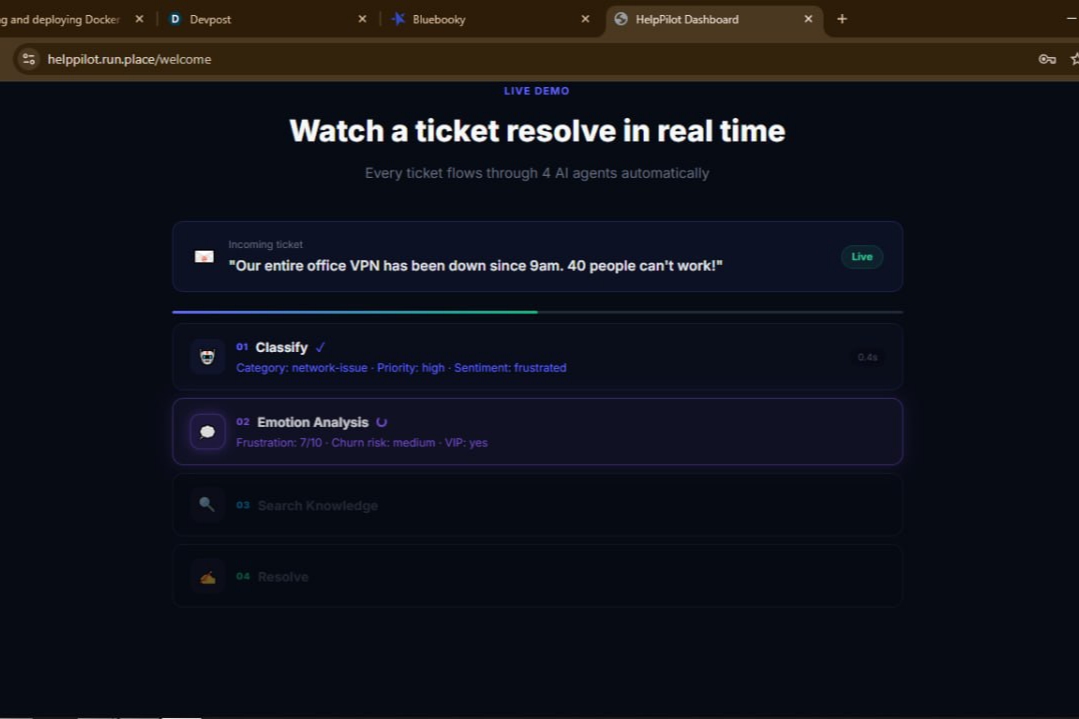
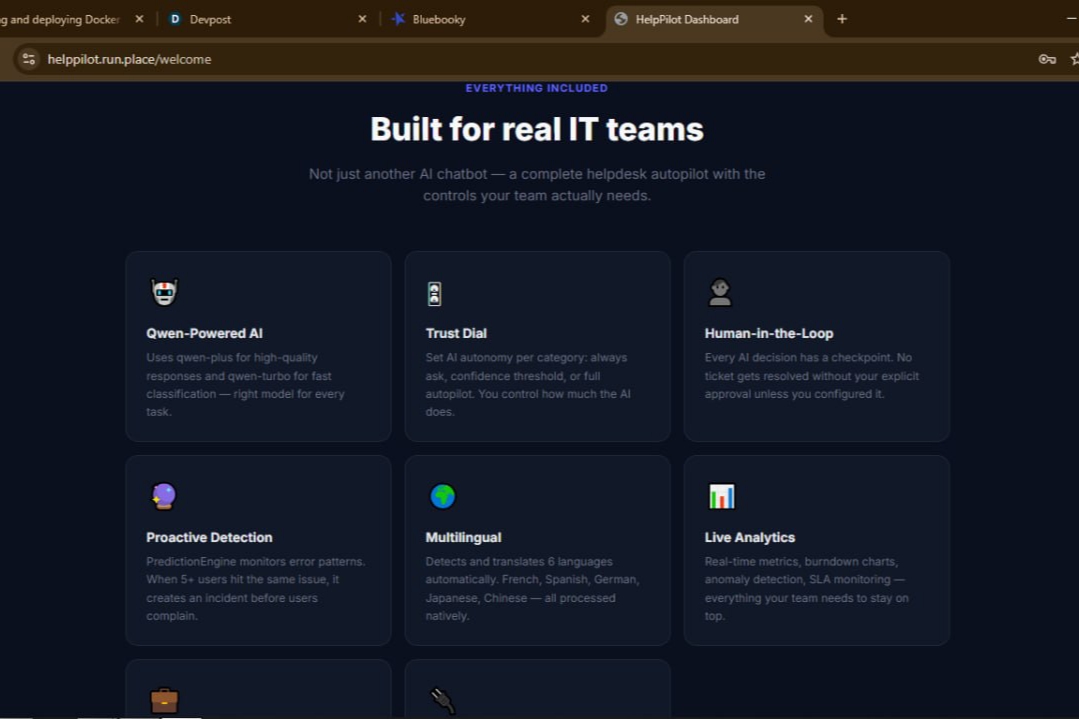
HelpPilot ingests incoming support tickets and automatically:
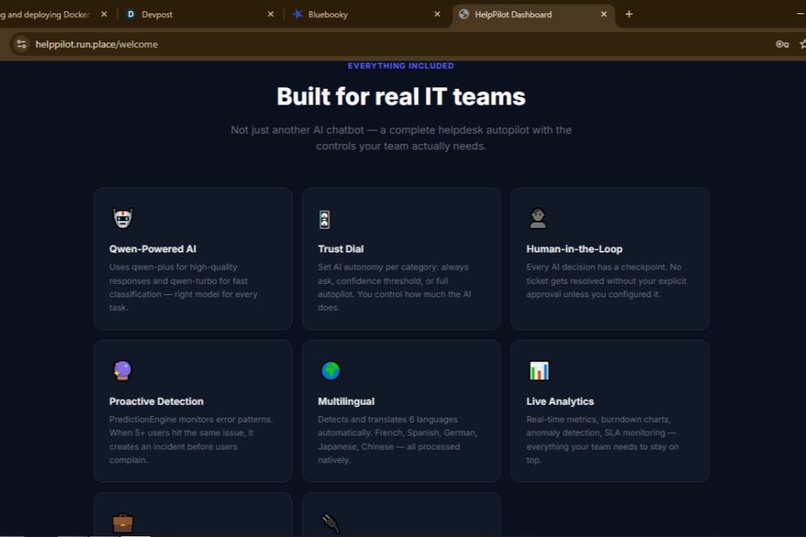
- Detects language and translates the ticket body for the agent
- Flags VIP customers so high-value accounts never get lost in the queue
- Reasons about emotion, surfacing why a ticket sounds urgent or upset — not just a sentiment score
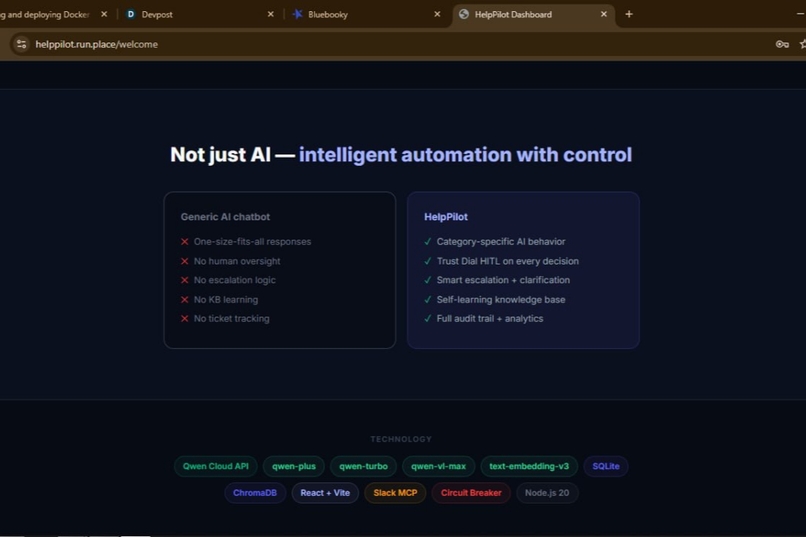
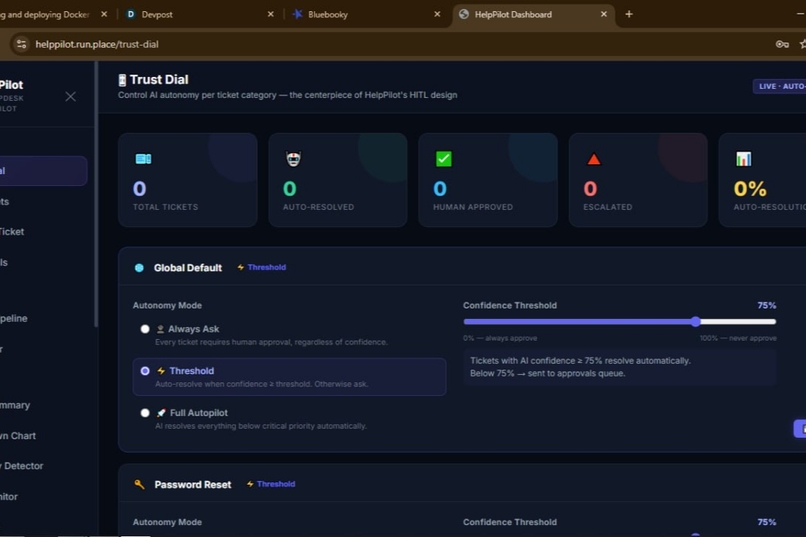
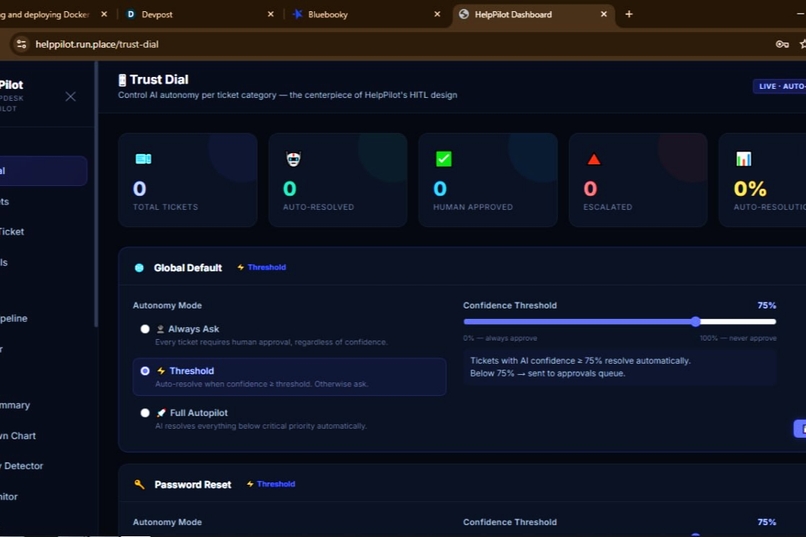
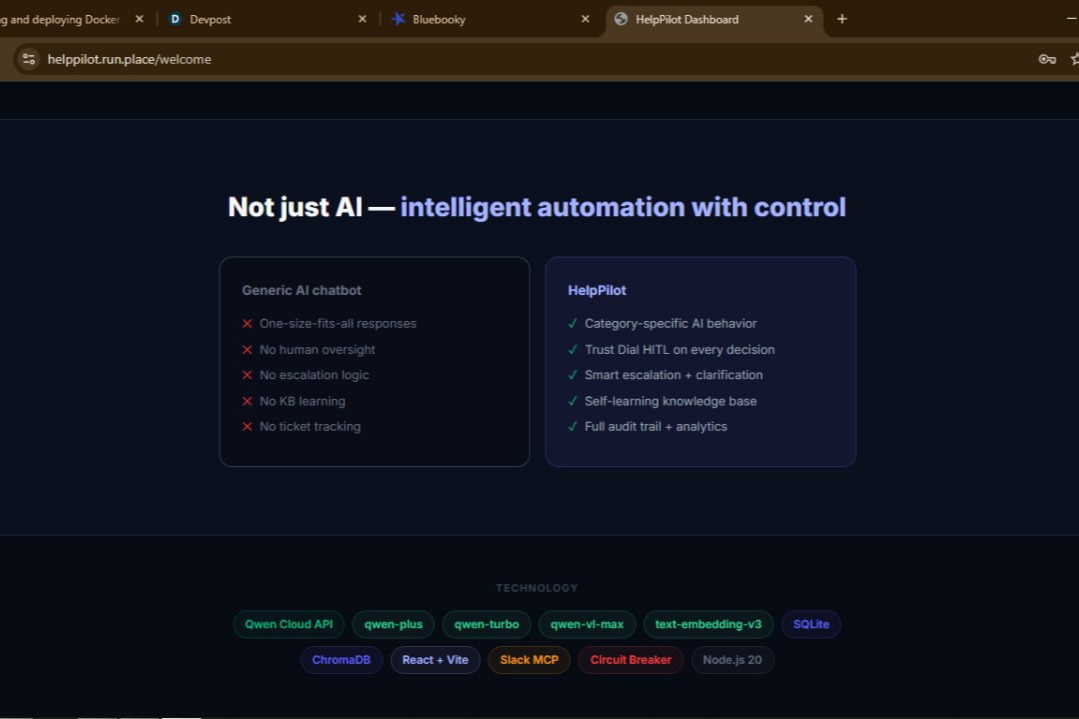
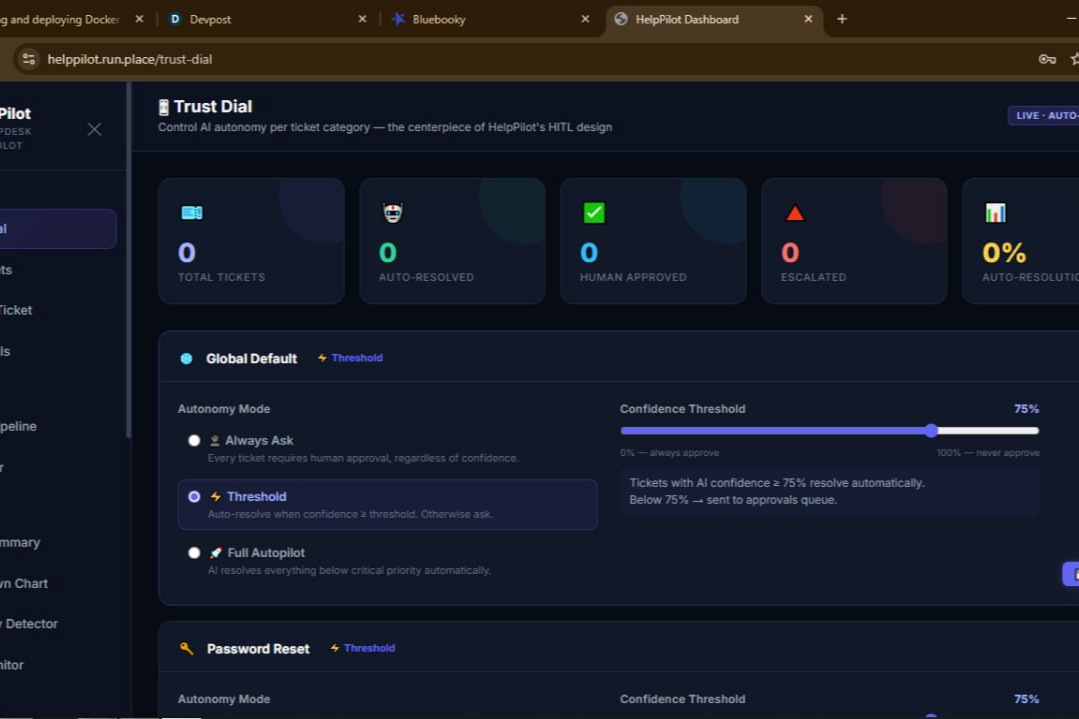
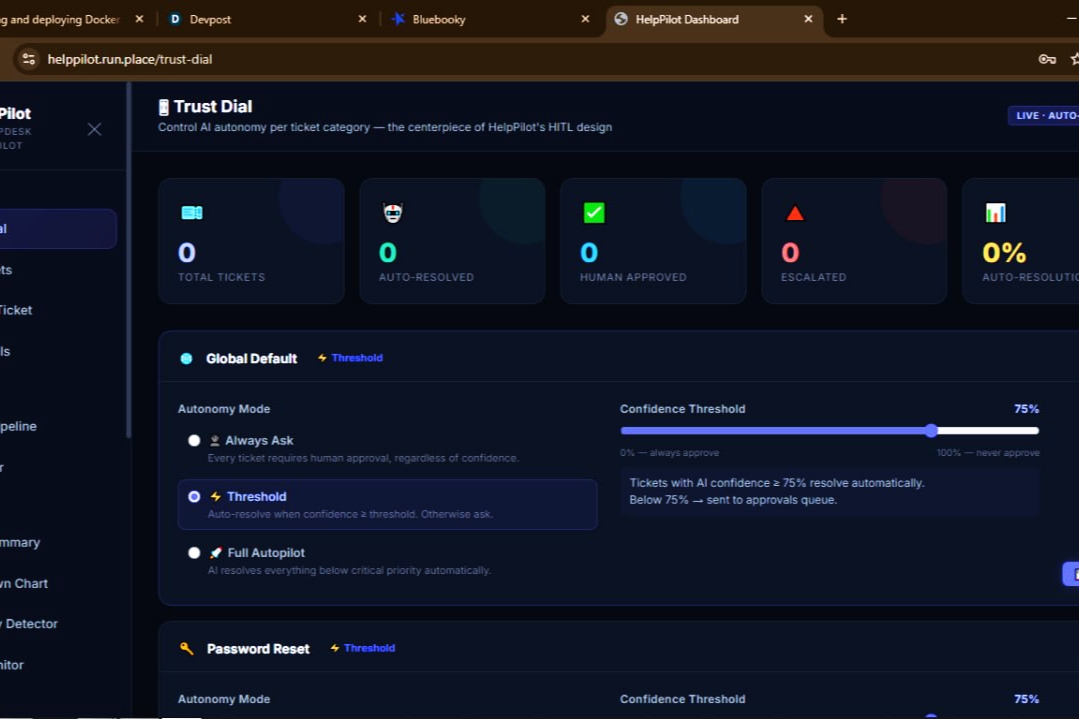
- Scores confidence on suggested responses via a "trust dial," so agents know when to trust automation and when to step in
- Tracks the full lifecycle of a ticket — classified, delivered, resolved — with timestamps and delivery channel visibility
The result is a support queue that tells you what to look at first, and why.
How we built it
- Frontend: React + TypeScript, built with Vite
- Backend: Python (FastAPI-style service) handling ticket ingestion, classification, and translation
- Confidence scoring: modeled as a probability $p \in [0, 1]$ over suggested actions, thresholded against an adjustable "trust dial" $\tau$, where actions are auto-applied only if $p \geq \tau$
- Deployment: containerized end-to-end with Docker — a multi-stage build that compiles the frontend, then serves it alongside the backend in a single production image, deployed to helppilot.run.place
Challenges we ran into
Getting from "runs on my machine" to a clean, reproducible Docker build surfaced a lot of issues that TypeScript's dev server quietly tolerates but its production compiler does not:
- Strict
tsctype-checking caught fields the frontend expected (translated_body,detected_language,vip_flag,emotion_reasoning, etc.) that hadn't yet been added to the sharedTickettype, forcing us to keep the frontend and backend contracts in sync - A project-wide habit of importing modules with explicit
.ts/.tsxextensions built fine in dev (Vite) but failed outright undertscin a clean Docker build — a good reminder that dev-server leniency isn't the same as a production-safe build - A couple of duplicate object keys and implicit
anyparameters that TypeScript's dev tooling silently allowed but a strict CI-style build correctly rejected
Each of these forced us to tighten up type safety across the app — annoying in the moment, but the app is meaningfully more robust for it.
What we learned
- A working dev environment tells you very little about whether your build
is actually production-ready — always test the real build command
(
tsc && vite build, not justvite dev) before you assume you're done - Keeping frontend types and backend response shapes in lockstep is worth the discipline, especially once a project grows past a handful of pages
- Docker's multi-stage builds are a great forcing function: they surface bugs your local environment was quietly hiding
What's next for HelpPilot
- Expanding language coverage for translation
- Making the trust dial ($\tau$) tunable per-team, not just globally
- Deeper SLA and burndown analytics for support managers
Built With
- alibaba-cloud
- css
- fastapi
- html
- javascript
- machine-learning
- natural-language-processing
- node.js
- npm
- python
- react
- rest-api
- sentiment-analysis
- tailwindcss
- typescript
- vite


Log in or sign up for Devpost to join the conversation.