-
-
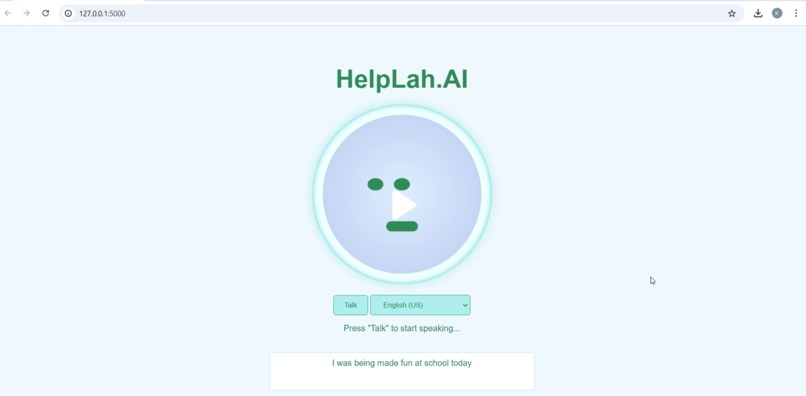
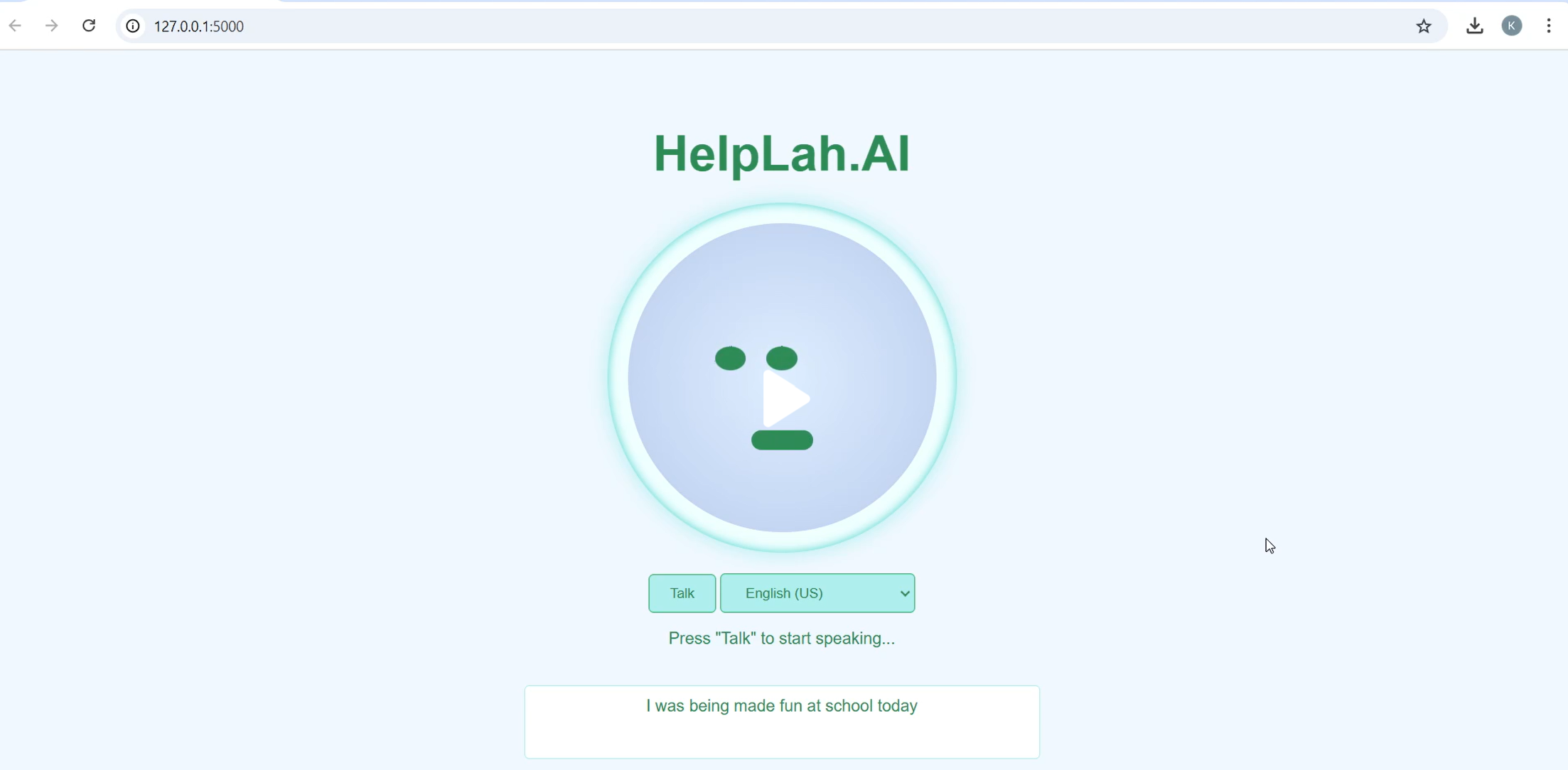
English user prompt
-
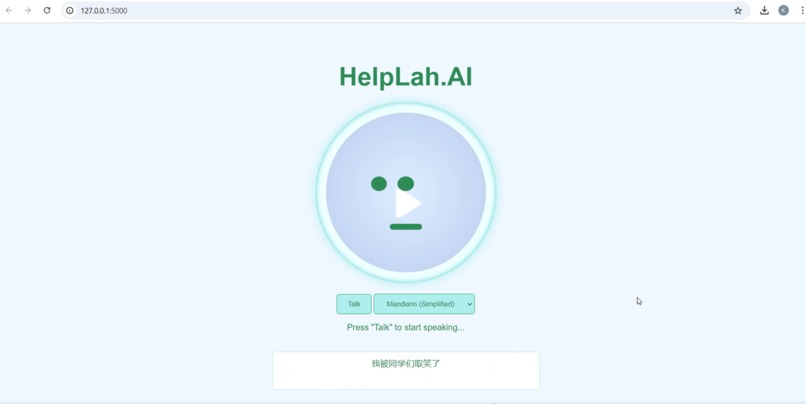
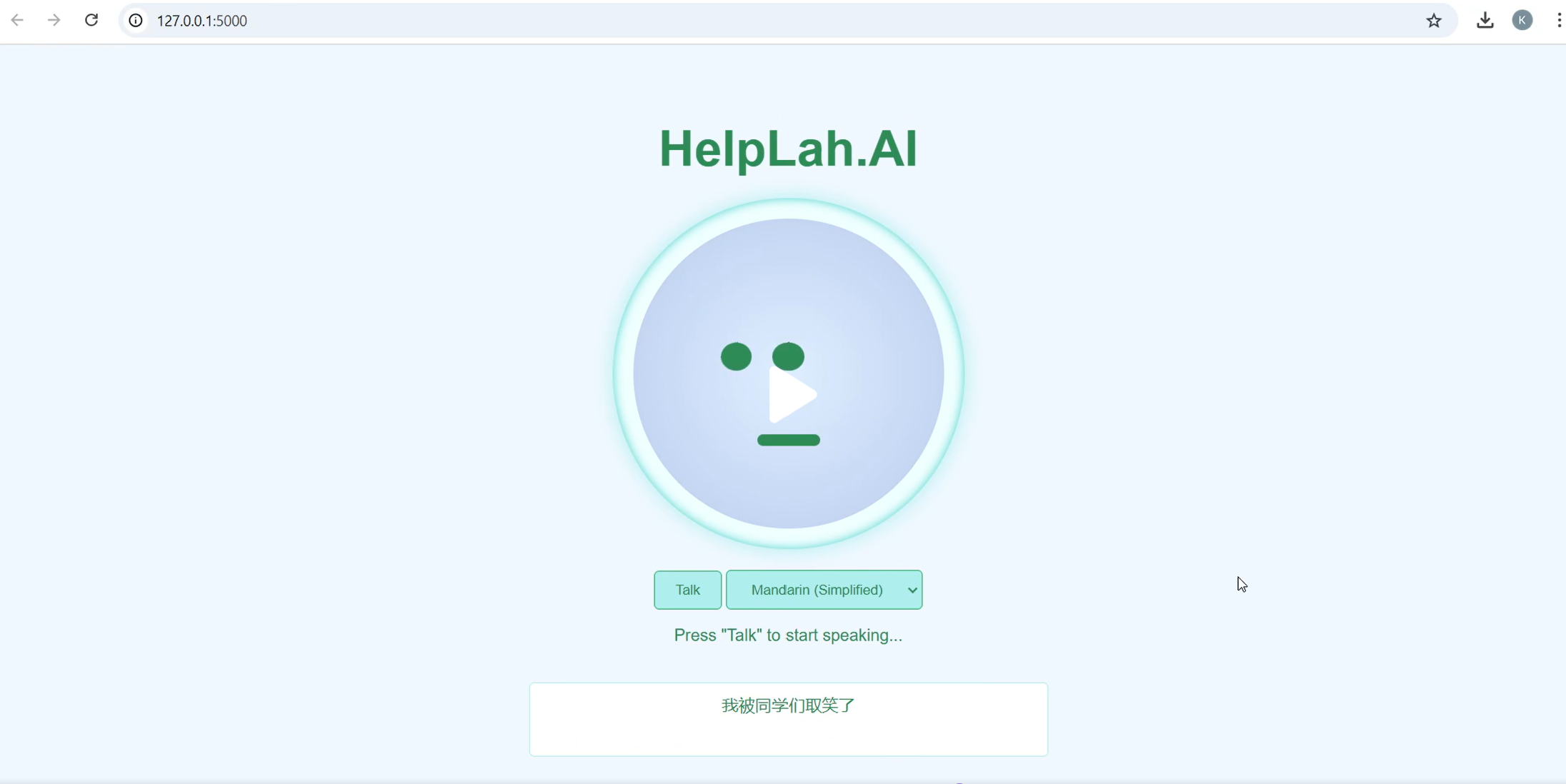
Mandarin user prompt
-
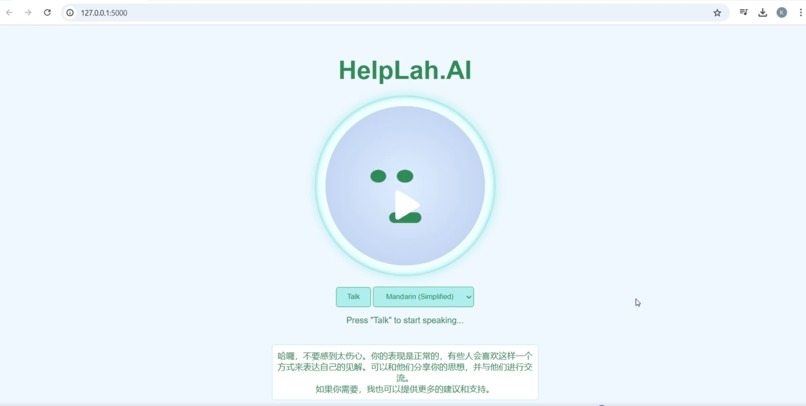
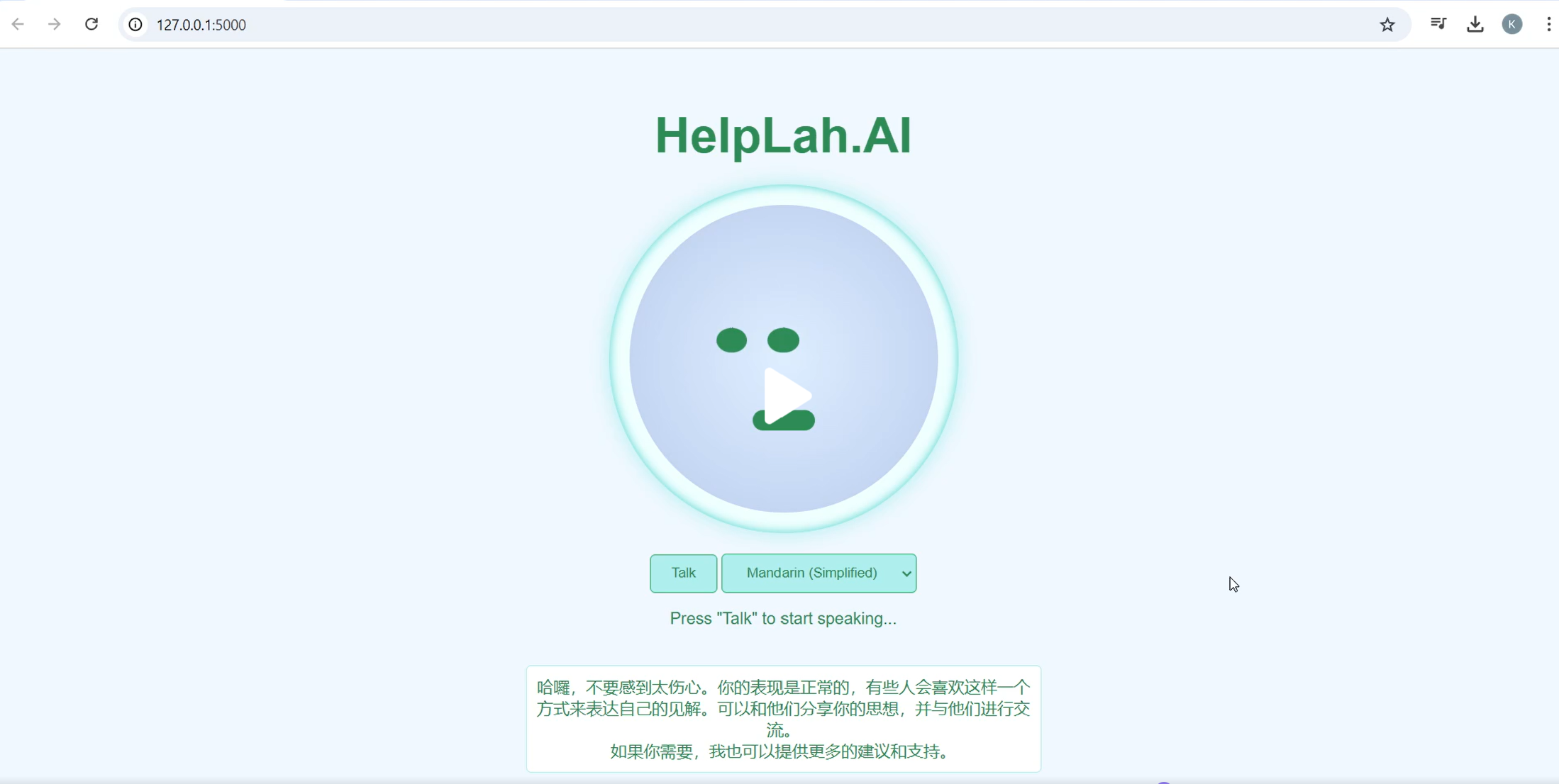
Mandarin GEN AI response
-
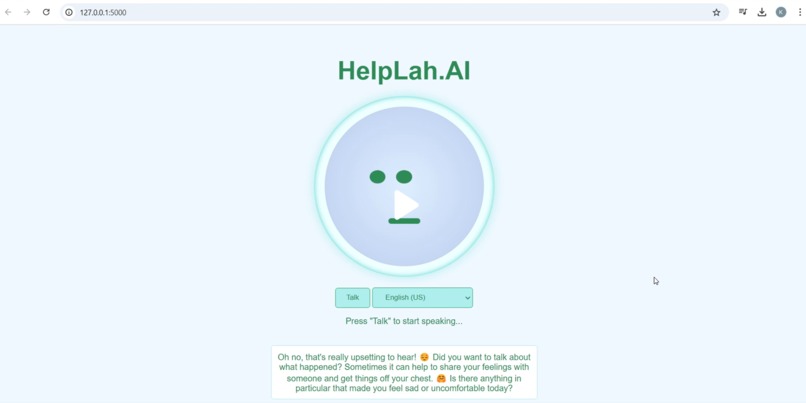
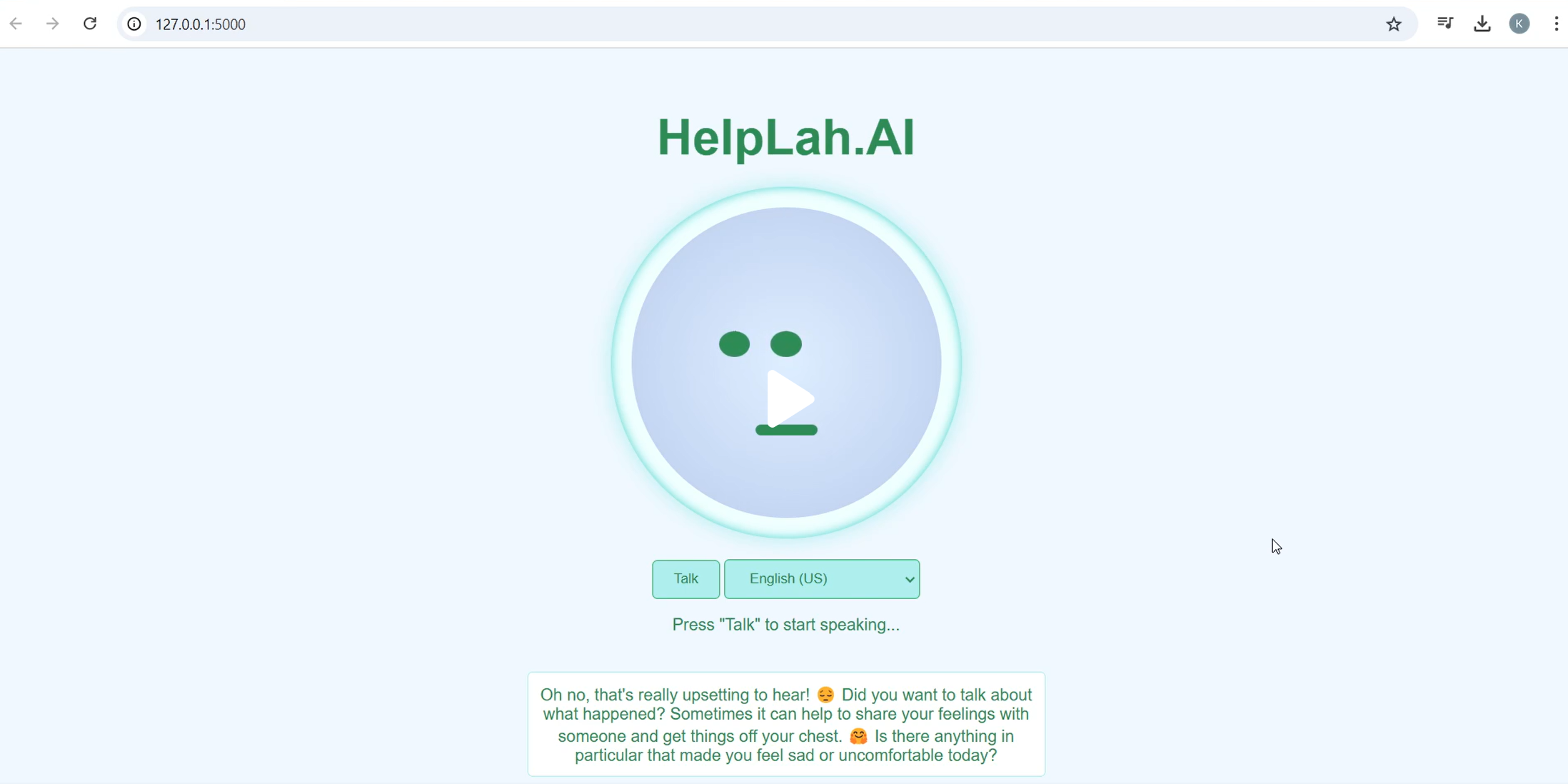
English GEN AI response
Inspiration
In Singapore, mental health challenges continue to affect two key groups in our society: young people and the elderly. Among the youth, anxiety and depression are growing concerns, driven by pressures from school, work, and societal expectations. Meanwhile, many seniors face loneliness and isolation as their social circles shrink with age.
These challenges inspired us to create an Emotional AI Assistant—a compassionate, accessible companion designed to provide meaningful support to these groups. Our goal is to bridge the emotional gap with technology, offering a solution that listens, comforts, and empowers individuals to navigate their mental health journey.
What it does
It is an AI assistant that generates responses to cheer the end user up emotionally.
How we built it
Python, Flask, Javascript, NGROK tunnel, LLama 2 Model, Google Colab
Challenges we ran into
A major challenge we encountered was converting LLaMA 2's generative AI responses from text into speech that could be seamlessly played as audio. This required us to navigate the technical complexities of integrating language generation with reliable text-to-speech functionality, ensuring the output was both natural and accessible.
Accomplishments that we're proud of
We’re proud to have successfully generated AI responses using the LLaMA 2 model in both English and Mandarin, and to have integrated Google Text-to-Speech with the Python package for smooth audio playback. This achievement brings us closer to creating a more accessible and dynamic AI assistant that can communicate naturally across languages.
What we learned
We’re learned about the capabilities of LLaMA 2, particularly its potential to generate responses in Mandarin, to create a more inclusive and versatile AI assistant. Alongside this, we’re diving into Google’s Text-to-Speech Python package to seamlessly convert responses into natural-sounding speech.
Our vision is to combine advanced language generation with lifelike audio output, making communication more engaging and accessible for users across diverse linguistic backgrounds.
What's next for HelpLah.ai
We aim to fine-tune our model to better understand and respond to a broader range of prompts, with a focus on enhancing its ability to support multiple languages commonly spoken in Singapore. This includes improving responses in Mandarin, as well as Malay and Tamil, to ensure accessibility and inclusivity for our diverse community.
Our goal is to create an AI assistant that feels natural and intuitive, no matter the language being used, fostering meaningful connections and support across cultures.
Built With
- flask
- googlecolab
- javascript
- llama2
- ngrok
- python

Log in or sign up for Devpost to join the conversation.