-
-
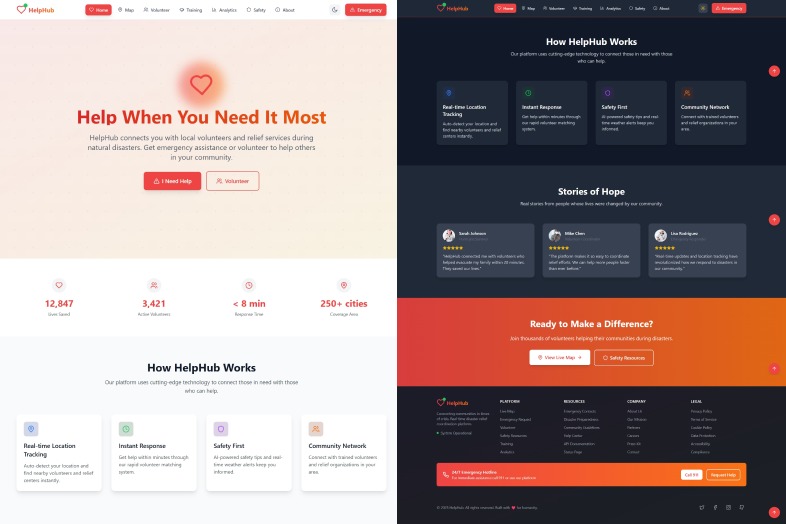
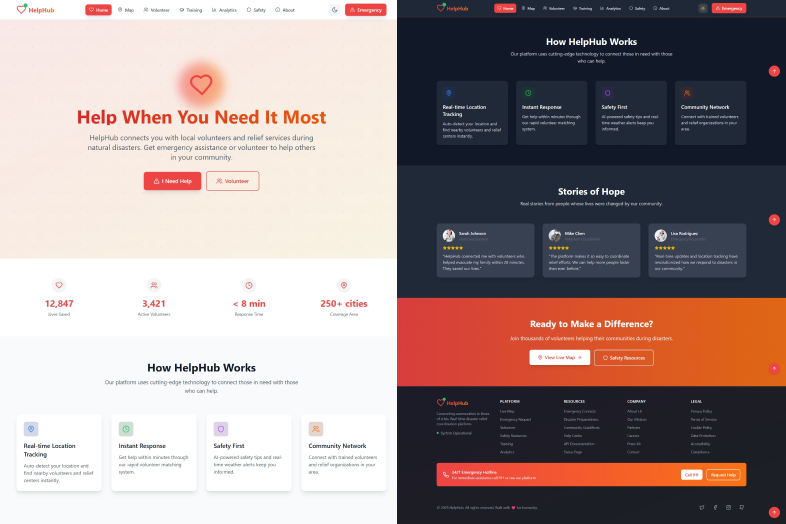
Home Page Preview (in both Light/Dark mode)
-
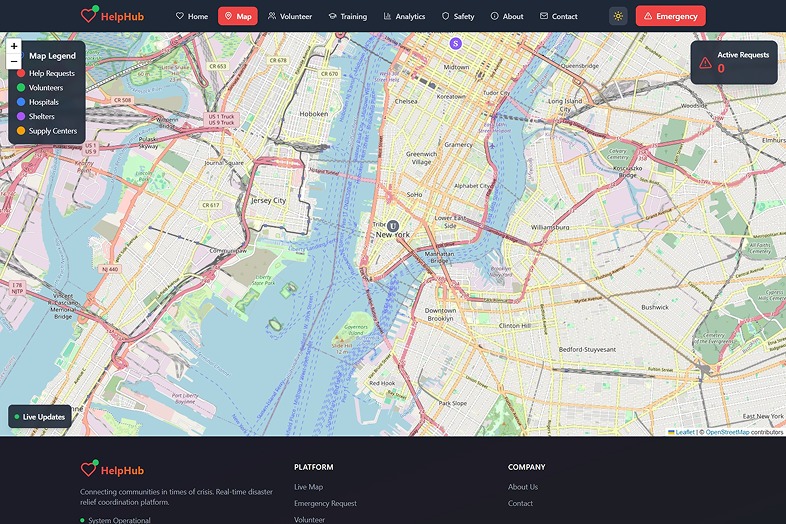
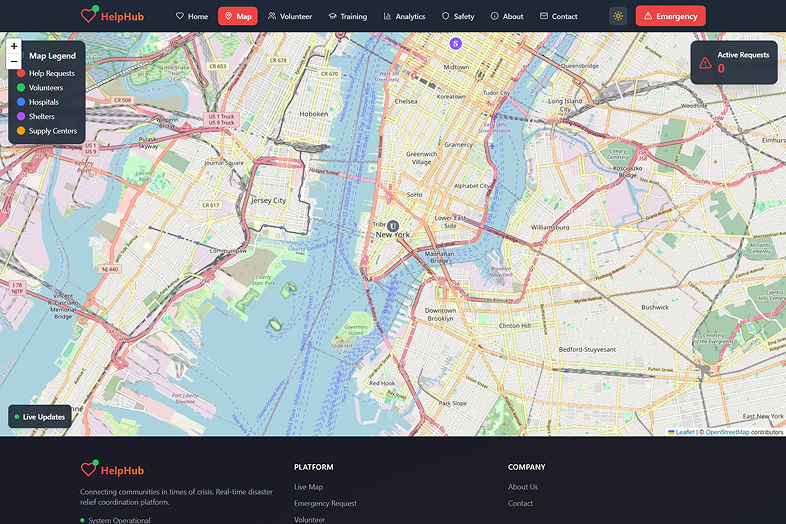
Map Page
-
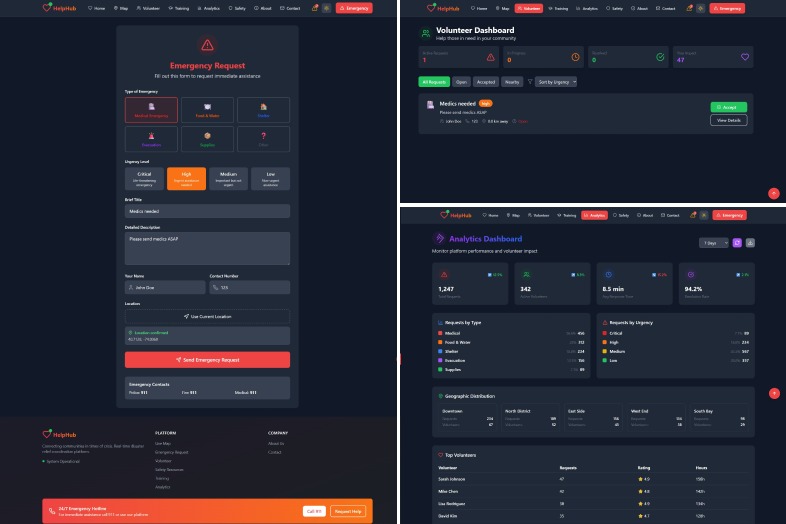
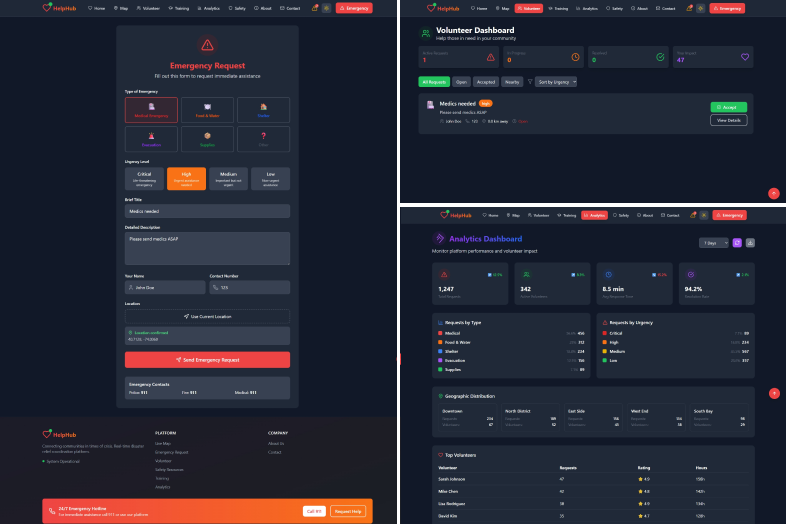
Emergency Response
Inspiration
Natural disasters strike without warning, leaving communities scrambling to coordinate help. We witnessed how traditional emergency response systems often fail to connect those in desperate need with willing volunteers nearby. The gap between people wanting to help and those requiring assistance inspired us to create HelpHub - a real-time platform that bridges this critical divide during disasters.
What it does
HelpHub is a comprehensive disaster relief coordination platform that connects volunteers with people in urgent need during natural disasters. The platform features real-time emergency request submission with GPS location tracking, interactive maps showing emergency situations and volunteer locations, volunteer coordination with proximity-based matching, analytics dashboards for response metrics, safety resources with weather alerts, emergency response training modules, and a complete contact system. Users can submit emergency requests, view real-time maps, volunteer for nearby emergencies, access safety information, and track response progress.
How we built it
We built HelpHub using React 18 with TypeScript for type safety and modern development practices. The frontend leverages Vite for lightning-fast development and builds, Tailwind CSS for responsive design, and Framer Motion for smooth animations. For mapping functionality, we integrated Leaflet with React Leaflet to provide interactive emergency visualization. The architecture follows modern React patterns with hooks, context API for state management, and React Router for navigation. We implemented a comprehensive design system with theme switching, custom glow effects, and accessibility-first principles.
Challenges we ran into
One of the biggest challenges was implementing real-time location services that work reliably across different devices and browsers. Designing an intuitive user interface that works seamlessly for both emergency requesters and volunteers required extensive user experience research. Ensuring the platform remains functional during network outages - when it's needed most - posed significant technical hurdles. We also faced challenges in creating a responsive design that works equally well on mobile devices during emergencies and desktop computers for coordination centers.
Accomplishments that we're proud of
We successfully created a fully functional disaster relief platform with real-time capabilities and beautiful, accessible design. The implementation of location-based volunteer matching helps optimize response times during critical situations. Our comprehensive analytics dashboard provides valuable insights for emergency coordinators. The platform's theme-aware design with custom glow effects creates an engaging user experience while maintaining professionalism. We're particularly proud of the offline support features that ensure the platform remains partially functional even during network disruptions.
What we learned
This project taught us the importance of user-centered design in emergency situations where every second counts. We learned advanced React patterns, TypeScript best practices, and how to integrate complex mapping libraries effectively. Working with real-time location services gave us insights into browser APIs and mobile development considerations. We also gained valuable experience in creating accessible interfaces and responsive designs that work across all device types. The project emphasized the critical importance of reliable, fast-loading applications in emergency scenarios.
What's next for HelpHub – Disaster Relief in Real Time
Future enhancements include implementing real-time WebSocket connections for instant updates, adding push notifications for emergency alerts, integrating with official emergency services APIs, developing a mobile app for better on-the-go access, implementing AI-powered volunteer-request matching algorithms, adding multilingual support for diverse communities, creating advanced analytics with predictive modeling, integrating with weather services for proactive alerts, implementing blockchain for secure emergency data, and expanding to support different types of emergencies beyond natural disasters.
Built With
- bolt
- css
- framer
- leaflet.js
- lucide
- netlify
- react
- tailwind
- typescript
- vite

Log in or sign up for Devpost to join the conversation.