-
-
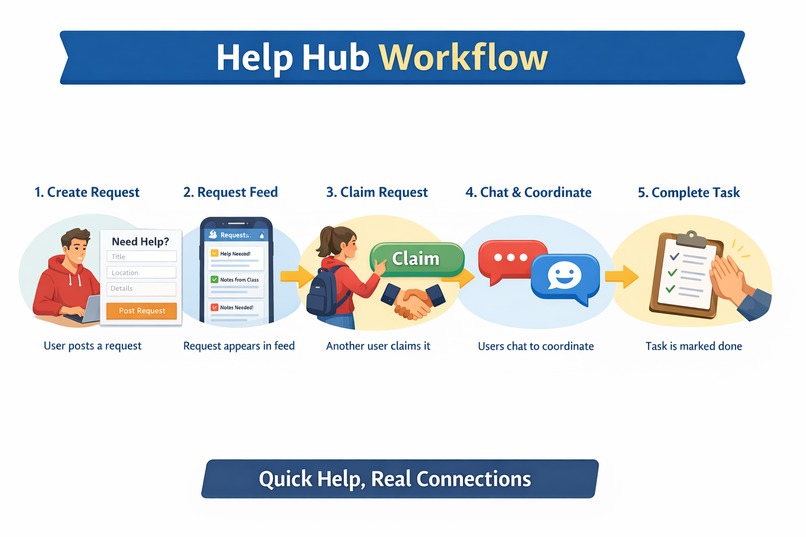
Workflow
-
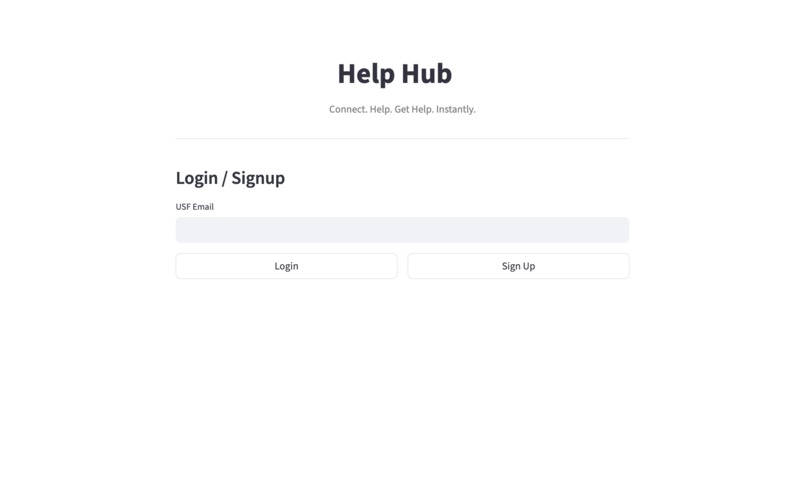
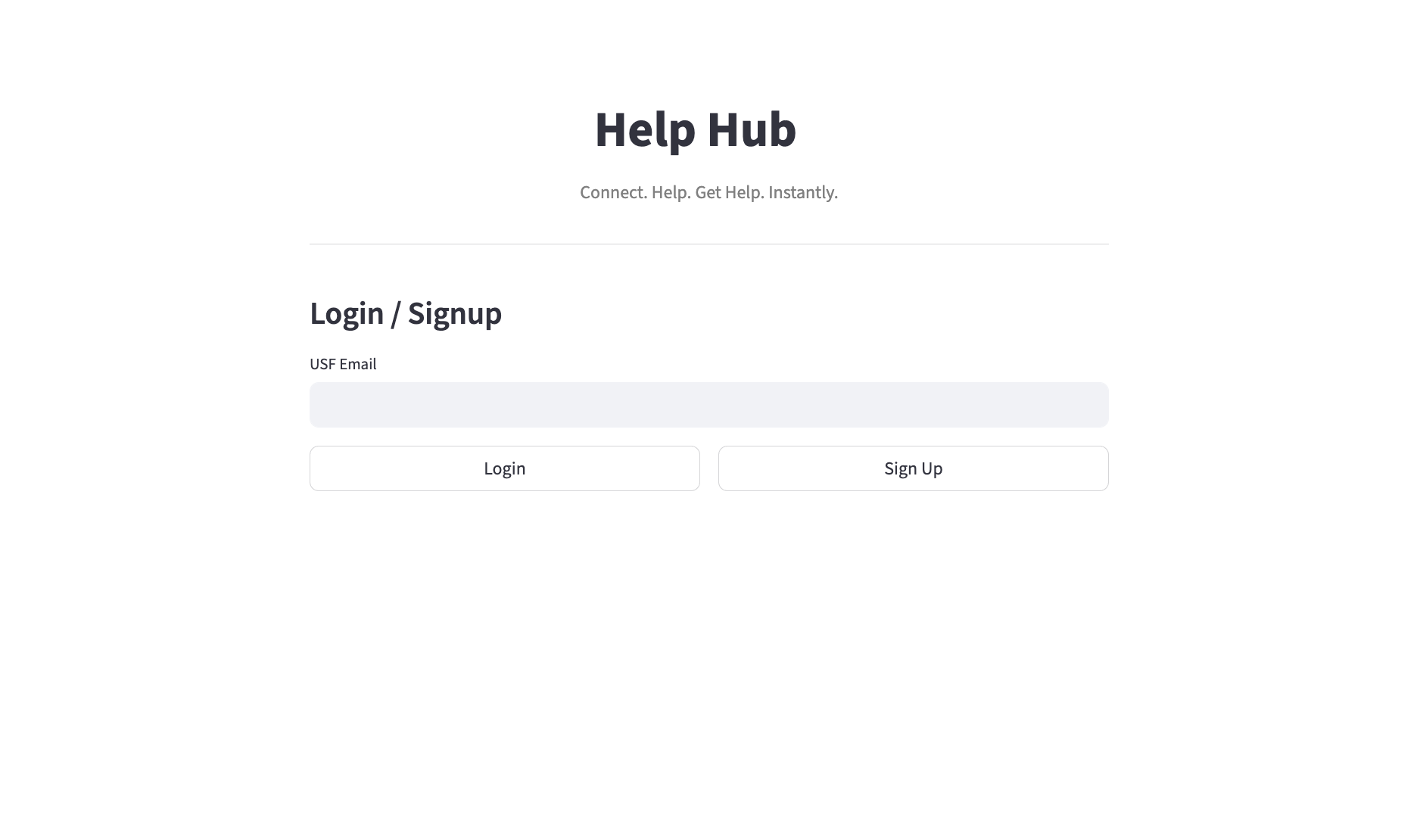
Login/Signup
-
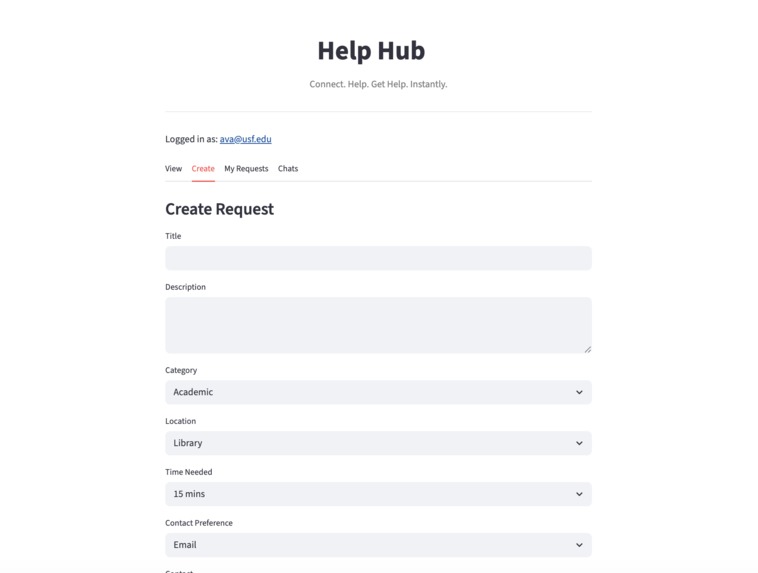
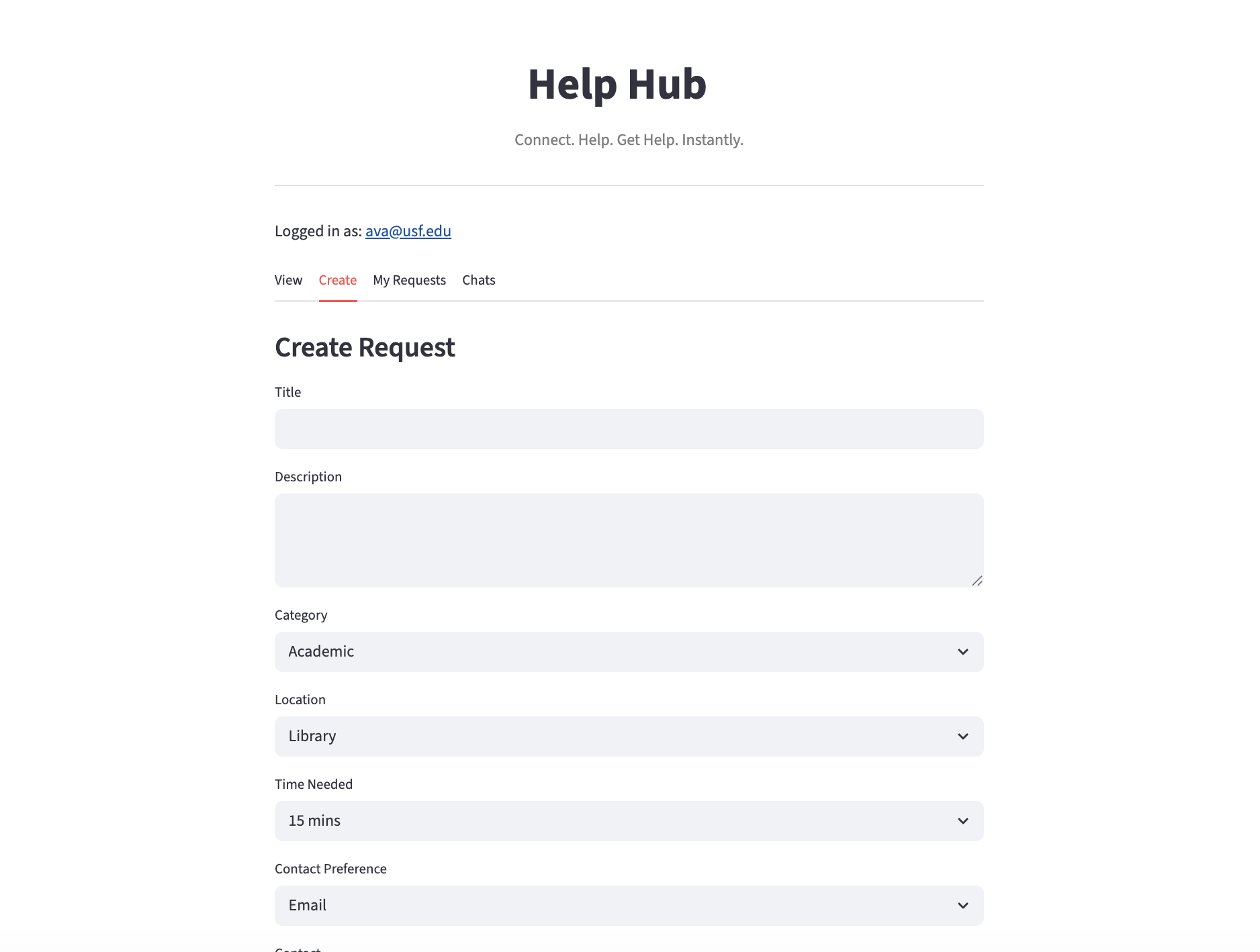
Create Request
-
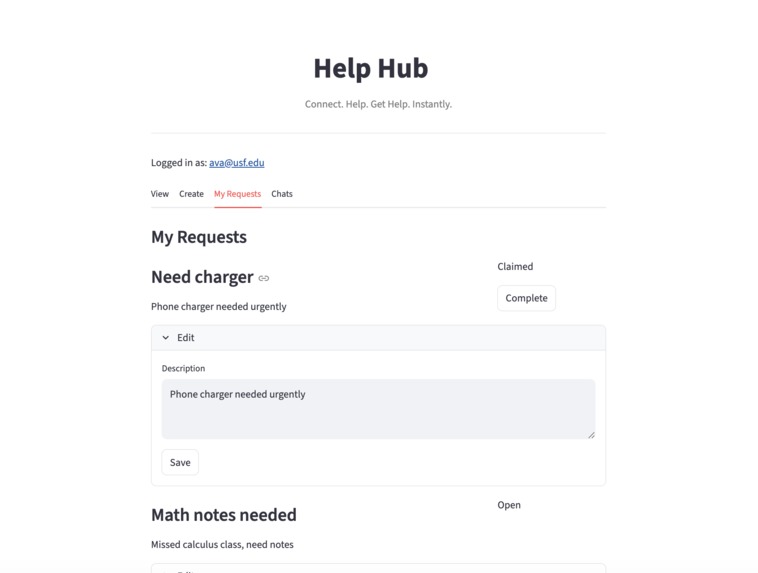
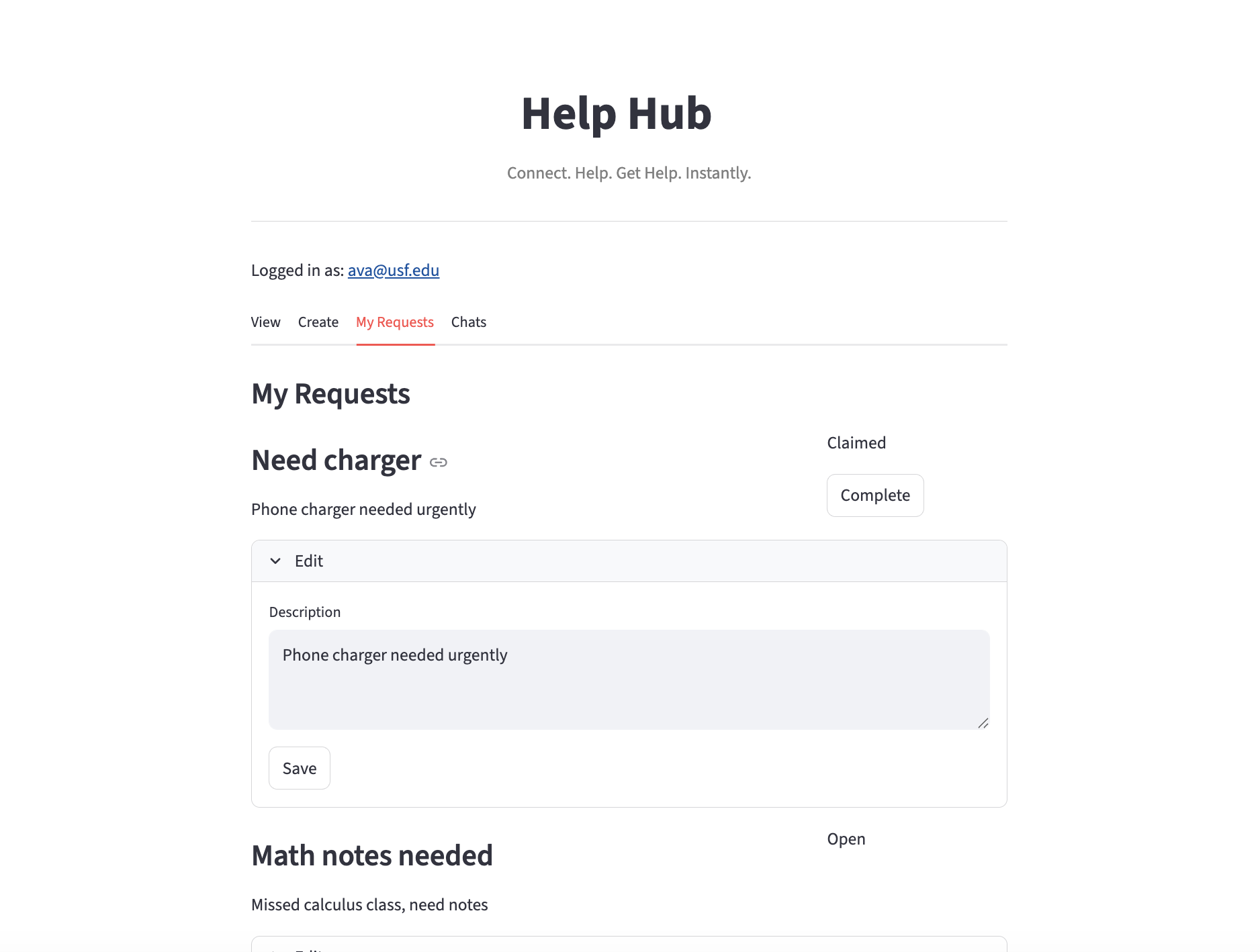
Update your request
-
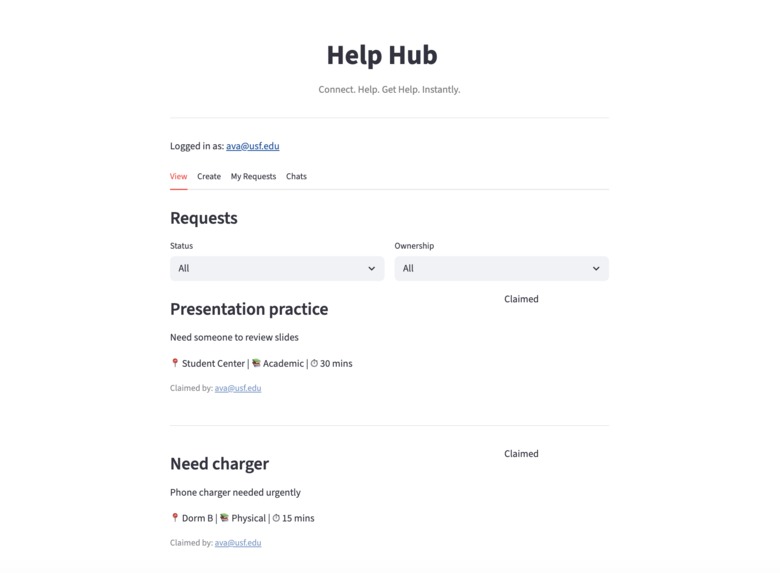
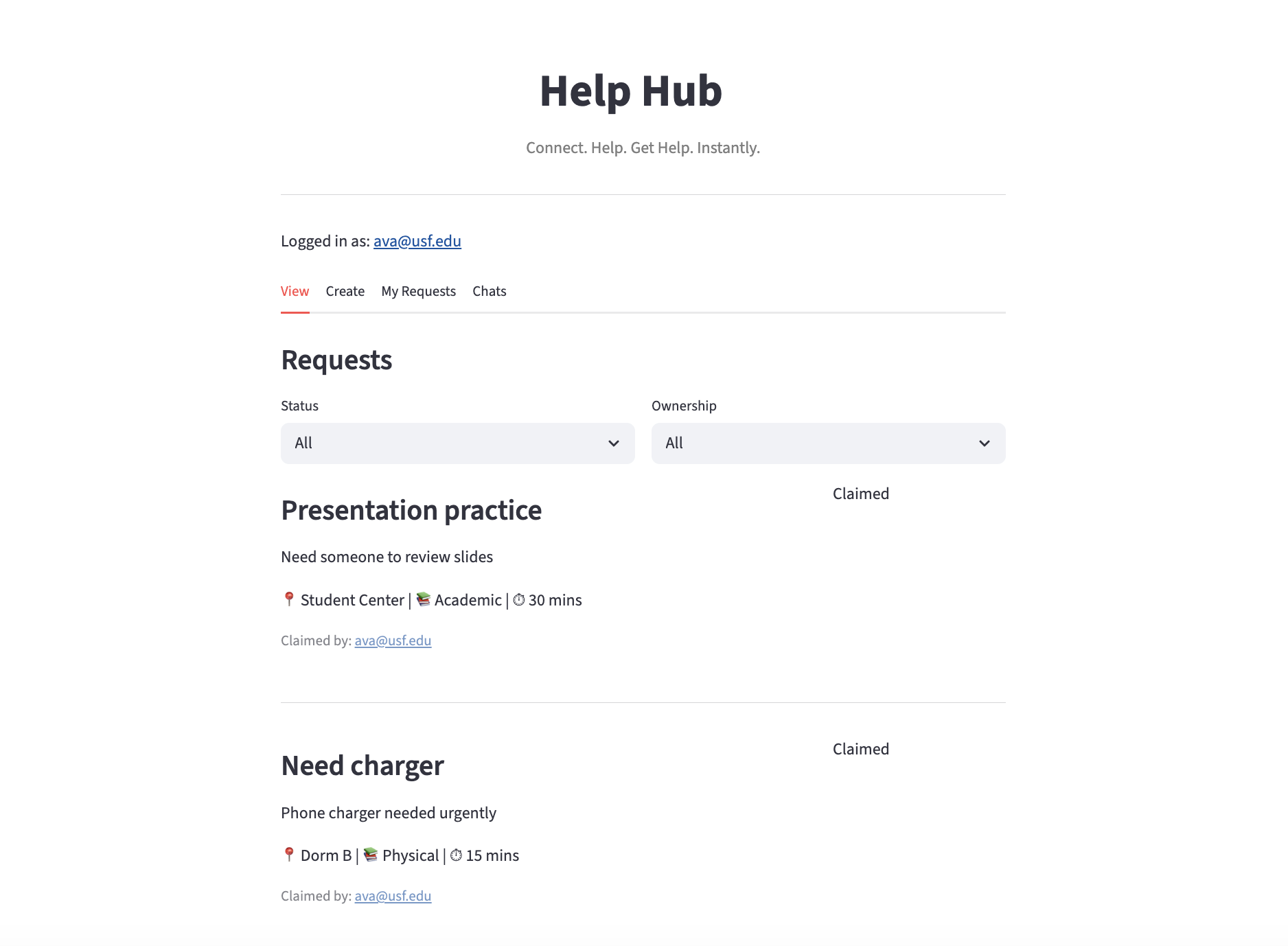
View all request
-
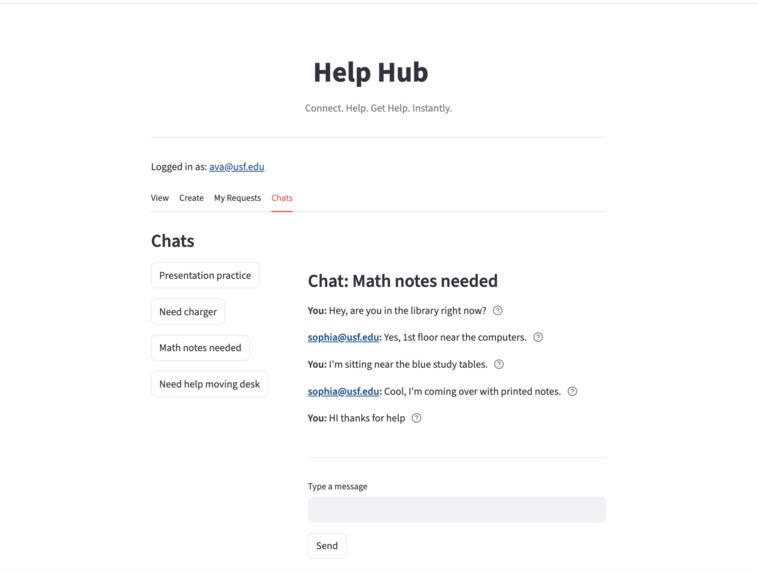
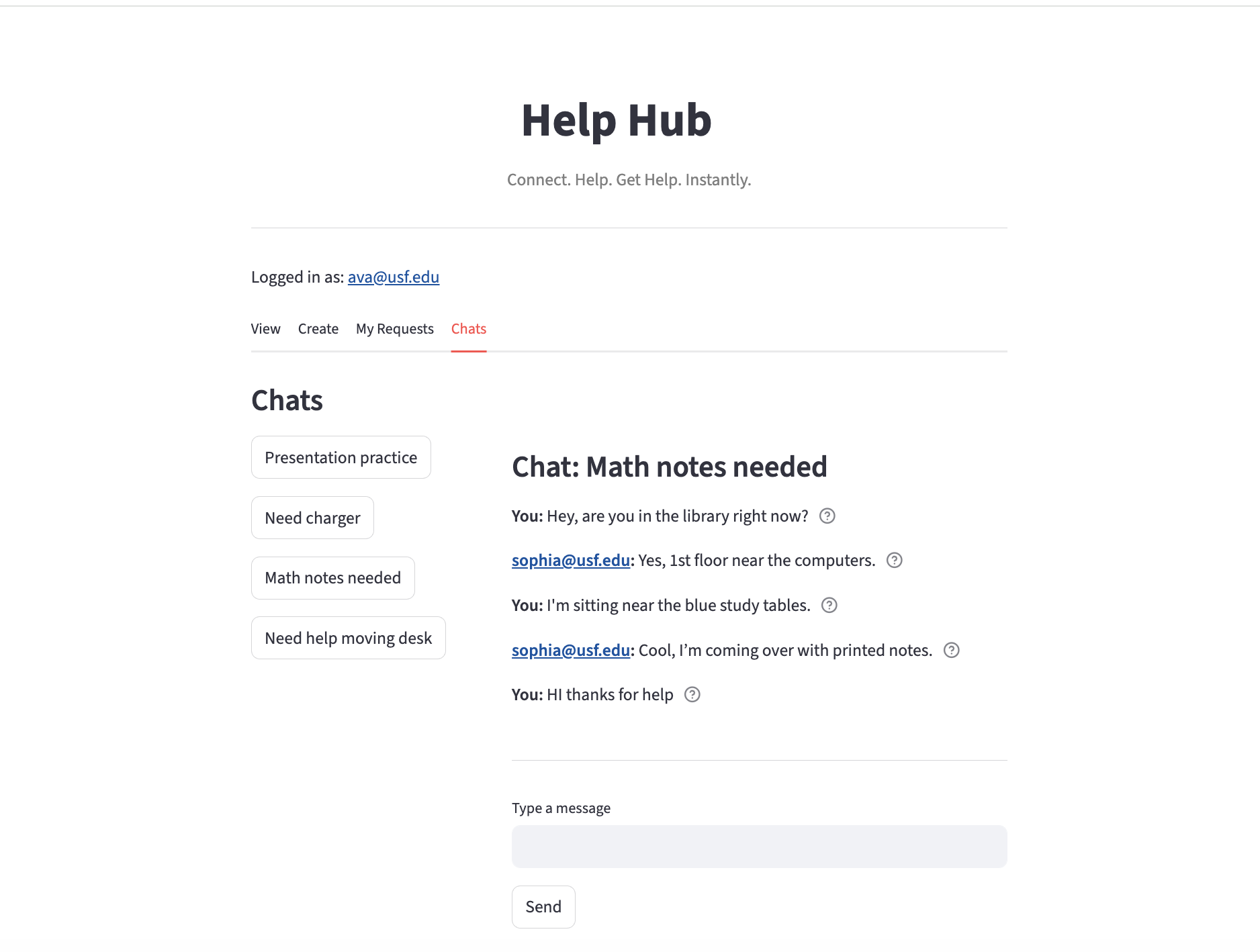
Chatbot
Inspiration
Help Hub was inspired by everyday situations where small help requests go unmet. Students often need quick support—notes from a missed class, help carrying something, or someone to talk to—but there is no simple way to reach people nearby.
We noticed that people are physically close in places like campuses, yet socially disconnected. This gap inspired us to build a platform that makes asking for help instant, local, and natural.
What it does
Help Hub is a real-time community support platform that enables users to request and provide small, time-sensitive help.
Users can:
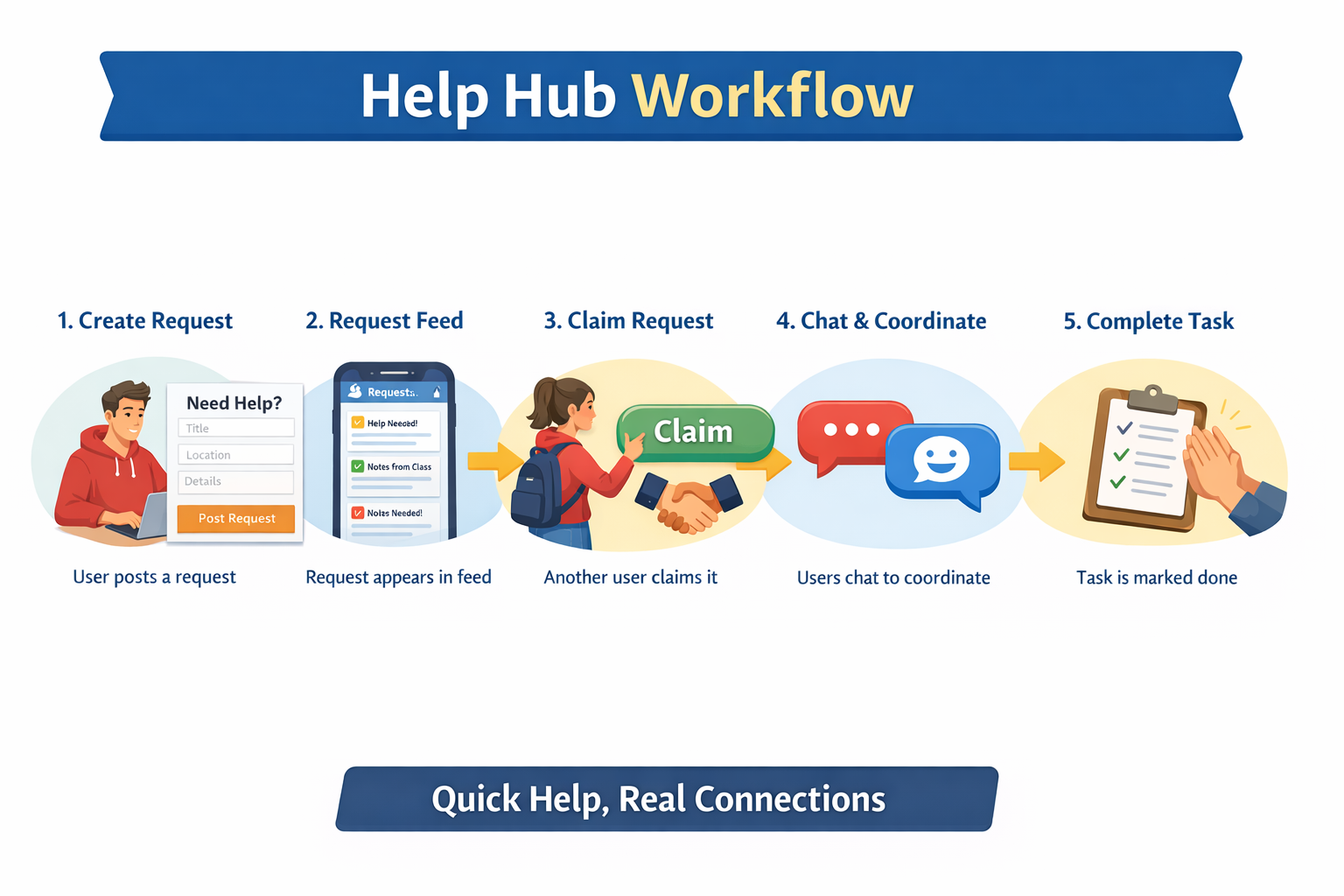
- Post quick help requests
- View nearby requests in a live feed
- Claim requests they can assist with
- Chat directly with the requester
- Mark requests as completed
The platform focuses on micro-volunteering—small actions that take only minutes but create meaningful impact.
How we built it
We built Help Hub using a simple and efficient stack:
- Frontend: Streamlit
- Backend: Python
- Database: SQLite
Key components include:
- A request system with lifecycle states (Open, Claimed, Completed)
- A filtered feed showing the most recent requests first
- A request-based chat system with access control
- Session state management for smooth user interaction
The design prioritizes speed, clarity, and ease of use.
Challenges we ran into
One challenge was managing request states correctly, ensuring that only one user can claim a request at a time.
We also had to enforce strict access control so that only the requester and the helper can access the chat. Designing smooth navigation between requests and chat while maintaining state was another key challenge.
Balancing functionality with a clean and minimal interface required careful design decisions.
Accomplishments that we're proud of
We successfully built a working end-to-end system that allows users to:
- Create and manage requests
- Claim and complete tasks
- Communicate through a secure chat system
We are especially proud of:
- The simplicity of the user experience
- The real-time feel of the platform
- The clear request lifecycle and structured interaction model
What we learned
Through this project, we learned:
- How to design systems around real human needs
- The importance of access control in communication systems
- How to manage application state effectively in Streamlit
- How small UX improvements can significantly impact usability
What's next for Help Hub — Real-Time Support Platform
This prototype treats a university as a single community, but the vision is much larger.
Next steps include:
- Expanding to neighborhood and city-level communities
- Adding location-based matching for nearby users
- Real-time notifications for requests and messages
- Priority detection for urgent or emergency requests
- Mobile-friendly interface for wider accessibility
Our goal is to build a platform where anyone, anywhere can access help from people around them in real time.


Log in or sign up for Devpost to join the conversation.