-
-
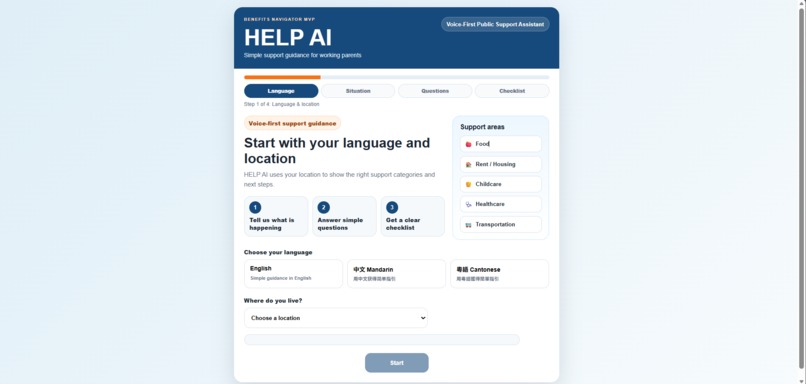
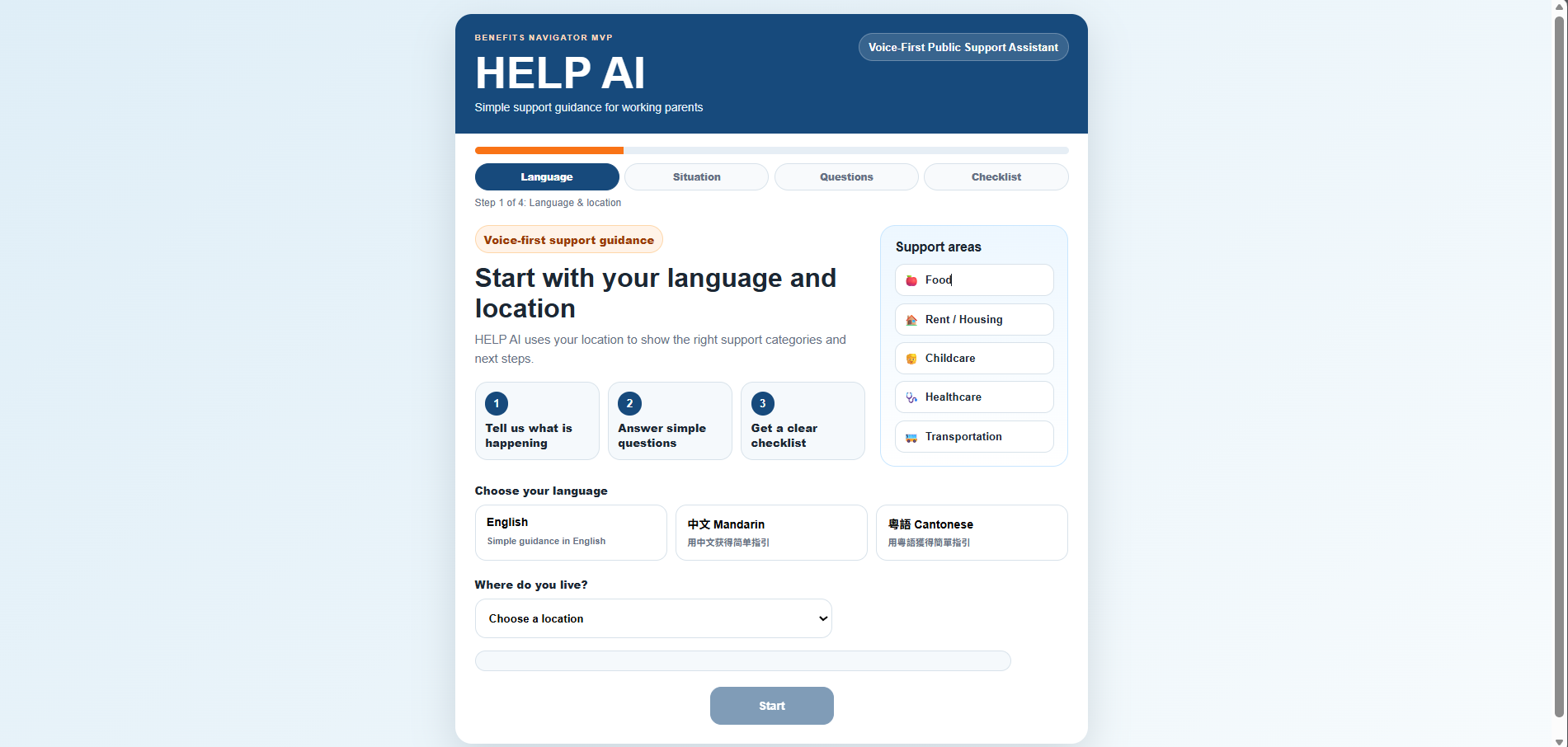
Language and location setup page
-
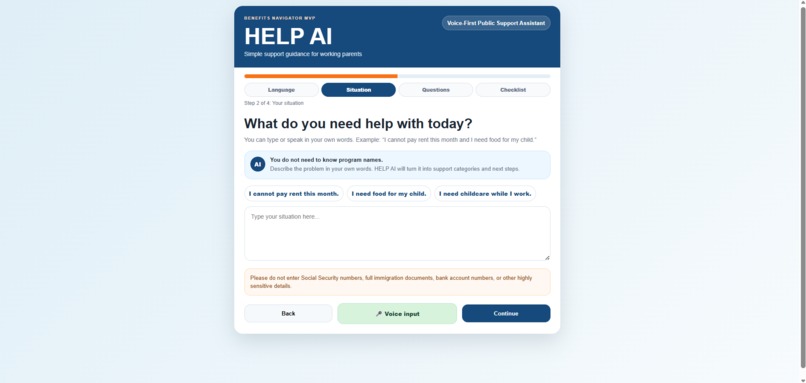
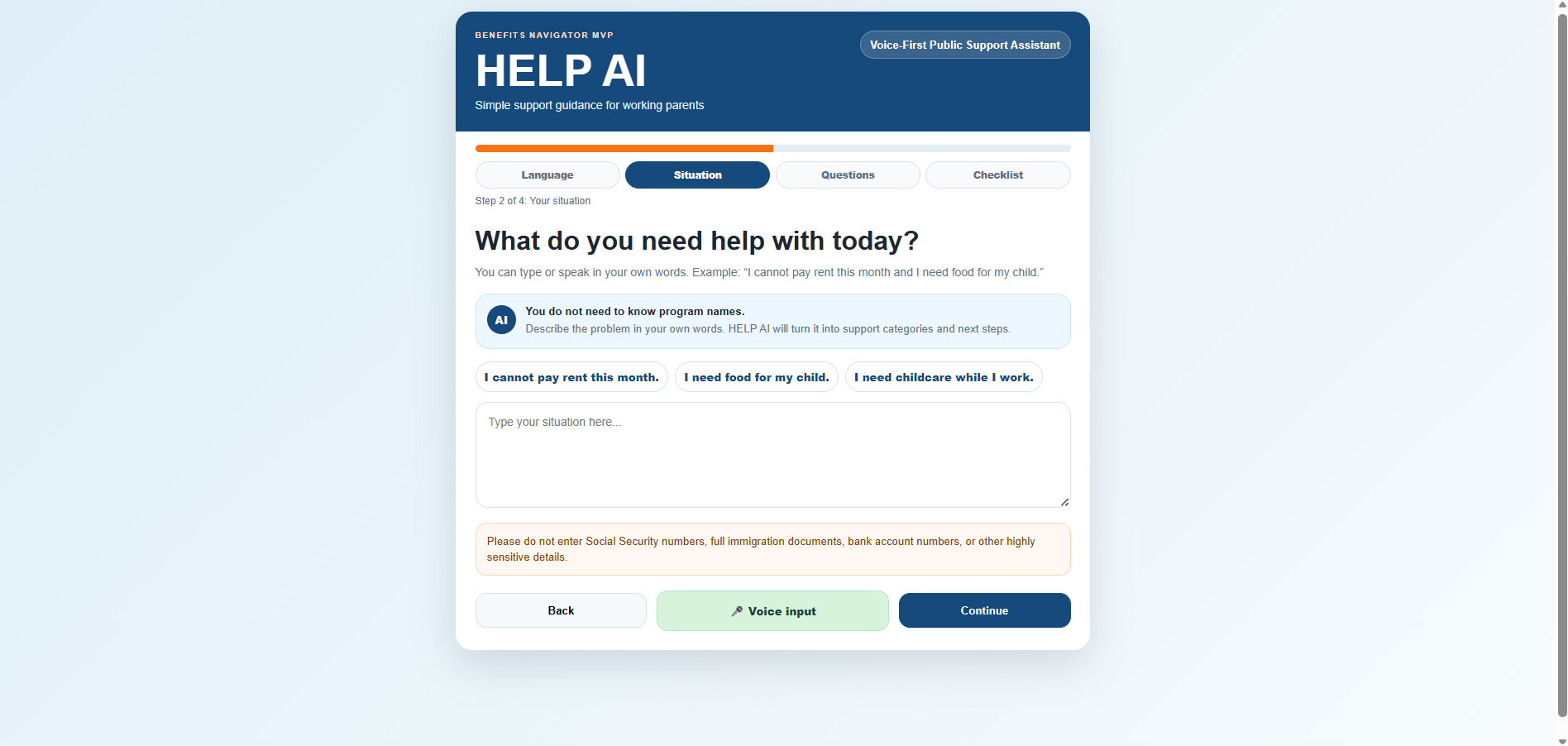
User describes their situation in simple words
-
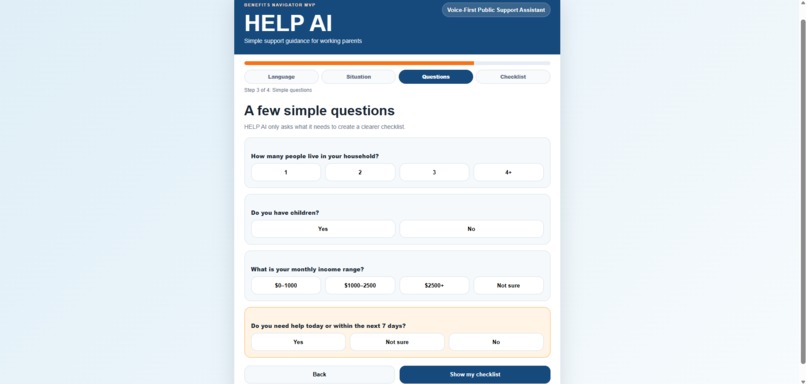
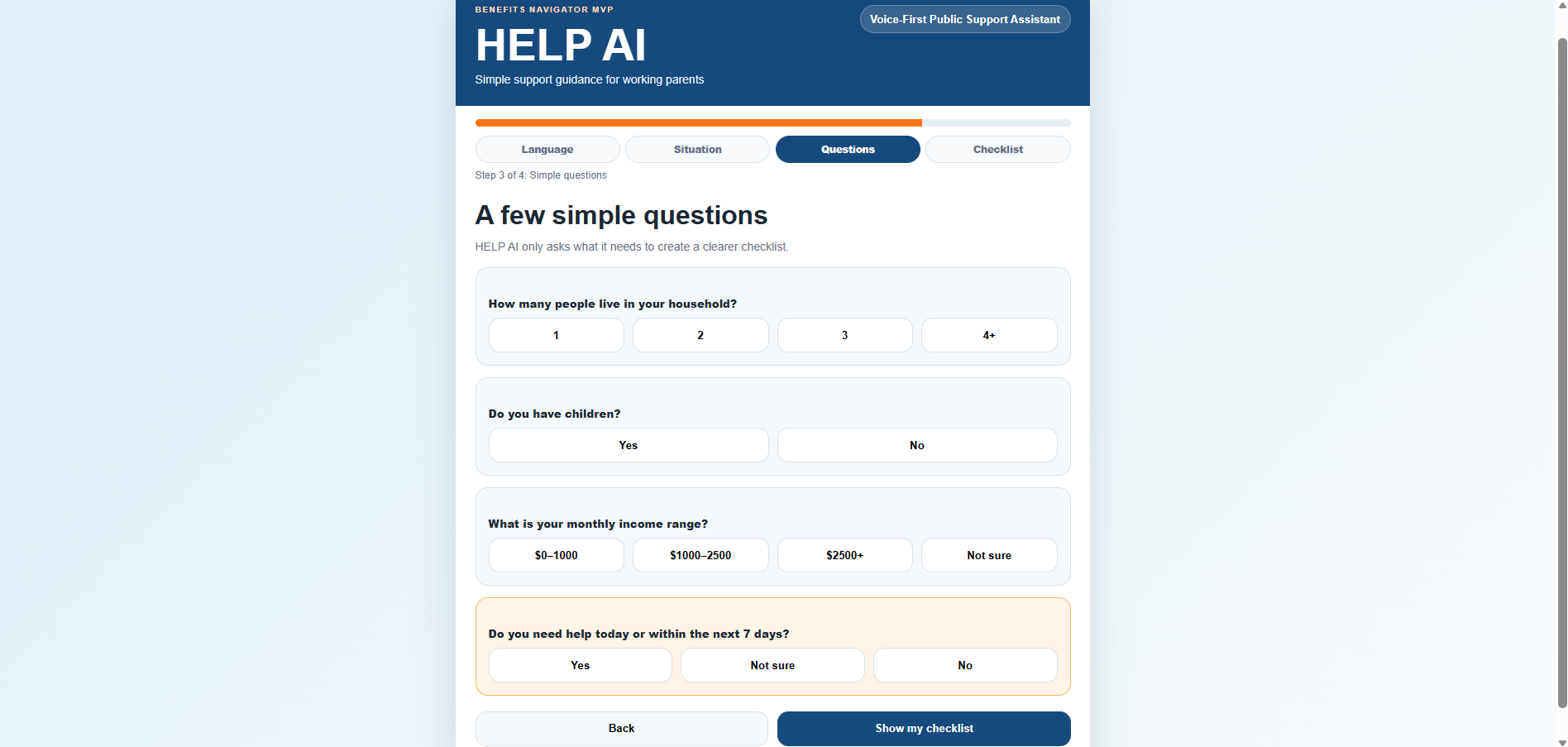
HELP AI asks simple follow-up questions
-
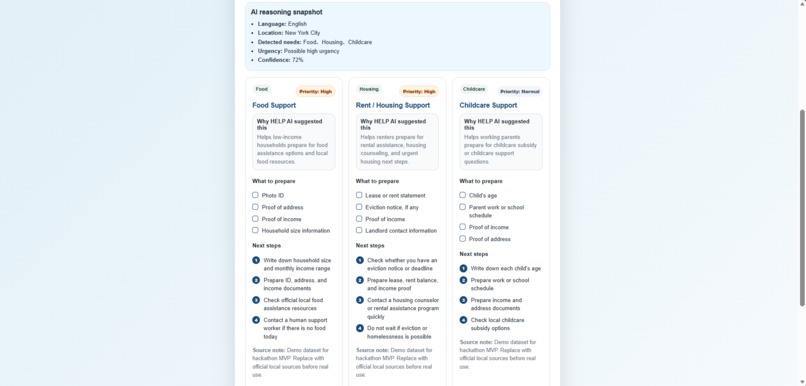
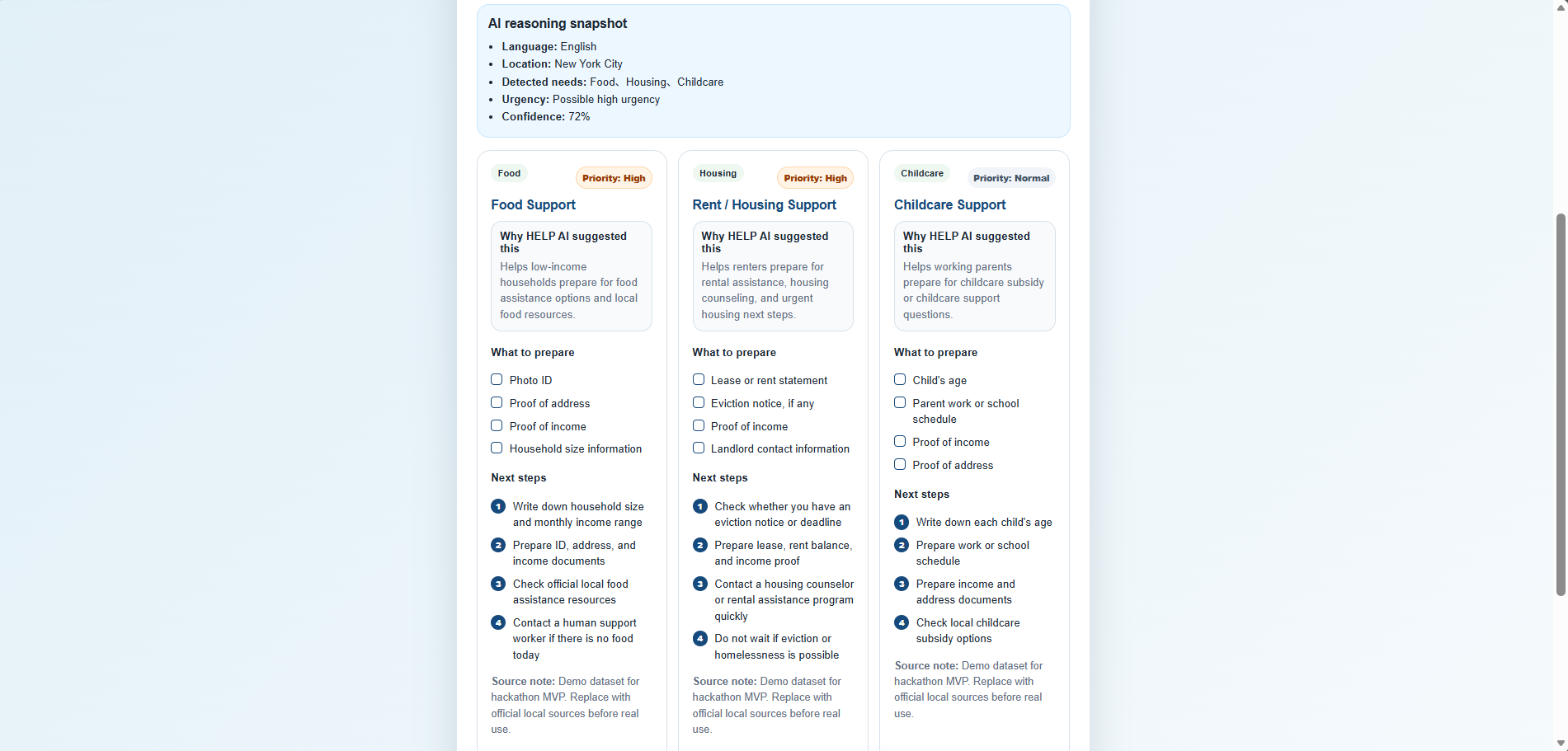
Checklist with AI reasoning and support options
-
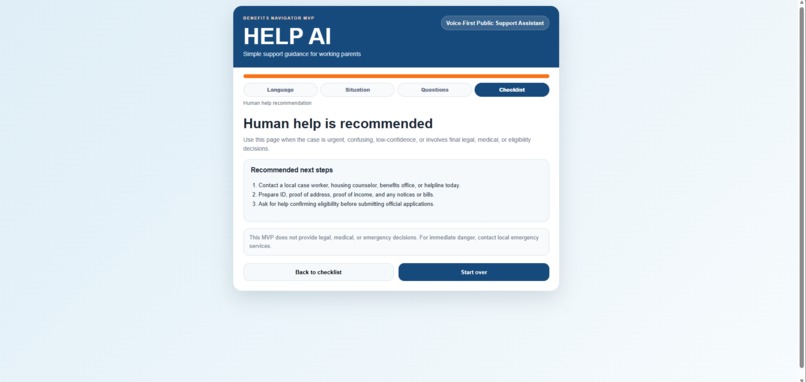
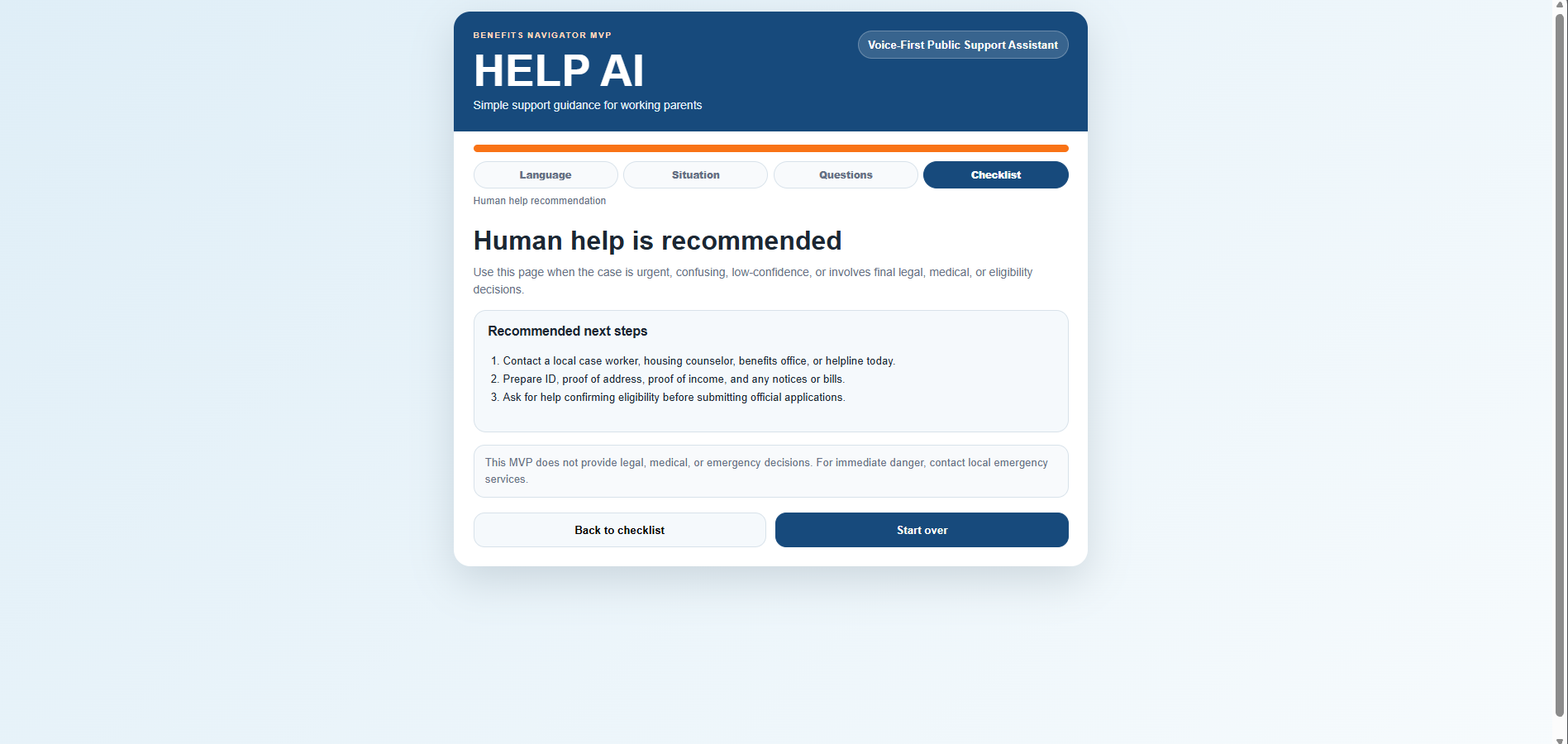
Human help recommendation for urgent cases
Inspiration
Many people who need public support do not know where to start. A low-income working parent may be struggling with rent, food, bills, childcare, healthcare, or transportation, but the information online is often difficult to understand. Government and nonprofit websites can be text-heavy, formal, and spread across many pages.
This problem has becomes even harder when the person is not comfortable using English or does not understand the official terms used on support websites. For example, they may not know to search for words like “housing assistance,” “utility relief,” or “childcare subsidy.” They may simply say, “I cannot pay rent this month,” or “I do not have enough money for food.”
We have created the HELP AI to reduce this first barrier. Instead of expecting users to know the correct search terms, HELP AI lets them describe their situation naturally in a language they understand, such as Mandarin, Cantonese, or English.
What it does
HELP AI is a voice-first web assistant that helps low-income users find public support programs. Users can speak or type in their preferred language. The AI listens to their situation, asks simple follow-up questions when needed, and recommends relevant support categories.
For example, the system may ask about income range, household size, rent, savings, age, number of children, and whether the situation is urgent. After that, HELP AI gives the user a short step-by-step checklist in the same language.
The checklist may include what type of help they may need, what documents to prepare, where to apply, what to do first, and when to contact a human case worker or local helpline.
If the user cannot read or does not understand the words, the system can read the answer aloud. The interface uses large buttons, short sentences, simple icons, and no long confusing paragraphs.
How we built it
We have designed HELP AI around four main steps.
First, the user speaks or types their situation in their preferred language. If the user speaks, speech-to-text converts the audio into text.
Second, the NLP layer detects the language, understands the user’s natural explanation, and extracts key information such as income, household size, rent, bills, food needs, childcare needs, healthcare needs, and urgency.
Third, the recommendation system compares the user’s situation with public support information from public datasets, official government websites, nonprofit directories, and local social service resources. The support database includes program categories, eligibility rules, required documents, deadlines, language options, and contact information.
Finally, the AI gives a short checklist in the user’s preferred language. If needed, text-to-speech reads the checklist aloud. If the case is urgent, confusing, or low-confidence, the system suggests a human case worker or local helpline.
Challenges we ran into
One challenge was making the AI useful without letting it make decisions it should not make. Public support eligibility can be complex, and the final decision should be made by official programs or human case workers, not AI. To solve this, HELP AI only gives guidance and next steps. It does not approve or deny support.
Another challenge was urgency detection. Users may describe serious problems casually or indirectly. For example, they may say they are “fine for now,” but also mention overdue rent, unpaid bills, or not enough food. We designed the system to flag high-urgency words and ask direct safety questions like, “Do you need help today?”
A third challenge was privacy. Users may share sensitive information such as income, family situation, housing status, or immigration status. HELP AI should only collect necessary information and explain clearly how the information will be used.
Accomplishments that we're proud of
We are proud that HELP AI focuses on accessibility, language inclusion, and responsible AI. It is not just a chatbot or search tool. It is designed to help people who may feel overwhelmed, stressed, or excluded by complicated websites.
We are also proud of the human-in-the-loop design. HELP AI helps with intake, translation, summarization, and first-step recommendations, while humans remain involved for urgent, confusing, or complex cases.
What we learned
We learned that AI is most helpful when it lowers barriers instead of replacing people. In this project, AI helps users explain their situation, understand possible support options, and prepare for the next step. Human case workers are still important for final decisions, emotional support, and complex situations.
We also learned that responsible AI design is very important when working with vulnerable users. The system must be simple, careful, privacy-aware, and honest about what it can and cannot do.
What's next for HELP AI
Next, we would like to connect HELP AI to real public datasets and official support directories. We would also like to test the tool with users who speak different languages and improve the voice experience.
Future features could include document upload, automatic form preparation, real-time translation for case workers, and direct handoff to local nonprofit or government support services.

Log in or sign up for Devpost to join the conversation.