Why I built Pausa
Recently, someone in my family was scammed with a fake sms.
The message looked real. It mentioned money, created a sense of urgency, and made them feel that they had to act immediately. In that moment, they did not know whether it was real or not.
I kept thinking about that moment. The scam worked because fear took away the time they needed to think, and they had no one to talk to in that moment.
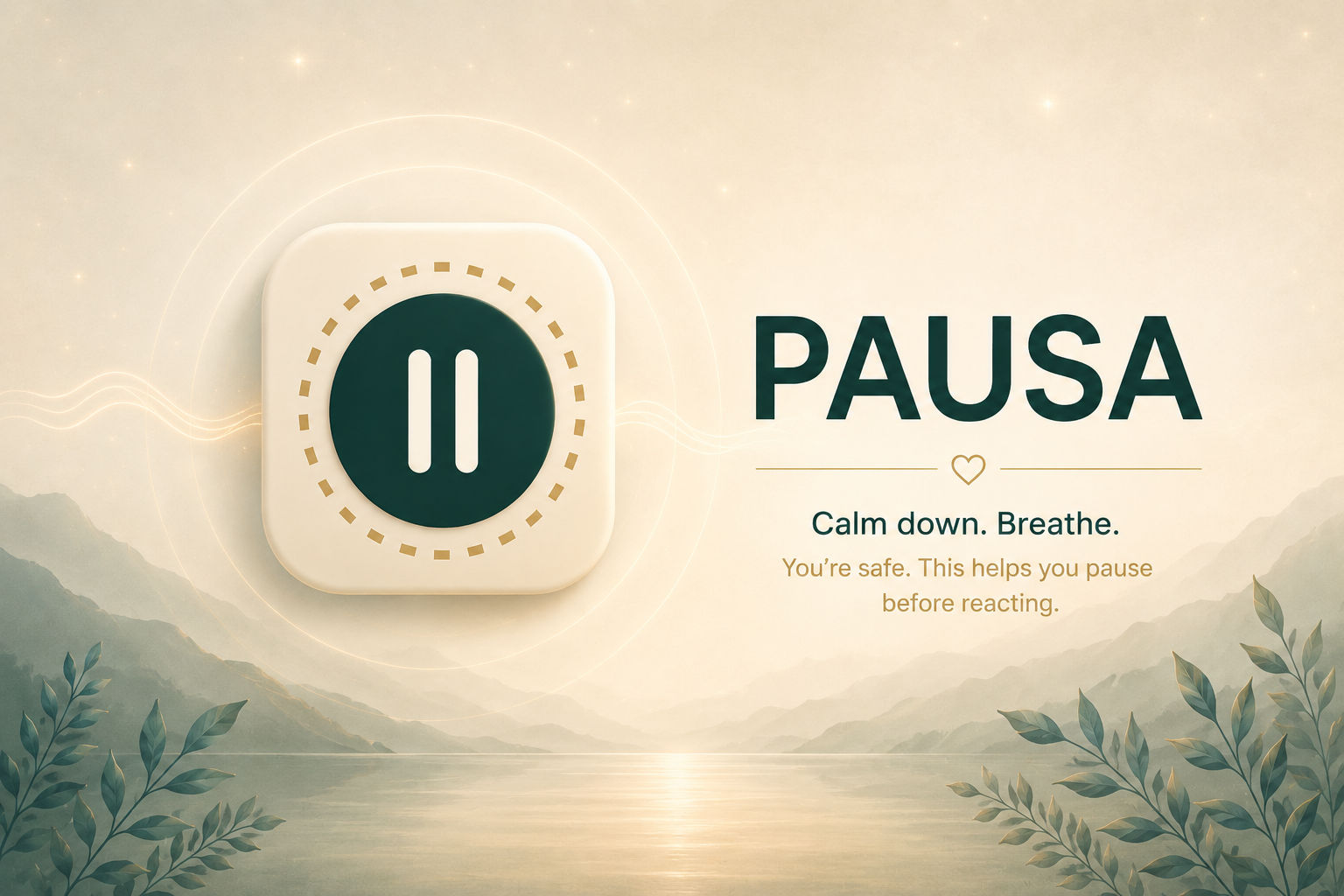
That is why I built an open source project called Pausa.
I wanted it to feel like calling the person in your family who understands technology and security; the one who listens without judging, explains what feels wrong, and helps you decide what to do next.
What Pausa does
Pausa is a free, bilingual web app for moments of digital uncertainty.
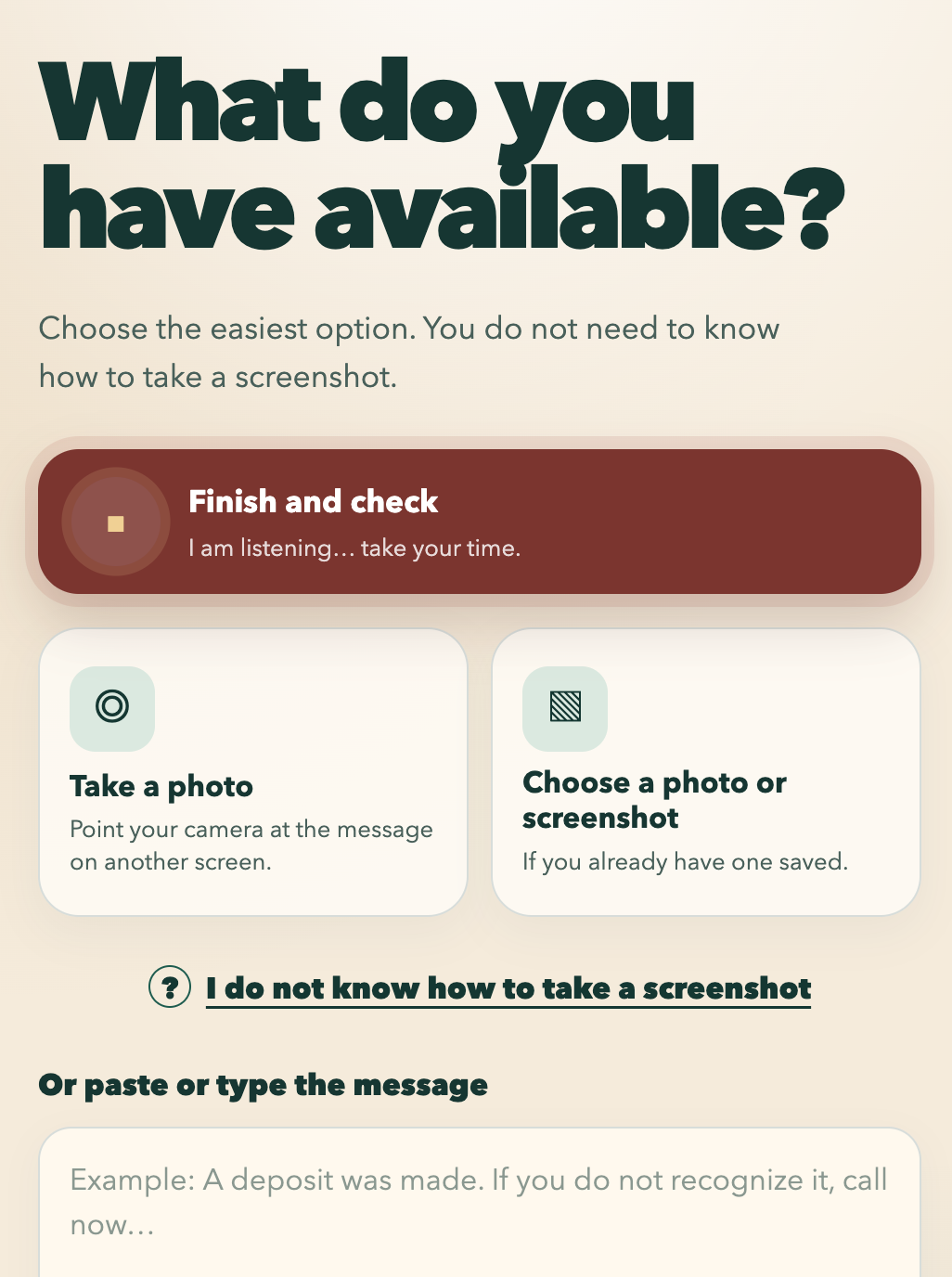
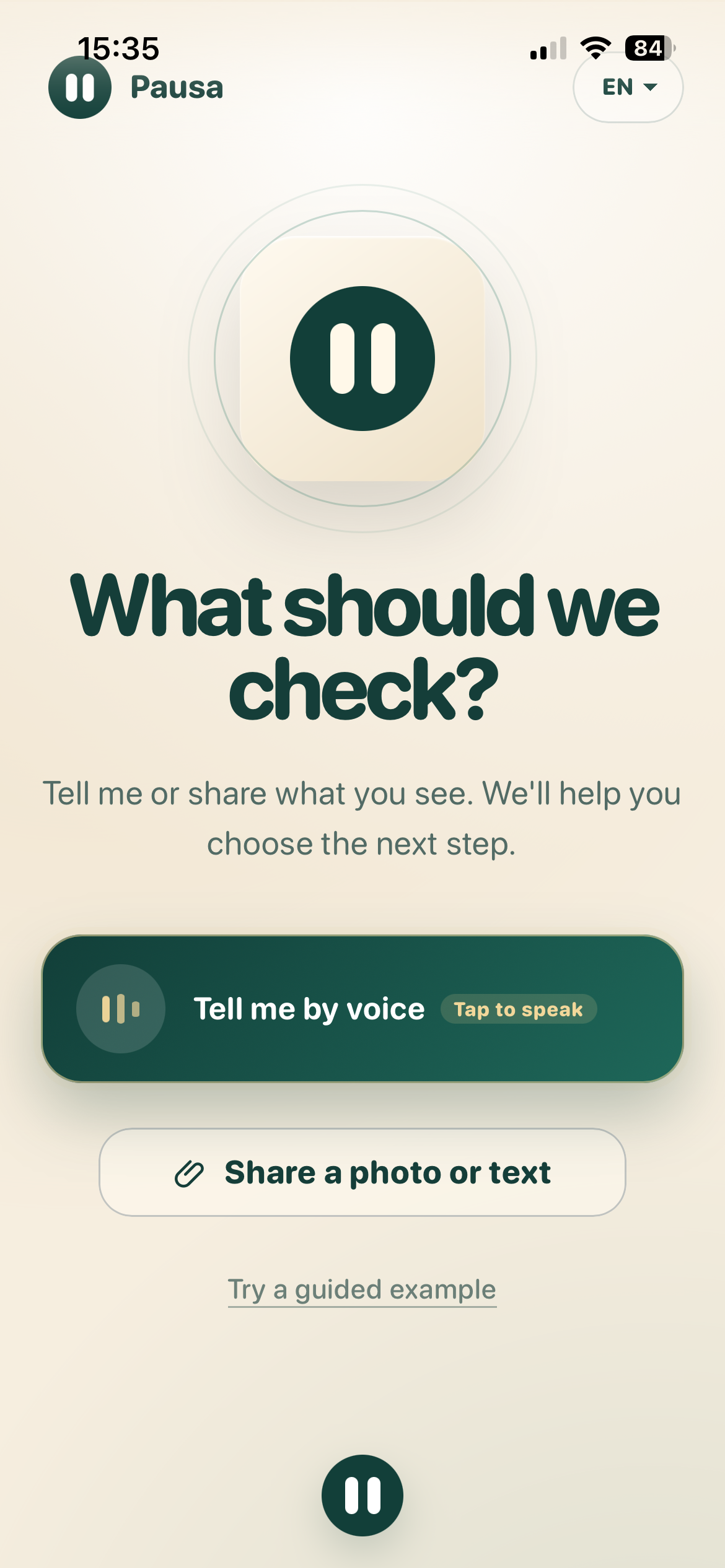
You can tell Pausa what happened using your voice, take a photo of another screen, choose a screenshot, or paste the message. It then looks for warning signs such as pressure, fear, urgency, impersonation, and suspicious instructions. It explains those signs in plain language and recommends a safer next step.
It does not promise that a message is safe or fraudulent. Instead, it helps the person stop, leave the suspicious conversation, and verify through a channel they already trust.
I designed it especially for people who are not digitally native. It works on phones, tablets, and the web, and it can be installed on a phone home screen without going through an app store. There is no account, no background monitoring, no analytics, and no app database storing submissions.
The product is available in Spanish and English. It also includes a clearly labeled guided example so anyone can understand the experience without sharing private information.
How I built it
I am not a traditional software developer. I started by speaking to Codex about the problem, the person I wanted to help, and how I wanted Pausa to feel.
That long conversation became the product.
With Codex, I narrowed the original idea into something I could build safely during Build Week. We chose a mobile-first PWA, designed the bilingual experience, built the voice, text, photo, and screenshot flows, connected the OpenAI models, created the privacy and safety rules, tested the product, fixed failures, refined the interface, and published the working application.
The live analysis uses the OpenAI Responses API with GPT-5.6. The model receives only what the person chooses to share, treats suspicious content as untrusted evidence, and returns a constrained result: a risk level, a short explanation, observable signals, and safer next steps.
Voice recordings begin only after an explicit tap and are transcribed with gpt-4o-transcribe. The read-aloud result uses gpt-4o-mini-tts and is clearly labeled as an AI-generated voice.
What testing changed
Testing was a major part of the build, not something I added at the end.
I created 12 synthetic scenarios covering bank impersonation, parcel fees, family impersonation, verification-code theft, threatening messages, QR payments, legitimate notices, ambiguous messages, and prompt injection. All 12 passed against the public production endpoint.
Testing also exposed real product problems. Image analysis initially took too long and exhausted its output budget. Codex helped me trace the problem, adjust the reasoning and structured-output behavior, and bring the synthetic screenshot test down to 12.7 seconds.
Another important lesson was that a demo must never pretend to be live analysis. If Pausa cannot access the API, it offers only a clearly labeled synthetic walkthrough instead of returning a convincing-looking answer about a person's real message.
What I am proud of
I am proud that Pausa feels like a small, complete product rather than a technology demonstration.
It is calm instead of alarming. It gives people several simple ways to ask for help. It explains without shaming. It preserves uncertainty. And it always moves verification away from the suspicious message.
Most importantly, it turns a difficult family experience into something that might help another family pause before making the same mistake.
What comes next
Next, I want to test Pausa with more older adults, expand the multilingual safety evaluations, and improve the trusted-family-member flow while keeping every contact or share action under the user's control.
The larger vision is a calm personal help button for moments when someone does not know what is happening or what to do next.
Scam protection is where it begins.
Built With
- cloudflare
- codex
- gpt-4o-mini-tts
- gpt-4o-transcribe
- next.js
- openai-gpt-5.6
- openai-responses-api
- react
- typescript
- vite

Log in or sign up for Devpost to join the conversation.