-
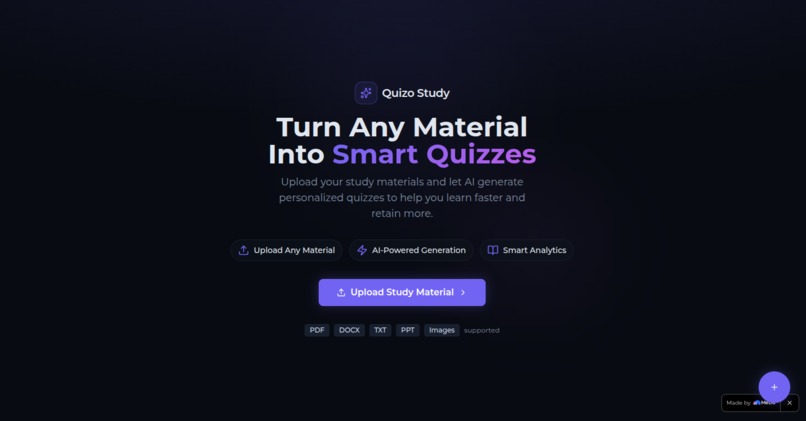
Quizo Homepaghe
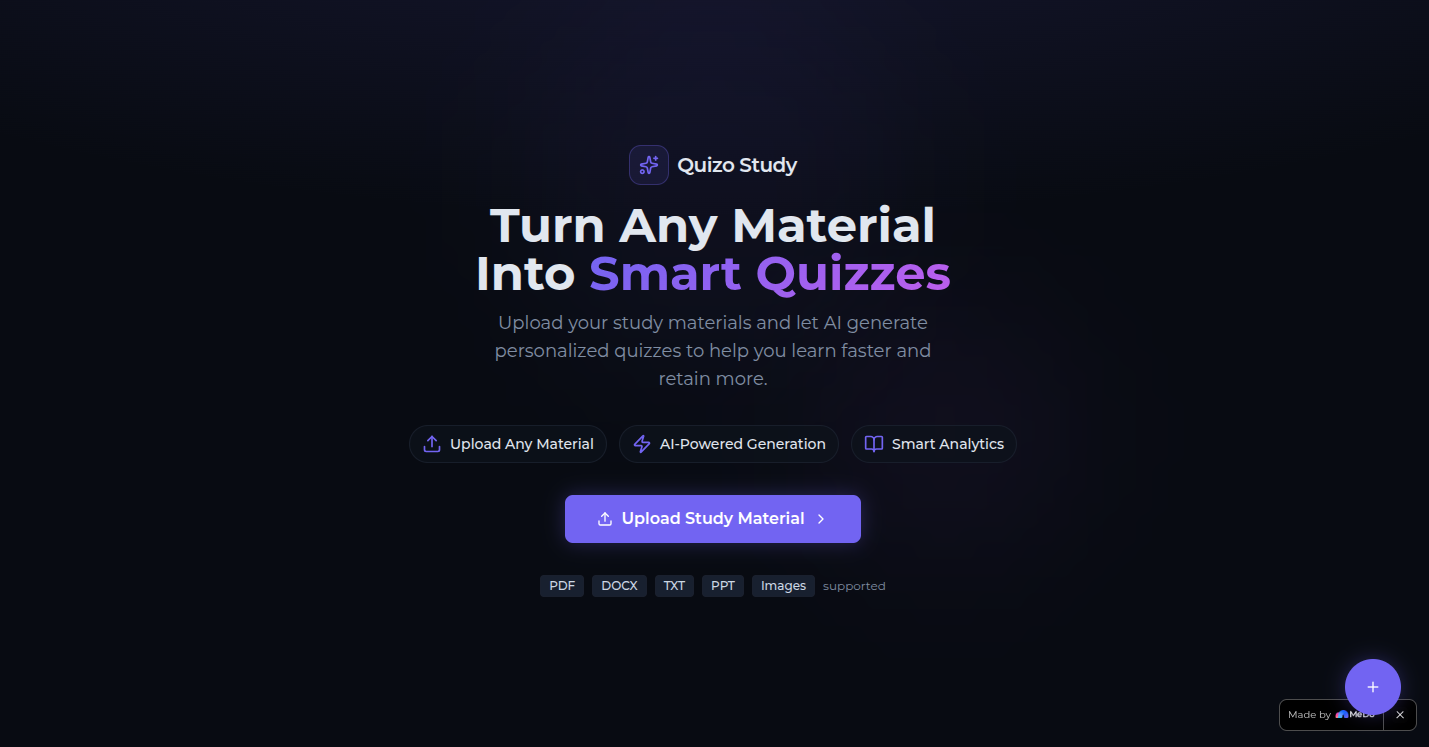
About Quizo The Inspiration I built Quizo because I've lived the problem. You sit down to study, open your textbook or notes, and reread the same paragraphs over and over. It feels productive, but it's stressful. You walk into an exam not knowing if you actually retained anything. Active recall through quizzing is scientifically proven to be far more effective, but manually creating questions from your material is tedious and time consuming. I wanted something that removes that friction entirely. Just upload your material and get tested. No excuses.
How I Built It The app lets users upload documents in virtually any format. PDFs, images of handwritten notes, slides, even raw text files. The frontend handles file ingestion and sends the content to an AI pipeline that parses the document, extracts key concepts, and generates quiz questions tailored to the material. Users choose their difficulty level, easy, medium, or hard, and decide whether to enable a timer. Once submitted, the backend evaluates answers against the AI generated answer key and returns a detailed breakdown: total score, each question's correctness, and a summary of weak areas that need revisiting.
What I Learned This project taught me a lot about prompt engineering to get consistent, high quality quiz generation across wildly different input types. A math textbook and a history essay need very different question structures, and getting the AI to adapt reliably took a lot of iteration. I also learned that parsing unstructured documents like photos of handwritten notes is genuinely hard, and even small OCR errors can throw off the entire quiz.
The Biggest Challenge The hardest part was handling edge cases in user uploaded content. Some documents are poorly scanned, others mix languages, some have heavy diagrams or tables that don't parse cleanly. Making the quiz generation robust enough to either work around these issues or fail gracefully with a helpful message instead of producing nonsense questions took significant testing and refinement. Ensuring the "areas to improve" summary was actually accurate and actionable, not just vague feedback, was another challenge that required careful tuning of the evaluation logic.
Built With
- api
- express.js
- gemini
- serverlessfunctions
- typescript
- vercel

Log in or sign up for Devpost to join the conversation.