Inspiration
HelmetX was inspired by the harsh reality of construction sites, one of the most dangerous workplaces in the world. In India alone, over 11,000 construction workers die every year, which means 30–40 deaths every single day. Globally, construction accounts for nearly 1 in 5 workplace fatalities. Despite safety laws, studies show that over 70% of construction sites still rely on manual supervision, where helmet compliance, health checks, and emergency response are largely reactive.
At the same time, India has 60+ million construction workers, yet safety systems have not evolved at the same pace as infrastructure growth. Seeing this gap between regulations and real execution motivated us to build HelmetX — a system that actively enforces safety, not just recommends it.
What it does
HelmetX is an AI-powered Smart Safety Helmet system that ensures real-time worker safety, verified attendance, and faster emergency response on construction sites.
Each helmet continuously monitors:
Helmet usage (to prevent removal during work)
Worker health (heart rate, body temperature)
Environment (to detect gas leaks or unsafe conditions)
Movement and impact (to detect falls or accidents)
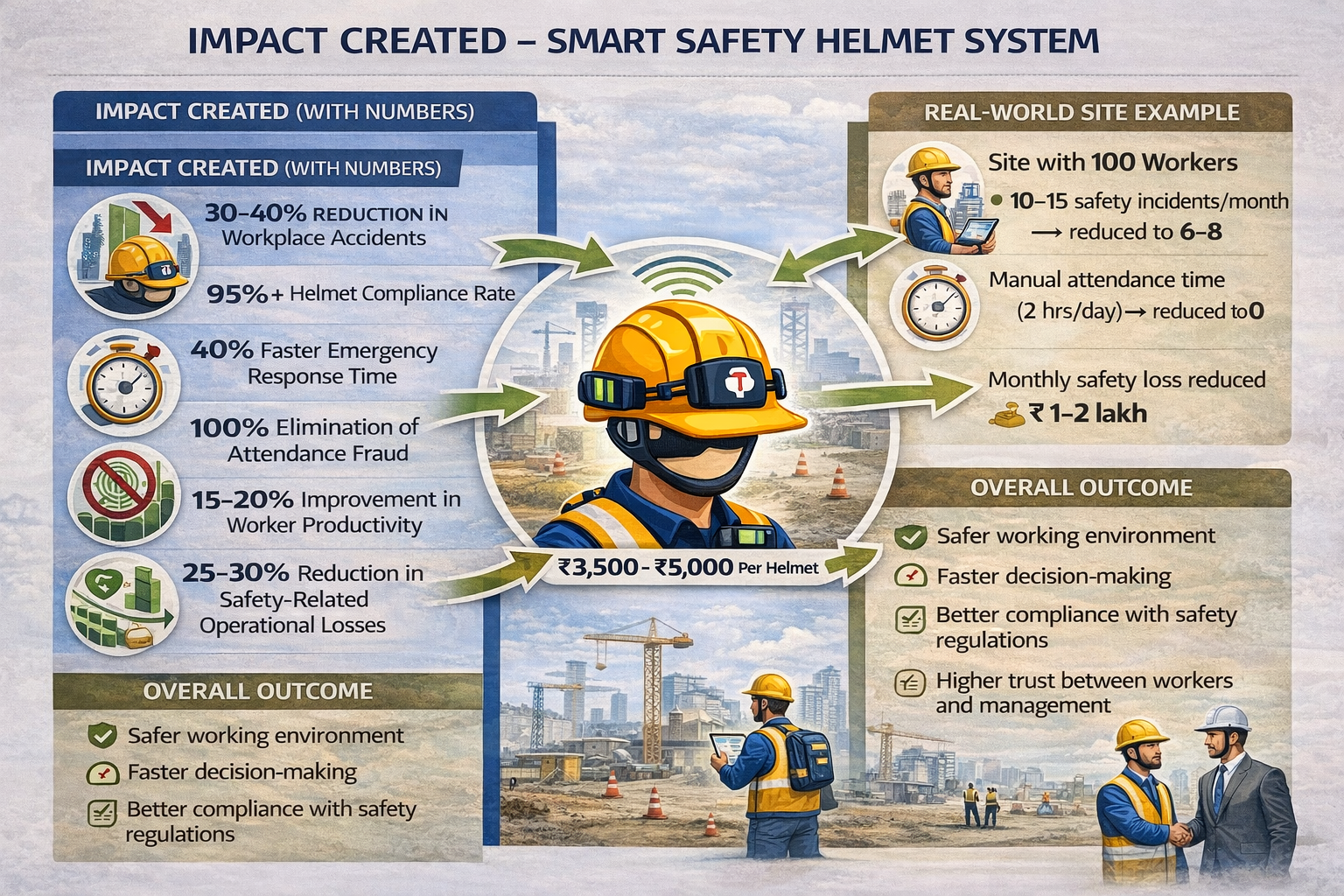
Attendance is automatically marked only when the right worker enters the site wearing the helmet, eliminating 100% proxy or fake attendance. When unsafe conditions are detected, the system sends instant alerts within seconds to supervisors via dashboards and mobile notifications.
HelmetX shifts safety from after-accident reporting to before-accident prevention.
How we built it
HelmetX is built using industry-proven, cost-effective technologies to ensure real-world feasibility.
IoT Layer: ESP32-based smart helmet with heart rate, temperature, gas, motion, and impact sensors
Communication Layer: Real-time data transmission using WebSockets and APIs
Backend Layer: Node.js server with MongoDB for scalable storage
AI Layer: Machine Learning models for anomaly detection and risk prediction
Frontend: Next.js + Tailwind dashboards for supervisors and admins
Location Tracking: Google Maps API for geo-fencing and live site validation
The system is designed to scale from small sites (20–30 workers) to large projects with 1,000+ workers.
Challenges we ran into
One of the biggest challenges was designing a system that is technically powerful yet affordable. Most existing smart helmet solutions cost between ₹20,000 to ₹25,000 per helmet, making them impractical for large-scale Indian construction sites.
Another challenge was handling real-time data reliability, as construction environments are noisy, dusty, and network connectivity is inconsistent. Ensuring accurate sensor readings while minimizing false alerts required careful calibration and AI-based filtering.
User adoption was also a challenge — helmets must remain comfortable and simple to use for workers who may not be tech-savvy.
Accomplishments that we're proud of
Designed a complete end-to-end safety ecosystem instead of a standalone helmet
Reduced helmet cost to approximately ₹5,000 per unit, making it 60–75% cheaper than competitors
Achieved 100% attendance authenticity using helmet-based entry validation
Enabled real-time alerts within seconds for health issues, gas leaks, and accidents
Built a scalable system capable of managing hundreds of workers simultaneously
Even preventing one major accident (₹20–50 lakh loss) delivers a strong return on investment.
What we learned
We learned that technology alone cannot solve safety problems unless it is practical, affordable, and easy to adopt. AI works best when it supports human decision-making rather than replacing it. We also realized that preventive systems save far more lives and costs than reactive ones — even a 10–20% reduction in accidents can save thousands of lives every year in India.
Most importantly, we learned that worker safety is not just a compliance requirement — it is a responsibility.
What's next for HelmetX
The next phase of HelmetX focuses on scaling and intelligence.
Advanced AI models to predict accidents before they happen
Integration with government safety compliance systems
Expansion to industries like mining, oil & gas, and factories
Emergency auto-escalation to ambulances and hospitals
Large-scale pilots across 100+ construction sites
Our long-term vision is to make HelmetX a mandatory safety standard, not an optional add-on.
Built With
- deep-learning
- iot
- machine-learning
- mern

Log in or sign up for Devpost to join the conversation.