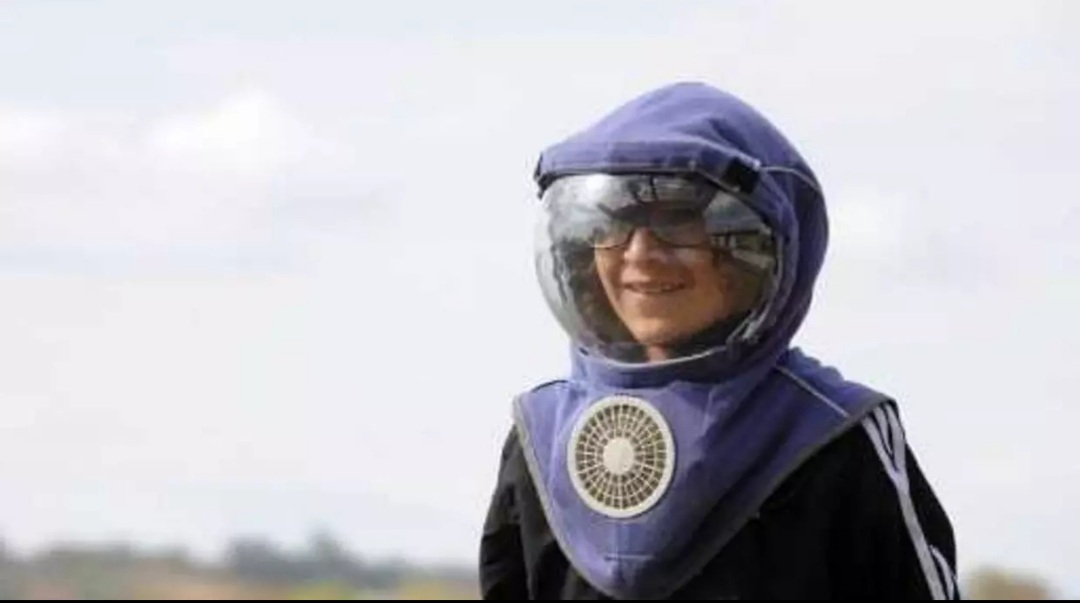
Helmet with filtered air flow
Models
a) Health professionals b) Citizens in General
The "helmet" covers the head 360º, and can be made of transparent acrylic, solid polycarbonate or PET, +450 microns plastic.
(Until making a matrix, or get a speedy execution, it could be used sectioned pipes of said materials)
It will have a cooler (PC for example) inserted with a disposable air filter (SPF fabric -the one with surgical chinstraps-), powered by an external mobile phone battery-charger. The location of the cooler will not be defined until testing the prototype, but it must ensure the correct entry of filtered air into the nose area.
Due to flow dynamics, it is expected that the expulsion of the exhaled air (also filtered for protection to other people in closed environments) and the heat emanating from the head should be located at the top.
Prototype must be spray tested and air flow adequacy verified. A priori, the flow rate of a 5v and 14A cooler would be efficient, but perhaps it can be considered a 2nd cooler for use by professionals.
It contemplates the possibility of lateral and frontal exits -at the height of ears and mouth- with the dual purpose of facilitating the exit of the "expelled" air flow and improving sound communication.
The lower part of the helmet must be semi-hermetically sealed with a removable fabric “choker” -for hygiene- and adjustable at ease, seeking greater comfort in use.
The "helmet" should maintain as much transparency as possible, allowing the full face, gestures and facial expressions to be viewed in the most "natural" way that circumstances allow. (Even prevent possible claustrophobic symptoms)
Support: it remains to be solved in the prototype (s), but we consider that it is more feasible for the helmet to be supported by the head itself, using small padded supports attached to its internal faces or a plastic structure such as safety helmets of the industry.
FUNCTIONALITY:
The cooler would generate a permanent filtered air flow (or carry a 30-second timer), seeking greater comfort in use, avoiding a mask and elastic adjusting the face, causing discomfort, condensation and dermatitis. The semi-hermetic closure of the lower part (neck) can be a removable fabric choker (to be defined).
ADVANTAGES:
Permanent flow of renewed and correctly filtered air, avoiding the free interstices left by the masks.
Avoid using goggles or tight glasses.
Avoid the reflex action of putting your hands to your mouth and / or rubbing your nose or eyes (forcing you to remove your helmet if necessary). (* A model can be made allowing the front part to be opened, which would immediately remind you of the proper protocol of cleaning your hands before touching your face).
In the case of non-professional use, it can be an effective element for the "normalization" of many activities (using means of transport, staying in shared closed environments. In addition, it would offer special protection for high risk population, allowing them to perform more social activities less risky.-
Casco con flujo de aire filtrado (Versión español)
Modelos
a) Profesionales sanitarios b) Ciudadanos en Gral
El “casco” cubre 360º la cabeza, pudiendo ser de acrílico transparente, policarbonato solido o plástico PET de +450 micrones *Hasta matrizar -o darle rapidez de ejecución podría utilizarse caños seccionados de dichos materiales)
- Llevara inserto un cooler (de PC por ej.) con un filtro descartable de aire (tela SPF -la de barbijos quirúrgicos-), alimentado por una batería-cargador externo de telefonía móvil. La localización del cooler aun no se definirá hasta el ensayo de un prototipo, pero deberá asegurar un correcto ingreso de aire filtrado a la zona de la nariz. *Por dinámica de flujos, se prevee que en la parte superior debería situarse la expulsión del aire exhalado (también filtrado para protección de 3ros en ambientes cerrados) y el calor emanado por la cabeza.
*Debe someterse prototipo a pruebas de “spray” y verificar la suficiencia del flujo de aire. A priori, el caudal de un cooler de 5v y 14A sería eficiente, pero tal vez puede considerarse un 2do cooler para uso de los profesionales.
Contempla la posibilidad de salidas laterales y frontal -a la altura de oídos y boca- con el doble propósito de facilitar la salida del flujo de aire "utilizado" y mejorar la comunicación sonora.
La zona inferior del casco deberá semi-hermetizarse con alguna “gargantilla” de tela desmontable -para su higiene- y ajustable a gusto, procurando el mayor confort de uso.
El "casco" deberá mantener la mayor superficie de transparencia como sea posible, permitir visualizar el rostro completa, gestos y expresiones faciales de la manera más "natural" que las circunstancias permiten. (Incluso impedir posibles síntomas claustrofobicos)
Soporte: aun queda por resolver en el/los prototipo/s, pero consideramos que es mas viable que el casco sea sostenido por la propia cabeza, utilizando pequeños soportes acolchados adheridos en caras internas del mismo o una estructura plástica como los cascos de seguridad de la industria.
FUNCIONALIDAD:
El cooler generaría un flujo de aire filtrado permanente (o llevar un temporizador de 30 seg), procurando el mayor confort de uso, evitando mascarilla y elásticos ajustando el rostro, produciendo incomodidad, condensación y dermatitis. El cierre semi-hermetico de la parte inferior (cuello) puede ser una gargantilla desmontable de tela (a definir).
VENTAJAS:
Flujo permanente de aire renovado y correctamente filtrado, evitando los intersticios libres que dejan las mascarillas.
Evita el uso de antiparras o gafas ajustadas
Evita el acto reflejo de llevarse las manos a la boca y/o frotarse la nariz u ojos (obliga a quitarse el casco en caso de necesidad) (*Puede confeccionarse un modelo que permita abrir la parte delantera, lo que inmediatamente recordaría el debido protocolo de higienizarse las manos antes de tocarse la cara)
En caso de uso no profesional, puede ser un elemento eficaz para la "normalización" de muchas actividades (uso de transporte público, permanencia en ambientes cerrados compartidos. Además, sería de especial protección para la población de mayor riesgo, permitiendo desplazarse socialmente con menores riesgos y realizar mayor cantidad de actividades.-


Log in or sign up for Devpost to join the conversation.