-
-
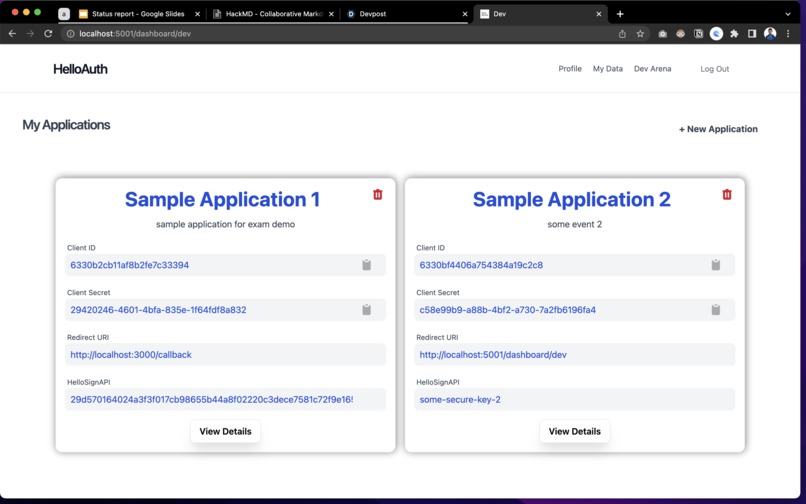
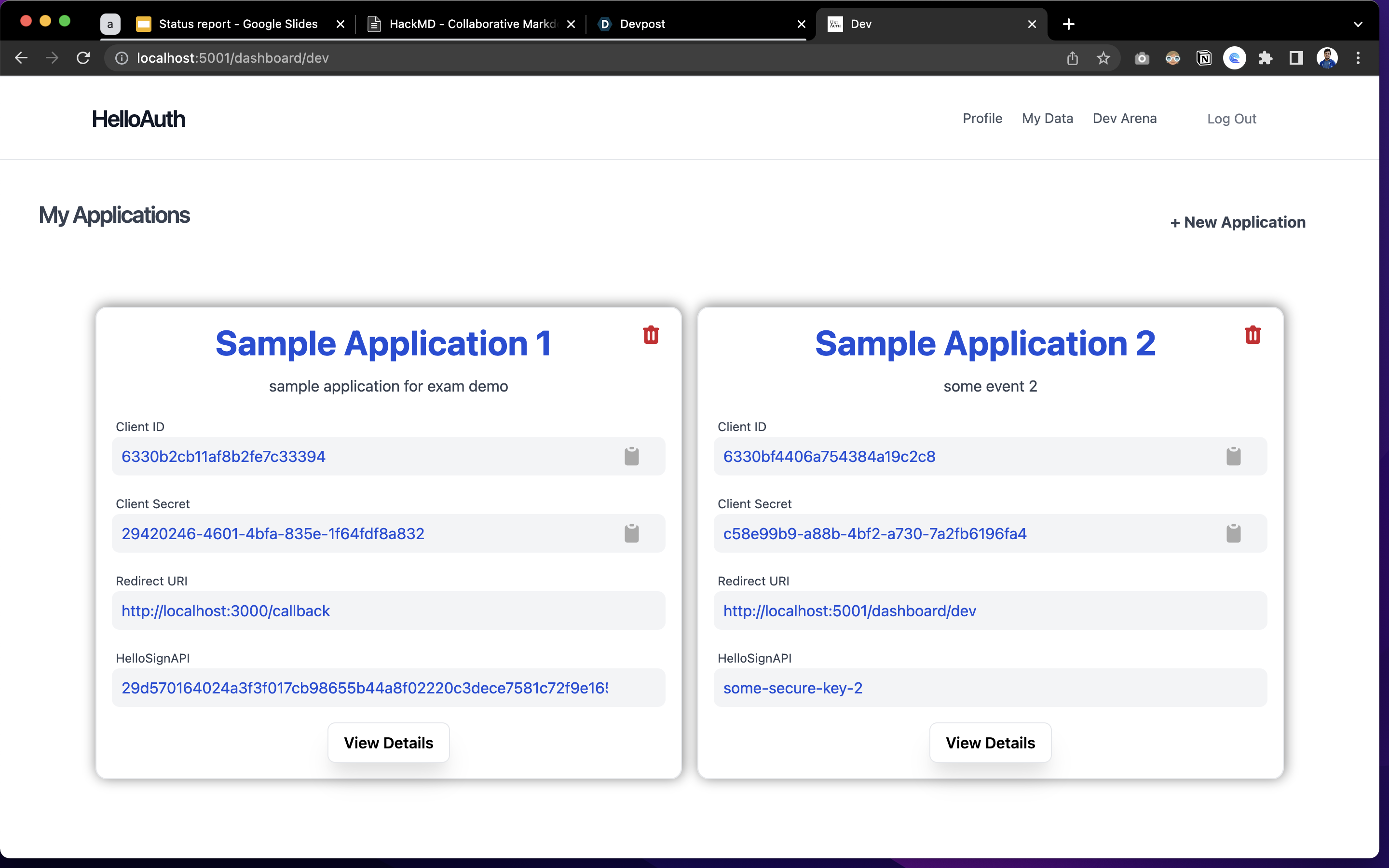
B2B dashboard
-
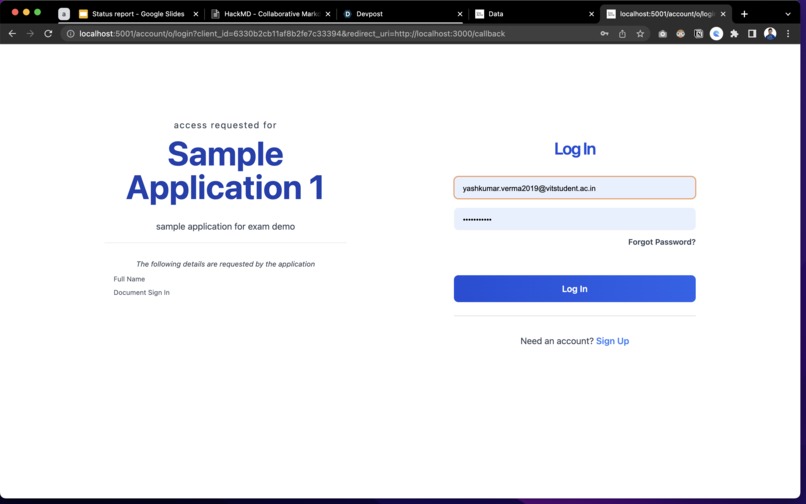
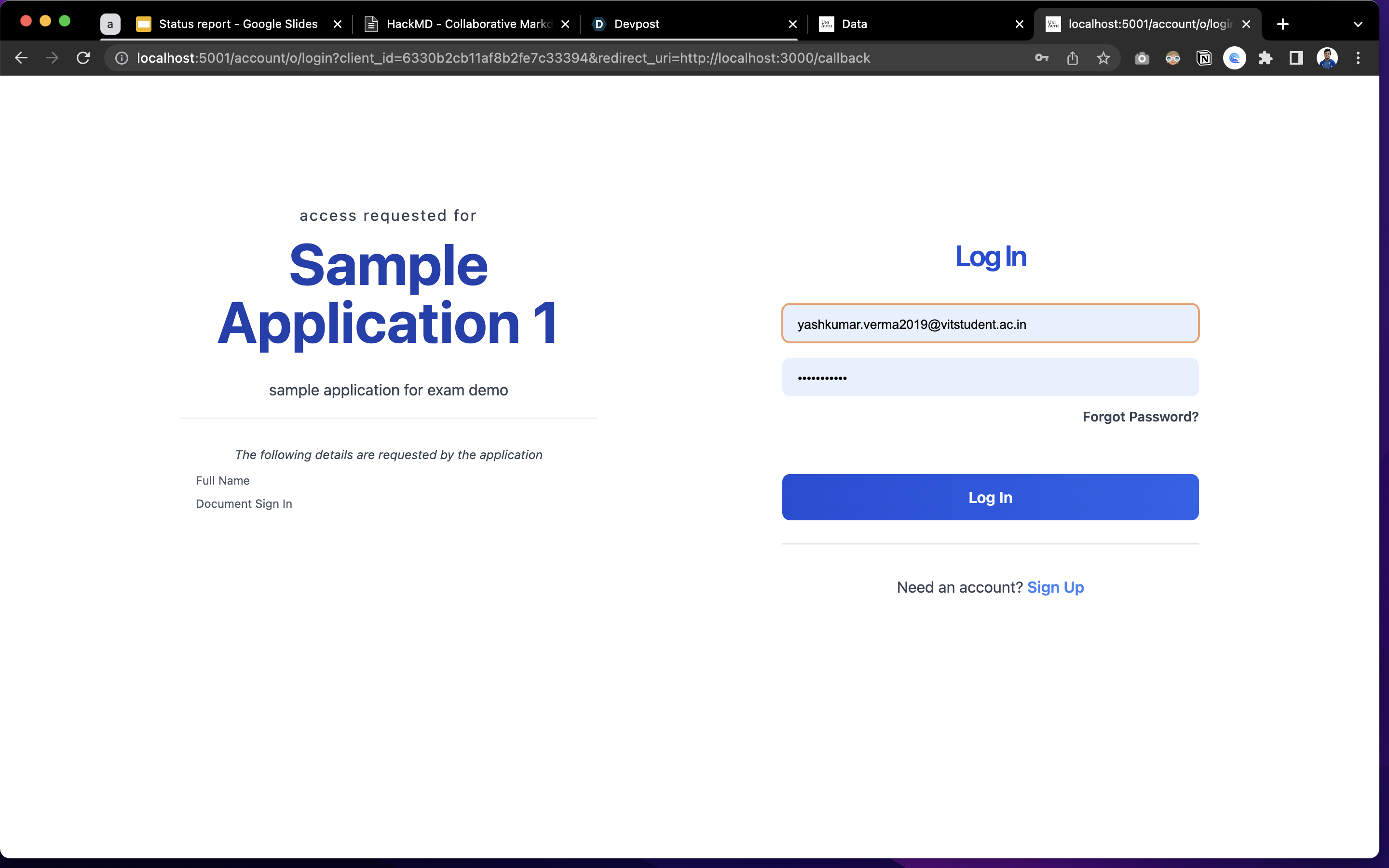
consent screen to show what data is beign shared
-
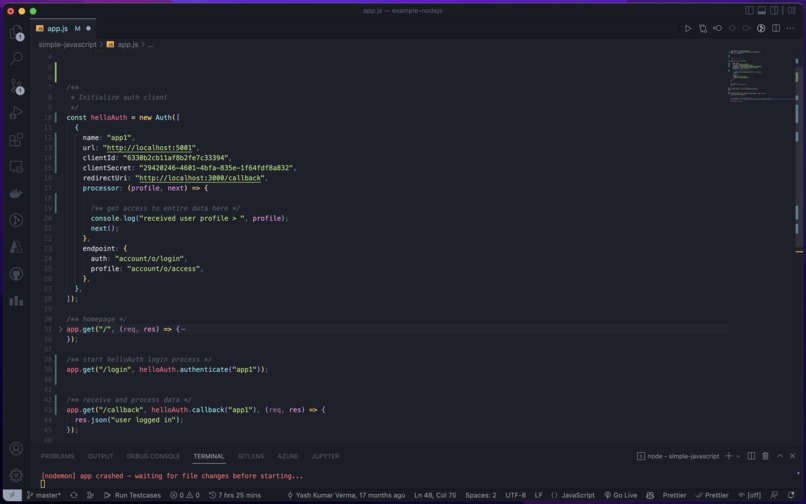
sample usage of sdk

Inspiration
Any large organization deals with sharing of data and resources and the area of OAuth provides to facilitate the same are heavily dominated by large tech giants. This
- keeps data in third party servers
- does not provide complete control on application behavior
- has no scope of customization or plugins
What it does
HelloAuth is
- an open source (SaaS for 💰)
- fully fledged OAuth2.0 Server
- with client libraries in 2 languages, 4 frameworks
- with scopes to share restricted data (e.g. only name, email etc)
- integrates with HelloSign to make resource sharing process legally binding and force end users to sign document before granting access to resources
- and security features to restrict origin and redirect URLs
- with client libraries to integrate quickly in
- golang
- gin
- fiber
- nodejs
- typescript
- javascript
- golang
How we built it
Since the scope of the project was huge, I divided it into 3 parts.
Part 0 - Core OAuth2.0 I started with the core features that constitute the OAuth flow, dealing with creation and handling of client_id and client secrets, security configurations to control origin and redirect links, and scopes to allow fine control on what data should be shared.
Part 1 - Client Libraries Next, I went forward to implement the client libraries that allow tird party developers to interact with the primary OAuth server.
I wrote libraries for 4 usecases
- NodeJS - javascript
- NodeJS - typescript
- GoLang - gin
- GoLang - fiber
This demonstrates the scope of the integrations possible, and allows clients written in these applications to request resources from the OAuth server.
Part 2 - HelloSign Finally HelloSign is used as a signing layer which allows adding a legally binding step during sign-in, which requires the user to sign the supplied document else the resources are not shared. This is achieved by the nodejs sdk.
Challenges we ran into
- Implementing the OAuth server from scratch was a major roadblock, as all the flows needed to be implemented from ground up, with token exchanges for resource being the tricky part.
- Upon completion of step 0, I faced a major difficulty in writing the library for golang as I wanted to test the usability on a compiled langauge, faced a lot of issues in implementing a library in golang. NodeJS was easier, but shipping the same code for nodejs and typescript was tough.
- The frontend of the OAuth server is written in vanilla html, css and javascript, and not react, so adding any logic was very tough
Accomplishments that we're proud of
- writing a server from scratch
- writing libraries
- integrating hellosign
What we learned
- writing a backend from scratch
- working with legally beginding scopes
- writing golang libraries
What's next for HelloSign - "sign" into apps
- to convert it into a fully fledged SaaS and merket it
- allow linking other data models as resources in the OAuth server to allow sharing diverse resources.
All code resources: https://github.com/YashKumarVerma/hellosign-v1


Log in or sign up for Devpost to join the conversation.