-
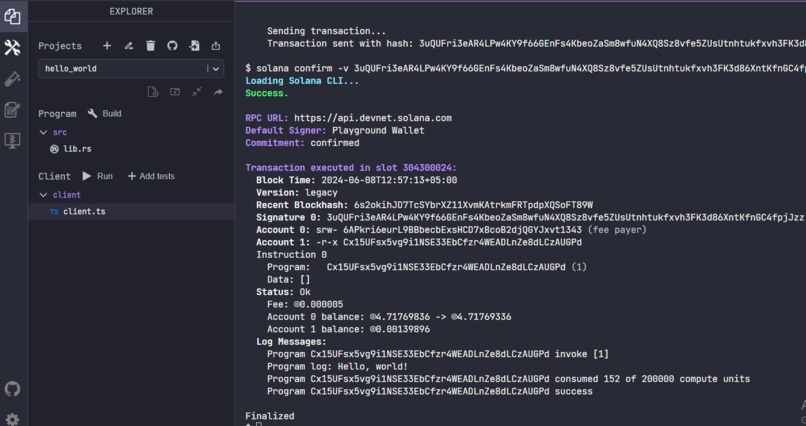
Result that Hello World is printed
Inspiration
The inspiration behind delving into Solana development was my interest because I started learning Blockchain by following the 6 month plan and Solana was also present in the plan. When the GHW started, they announced Solana in it. I thought why not apply to it?
What it does
The Solana "Hello World" quickstart guide walks through the process of developing and deploying a simple Solana program that logs "Hello, world!" to the blockchain. It covers setting up Solana Playground, creating a Solana wallet, writing the program in Rust, building and deploying it, and finally, interacting with the deployed program using JavaScript.
How I built it
Setting up Solana Playground: I opened Solana Playground in my browser and imported the example "Hello World" project.
Creating a Playground Wallet: Following the guide, I created a browser-based wallet within Solana Playground to facilitate interaction with the Solana blockchain.
Writing the Solana Program in Rust: Using the provided editor in Solana Playground, I wrote the program logic in Rust, defining the entry-point function and specifying the on-chain behavior to log "Hello, world!".
Building and Deploying the Program: Utilizing the built-in tools in Solana Playground, I compiled and deployed the Solana program to the chosen Solana cluster, ensuring its successful deployment.
Interacting with the Program using JavaScript: Leveraging @solana/web3.js, I crafted JavaScript code to interact with the deployed Solana program, creating transactions and sending them to the Solana cluster for execution.
Challenges I ran into
Learning Curve: Initially, navigating Solana's development ecosystem and understanding its integration with Rust and JavaScript posed a steep learning curve. However, the guided tutorials and comprehensive documentation in Solana Playground gradually eased this challenge.
Transaction Management: Managing transactions and grasping the required parameters, such as keys and program IDs, for interacting with Solana programs required meticulous attention to detail. However, with persistent practice, I gained confidence in handling transaction-related tasks effectively.
Debugging: Debugging Solana programs, especially when encountering errors during compilation or deployment, demanded patience and meticulous examination of the code and associated documentation. Yet, the informative error messages and supportive community resources proved invaluable in troubleshooting and resolving issues.
Accomplishments that I am proud of
I'm proud to have successfully set up, developed, and deployed a Solana program using the Rust language directly within my browser. Overcoming the initial challenges and seeing the program execute on the Solana blockchain reinforced my confidence in exploring more complex Solana projects in the future.
What I learned
Solana Development Workflow: I gained a solid understanding of the development workflow for creating and deploying Solana programs, from setting up the environment to interacting with deployed contracts.
Rust for Blockchain Development: Through writing Solana programs in Rust, I deepened my knowledge of Rust's suitability for blockchain development, thanks to its safety features and performance optimizations.
Interoperability with JavaScript: Exploring how Solana programs can be interacted with using JavaScript broadened my understanding of blockchain application development, emphasizing the importance of cross-language compatibility.
Transaction Management: Managing transactions and understanding the intricacies of transactional data in the context of Solana blockchain transactions enhanced my skills in blockchain application development and transaction processing.
Problem-Solving in a Decentralized Environment: Overcoming challenges related to debugging and transaction management within the decentralized Solana ecosystem honed my problem-solving skills and deepened my understanding of blockchain technology.
Built With
- api
- programming
- rust
- solana
- web3js

Log in or sign up for Devpost to join the conversation.