-
-
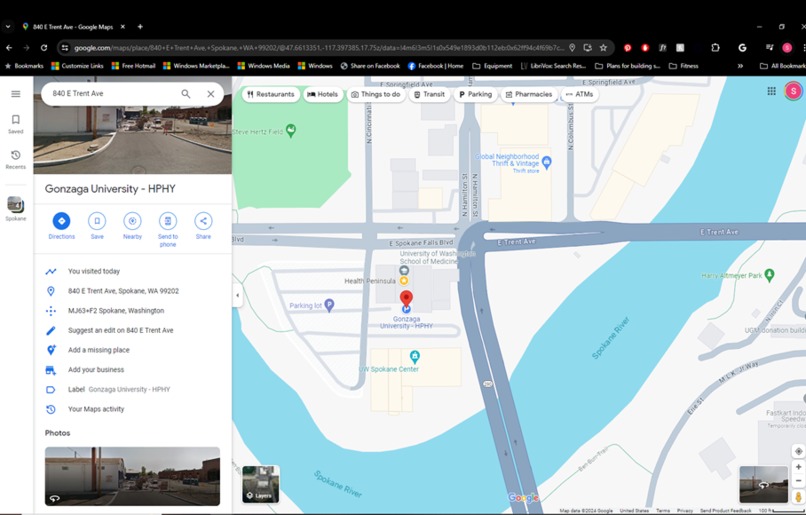
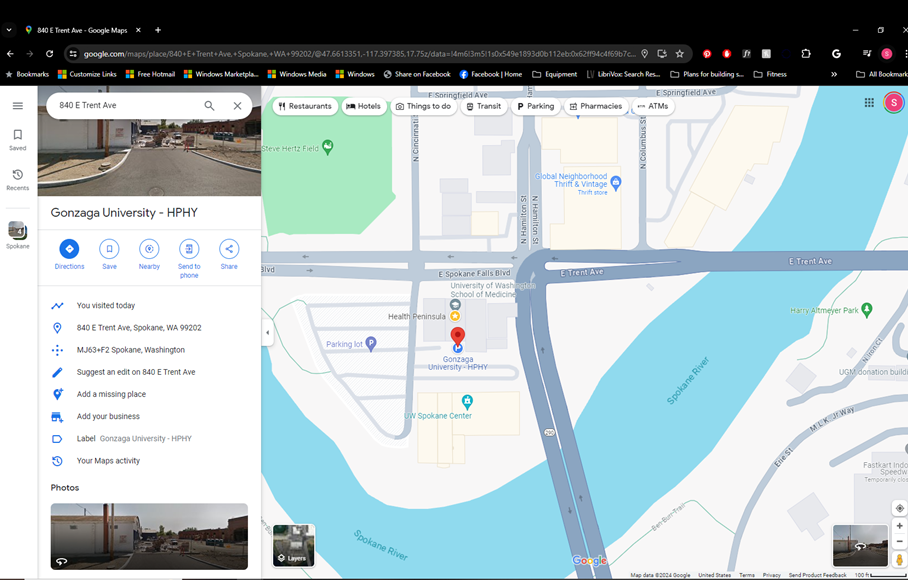
This is what we looked like on Maps 2 years after we moved in to our building.
-
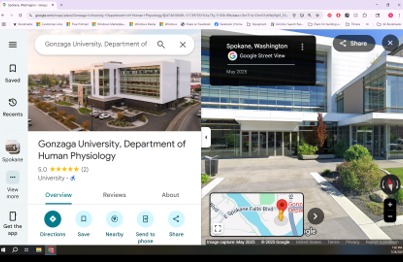
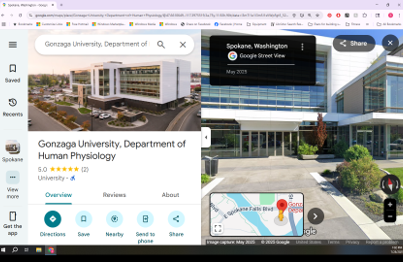
This is what we look like on Maps now.
Inspiration
The inspiration for this project stemmed from the challenges we faced in accurately representing the Gonzaga University Human Physiology Department online. Prior to 2022, our building was displayed on Google Maps as an undeveloped construction site, surrounded by dirt and weeds. This outdated and inaccurate representation of our facilities did not reflect the cutting-edge learning spaces we had spent years developing.
We wanted to update this digital presence to match the reality of our newly completed building and provide prospective students, alumni, and visitors with an immersive, accurate virtual tour of our department.
What We Learned
Throughout this process, we learned the value of accurate digital representation. Our team discovered how powerful tools like Google Maps and 360° imagery could be in enhancing the visibility of our department and improving user engagement. We realized that having updated, interactive street views and lab tours could give people a true sense of the department’s offerings, from the exterior to the inside spaces where our students and faculty work.
In addition, we learned how to integrate 360° visuals with Google Maps Street View, making the department more accessible for potential students and visitors from all over the world.
Building the Project
Our project was built in several phases:
Updating the Street View: The first step was to update the outdated street view of our building. The new, accurate images were taken after the building’s completion in 2022, showcasing the modern, state-of-the-art architecture.
Creating the 360° Virtual Tours: To capture the immersive lab tours, we used Kuula and Hugin for stitching and editing the panoramic images. The photos were taken with a Canon DSLR camera, equipped with a fisheye lens and a pano head to capture high-quality, wide-angle shots. These images were then uploaded to Kuula, where they were processed into a seamless 360° tour. The resulting virtual tours allow users to explore the labs interactively, providing a realistic preview of the department’s facilities.
Updating Business Information: Along with the visual updates, we worked to ensure that the business information, such as our department's name, hours, and contact details, was accurate and up-to-date. This ensures a smooth experience for anyone interacting with our digital presence.
Integrating Everything: The final step was to integrate all these elements—updated street views, immersive lab tours, and business information—into one seamless experience. This integration was key to creating a comprehensive, interactive experience for anyone exploring the department.
Challenges Faced
One of the primary challenges we faced was the initial lack of accurate digital representation. For years, our building was misrepresented on Google Maps, which not only affected how prospective students viewed our department but also posed a problem for visibility in search results.
Another challenge was capturing high-quality 360° imagery of our labs. This required the coordination of various resources, including the use of specialized equipment like the Canon DSLR with a fisheye lens and pano head. Each lab had to be carefully staged, and the photos needed to be of a high standard to ensure a clear, engaging virtual tour.
Lastly, the integration of all these elements into a cohesive project posed some technical hurdles. Ensuring that the street view, virtual tours, and business info were all linked seamlessly took time and attention to detail.
Conclusion
This project has not only improved our department's visibility but has also helped us engage with prospective students and the broader Gonzaga community in a new and exciting way. The updated 360° Street View, immersive lab tours, and accurate business information have helped create an authentic digital representation of the Human Physiology Department that aligns with the state-of-the-art facilities we offer.
Built With
- hugin
- kuula
- maps


Log in or sign up for Devpost to join the conversation.