-
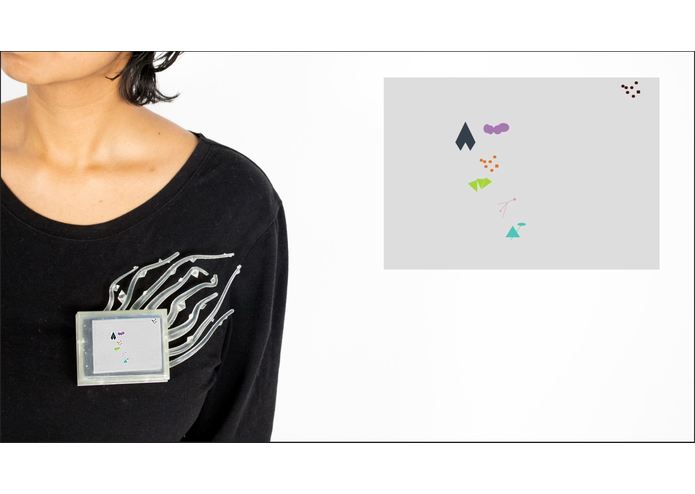
Prototype_1
Inspiration
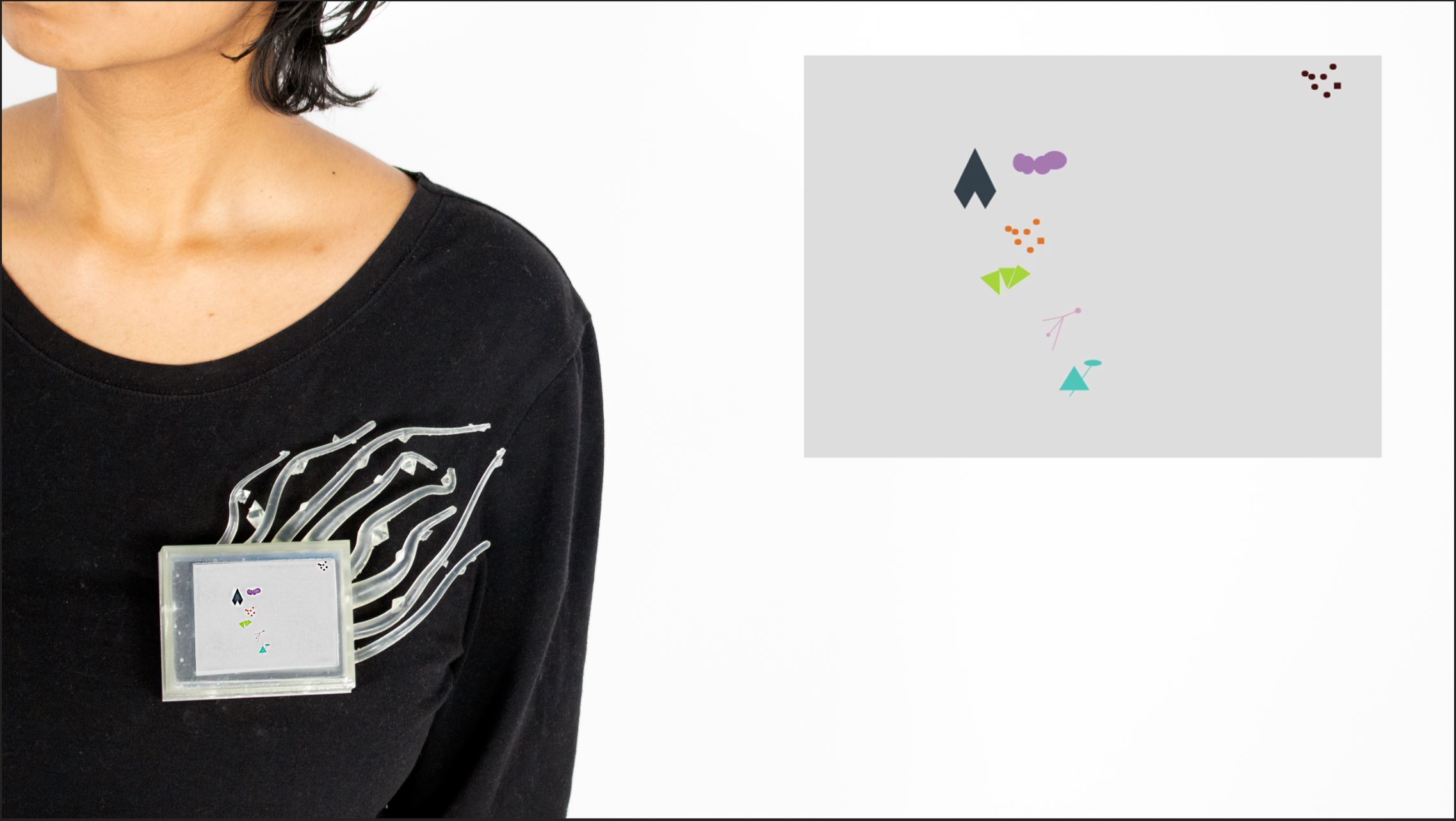
Our inspiration originally is to create something like a horoscope/star sign image, dervied from user's social media data. And have that image change everyday depending on their twitter/calendar and creating visuals that can let user feel attached to, but not necessarily informative. We were thinking it could be a cool screen saver on computers, or smart watches...etc.
What it does
What our prototype does is that it gets the last 10 of the user's tweets. The program then prunes words that are common and are not good indicators of one's "mood". Then we group the words into categories and calculate several indices that help indicate which visuals to show, their motion, and speed.
How I built it
I worked with a design student who is in charge of the design of the visuals, categories, and variations. Then I wrote a python script to scrape data using the TwitterAPI, processes the data, and outputs an JSON file. Then I wrote a processing program that takes in the JSON file, classifies the data into numerous shapes and outputs the results.
Challenges I ran into
Challenges I ran into was the balance between randomness and precision in the process of generating the visuals. It was hard to strike a balance as we want the shapes to be intended per the designs, but has variations and elements of randomness to it.
Accomplishments that I'm proud of
I'm proud that we thought outside of the box and created something that isn't practically functional, but we could see it being a thing that people would use/do in another world. This was my first time to work on a project that incorporates a sci-fi imagination that doesn't quite make sense with the way things are in the real world.
What I learned
I learned that building something sometimes does not need to be solving existing problems. I think this project's idea is not practical useful, but the idea is thought provoking and interesting.
What's next for "Hello I am"
I think the big next step for this prototype would be to incorporate machine learning to break down the emotional index of a message, as well as generating new visuals that fit a design guide but not crafted by a designer. Another thing to think about, is the potential ethical vulnerability of the project. Although the visuals are very abstract, but with a large enough sample size, would a machine be able to generalize and discriminate people based on their social media data?

Log in or sign up for Devpost to join the conversation.