Inspiration
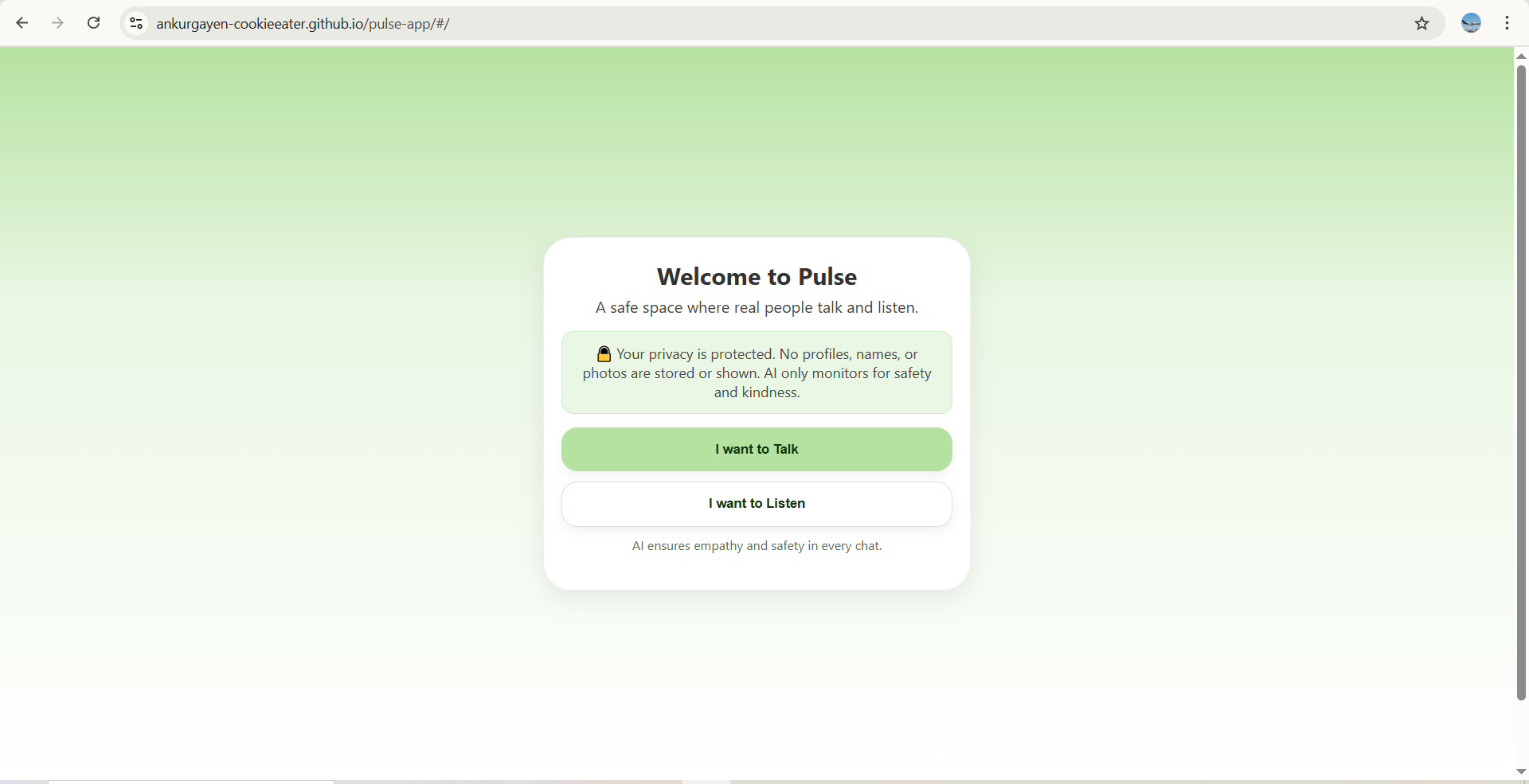
In a hyper-connected world, people still feel unheard and emotionally isolated. I noticed how difficult it can be to open up when you fear judgment or exposure. The idea for Pulse came from a simple question: What if there was a space where people could talk freely—without names, profiles, or pressure—and just be heard? I wanted to build something that feels human, kind, and safe—a place where empathy matters more than identity.
What it does
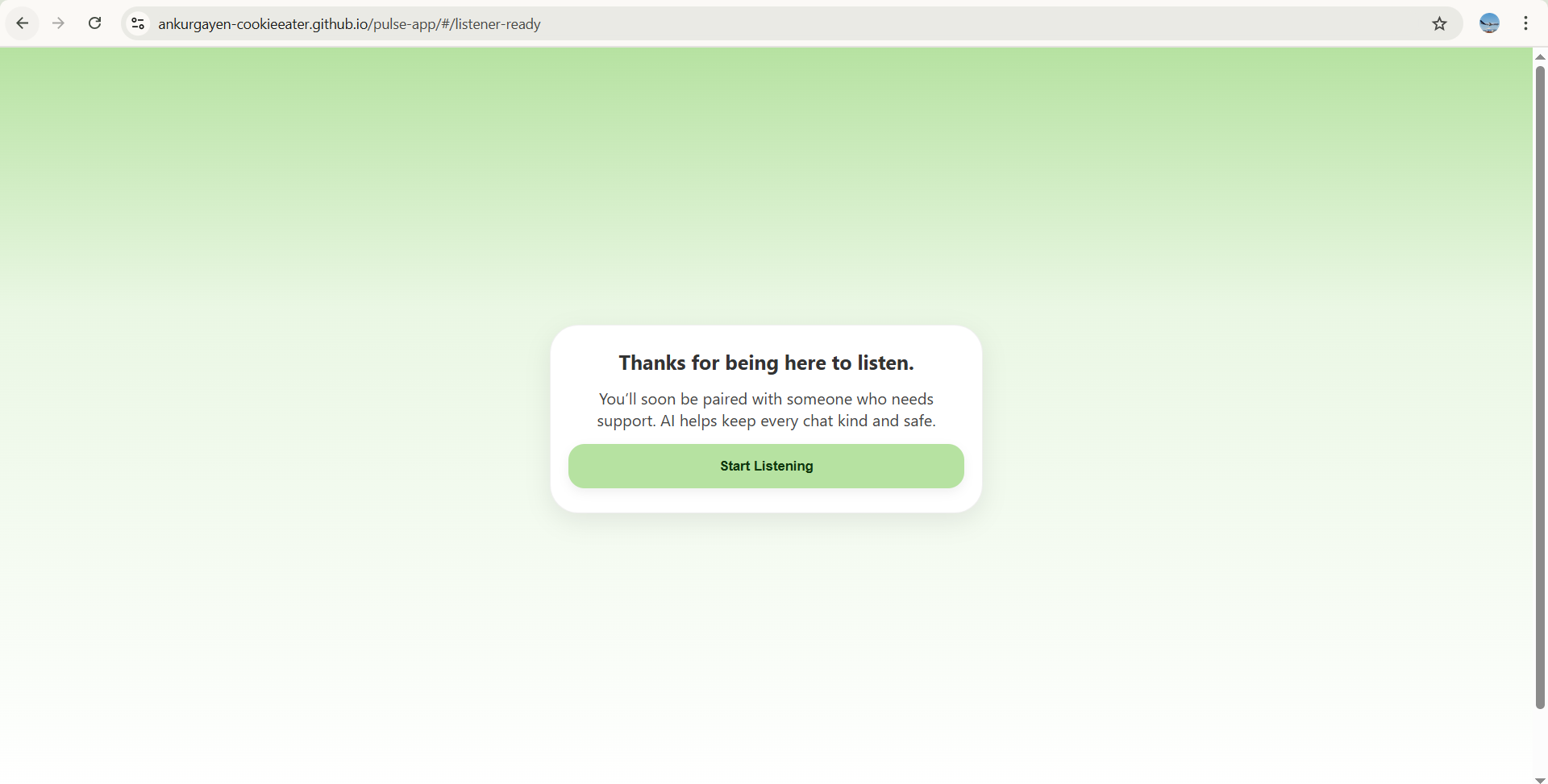
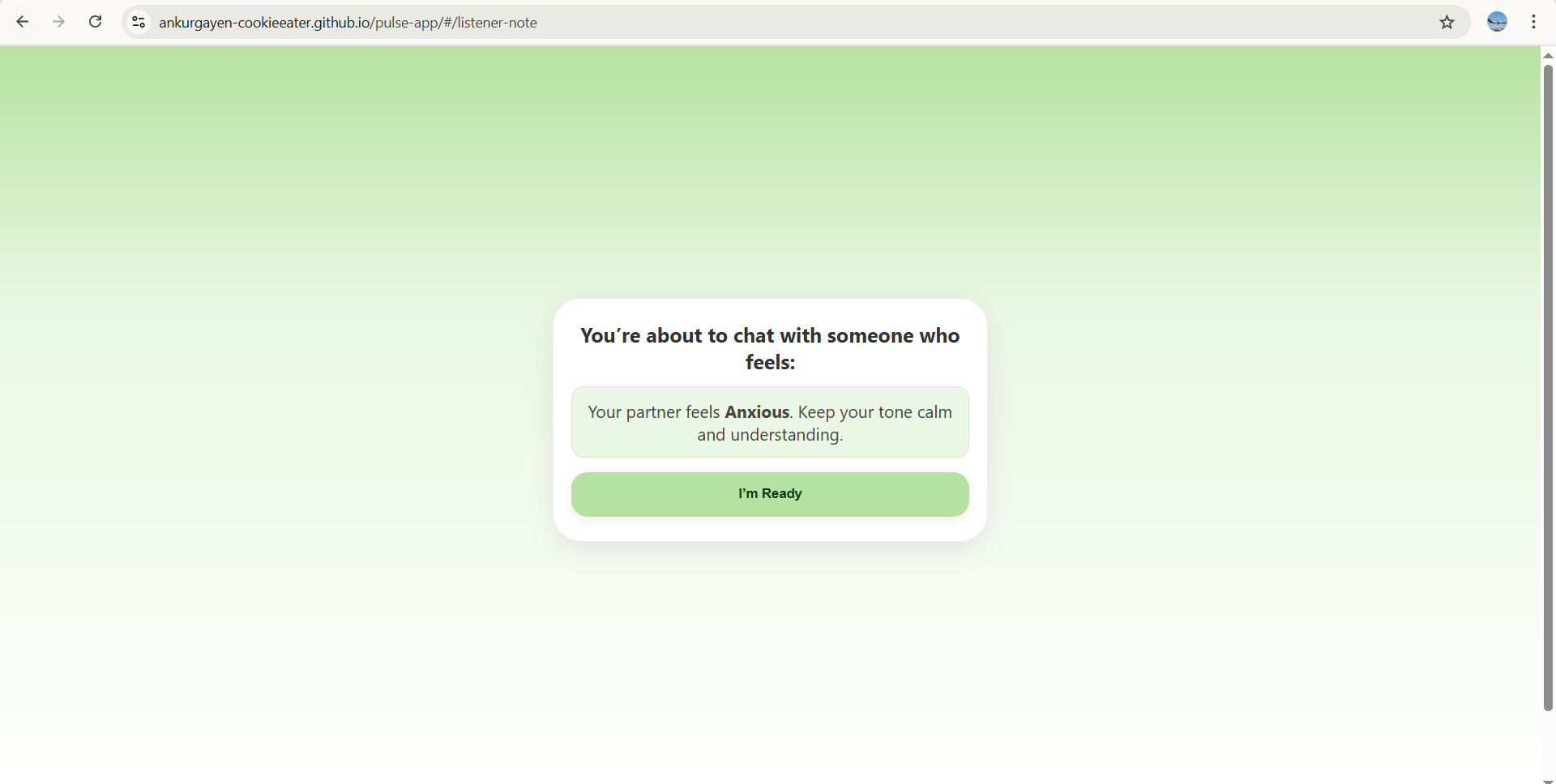
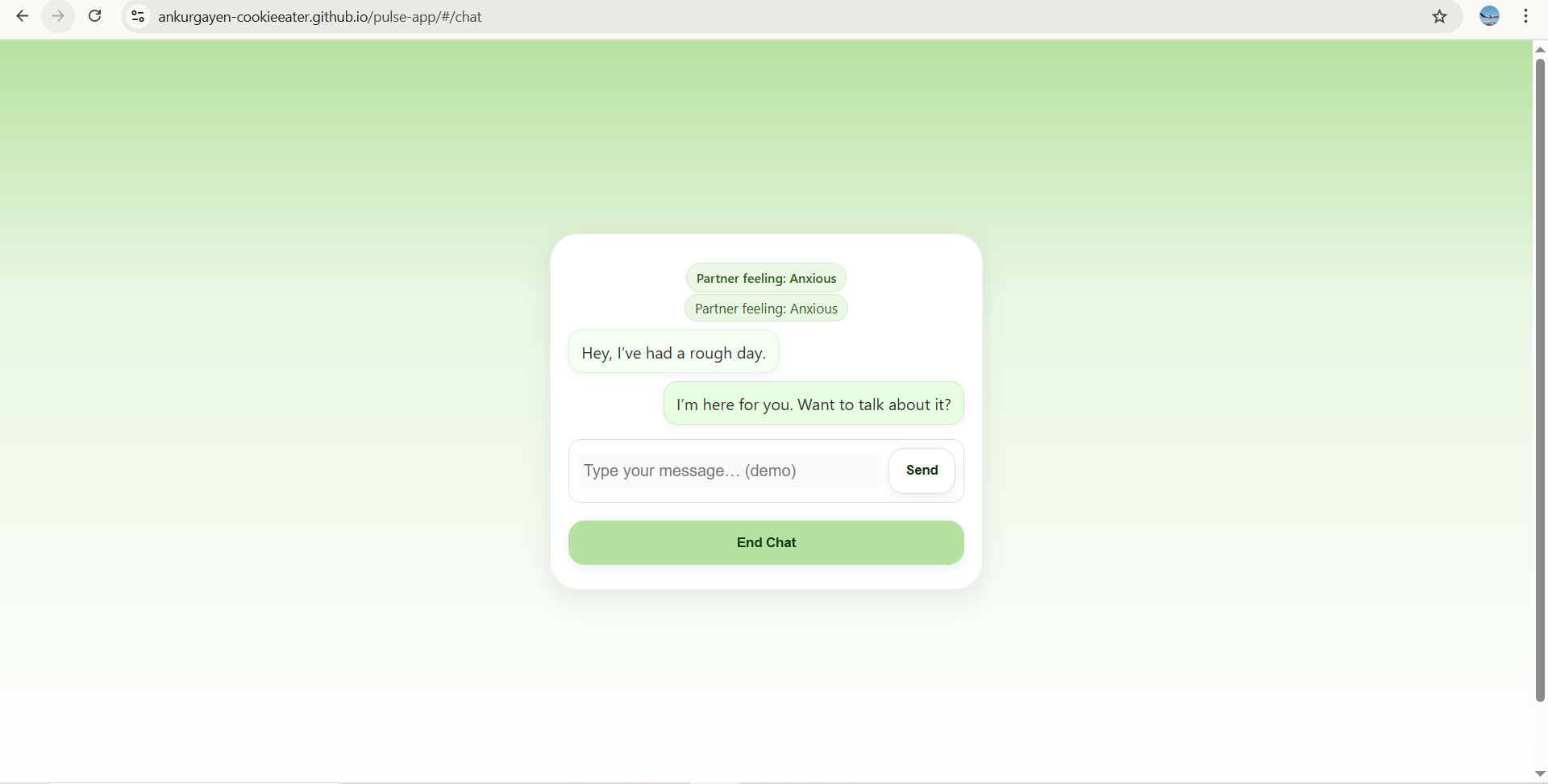
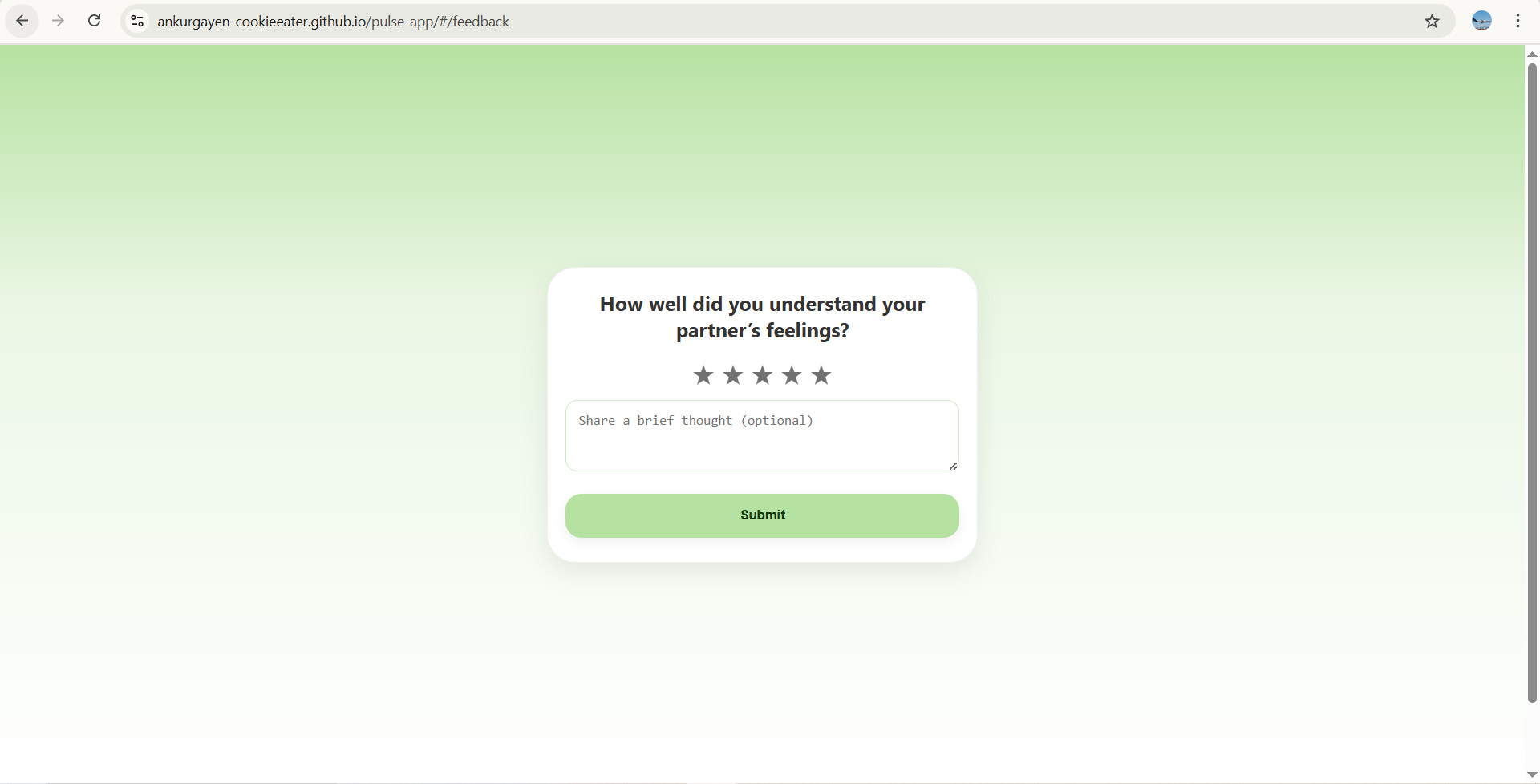
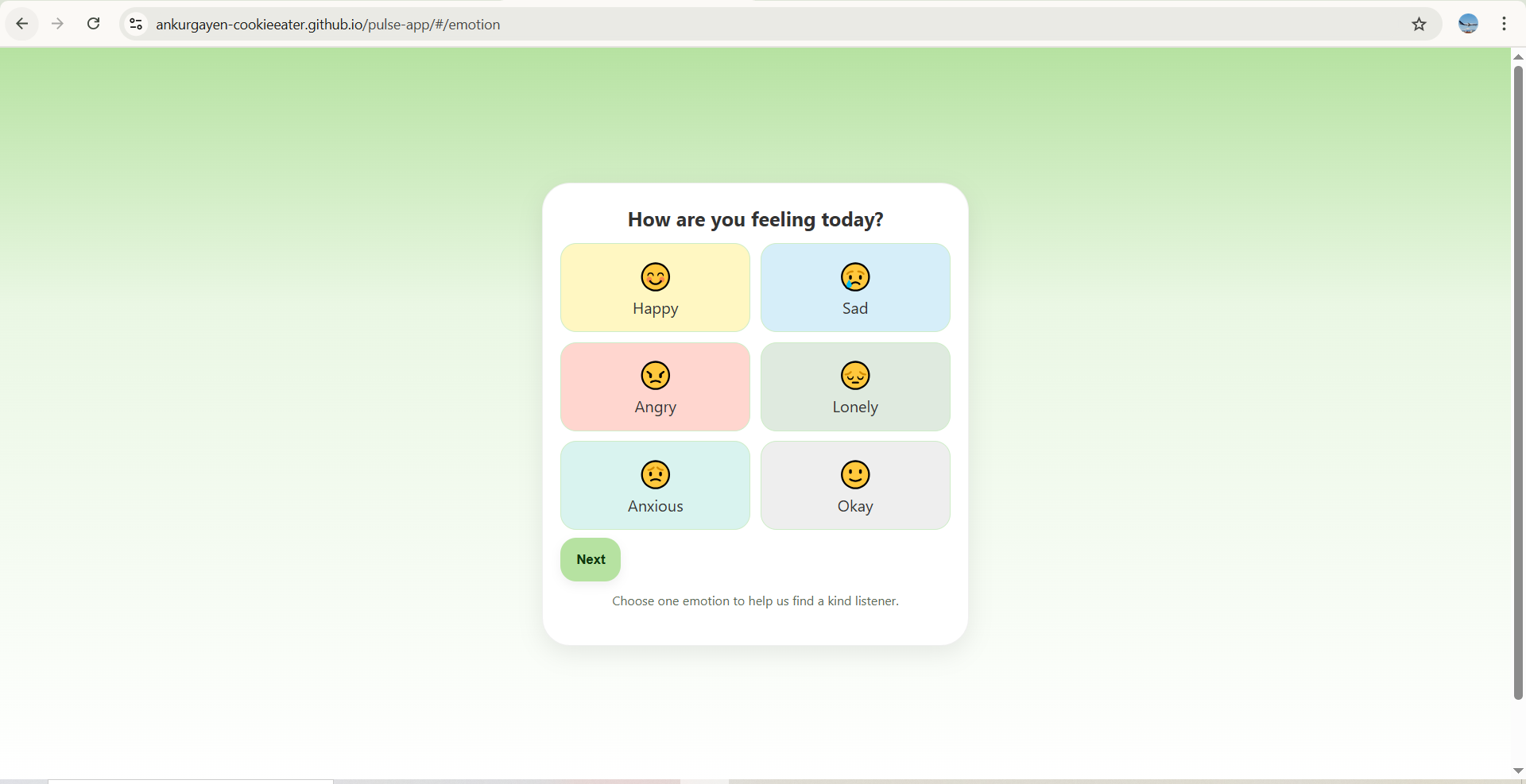
Pulse connects two real people anonymously—a Talker who wants to share, and a Listener who’s ready to listen. The Talker begins by choosing how they feel (happy, sad, anxious, lonely, etc.). The Listener is quietly notified of that emotion before the chat starts, helping them approach the conversation with care. After the session, both users complete a short feedback reflection on empathy and understanding—no personal data is stored, ever.
How I built it
I built Pulse as a lightweight, browser-based prototype using:
- HTML, CSS, and JavaScript for structure, design, and interactivity
- GitHub Pages for free and open web hosting
- Responsive design principles for a seamless mobile and desktop experience I intentionally avoided databases, frameworks, or logins—keeping the focus on anonymity, simplicity, and accessibility.
Challenges I ran into
- Simplifying an emotional experience into a minimal interface
- Maintaining complete anonymity while still allowing empathy to flow
- Debugging mobile responsiveness and emoji compatibility across devices
- Navigating multiple “no-code” platforms before deciding to hand-build everything from scratch
AI Tools I Used and How
I didn’t use AI to power a backend or live chat system—instead, I used it as a development partner while building the entire app from scratch.
- ChatGPT (by OpenAI): I used ChatGPT to brainstorm the Pulse concept, design the Talker–Listener–Feedback flow, and generate clean, beginner-friendly HTML, CSS, and JavaScript code. It guided me in debugging layout issues, ensuring responsiveness on mobile, and improving user accessibility while maintaining complete anonymity. Essentially, ChatGPT acted as my personal coding mentor and design consultant throughout development.
- Framer AI and Figma AI (initial experiments): I explored these tools to visualize color palettes, mobile layouts, and typography options before building the final version manually. They helped me form a cohesive design direction. The final version of Pulse doesn’t rely on a backend or database—it’s a fully client-side web app that runs entirely in the browser. This design choice reinforces Pulse’s mission: a simple, anonymous, privacy-focused space for emotional connection, without storing or tracking any user data.
Accomplishments that I'm proud of
- Built a functional, public-facing web app from zero coding background
- Designed an interface that feels calm, safe, and emotionally intelligent
- Successfully hosted it on GitHub Pages with a shareable live demo link
- Created a working proof of concept for anonymous, empathy-based communication in under 48 hours
What I learned
- How simple HTML and CSS can still deliver a meaningful experience when used thoughtfully
- That empathy-driven design matters just as much as technical complexity
- The power of persistence—I overcame repeated tool failures and built something meaningful manually
- That emotional design is just as important as user interface design
What's next for Pulse App
- Add a lightweight backend to allow real-time chats between Talkers and Listeners
- Introduce AI-powered kindness moderation to ensure safe conversations
- Enable optional topic filters (e.g., stress, loneliness, motivation)
- Develop a Progressive Web App (PWA) version so users can install it on their phones
- Partner with mental wellness initiatives to make Pulse a real-world tool for emotional support
Built With
- chatgpt
- css
- github
- html
- javascript
- notepad

Log in or sign up for Devpost to join the conversation.