

Inspiration
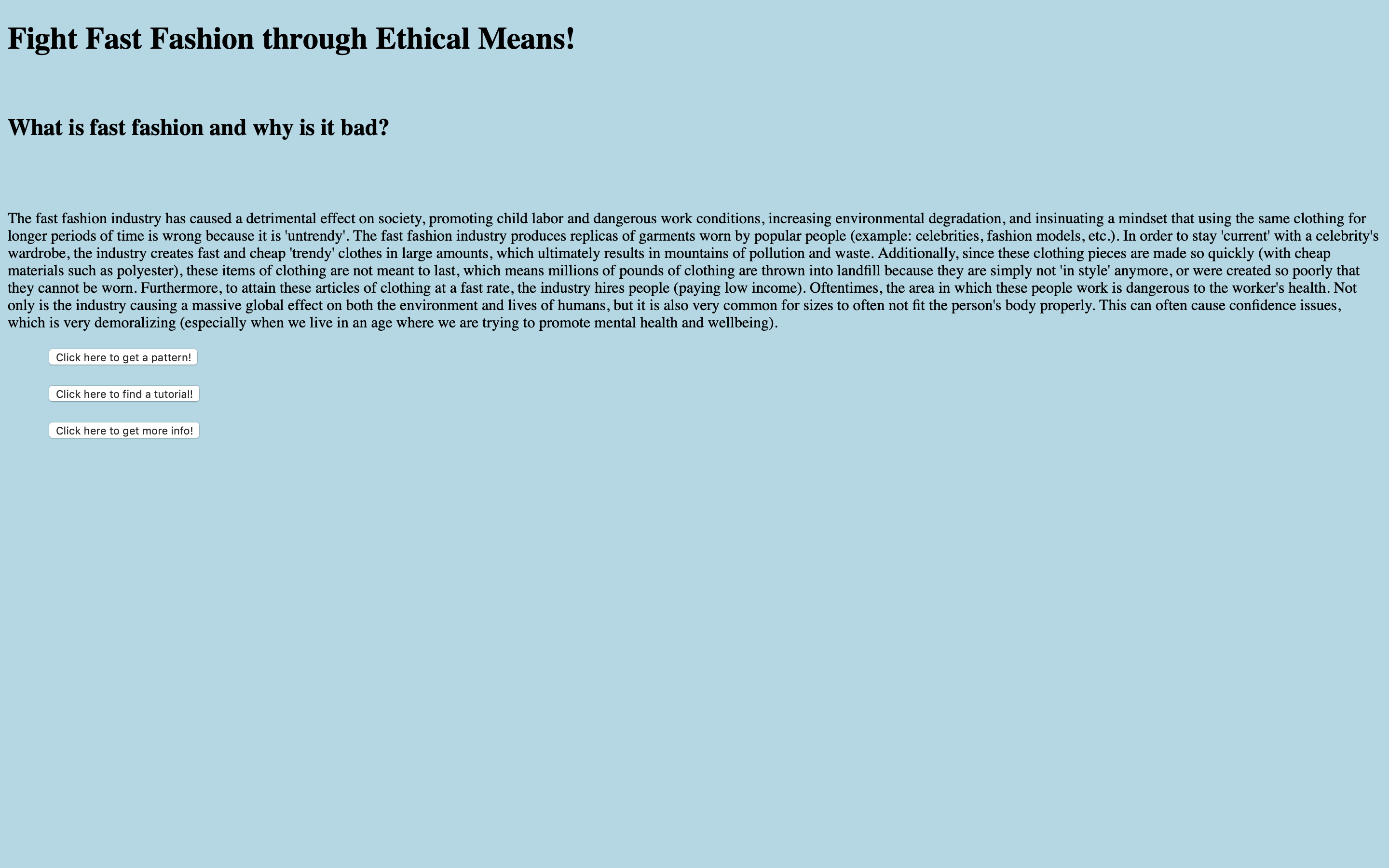
The fast fashion industry has caused a detrimental effect on society, promoting child labor and dangerous work conditions, increasing environmental degradation, and insinuating a mindset that using the same clothing for longer periods of time is wrong because it is 'untrendy'. The fast fashion industry produces replicas of garments worn by popular people (example: celebrities, fashion models, etc.). In order to stay 'current' with a celebrity's wardrobe, the industry creates fast and cheap 'trendy' clothes in large amounts, which ultimately results in mountains of pollution and waste. Additionally, since these clothing pieces are made so quickly (with cheap materials such as polyester), these items of clothing are not meant to last, which means millions of pounds of clothing are thrown into landfill because they are simply not 'in style' anymore, or were created so poorly that they cannot be worn. Furthermore, to attain these articles of clothing at a fast rate, the industry hires people (paying low income). Oftentimes, the area in which these people work is dangerous to the worker's health. Not only is the industry causing a massive global effect on both the environment and lives of humans, but it is also very common for sizes to often not fit the person's body properly. This can often cause confidence issues, which is very demoralizing (especially when we live in an age where we are trying to promote mental health and wellbeing). After learning about this, we were appalled and are determined to not only educate others about the issue, but to provide them with simple solutions to reduce the vast effects this industry creates. The best solution: making your own clothes. There are a couple of reasons as to why people are hesitant to make their own clothing:
1) they are scared to dive into sewing 2) finding patterns can be difficult (and expensive) 3) it takes a lot of time (the most time consuming aspect is often the learning process)
Our website's aims to battle these issues by helping people overcome any hesitation of starting making their own clothes, providing them with cheap, cost effective patterns (the main reason as to why people buy from large retail brands is because they are so cheap to buy), and guides the user through each step, making the overall process much faster.
What it does
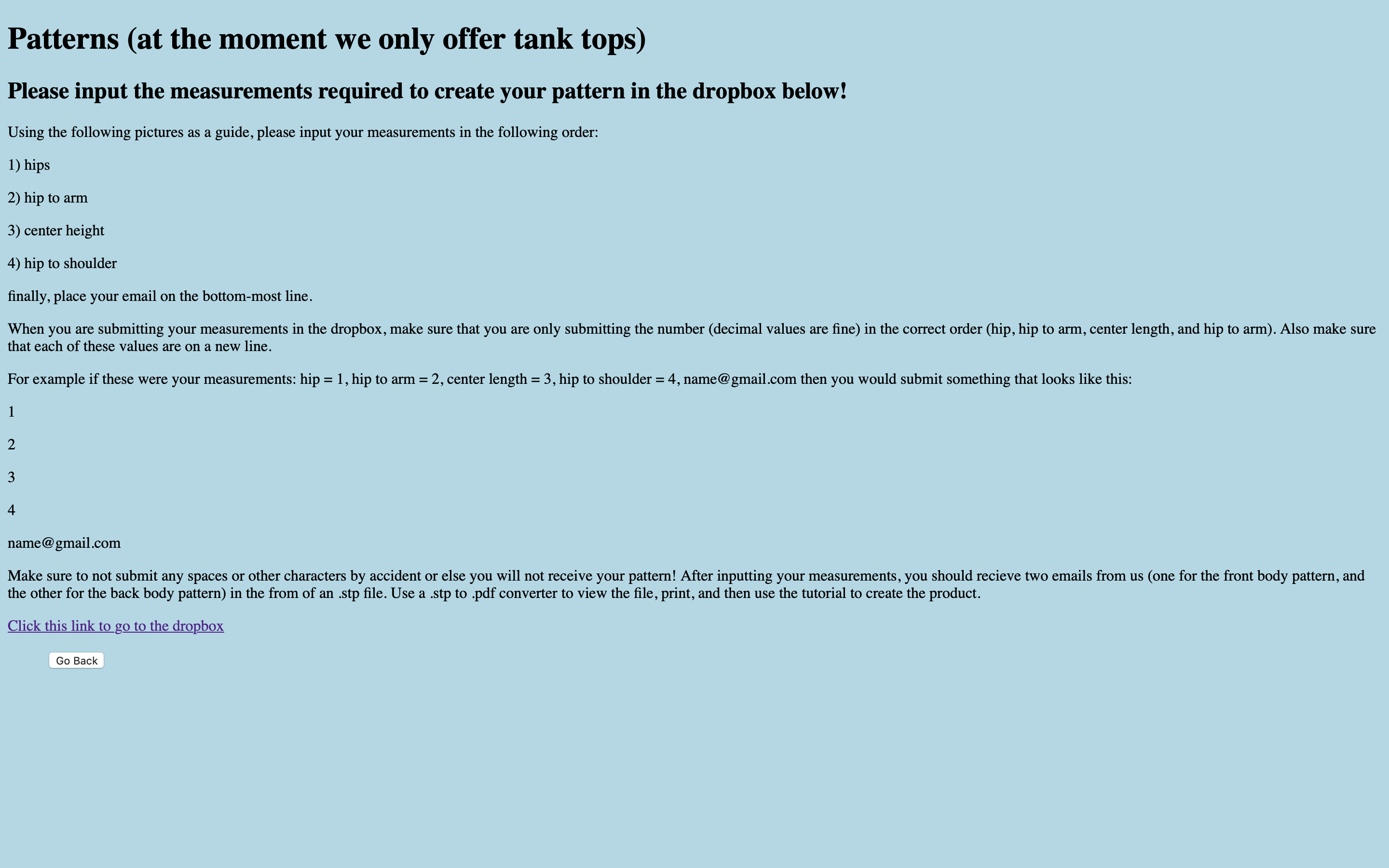
Our website's main function is to give the user a pattern for an article of clothing that fits them personally. To do this, the user will input their measurements into our website and they will get a PDF of the pattern in return. The user can print out this PDF and use the tutorial we provided on the website to make the piece of clothing. At the moment, we are only supplying patterns for tank tops.
How we built it
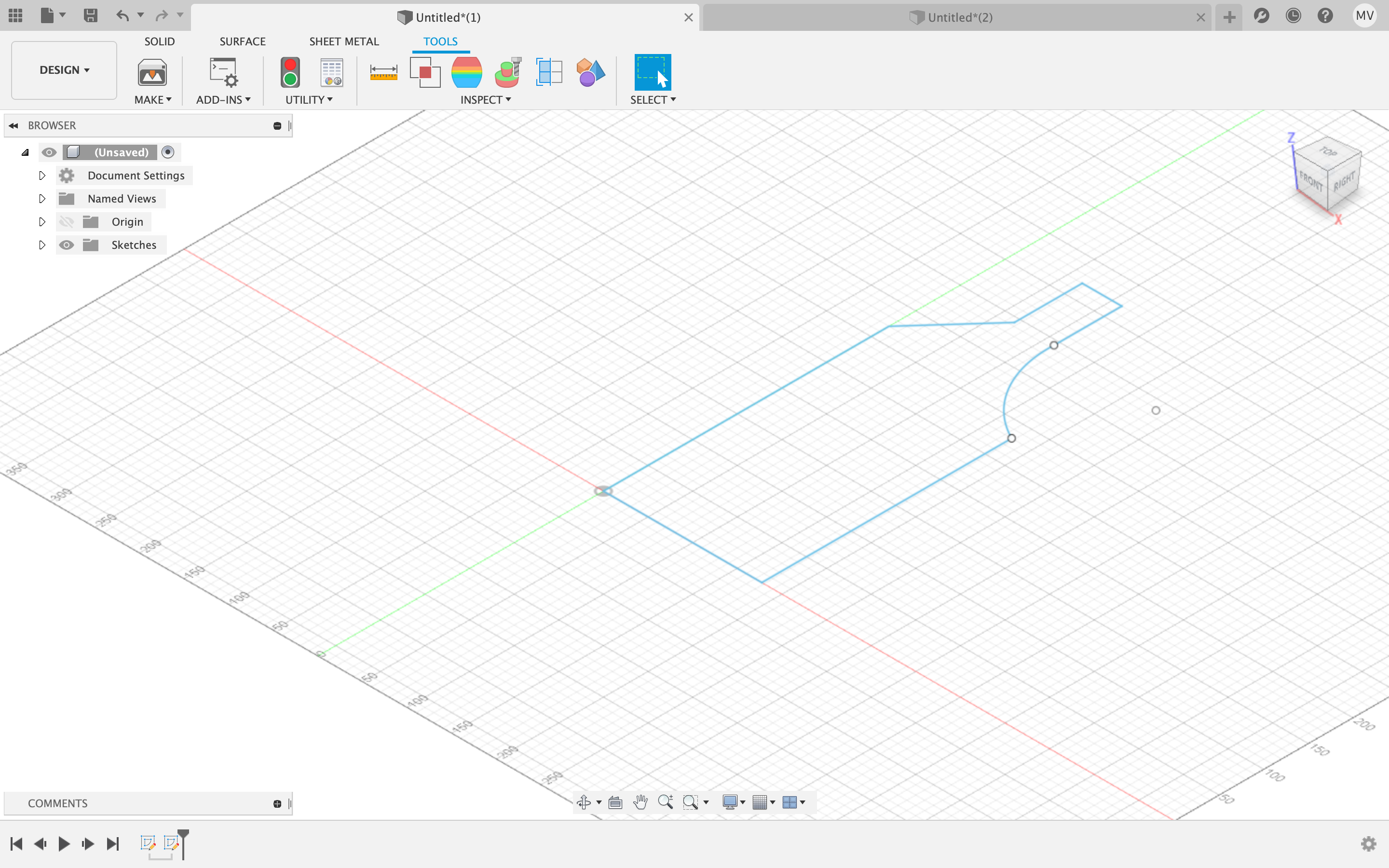
We used a combination of Python, Fusion 360/Autodesk API, html, and javascript to create our product. We used API software to create the pattern design (which we made customizable based on the inputs we received from our dropbox .txt file). The design files were then stored into the directory and are sent to the email provided by the customer. We made a website using HTML and JavaScript, where we essentially created a platform for the user to input their measurement, educate themselves on the topic of fast fashion, and to have access to follow along tutorials to make their garment.
Challenges we ran into
We are both very new to Computer Science (we have only been coding for about 3 months now). The only language we know is python, and we know it to a very minimal or limited extent. So, the entire process of understanding APIs and HTML and JavaScript was challenging, but we did our best to understand how they worked through research, and applied them to our product. We originally intended a PDF version of the pattern to be emailed to the user so that they could print it directly and use it. However, Autodesk's API for exporting PDFs was only created a couple of days ago. This means that its range of functions were limited, which prevented us from using it in our product. So, we resorted to using an .stp file instead. We also did not know how to use outside Autodesk script plug ins, which again required some research. We also did not how to run our scripts from outside Autodesk without manually having to do it. We found 'Autodesk Forge', which seemed as though it would solve our problem, but we were not familiar with the coding languages provided (like Java and node.js) and we did not have time to change our platform. It was also our first time using CAD softwares, so we had to understand how shapes, orientation, and dimensions worked on the site. Finally, we did not know how to take input from the customer and save it into a text file, so we resorted to using a Dropbox because we were more familiar with the platform.
Accomplishments that we're proud of
We are very proud to have succeeded in creating a design in Autodesk Fusion 360 based on dynamic measurements, especially when we had no experience with using APIs or even using the Fusion 360 platform. We are also proud that our product was almost nearly complete (we just needed some more time, but we are proud we got so far based on what we know). Finally, we are most proud that our product works and that we were able to create something that we are passionate about.
What we learned
A lot of what we did for this project was entirely new to us. We learned how to use Fusion 360 APIs for both 2D and 3D objects/designs. We also learned how to use written plug ins in Fusion 360s, which is what allowed us to programmatically control the dimensions of the pattern. We also learned how to use many different python libraries (such as smtp import, sys import, os import, asdk.core import, etc.). We learned how to import these packages into the python scripts. We also learned how to create shapes within Fusion 360, which allowed us to determine the shape, design, and orientation of our pattern. We also learned how to use HTML and JavaScript to create a website.
What's next for QuickFixFashion
We plan to diversify and expand the range of clothing templates offered to include people of all backgrounds and fashion preferences. We also want to add tutorials of basic skills, like different stitches and how to sew a button. We want to integrate it with Autodesk Forge (a cloud platform) so that the flow from the webpage input to the customer getting back their pattern becomes more integrated. This would allow to bypass the issue that we faced regarding having to manually run the python script from Autodesk. Fusion 360 has just released their first version of a PDF generating API. However, as it was only released a couple of days ago, the range of capabilities is very limited, which forced us to send our user a .stp file instead of our intended PDF. This is one area that we will further develop as new APIs get released.


Log in or sign up for Devpost to join the conversation.