Helix
Inspiration
Modern websites are often limited to static layouts, conventional scrolling, and predictable user interactions. We wanted to challenge that norm by asking a simple question:
What if browsing a website felt like exploring a virtual world?
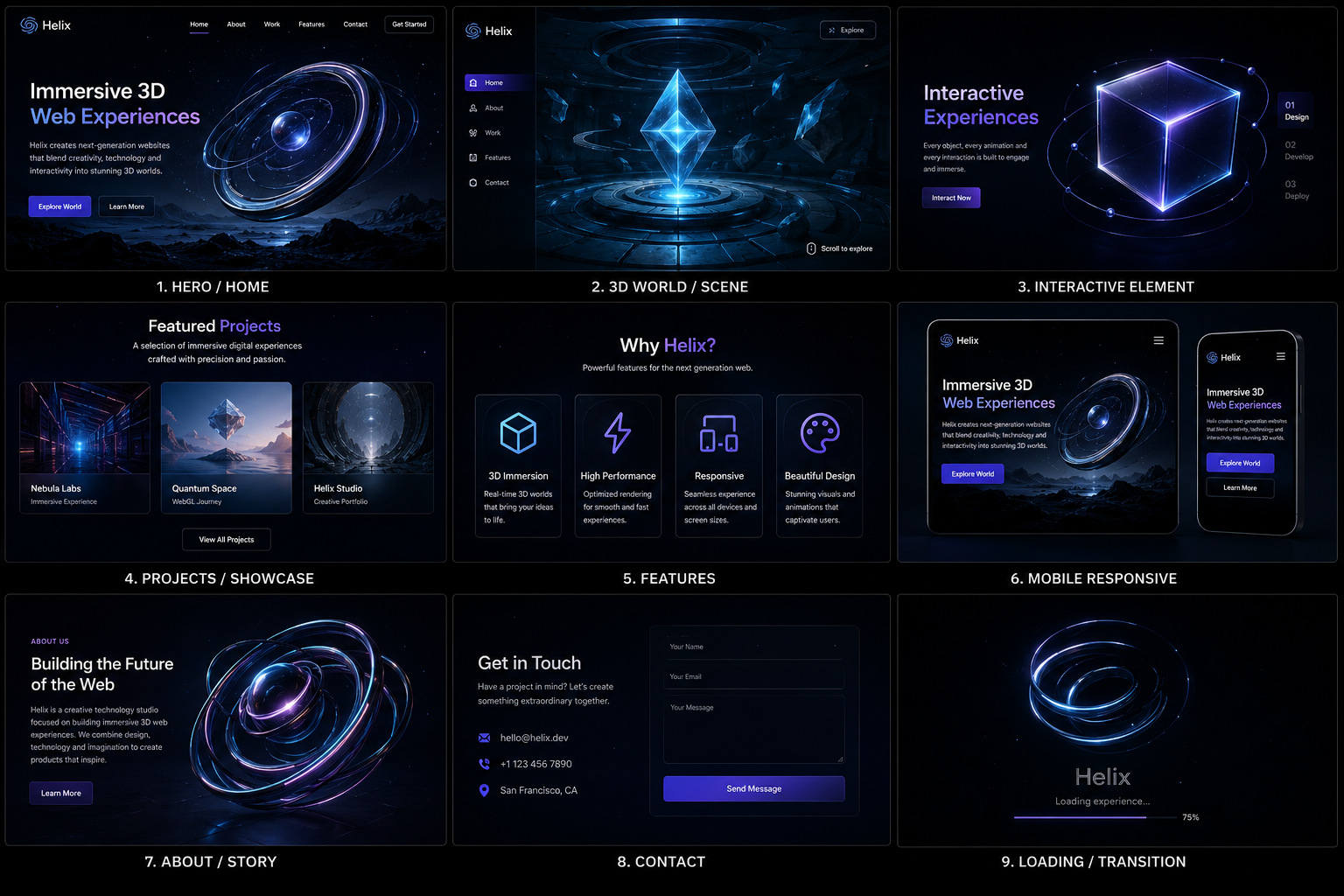
Inspired by the evolution of real-time graphics, gaming environments, and cinematic user experiences, we built Helix—an immersive 3D web experience that combines creativity, performance, and modern web technologies to redefine how users interact with the web.
What It Does
Helix transforms a traditional website into an interactive 3D environment where users don't just navigate pages—they experience them.
Key features include:
- Fully immersive 3D interface
- Modern cinematic visual design
- Smooth real-time animations
- Interactive 3D objects and transitions
- Responsive experience across devices
- High-performance rendering optimized for the web
Instead of presenting information through flat interfaces, Helix creates engaging digital experiences that encourage exploration and interaction.
How We Built It
Our development focused on creating a scalable, modern architecture while maintaining excellent performance.
Frontend
- React
- TypeScript
- Vite
3D Rendering
- Three.js
- React Three Fiber
- Drei
Animation
- GSAP
- Framer Motion
Styling
- Tailwind CSS
Development
- GitHub Codespaces
- GitHub
- VS Code
We structured the application into reusable components, separating UI, 3D scenes, animations, and application logic to keep the project maintainable and scalable.
Performance optimization was a major priority throughout development. We minimized unnecessary renders, optimized scene composition, and carefully balanced visual quality with responsiveness.
Challenges We Ran Into
Building immersive 3D experiences for the web introduced several technical challenges.
Performance
Real-time rendering can quickly become resource-intensive. We spent considerable time optimizing lighting, geometry, textures, and animations to maintain smooth frame rates.
Balancing Visuals and Usability
Creating beautiful 3D environments is only half the challenge. The experience also had to remain intuitive and accessible for users who may not be familiar with navigating 3D interfaces.
Responsive Design
Ensuring that the experience adapted gracefully across different screen sizes and hardware capabilities required continuous testing and refinement.
Development Environment
Developing entirely in cloud-based environments required careful management of dependencies, tooling, and build performance while maintaining a productive workflow.
What We Learned
Throughout this project we gained valuable experience in:
- Designing immersive user experiences
- Real-time rendering with Three.js
- Building scalable React architectures
- Performance optimization for WebGL applications
- Creating reusable 3D components
- Advanced animation techniques
- Managing complex frontend state
- Structuring large modern web applications
Perhaps the biggest lesson was that immersive experiences are most successful when technology enhances usability rather than distracting from it.
Accomplishments We're Proud Of
- Successfully creating an immersive 3D web experience
- Building a scalable and maintainable architecture
- Achieving smooth animations and responsive interactions
- Delivering a polished visual design
- Maintaining strong performance while rendering complex scenes
What's Next for Helix
Helix is just the beginning.
Future plans include:
- AI-powered personalized experiences
- Physics-based interactions
- Multiplayer collaborative environments
- Procedural 3D worlds
- Voice-driven navigation
- WebXR support for virtual and augmented reality
- Advanced particle simulations
- Expanded accessibility features
- More interactive storytelling experiences
Our long-term vision is to push the boundaries of what is possible on the web and inspire a new generation of immersive digital experiences.
Conclusion
Helix demonstrates that websites can be more than collections of pages—they can become living, interactive experiences.
By combining modern web technologies with real-time 3D graphics, we created a platform that explores the future of digital interaction and showcases the possibilities of immersive web development.


Log in or sign up for Devpost to join the conversation.