-
-
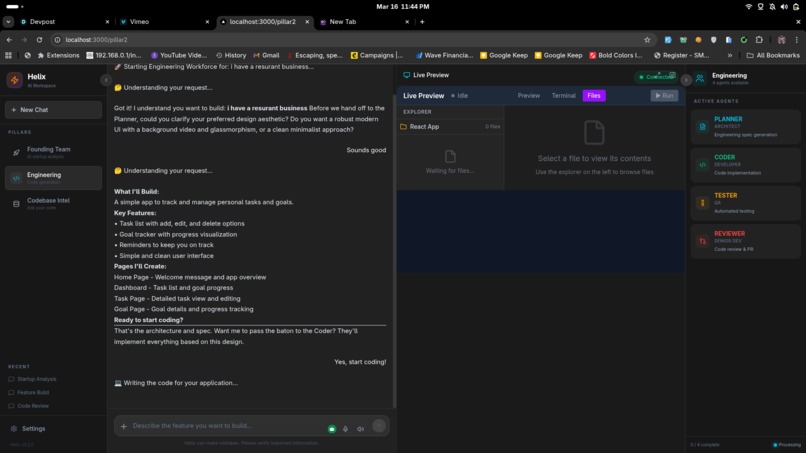
pillar 2
-
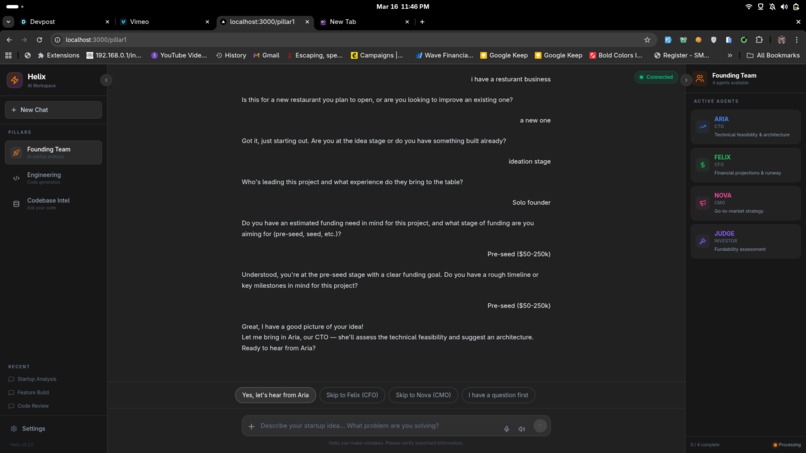
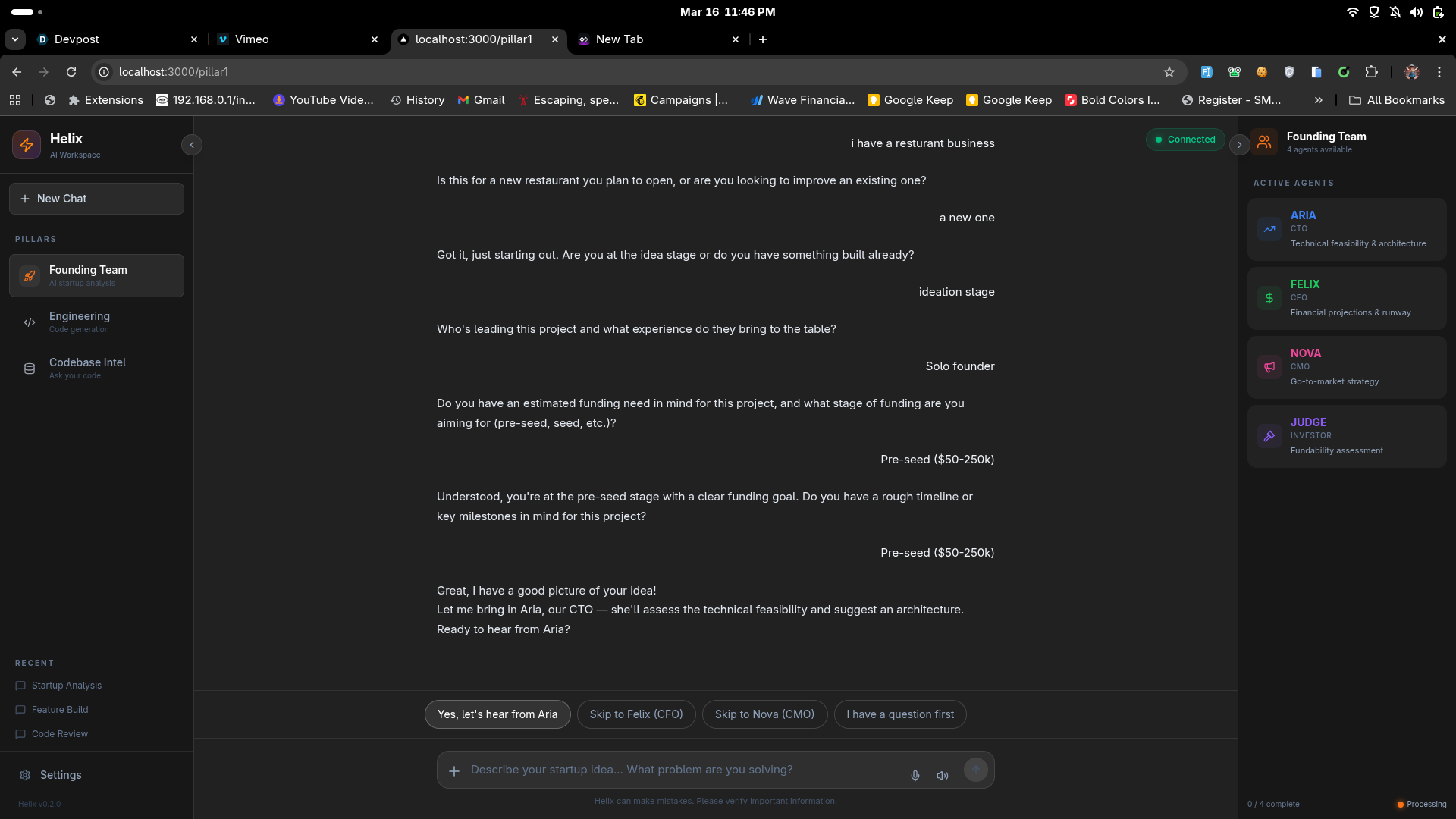
pillar 1
-
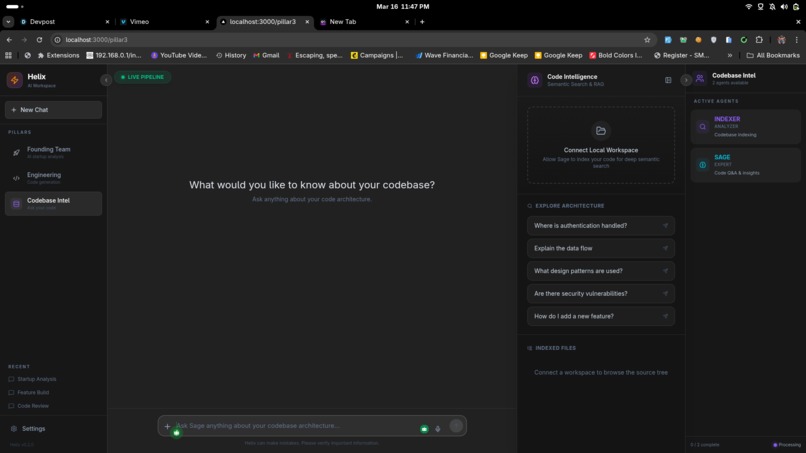
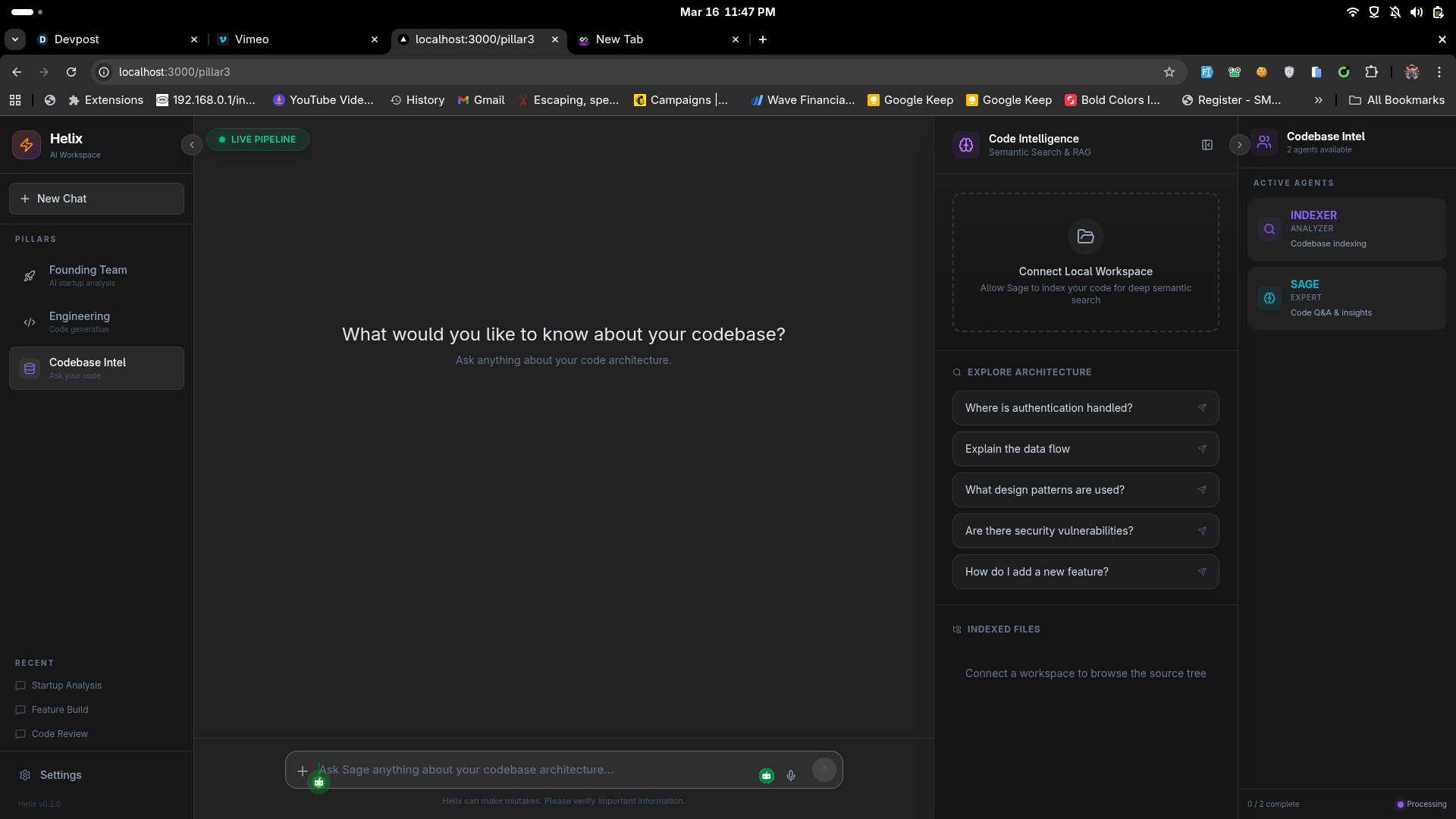
pillar 3
Here is a compelling Devpost-style hackathon submission based on the architecture and capabilities of Helix:
Inspiration
The software development lifecycle is increasingly fragmented. Founders spend weeks validating ideas, engineers get bogged down setting up boilerplate and arguing over architecture, and onboarding new developers into massive codebases takes months. We were inspired to build a unified intelligence layer—a "Digital Workforce"—where AI agents don't just act as isolated copilots, but actually collaborate with human oversight (Human-in-the-Loop) across the entire lifecycle: from inception, to engineering, to deep codebase comprehension. We wanted an AI system that thinks like a CTO, acts like an elite engineering team, and mentors like a principal engineer.
What it does
Helix is an orchestrator-driven Digital Workforce divided into three distinct pillars:
- Pillar 1 (The Founding Team): A collaborative ensemble of specialized agents (Aria the CTO, Felix the CFO, Nova the CMO, and Judge the Investor). You give it an idea, and it runs a full feasibility analysis, architectural spec, and business validation.
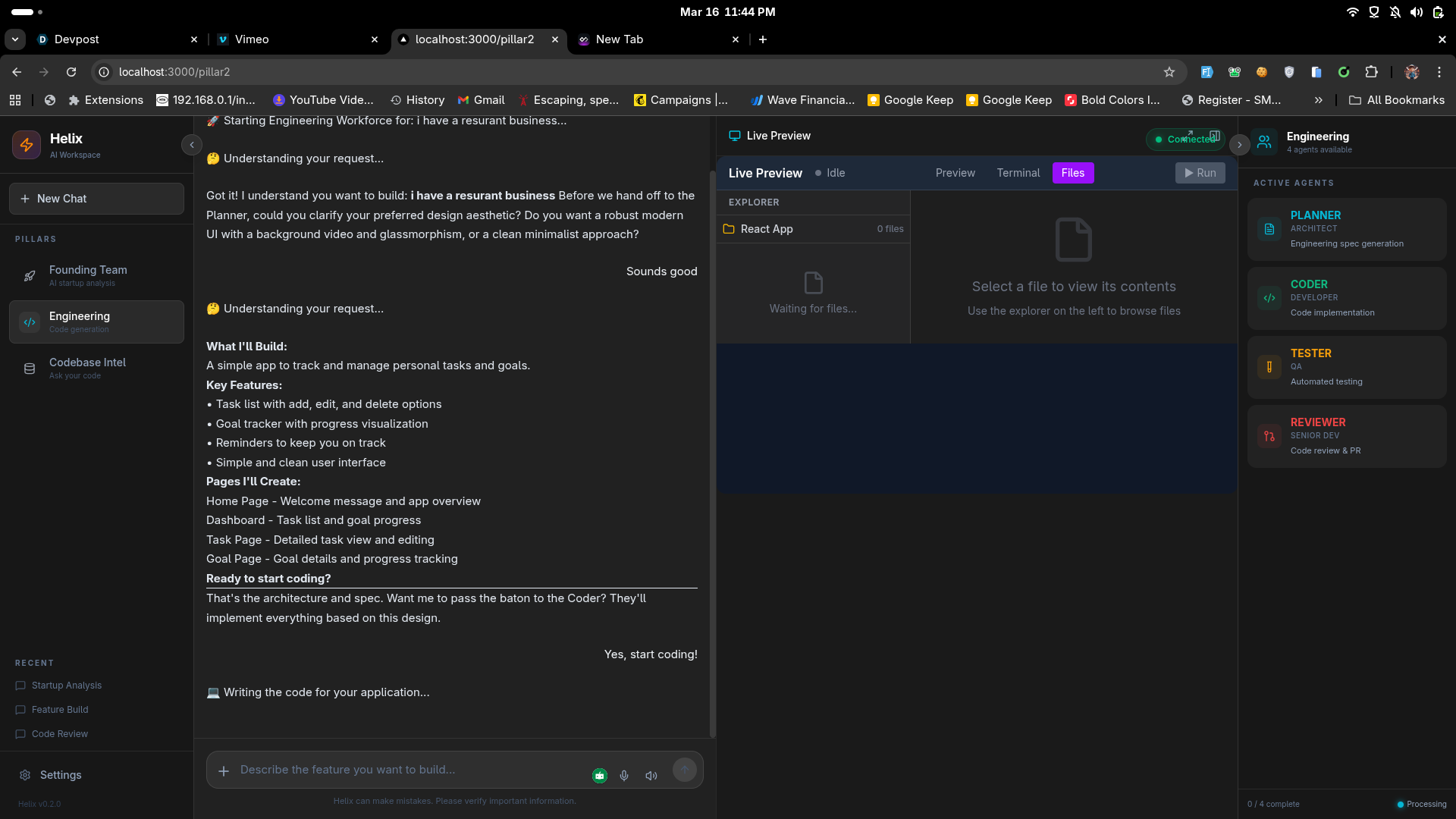
- Pillar 2 (Engineering Workforce): A fully-automated, agentic software factory. An Orchestrator manages the handoffs between a Planner, an elite Coder, a Tester, Docs generator, and Reviewer. Through dynamic "gates," humans approve design aesthetics (e.g., "minimalist vs. glassmorphism") and code specs before the system writes and compiles production-ready React apps with sophisticated UI components.
- Pillar 3 (Codebase Intelligence / Sage): A semantic codebase RAG engine powered by Amazon Nova Multimodal Embeddings. Users connect GitHub or local repositories, and "Sage" (a principal engineer persona) answers architectural questions, traces dependencies, and flags security vulnerabilities—actively generating smart follow-up suggestions when uncertainty arises.
How we built it
Helix's backend is a Python-based orchestrator leveraging Amazon Nova Models (nova-pro, nova-lite, nova-sonic for voice interactions, and titan-embed-text for RAG). The agents operate via a robust BaseAgent framework with persistent state and Human-in-the-Loop (HITL) checkpoints.
- Code Generation: We prompt the Pillar 2
CoderAgentto use the latest 2024 React patterns (Next.js/Vite, Zustand, Framer Motion, Tailwind CSS, Lucide Icons) ensuring outputs are stunning right out of the box. - Browser Automation: We integrated Amazon Nova Act to literally drive browser behavior for automating GitHub PR creations, branch generation, and file commits natively within the GitHub UI.
- Frontend: The frontend is a sophisticated Next.js application leveraging websockets to maintain real-time bidirectional communication with the agent orchestrator. We built dynamic, context-aware Chat Interfaces and Live Code Previews.
Challenges we ran into
One of the biggest challenges was Context Passing & Handoffs. We initially found that the Coder agent wasn't receiving the architectural spec from the Planner agent due to mismatched metadata keys. Fixing the inter-agent state passing so that the pipeline flows flawlessly without losing context required careful engineering. Additionally, making the agents "conversational yet technical" was difficult. Early iterations of the Orchestrator would endlessly loop generic questions. We overhauled its system prompts to act as a senior tech lead—asking targeted architectural questions and providing dynamic, clickable Suggestions (e.g. "Do you want background videos or a dark-mode neon aesthetic?") which we parsed and injected natively into our React interface.
Accomplishments that we're proud of
- The Seamless HITL Checkpoints: Implementing a robust Human-in-the-Loop system where the pipeline effectively pauses at specific "Gates", passes contextual UI options/suggestions to the frontend via WebSockets, and waits for user approval before handing off to the next agent.
- Pillar 3's Split-View Intelligence UI: Evolving Pillar 3 from a basic chat window into a massive "Code Intelligence Panel" complete with semantic RAG insights, live codebase folder-tree visualization, and automated deep-dive follow-up suggestions.
- Stunning Code Output: Tuning the
CoderAgentprompts to stop outputting "stub" components and instead generate full, production-ready pages complete with glassmorphism, Framer Motion animations, and beautiful data mocks.
What we learned
We learned that the key to an effective AI developer platform isn't just generating code—it's state management and orchestration. Building the infrastructure to manage agent personas, handoffs, and context pipelines is vastly more complex than the prompt engineering itself. We also realized how crucial UI/UX is for AI tools: giving users clickable, smart suggestions significantly lowers the cognitive load of interacting with autonomous agents.
What's next for Helix
We plan to expand Pillar 2's capabilities beyond frontend generation to handle full-stack deployments via automated AWS CDK and Terraform. For Pillar 3, we want to expand the RAG capabilities to include visual graph-node representations of repository dependencies and realtime linting overlays directly in the Live Preview. Ultimately, we envision Helix as the definitive operating system for startup creation and enterprise engineering.

Log in or sign up for Devpost to join the conversation.