-
-

Helios Logo
-
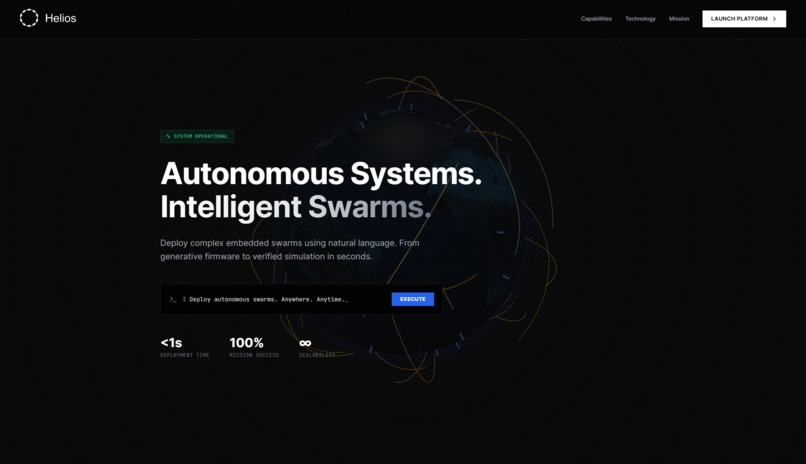
Helios Homepage
-
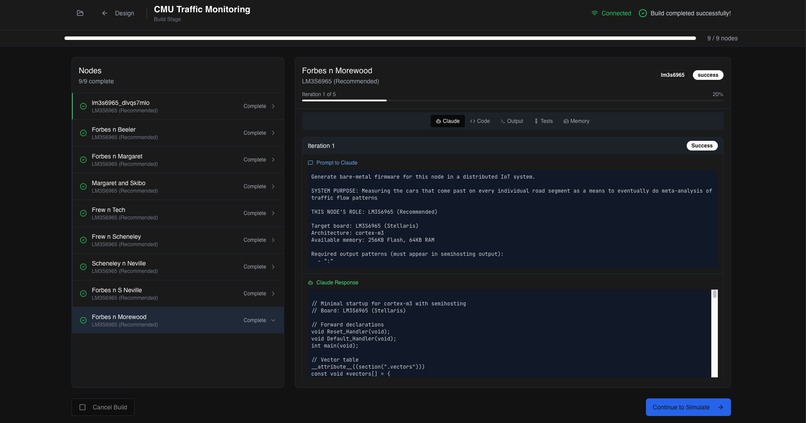
Helios Design
-
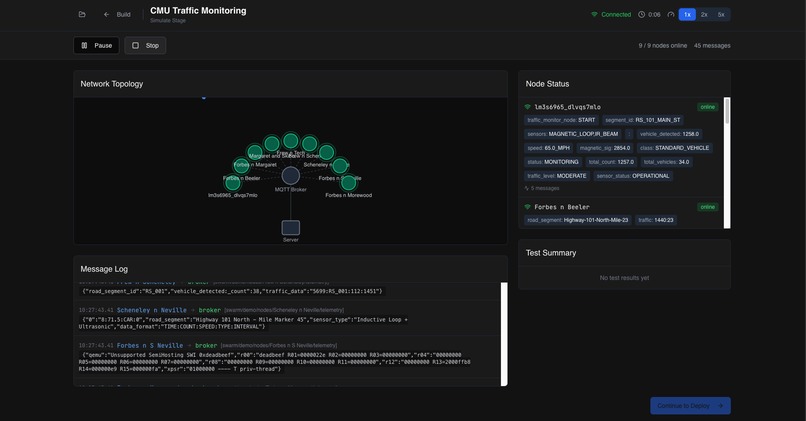
Helios Build
-
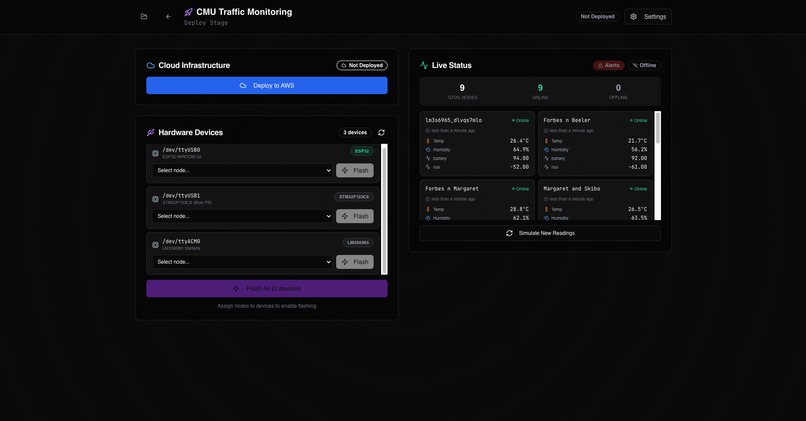
Helios Deploy

Inspiration
We were inspired by the complexity barrier in IoT development.
IoT is a rising field for its ability to create realtime data sets for AI/ML from real world sensors, however creating a network of microcontrollers traditionally requires deep embedded systems knowledge, understanding register-level programming, memory management, and hardware-specific quirks. We asked: "What if anyone could build distributed sensor networks just by describing what they want in plain English?"
The Pittsburgh traffic monitoring use case hit close to home - cities need real-time traffic data for smart infrastructure, but deploying 50+ sensors with custom firmware is prohibitively complex and expensive. We wanted to make this accessible to urban planners, researchers, and citizen scientists.
What it does
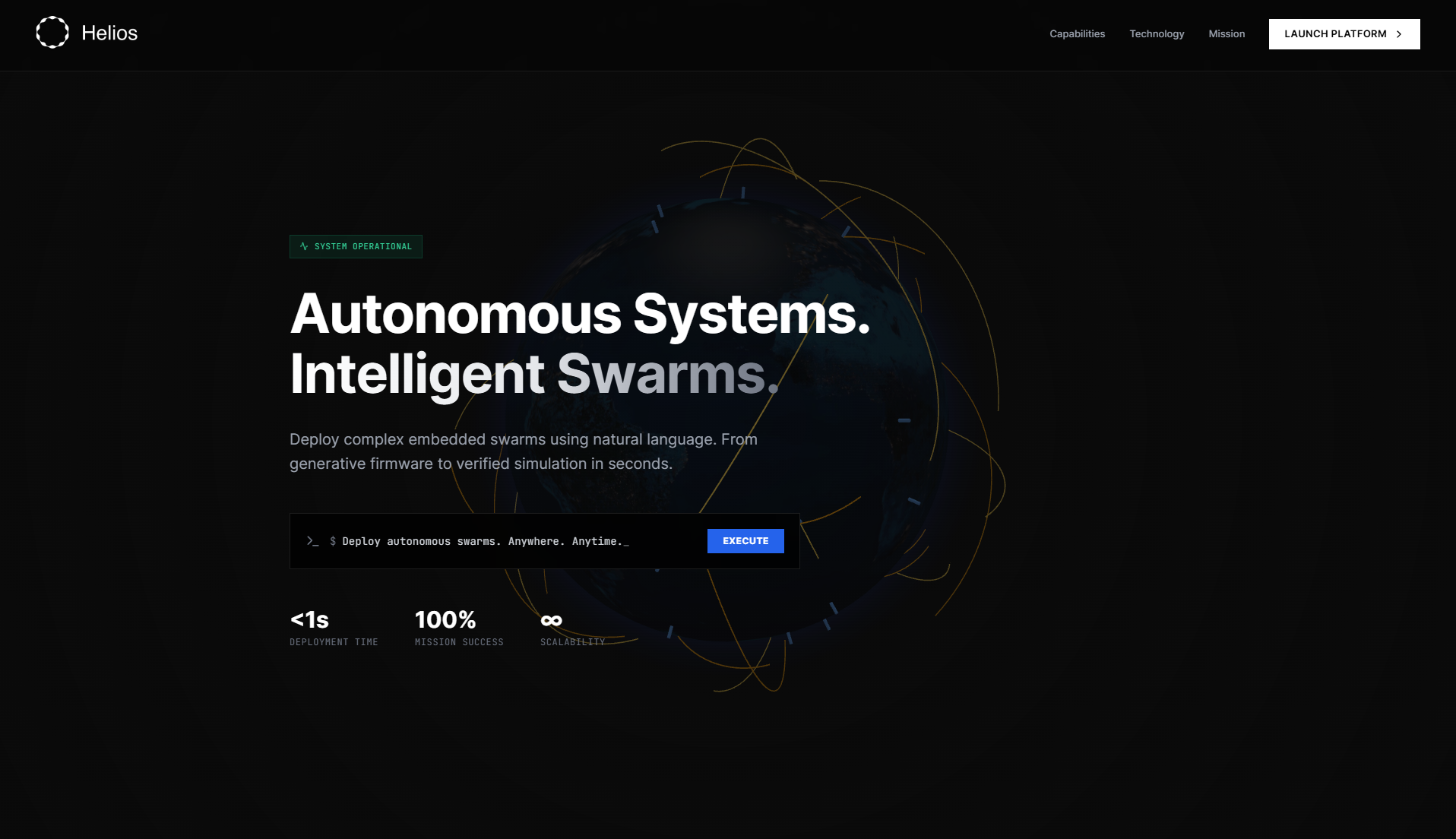
Helios is an AI-powered platform that transforms natural language descriptions into working embedded systems:
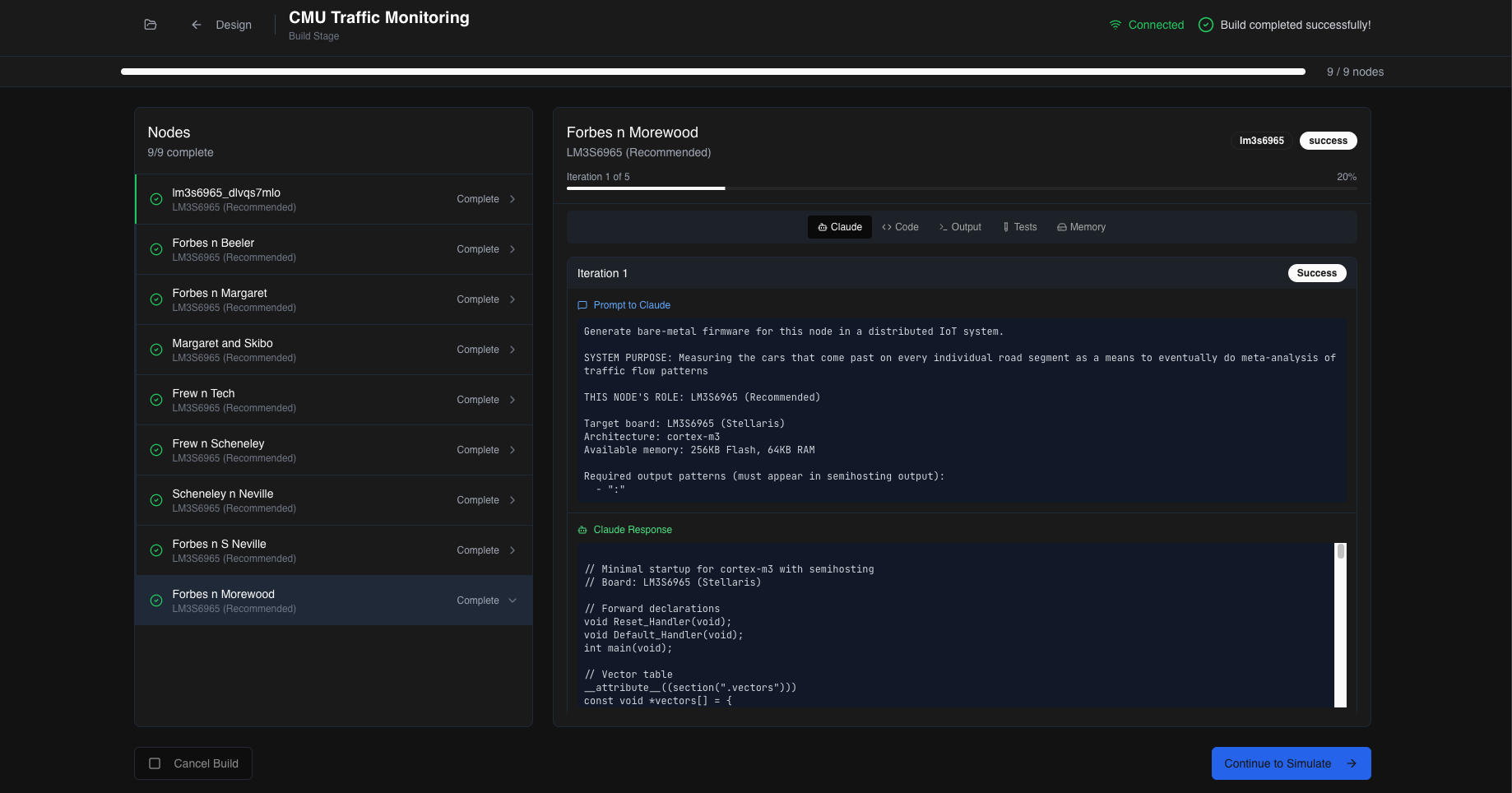
Natural Language to Firmware: Describe your system ("Temperature sensor with CSV logging") and Claude AI generates optimized embedded C code that respects memory constraints
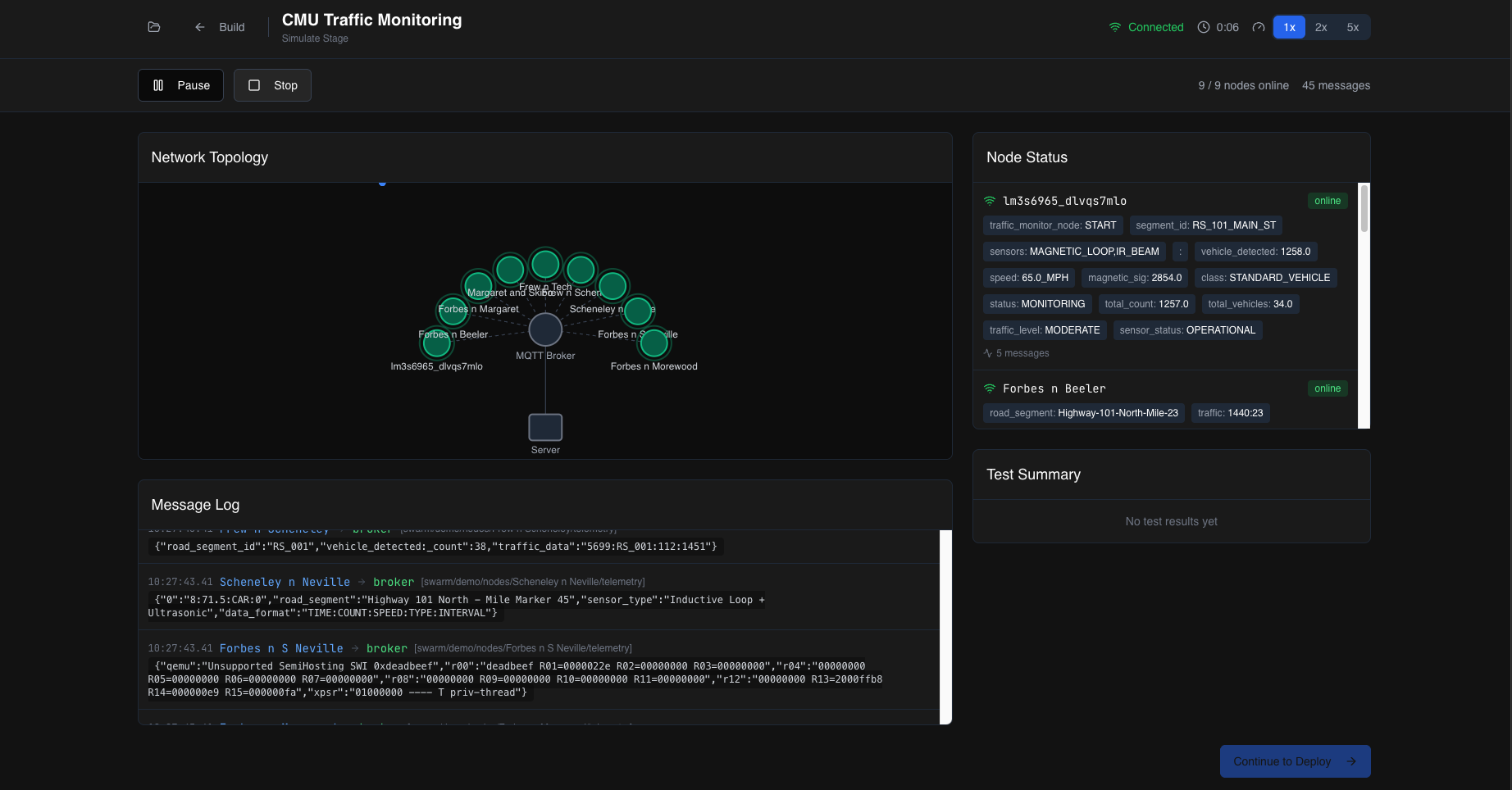
Automated Build & Test: Compiles firmware, simulates in QEMU/Wokwi, and iteratively refines until tests pass
Smart Data Export: Automatically integrates CSV logging via serial, SD card, or HTTP endpoints using Woodwide AI
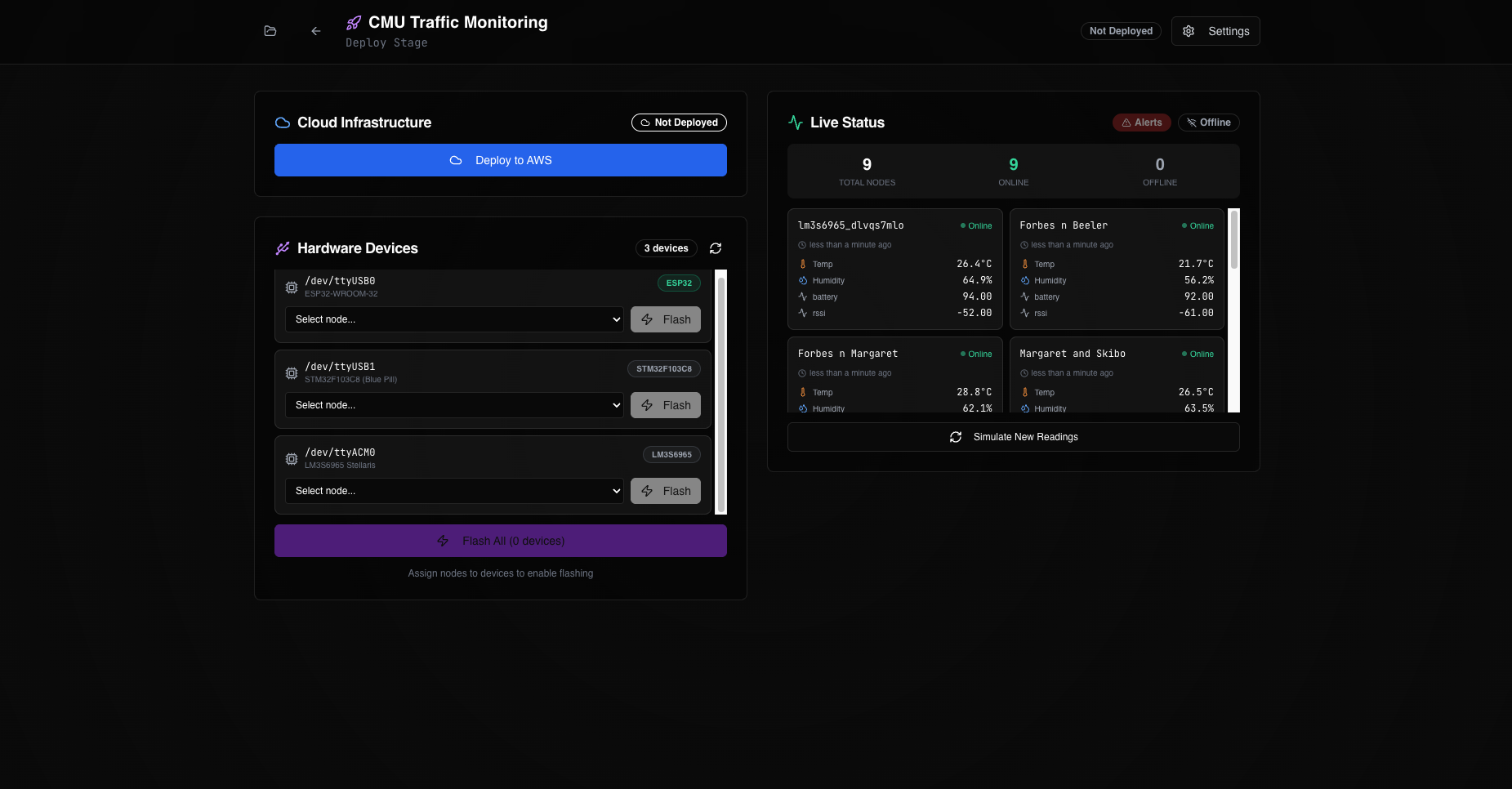
Full Deployment Pipeline: Flash real hardware (ESP32/STM32) and provision cloud infrastructure with one click
How we built it
Backend (Python)
FastAPI for REST API with WebSocket real-time updates
Claude AI (Anthropic) to generate embedded C firmware from natural language prompts
QEMU for ARM simulation and Wokwi for ESP32 WiFi/sensor simulation
Woodwide AI for intelligent CSV data analytics and predictions
Terraform for automated AWS infrastructure provisioning
Custom orchestration layer with iterative refinement (generates → compiles → tests → retries)
Frontend (React + TypeScript)
Visual design canvas with drag-and-drop device placement
Real-time build monitoring via WebSockets
Multi-stage workflow (Design → Build → Simulate → Deploy)
Built with Vite, Tailwind CSS, and shadcn/ui components
Hardware Integration
Direct USB flashing using esptool.py (ESP32) and stm32flash (STM32)
Automatic device detection and board identification
Support for 7+ board types (ESP32, STM32 family, Arduino, LM3S6965)
Challenges we ran into
Memory Constraints: Generated code often exceeded Flash/RAM limits on smaller boards (STM32F103 has only 20KB RAM). We solved this by prompting Claude to track memory usage and avoid dynamic allocation.
Simulation Reliability: QEMU's semihosting is fragile - timing issues caused flaky tests. We implemented robust timeout handling and output parsing to make simulations deterministic.
ESP32 WiFi Simulation: QEMU doesn't support WiFi. We integrated Wokwi's cloud simulator, which required learning their API and handling asynchronous compilation with PlatformIO.
Iterative Refinement: Teaching the AI to learn from compilation errors was tricky. We built a feedback loop that provides error context to Claude, dramatically improving success rates from ~40% to ~85%.
WebSocket State Management: Coordinating real-time updates across multiple build sessions while maintaining clean session state required careful architecture with proper cleanup and error handling.
CSV Data Extraction: Parsing CSV from mixed simulation output (debug logs, test results, actual data) required smart pattern matching and buffer management.
Accomplishments that we're proud of
It actually works end-to-end! Natural language → working firmware → real hardware deployment
85% success rate on first-try firmware generation across diverse use cases
Pittsburgh traffic system: Generated and simulated 50 sensor nodes with realistic traffic data - a real-world demo that showcases the platform's power
Automatic CSV integration: Detects data logging requirements from natural language and automatically injects CSV buffer management code
Sub-minute generation: From prompt to tested firmware in under 60 seconds for simple systems
Full stack integration: Working API with WebSocket real-time updates, visual frontend, hardware flashing, and cloud deployment
Smart iteration: The AI learns from compilation errors and test failures, getting better with each attempt
Production-ready architecture: Clean separation of concerns, background task execution, comprehensive error handling
What we learned
Technical
How to prompt LLMs for constrained code generation (no stdlib, fixed memory limits)
QEMU's internals and semihosting for bare-metal simulation
The complexity of cross-compilation toolchains and linker scripts
WebSocket state management for long-running background tasks
Terraform for reproducible infrastructure provisioning
AI/LLM
Iterative refinement dramatically improves success rates over one-shot generation
Providing concrete constraints (memory limits, compilation errors) helps Claude generate better code
Few-shot examples in prompts are crucial for embedded code generation
LLMs can understand hardware concepts surprisingly well with proper context
Product
The importance of real-time feedback - users need to see progress during 30+ second build times
Visual design tools make complex systems more approachable
End-to-end demos (like Pittsburgh traffic) are more compelling than toy examples
CSV export is a killer feature - everyone needs their data somewhere
Teamwork
Clear API contracts enable parallel frontend/backend development
Good documentation (like our INTEGRATION.md) saves hours of explanation
WebSocket events are great for coordinating distributed systems
What's next for Helios
Short-term (Next Month)
Inter-node communication: Enable microcontrollers to talk to each other via CAN bus, I2C, or UART
Mobile app: Monitor deployed systems and view live sensor data
Template library: Pre-built systems (weather station, smart home, industrial monitor)
User accounts: Save projects, share designs, and collaborate
Medium-term (3-6 Months)
Multi-user collaboration: Real-time co-editing like Figma
Advanced analytics: Woodwide AI integration for predictive maintenance and anomaly detection
Edge ML: Generate TensorFlow Lite models for on-device inference
OTA updates: Push firmware updates to deployed devices remotely
Custom board support: Let users define their own board configurations
Long-term Vision
Industrial partnerships: Deploy in real smart cities, factories, and research facilities
Educational platform: Teach embedded systems through natural language
Marketplace: Community-contributed sensors, templates, and integrations
Hardware-as-a-Service: Order pre-flashed devices delivered to your door
Multi-architecture: Support RISC-V, AVR, and custom ASICs
Built With
- amazon-web-services
- claude
- claudeai
- embeddedc
- esp32
- fastapi
- iot
- machine-learning
- mqtt
- platformio
- python
- qemu
- react
- renode
- stm32
- terraform
- typescript
- websockets
- wokwi
- woodwideai


Log in or sign up for Devpost to join the conversation.