-
-
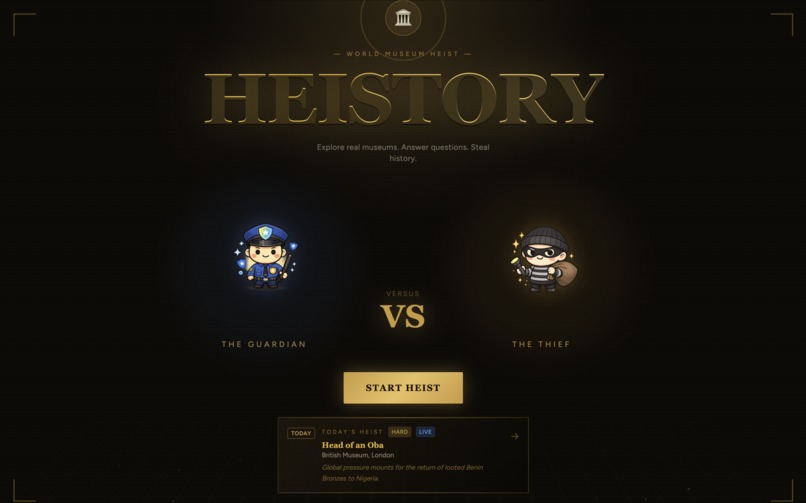
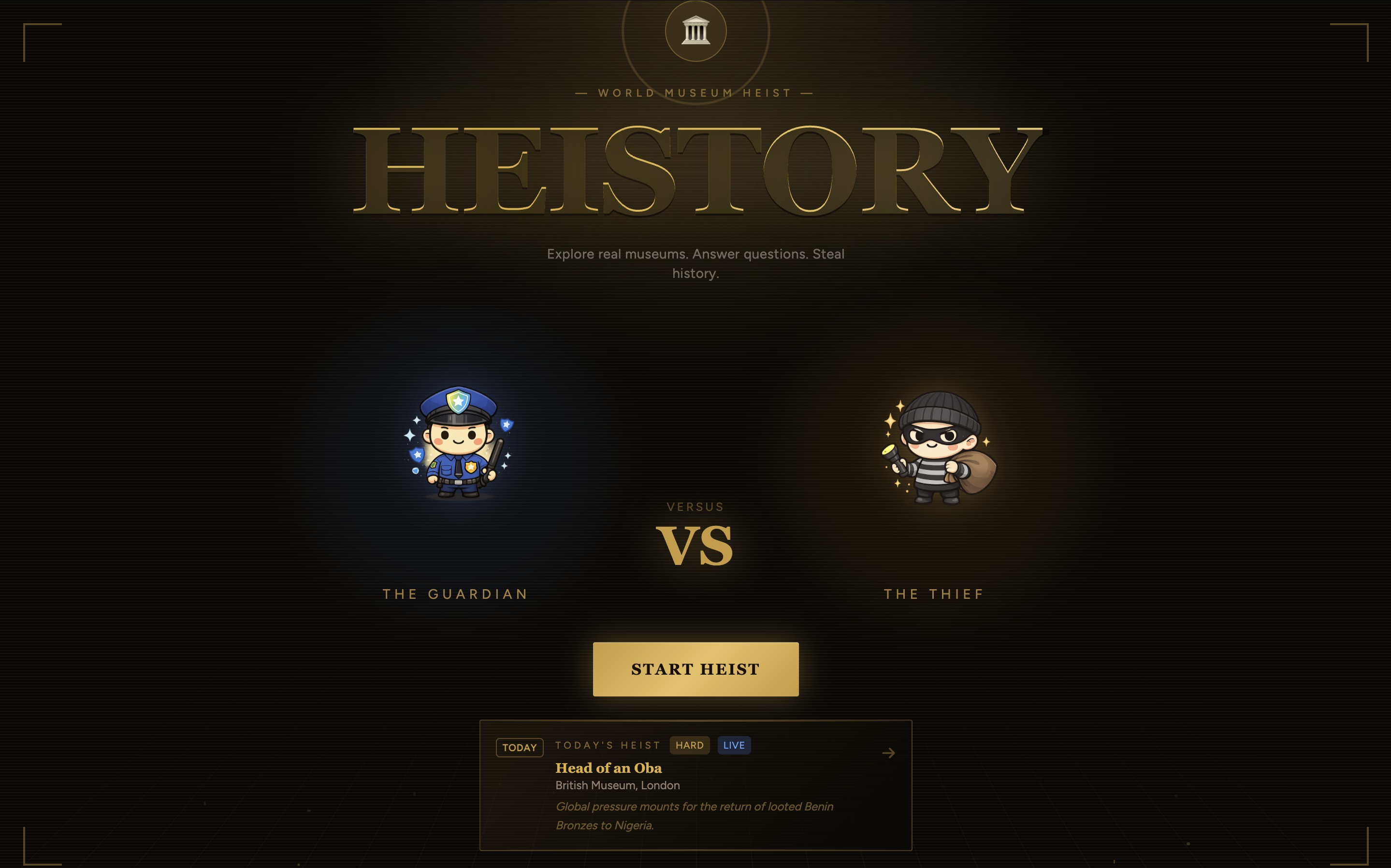
Home Page
-
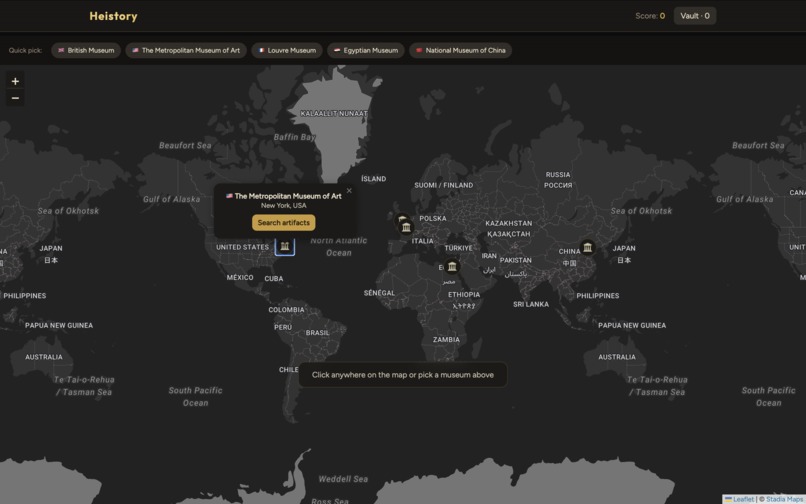
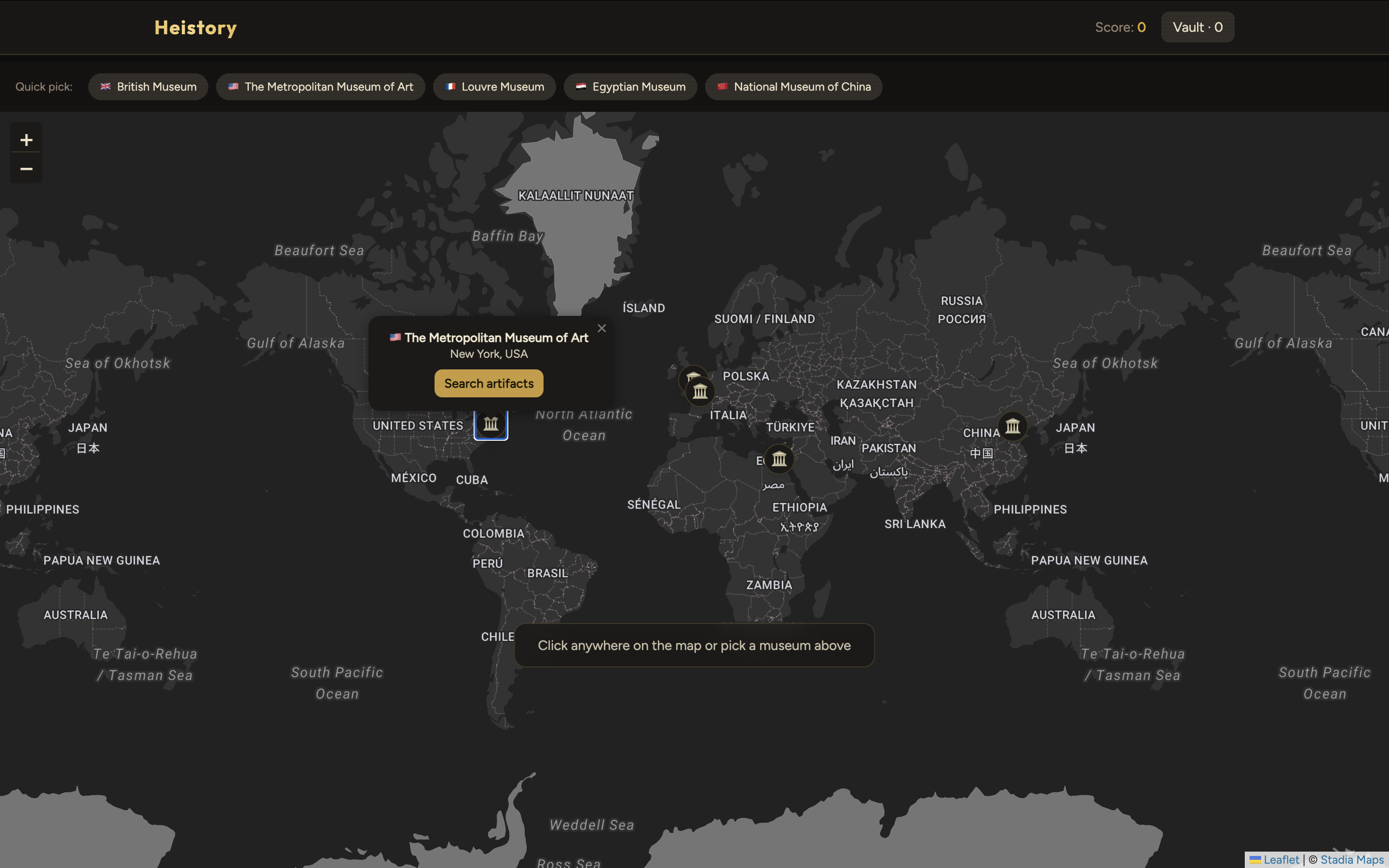
World Museum Map
-
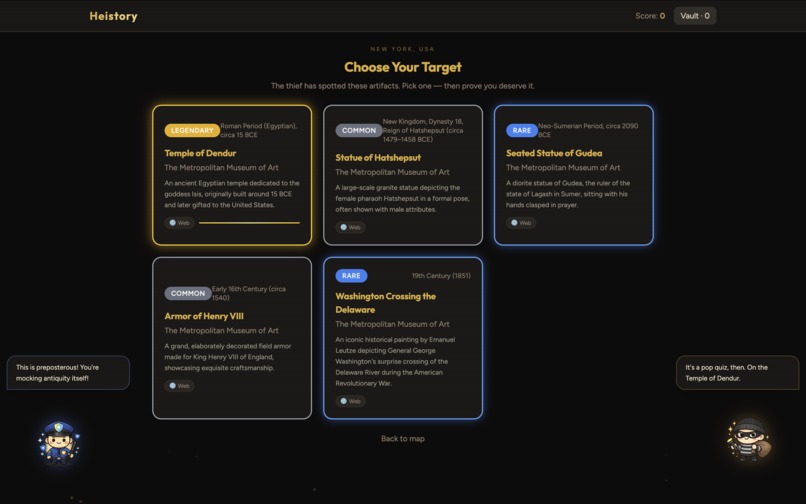
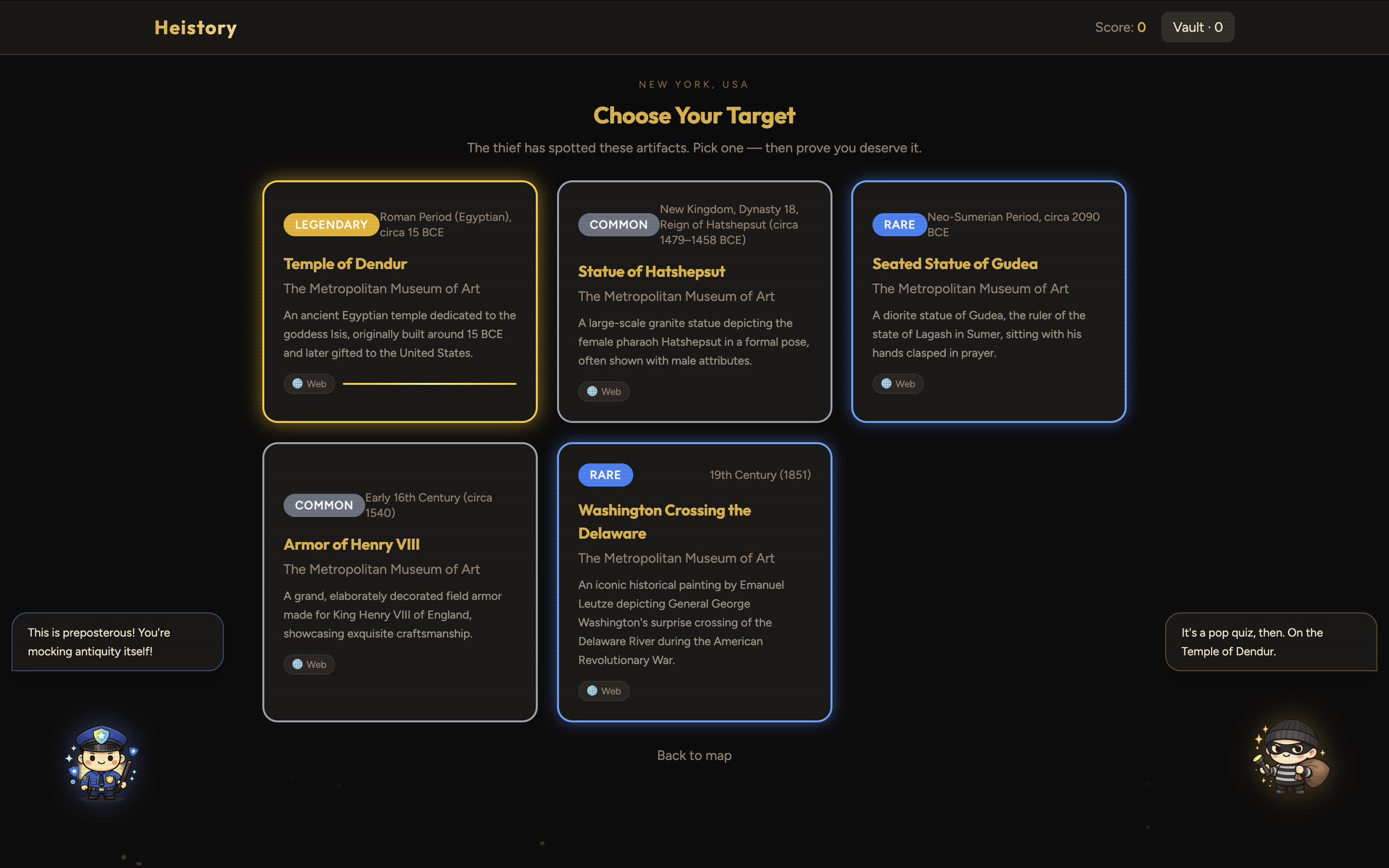
Artifacts Page
-
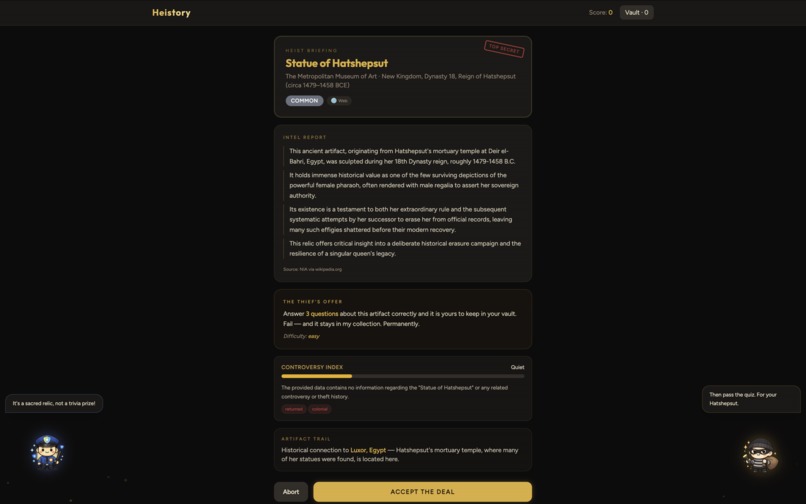
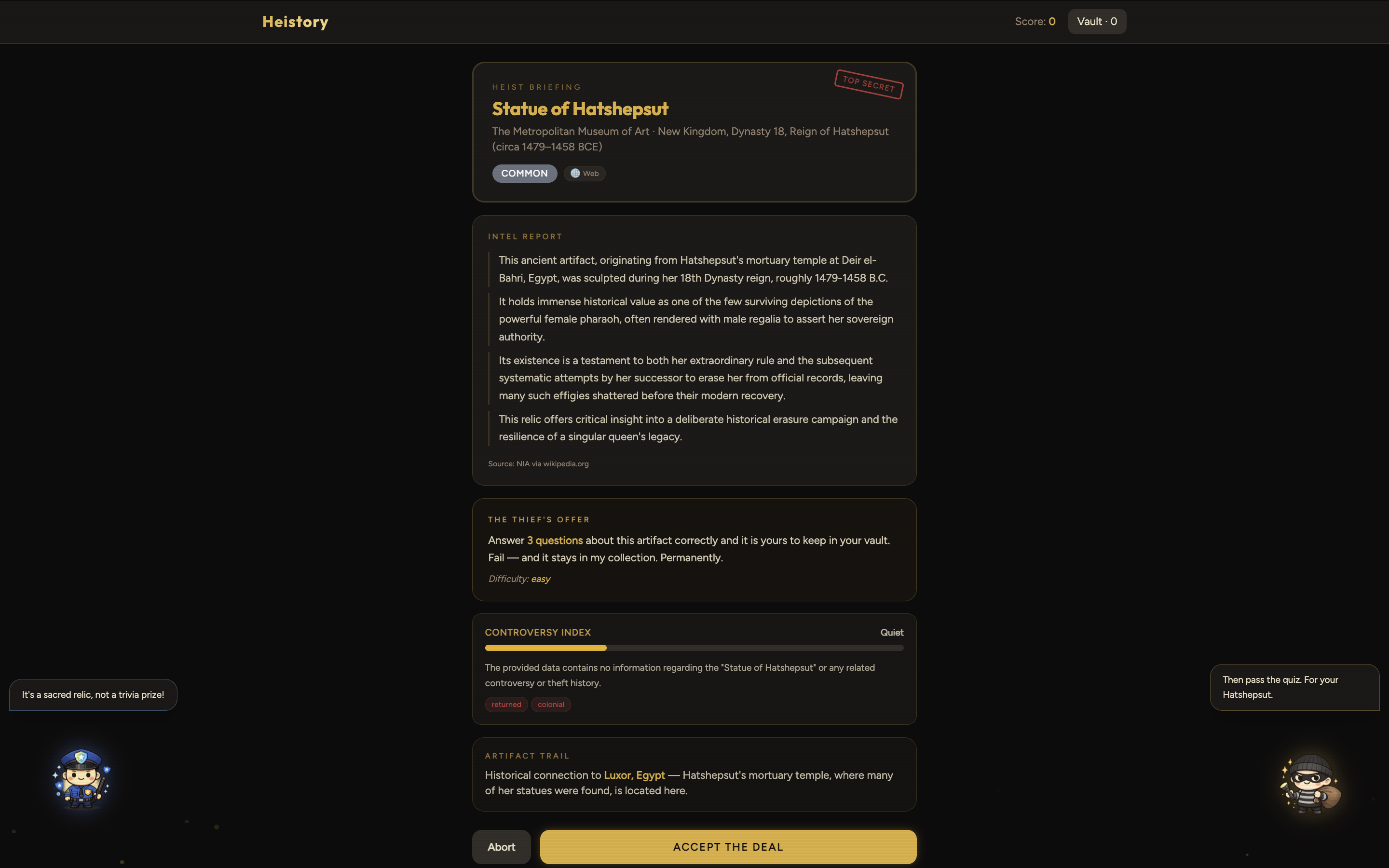
Heist Briefing
-
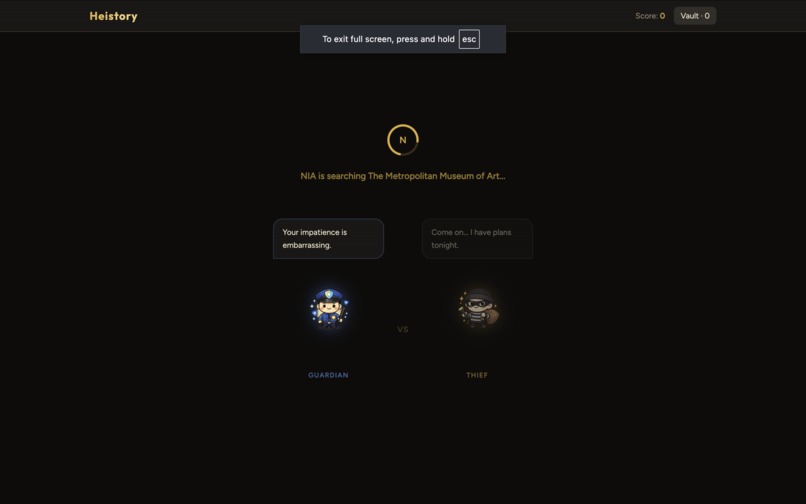
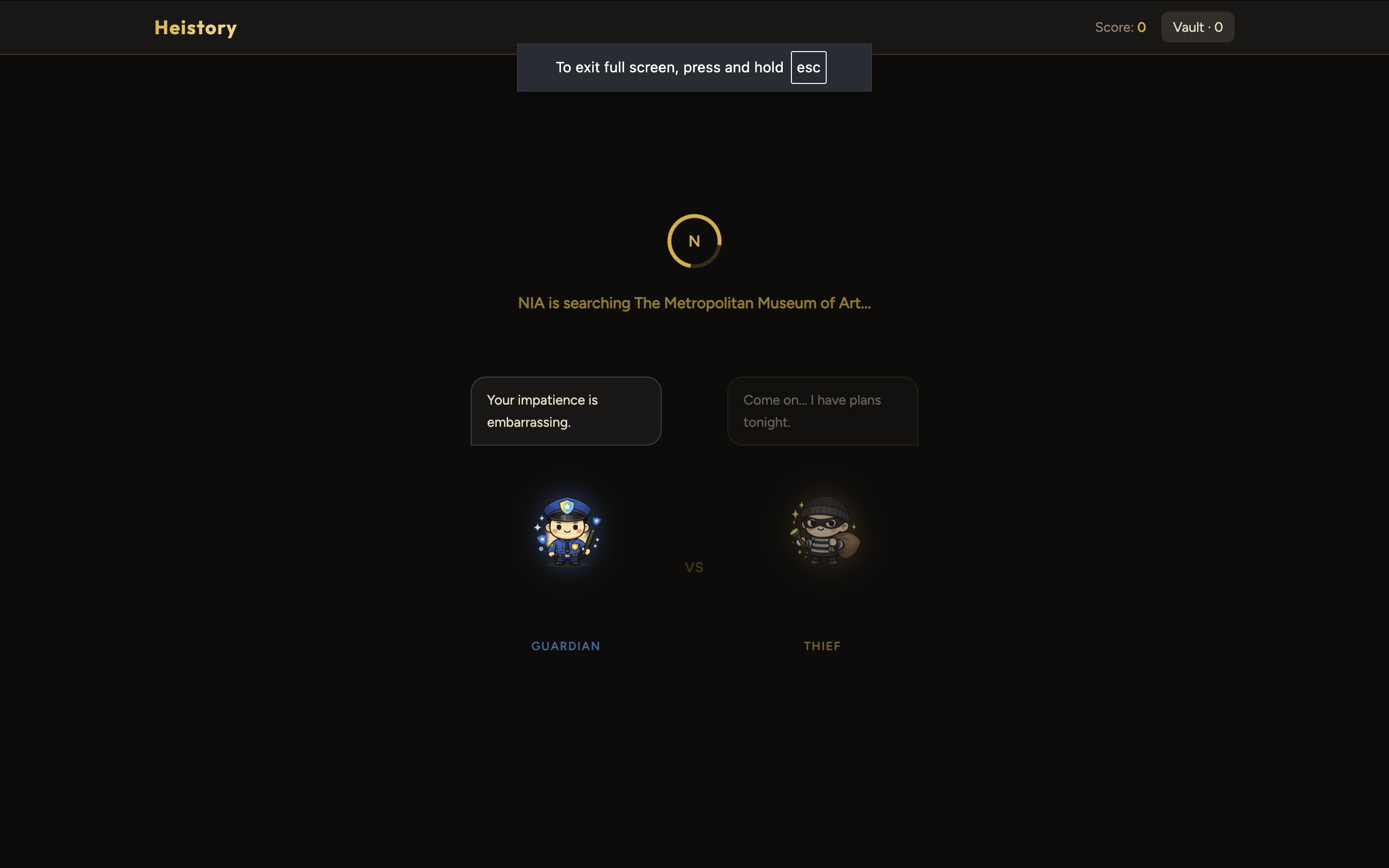
Loading Page
-
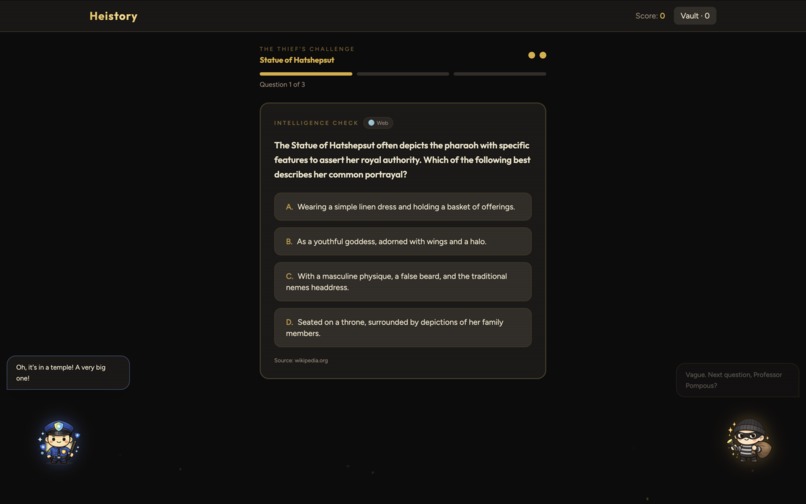
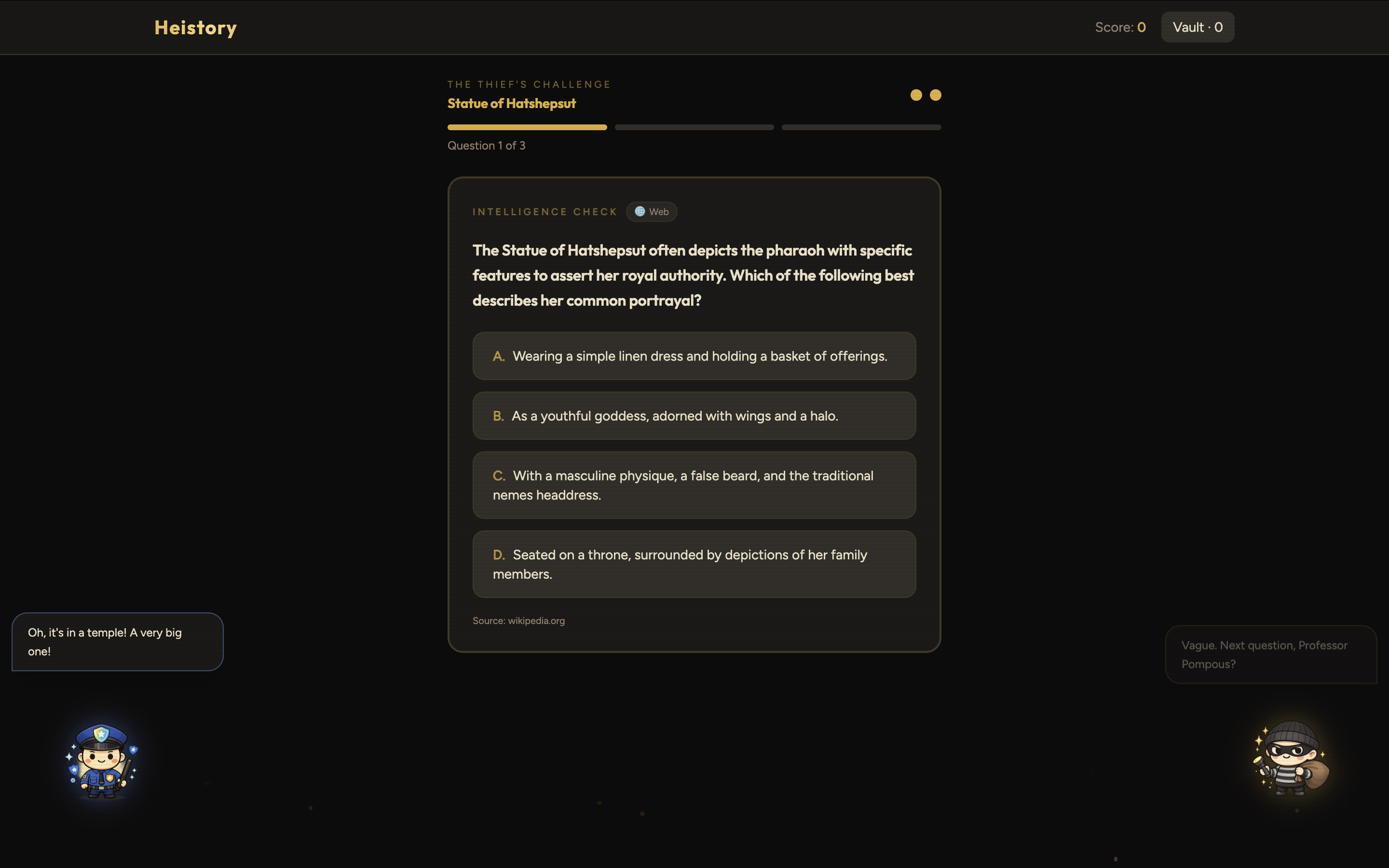
Quiz questions page
-
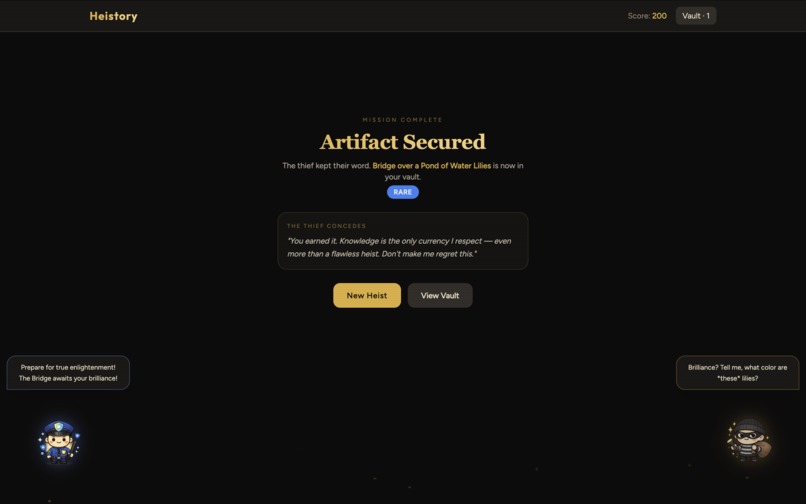
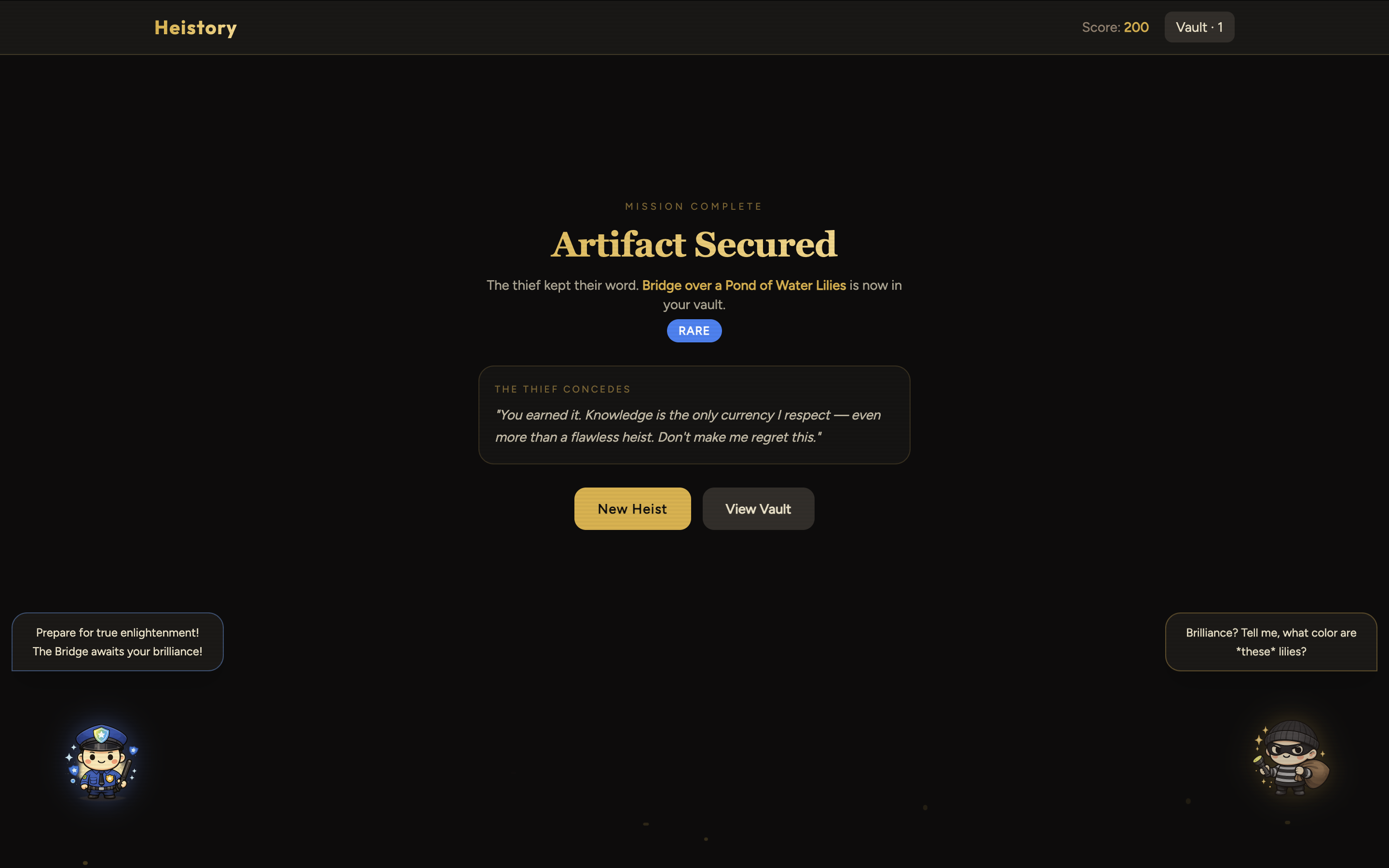
Successfully saved artifact
-
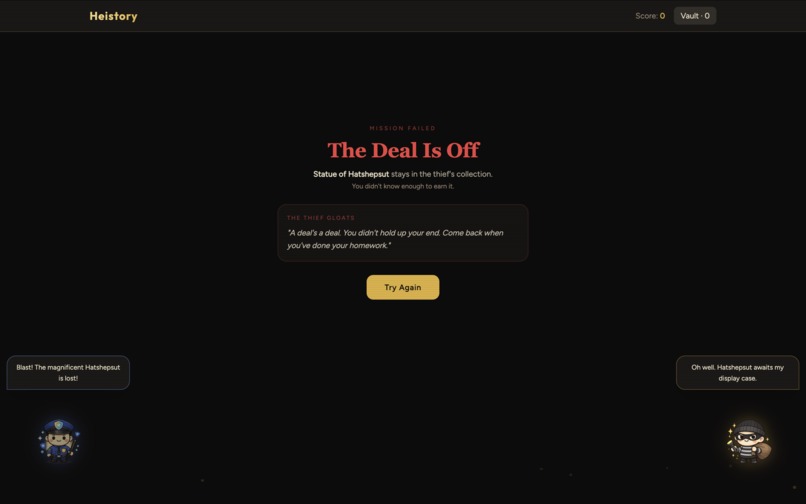
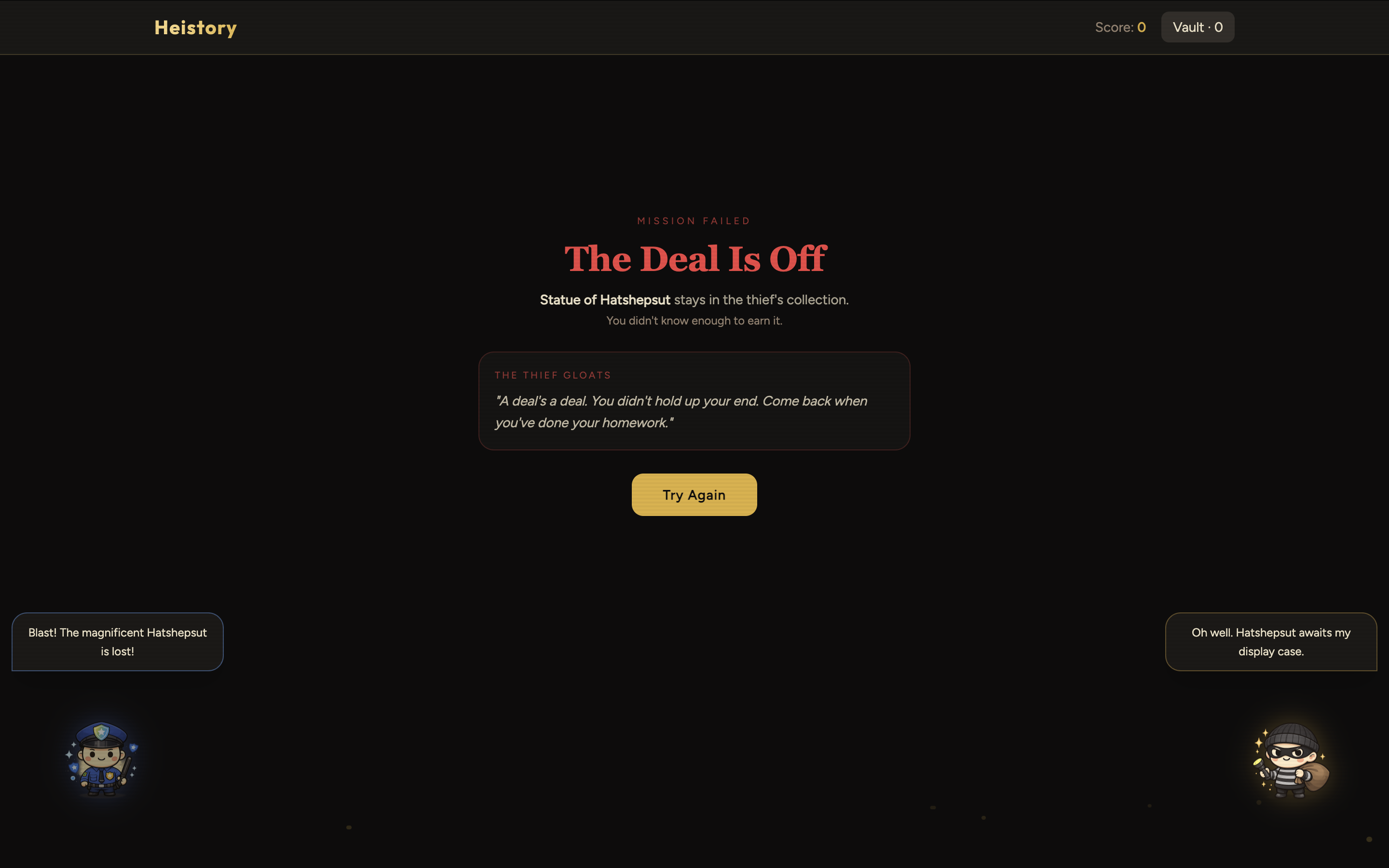
Lost artifact
-
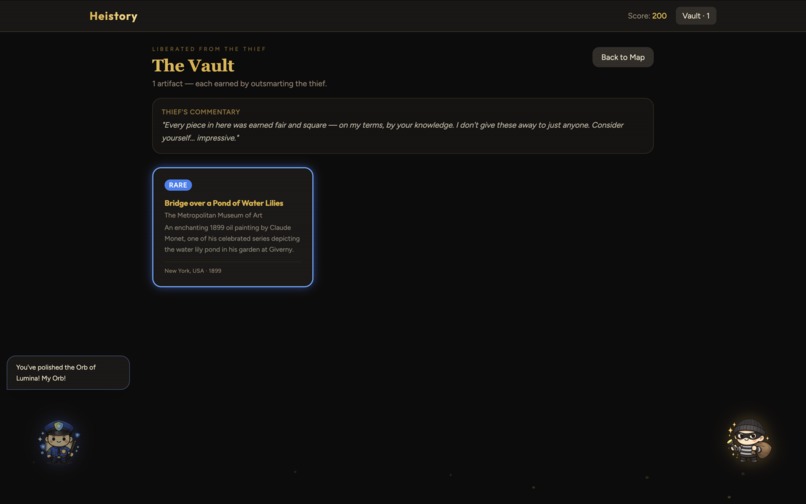
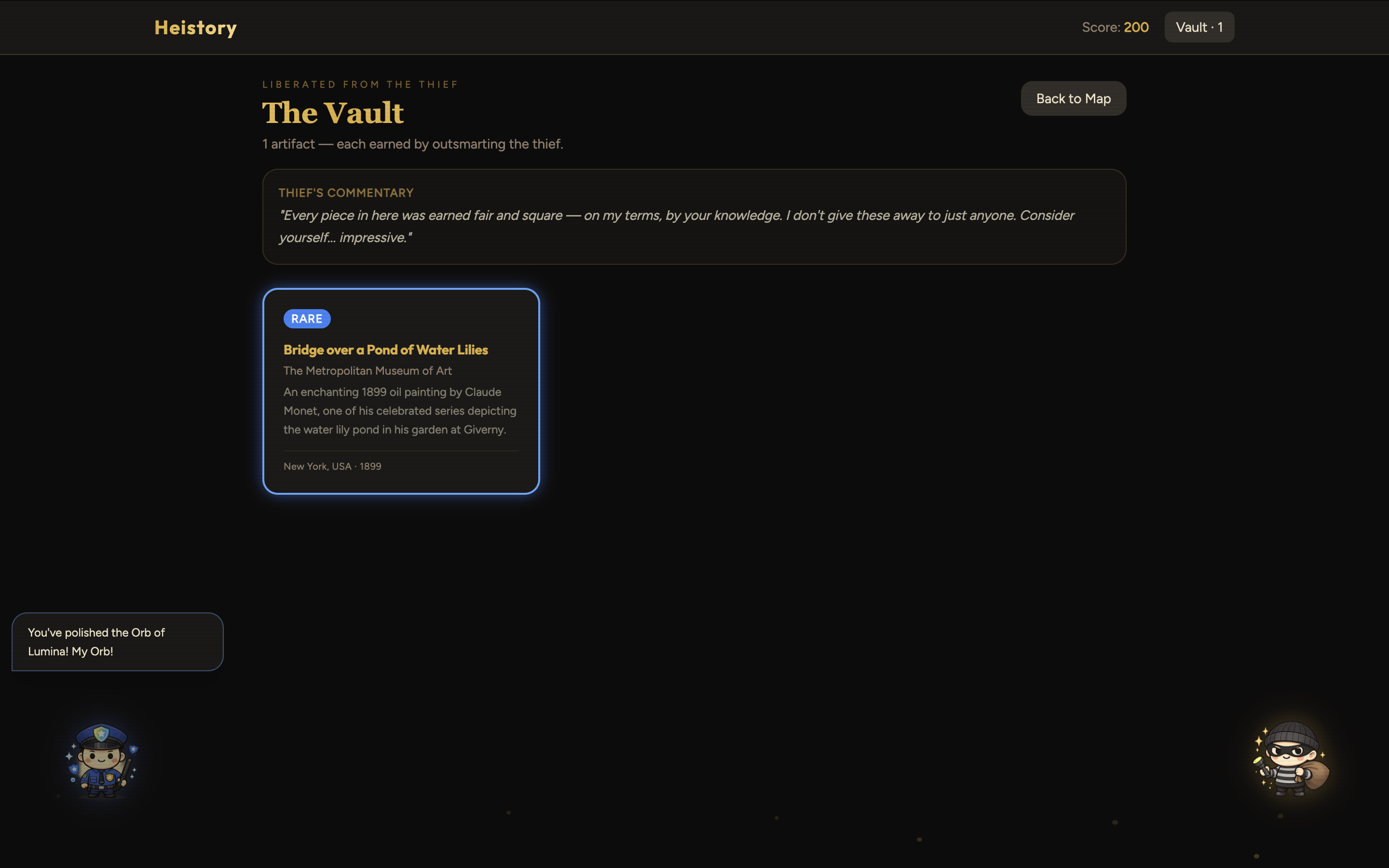
Vault Page
Inspiration
We have all been in that place where learning history feels like a chore instead of an experience. You open a textbook, read page after page of disconnected facts, and nothing really sticks. It is not that history is boring, it is that the way we interact with it is passive and disconnected from any sense of discovery.
We wanted to flip that completely.
Instead of treating history as something you read about, we started thinking about it as something you experience. What if learning felt like stepping into a story? What if you were not just memorizing artifacts, but actually discovering them, understanding them, and earning them through interaction and exploration?
That idea became Heistory, a system where curiosity becomes exploration turning into a personal archive of knowledge you build over time!
At the same time, we became interested in something deeper. Knowledge in the real world is uneven. Some artifacts are heavily documented while others are barely mentioned. Using Nia, we realized we could measure that difference and turn it into a meaningful signal inside the experience, reflecting how much the world actually knows about something.
What it does
Heistory is a map based narrative learning experience where users explore real world history through a heist inspired framework that makes discovery feel like a story instead of a lesson.
Users start by clicking on a global map or selecting a museum. The system then uses Nia to retrieve real artifacts tied to that location. These are not fictional objects, they are grounded in real historical records. Each artifact is then assigned a rarity based on how much information exists about it across the internet, turning global knowledge density into a live gameplay signal.
Once an artifact is selected, the experience shifts into narrative mode. Users are guided by two characters, the Guardian and the Thief. The Guardian represents preservation and authority, while the Thief represents curiosity and discovery. They react dynamically to the artifact the user is interacting with, making the experience feel alive instead of static.
Users then receive a generated dossier that explains the artifact’s historical context in an engaging way. To successfully collect the artifact, they must answer AI generated questions that test understanding rather than memorization. If they succeed, the artifact is added to their personal collection.
Over time, this collection becomes a living archive of everything the user has learned through exploration.
On top of this core loop, we added systems like controversy detection for artifacts tied to theft or repatriation debates, source credibility indicators for transparency, and a daily heist challenge based on real world museum and historical data. Together, these systems make the experience feel like both a game and a learning platform at the same time.
How we built it
Heistory is built with a TypeScript and Vite frontend and an Express backend, but the real complexity comes from how we layered AI systems on top of real world retrieval.
At the core, we use Nia as our retrieval and intelligence layer. It finds real artifacts tied to regions and museums, but it also powers deeper systems like rarity and controversy. Instead of treating search results as static outputs, we use result density as a signal. Fewer results means the artifact is obscure and rare, while more results means it is widely known. We use the structure of global knowledge itself as part of the gameplay system.
On top of that, we use Gemini 2.5 Flash as the generation layer. Gemini transforms raw artifact data into interactive content, including dossiers, quiz questions, and dynamic dialogue for the Guardian and the Thief. It also adapts tone based on personality styles, making the system feel like it has characters rather than just outputs.
The system flows in a loop. The user interacts with the map, Nia retrieves real world context, Gemini generates narrative and learning content, the user engages through questions, and the artifact is then added to their collection as a permanent record of that learning moment.
Challenges we ran into
One of the biggest challenges was turning raw search data into meaningful gameplay signals. At first, the rarity system felt flat because many artifacts returned similar result counts. We had to tune thresholds carefully so that differences in knowledge density actually felt meaningful in gameplay.
Another challenge was controversy detection. Early versions relied too heavily on result volume, which caused inaccurate scores. We fixed this by shifting to keyword based signals such as stolen, looted, and repatriation, while treating volume as a secondary factor instead of the main driver.
We also had to manage performance carefully because multiple Nia and Gemini calls happen per artifact. Keeping the system fast enough for a live demo while preserving richness required restructuring how requests were batched and executed.
Finally, balancing tone was an ongoing challenge. We wanted the experience to feel fun and narrative driven while still being educational. Making sure storytelling enhanced learning rather than distracting from it took multiple iterations.
Accomplishments that we're proud of
We are most proud of how Heistory turns real world knowledge into an interactive learning experience. The idea that global information density can become a gameplay mechanic is something we have not really seen done in this way before.
We are also proud of how deeply integrated Nia is in the system. It is not just a retrieval tool, it actively shapes gameplay, difficulty, narrative, and progression.
The Guardian and Thief system also came out stronger than expected. It adds personality and tension to what would otherwise be a standard information system, making each interaction feel like part of a larger story.
What we learned
We learned that AI systems become much more powerful when they are treated as part of a design system instead of just tools. Nia and Gemini are not just generating content, they are shaping gameplay and learning structure.
We also learned that framing matters just as much as information. The same artifact can feel completely different depending on whether it is presented as data, story, or challenge.
Most importantly, we learned that people engage with learning more deeply when there is narrative, emotion, and progression involved. When learning feels like discovery instead of consumption, it becomes much more memorable.
What's next for Heistory
We want to expand Heistory into a broader platform for narrative based learning beyond history, including science, art, culture, and modern events.
We also want to add more social and competitive features so users can explore together, compare collections, and compete over knowledge discovery.
On the technical side, we want to build deeper knowledge connections between artifacts so learning naturally links across regions and time periods.
Ultimately, the goal is simple. Make learning feel like exploration, something you experience rather than something you read.


Log in or sign up for Devpost to join the conversation.