-
-
-
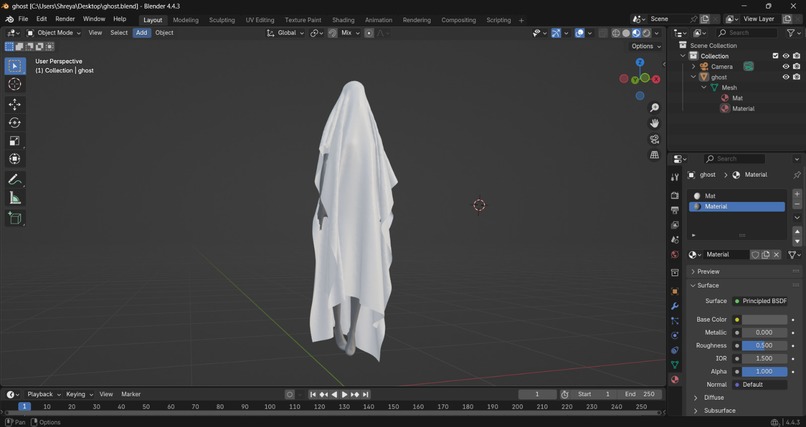
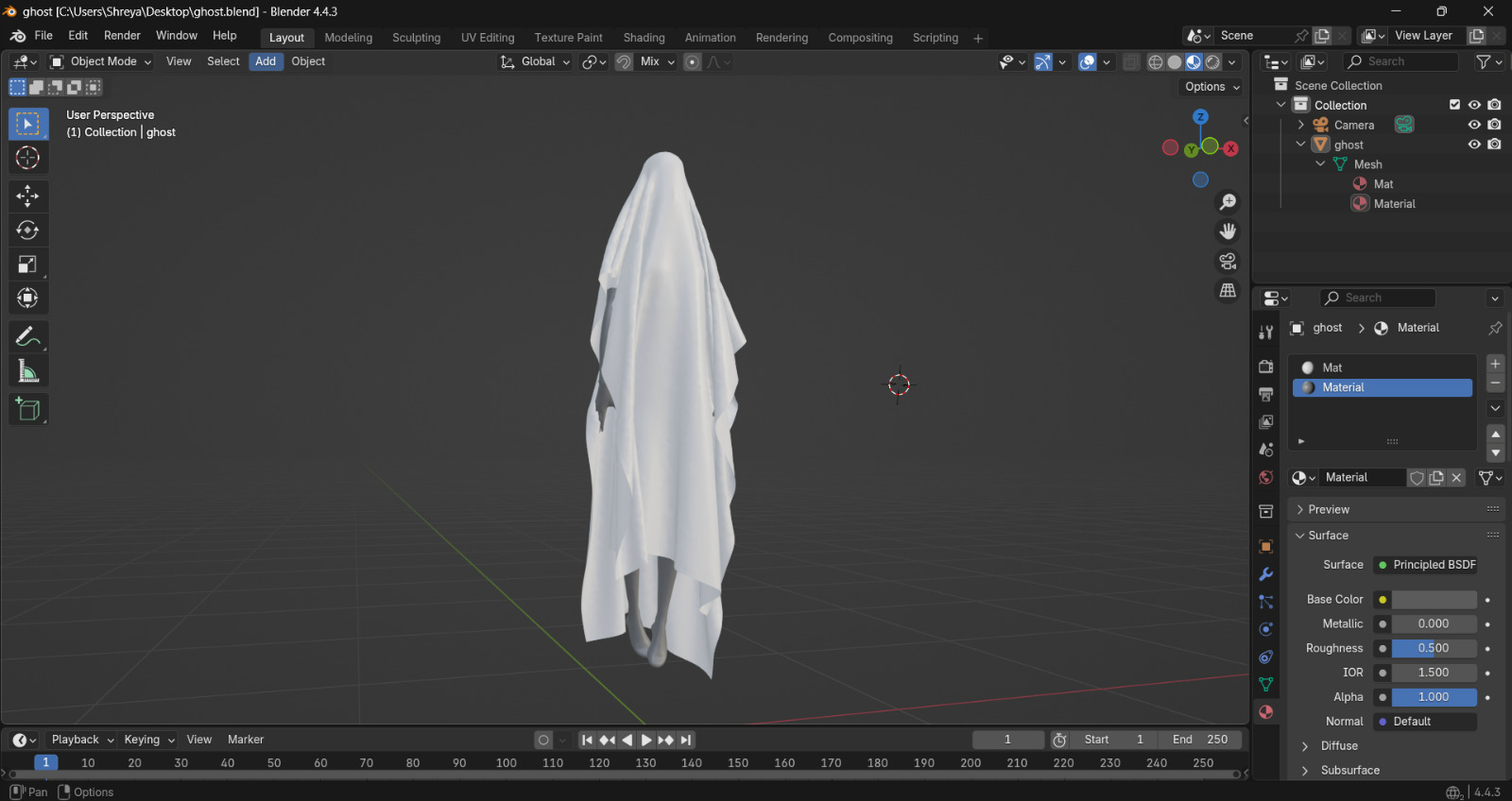
Ghost monster mesh
-
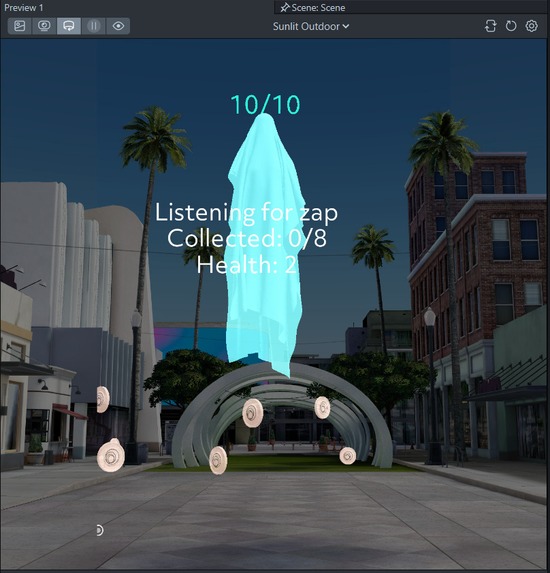
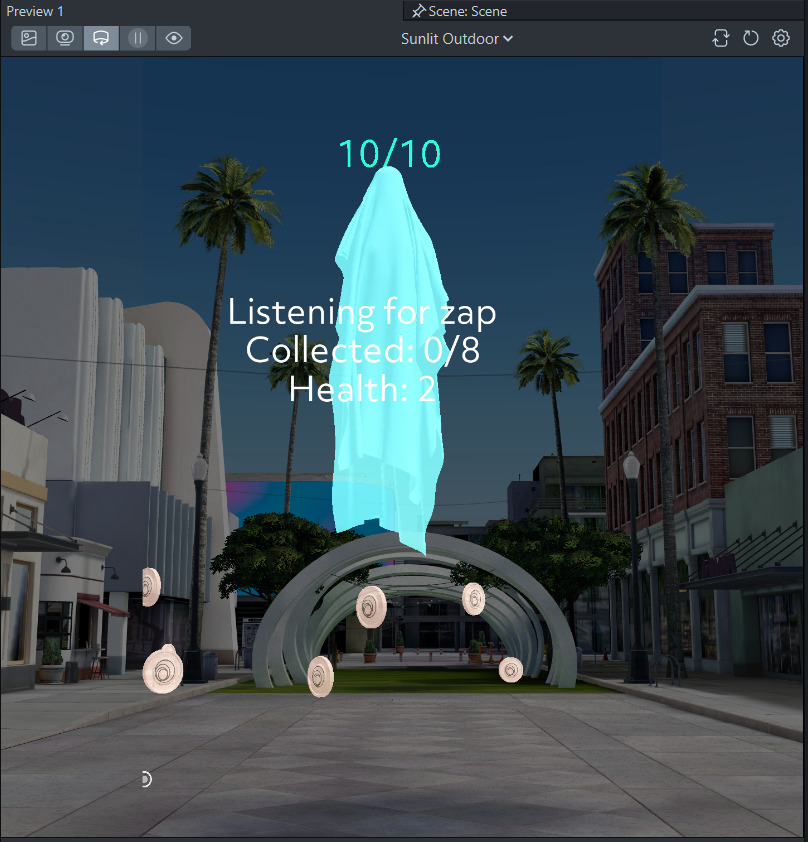
gameplay
-
Inspiration
We wanted to create a thrilling horror AR game filled with fast paced fun, excitement, and movement. Games like Lethal Company and REPO inspired us, but gameplay is confined through a screen, with users stationary and physically separated from one another. We love the collaborative and exhilarating nature of these games but wished we could play them while hanging out with our friends in person and moving around. HeistAR uses augmented reality to create a collaborative horror game experience, letting users’ own environments become the game itself.
What it does
HeistAR turns your current physical space into a haunted museum heist. In the game, you are tasked with stealing artifacts from a museum that appear around the room for you to collect. At the same time, ghosts are constantly chasing and trying to kill you. Fight these monsters by using your own voice to cast spells and fight back! Additionally, HeistAR offers a multiplayer mode so users can play with friends. Instead of controlling a character through a screen, you get to be the character itself. Everything within the game space is fully procedural, so you get a different level every single time you play. With multiple difficulty levels, there's something for everybody. Customize how large your playing space is: play in your living room or on a football field!
How we built it
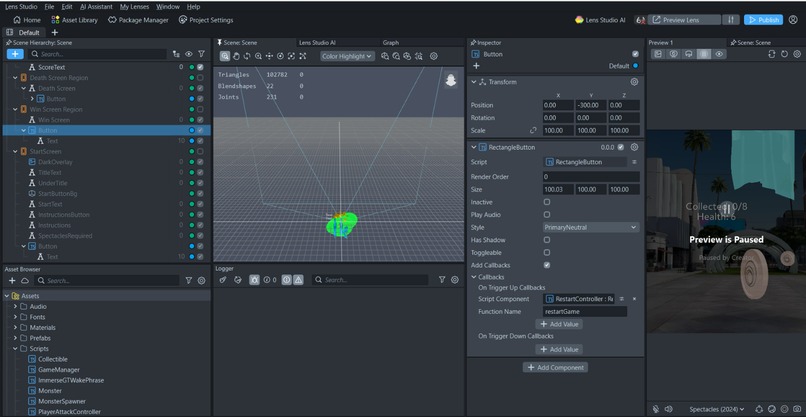
We built our experience in Snap Lens Studio for Spectacles as a room-scale AR survival/collection game. The core world is defined by a custom polygon-based play area, where we manually mark the corners of the room and use that shape as the valid spawn region for gameplay elements. We then procedurally spawn collectibles and enemies within that polygon, rather than placing everything by hand, which makes the game logic flexible and reusable.
For collectibles, we created a pooled spawning system that randomly distributes coins across the play space and tracks player progress through a running score. Collection is proximity-based, so when the player moves close enough to a coin, it is collected, hidden, and counted toward the win condition. We also added UI feedback for score, health, win, and lose states to make the loop feel game-like and readable in Spectacles.
For enemies, we built a lightweight AI behavior system in TypeScript. Ghost enemies spawn within the same polygonal room bounds, remain a safe distance away from the player at spawn, and then switch between idle wandering and chase behavior based on player proximity. Their movement is constrained to the horizontal plane, with gentle vertical bobbing to create a floating ghost effect. We also added attack behavior, health tracking, audio states, and hit feedback to make encounters feel more alive.
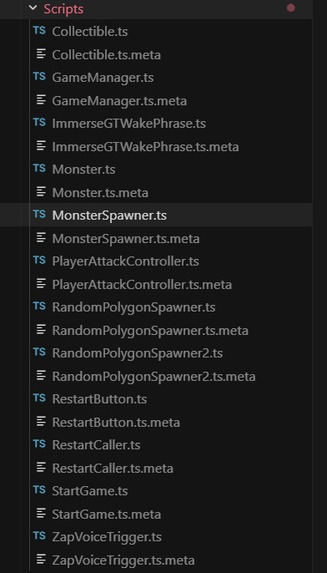
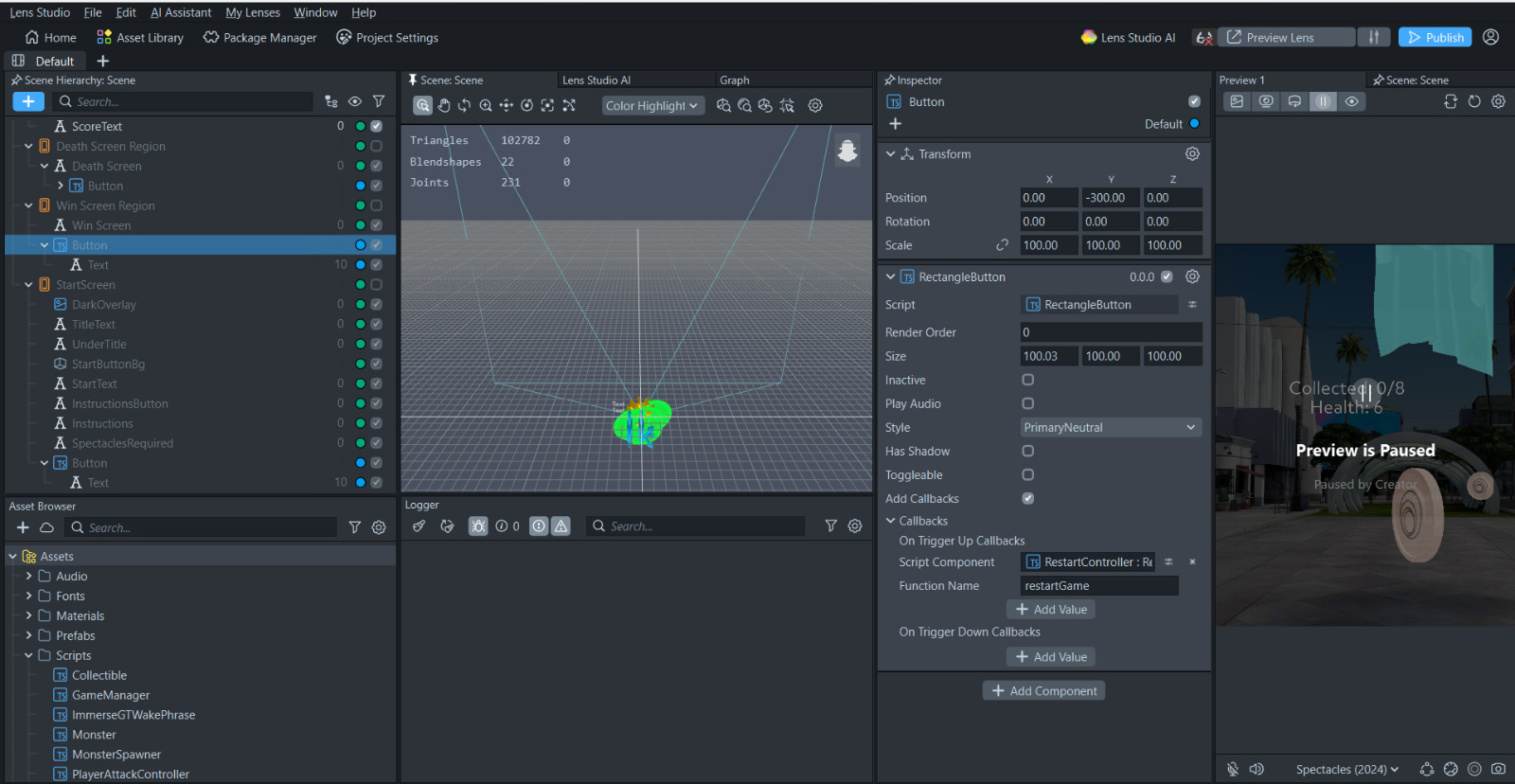
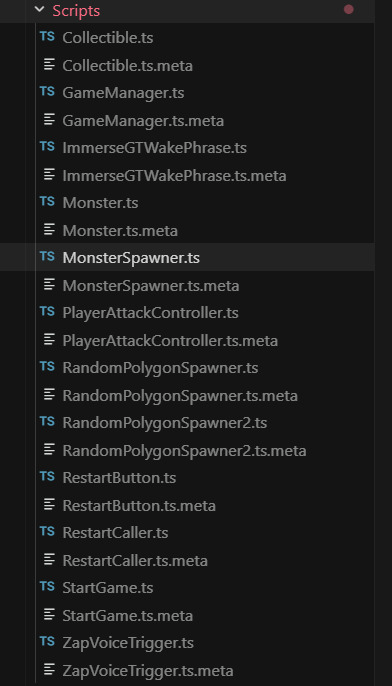
Interaction was designed specifically around Spectacles input. We use hand targeting for aiming, with gesture-based attacks to damage enemies at different ranges. The project also includes modular manager scripts for handling overall game state, including restarting the game, death/win screens, and resetting spawned objects.
Overall, the project combines procedural spawning, lightweight enemy AI, AR interaction design, and Spectacles-specific gesture systems into a cohesive multiplayer-ready game framework that can be extended with new enemy types, effects, and mechanics.
Challenges we ran into
Getting the speech recognition to recognize spells was the most difficult part of the project. Additionally, learning how to smoothly use Lens Studio to create our ideal UI design was challenging. Creating features that would otherwise be quick and simple in a web development environment, such as creating buttons and setting a destination page when one is clicked, proved to be more complex in Lens Studio.
Accomplishments that we're proud of
Beyond creating a game we are deeply proud of and had fun playing we are most proud with how we overcame technical challenges as a team. In AR development, the technical process was very jagged for us, however we managed to push through each obstacle. We stepped in when other teams encountered challenges, and when we needed outside perspectives, they returned the favor. Mutual collaboration, both inside and outside our team, helped us overcome challenges much quicker, and established a productive and positive working environment.
What we learned
Developing for Snap Spectacles through Lens Studio introduced our team to a development environment most of our group had little or even no experience in. We learned to work within the constraints of AR hardware, including managing spatial anchoring, the limitations of peripheral vision, and manipulating close versus far objects. As a result, we learned to design a product that fits the limitations of Snap Spectacles.
What's next for HeistAR
We want to have multiplayer integration for other Spectacles users and people joining the game via desktop.
Built With
- asr
- javascript
- lensstudio
- snapchatspectacles
- typescript


Log in or sign up for Devpost to join the conversation.