Inspiration
A stream is more memorable when the audience has something meaningful to contribute. We wanted viewers to become necessary members of a crew, carrying information the streamer cannot see and helping turn a tense situation into a shared success.
What it does
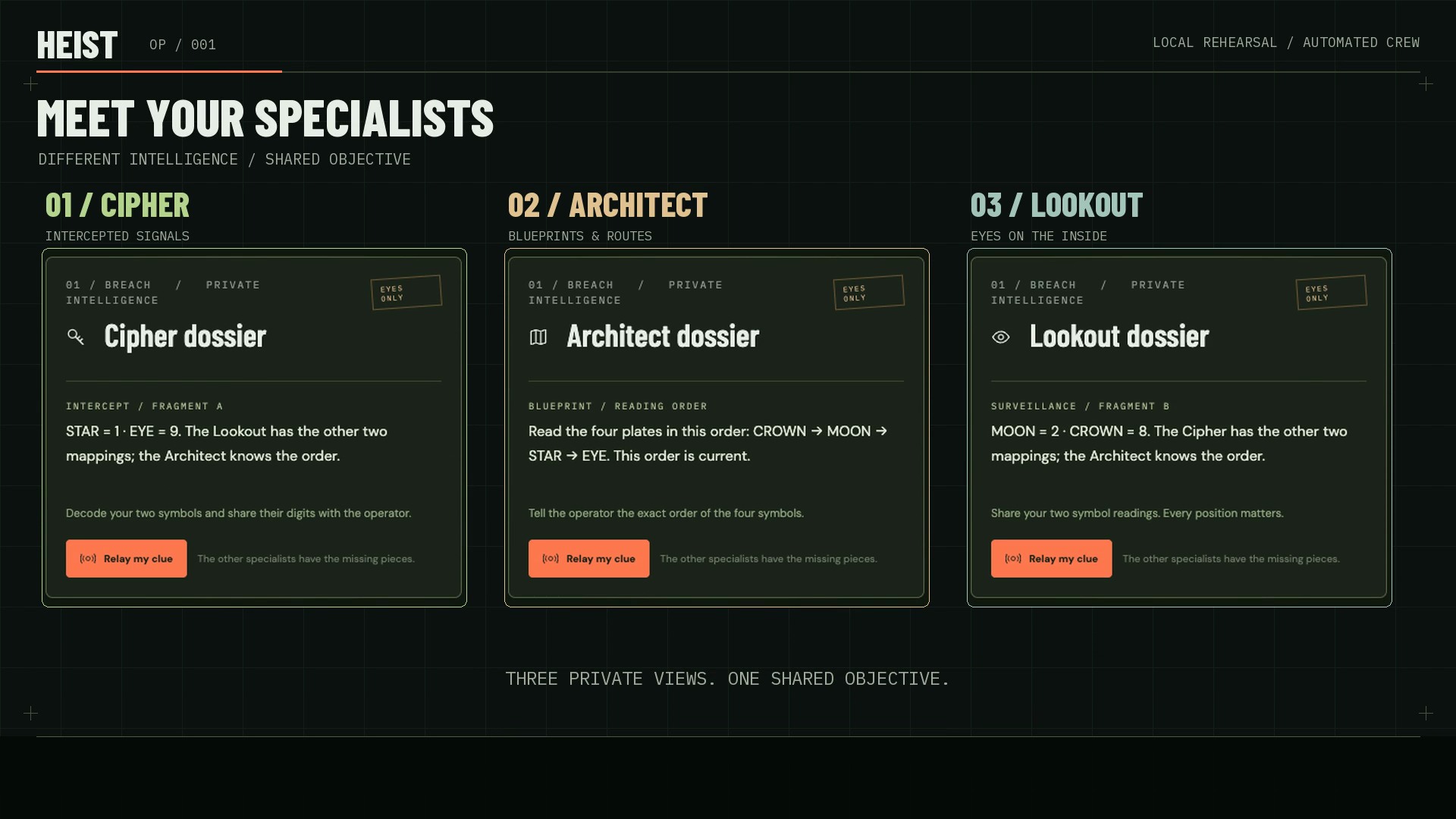
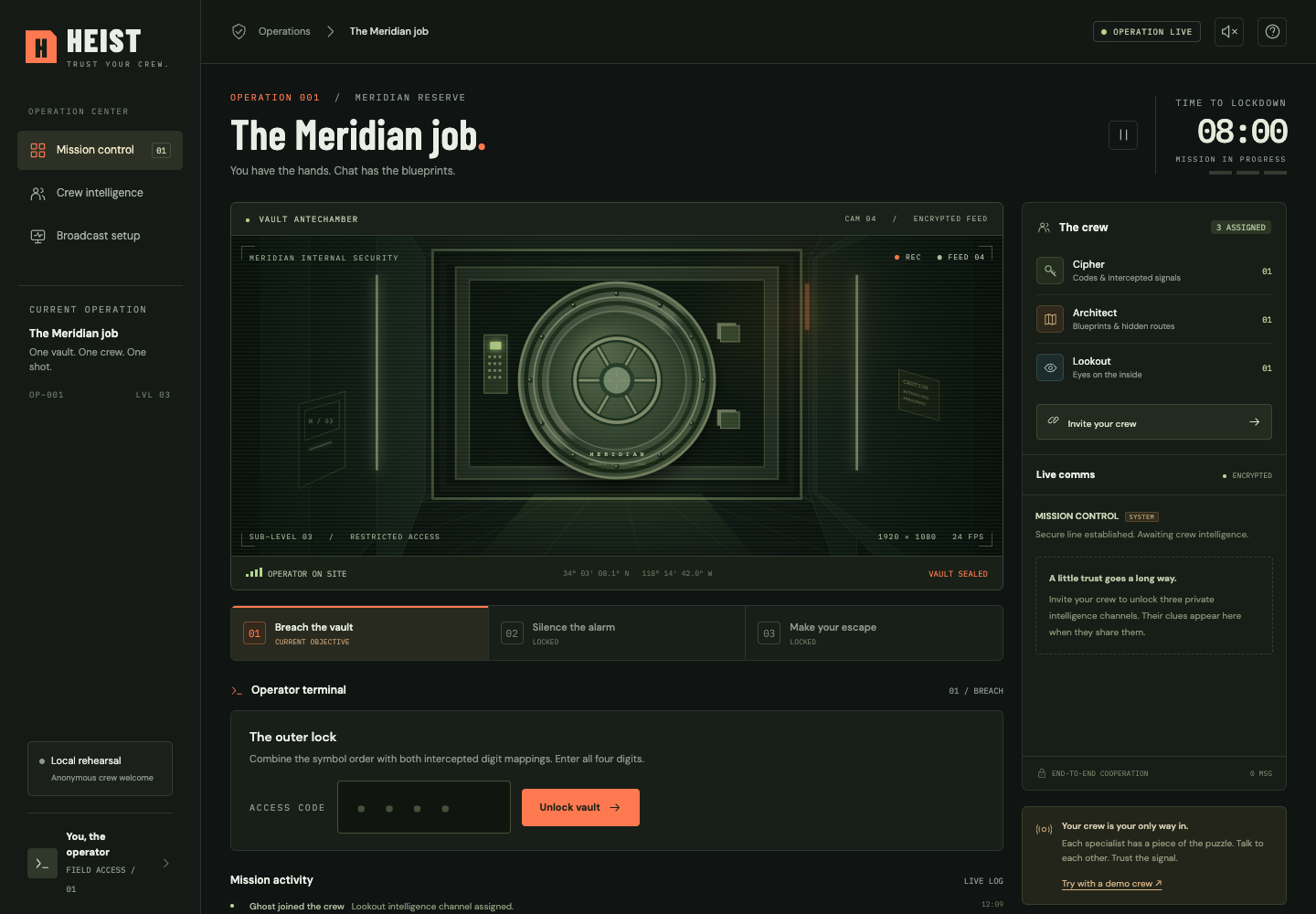
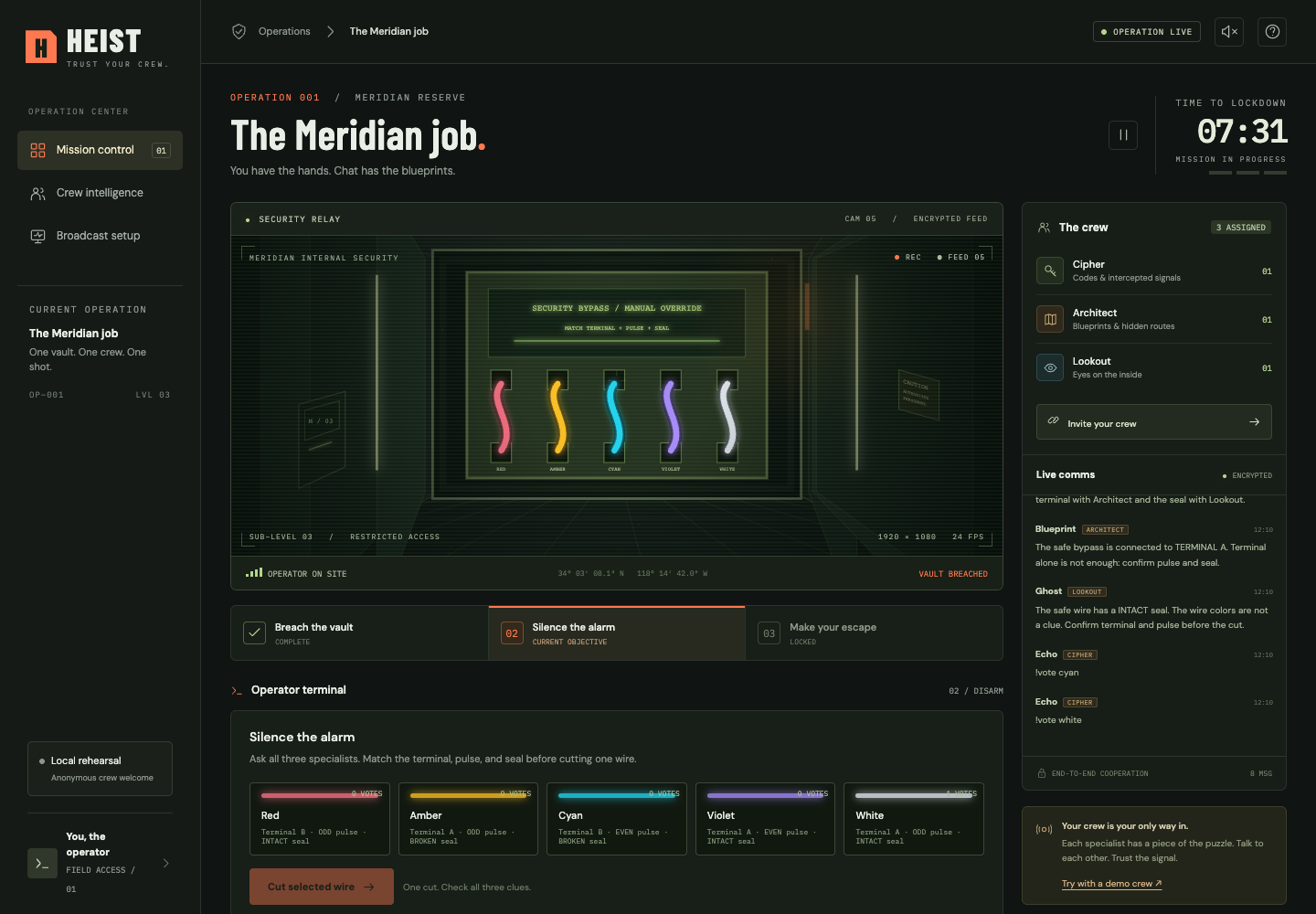
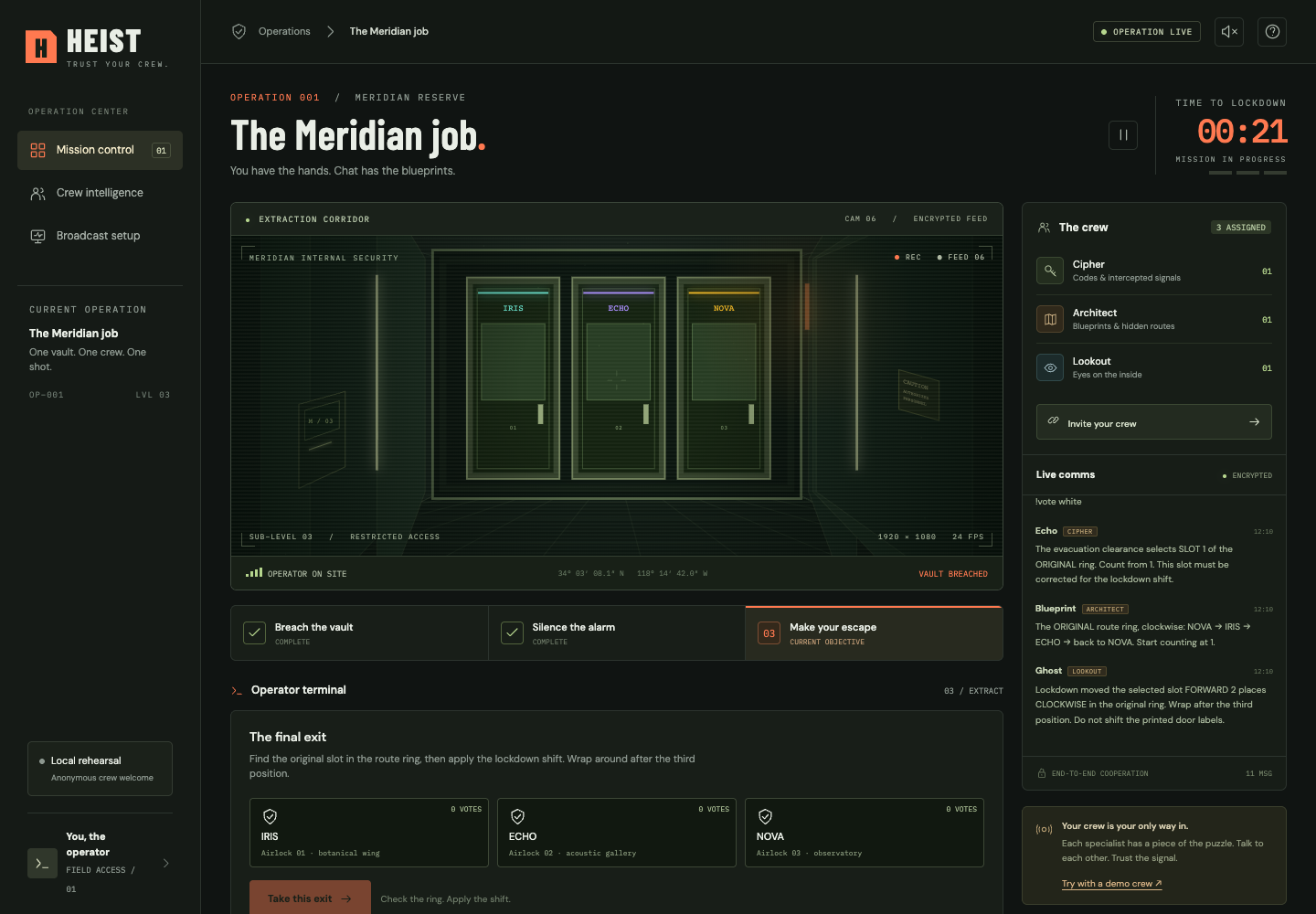
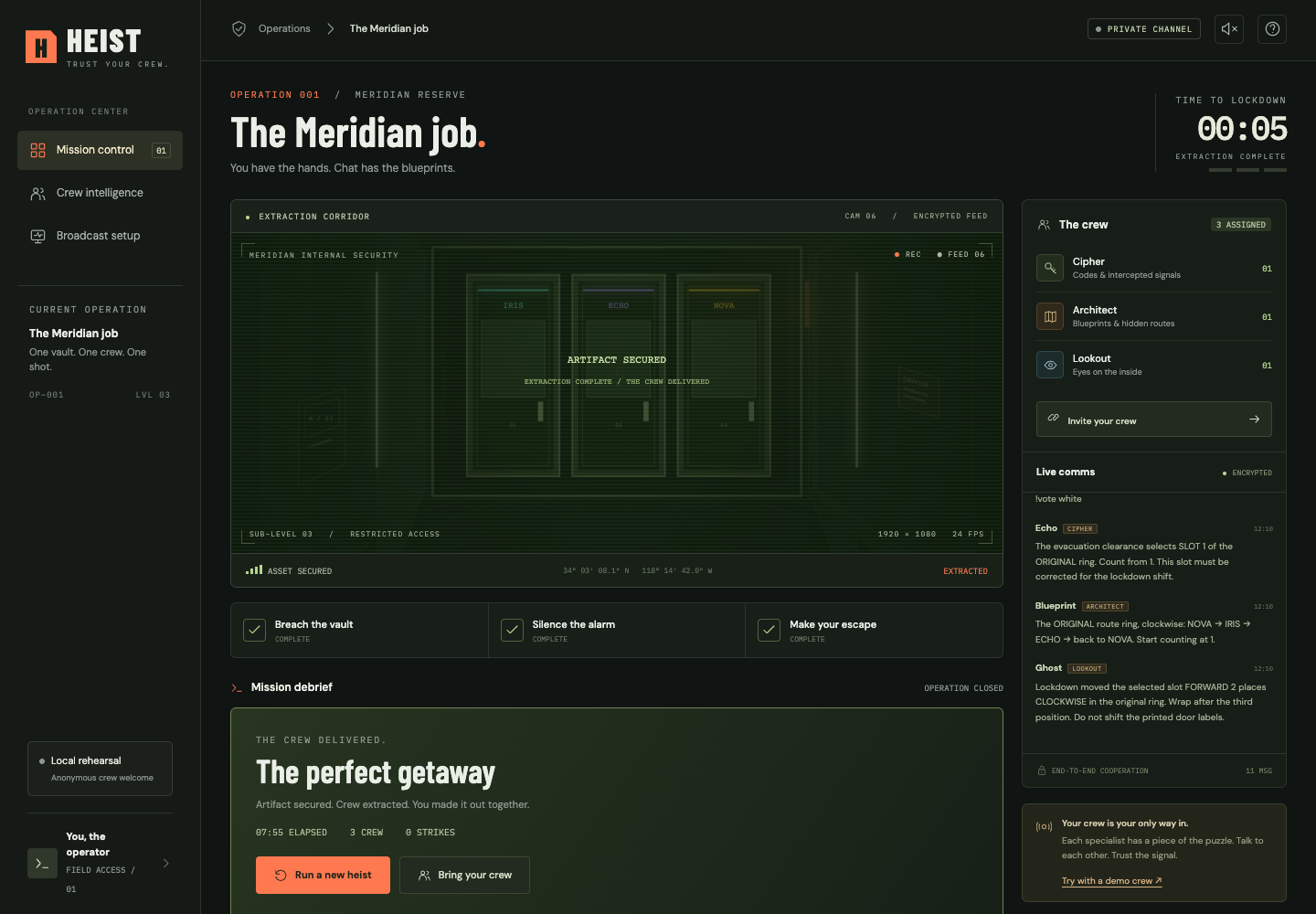
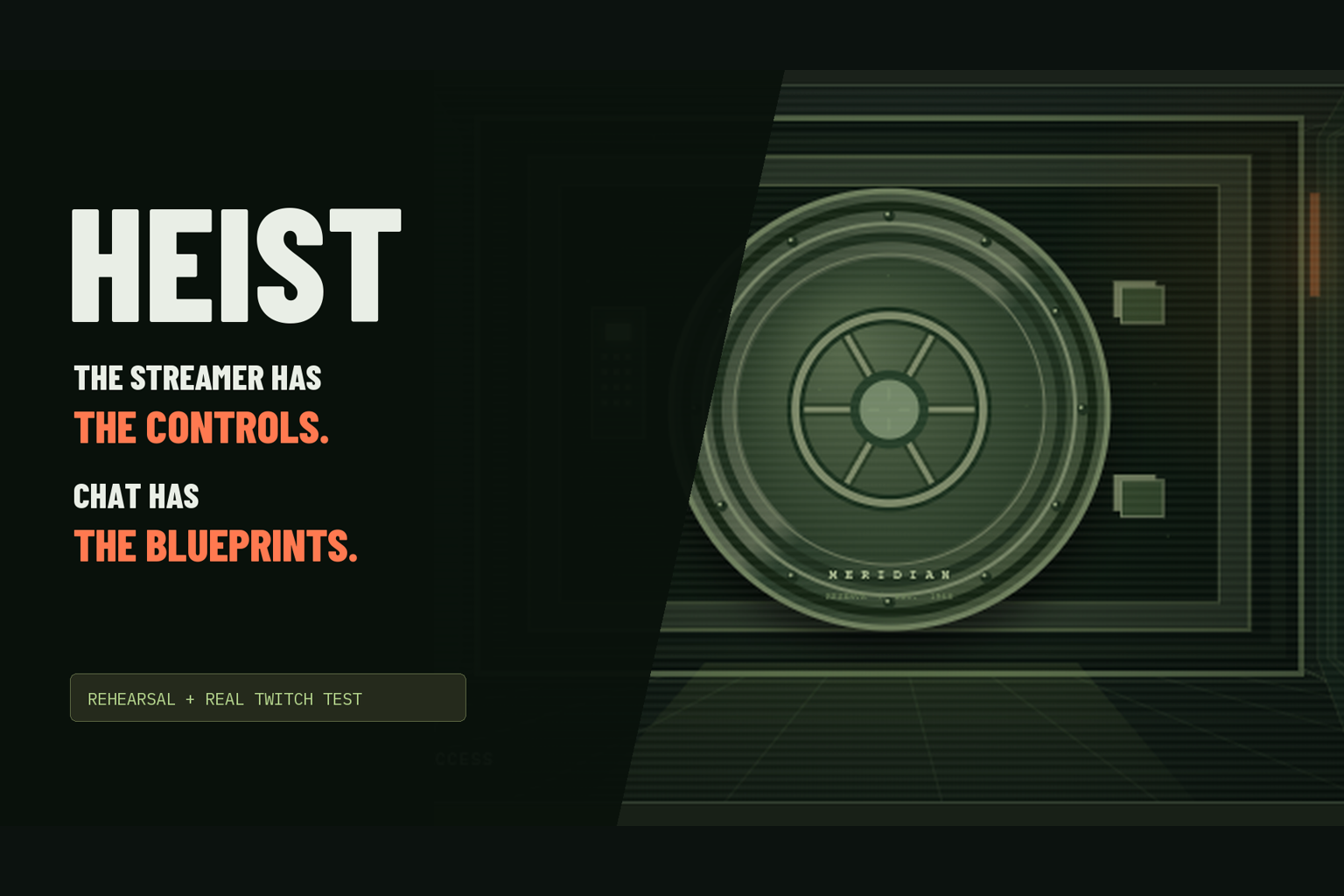
HEIST turns a Twitch stream into a cooperative vault escape. The streamer operates the controls while viewers join as the Cipher, Architect, or Lookout. Each role receives different intelligence. The crew must combine those clues to reconstruct an access code, disable an alarm circuit, and identify a safe exit before time runs out.
The experience includes a shared countdown, a three-strike alarm, audience communications, advisory votes, an OBS browser view, and an optional Twitch EventSub chat bridge. A labeled demo crew mode supports local rehearsals without pretending to be a live audience.
How we built it
The implementation uses Node.js 24, browser JavaScript, CSS, and Canvas. A server-authoritative engine owns the puzzle answers, timer, and mission transitions. Server-sent events keep host, crew, and overlay views synchronized. Each crew session receives only its assigned role's current dossier; host and public state omit private clue data.
Live missions link companions to a verified Twitch account using a short-lived, single-use chat code and explicit browser confirmation. Chat and all linked browsers reuse one participant, role, and latest vote. Anonymous role selection and the solo demo remain available in rehearsal. The Twitch bridge uses a broadcaster user access token and EventSub WebSockets to receive channel chat. Credentials remain server-side. Chat commands introduce the mission, share a participant's role clue, and register votes, while the host retains control over actions.
Codex helped implement the project across the game engine, interface, server, tests, and documentation. Before submission, replace this sentence with two concrete examples visible in the build chat and recording, and include the actual session ID obtained from /status.
Challenges
The central design challenge was making every role useful without making the puzzles confusing. We separated information by role, kept each stage's decision clear, and made the audience's recommendations visible without allowing a vote to bypass the streamer's action.
The engineering challenge was maintaining one authoritative mission while presenting different information to different clients. The clock and puzzle logic live on the server, with separate projections for host, public viewers, and authenticated crew members.
What we learned
Add observations from the verified playtest: which clue caused discussion, whether the clock created useful tension, and how viewers understood their role. Do not claim audience research that has not happened.
What's next
Additional mission packs, creator-authored scenarios, accessibility options, and hosted onboarding could make repeat sessions easier. A production service would also need durable room state and robust multi-instance coordination.

Log in or sign up for Devpost to join the conversation.