-
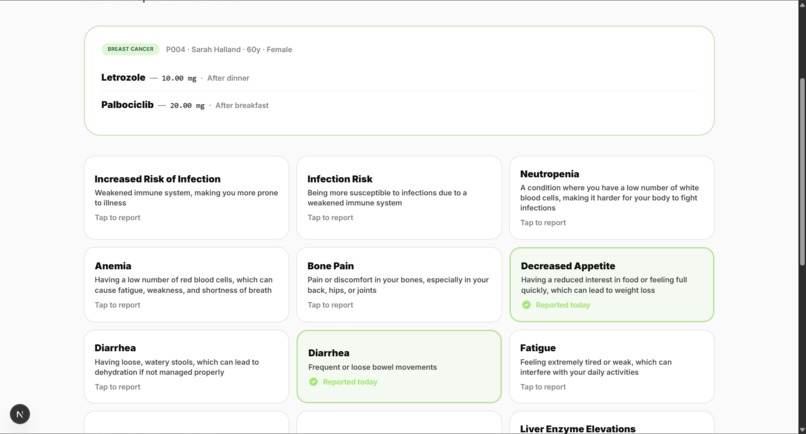
Patient medical condition page
-
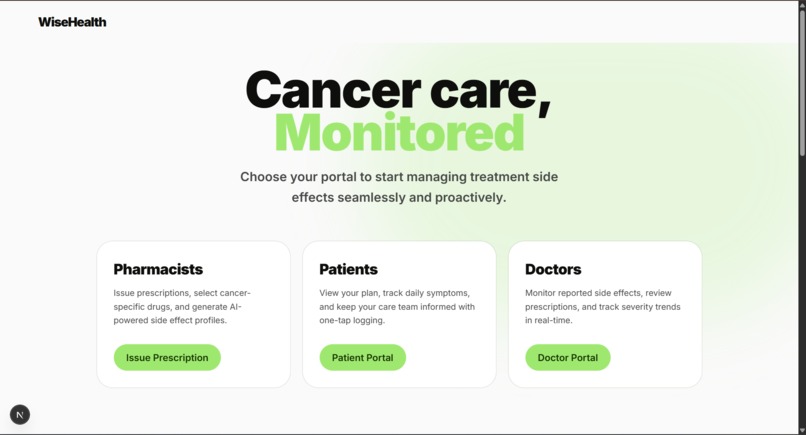
Home page
Inspiration
Cancer patients endure some of the most aggressive drug regimes in medicine. Yet once they leave the pharmacy, there's no simple way for doctors to know what they're actually experiencing day-to-day. Side effects go unreported, warning signs get dismissed as normal discomfort, and by the time a high-severity symptom surfaces in a consultation, it's often too late to course-correct early.
What it does
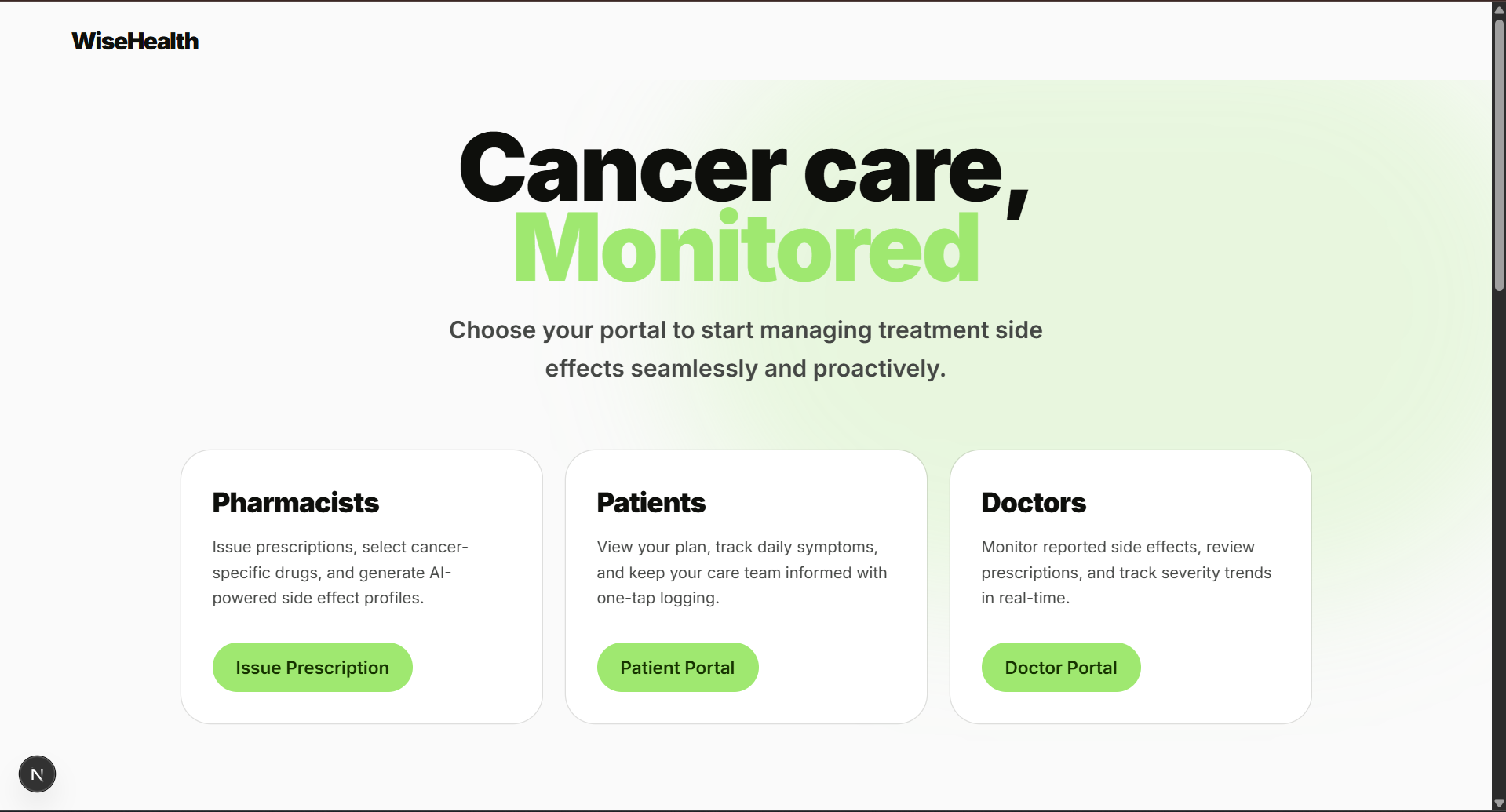
WiseHealth is a three-sided patient monitoring platform connecting pharmacists, patients, and doctors around a single prescription.
A pharmacist enters a patient's prescription — medicines, quantities, constraints — and the system instantly generates a personalised list of expected side effects using AI, graded by severity. The patient gets a simple ID to access their dashboard.
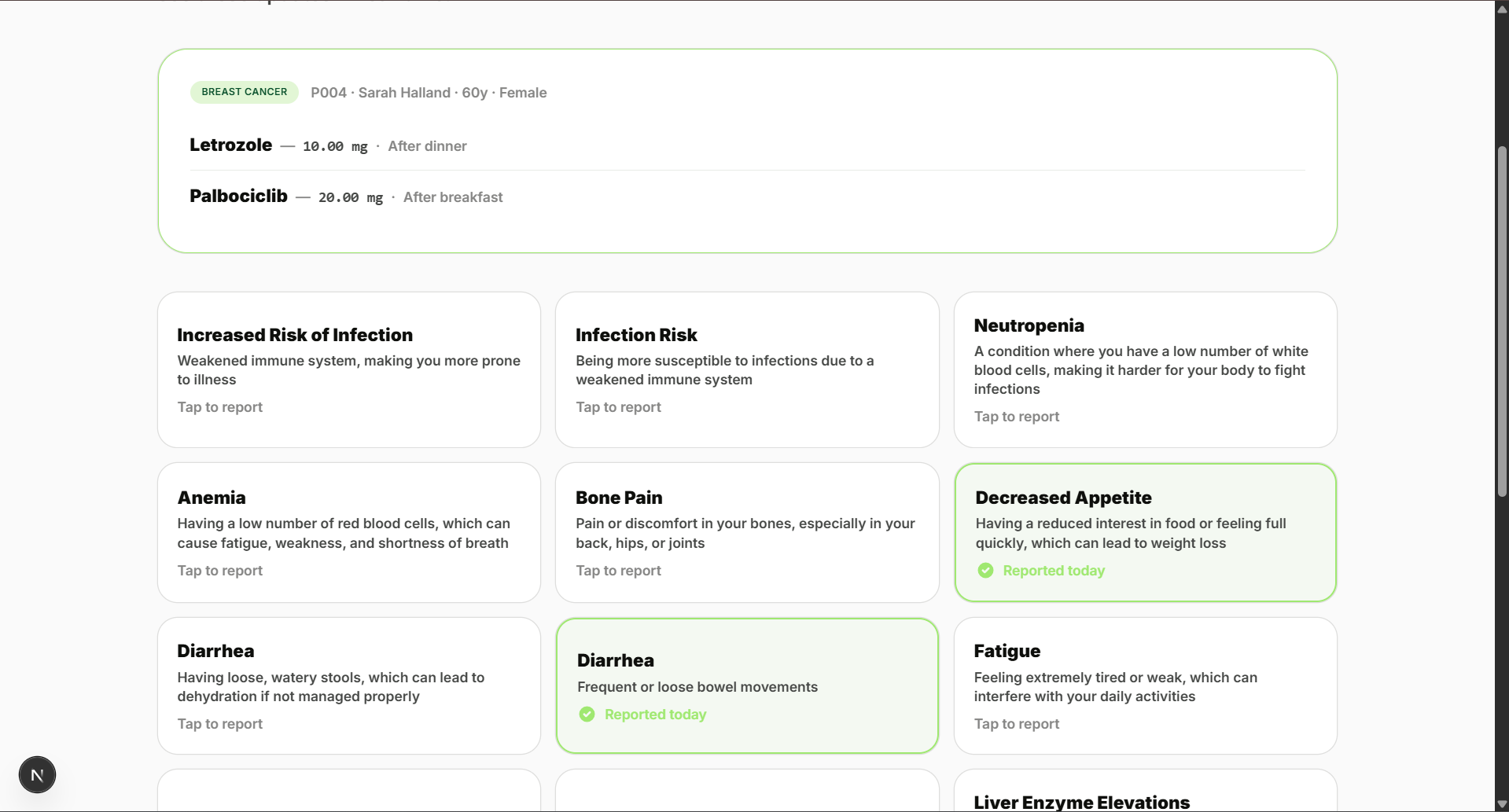
A patient opens their daily check-in page and taps which symptoms they're experiencing today. No forms. No login. Just tappable condition buttons that log their experience with one touch.
A doctor enters any patient ID and sees a live dashboard — medicine list, prescription details, and a colour-coded condition report showing how many times each symptom has been reported, with high-severity conditions flagged in red.
How we built it
Frontend -> Next.js Backend -> Node.js Database -> MySQL AI -> GroqAPI
Challenges we ran into
Getting AI output to be reliably parseable. Claude occasionally returned well-reasoned explanations instead of raw JSON. We tightened the prompt significantly and added a fallback — if JSON parsing fails, the prescription is saved with zero conditions and flagged for retry rather than crashing the flow.
Accomplishments that we're proud of
- No login required for patients
- The daily check in takes under a minute
- The production architecture is scalable to 1000req/sec
What we learned
- Async AI pipelines
What's next for WiseHealth
Getting AI output to be reliably parseable. Claude occasionally returned well-reasoned explanations instead of raw JSON. We tightened the prompt significantly and added a fallback — if JSON parsing fails, the prescription is saved with zero conditions and flagged for retry rather than crashing the flow.
Trend alerts — if a high-severity symptom is logged 3 days in a row, surface it prominently on the doctor dashboard without requiring the doctor to proactively check

Log in or sign up for Devpost to join the conversation.