-
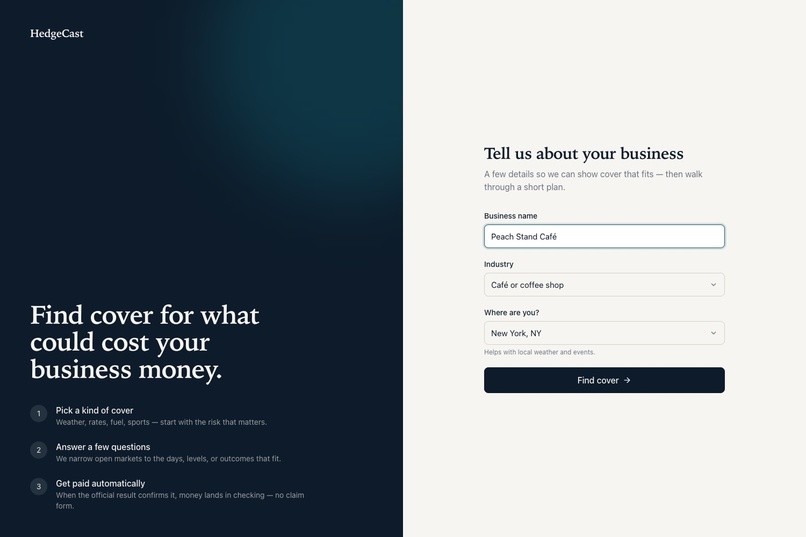
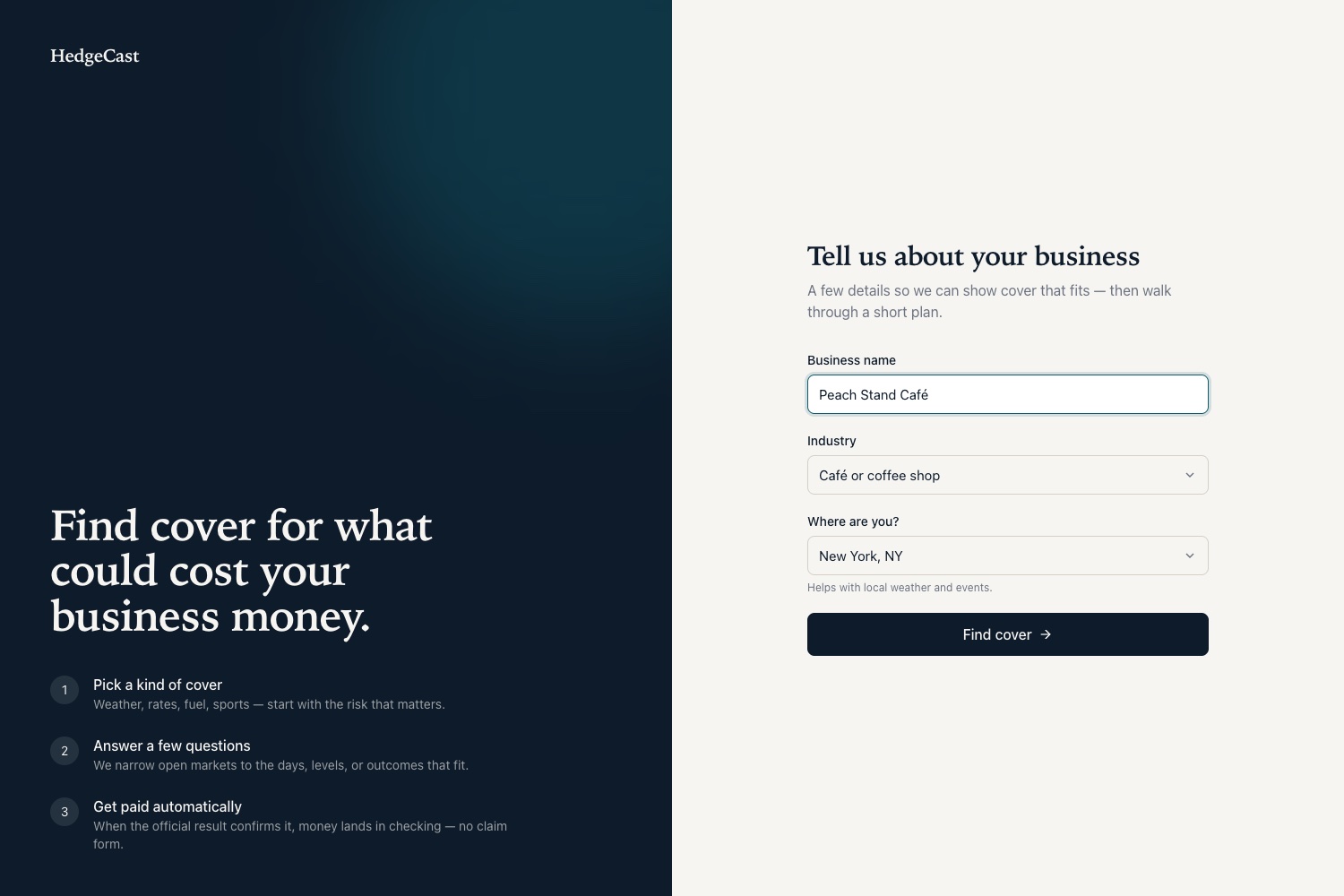
Onboard a business with name, industry, and city.
-
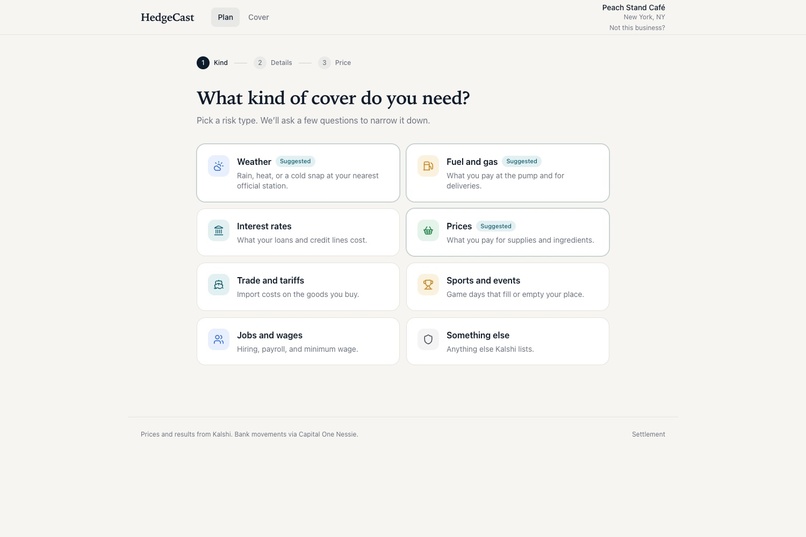
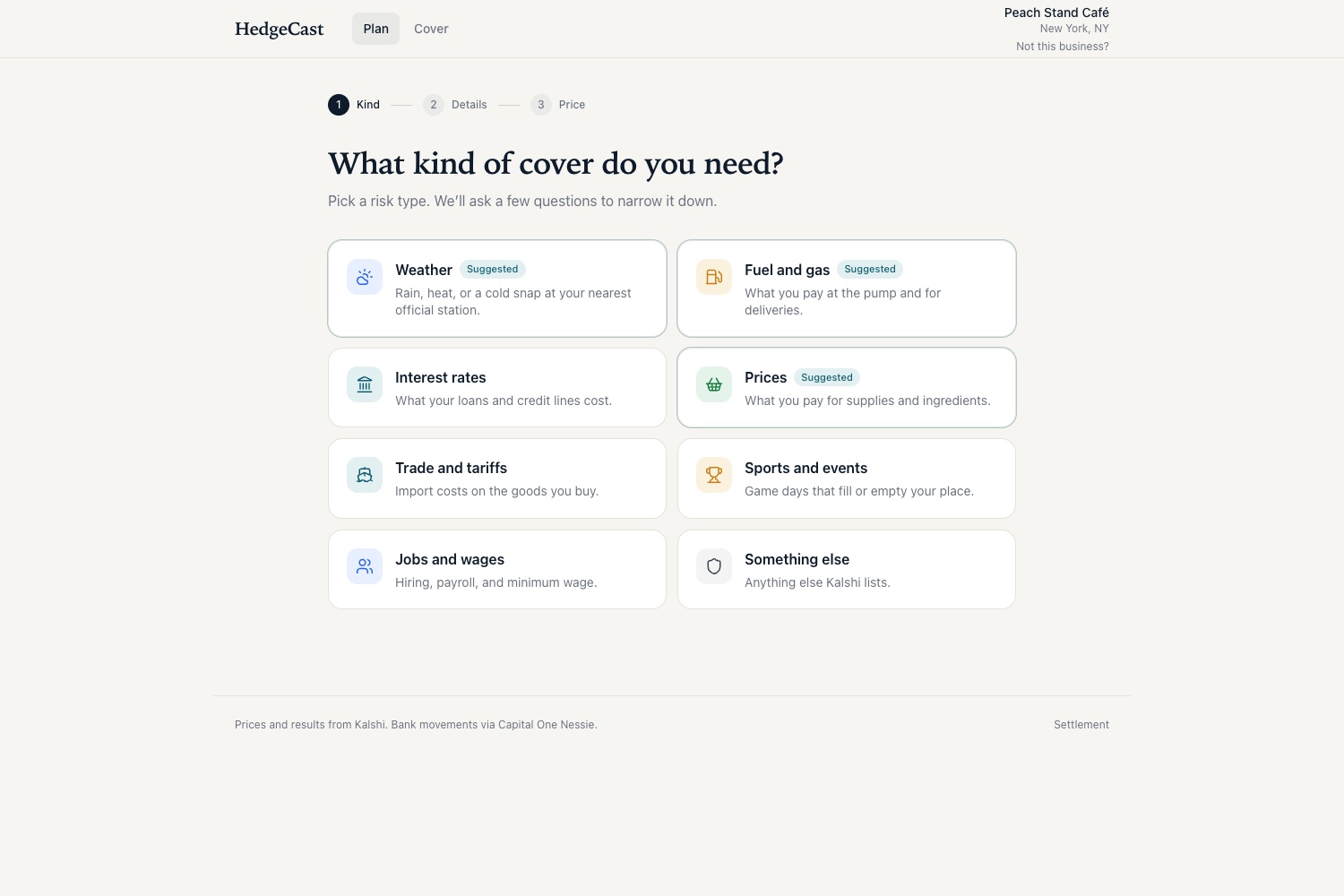
Pick a kind of cover
-
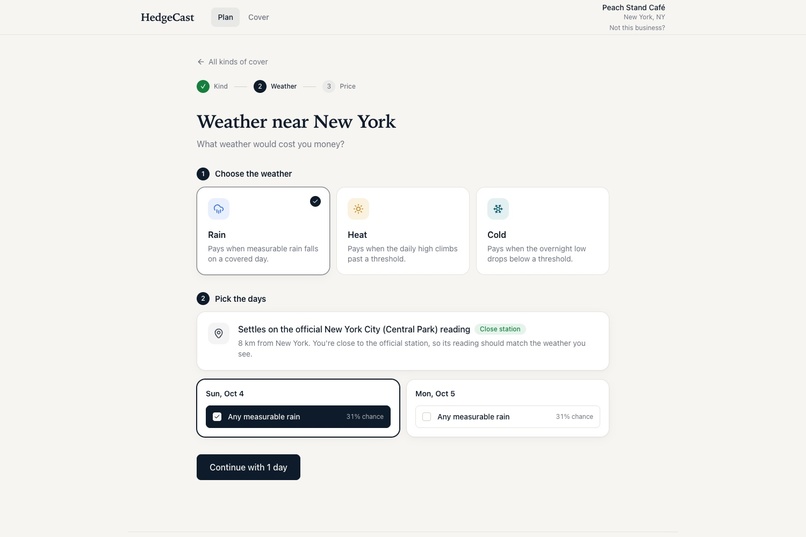
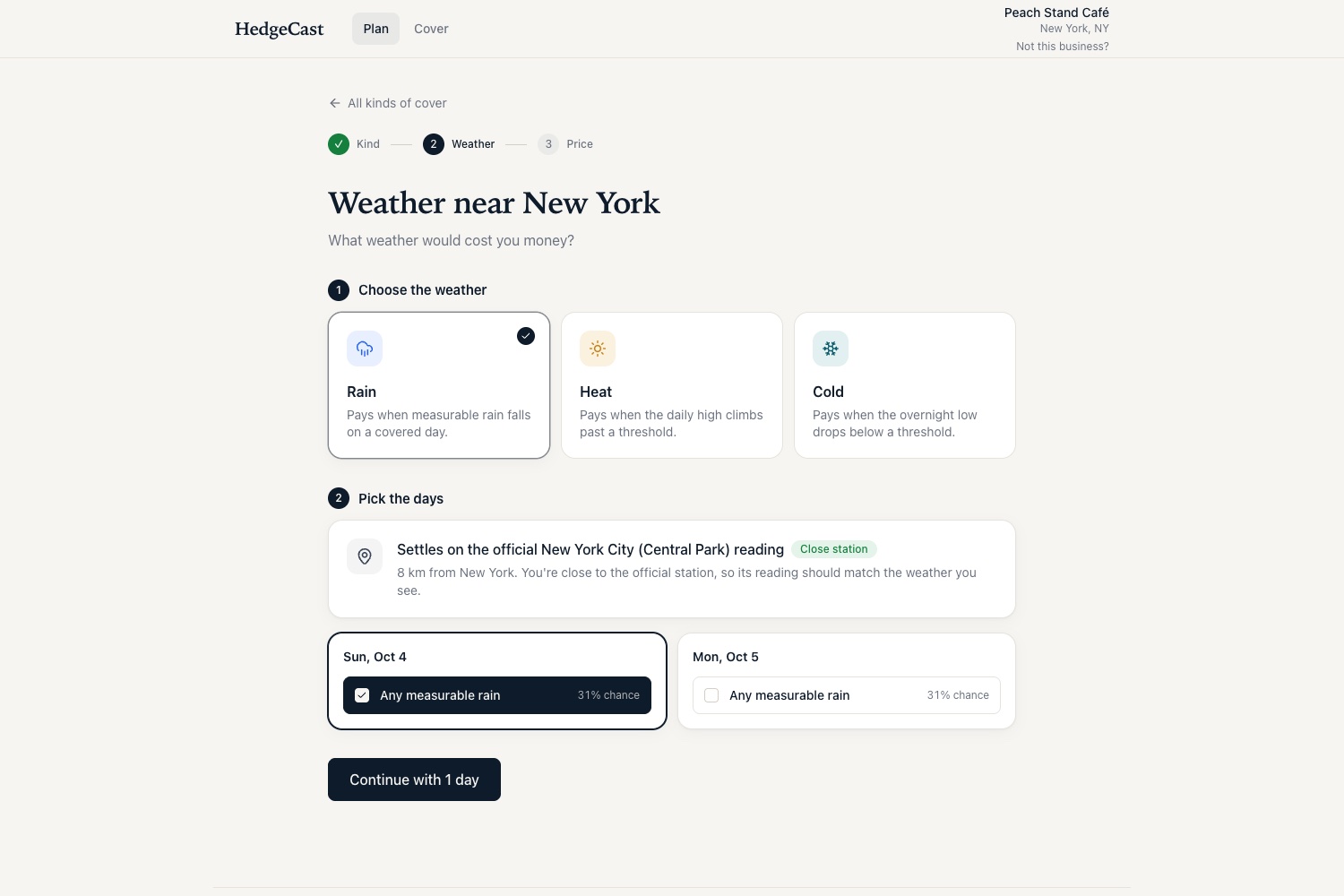
Pick rain cover in plain English, with live market chances.
-
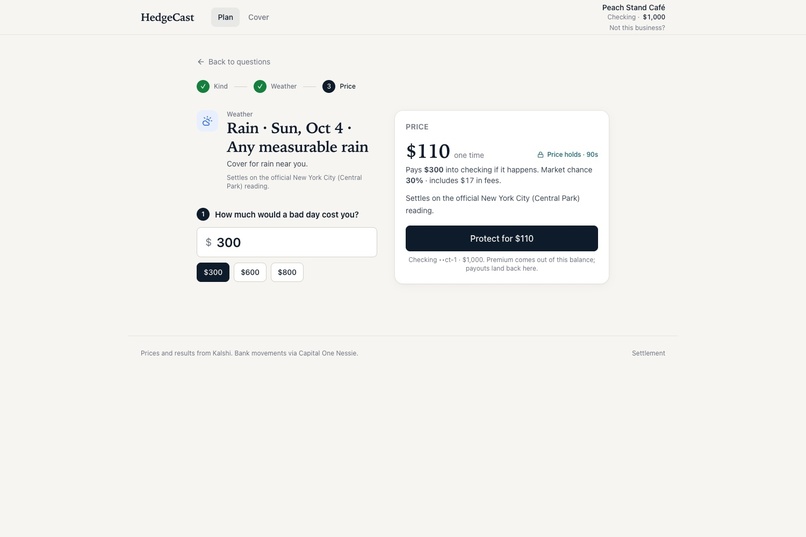
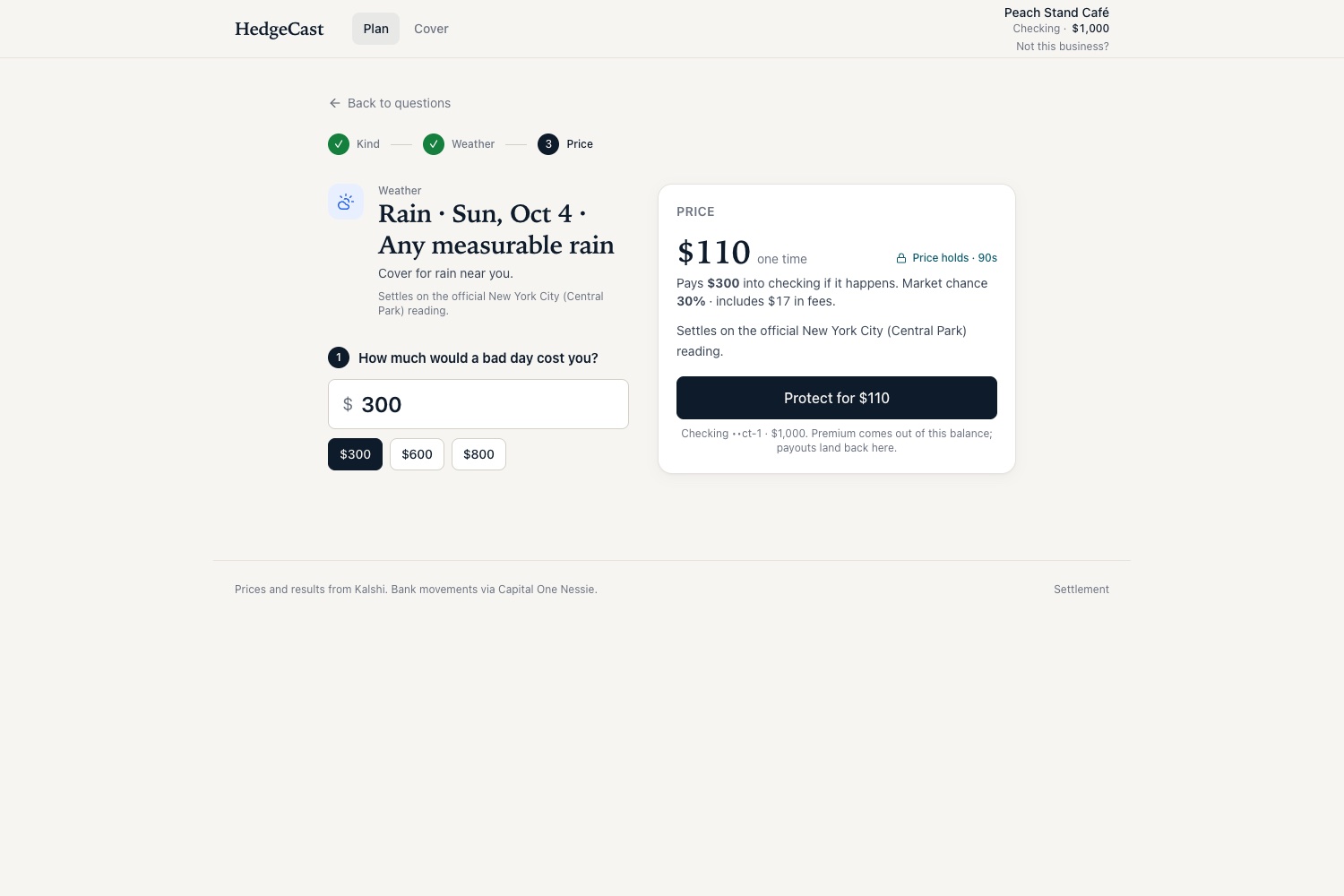
See the live price, connect checking, and buy cover.
-
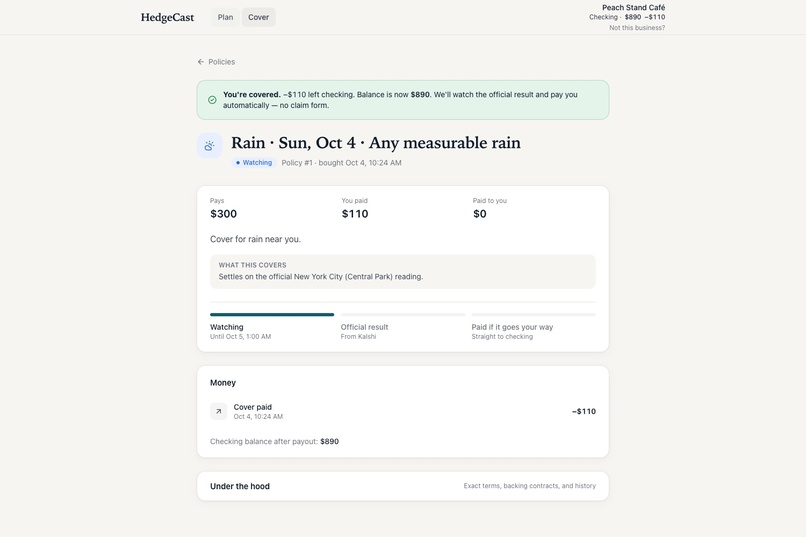
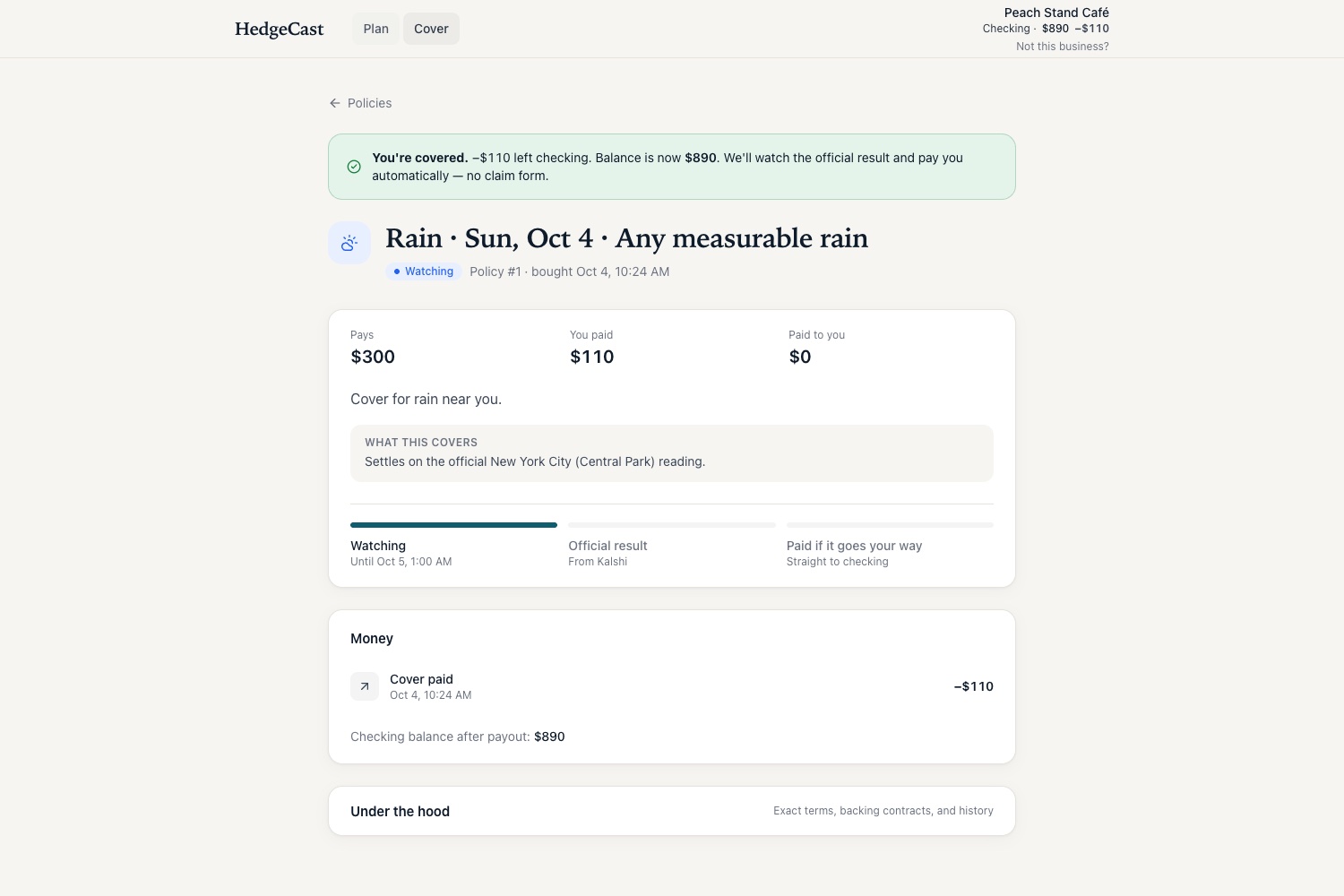
Cover is live after the premium leaves checking.
-
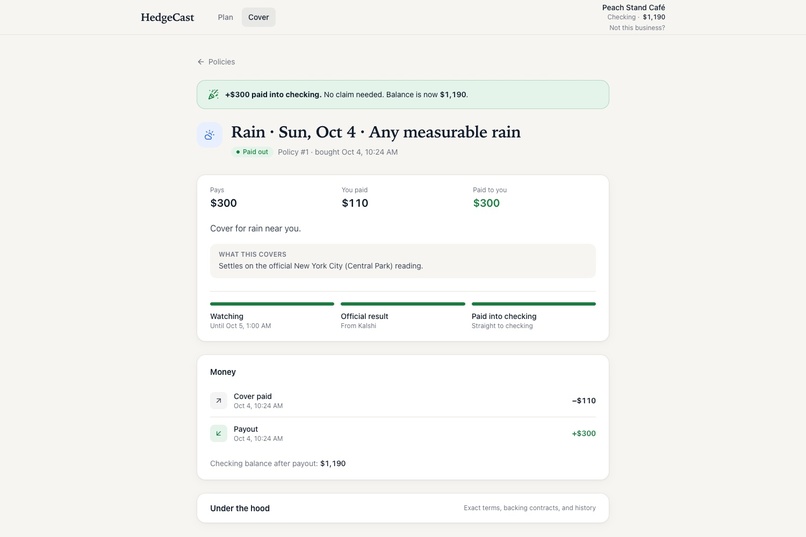
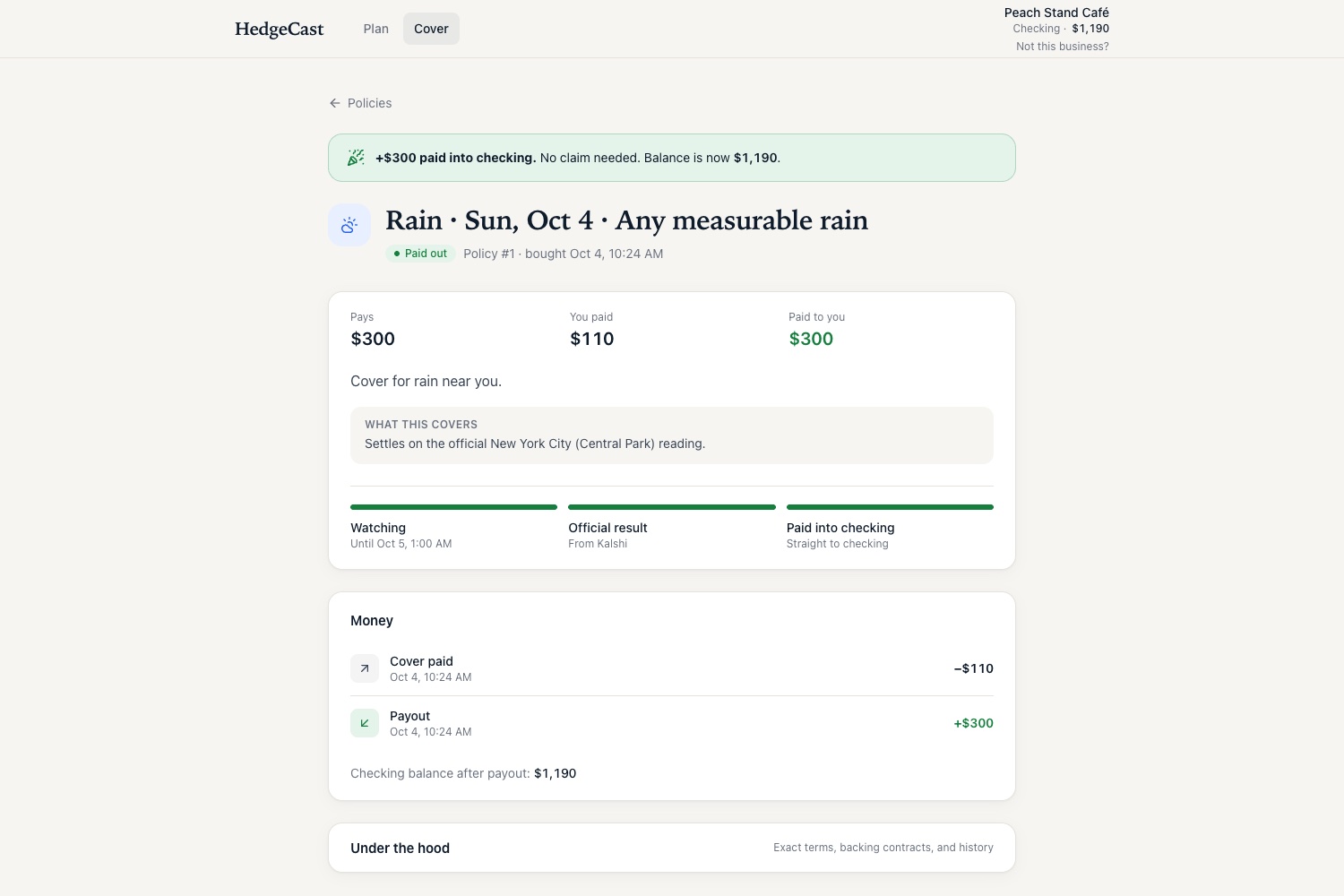
When the result hits, payout lands in checking. No claim form.
-
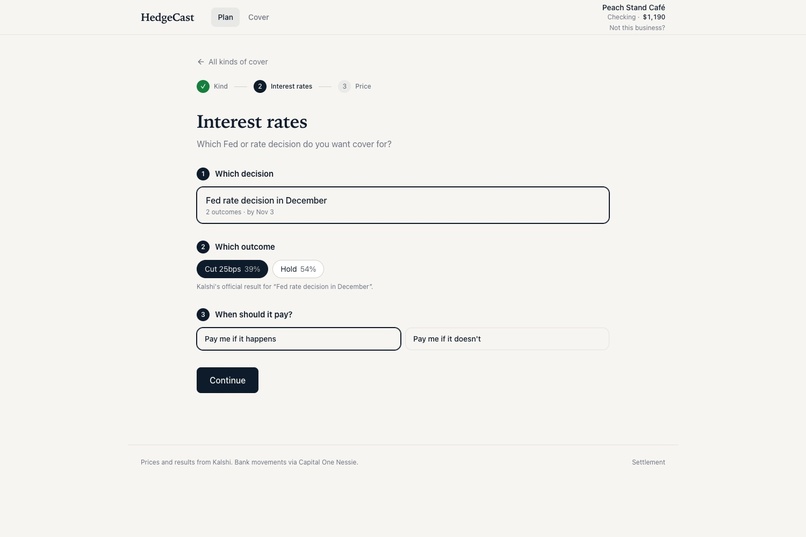
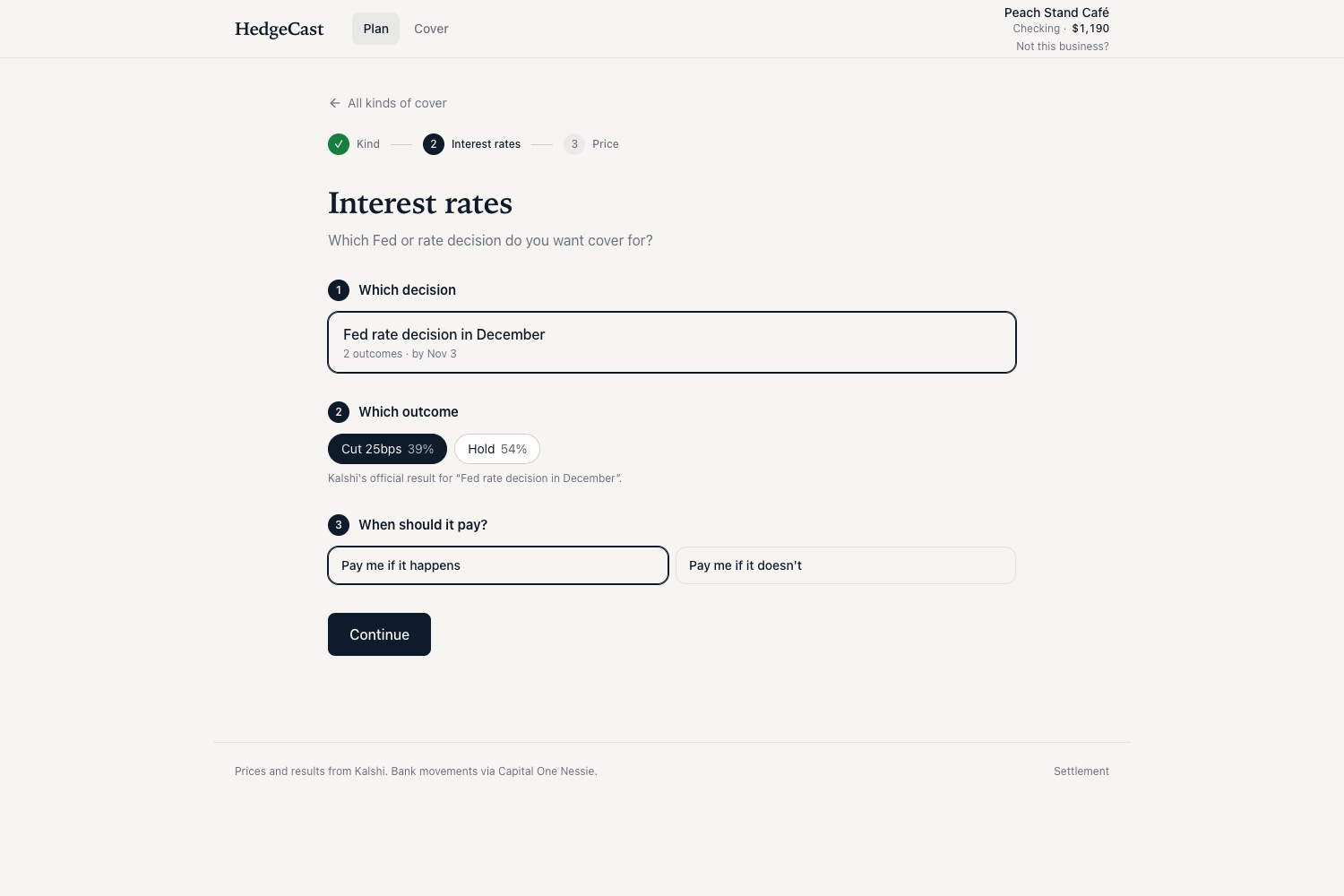
Same flow for interest rates and Fed decisions.
Inspiration
Small businesses lose money to weather, fuel spikes, rate changes, and similar shocks. Traditional insurance is slow and claim-heavy. Kalshi already prices a lot of these risks, but the interface is built for traders.
I built HedgeCast as the middle layer: describe the risk in normal language, buy cover priced off live markets, pay from a bank account, and get paid when the official result comes in. No claim form.
What it does
- Create a business profile with name, industry, and city.
- Pick a kind of cover: weather, rates, fuel, prices, tariffs, sports, jobs, or something else.
- Narrow it to a specific market. Example path: Weather → Rain → a day with a live probability.
- Choose a cover amount, connect checking, pay the premium, and activate cover.
- When the market settles, the payout lands in checking. You can see it in the balance and the money ledger.
The same flow works across topics, not only weather.
How we built it
- Frontend: React + Vite + Tailwind. Main path is onboarding → plan wizard → quote → protect → policy page.
- Backend: FastAPI. Topics map to Kalshi markets. The engine handles quoting, binding cover, executing the hedge, settlement, and bank transfers.
- Kalshi: Live market data and settlement results.
- Capital One Nessie: Bank movements for premiums and payouts.
- Checks: pytest, TypeScript, lint, Playwright, and a smoke path against the integrations.
For the hackathon demo, hedges fill against the live Kalshi book on paper because the exchange demo account can’t be funded, and banking runs through the Nessie sandbox. There is also an ops settle path so the payout is visible without waiting for a market to close.
Challenges I ran into
- Mapping business language like “rain kills patio sales” onto real Kalshi contracts.
- Showing enough market detail for trust without making the user learn prediction markets.
- Keeping the money story clear end to end: premium out, cover live, payout back in.
- Fitting the full path into a short demo.
Accomplishments that I'm proud of
- A complete loop from plain-English risk selection to payout in checking.
- Topic matching that stays predictable. Each topic only shows markets that fit its rules.
- A product that is about priced cover and money movement, not another dashboard.
What I learned
- Most of the work is packaging. The market data is available. Making it usable for a non-trader is the hard part.
- People follow the money. If the balance and ledger don’t update, the pitch falls flat.
- Clear product boundaries matter more than covering every edge case in the first version.
What's next for HedgeCast
- Live exchange fills once funding is workable.
- Better city and weather-station coverage.
- Production banking rails.
- Ops tools for inventory and thin markets.
- Distribution through banks or SMB platforms.
Built With
- fastapi
- python
- react
- sqlite
- typescript

Log in or sign up for Devpost to join the conversation.