-
-
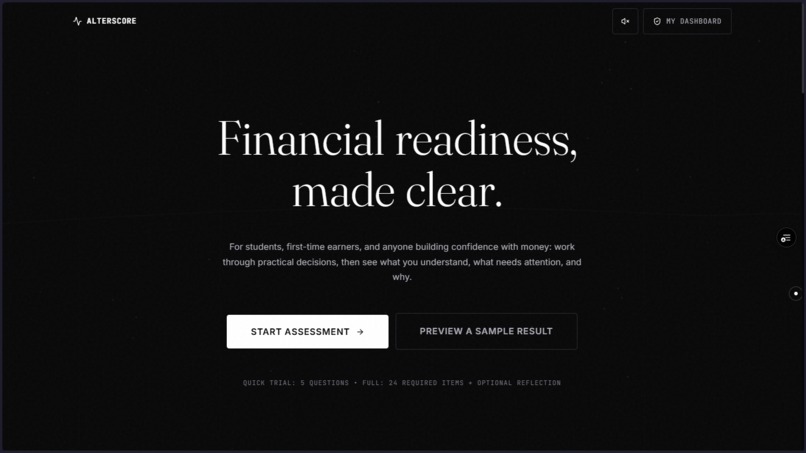
Financial readiness, made clear
-
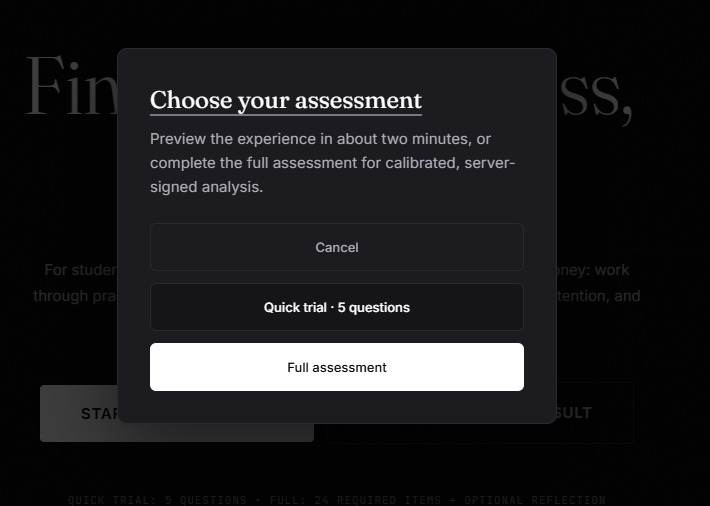
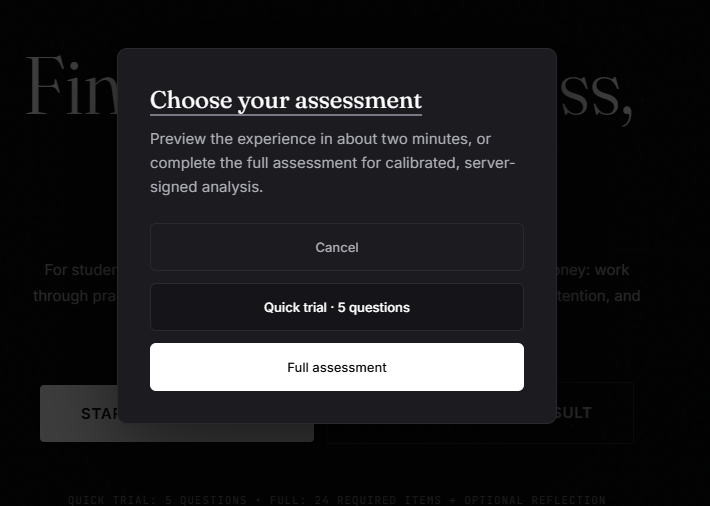
Choose your assessment
-
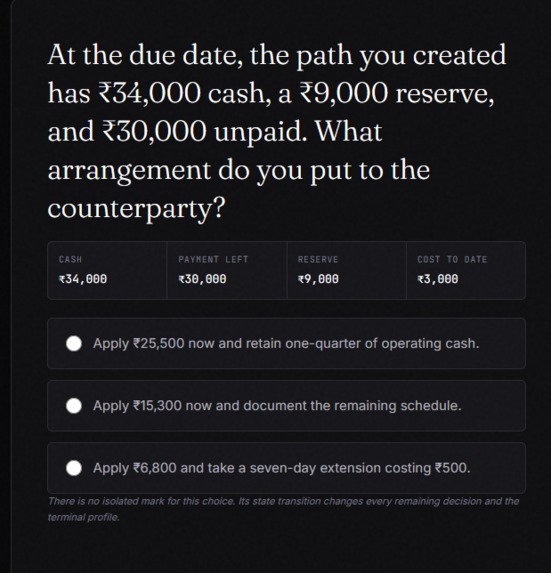
Decisions that change what happens next
-
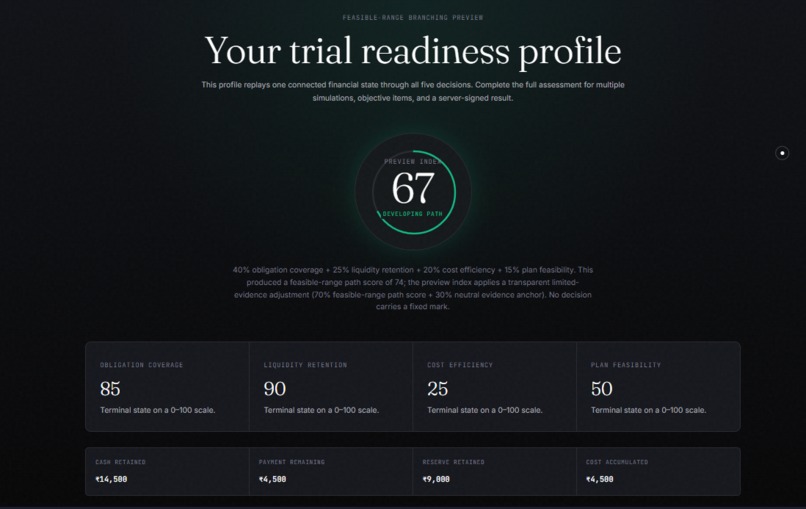
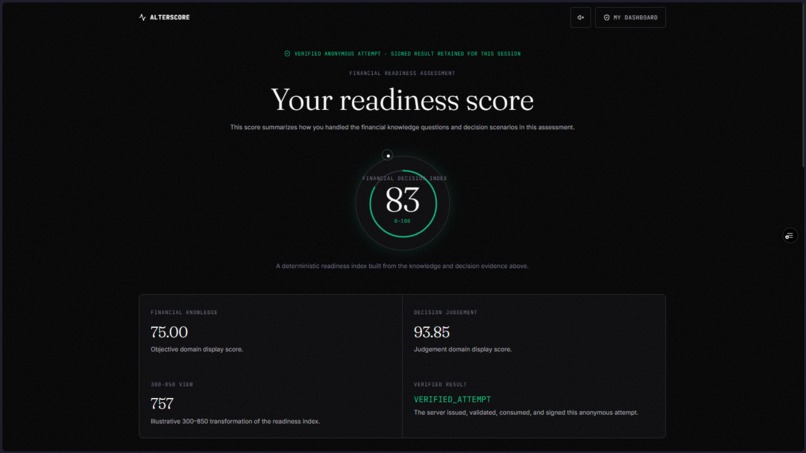
See where you stand
-
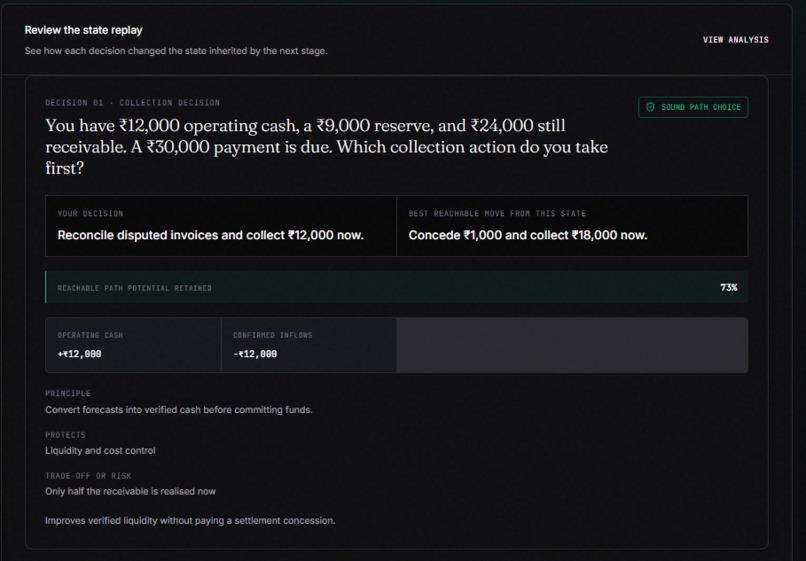
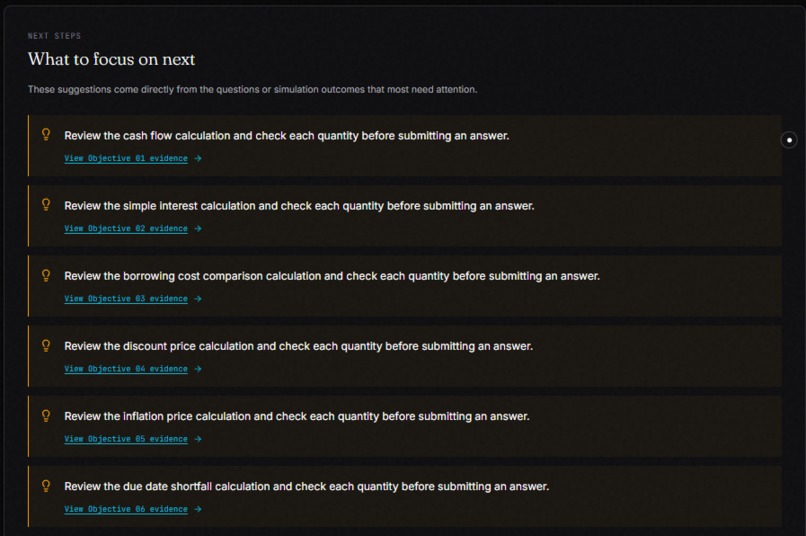
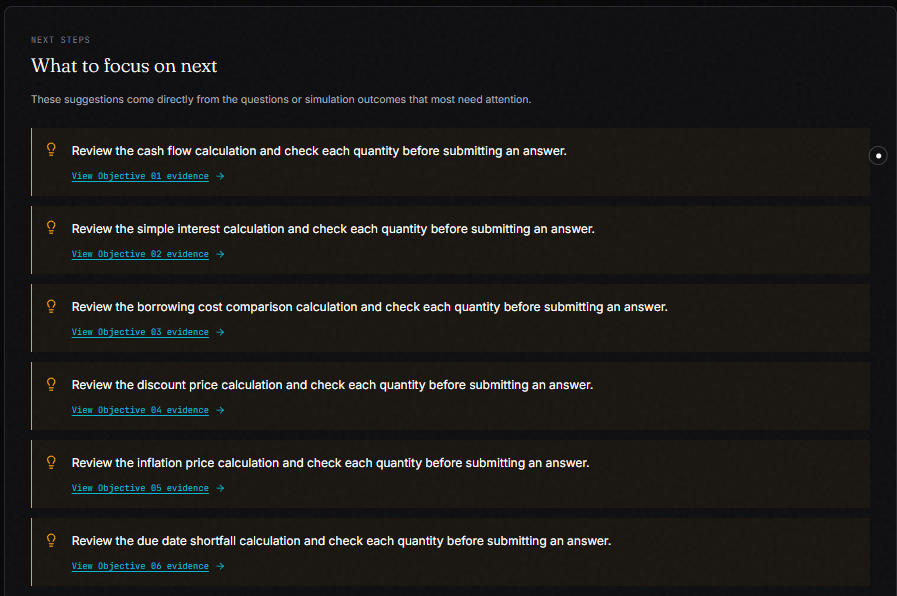
Know what to work on next
-
See why your score changed
-
A secure and verifiable full result
Inspiration
Most financial quizzes give you a number and leave you there.
You might score 62 out of 100, but that does not tell you which ideas you understand, which decisions caused problems, or what you should work on next.
That was the gap we wanted to address with AlterScore. We wanted people to see where their financial knowledge stands and understand how their choices shaped the result.
We also wanted to avoid judging people through their salary, identity, credit history, or personal documents. AlterScore focuses on how someone thinks through practical money situations.
What it does
AlterScore is an educational financial-readiness assessment for students, first-time earners, and anyone who wants to feel more confident with money.
The assessment covers situations such as paying bills, protecting savings, handling unexpected costs, comparing borrowing options, and managing uncertain income.
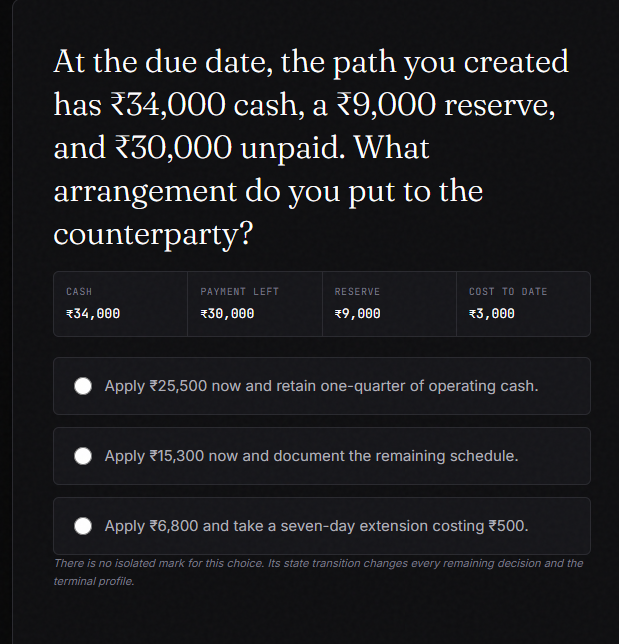
Some questions are connected. A decision made early can change the cash, reserve, obligations, and costs shown in the next situation. This makes the experience closer to real decision-making than a list of unrelated quiz questions.
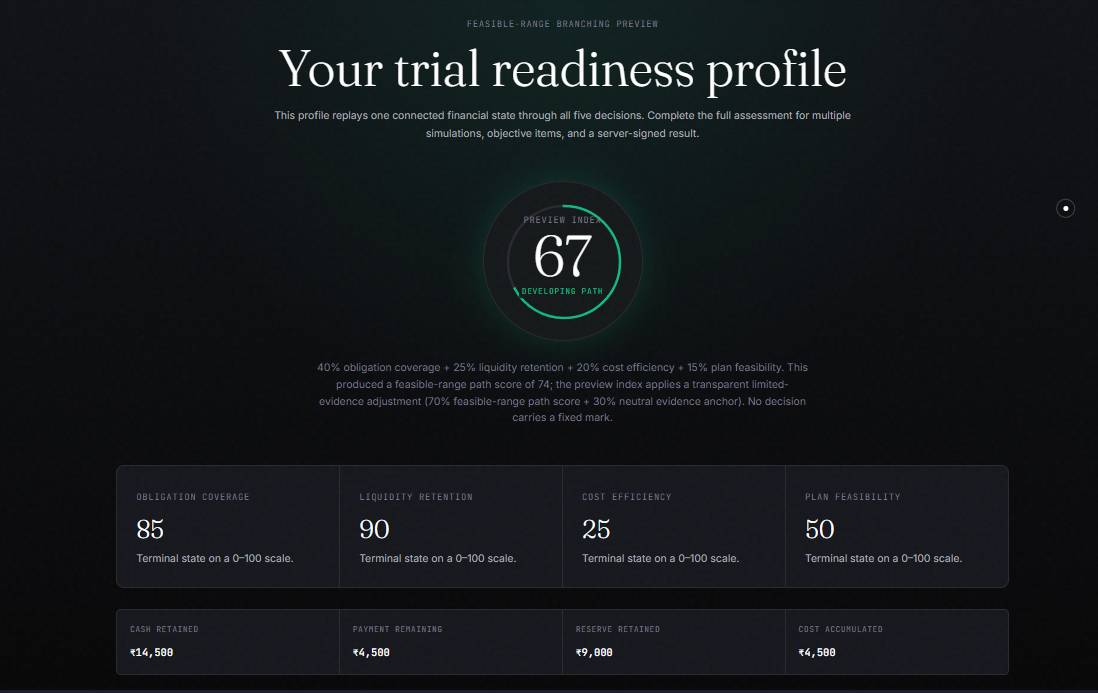
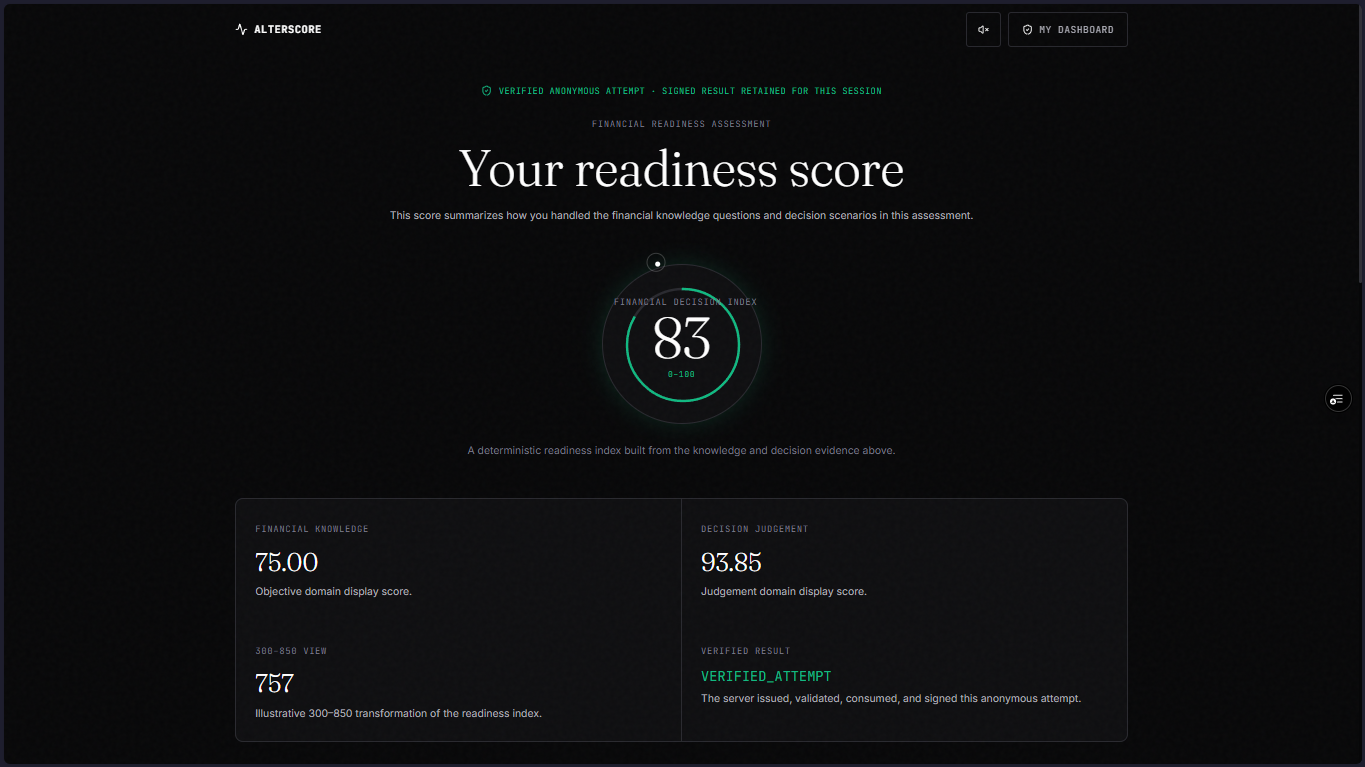
At the end, AlterScore gives the user a Financial Decision Index from 0 to 100. The result also explains:
- where the user's financial knowledge stands;
- which areas they handled well;
- which areas need more attention;
- how their choices affected the result;
- and what they can review next.
AlterScore is an educational tool. It is not a credit score, lending system, underwriting model, or repayment predictor.
How we built it
We built the frontend with React, Vite, and CSS. The backend uses FastAPI, Python, and Pydantic.
The assessment combines short calculations, judgement questions, and connected financial scenarios. We used this mix because knowing a formula is different from making a decision when several financial priorities compete.
During a scenario, AlterScore keeps track of values such as available cash, unpaid obligations, emergency savings, and added costs. Each answer updates that financial state. The next question begins with the situation created by the previous choice.
The quick trial looks at four parts of the final position:
$$ S = 0.40O + 0.25L + 0.20C + 0.15P $$
Here:
- (O) measures obligation coverage.
- (L) measures liquidity retention.
- (C) measures cost efficiency.
- (P) measures plan feasibility.
The full assessment is scored on the server. It uses one-time attempts and returns a signed, redacted result that can be verified without exposing the user's identity or raw answers.
Challenges we ran into
The hardest part was deciding how to make the assessment useful without turning it into a disguised credit score.
We wanted to focus on financial reasoning rather than personal circumstances. That meant keeping identity, credit history, documents, and other personal information outside the scoring process.
The connected scenarios also took a lot of work. If a user changed an earlier answer, later answers might no longer make sense. We had to clear those answers, rebuild the financial state, and make sure the final explanation matched the new path.
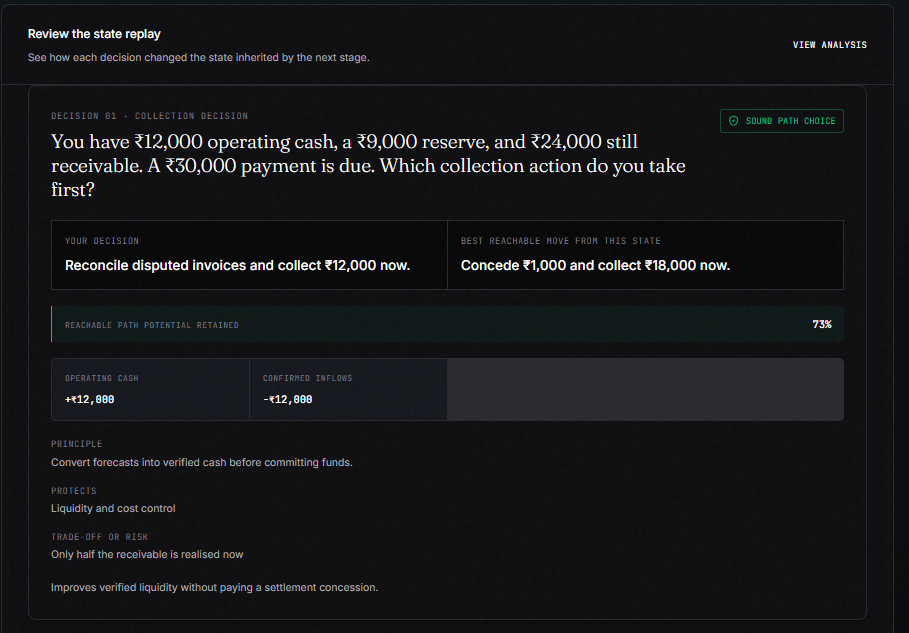
The result page was another challenge. We wanted to show the score, calculations, financial state, trade-offs, recommendations, and decision replay. Showing everything at once made the page feel like a spreadsheet, so we placed the main result first and let users open the deeper evidence when they wanted to understand more.
We also spent time fixing smaller problems that still mattered, such as mobile layouts, keyboard focus, reduced-motion settings, expired attempts, accidental duplicate submissions, and route changes.
Accomplishments that we're proud of
Seeing the full assessment work from beginning to end was a big moment for us.
A user can make a decision, watch it change the next financial situation, finish the assessment, and trace the final result back through the choices they made. The score does not appear from a black box. The user can see where their financial knowledge stands and why.
We are also proud that the product works without a login, credit history, or personal financial documents. The full assessment still uses secure one-time attempts and produces a signed result that can be independently verified.
Getting the scoring, explanation, privacy choices, and user experience to work together took a lot of effort. That is the part of AlterScore we are proudest of.
What we learned
We learned that explainability has to be part of the scoring design from the start.
If the system does not keep track of evidence and state changes, the result page cannot honestly explain the final score later. The questions, scoring rules, API responses, and interface all need to agree.
We also learned that consequences teach better than answer keys. A choice can solve today's payment problem while leaving less emergency cash for tomorrow. Another option may protect cash but create a higher cost. Seeing those trade-offs makes the lesson easier to understand.
Building AlterScore also changed how we think about financial education. A useful assessment should not make people feel labelled. It should give them a clearer picture of what they understand and a practical place to begin improving.
What's next for AlterScore
We want to add more scenarios about budgeting, saving, borrowing, irregular income, and emergency planning.
We also want to make examples more relevant to different regions and currencies. Financial situations can look very different depending on where someone lives, so the questions should feel familiar to the people answering them.
The next step is to put AlterScore in front of students and first-time earners. We have tested whether the system works. Now we want to learn whether the explanations make sense to the people it was built for.
Built With
- css
- docker
- fastapi
- github-actions
- gpt-5.6
- hmac-sha256
- hugging-face-spaces
- javascript
- openai-codex
- pydantic
- pytest
- python
- react
- rest-api
- vercel
- vite
- web-crypto-api

Log in or sign up for Devpost to join the conversation.