-
-

Landing Page
-
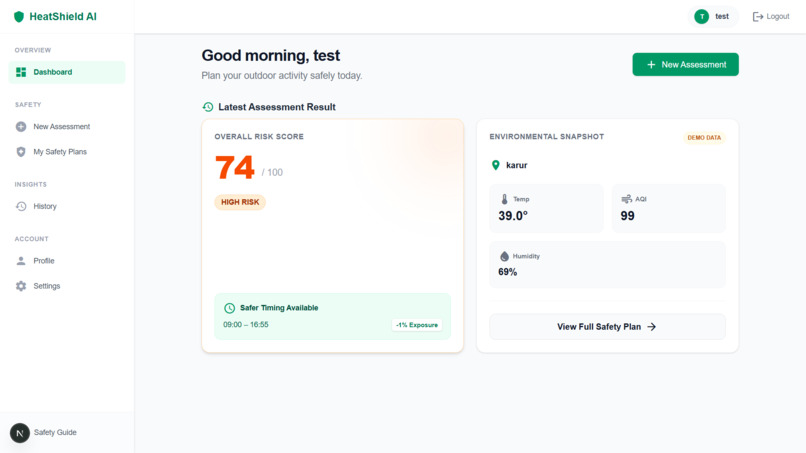
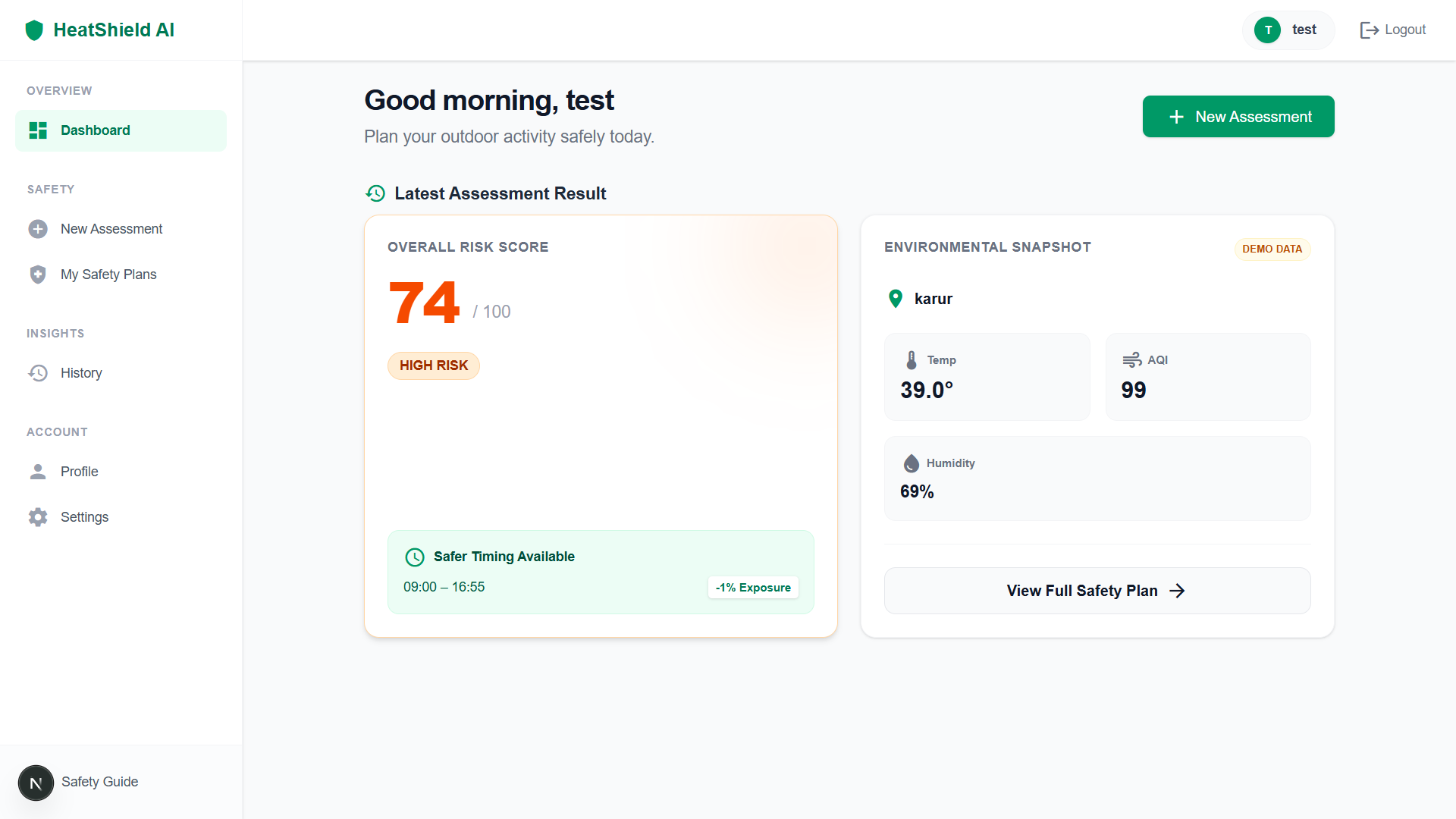
Dashboard Page
-
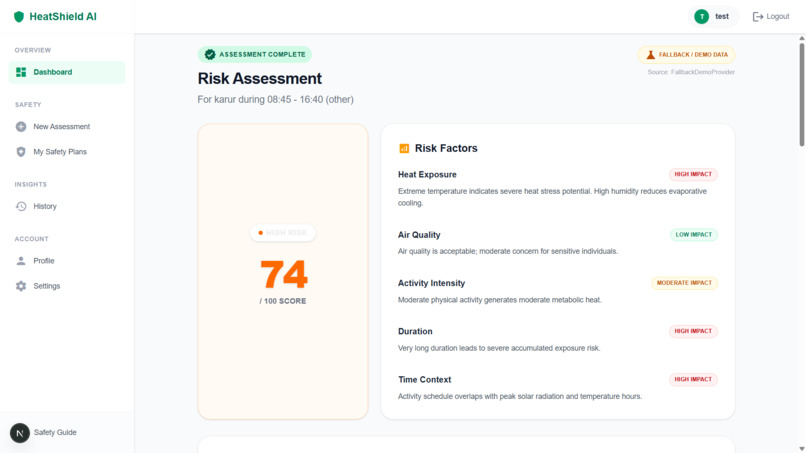
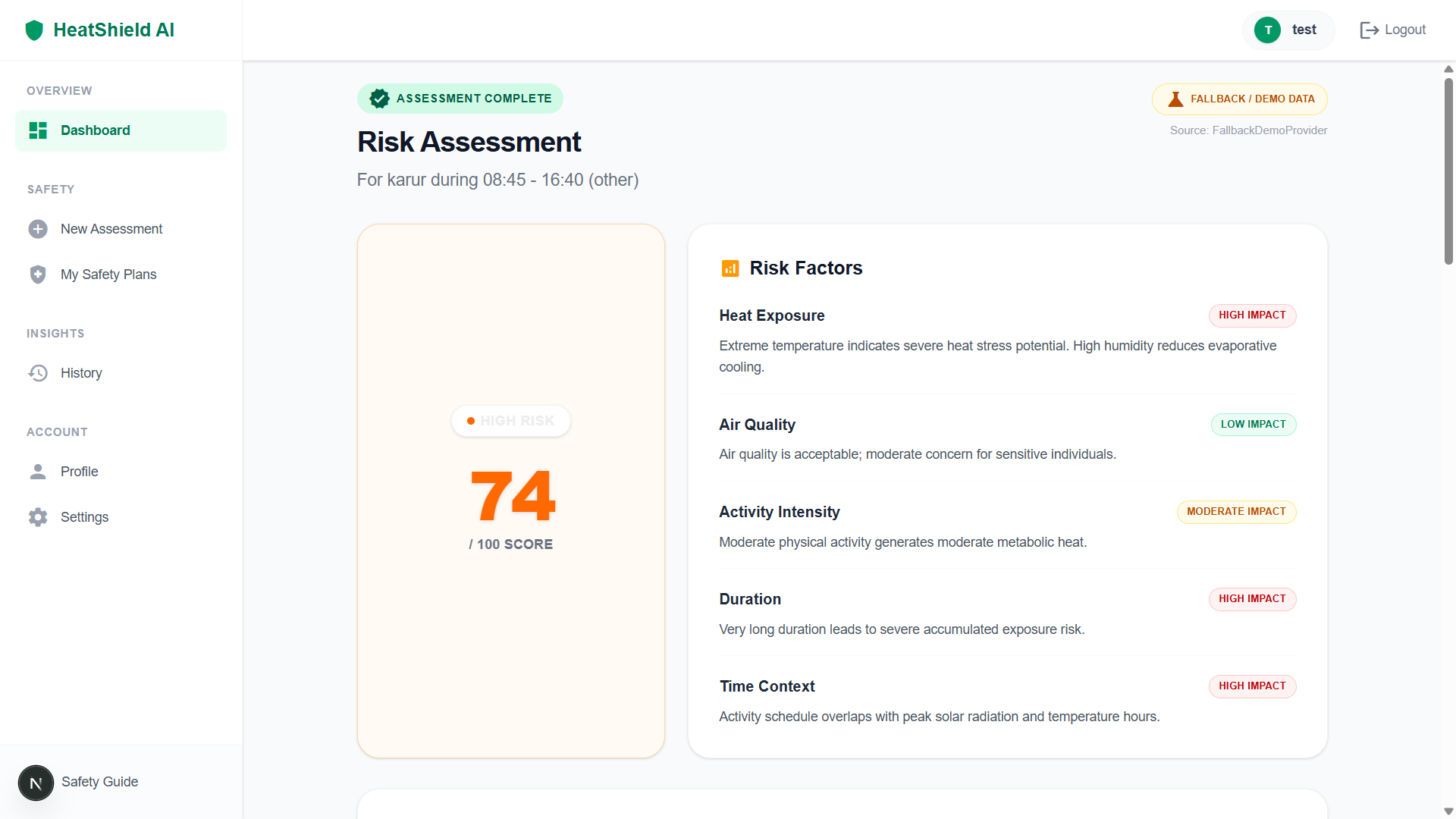
Detailed of Assessment page
-
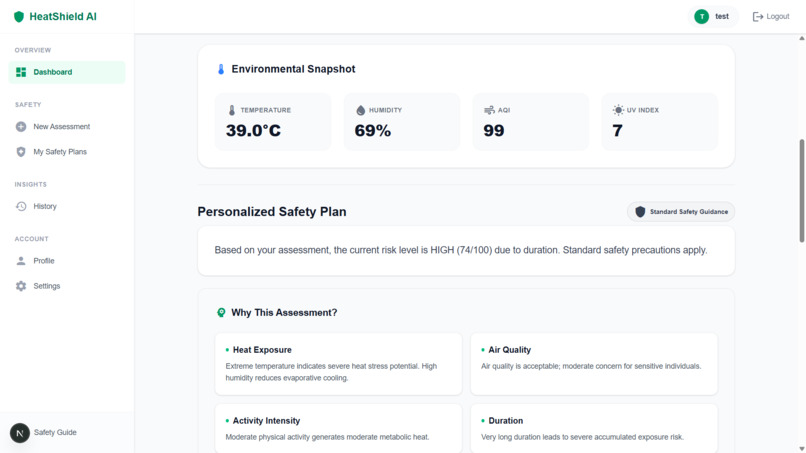
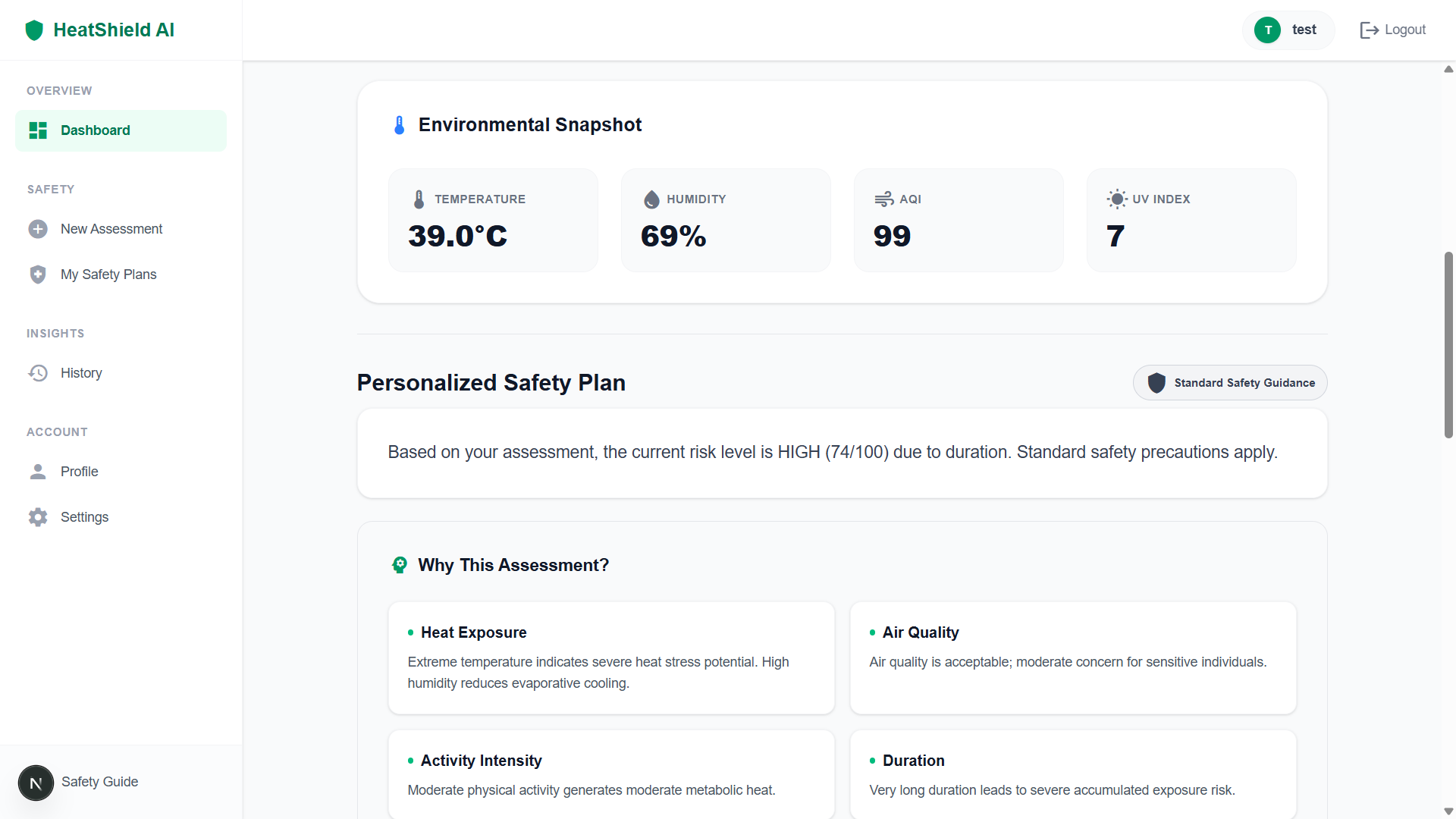
Detailed of Assessment Page
-
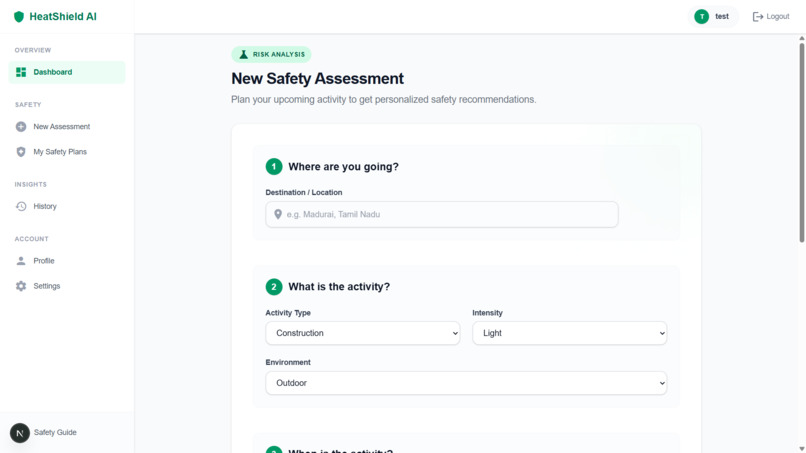
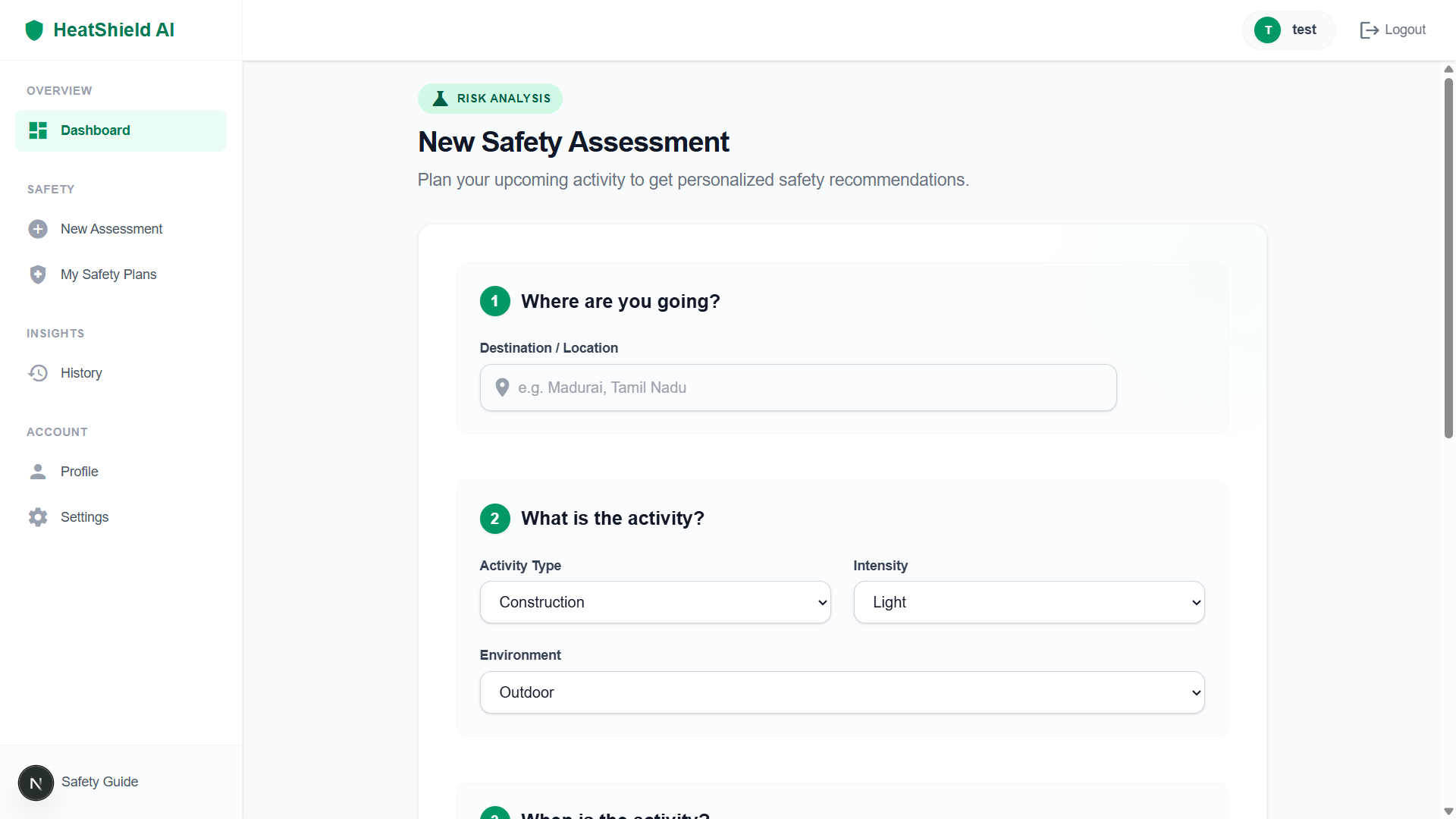
New Assessment creation Page
-

Sign In Page


Inspiration
Extreme heat and poor air quality can make everyday outdoor activities risky, especially for outdoor workers, street vendors, delivery personnel, and people with limited access to cooling. However, knowing that it is hot outside is not enough. People also need practical answers: How risky are the current conditions? What precautions should they take? Could changing their working hours reduce their exposure?
This inspired us to build HeatShield AI, an AI-powered climate safety platform that turns environmental risk information into personalized, actionable guidance. Instead of being just another weather dashboard, HeatShield AI focuses on helping people make safer decisions about when and how to carry out outdoor activities.
What it does
HeatShield AI combines deterministic risk assessment, AI-generated explanations, and schedule optimization to help users understand and respond to environmental risks.
Key features include:
- Personalized risk assessment: Evaluates environmental conditions alongside user-provided activity details and exposure circumstances to produce a transparent risk score and risk category.
- Explainable risk factors: Shows the factors contributing to the assessment so users can better understand why a situation may be risky.
- AI-powered safety guidance: Generates structured, personalized recommendations and practical action plans, with English and Tamil language support.
- Safer schedule recommendations: Compares a proposed outdoor activity schedule with alternative time slots and estimates how changing the schedule may reduce exposure.
- Risk history and dashboard: Helps users review previous assessments and their recommendations.
- Transparent fallback behavior: Supports demonstration and testing when live environmental data or AI services are unavailable, while distinguishing fallback information from verified live data.
How we built it
We designed HeatShield AI around a clear separation between risk calculation and AI-generated guidance.
First, environmental information and user-provided activity details enter a deterministic risk engine. The engine calculates a risk score on a 0–100 scale, assigns a risk category, and identifies contributing factors. Keeping this calculation separate from the language model makes the assessment more consistent and explainable.
Next, an AI guidance layer uses Groq-compatible language-model integration to generate structured safety explanations and recommendations. The application validates the expected response format and includes fallback handling for unavailable services. The AI explains the assessment; it does not determine or override the underlying risk score.
A separate schedule optimizer evaluates candidate activity start times while keeping the activity duration consistent. It compares estimated exposure under the proposed and alternative schedules, allowing users to explore potentially safer options.
We integrated these components into a responsive web application with authentication, assessment workflows, dashboards, saved results, and history. We also worked on interface consistency, readable form inputs, public and authenticated page layouts, and responsive user experience.
Challenges we faced
One of our main challenges was making the platform useful without allowing AI-generated text to become the source of truth for safety calculations. We addressed this by keeping risk scoring and schedule optimization deterministic and using AI primarily for explanation and personalized communication.
Another challenge was handling unavailable external services. Live environmental-data and Groq API verification depended on valid credentials, which were not available during verification. We therefore tested fallback behavior and designed the application to distinguish fallback demonstrations from live data rather than presenting simulated information as verified current conditions.
We also needed to make complex environmental information understandable to users with different levels of technical knowledge. We focused on clear risk categories, contributing factors, practical recommendations, and bilingual guidance.
What we learned
Building HeatShield AI taught us how to combine deterministic algorithms with generative AI while preserving transparency and predictable behavior. We learned the importance of validating structured model responses, designing reliable fallback paths, testing complete user journeys, and communicating the limitations of environmental estimates.
We also learned that an AI-powered climate solution should do more than display data. It should help users understand their options and take practical steps to reduce exposure.
Impact and future scope
HeatShield AI aims to make climate safety information more actionable for people whose work or daily lives require outdoor exposure. By combining understandable risk assessments, personalized guidance, and alternative scheduling suggestions, it can support better-informed decisions in heat-stressed environments.
Future improvements include integrating verified live environmental data, validating risk estimates against authoritative guidance, expanding regional and language support, and evaluating schedule recommendations using real-world observations.
HeatShield AI is a decision-support tool, not a medical diagnostic system or a replacement for official weather alerts, public-health guidance, emergency services, or professional medical advice. Its purpose is to help people understand potential environmental risks and consider safer choices.
Built With
- artificial-intelligence
- climate-tech
- environmental-safety
- generative-ai
- groq
- llm
- multilingual
- next.js
- playwright
- react
- risk-assessment
- schedule-optimization
- typescript
- web

Log in or sign up for Devpost to join the conversation.