-
-
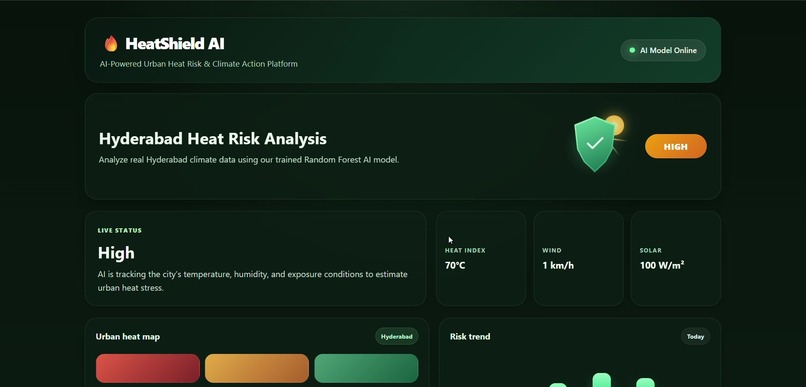
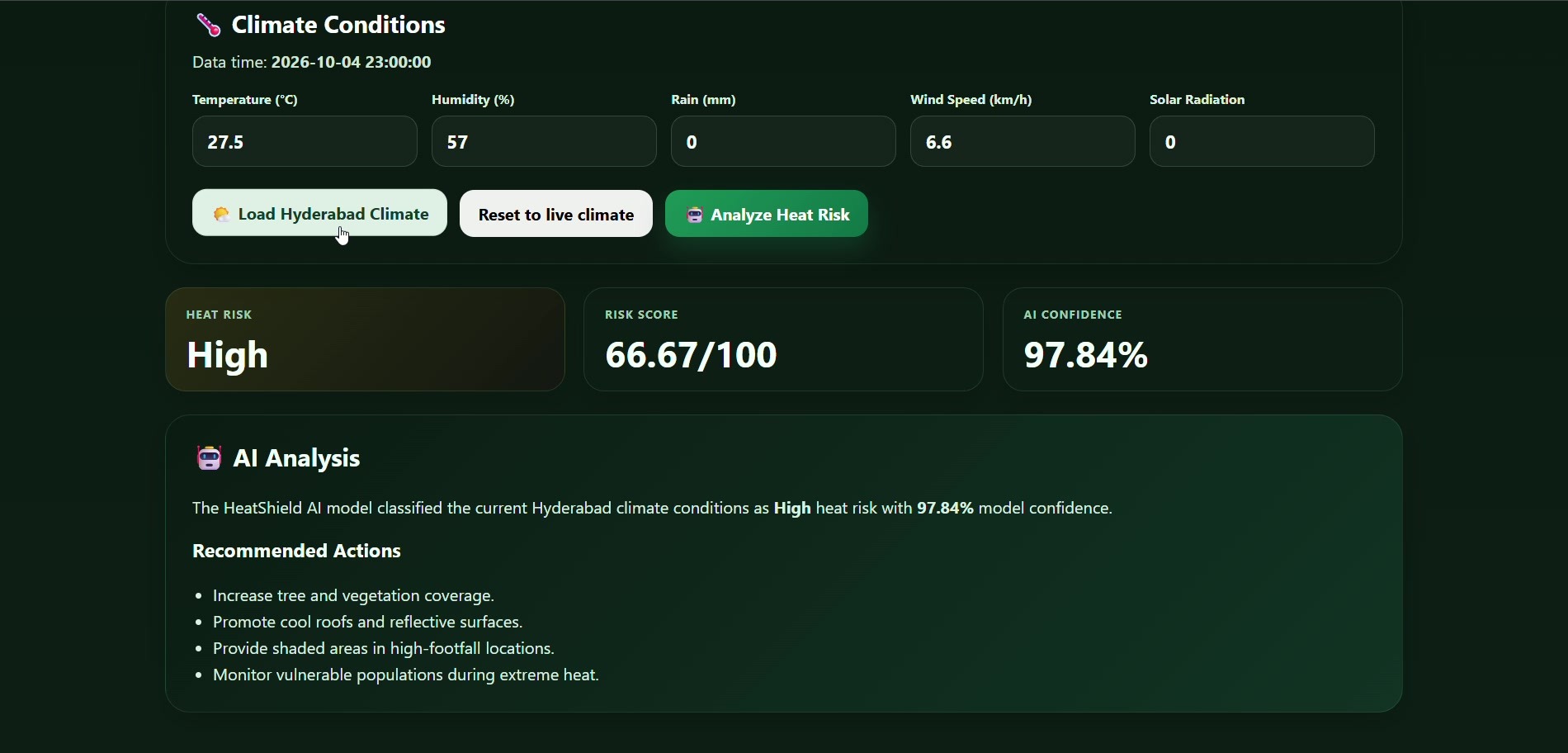
Climate Data — climate information used by the prototype.
-
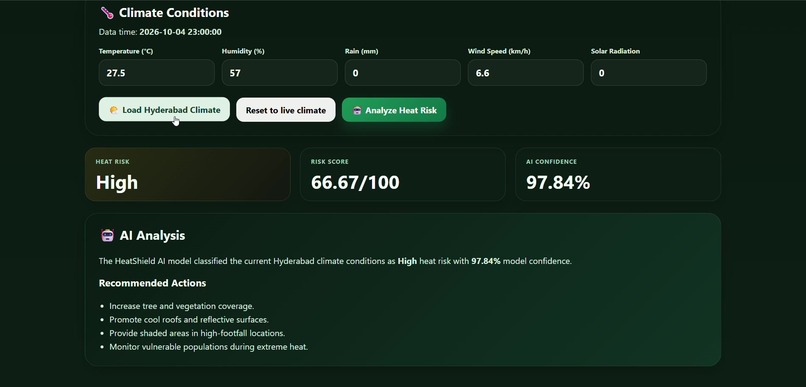
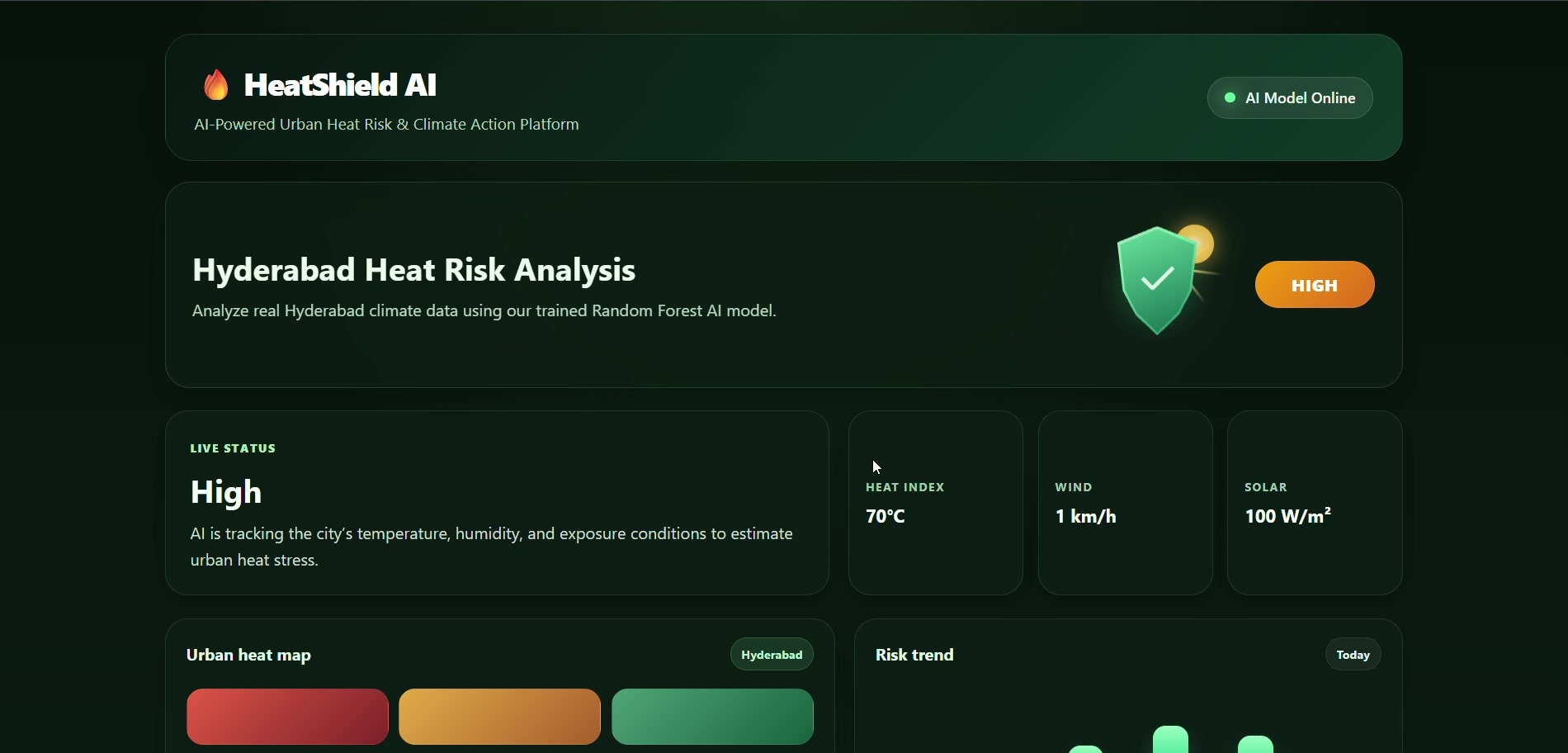
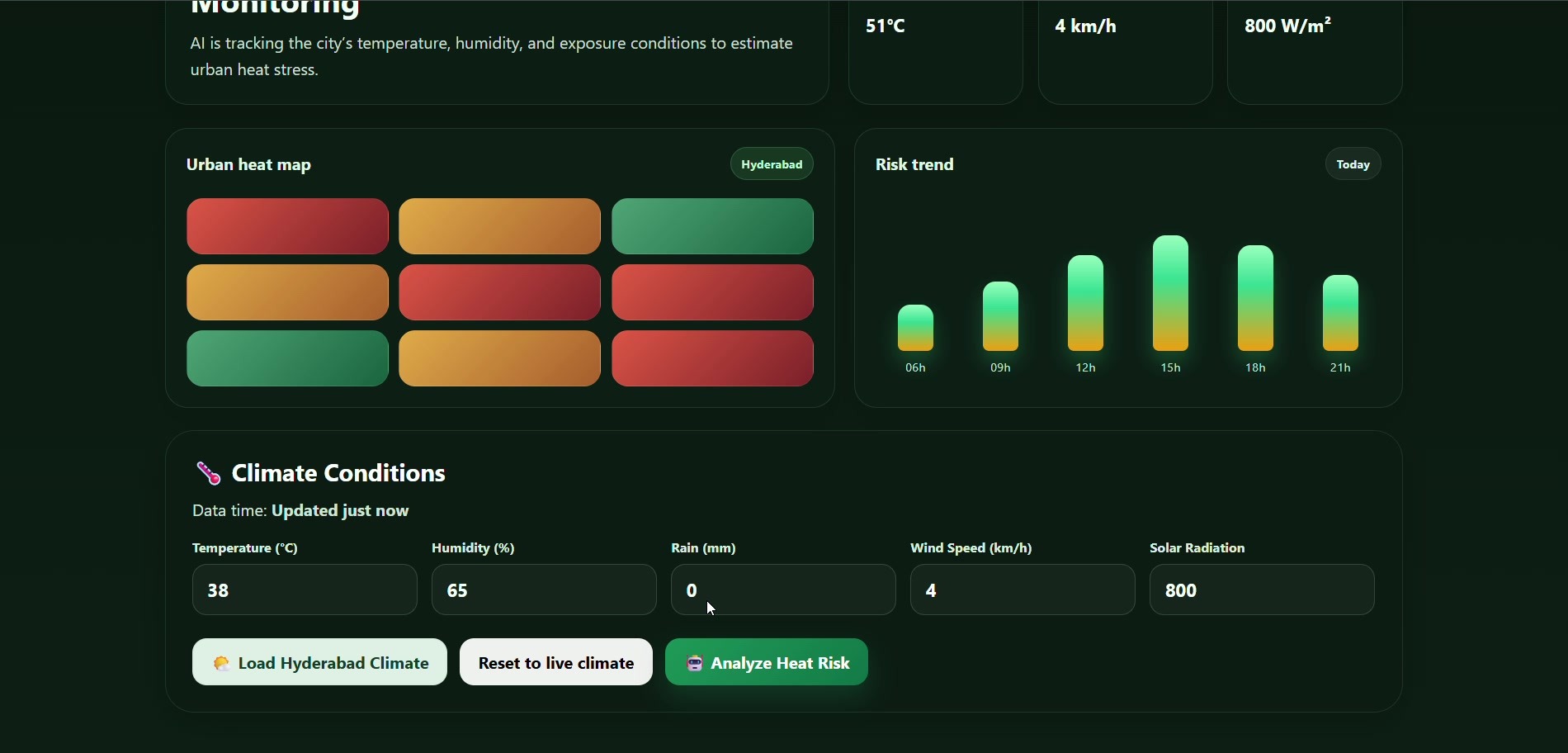
Dashboard — the main HeatShield AI interface.
-
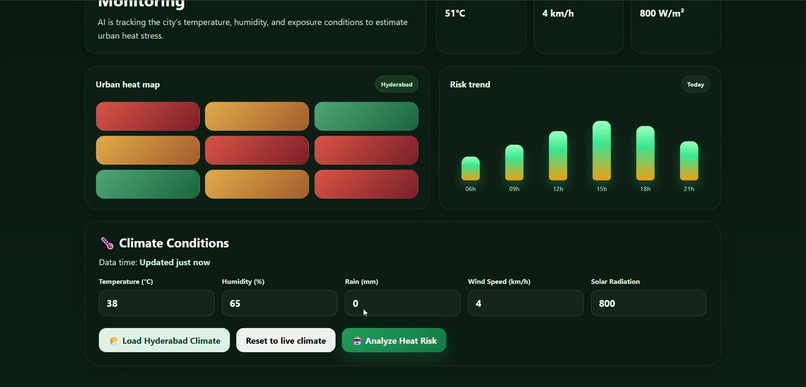
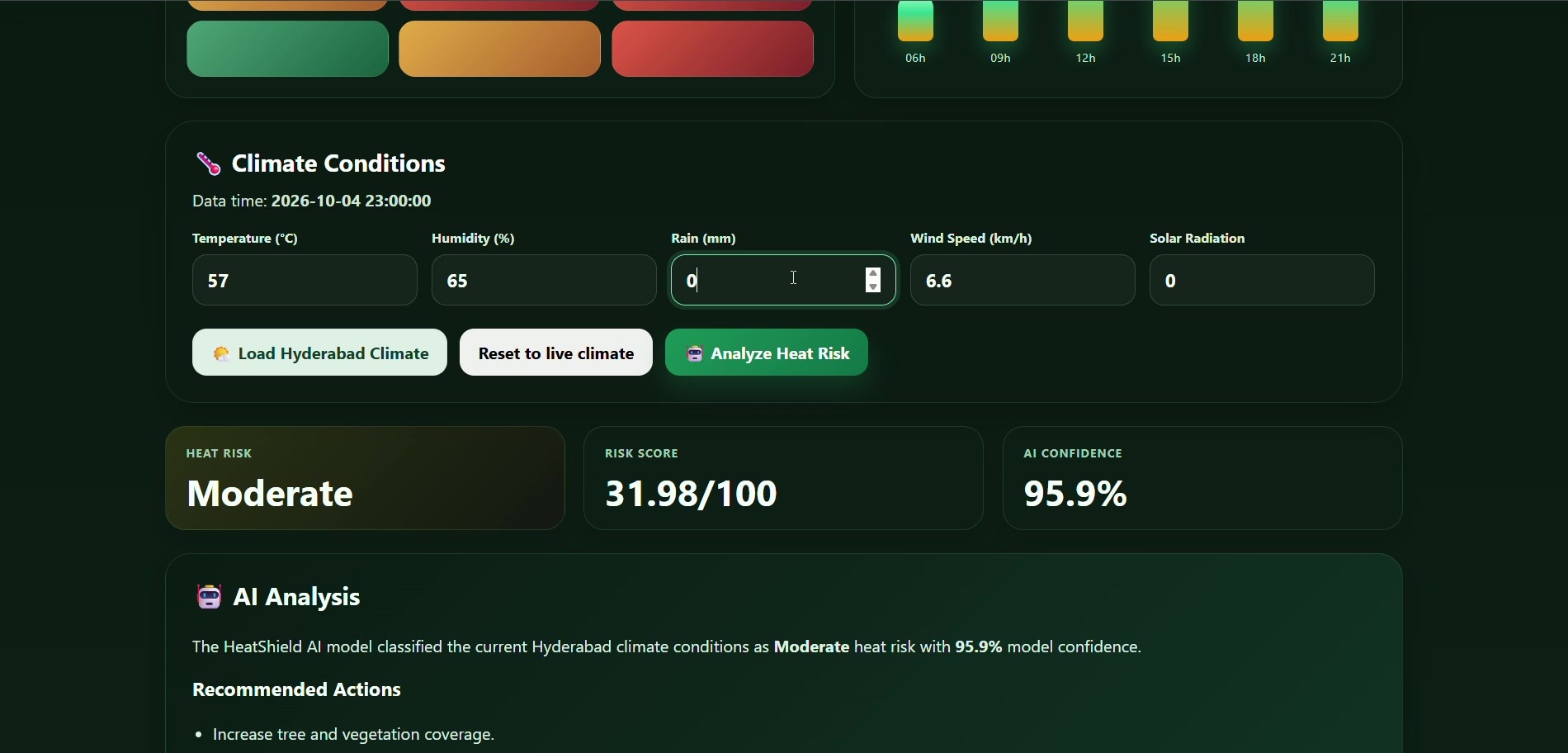
Heat Risk Prediction — risk classification and score.
-
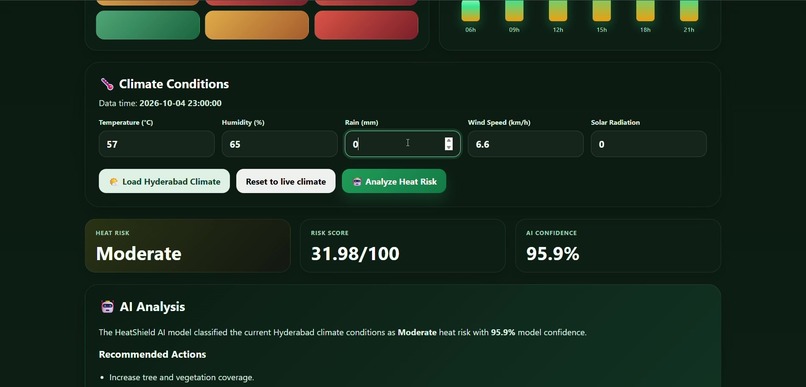
AI Recommendations — suggested cooling and climate adaptation measures.
🔥 HeatShield AI — AI-Powered Urban Heat Risk & Climate Action Platform
Inspiration
Extreme heat is becoming a serious challenge for cities, affecting public health, outdoor workers, students, and vulnerable communities. We wanted to build a platform that goes beyond reporting temperatures by helping people understand heat risk and discover practical climate adaptation measures.
What It Does
HeatShield AI uses climate data and machine learning to classify heat-risk conditions and recommend actions to improve urban heat resilience.
Our goal is to answer three important questions:
- Why might an area experience elevated heat risk?
- Who could be more vulnerable to extreme heat?
- What actions could help communities become more heat-resilient?
How We Built It
We built a React frontend connected to a Python FastAPI backend. We collected historical climate data for Hyderabad, India, and used temperature, humidity, rainfall, wind speed, solar radiation, and time-based features to train a Random Forest classification model.
The model classifies climate-derived heat-risk levels as Low, Moderate, High, or Critical. It achieved 94.19% accuracy on a held-out test set using our prototype's derived risk labels.
Key Features
- Historical Hyderabad climate data analysis
- Machine-learning-based heat-risk classification
- Easy-to-understand risk scores
- Climate adaptation recommendations
- A dashboard connecting climate data with AI predictions
- An architecture designed for future heat maps and climate intervention simulations
Impact
HeatShield AI aims to help communities, urban planners, and local organizations better understand heat-related risks and consider practical adaptation strategies, including tree planting, cool roofs, shaded public spaces, and protection for vulnerable populations.
What's Next
We plan to expand the platform with neighborhood-level climate data, interactive heat maps, population vulnerability indicators, and a what-if simulator to explore potential cooling interventions.
Current Limitations
This is a prototype. Its model predicts climate-derived risk labels rather than validated medical or official heat-risk categories. The current dataset represents a Hyderabad location and historical observations, not live citywide measurements.
Built With
- fastapi
- forest
- javascript
- numpy
- pandas
- python
- random
- react
- scikit-learn

Log in or sign up for Devpost to join the conversation.