-
-
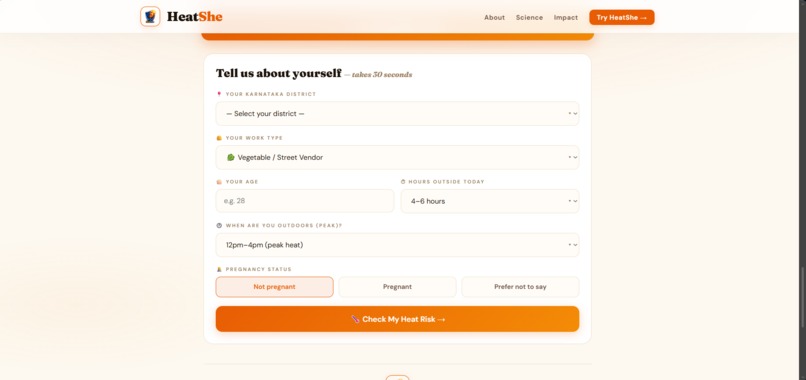
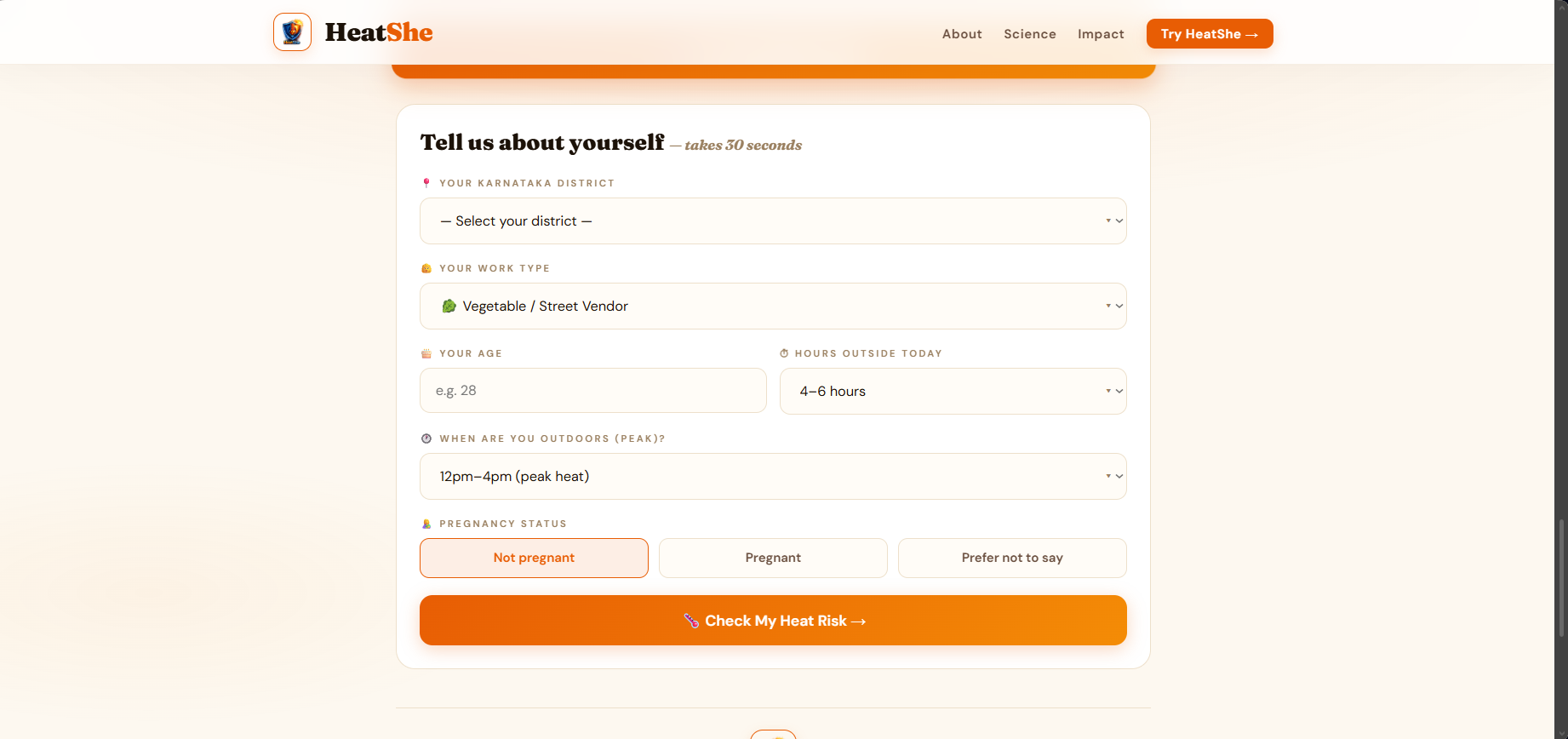
Risk input form for district, occupation, hours, age, pregnancy, and temperature.
-
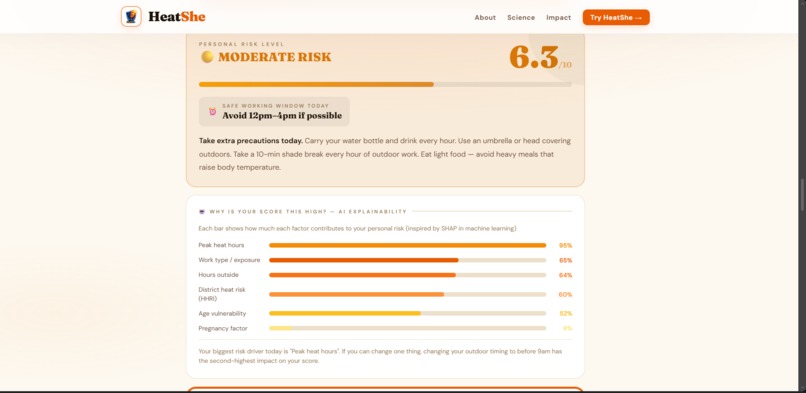
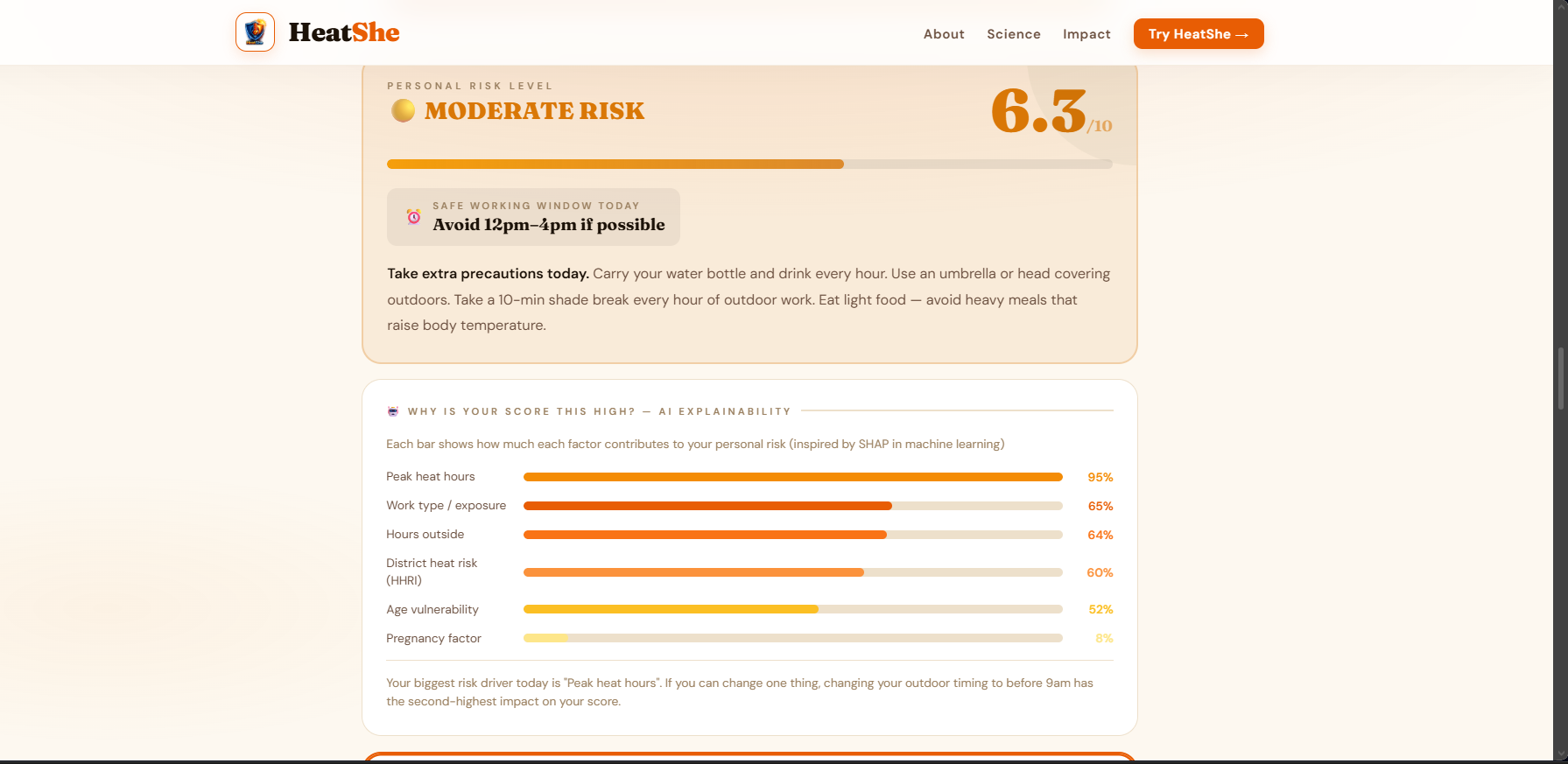
Explainable risk result with score, breakdown, and safety guidance.
-
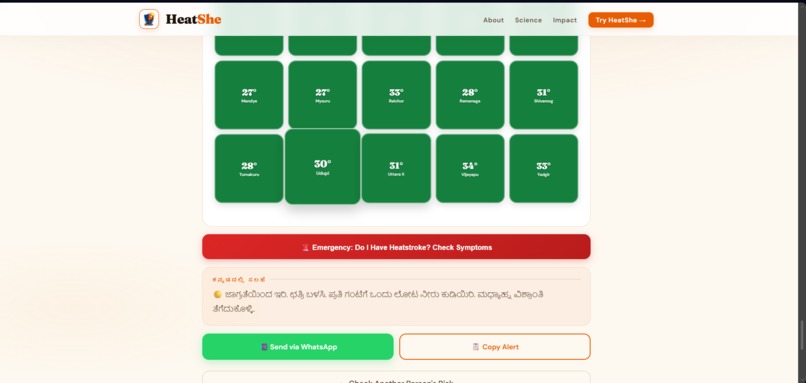
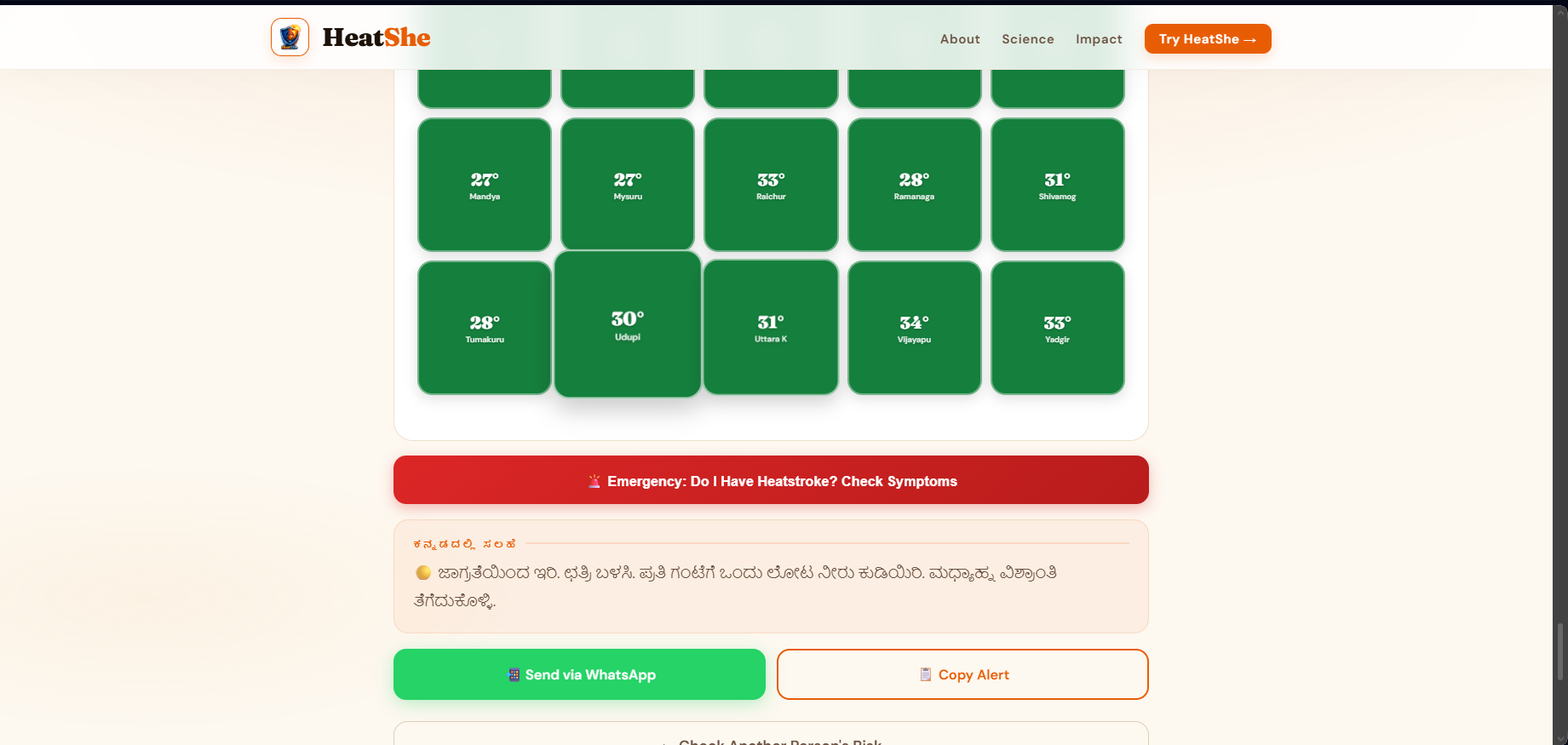
District heat map view showing Karnataka-wide vulnerability patterns.
-
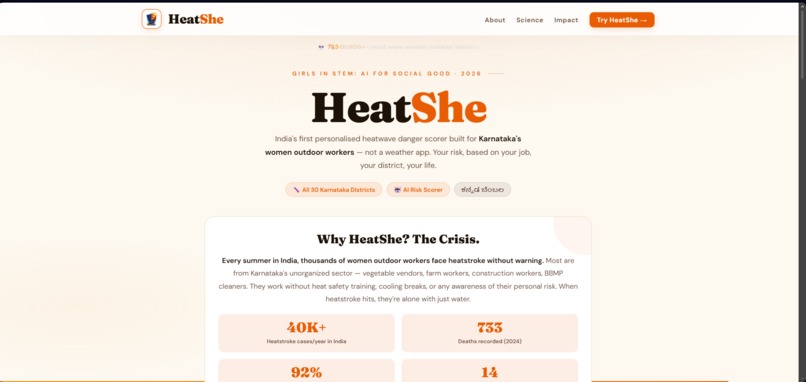
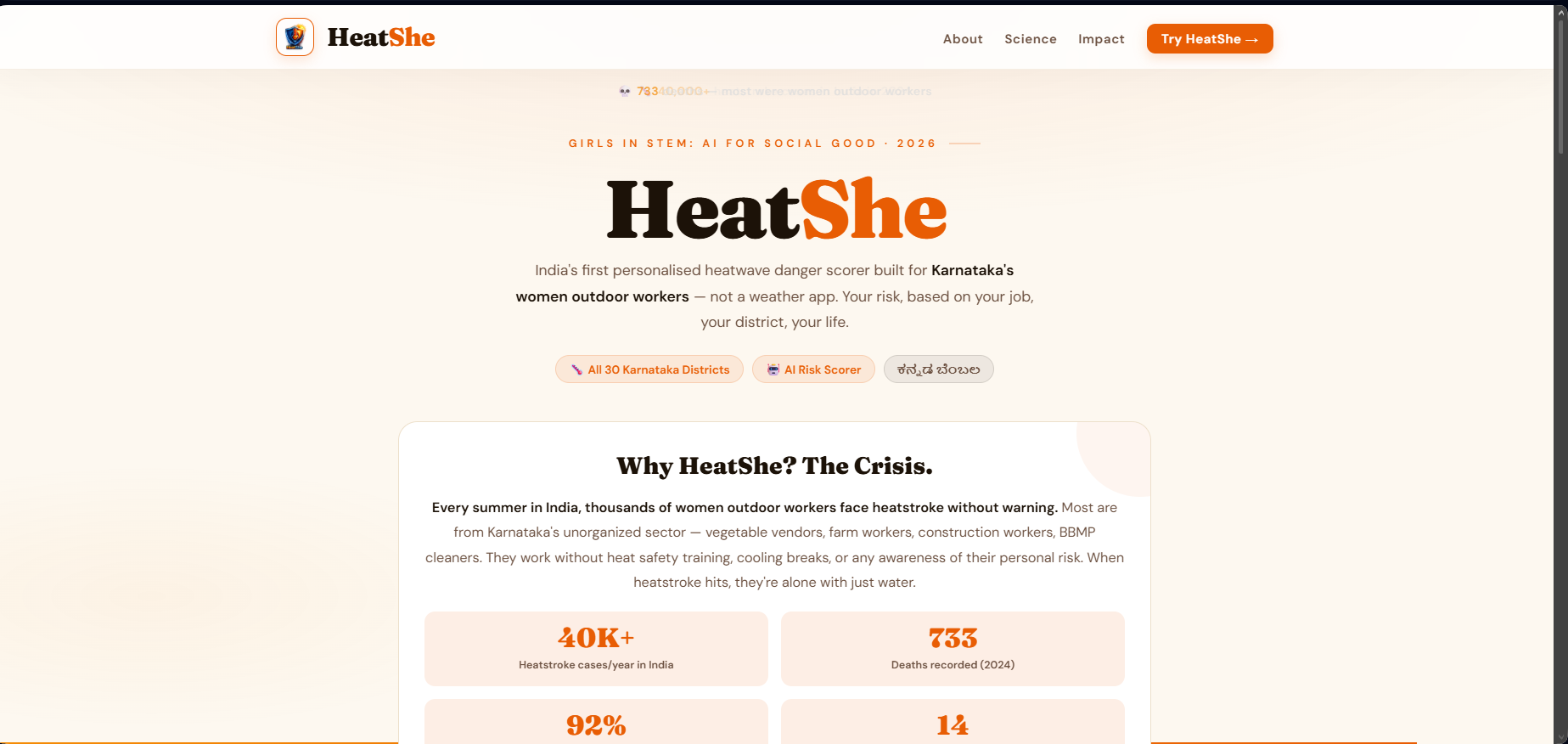
Project homepage with the hero message and live demo entry point.
Inspiration
HeatShe came from a simple but urgent question: how can we help women outdoor workers make safer decisions during extreme heat?
Regular weather apps only tell temperature. They do not explain what that heat means for a brick kiln worker, a sanitation worker, or a farm worker spending hours in the sun. I wanted to build something more human, more practical, and more action-ready.
What it does
HeatShe turns live weather, district-level heat risk, occupation, age, pregnancy status, and outdoor work duration into one clear risk score. It then explains the result in simple language and gives a next action, so the user knows whether to continue, slow down, or stop work.
How I built it
I built HeatShe as a solo project using HTML, CSS, and vanilla JavaScript for the interface, with a modular risk engine for the scoring logic. The app is deployed on Vercel and uses Open-Meteo for live weather. I kept the system lightweight so it can run well on low-end devices and remain easy to use in real-world conditions.
What I learned
This project taught me how important clarity is in AI systems. A score is not enough unless people can understand why it was generated. I learned how to combine data, explainability, and design into one experience that feels useful instead of overwhelming.
Challenges I faced
The biggest challenge was balancing accuracy with simplicity. I had to make the scoring system strong enough to feel credible, but still easy for a user to understand in seconds. Another challenge was making the design feel premium while keeping the app fast and lightweight.
Built With
- css
- html
- javascript
- open-meteo-api
- vercel


Log in or sign up for Devpost to join the conversation.