-
-
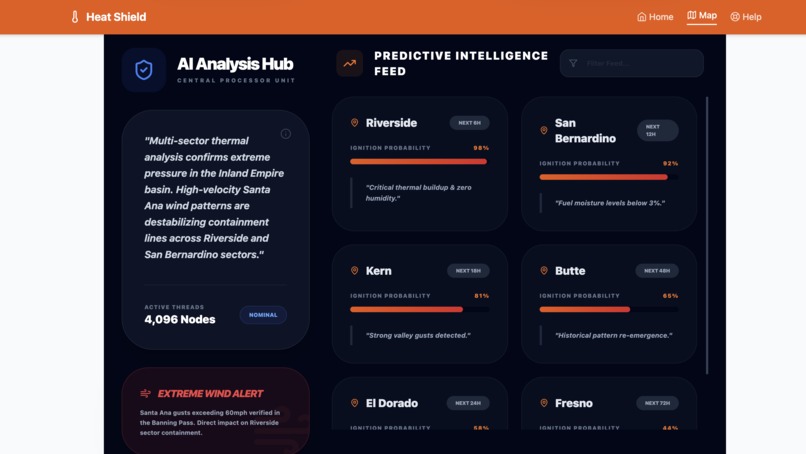
Prediction
-
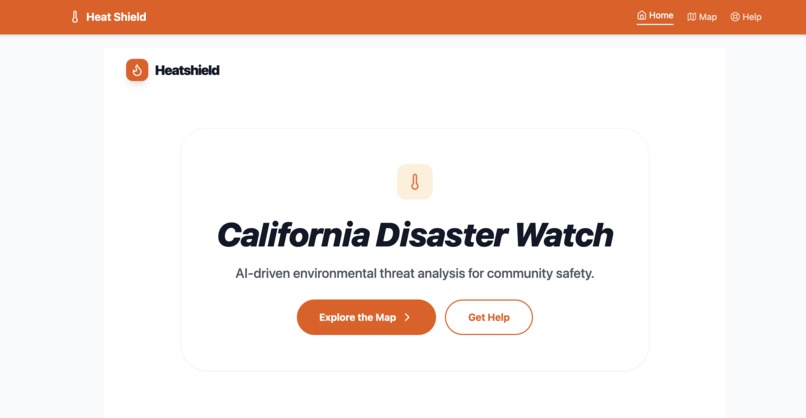
Homescreen
-
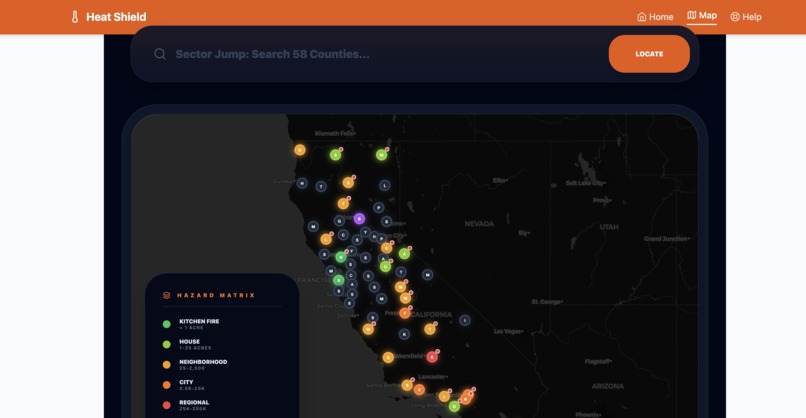
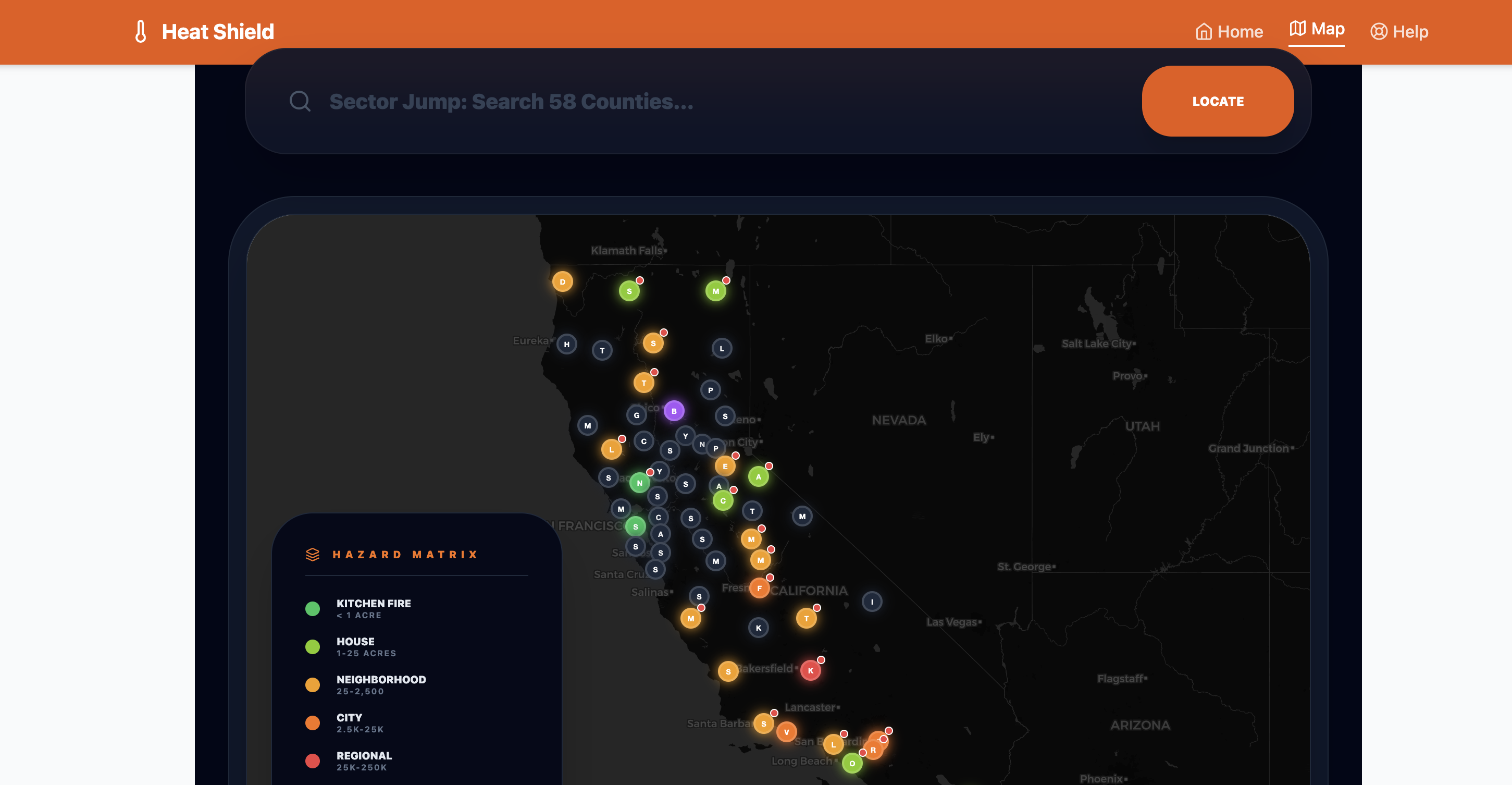
Map
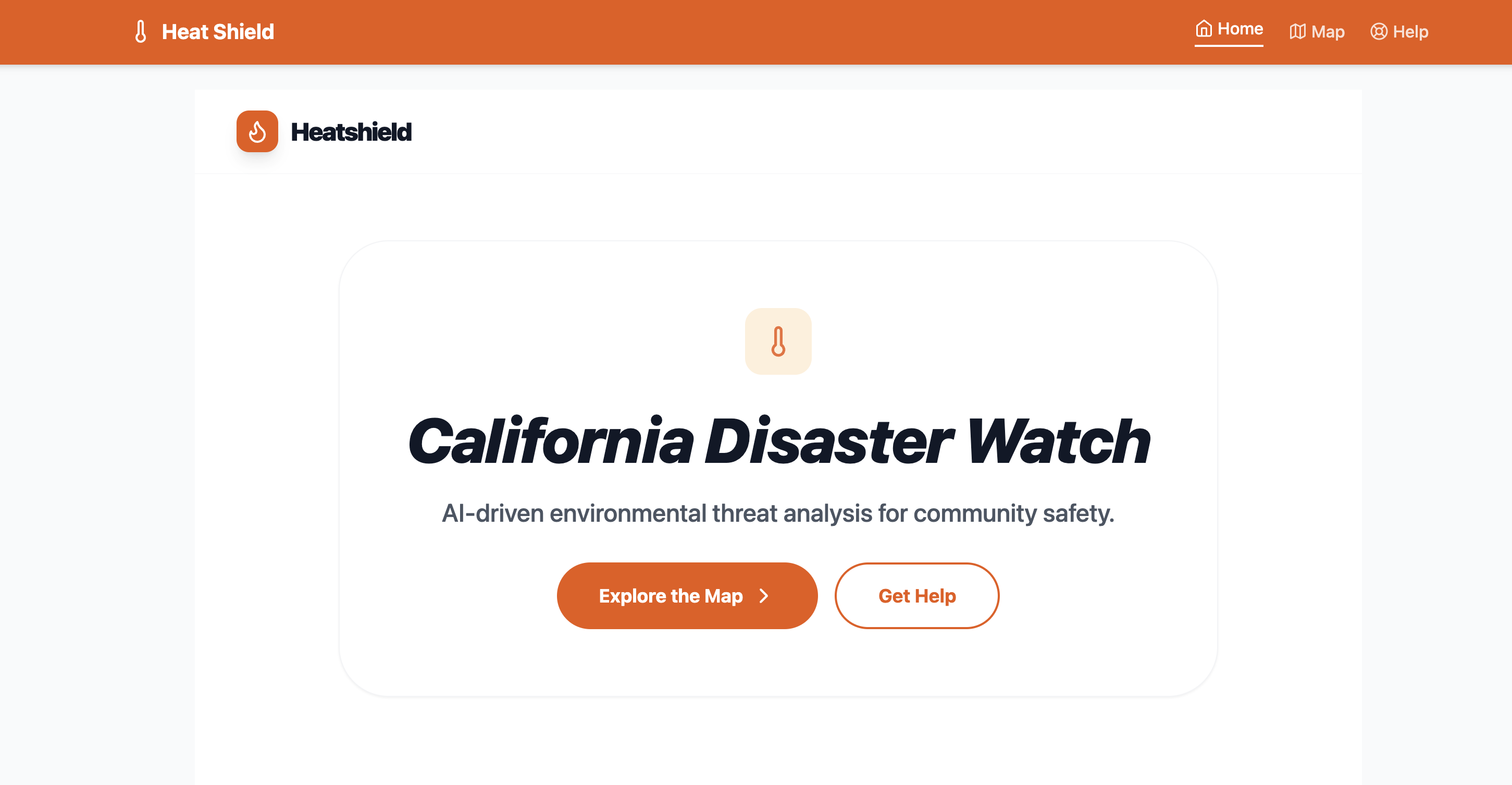
What inspired you to do the project:
Recent temperature anomalies in California have led to severe heat waves and wildfires that harm people and property. Adding on, this high temperature has only increased throughout recent years, with the necessity to inform others of the dangers only growing. This motivated us to take action and explore ways to help communities better prepare for these natural disasters.
Describe your project:
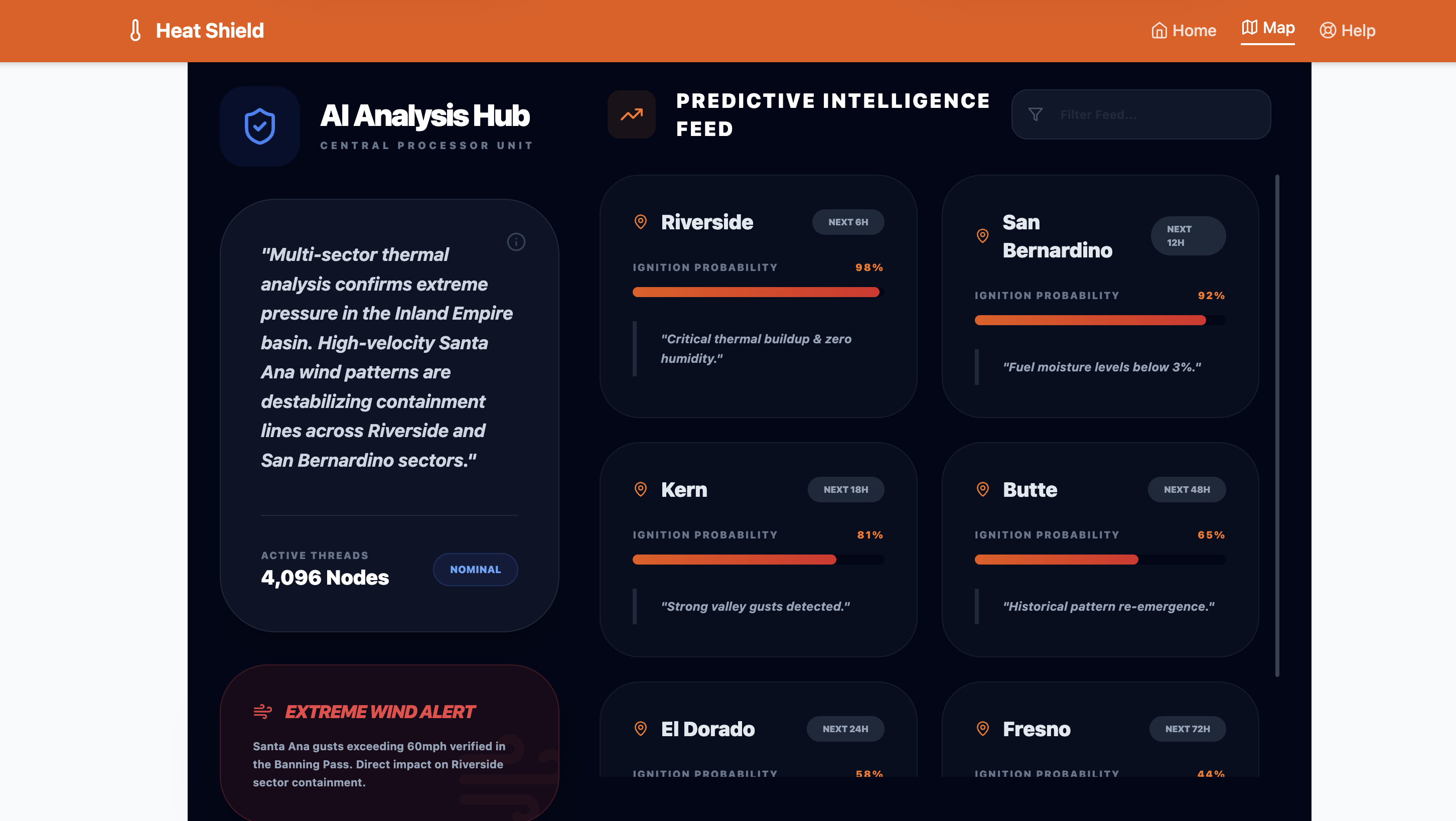
To reduce the effect of these natural disasters, our team created a visual representation on our webpage to predict and analyze high-risk areas. Our website uses factual statistics and data from credible data sources to help analyze and interpret the information. Through this, our webpage gains various features such as categories of fire, incident counts, and acres burned. The map also highlights nearby hospitals and police departments in case one is in danger. Moreover, it also contains locations with more desirable weather, offering refuge to those affected by the heat.
How we built it:
We built it with help from advanced AIs such as ChatGPT, Gemini, and Claude in order to help support the code we write to be more effective. We also used multiple programming languages, including Python, JSON, HTML, and JavaScript, to design the frontend and backend of our project.
Challenges we ran into:
Some of the challenges that we faced were debugging errors in the code. We also found difficulties in finding clear, reliable, and effective data from factual websites and correlating it with our website. Adding on, we also faced struggles fully connecting the frontend and backend of our website for the data to run smoothly and appear pleasing.
Accomplishments that we're proud of:
We're proud of our strong team collaboration and chemistry. By effectively utilizing the strengths of each member, we are able to produce a project that we find helpful and beneficial to society. Overall, we're proud to have created a project that can help people stay safe and reduce the effects of the heat physically and financially.
What we learned:
Throughout the project, we learned that extreme heat can cause severe damage to property and poses serious health risks to others. Furthermore, through the development of our project, we also discovered the lack of awareness of dangerous natural disasters and methods to help those affected.
What's next for Heat Shield:
In the future, we plan to expand our project and cover more regions throughout, not just the United States, but the entire world. Moreover, we also hope to make predictions for a wider range of natural disasters, not just wildfires. Through these incorporations of techniques, we believe we can help obtain our goal of helping more people and prevent unnecessary loss of lives, as well as property and possessions.

Log in or sign up for Devpost to join the conversation.