-
-
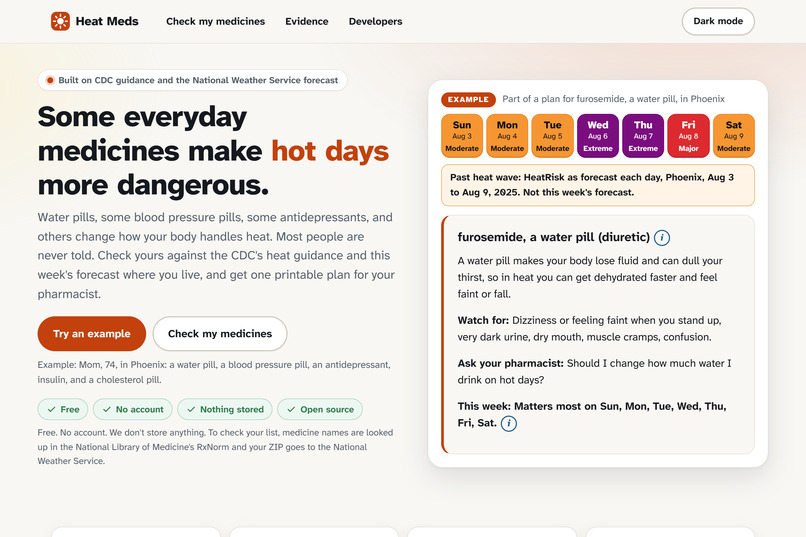
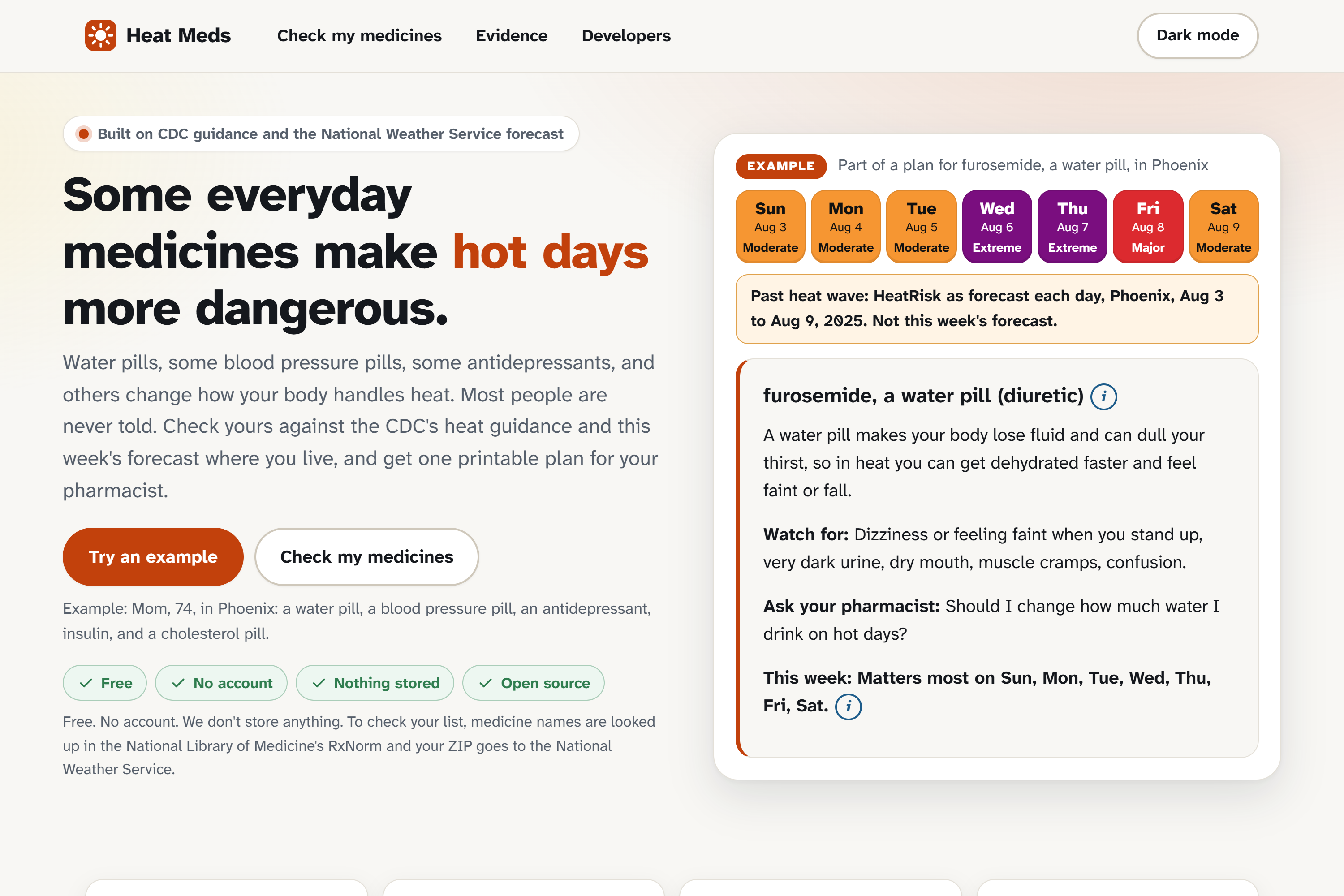
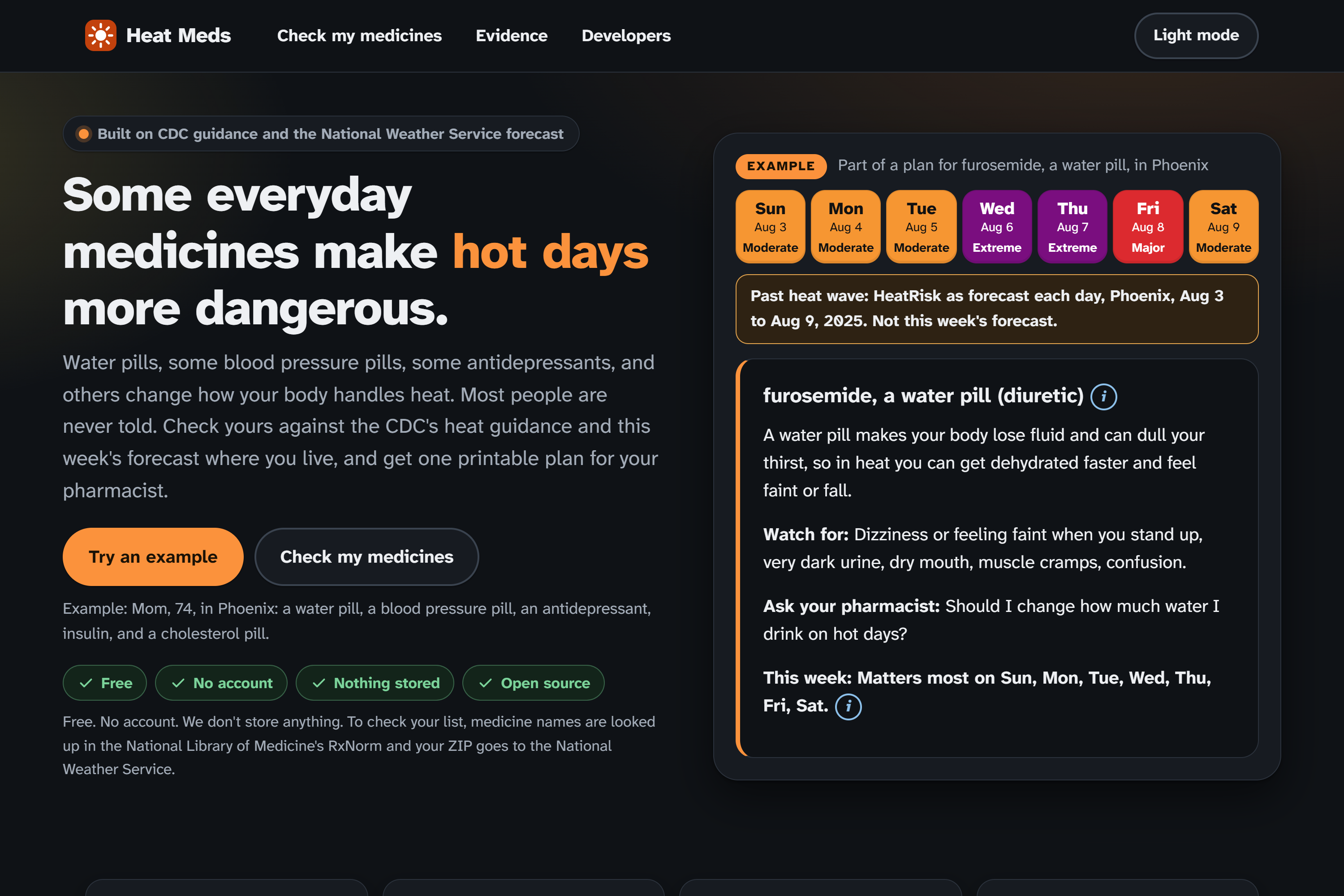
The home page. Check your everyday medicines against the CDC's heat guidance and this week's forecast where you live.
-
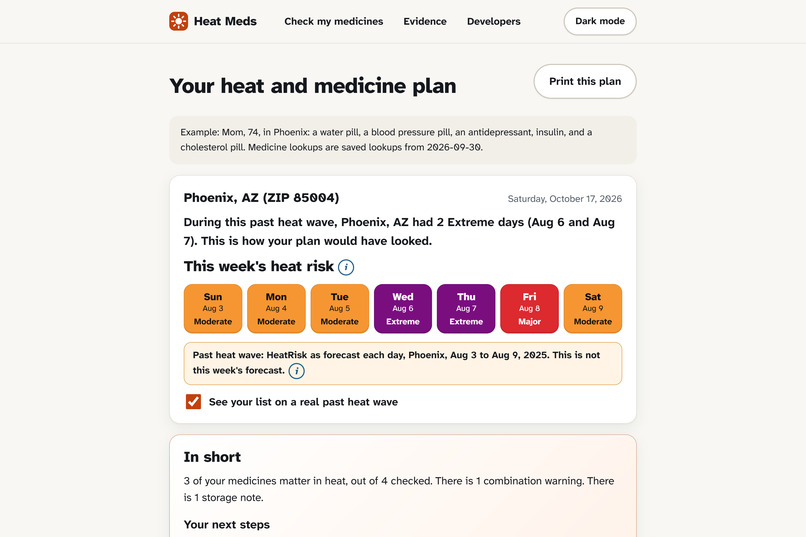
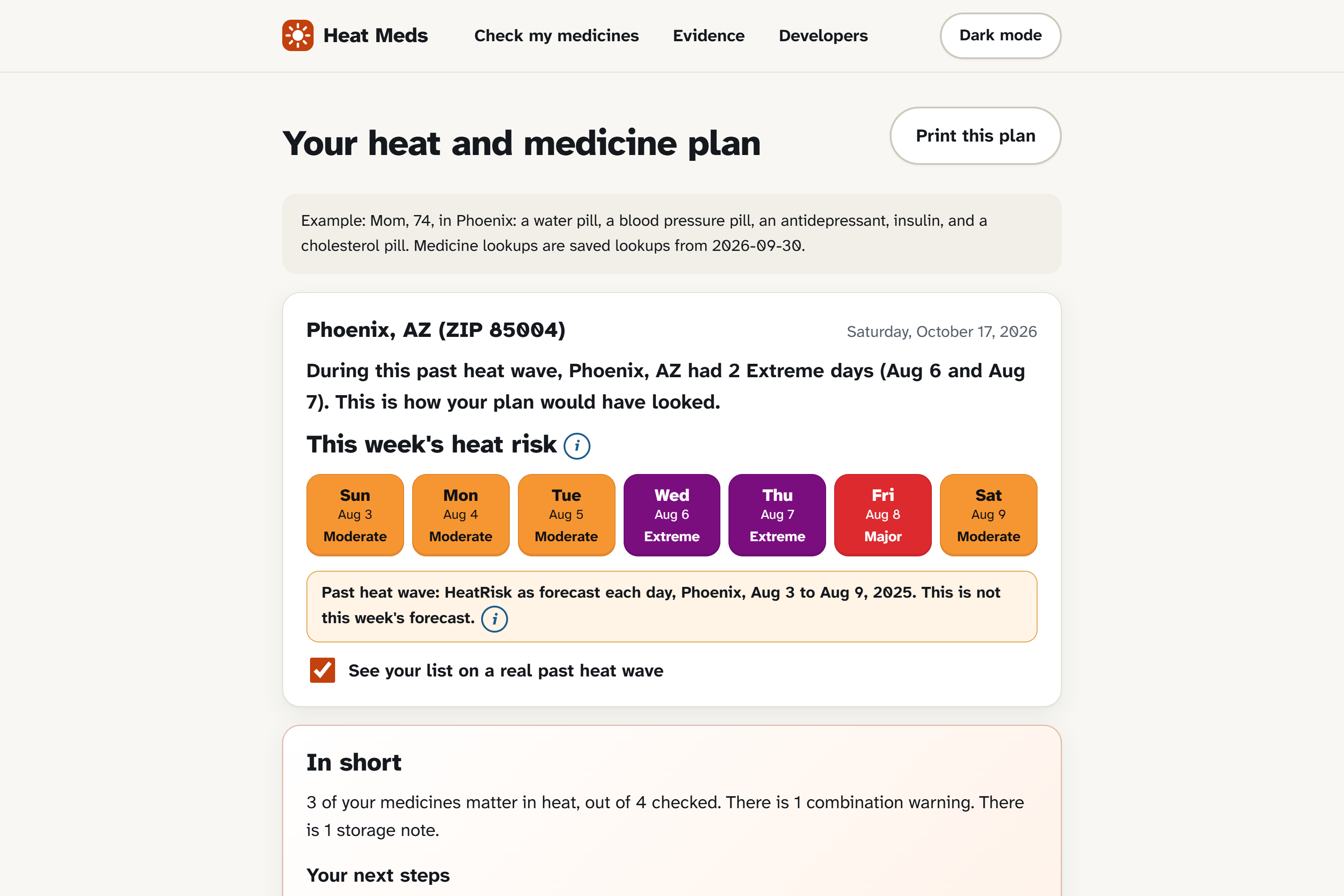
Mom's plan during a real Phoenix heat wave: two extreme days, a quick summary, and three simple next steps.
-
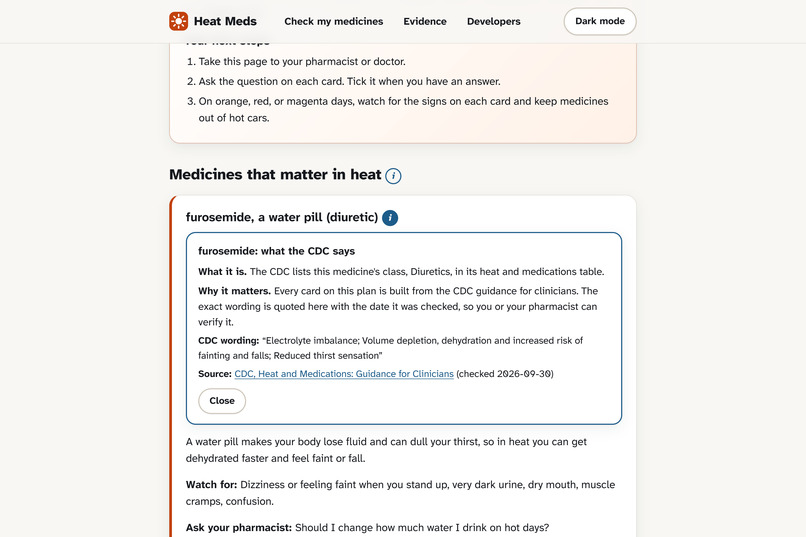
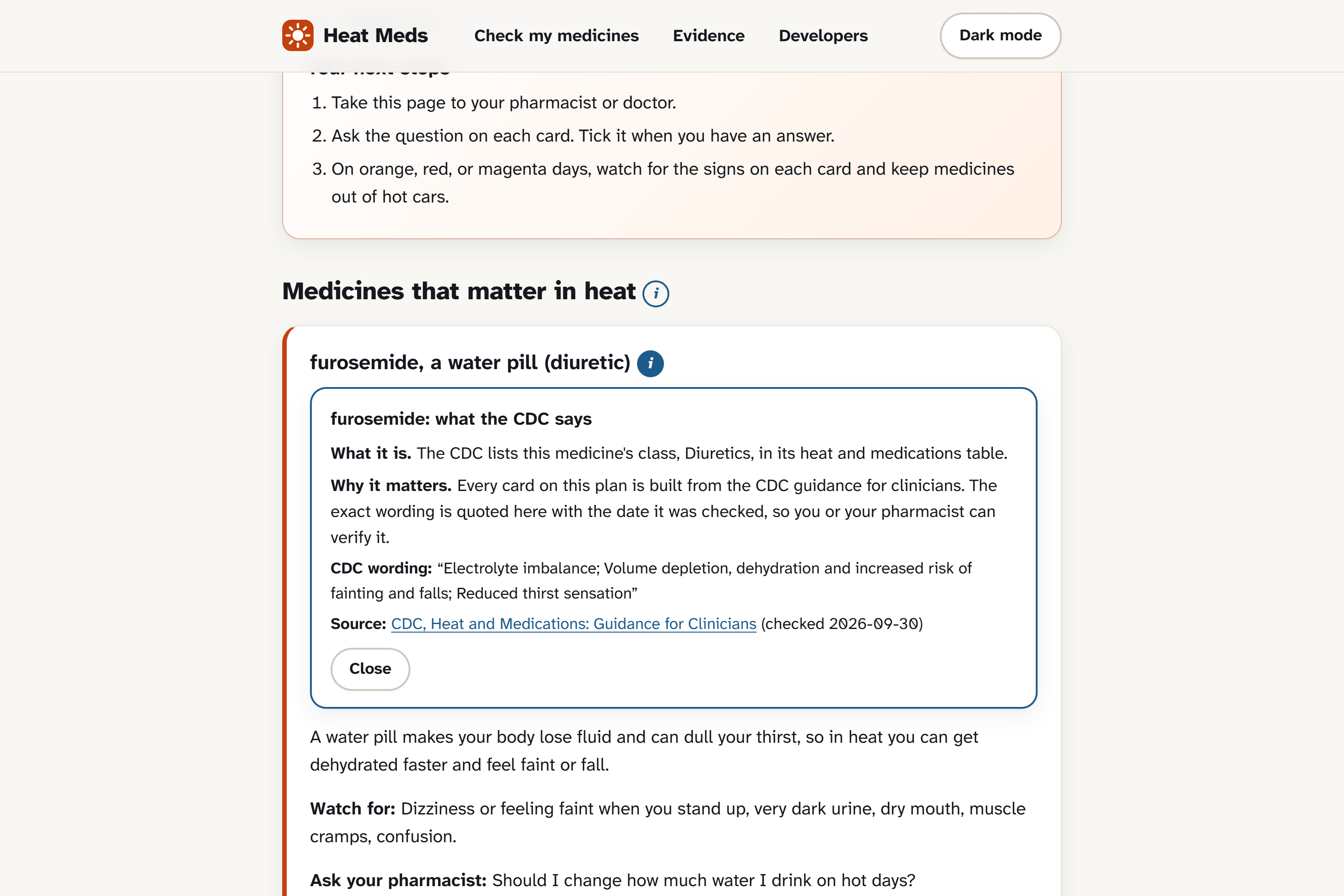
Every warning quotes the CDC word for word, with the date I checked it. Nothing is made up.
-
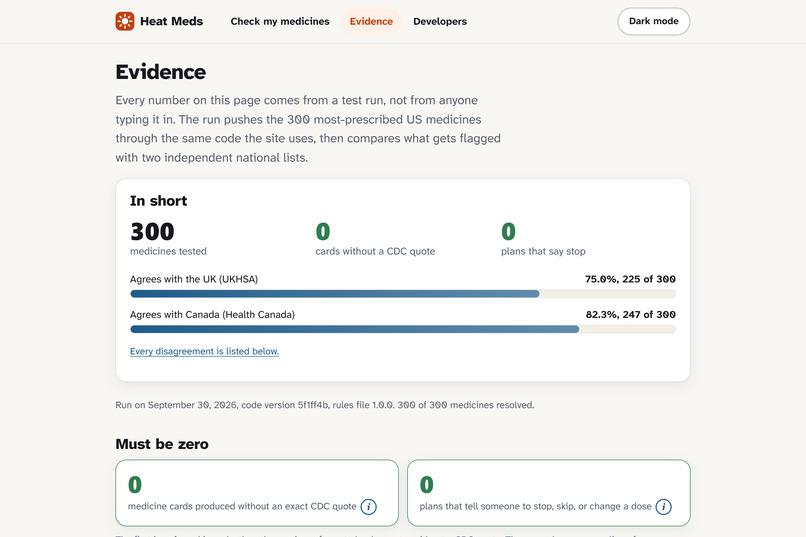
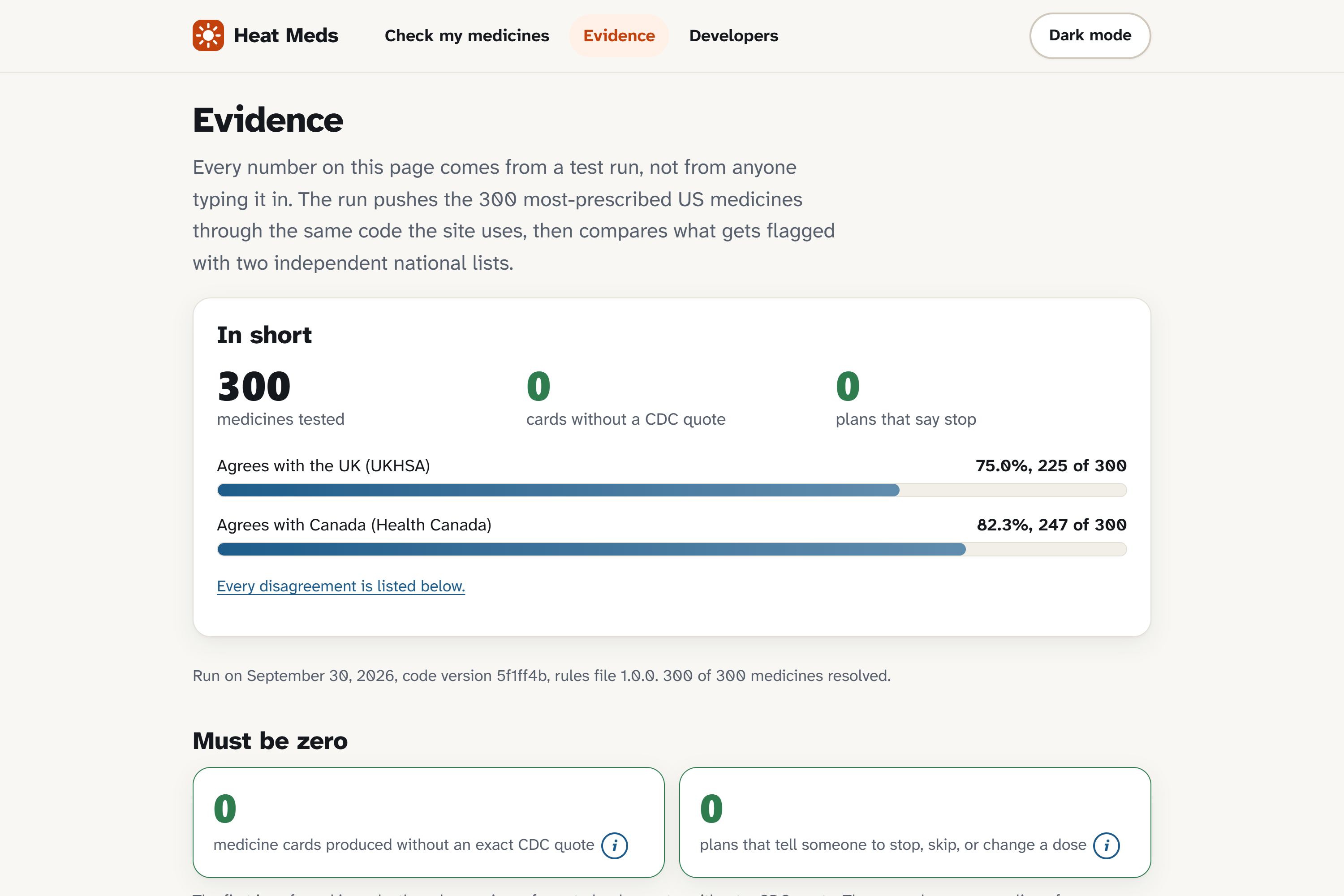
I ran the 300 most-prescribed US medicines through it. Zero warnings without a CDC source, zero plans that say stop.
-
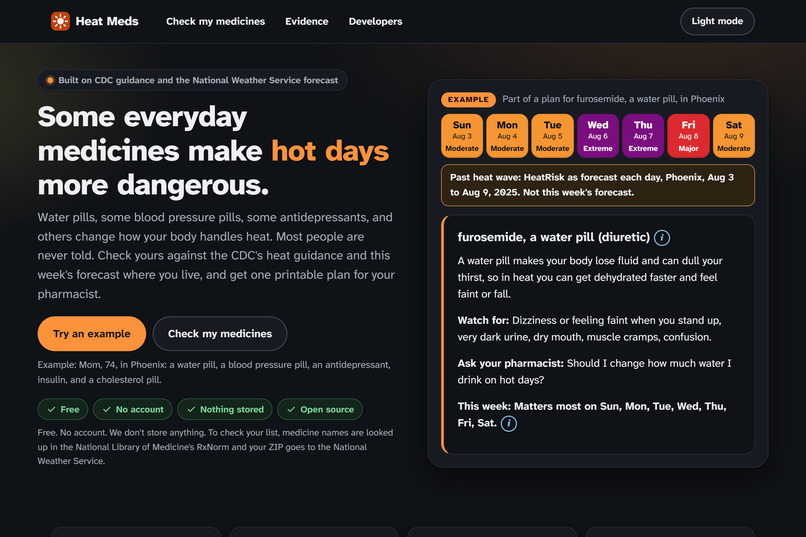
Dark mode, for anyone who finds a bright screen hard on the eyes.
-
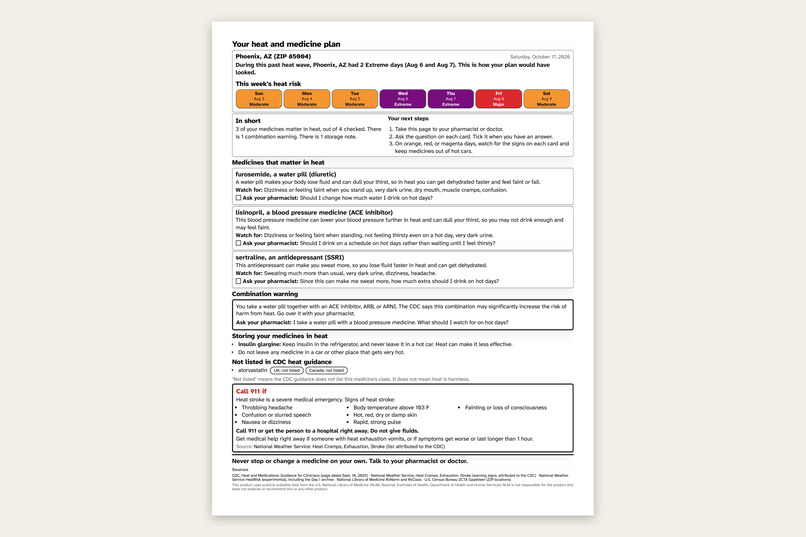
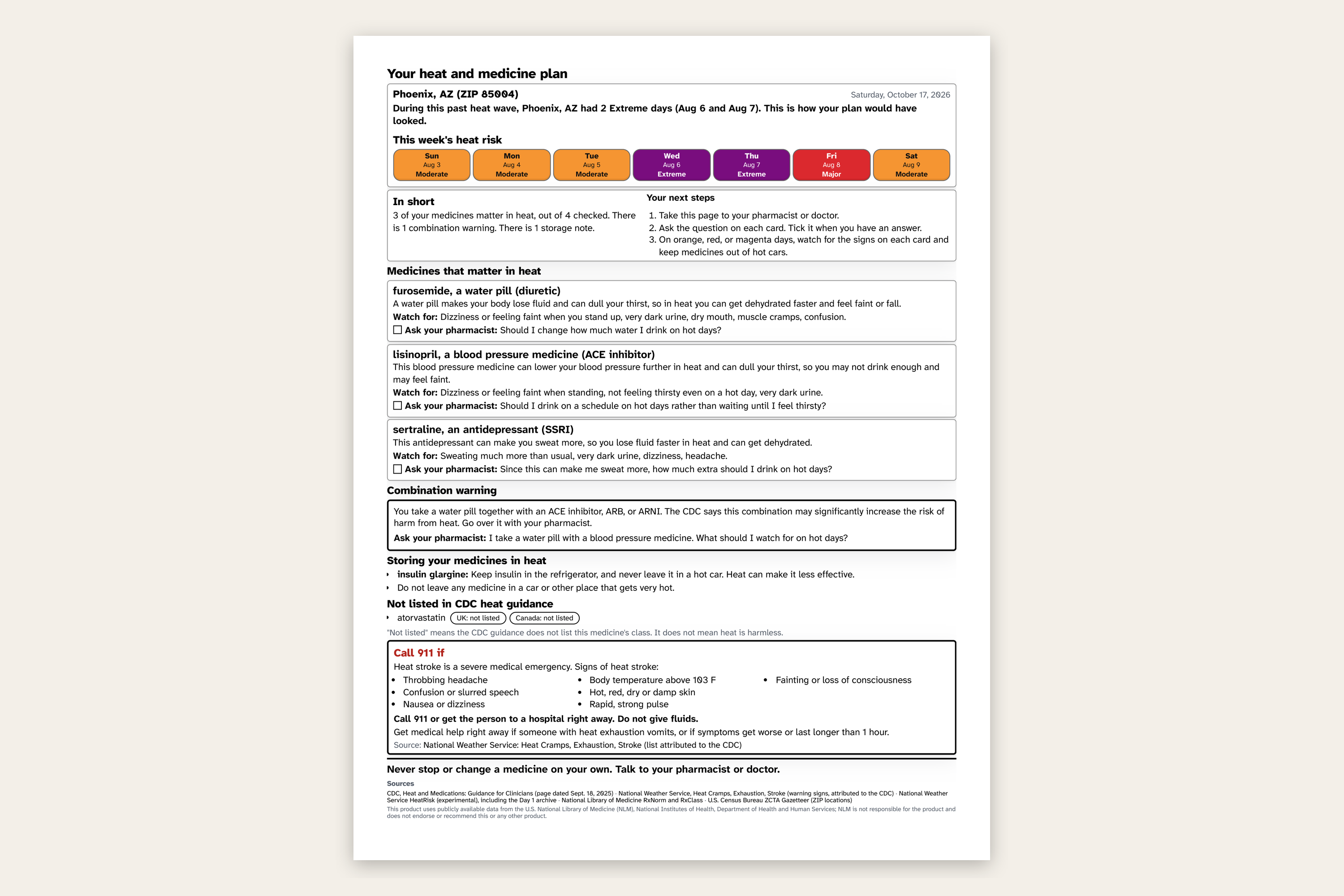
The one-page printout for the pharmacy counter, with a box to tick next to each question for the pharmacist.
-
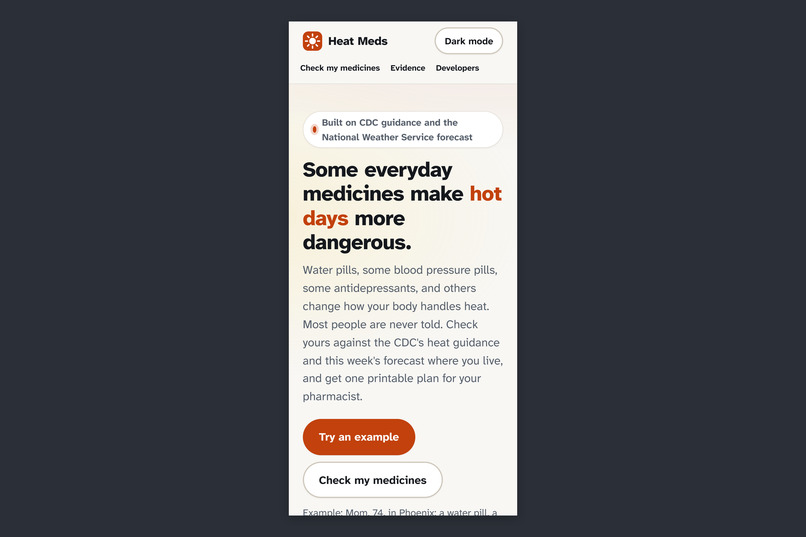
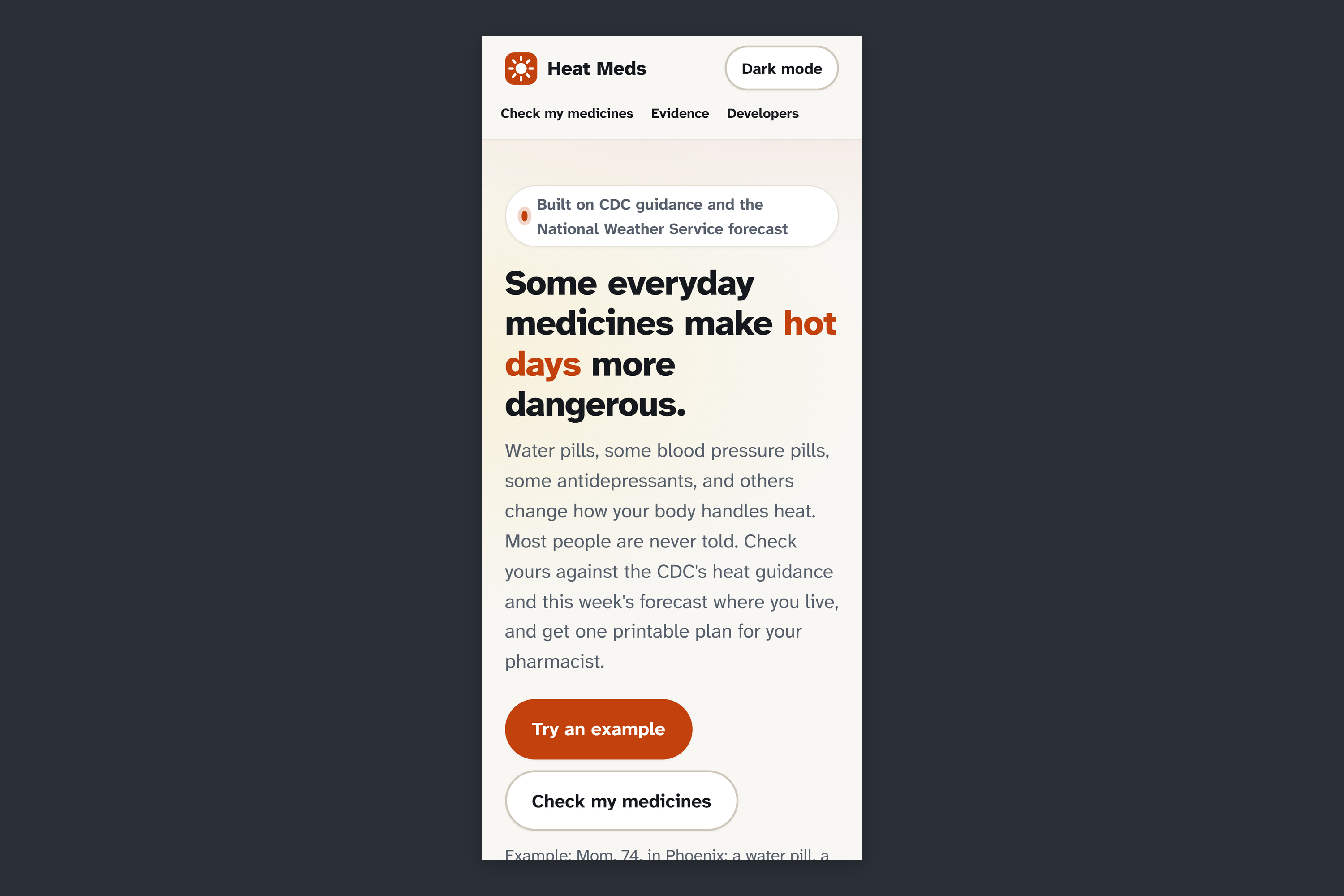
Works on any phone, with large, easy-to-read text for older eyes.
-
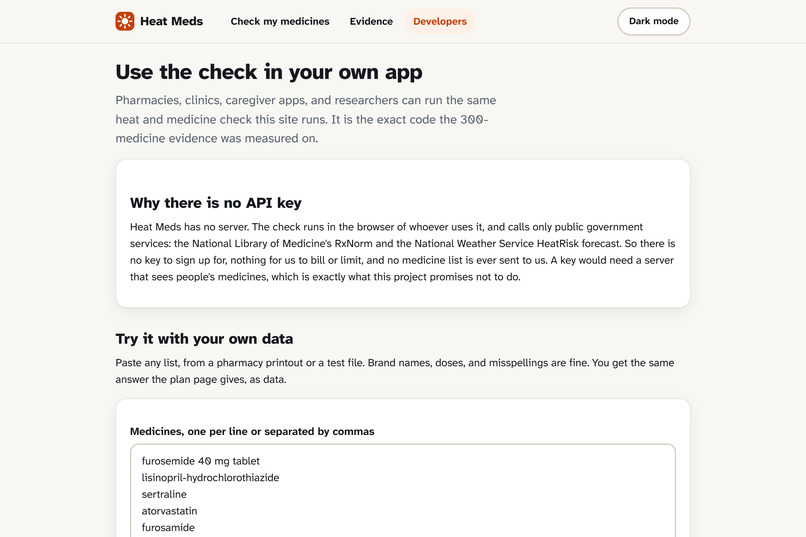
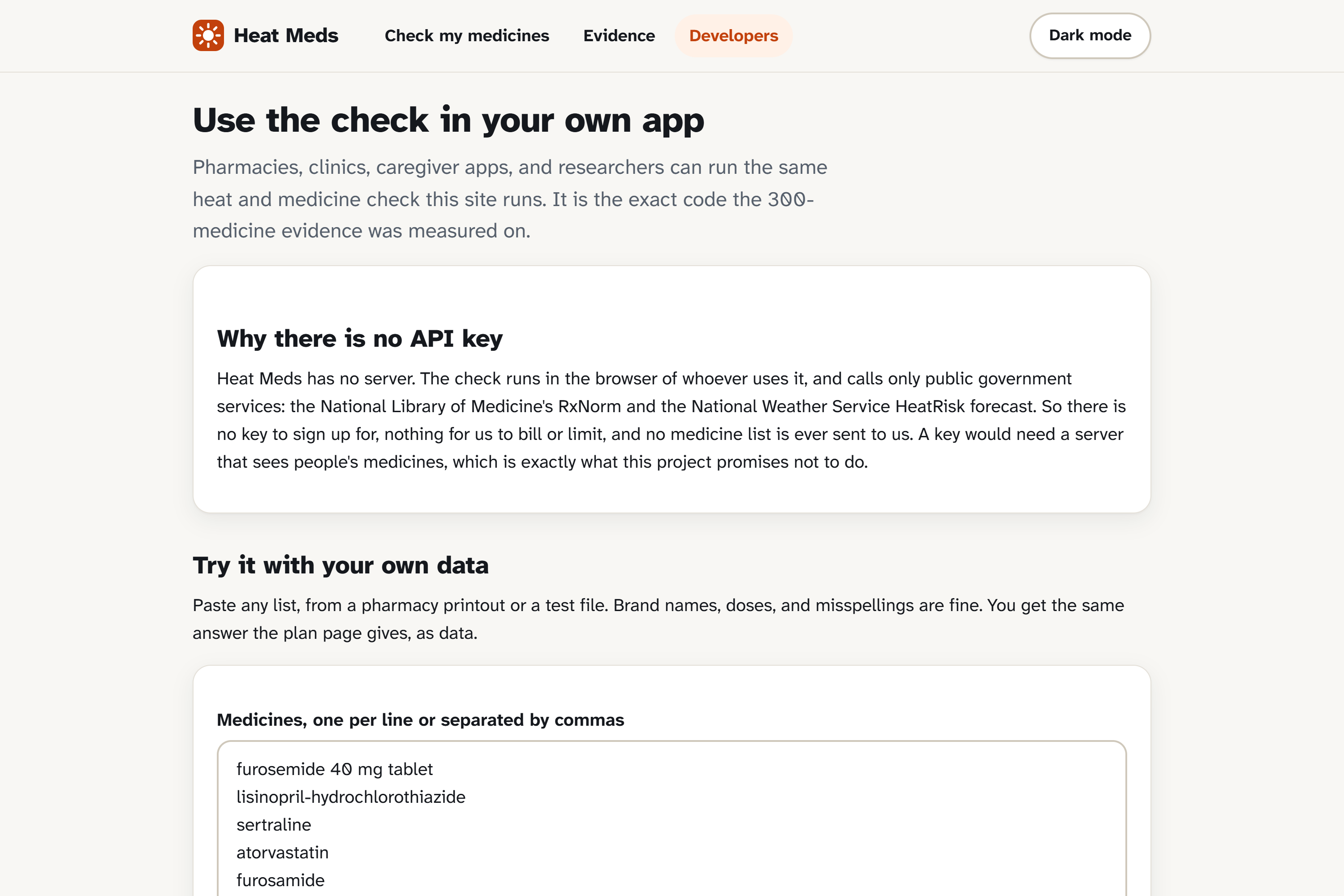
Other apps can use the same check with one line of code. No API key, no server, and nobody's medicines are sent anywhere.
Inspiration
Some everyday medicines, like water pills, blood pressure pills and some antidepressants, change how the body handles heat. They can dull your thirst, change how you sweat, or drop your blood pressure, so a hot day hits harder. Older adults take these medicines most, and most are never told.
In September 2025 the CDC published guidance asking doctors to plan for this with their patients (CDC, Heat and Medications: Guidance for Clinicians). But that guidance is a table written for clinicians. Patients and their families had no tool to start the conversation themselves.
And it is not rare: 6 of the 10 most-prescribed medicines in the US are on the CDC's heat list (my analysis of the government's 2024 Medical Expenditure Panel Survey).
What it does
Picture a daughter helping her 74-year-old mom in Phoenix, pill bottles on the kitchen table.
- Add the medicines. Type them, or paste a whole list from a pharmacy printout. Brand names, doses and misspellings are fine. If a name is uncertain, it asks "Did you mean...?" instead of guessing.
- Add a ZIP code. It pulls the next 7 days of heat risk from the National Weather Service HeatRisk forecast.
- Get a one-page plan to take to the pharmacist:
- A short summary and three next steps
- One card per medicine that matters in heat: why, what to watch for, and one question to ask the pharmacist, each quoting the CDC word for word
- The CDC's combination warning (for example, a water pill plus a blood pressure medicine, even inside one combination pill)
- Storage warnings, like keeping insulin out of a hot car
- An honest "not listed" section, so it informs instead of scaring
- When to call 911, and one fixed rule: it never tells anyone to stop or change a medicine
In a calm week, you can replay a real past heat wave (Phoenix, August 2025) to see what your plan looks like on a bad day. Outside the forecast area, it says so instead of pretending.
It works on any phone, in light or dark mode, with large readable text. It is free, needs no account, and stores nothing.
Does it work?
I ran the 300 most-prescribed US medicines through the same code the site uses:
- 0 warnings without an exact CDC quote
- 0 plans that tell anyone to stop a medicine
- It agrees with UK (75%) and Canadian (82%) heat guidance, and every disagreement is published on the Evidence page
This measures agreement with national guidance, not clinical outcomes.
How I built it
I planned before building, using the Devpost Learn Skill Pack: a scope, a product requirements document and a technical spec (all in the repo's devpost folder), then built it in small steps, checking each one.
- Plain HTML, CSS and JavaScript on GitHub Pages. No server, so no one's medicine list is ever sent to me.
- Medicine names come from the National Library of Medicine's RxNorm. The heat forecast comes from the National Weather Service.
- Every rule was copied line by line from the CDC page, with the date I checked it.
- Other apps can use the same check with one line of code, with no API key.
Challenges
- Real data broke my assumptions. A Honolulu ZIP showed Phoenix's heat wave as "where you live", because the forecast service treats places outside the mainland US as errors. Now it says the forecast is not available there.
- Medicine names are messy. Brand names, combination pills and misspellings needed careful handling so the tool never guesses.
- The guidelines disagree. France's list is much broader than the CDC's, so I show it as context instead of pretending there is one answer.
What I learned
Planning first made my requirements precise enough to test, and testing on real outside data, not just my own examples, found the bugs that mattered. Next time, I will test the input least like my happy path (another region, a misspelling, a service outage) as early as possible.
What's next
Spanish, calendar reminders for hot days, and partnering with pharmacies to hand the plan out in summer.
Educational tool, not medical advice. Disclosure: built with Claude Code as my AI coding assistant, following the Devpost Learn Skill Pack. The demo video was recorded automatically from the live site, with synthetic narration.
Built With
- accessibility
- cdc
- claude-code
- css
- github
- html
- javascript
- nws-heatrisk
- rxnorm

Log in or sign up for Devpost to join the conversation.