Inspiration
Living in Nigeria, we are currently experiencing extremely high temperatures, with heat waves becoming more intense and frequent. On a daily basis, people are exposed to dangerous heat without clear guidance on when conditions become unsafe or what actions to take. Outdoor workers, elderly people, and students are especially vulnerable, yet most existing weather apps only show numbers, not health risks. This gap between temperature data and human safety inspired us to build Heat Guard.
What it does
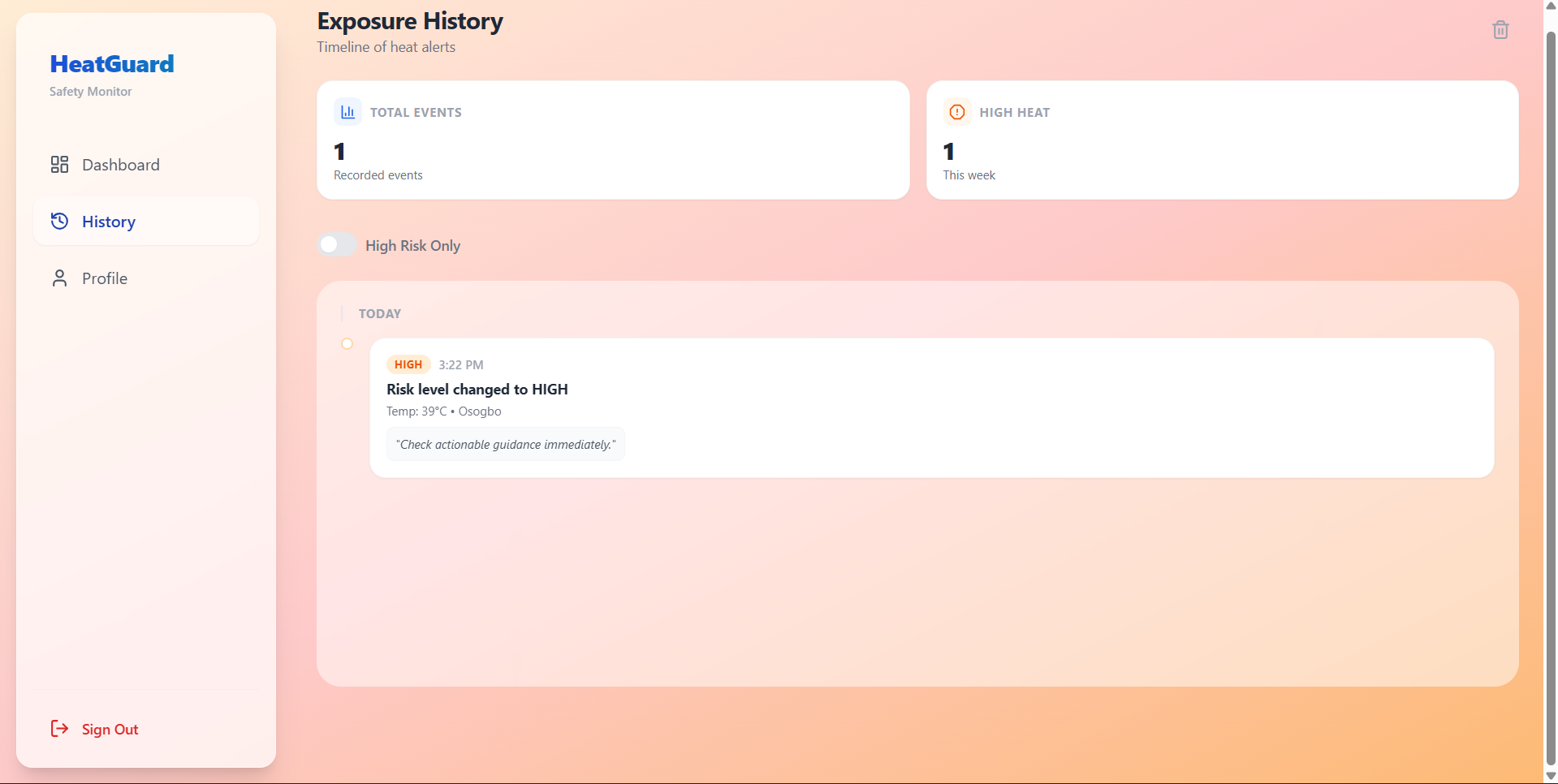
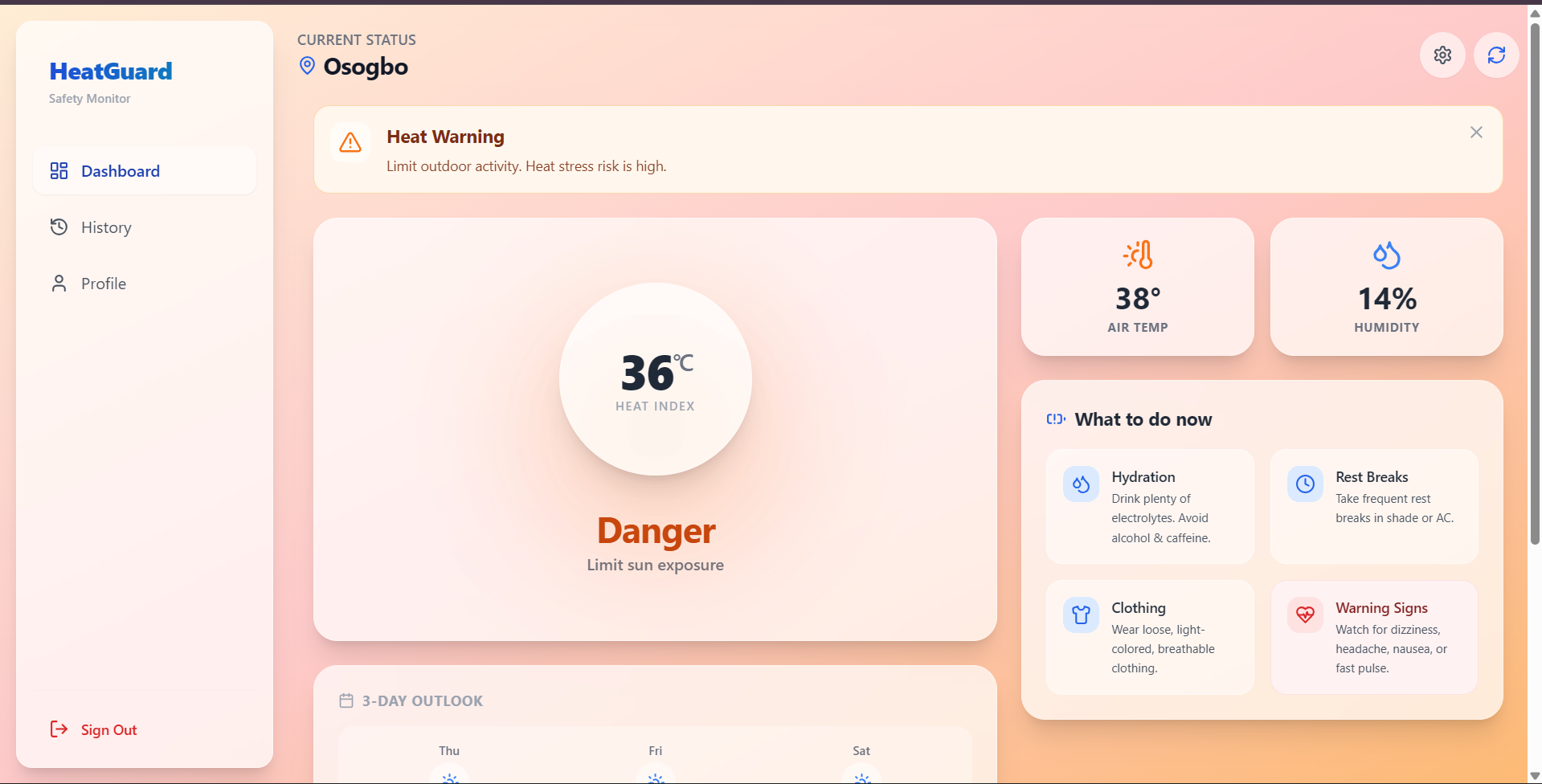
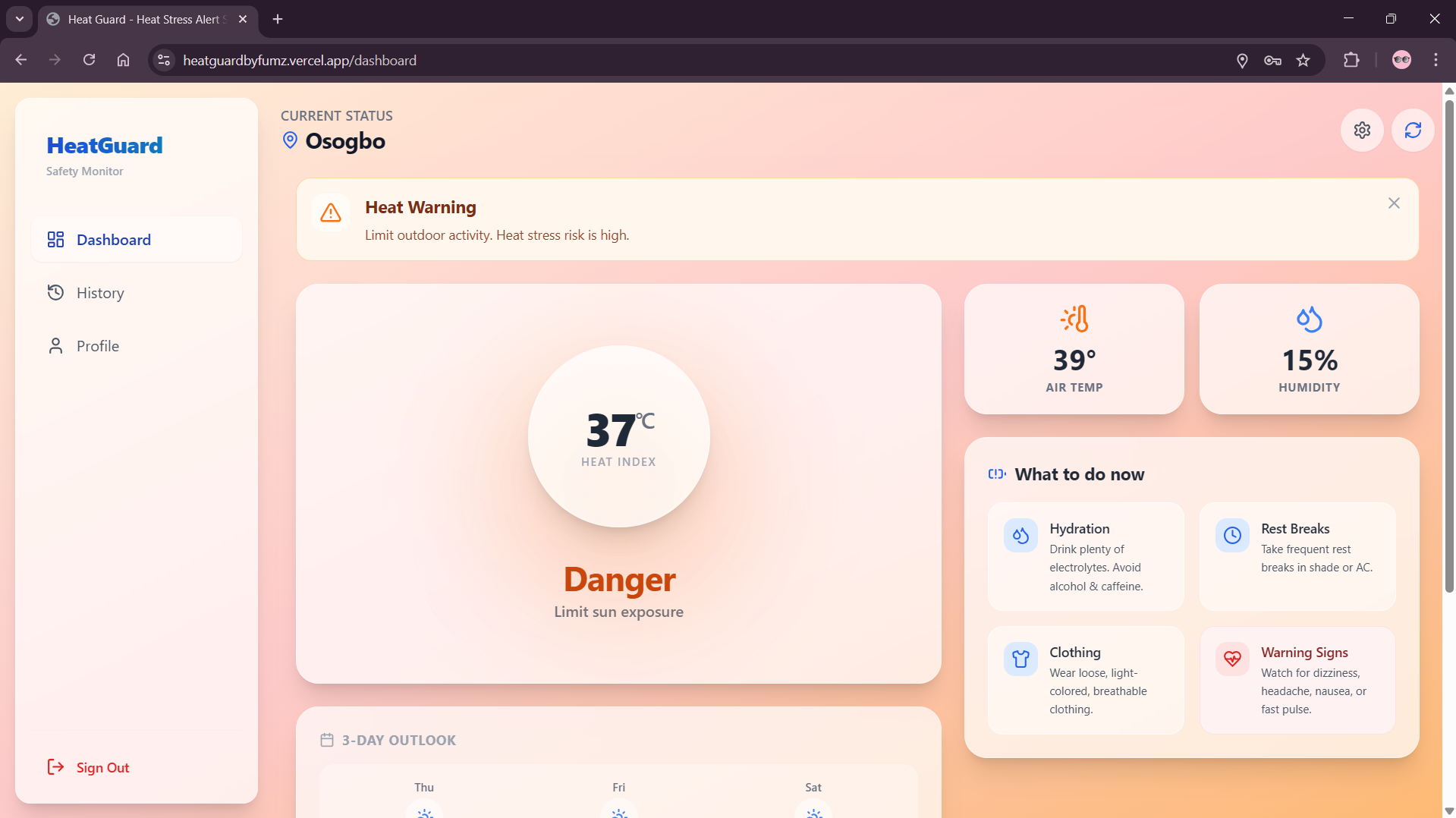
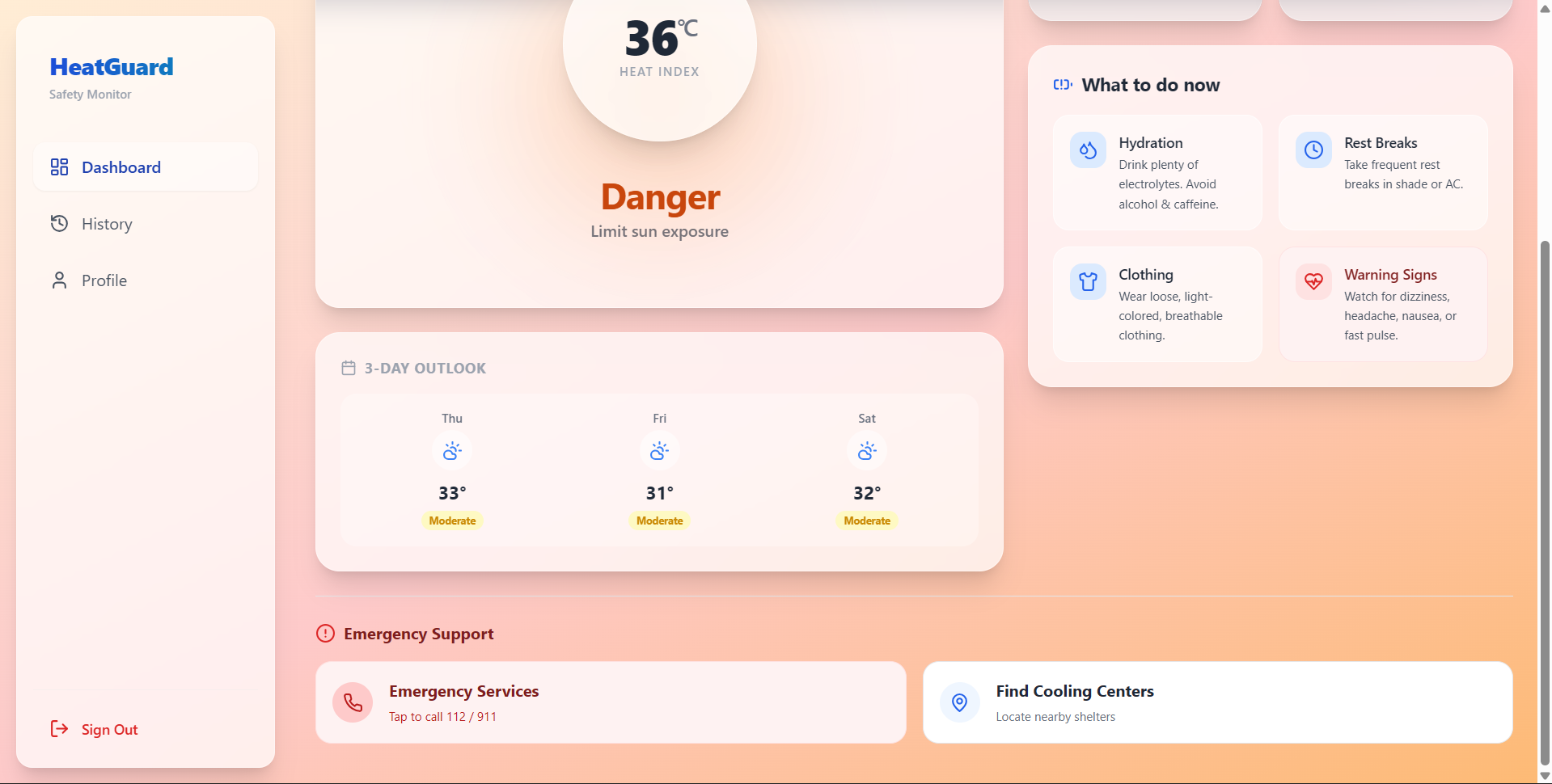
Heat Guard is a web application that helps people understand heat as a health risk, not just a weather condition. It translates environmental heat data into clear alerts and practical guidance that helps users stay safe during extreme temperatures. The app provides: Real-time heat condition awareness Smart heat alerts with clear risk levels Personalized safety recommendations Short-term heat forecasts to help users plan ahead Emergency resources when conditions become dangerous
How we built it
We built Heat Guard as a lightweight, mobile-first web application. The system uses location-based weather data to determine current heat conditions and maps them to predefined risk levels. The UI dynamically adapts to the current condition using color and layout to communicate urgency intuitively. We focused heavily on: Human-centered design Clear visual hierarchy Simple language instead of technical terms Modular components for easy iteration The app is designed to be fast, accessible, and demo-ready within a hackathon timeframe.
Challenges we ran into
One major challenge was balancing urgency without causing panic. Extreme heat is dangerous, but overly aggressive visuals or wording can overwhelm users. We had to carefully design alert tones, colors, and messaging to feel supportive rather than alarming.
Another challenge was ensuring the app felt useful even with limited data, especially in regions where detailed environmental datasets may not always be available.
Accomplishments that we're proud of
Turning complex climate and weather data into clear, actionable health guidance Designing a UI that reacts emotionally and visually to heat conditions Building a solution that directly addresses a real problem happening around us Creating a project that can realistically be used by communities, NGOs, and individuals
What we learned
We learned that climate-related health problems are not just technical issues — they are communication problems. How information is presented can directly affect whether people take action or ignore warnings. We also learned the importance of designing for real users in real environments, especially in regions heavily affected by climate change.
What's next for Heat Guard
Next, we plan to: Expand support for community heat reporting Add deeper personalization for vulnerable groups Partner with health organizations and NGOs Improve predictive insights for future heat events Our goal is to evolve Heat Guard into a trusted climate-health safety tool that helps people adapt to a hotter world.


Log in or sign up for Devpost to join the conversation.