Inspiration
HeartToMom was inspired by the maternal health crisis in the United States, especially the risks that continue during pregnancy and after birth. According to the Commonwealth Fund, the U.S. maternal mortality rate is disturbingly high compared with other industrialized countries, and more than half of recorded maternal deaths happen after the day of birth. The same source reports that Black women face a much higher maternal mortality rate than white and Hispanic women.
This showed us that maternal health support cannot stop at delivery. Many serious risks, including high blood pressure and cardiomyopathy, can appear during pregnancy or in the postpartum period. The Commonwealth Fund also notes that identifying higher-risk women earlier and keeping them connected to care after childbirth are key steps for improving outcomes.
HeartToMom was created to respond to this gap. We wanted to build a simple, supportive platform that helps pregnant and postpartum women track symptoms, monitor cardiovascular signals, and recognize when they may need medical attention sooner. We want pregnant women to feel supported both during and after pregnancy and feel empowered to advocate for themselves and their health.
What it does
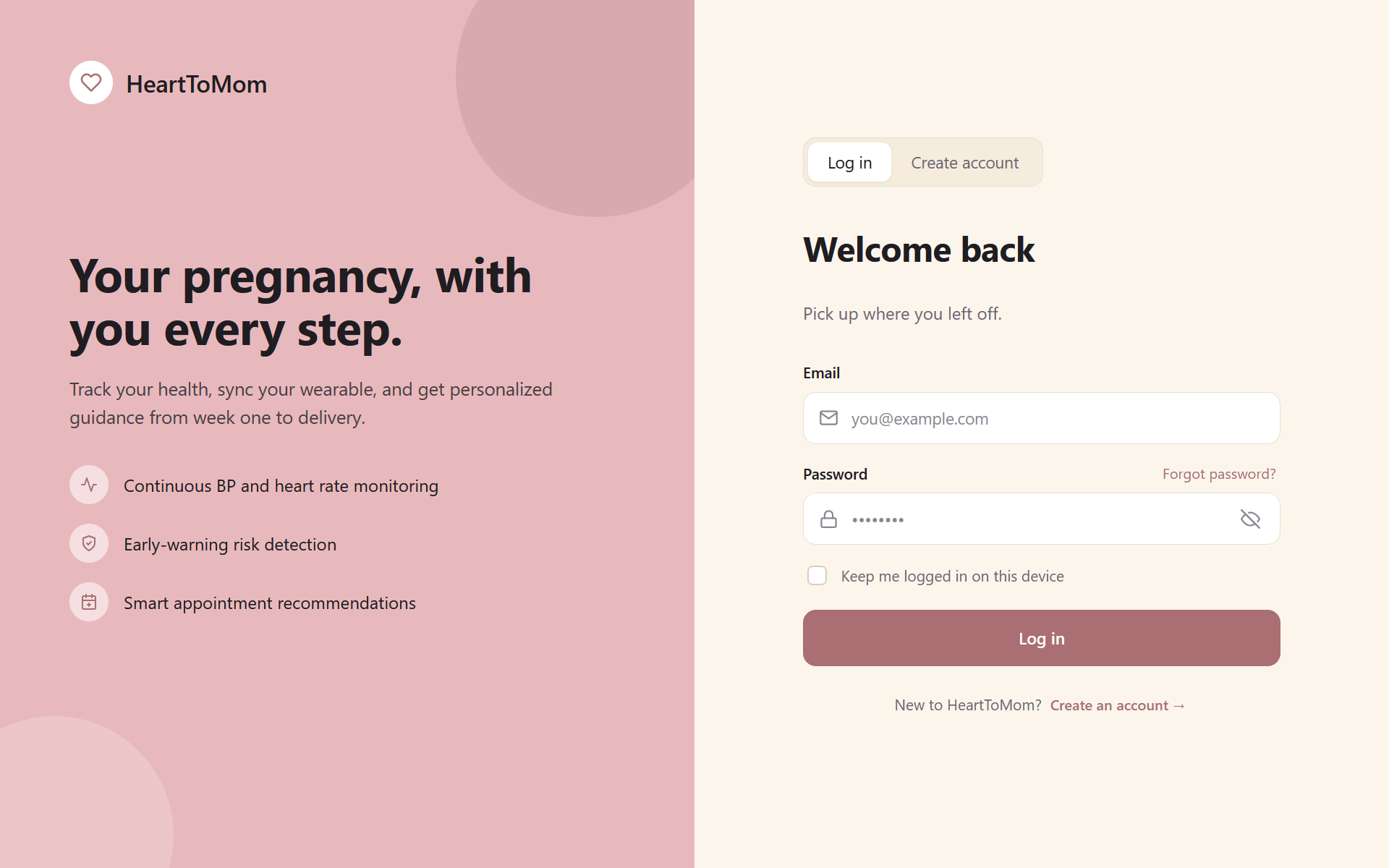
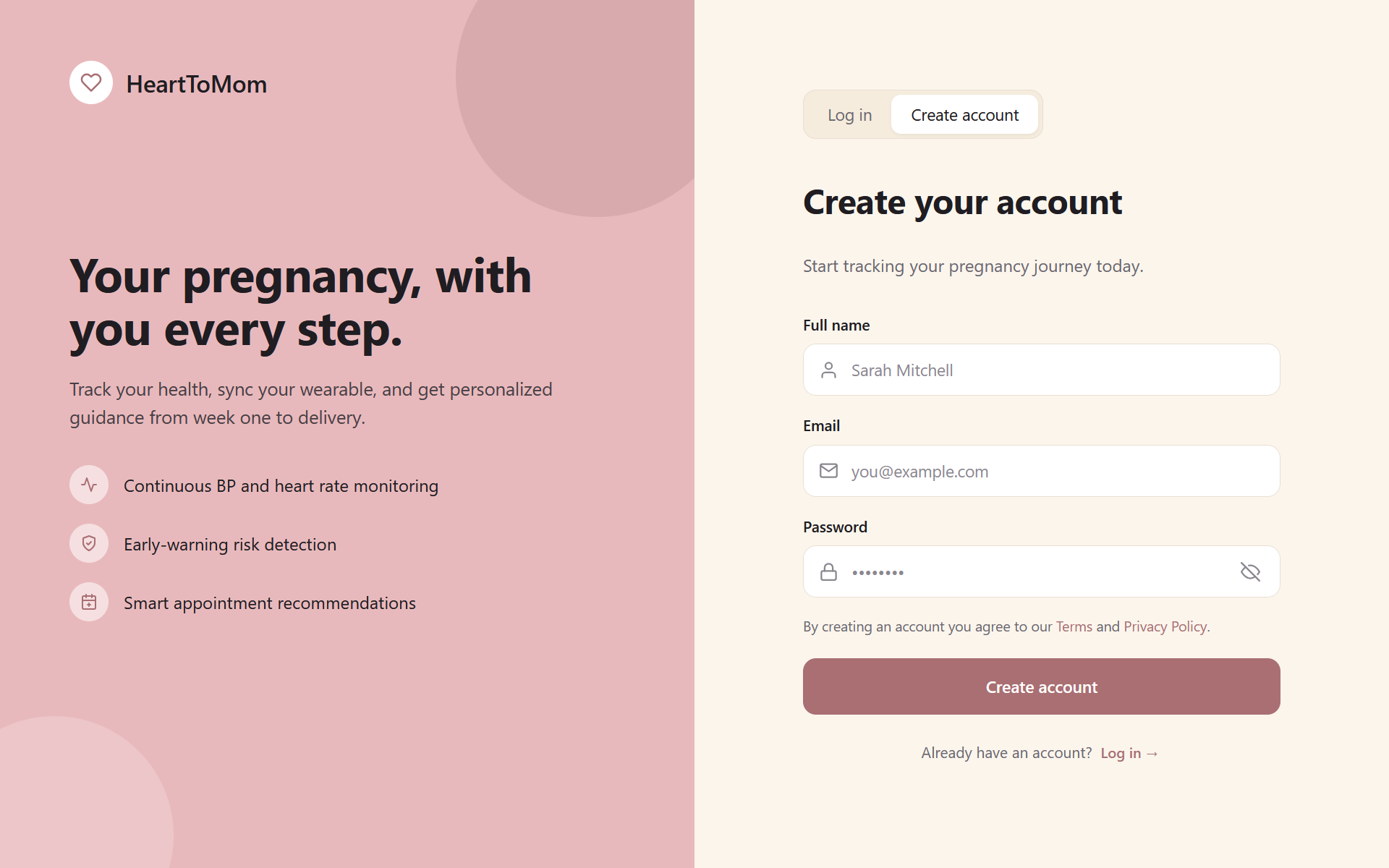
HeartToMom is a maternal health website designed to support pregnant and postpartum women before small warning signs become serious emergencies. It brings pregnancy tracking, symptom monitoring, wearable health data, and personalized risk awareness into one simple platform.
Key Features:
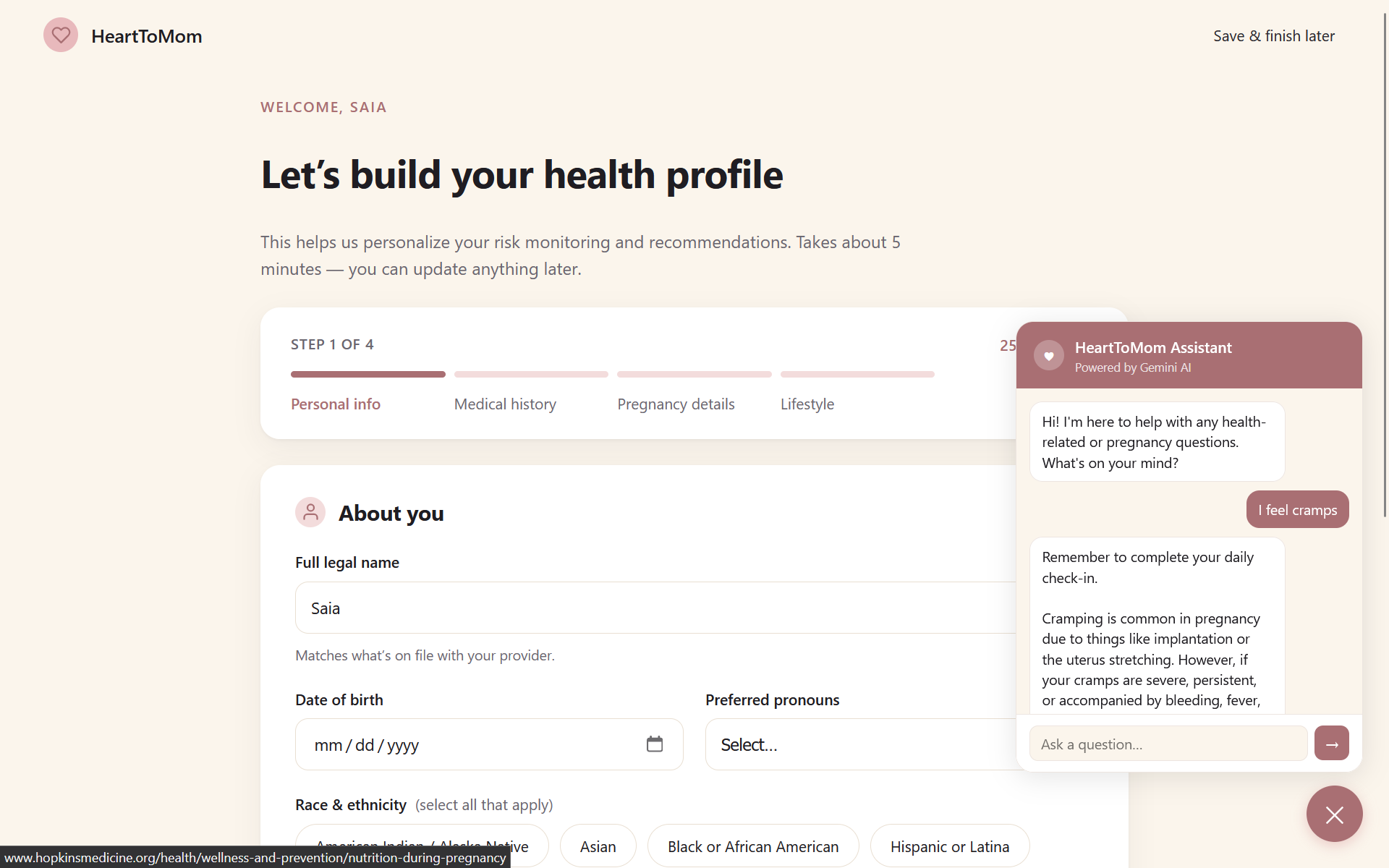
- AI powered chatbot for additional questions
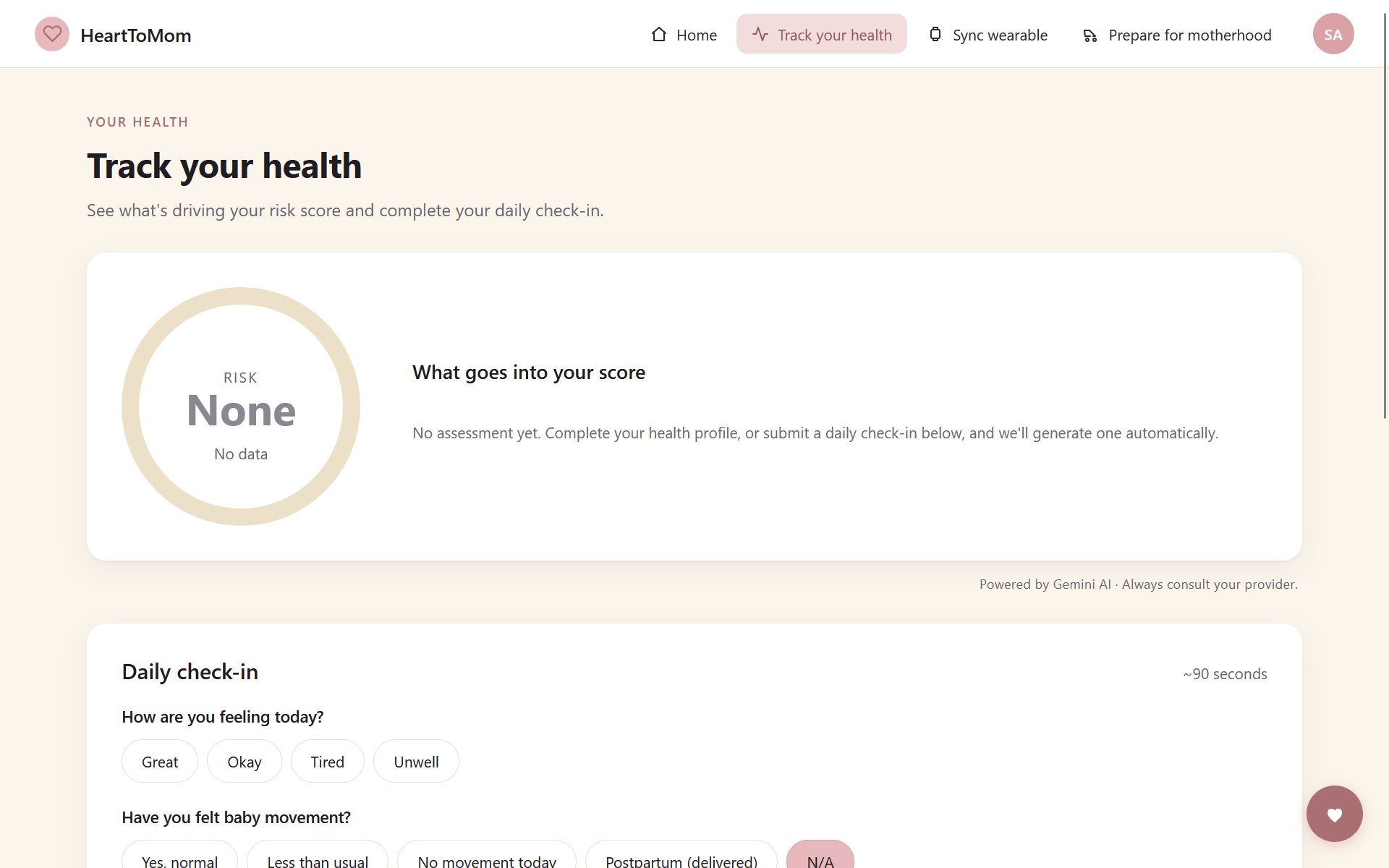
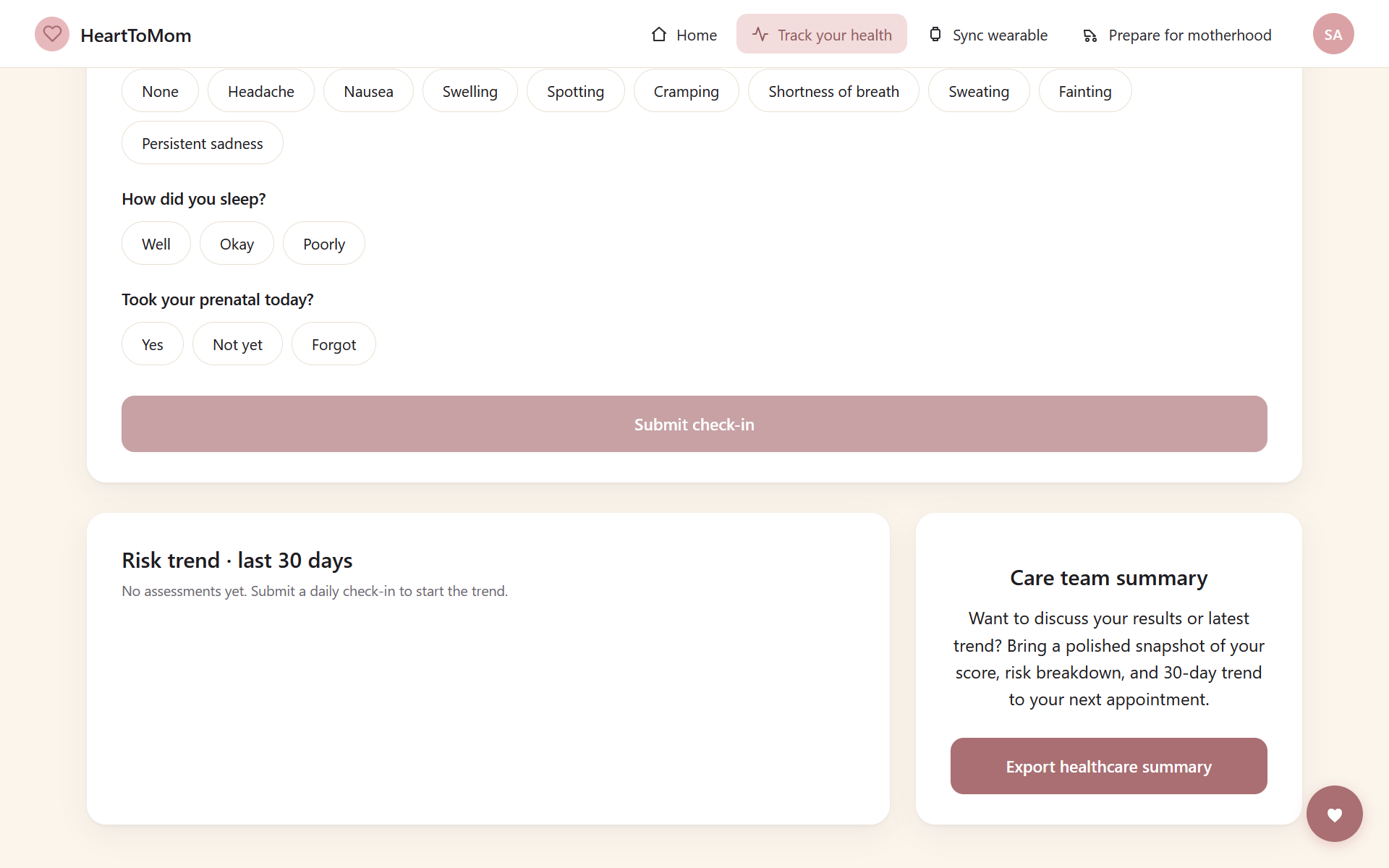
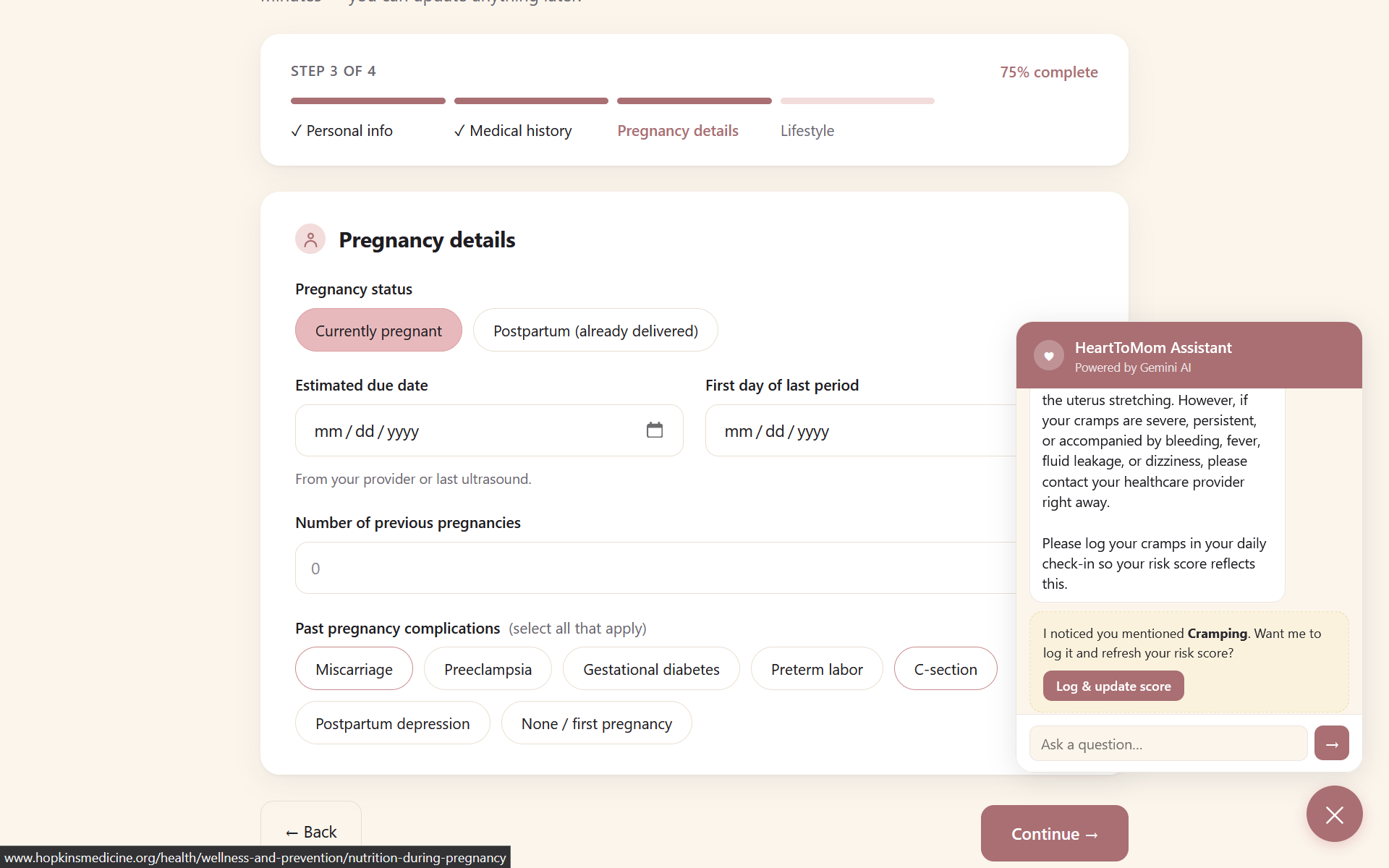
- Daily symptom check in
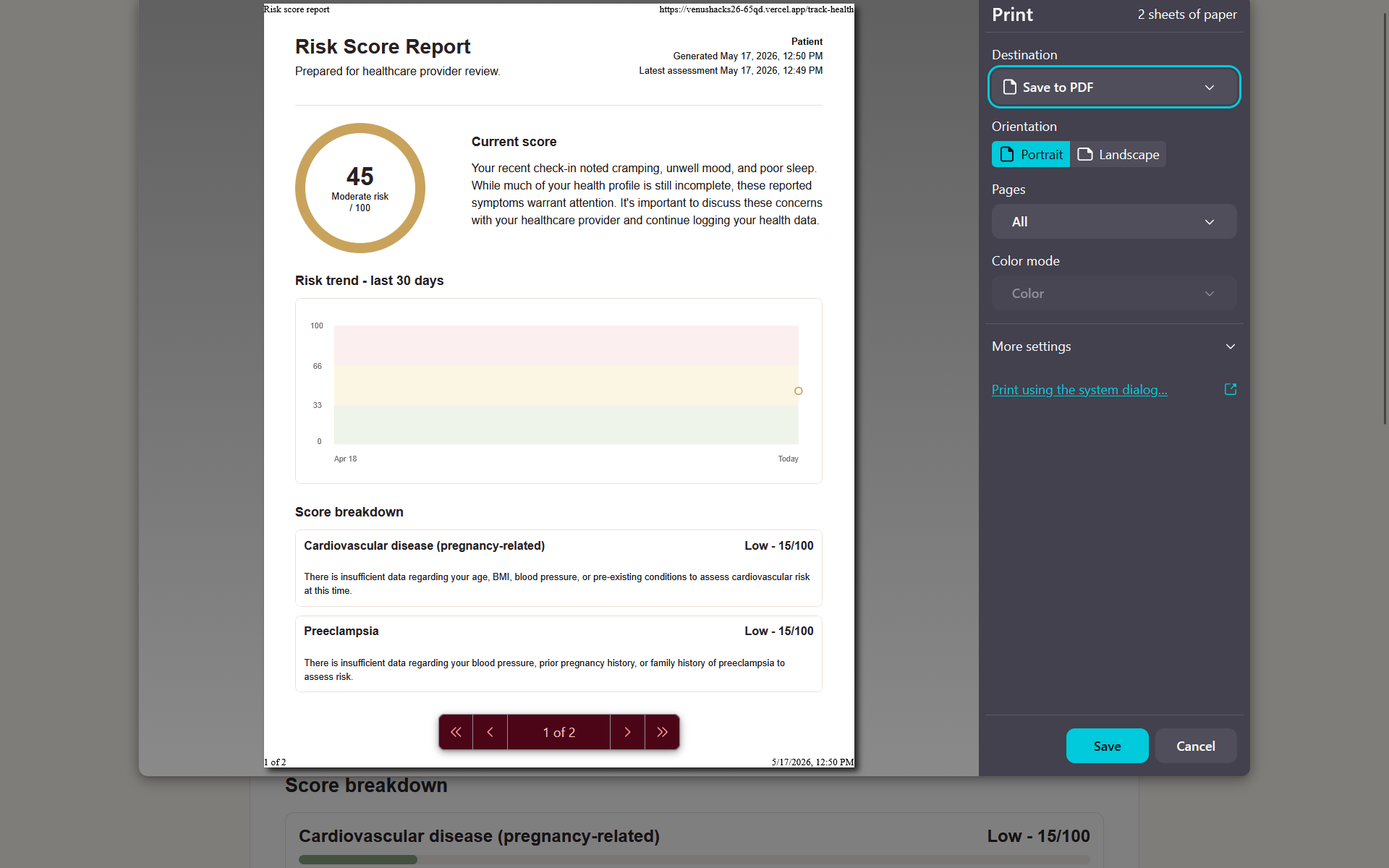
- Risk score calculation for evaluation on what conditions the user may be at risk for
- A score trend analysis to see long term patterns and further help in diagnosis
- A score exporter to share with medical providers
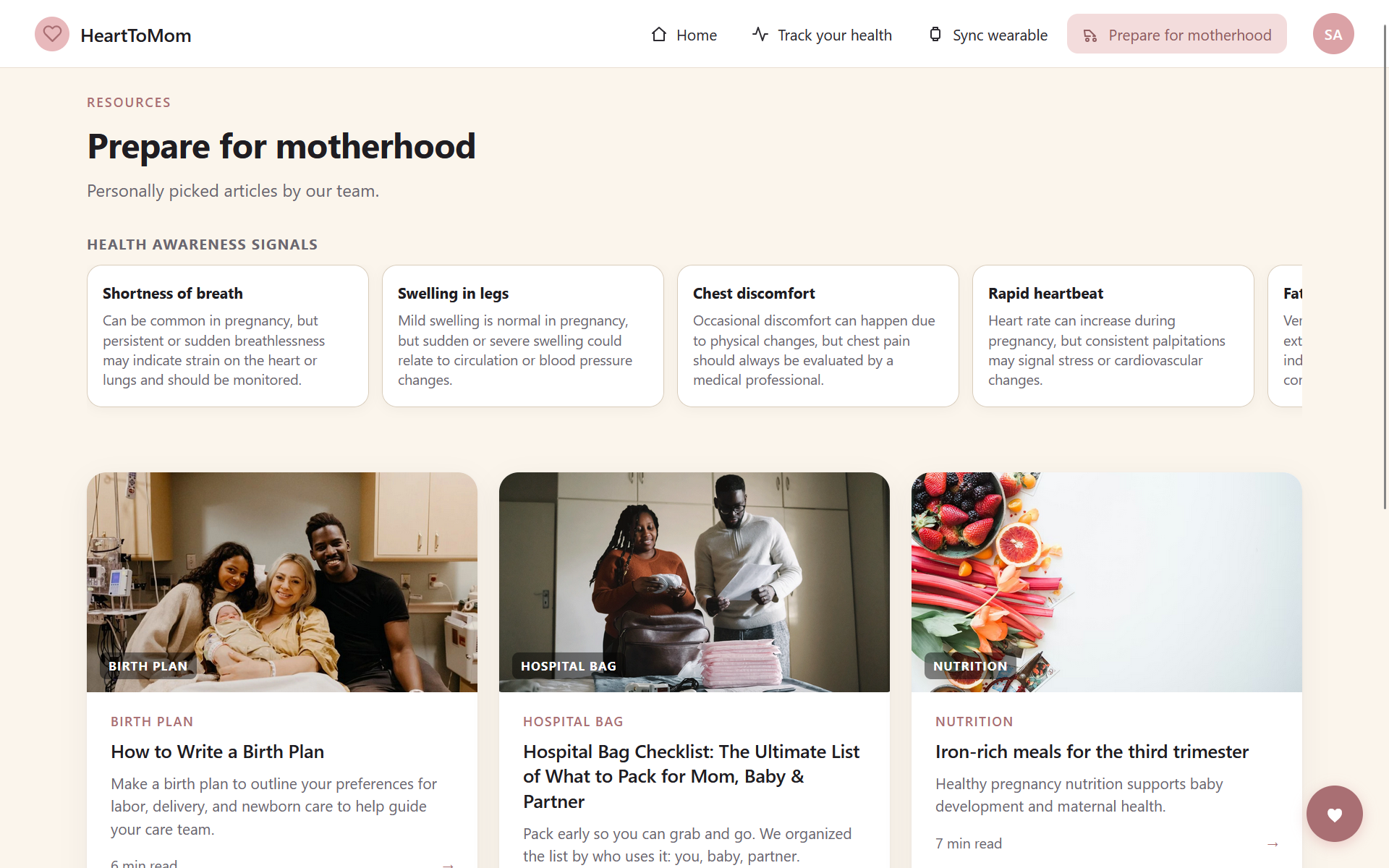
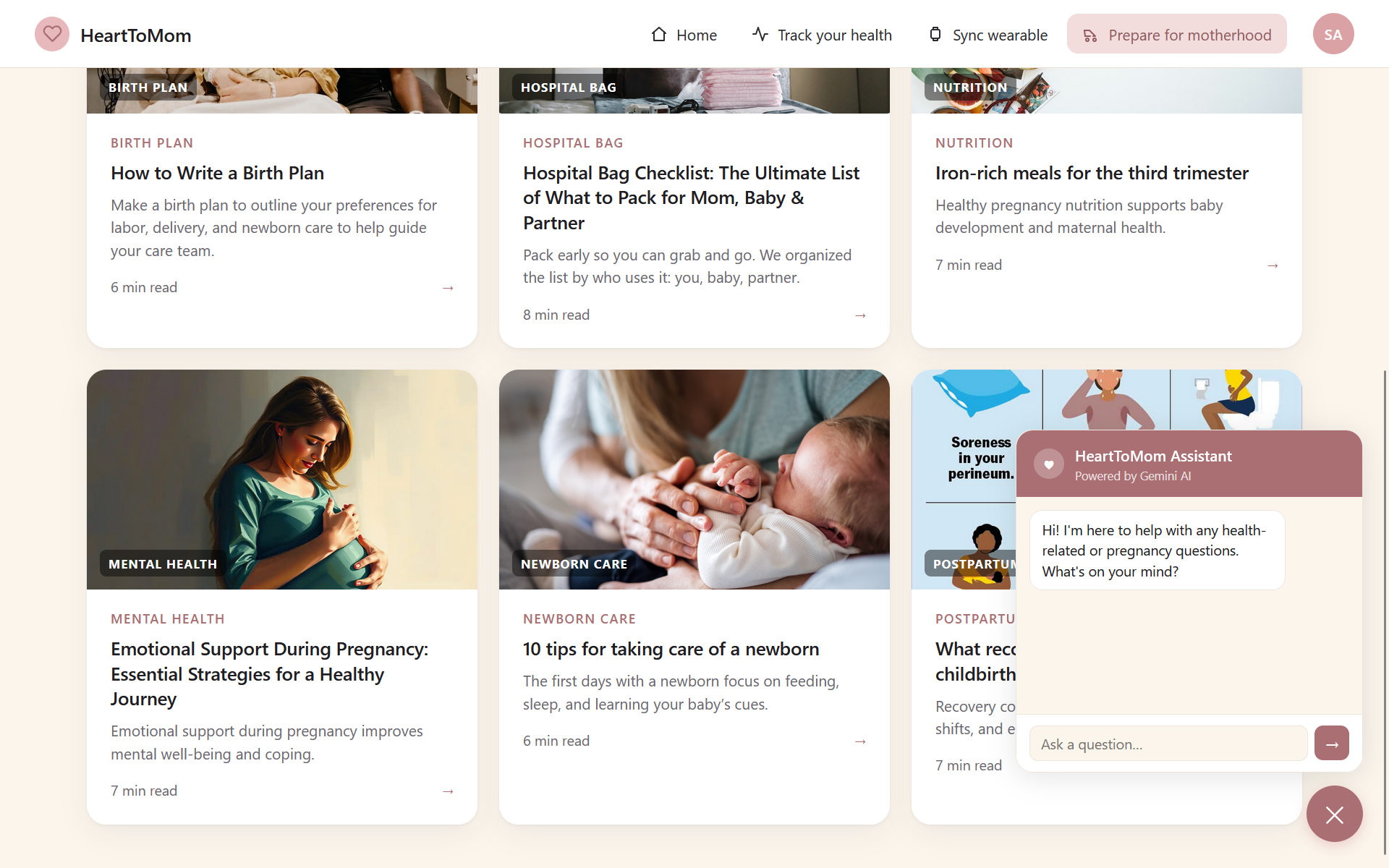
- A blog section
- Postpartem care and analysis
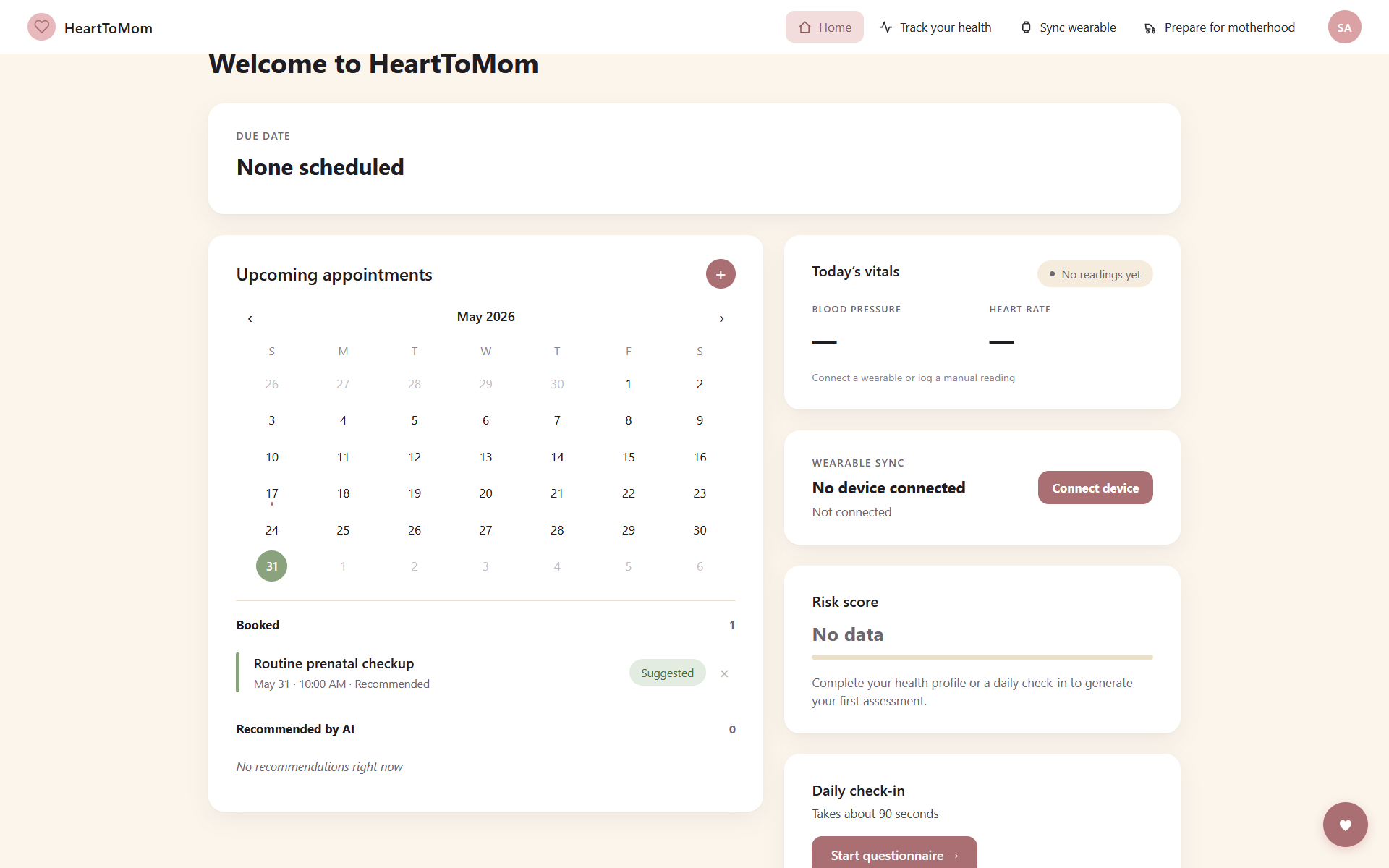
- Calendar for appointment tracking
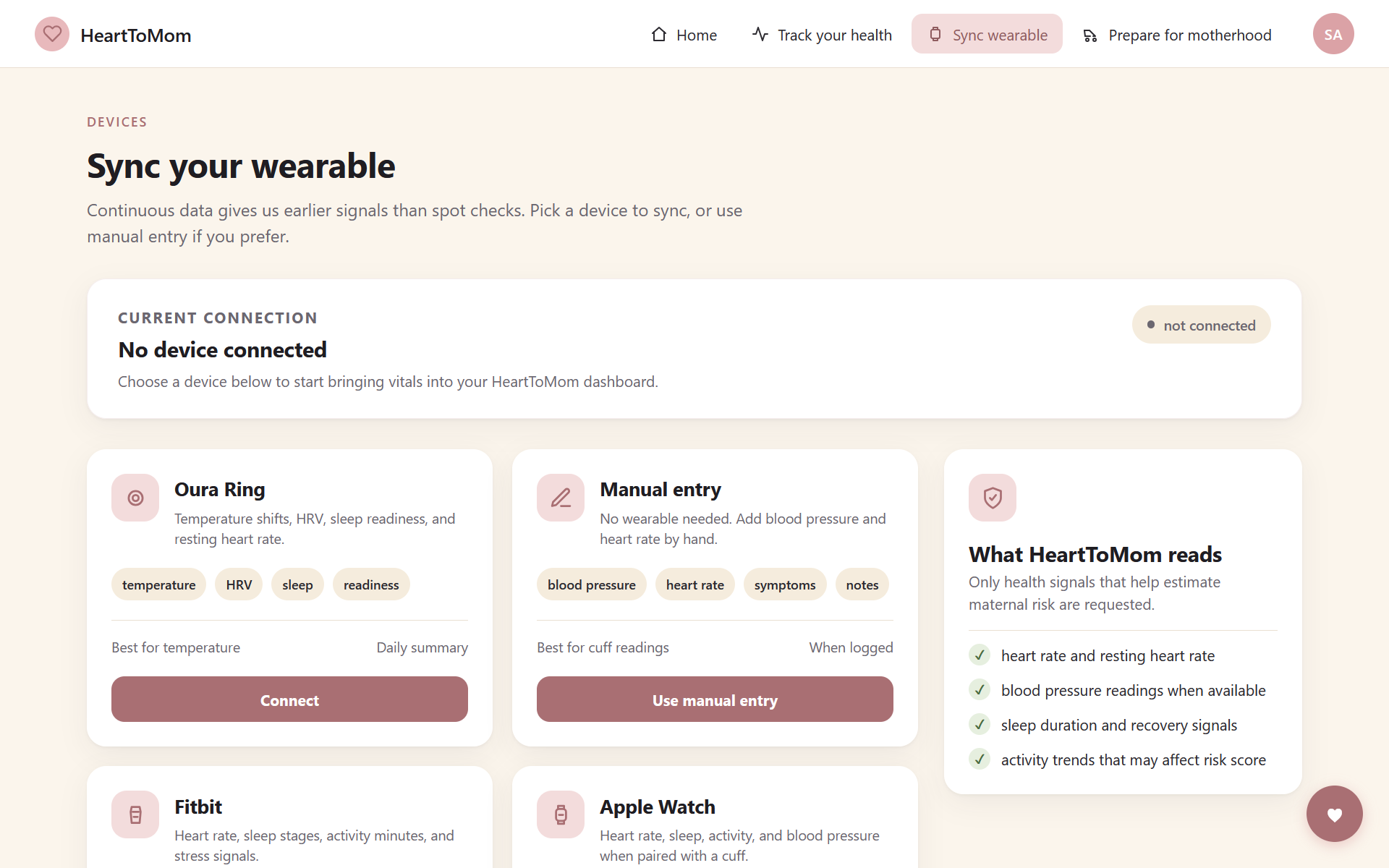
- Wearable connectivity for increased data accuracy
Users can track where they are in their pregnancy journey, log daily symptoms, and monitor important cardiovascular indicators such as blood pressure, heart rate, swelling, dizziness, headaches, shortness of breath, and other warning signs. Instead of leaving users to wonder whether a symptom is “normal” or concerning, HeartToMom helps organize their information and highlights patterns that may need attention.
HeartToMom also provides personalized guidance in a calm and understandable way. It does not overwhelm users with medical jargon. Instead, it gives simple next-step suggestions, such as tracking a symptom, checking blood pressure again, contacting a provider, or seeking urgent care if the risk appears high.
The website can also recommend appointments and help users stay connected to care, which is especially important for postpartum women who may have difficulty accessing regular follow-up visits. For underserved, rural, or busy users, HeartToMom creates a more accessible way to stay aware of their health from home.
In short, HeartToMom is not just a pregnancy tracker. It is an early-warning, education, and support system that helps mothers understand their bodies, recognize risk sooner, and feel less alone throughout pregnancy and postpartum recovery.
How we built it
We built HeartToMom as a React and Vite based web application deployed on Vercel. The frontend was structured with reusable components for the home dashboard, pregnancy progress tracker, symptom check-in, cardiovascular monitoring, appointment recommendations, and educational resources.
For the AI layer, we designed HeartToMom around a risk-awareness model instead of a diagnosis model. The goal of the AI is not to tell the user what condition they have, but to analyze symptom patterns and health indicators to suggest when a user may need closer monitoring or medical support.
The AI logic takes in user-reported symptoms such as swelling, headache, dizziness, shortness of breath, fatigue, chest discomfort, and changes in vision. It also uses cardiovascular inputs such as blood pressure and heart rate. These inputs are processed together so the system can detect combinations of symptoms that may be more concerning than a single symptom alone.
We used a rule-based AI approach for the prototype because it is safer and more explainable for a healthcare-related project. Instead of producing a vague risk score, the system maps specific symptom combinations to risk levels and gives a clear reason for the result. For example, if a user reports high blood pressure along with headache and vision changes, the app can flag the pattern as higher risk and recommend contacting a healthcare provider.
To make the AI more user-centered, we focused on explainability and tone. The app does not simply say “high risk.” It explains why a pattern was flagged and gives a simple next step, such as checking blood pressure again, tracking symptoms, contacting a provider, or seeking urgent care. This makes the AI feel supportive rather than scary.
Challenges we ran into
One of the biggest challenges we ran into was designing the AI in a responsible way. Since HeartToMom deals with pregnancy and cardiovascular health, we did not want the AI to act like a doctor or give a diagnosis. Instead, we designed it as a risk-awareness and support tool that helps users recognize patterns and decide when they may need to contact a healthcare provider.
Another challenge was deciding what data the AI should use. Maternal health symptoms can be complex, and the same symptom can mean different things depending on the person, pregnancy stage, and medical history. For example, swelling can be normal during pregnancy, but swelling combined with high blood pressure, headache, dizziness, or shortness of breath may be more concerning. Because of this, we focused on combining multiple signals rather than relying on one symptom alone.
We also had to think about false positives and false negatives. If the AI warns users too often, they may become anxious or stop trusting the app. But if it misses a serious warning sign, that could be dangerous. To handle this, we designed the AI logic to be cautious, transparent, and focused on next-step guidance rather than definitive medical conclusions.
Another challenge was making the AI explainable. Users should not just see a vague “high risk” label. They need to understand why the app flagged something. We wanted HeartToMom to explain risk in simple language, such as “Your blood pressure is elevated and you also reported a headache, so it may be safer to contact your provider.”
Finally, we had to make the AI feel human-centered. Pregnancy and postpartum recovery can already feel stressful, so the tone of the app needed to be calm, supportive, and non-alarming. Our goal was to use AI to reduce confusion, not increase fear.
Accomplishments that we're proud of
We are proud that HeartToMom became more than a simple pregnancy tracker. Instead of only showing pregnancy progress, the platform focuses on maternal cardiovascular health, which is one of the most urgent and preventable areas of maternal risk.
We successfully built a working web prototype that brings together symptom tracking, cardiovascular risk awareness, pregnancy progress, educational support, and future wearable integration in one place. The app gives users a simple way to log symptoms like swelling, headache, dizziness, shortness of breath, fatigue, and blood pressure changes, then turns those inputs into clear next-step guidance.
We are also proud of the AI risk-awareness layer. We designed it to be explainable and supportive rather than scary or diagnostic. Instead of giving users a vague score, HeartToMom explains why a pattern may be concerning and what the user can do next.
Another accomplishment is the user experience. We focused on making the design calm, accessible, and easy to use for pregnant and postpartum users who may already feel overwhelmed. The interface uses simple language, clear navigation, and a supportive tone so users can understand their health without feeling judged or confused.
Most importantly, we are proud that HeartToMom was designed with real-world impact in mind. It considers users who may face barriers to care, including limited transportation, rural location, cost, digital literacy, or lack of regular postpartum follow-up.
What we learned
We learned that maternal health technology needs to be both medically meaningful and emotionally supportive. A product in this space cannot simply collect data. It has to help users understand what their data means, build trust, and guide them toward appropriate next steps.
We also learned that AI in healthcare has to be designed carefully. Since HeartToMom focuses on pregnancy and cardiovascular risk, we did not want the AI to diagnose users or replace medical professionals. Instead, we learned to frame AI as a risk-awareness tool that helps detect patterns and support decision-making.
Another major lesson was that symptoms cannot always be interpreted in isolation. A symptom like swelling may be common during pregnancy, but swelling combined with high blood pressure, headache, vision changes, dizziness, or shortness of breath can be more concerning. This helped us understand why combining multiple data points is so important.
We also learned that feasibility is not just about whether the app can be built. It is about whether patients can realistically use it, whether providers can act on the information, whether the data is private and secure, and whether the tool can fit into real healthcare workflows.
Finally, we learned that good UI/UX is especially important in maternal health. Pregnant and postpartum users may be tired, anxious, busy, or dealing with limited support. That means the app needs to be simple, calm, accessible, and actionable from the first screen.
What's next for HeartToMom
Next, we want to turn HeartToMom from a web prototype into a fully functional mobile app for iOS and Android. A mobile app would make the platform easier to use in daily life and allow users to receive real-time push notifications for symptom check-ins, blood pressure reminders, appointment alerts, and urgent risk warnings.
We also want to implement RAG, or Retrieval-Augmented Generation, into our chatbot and AI model. This would allow the chatbot to give more grounded and context-aware responses by pulling from trusted maternal health resources, our educational blog content, and verified clinical guidance instead of relying only on general model knowledge.
Another major next step is adding HCP connectivity, so healthcare providers can be connected to the user’s health journey. This would allow clinicians, doulas, or community health workers to view risk trends, follow up earlier, and support users when concerning symptoms or cardiovascular patterns appear.
We also plan to support Apple Watch and Fitbit connectivity in the mobile app version. Since these platforms currently do not offer the same level of direct web API access for our prototype needs, moving into a native mobile app would allow stronger integration with Apple HealthKit, Fitbit, and other wearable health data sources.
In addition, we want to build a notification system that can send reminders for symptom check-ins, blood pressure tracking, appointment preparation, medication adherence, and urgent risk warnings. These notifications would help users stay consistent and make the app more useful in real daily routines.
Because HeartToMom may handle sensitive health-related data, we also plan to pursue HIPPA verification and strengthen privacy and security protections. This includes secure authentication, encrypted data storage, role-based access, and clear consent flows for sharing information with healthcare providers.
Finally, we want to expand the “Prepare for Motherhood” section by increasing the number of educational blogs and resources. These blogs would cover topics like postpartum warning signs, cardiovascular risk, preeclampsia, blood pressure tracking, mental health, nutrition, appointment preparation, and what symptoms should not be ignored.
In the future, HeartToMom could grow into a scalable mobile maternal health platform that combines AI support, wearable data, provider connectivity, secure health data handling, and accessible education to support pregnant and postpartum users, especially in underserved and rural communities.
Built With
- css
- gemini-api
- html
- javascript
- react
- vercel


Log in or sign up for Devpost to join the conversation.