Inspiration
HeartSync was inspired by the quiet moments of misunderstanding in relationships — when one partner is upset, and the other simply doesn’t notice or know how to respond. We wanted to create a solution that bridges this emotional gap using technology — something subtle, supportive, and deeply human.
We asked ourselves:
What if your relationship had an emotional radar — powered by AI — that helped you connect before conflict began?
That question became HeartSync.
Why This Matters
In a world full of distractions, HeartSync helps couples slow down, tune in, and care better. It’s not just an AI — it’s a gentle emotional bridge between people who love each other. Whether you're married, engaged, or just want to be more mindful — this app helps you show up with empathy, at the right moment.
Impact
Strengthens communication by turning subtle feelings into clear insights
Empowers emotionally unsure partners to act with confidence
Reduces misunderstandings, emotional neglect, and silent frustration
Simple and intuitive — made with no code, usable by anyone
What it does
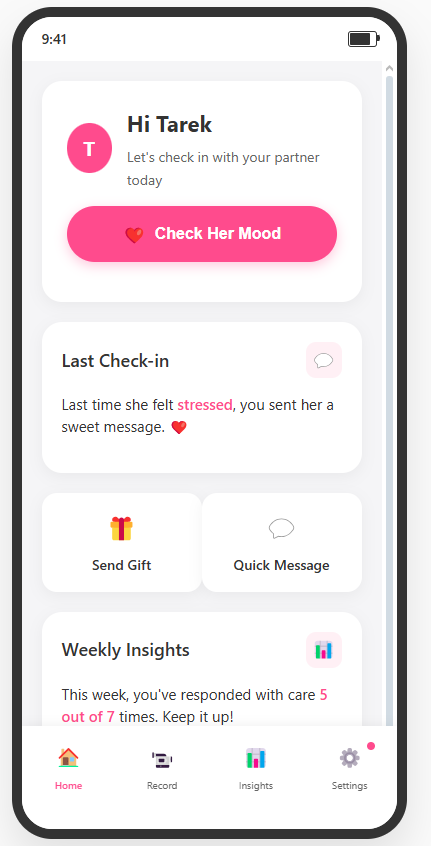
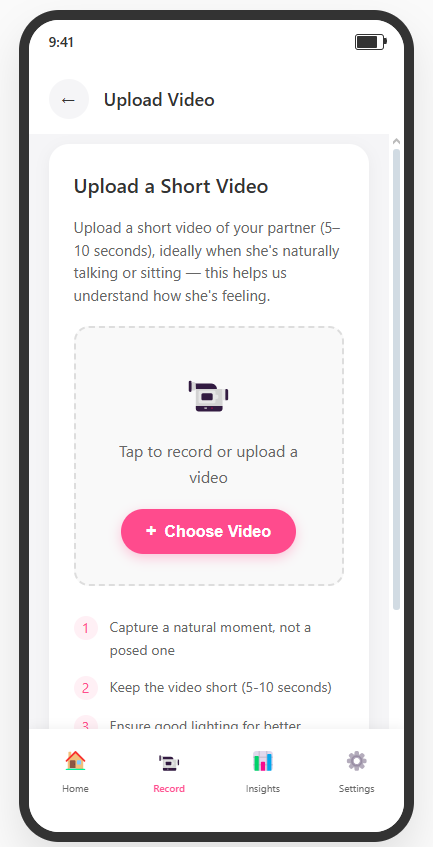
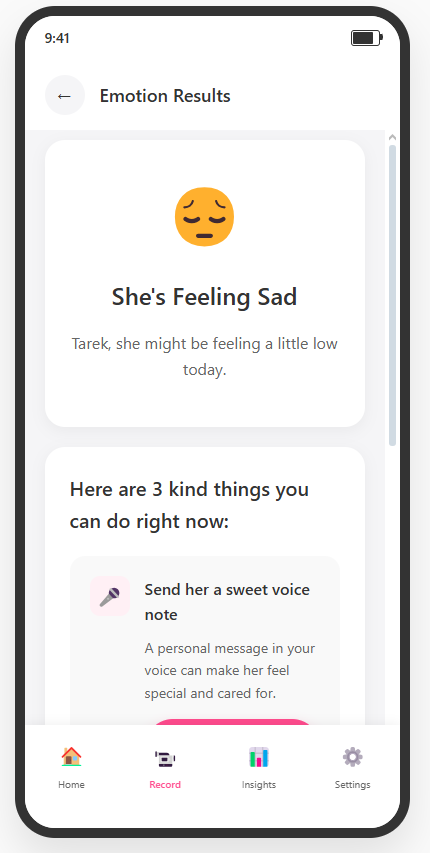
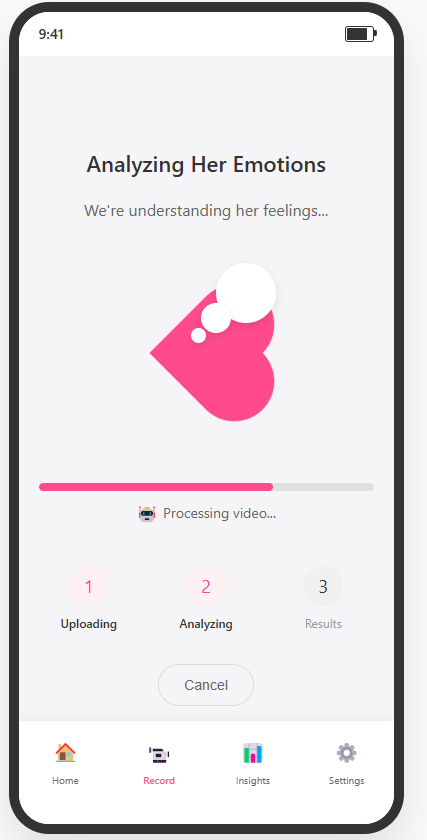
HeartSync is an AI-powered relationship wellness assistant that helps partners stay emotionally in sync. It detects emotions from voice tone, facial expressions, and text sentiment — and discreetly notifies the other partner with empathetic suggestions.
Key Features: 📸 Emotion detection (face, voice, text)
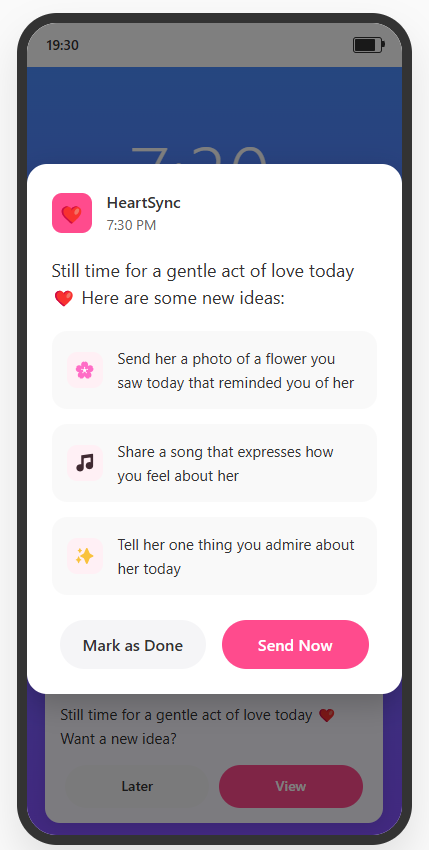
💡 Smart suggestions (what to say/do in the moment)
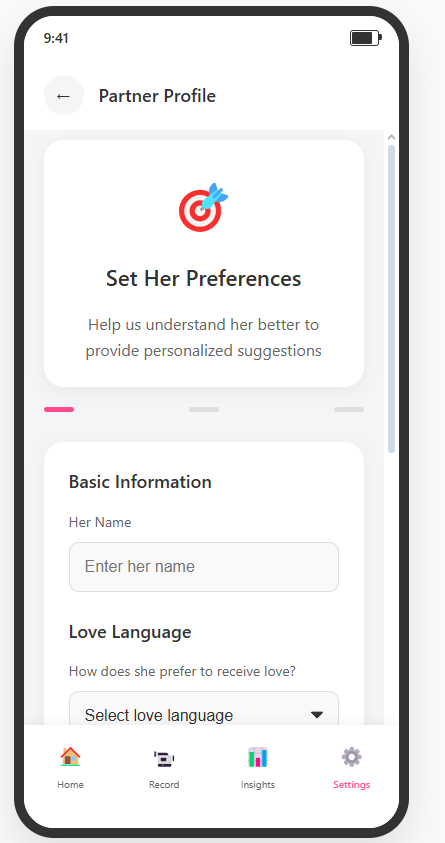
🧠 Personalized love language tips
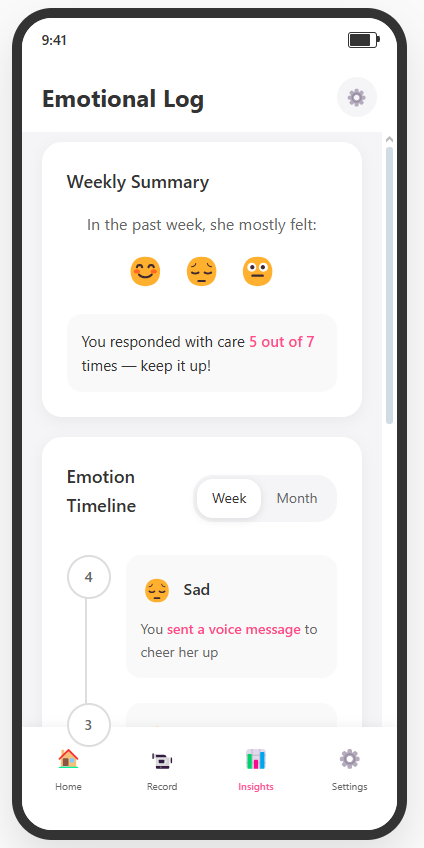
📊 Emotional trend insights
💞 Silent Guardian Mode (discreet and private)
It’s like a real-time relationship coach that promotes emotional awareness, communication, and connection — without being invasive.
How we built it
We followed a structured yet agile approach to bring HeartSync to life within the hackathon timeframe:
🧠 Ideation & Brainstorming We began by identifying a real-world emotional challenge — miscommunication in relationships — and imagined how AI could proactively help. The core concept of “emotional radar for couples” was born from this session.
🗺 Flow Mapping & Discussion Next, we mapped out the user journey — from detecting an emotional state to delivering an empathetic suggestion. This helped us align on the app logic and data flow between modules (input > detection > suggestion > feedback).
🎨 UI/UX Design We designed the interface to be minimalist and respectful of privacy. The design emphasized ease of use, with soft prompts and clean emotional visuals.
⚡ Development with Bolt & StackBlitz We used Bolt as our core platform to quickly scaffold and develop the app. StackBlitz was used for rapid front-end editing, debugging, and live collaboration.
🔗 API Integration We integrated with custom and third-party APIs for:
Emotion recognition from text and voice
Smart suggestion generation using AI prompts
User profile management (love language preferences, emotional history)
🔄 Testing & Iteration We tested the emotion flows, calibrated the suggestions, and refined the nudges to feel human and helpful — not robotic. Real feedback was used to fine-tune the language and tone.
Challenges we ran into
Real-Time Emotion Fusion: Combining signals from voice, face, and text and resolving emotional conflicts was technically complex.
Privacy and Ethics: Ensuring emotional data stayed private, secure, and respectful was a top priority.
Tone and Timing: Delivering suggestions in a way that feels natural and helpful — not robotic or inappropriate — took careful design.
Training Models in Limited Time: Some AI components had to be fine-tuned fast, and we had to creatively optimize performance under time constraints.
Accomplishments that we're proud of
Built a working prototype that integrates multimodal emotion detection in just a few days.
Created a user experience that’s emotionally sensitive and non-invasive.
Developed a smart suggestion engine that adapts to relationship patterns.
Initiated conversations about how tech can support — not replace — emotional connection.
What we learned
Emotional intelligence in AI requires empathy, not just data science.
Simplicity matters — users want help, not control.
Building for real relationships means designing with privacy, trust, and subtlety.
You can create deeply impactful tech experiences even within a short hackathon.
What's next for HeartSync
Expanded emotion spectrum: Detect a wider range of emotions like guilt, anxiety, and excitement.
Wearable integration: Add smartwatches and health data for more accurate emotion detection.
Couples AI profiles: Let each couple personalize how they want to be supported.
Therapist mode: Partner with mental health experts for deeper relationship insights.
Offline Mode + Edge AI: Run emotion detection locally for stronger privacy.
Built With
- bolt
- react


Log in or sign up for Devpost to join the conversation.