-
-
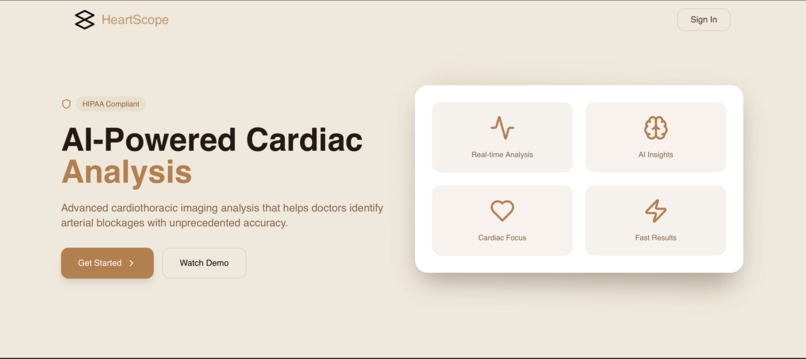
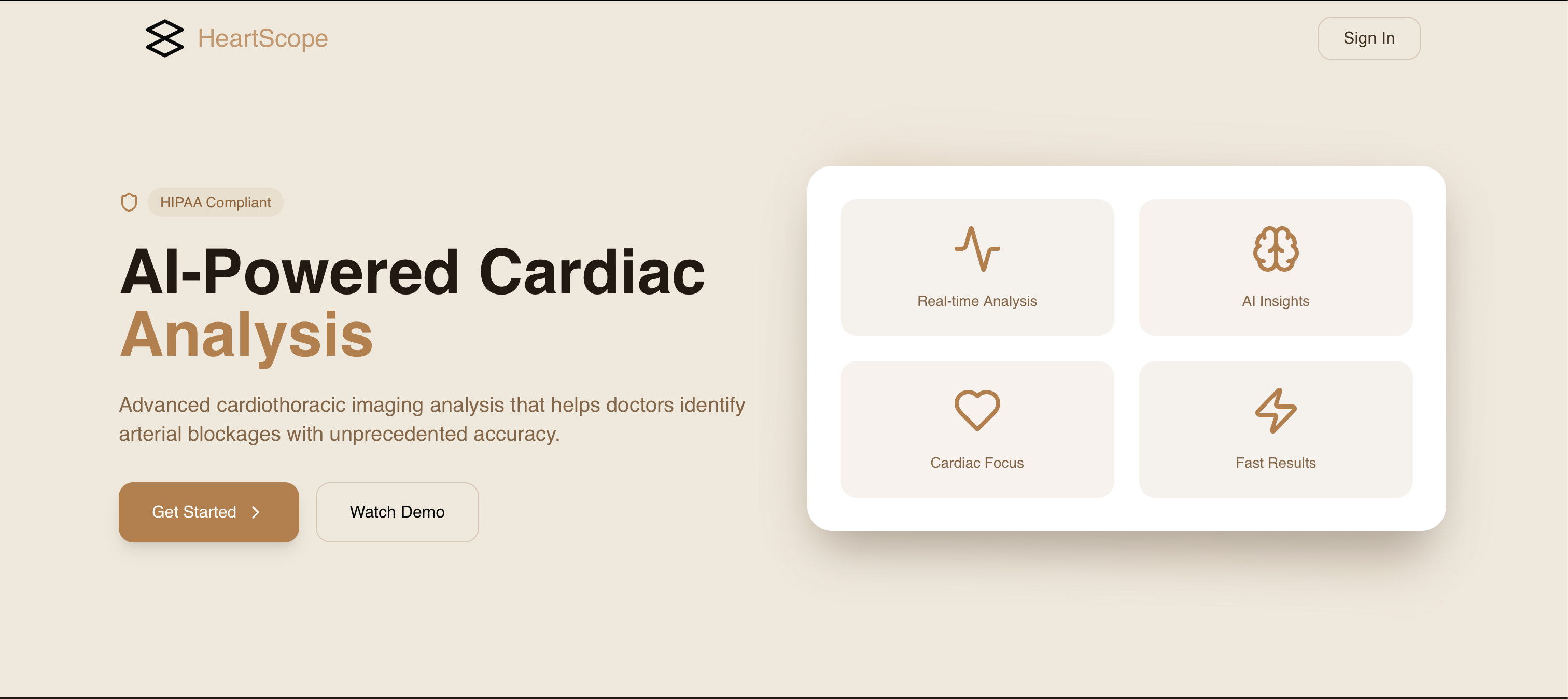
Splash page!
-
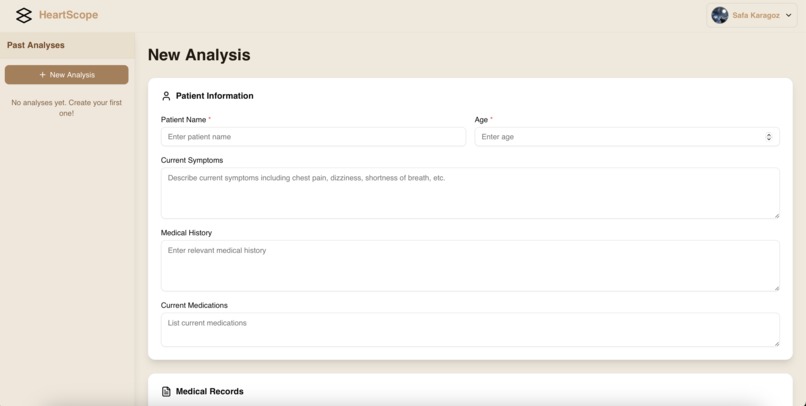
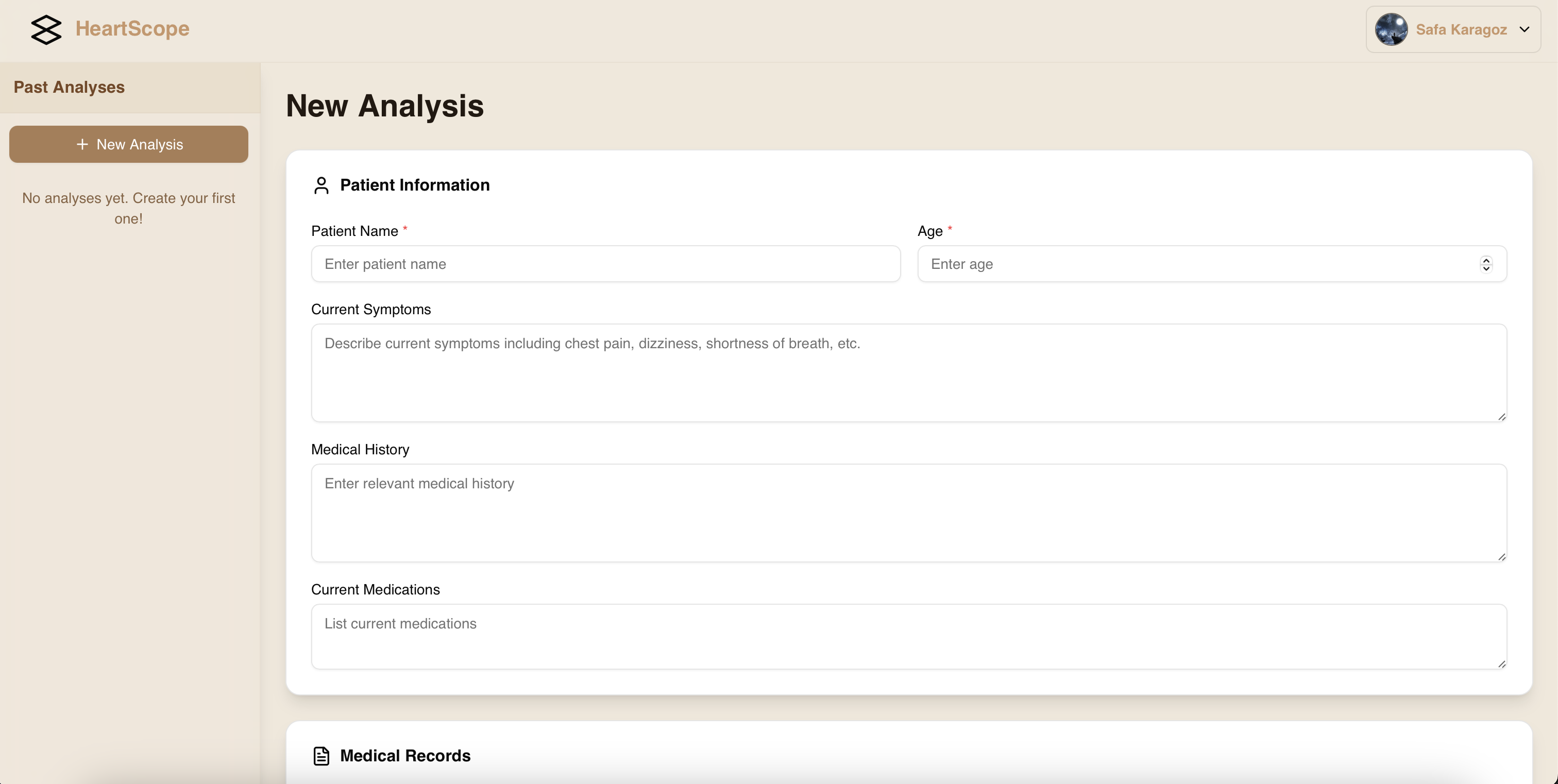
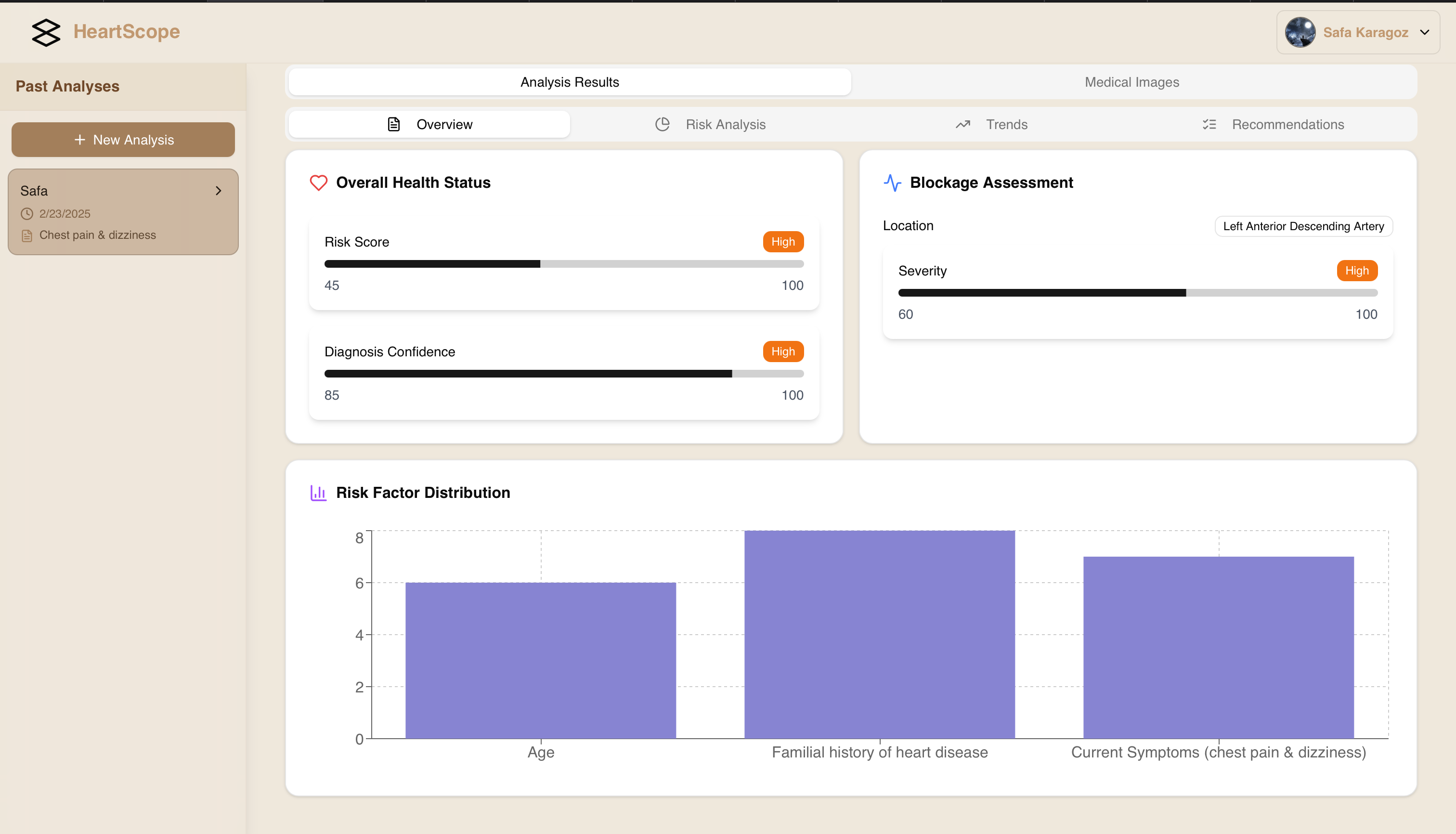
Start a new analysis of patient and x-ray images
-
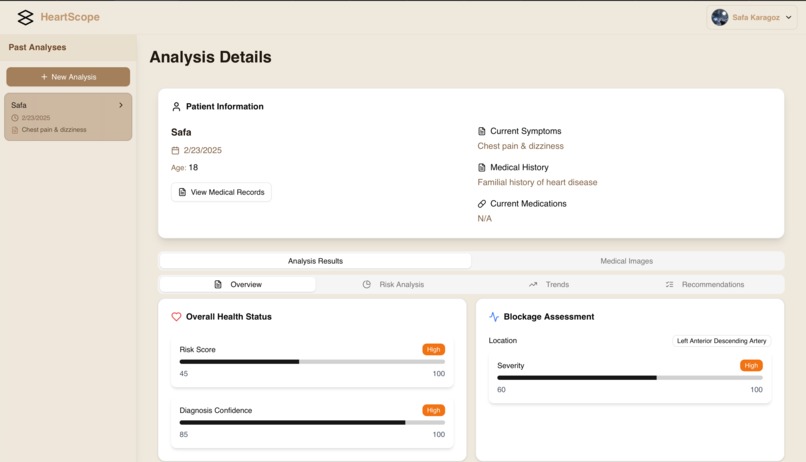
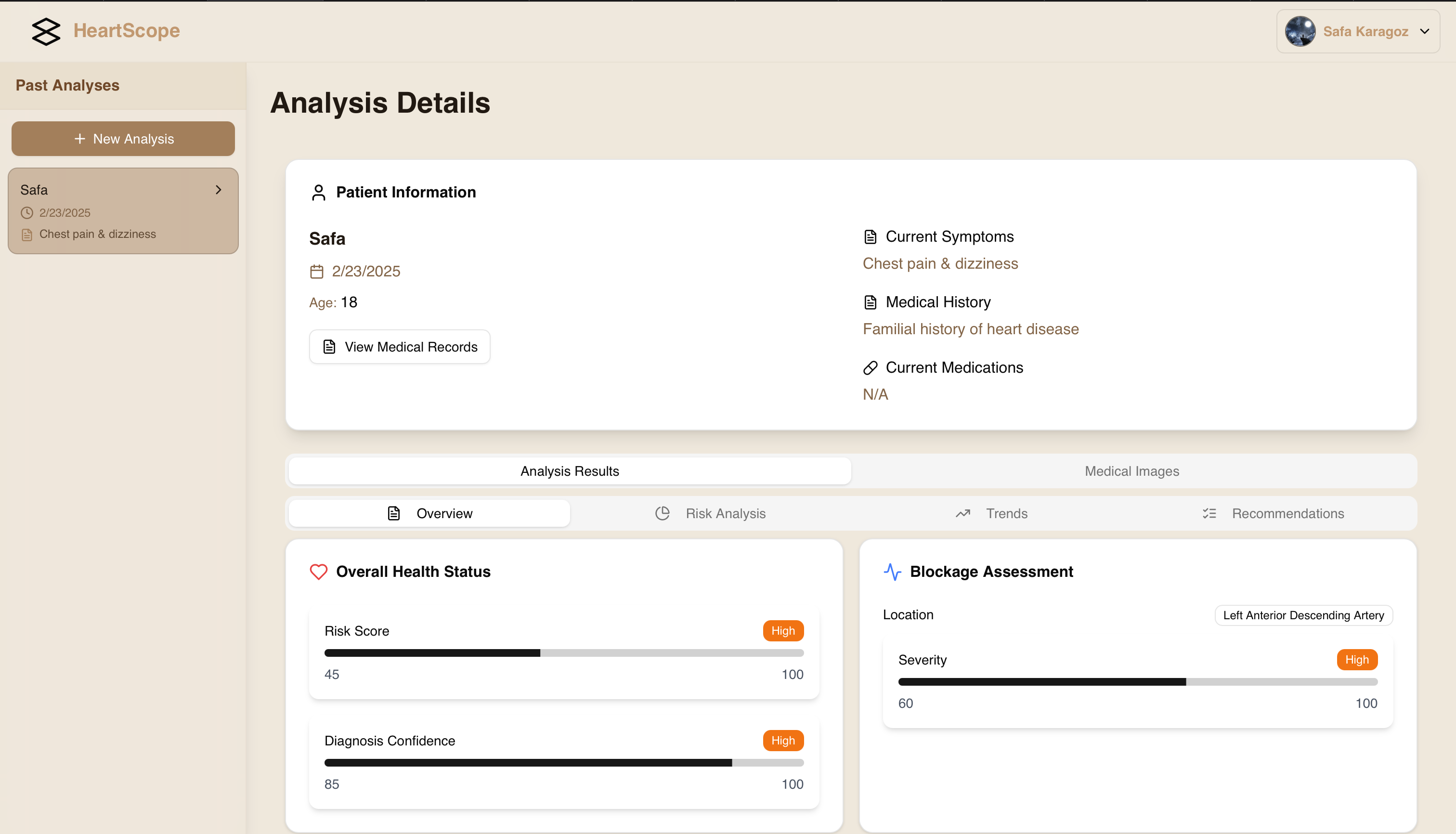
Analysis Details
-
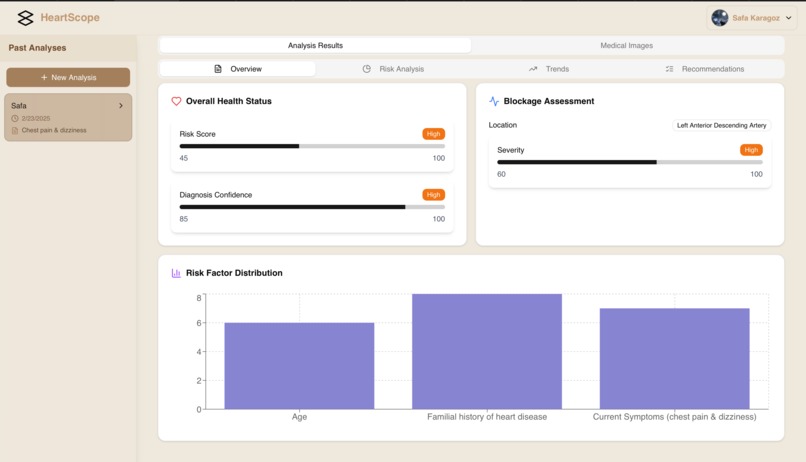
Overview
-
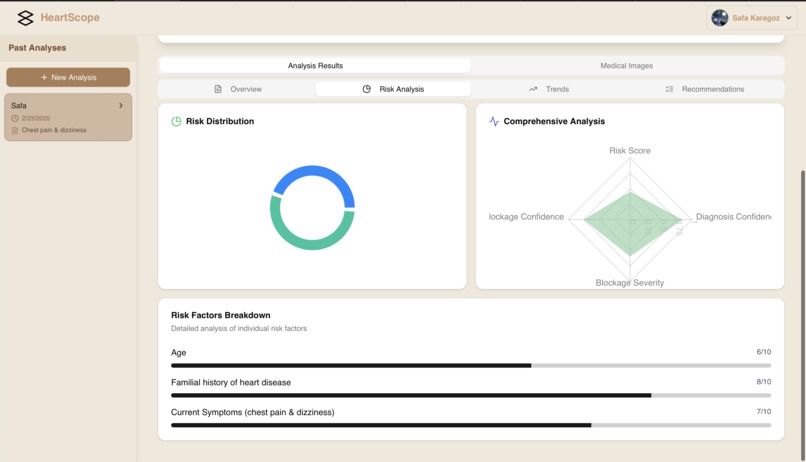
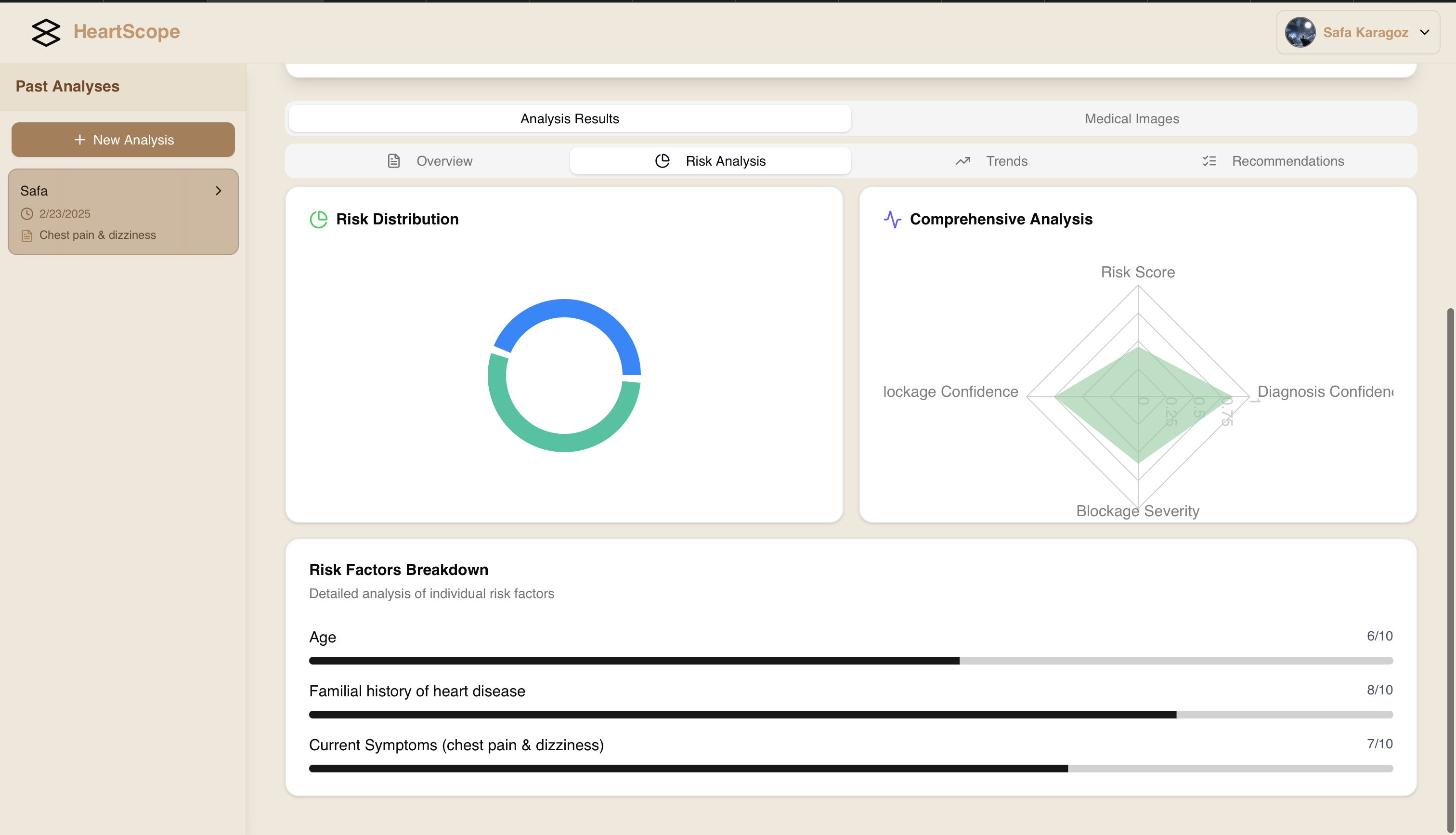
Risk Analysis
-
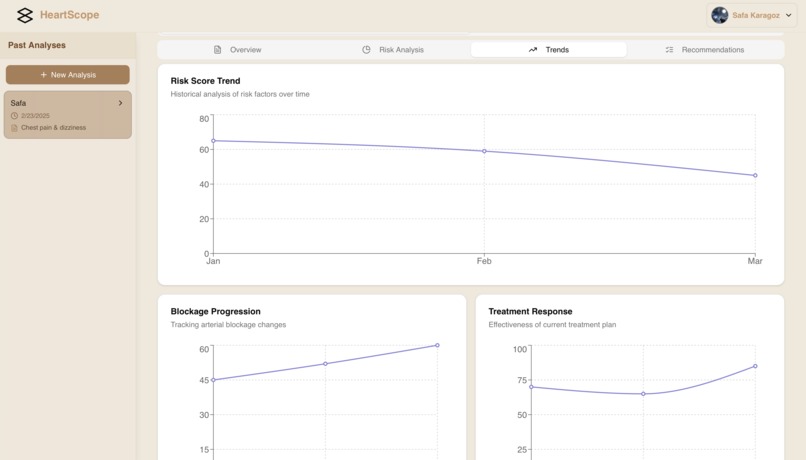
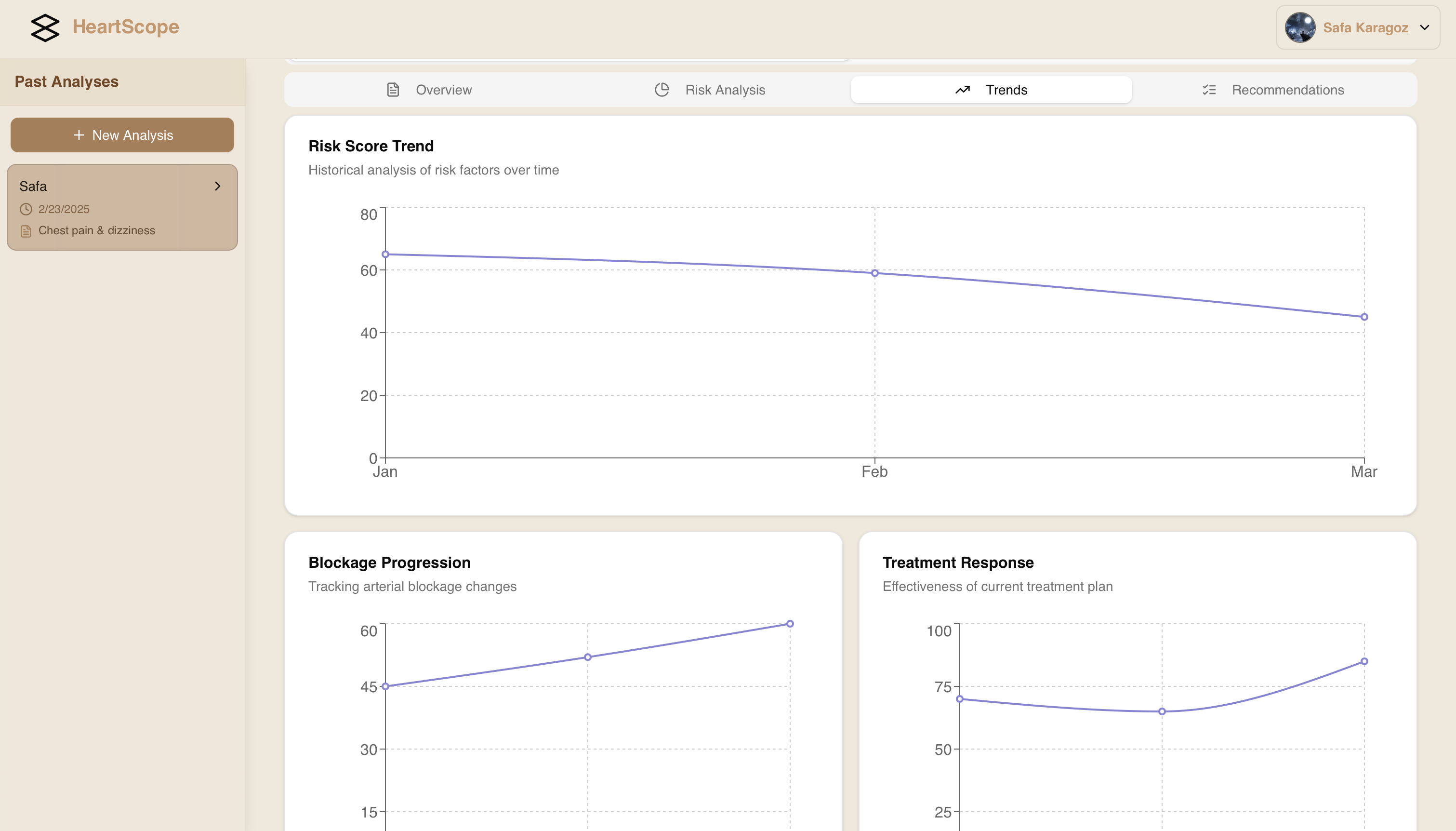
Trends
-
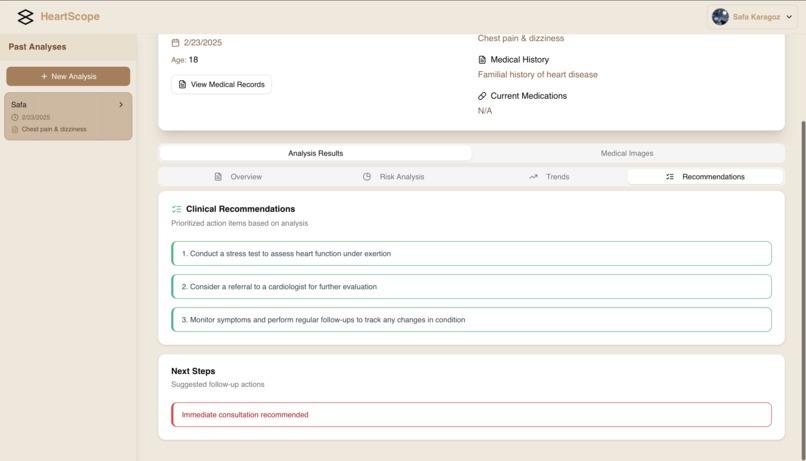
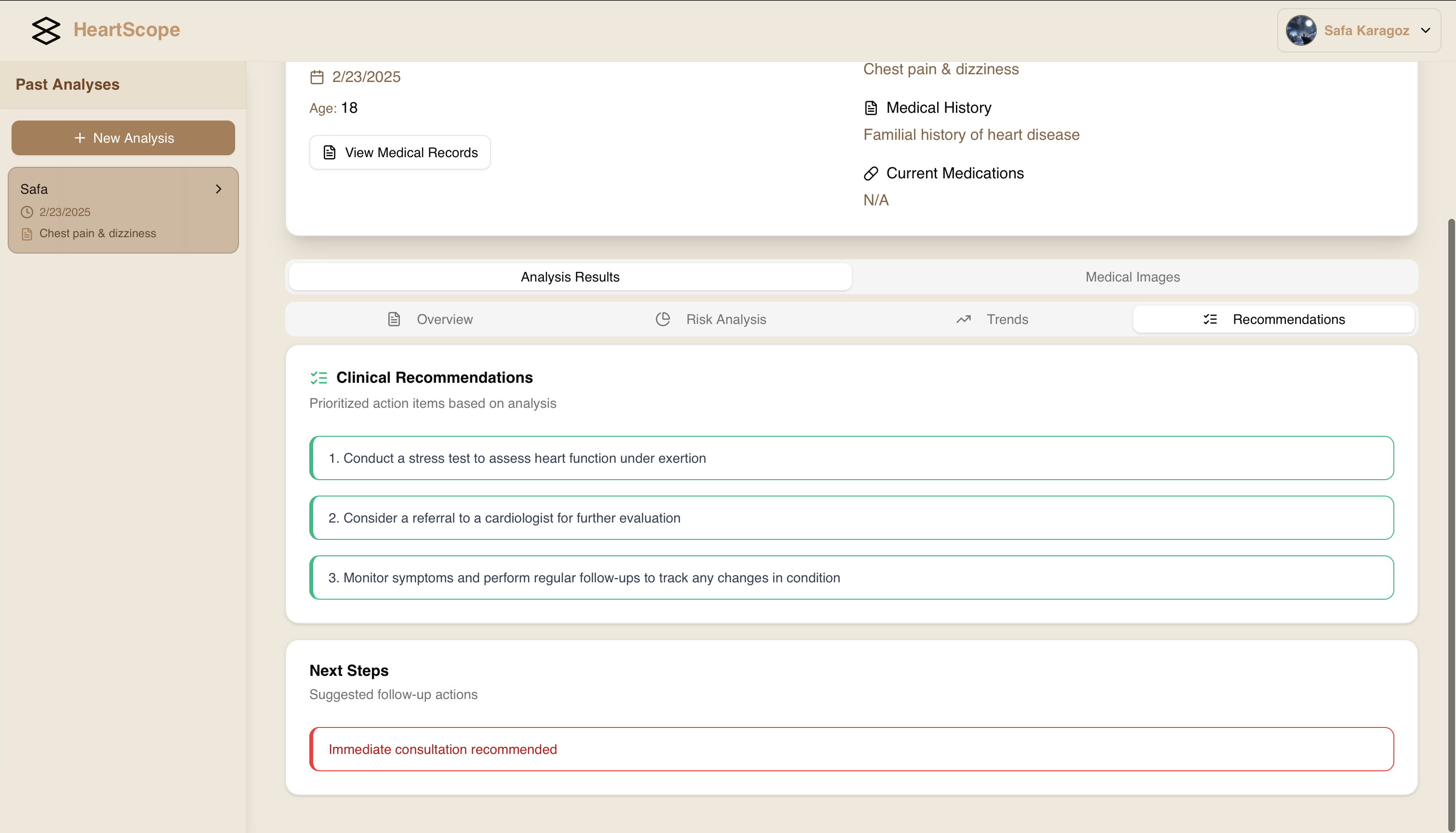
Recommendations
-
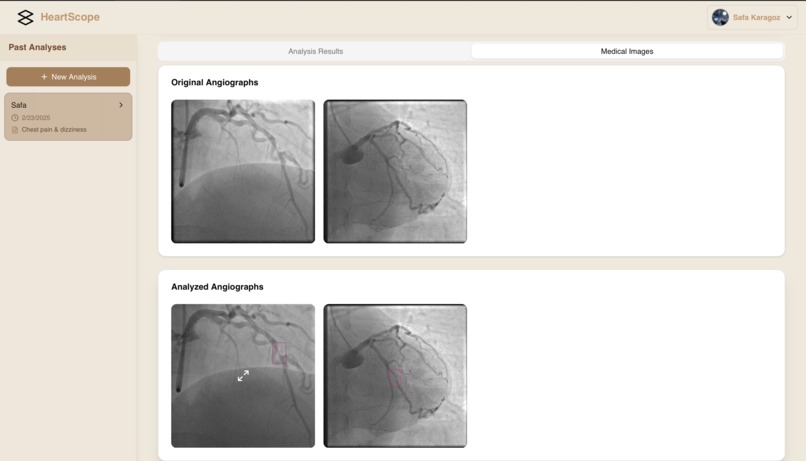
Medical Images
-
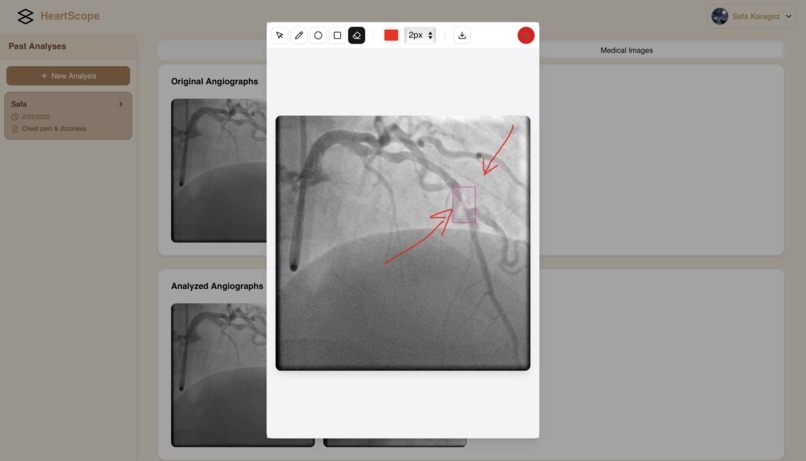
Canvas
Inspiration
In the field of cardiology, accurately detecting coronary artery disease through X-ray angiography is a critical yet challenging task. Even experienced physicians can miss subtle signs of blockages due to the complex nature of these images. Having witnessed firsthand how AI has transformed various medical fields, we recognized an opportunity to enhance diagnostic accuracy and potentially save lives by creating an AI assistant for cardiologists.
What it does
HeartScope serves as an AI diagnostic assistant that enhances cardiologists' capabilities in detecting coronary artery disease:
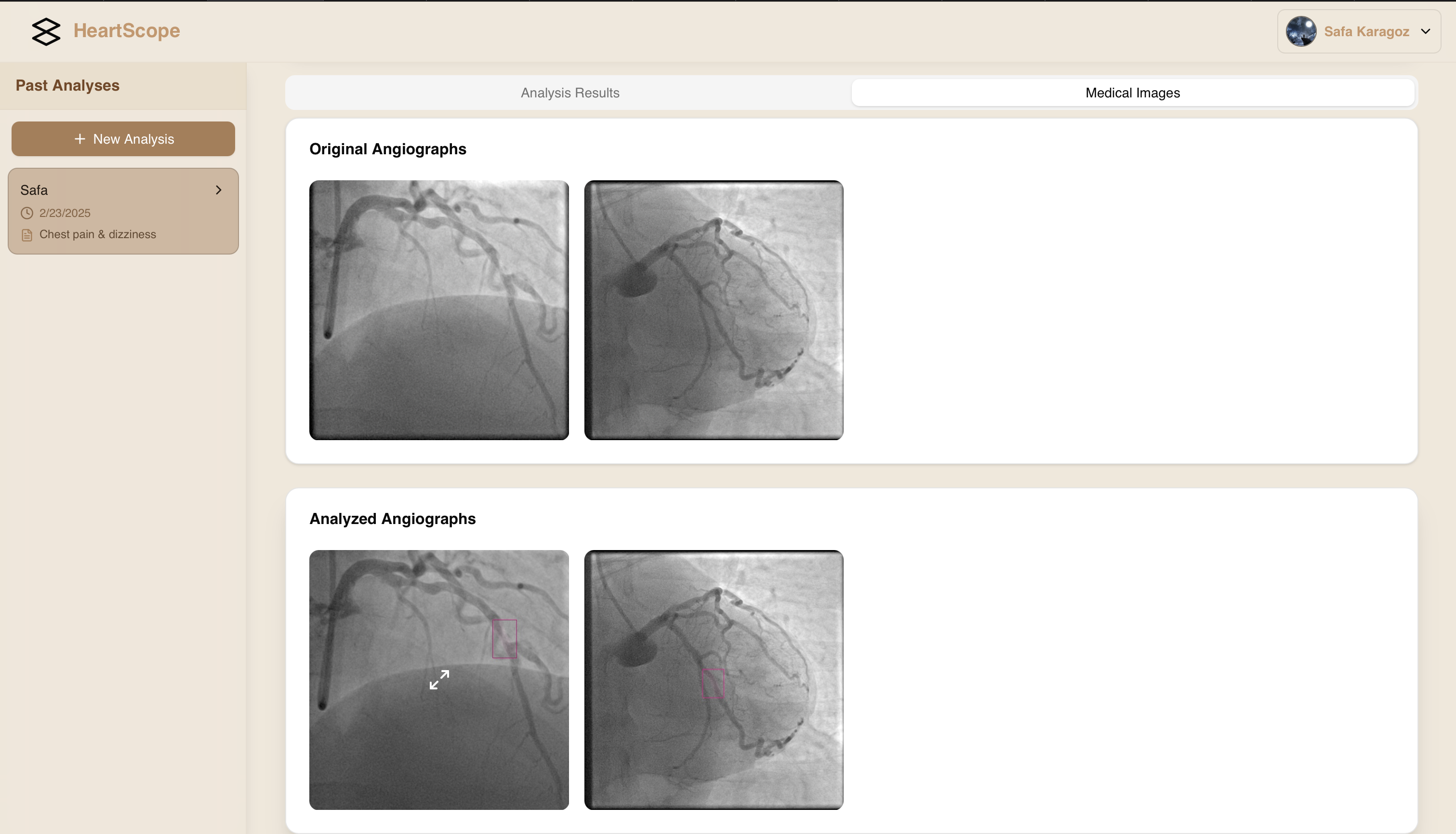
- Automatically analyzes X-ray angiography images to detect areas of stenosis
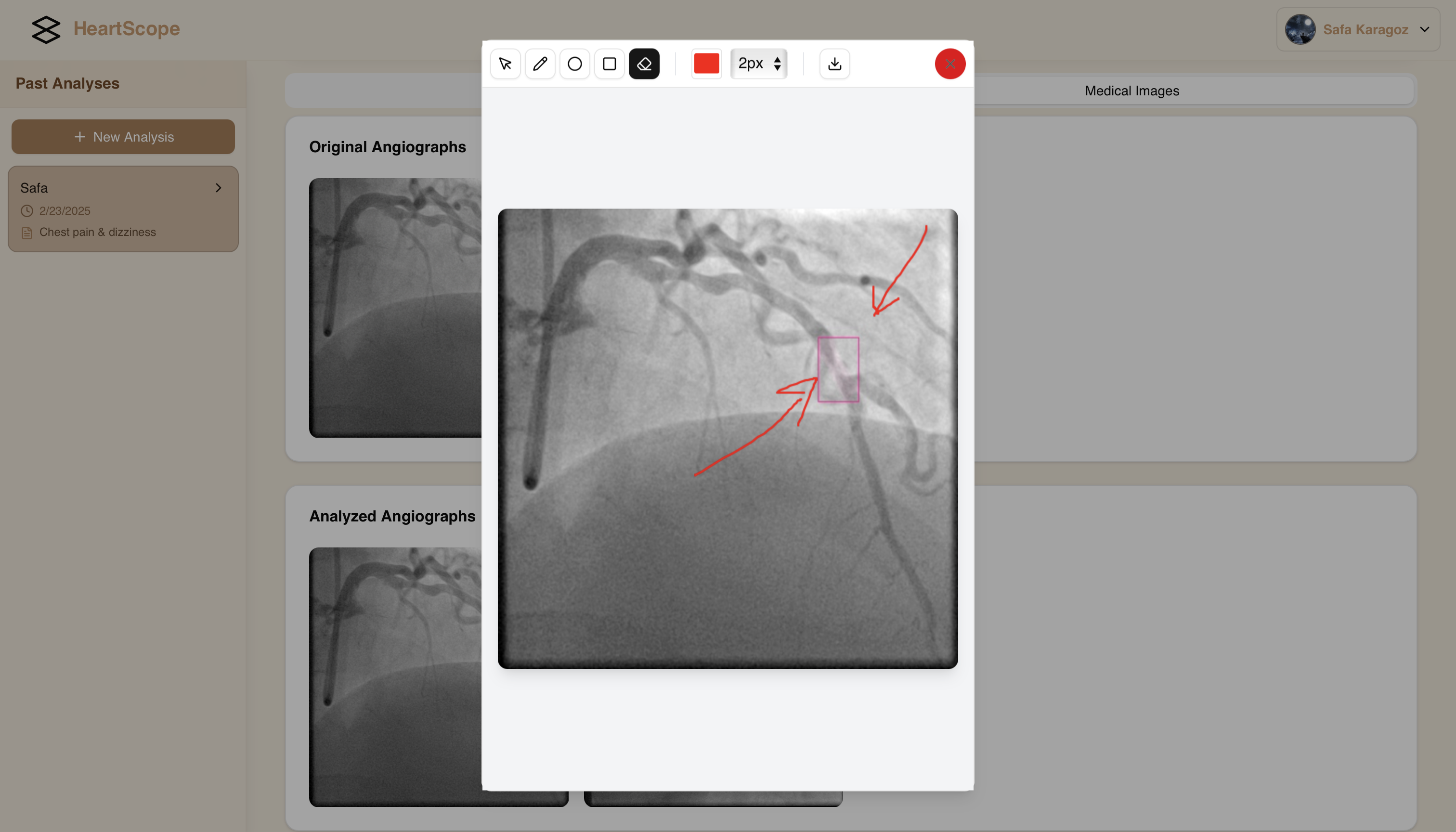
- Highlights regions with potential plaque buildup that might be difficult for human eyes to detect
- Provides precise marking of affected areas to assist in diagnostic decision-making
- Generates detailed reports of detected abnormalities by taking into consideration patient history
- Offers real-time analysis during procedures to support immediate clinical decisions
- Maintains a database of analyses for tracking disease progression over time
How we built it
Core Detection System:
- Trained a YOLOv11 model for coronary artery detection, specifically utilizing its segmentation architecture to create precise masks around blocked regions rather than simple bounding boxes
- Developed using a comprehensive dataset of X-ray angiography images
- Fine-tuned the model to specifically identify stenosis from plaque build up and calcification
Image Processing Pipeline:
- Created custom preprocessing algorithms to enhance image quality
- Implemented automatic region-based segmentation for precise arterial analysis
- Developed post-processing annotation scripts to highlight detected abnormalities
Clinical Integration:
- Built a user-friendly interface designed for clinical settings
- Securely store relevant data
Challenges we ran into
Training the YOLO model on medical imaging data presented unique challenges. Medical images often have subtle features that are crucial for diagnosis but challenging for AI to detect. We had to carefully balance model sensitivity to avoid false positives while ensuring no critical blockages went undetected.
Accomplishments that we're proud of
We successfully created a system that achieves:
- High accuracy in detecting stenosis
- Real-time analysis capabilities suitable for clinical settings
- Seamless integration for ease of use
What we learned
Training computer visions models is not a one size fits all.
What's next for HeartScope
The future of HeartScope lies in expanding the training dataset to improve model performance, while implementing additional detection capabilities for other cardiovascular conditions
Built With
- cv2
- fastapi
- mongodb
- nextjs
- numpy
- openai
- pillow
- python
- pytorch
- ssh
- tailwind
- typescript
- yolov11

Log in or sign up for Devpost to join the conversation.