-
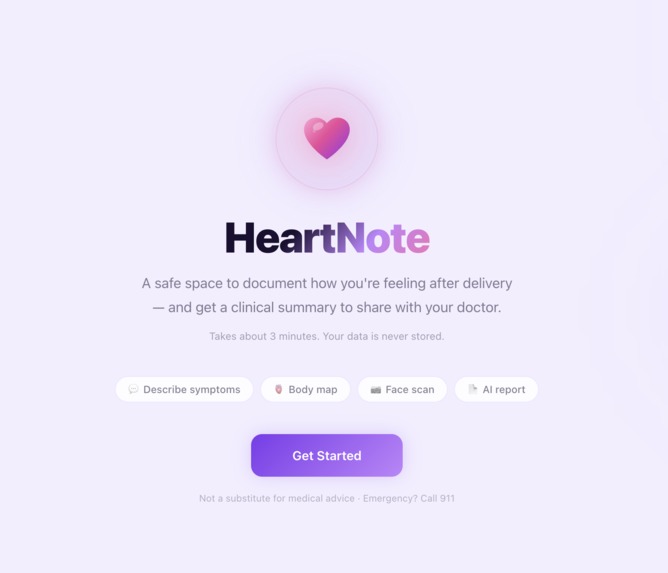
AI-powered postpartum health platform for faster symptom recognition and clearer doctor communication.
-
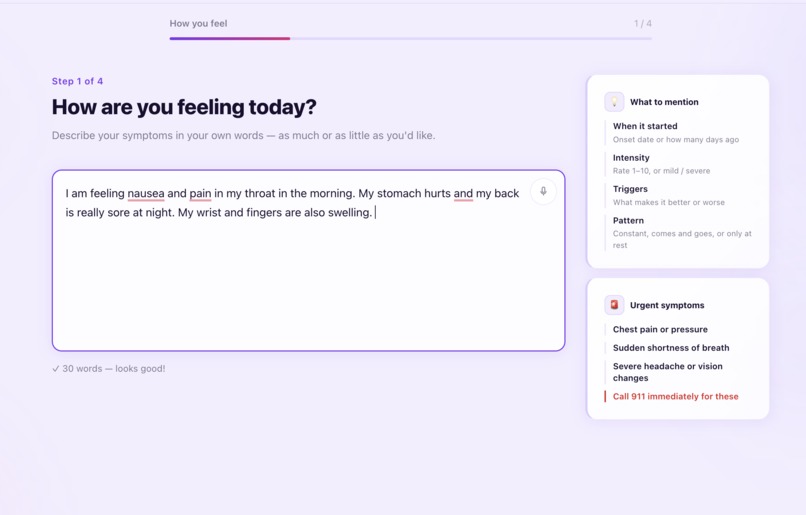
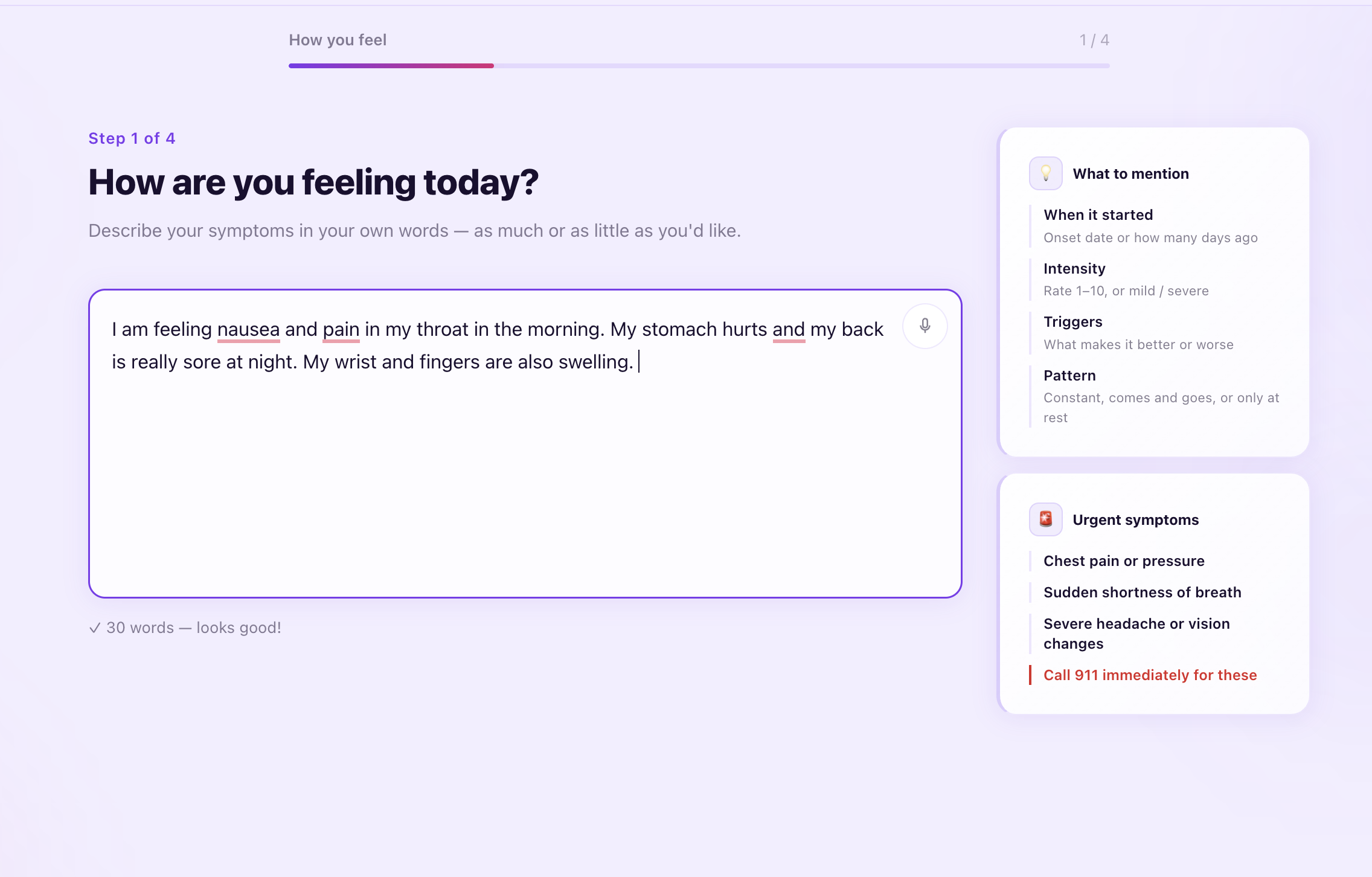
Natural language symptom input translated into structured clinical insights and cardiovascular risk analysis.
-
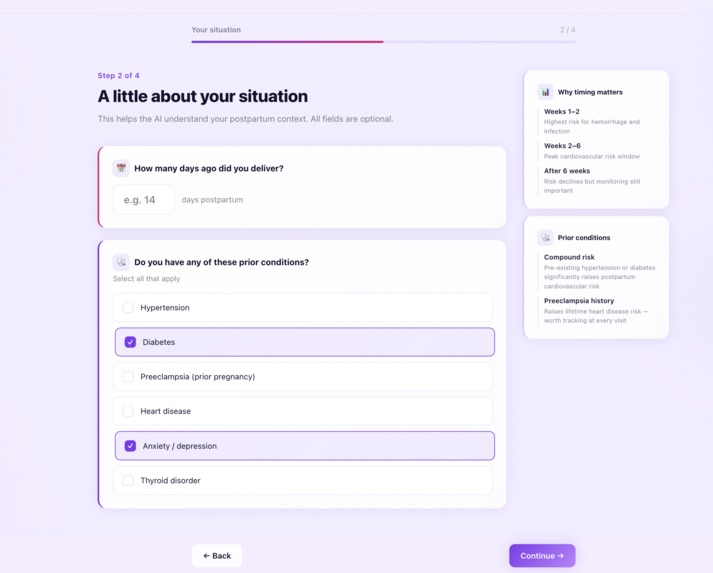
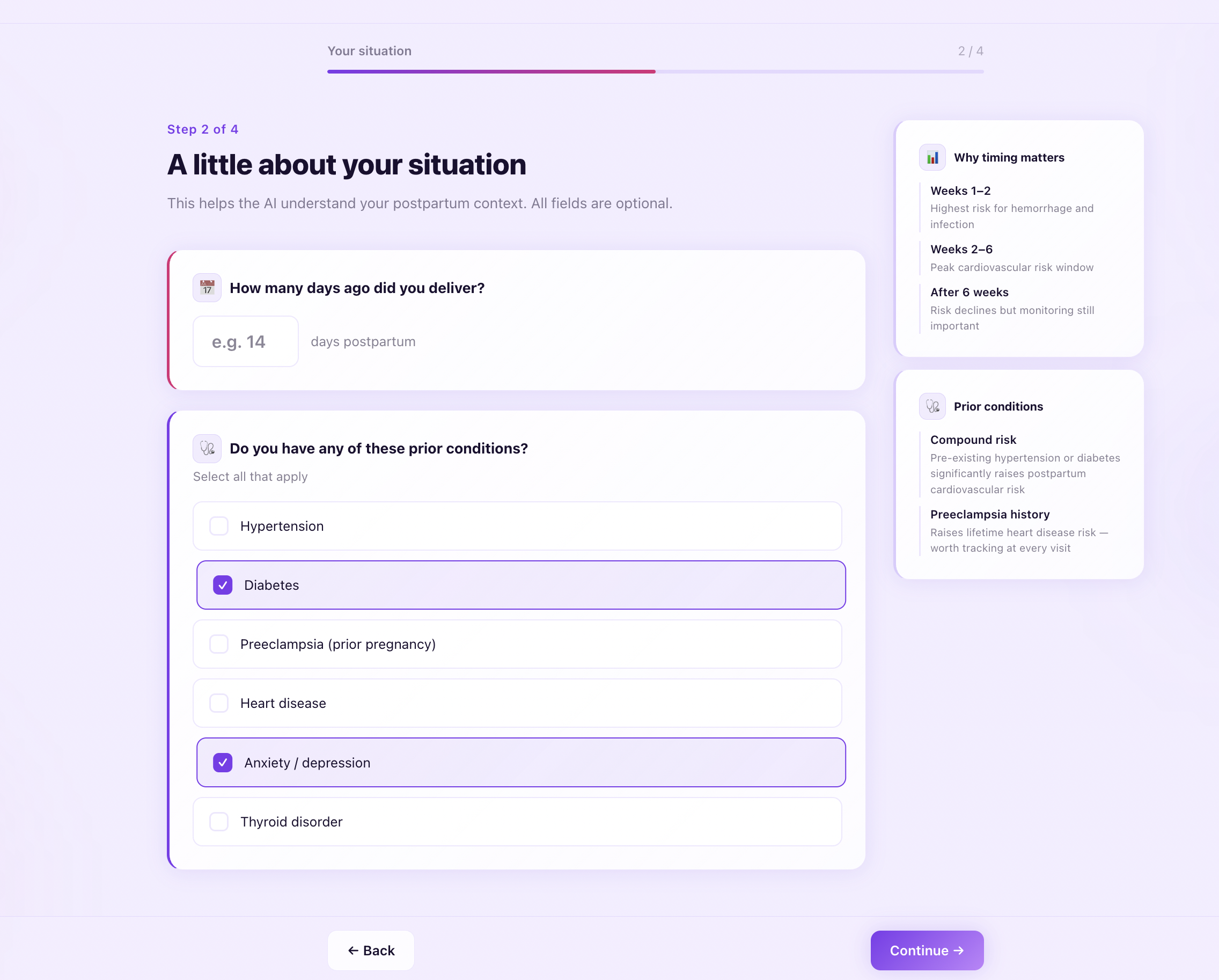
Guided postpartum intake flow collecting symptom history and cardiovascular risk factors.
-
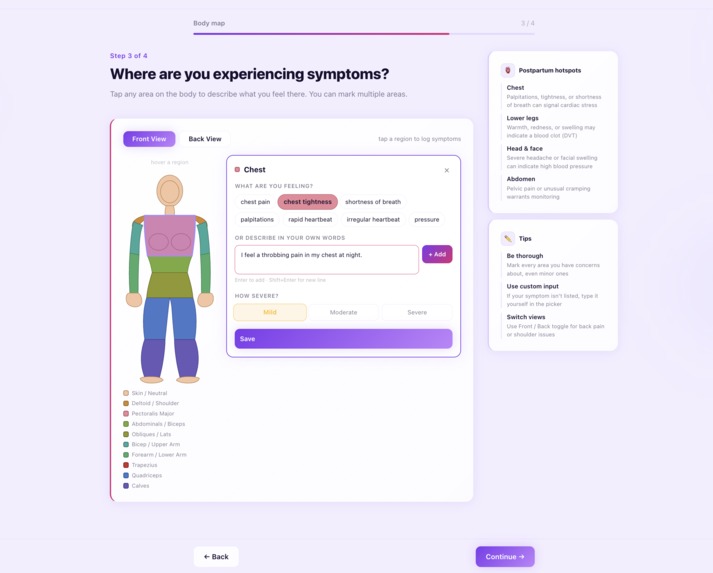
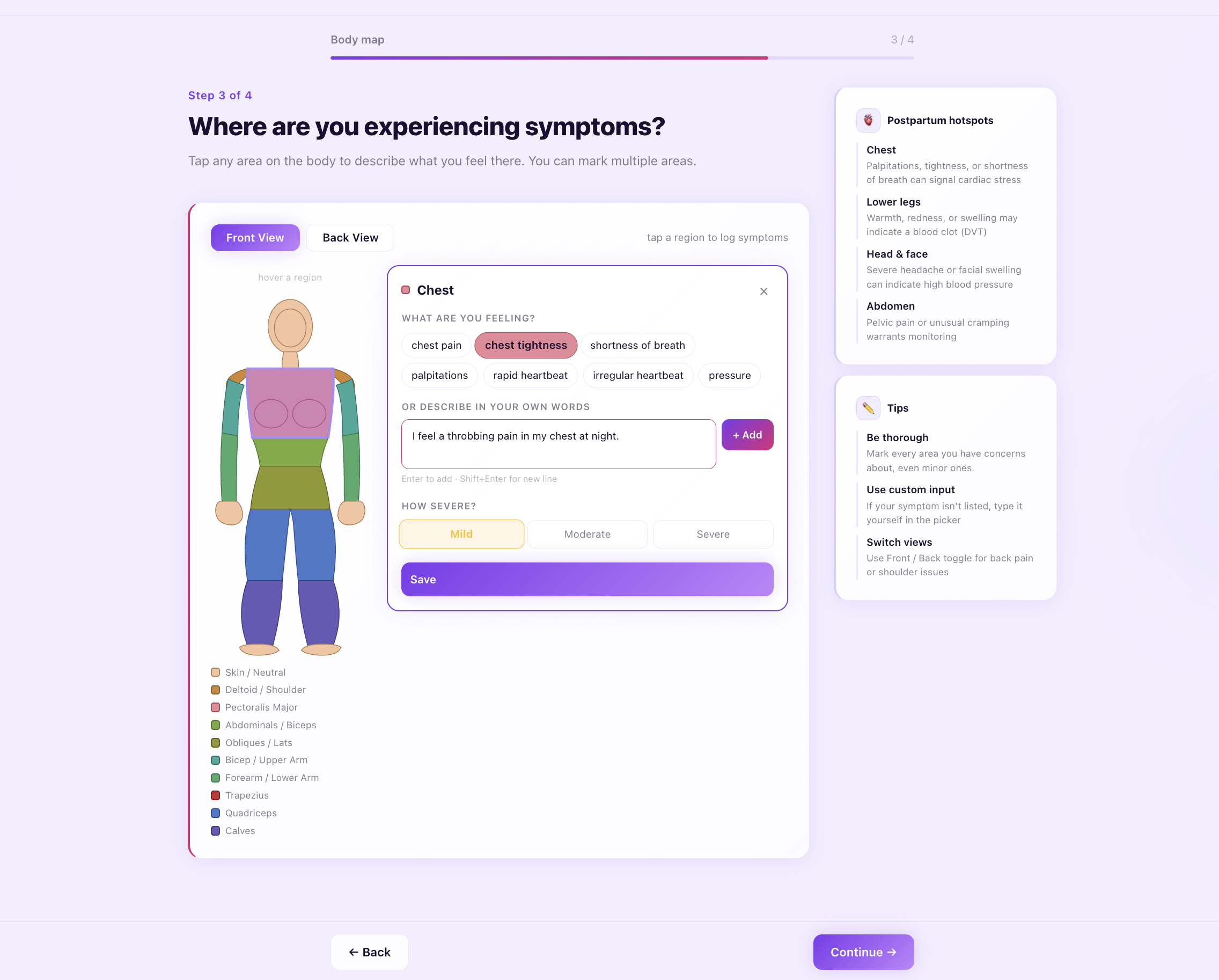
Interactive body map for logging symptom location, severity, and cardiovascular warning signs.
-
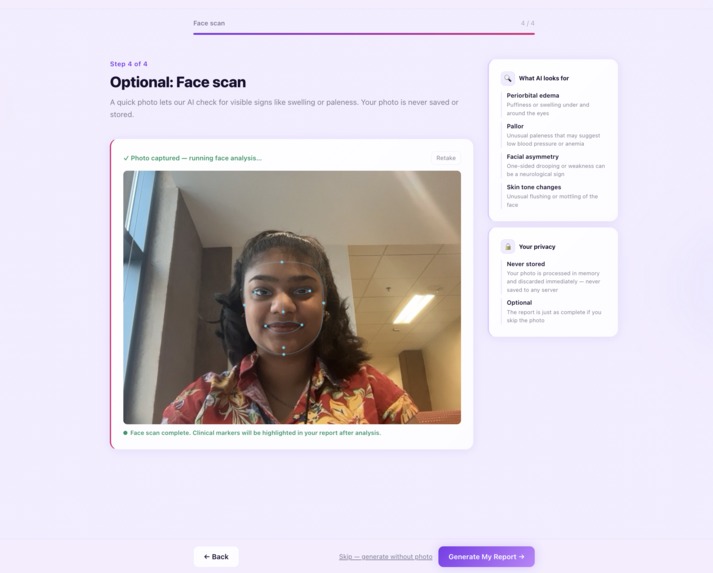
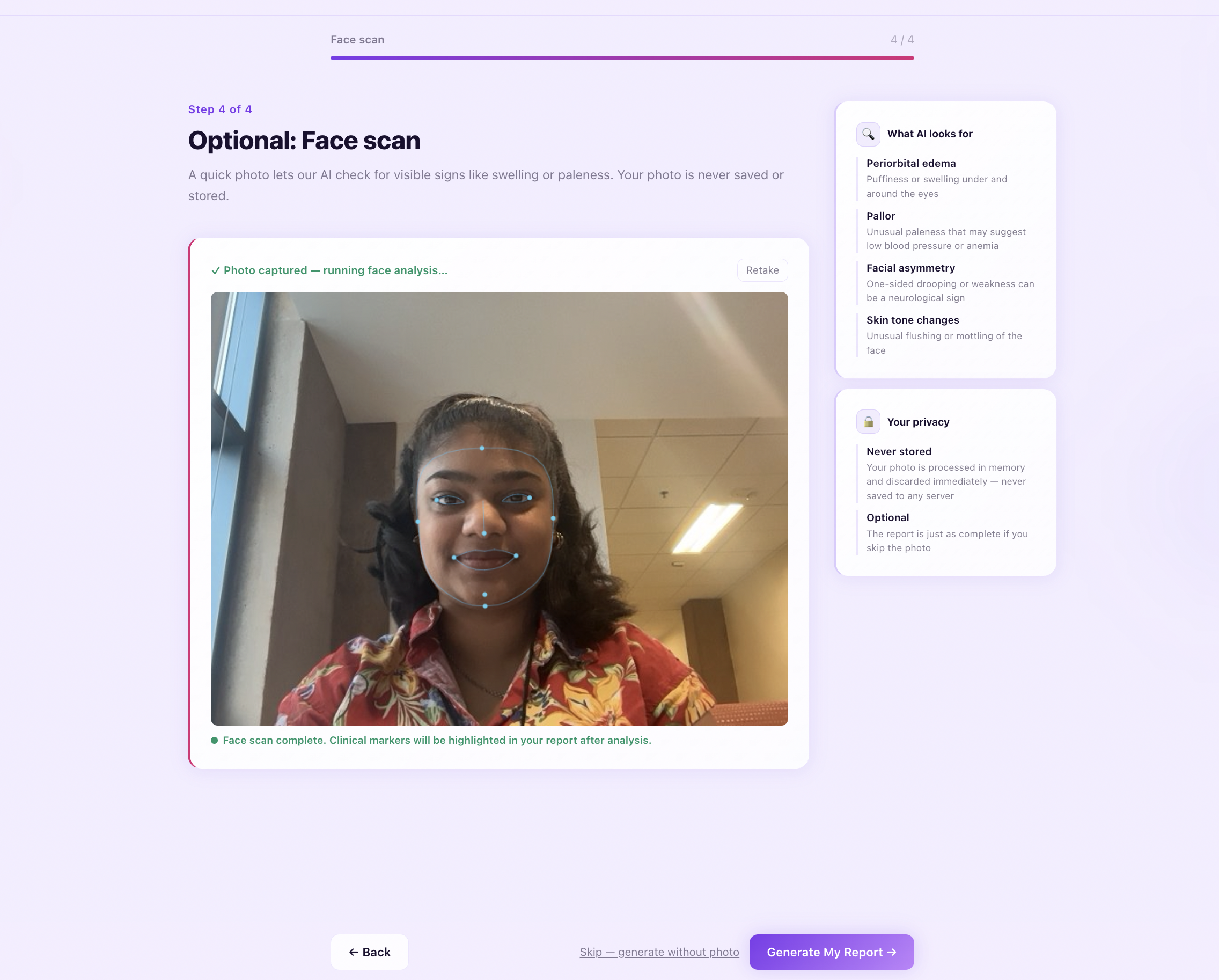
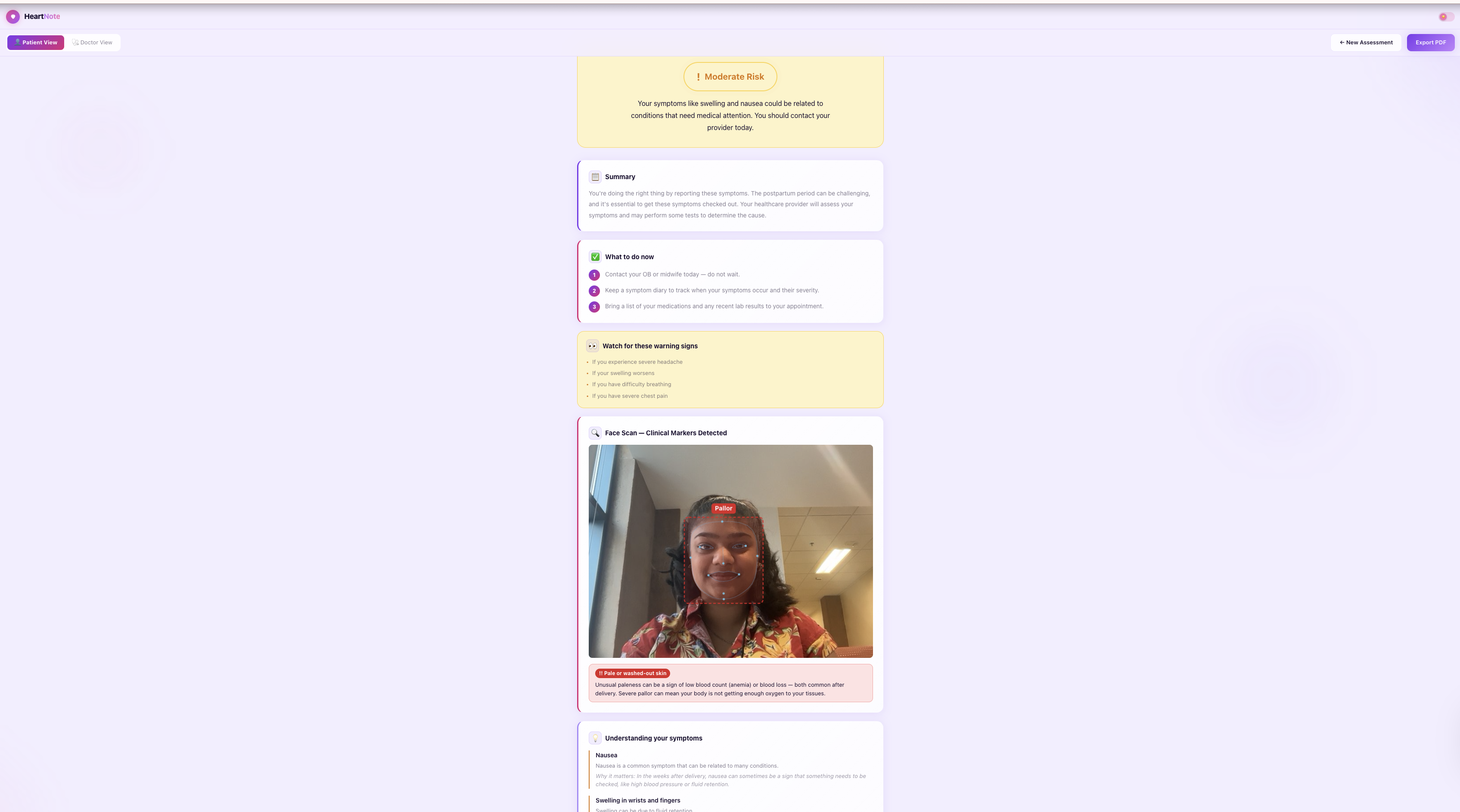
Optional face scan detecting visible indicators like swelling and pallor using MediaPipe Face Mesh.
-
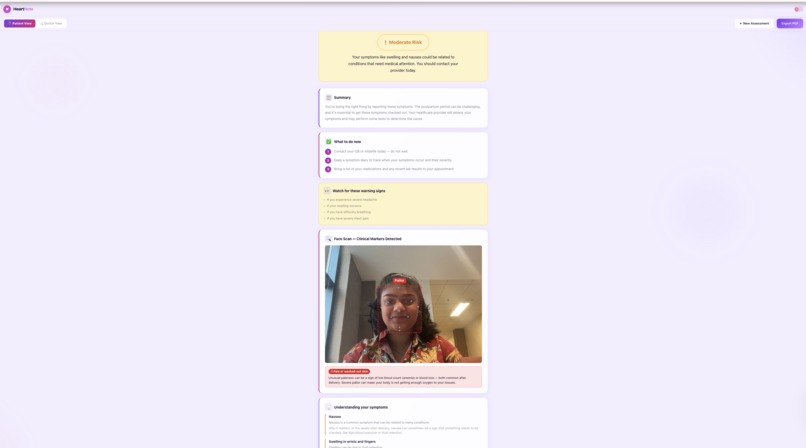
Patient-friendly report translating clinical findings into clear, understandable postpartum health insights.
-
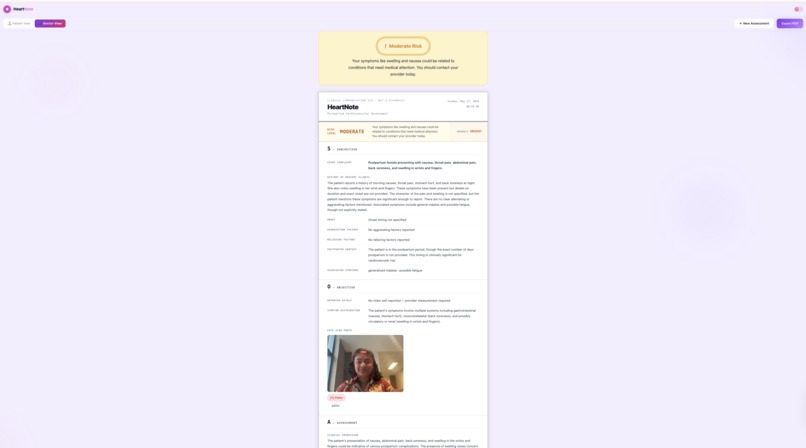
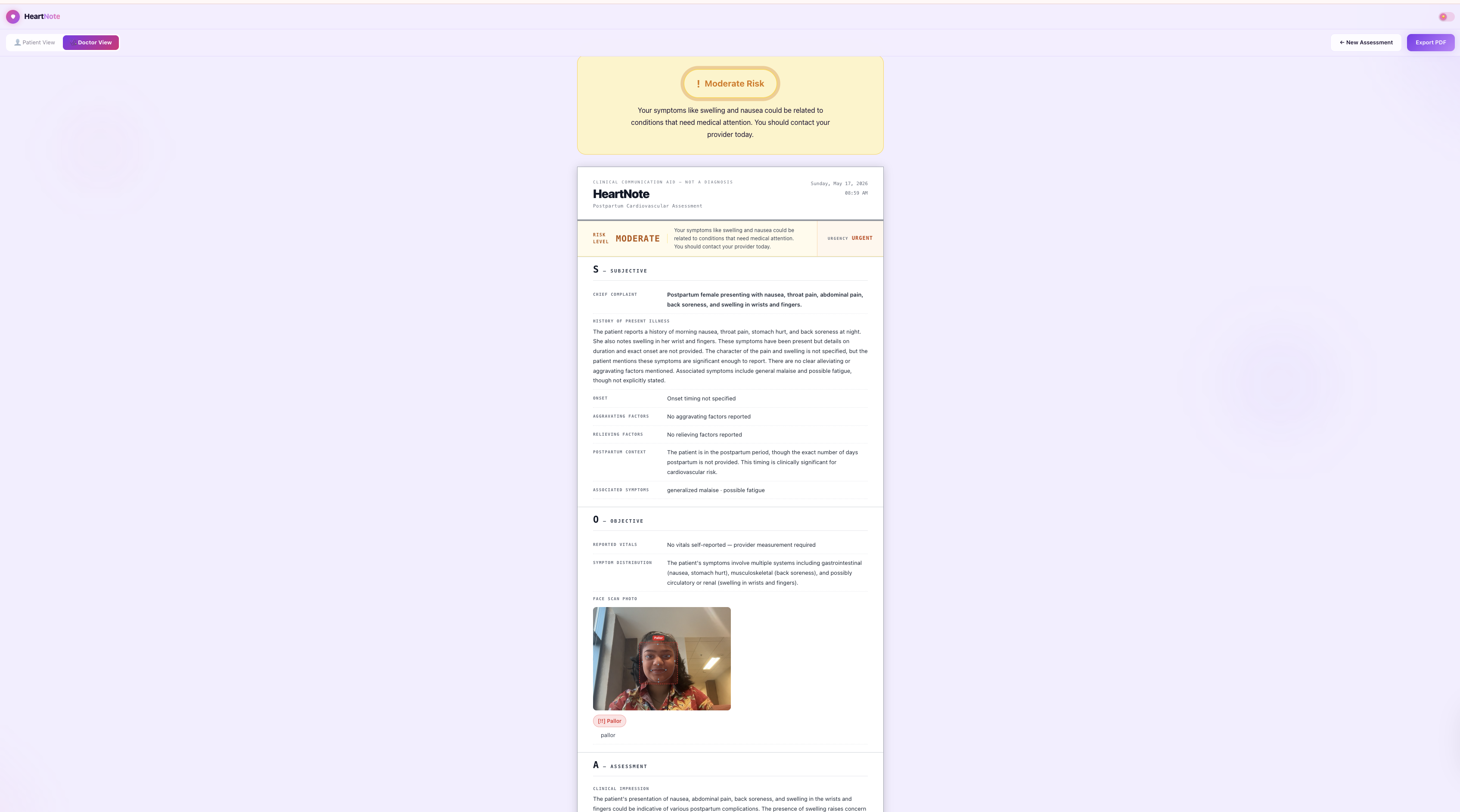
Doctor-facing SOAP report formatted for faster clinical review and clearer postpartum risk communication.
Inspiration
Many postpartum women with cardiovascular complications are dismissed or misdiagnosed because symptoms like chest pain, swelling, dizziness, or shortness of breath are often seen as “normal” after childbirth. Delays in diagnosis can become life-threatening, especially for conditions like postpartum preeclampsia or peripartum cardiomyopathy. We wanted to build a tool that helps mothers communicate symptoms more clearly and receive earlier medical attention.
What it does
HeartNote is an AI-powered postpartum health website that helps new mothers track symptoms and identify potential cardiovascular warning signs. Users can describe symptoms via natural-language input, interact with a body map, and use a camera-based face scan to detect visible indicators such as swelling or pallor. HeartNote then generates AI-powered insights, cardiovascular risk flags, and doctor-ready SOAP summaries that make communication with healthcare providers faster and clearer.
How we built it
We built HeartNote using React and Next.js for the frontend and Next.js API routes for the backend. We integrated the Claude API to power symptom interpretation, clinical translation, risk analysis, and SOAP report generation. For computer vision, we used MediaPipe Face Mesh and TensorFlow.js to detect visible facial indicators directly in the browser. We also implemented an interactive body map, PDF export, and a structured AI pipeline to generate both patient-friendly and doctor-facing reports.
Challenges we ran into
One of our biggest challenges was balancing medical accuracy with accessibility. We had to carefully design prompts and risk logic that translated everyday language into clinically meaningful information without making unsupported medical claims. Another challenge was integrating multiple input systems, including voice, body map interactions, AI processing, and face scan analysis, into a smooth real-time workflow within a short hackathon timeline.
Accomplishments that we're proud of
We are proud that HeartNote goes beyond being a generic symptom checker. The platform combines AI symptom translation, cardiovascular risk analysis, interactive body mapping, and visual face scan indicators into a single workflow designed specifically for postpartum care. We successfully built a system that generates realistic doctor-style SOAP reports while still remaining understandable for patients. Most importantly, we created a tool focused on helping women feel heard and taken seriously.
What we learned
We learned how difficult healthcare communication can be, especially in postpartum care where symptoms are frequently overlooked or normalized. We also gained hands-on experience integrating AI into a real-world healthcare application while thinking carefully about ethics, usability, accessibility, and clinical responsibility.
What's next for HeartNote
Next, we want to expand HeartNote with multilingual support, wearable device integration, longitudinal symptom tracking, and larger medically validated datasets to improve accuracy. We also hope to collaborate with healthcare professionals and maternal health organizations to make the platform more clinically informed, accessible, and scalable for underserved communities.
Built With
- css
- groq
- javascript
- jspdf
- mediapipe
- nextjs
- python
- react
- typescript
- vercel
- webspeech


Log in or sign up for Devpost to join the conversation.