Inspiration
In a care home, the week is planned for everyone at once. Ask what an older person enjoys and you usually get a guess: bingo, a film nobody chose, a lunch that ignores where they grew up. Families know the songs and films that light someone up, but that knowledge rarely reaches the weekend carer or the agency nurse. I wanted any carer to know, from day one, what this particular person would love, and why.
What it does
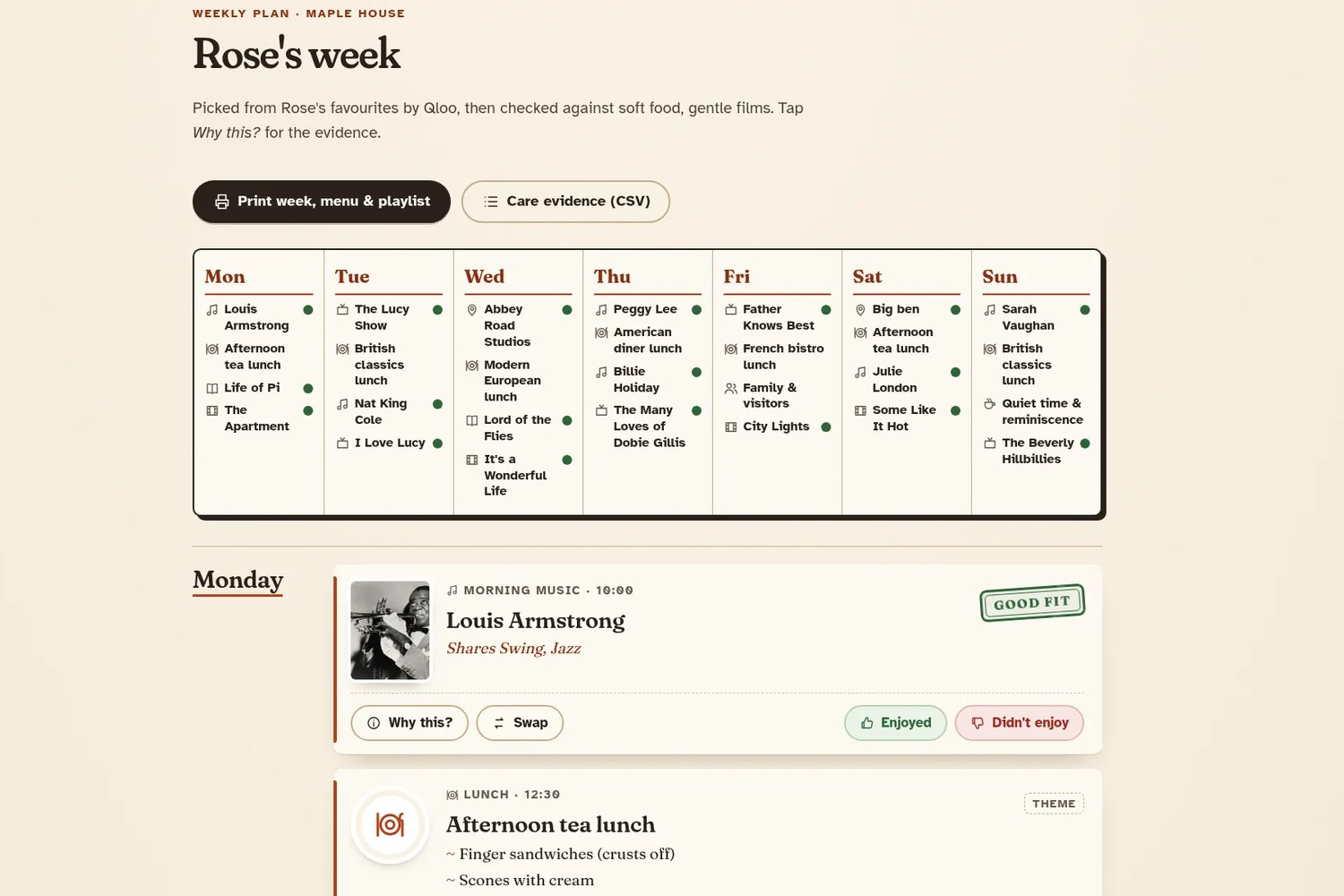
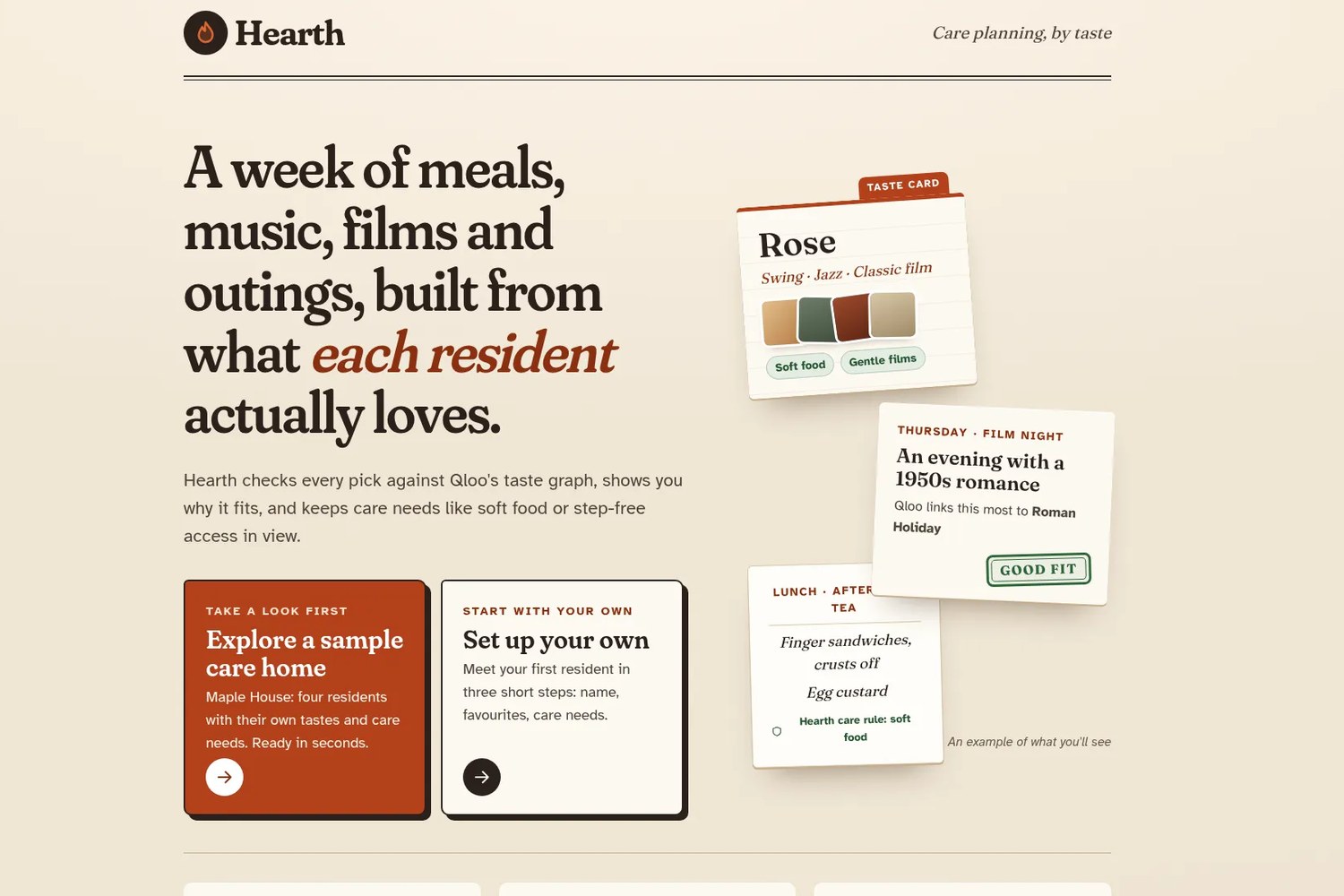
Hearth turns a few favourites (three songs or films is enough) into a full, care-safe week for each resident: morning music, a themed lunch, reading or an outing, and an evening film or TV show, every day.
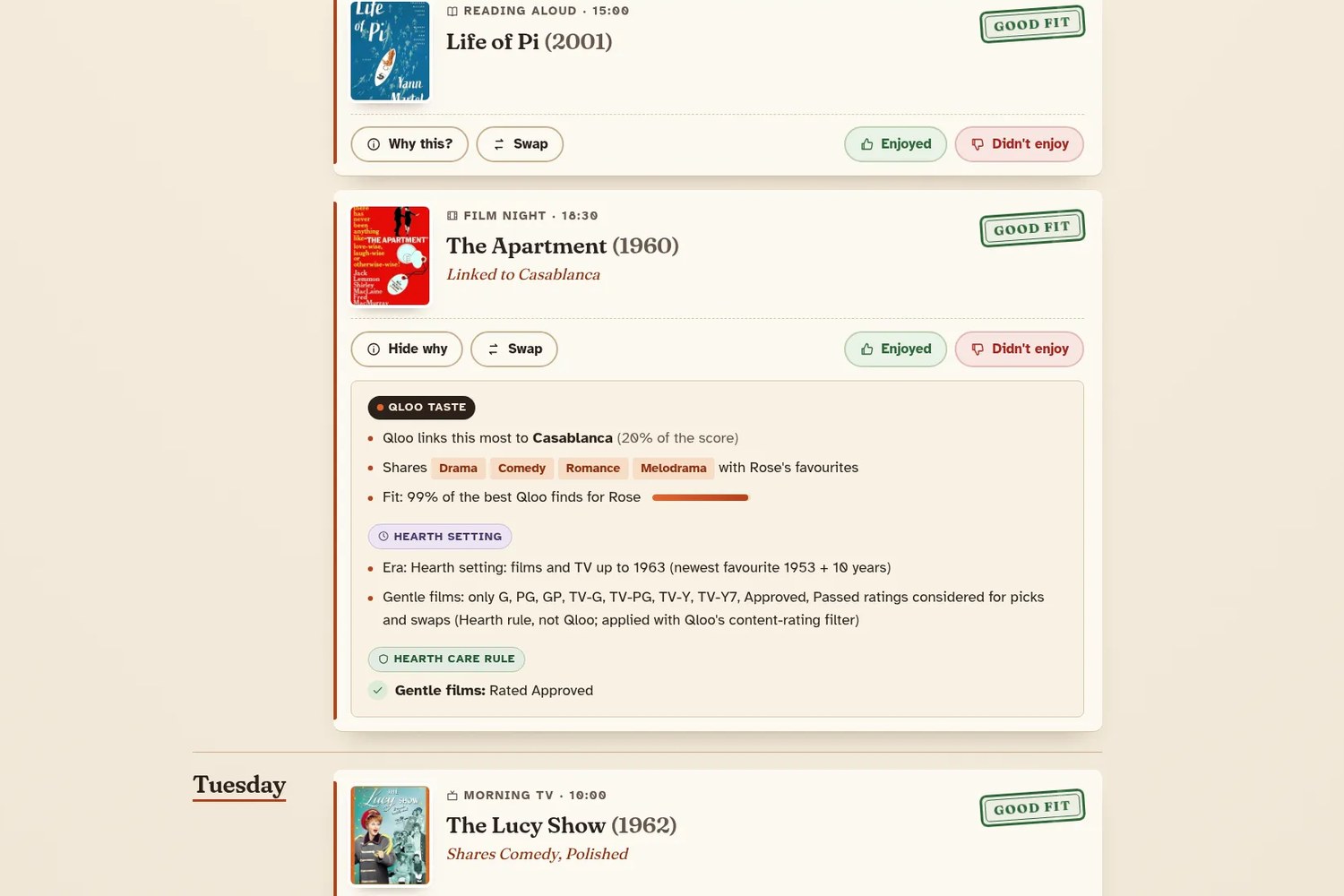
Every pick comes from Qloo's taste graph and carries its evidence. Tap Why this? and Hearth shows which favourite Qloo links it to, the genres they share, and how close it is to the best Qloo can find for that person. Care needs (soft food, low salt, step-free access, hearing support, gentle films and more) are checked by Hearth's own rules and labelled Hearth rule, not Qloo, because a taste graph shouldn't decide what someone can safely eat.
It also:
- Checks anyone's ideas (from staff, family or an AI) and stamps each one good, weak or poor fit, with a better swap in the same genre
- Picks one film, artist or outing for a group, names who'd be left out, and gives them a one-to-one alternative
- Prints a Talk to Rose about... card and a personal playlist for weekend, agency and new staff
- Keeps films and TV in each person's era, so a 1950s fan gets The Apartment rather than this year's blockbuster
- Works locally: a home in Nkwerre, Imo State gets outings near Nkwerre and Orlu and soft West African lunches like pepper soup and moi moi
- Exports a care evidence CSV (activity, Qloo reason, care rules, staff feedback) for inspections
- Runs as an MCP server, so any AI agent can check its suggestions for an older person before making them
No accounts, no birthdays, no medical records: just favourites and care needs.
How we built it
Backend: Python, FastAPI and Pydantic, with SQLite for each care home. Frontend: React, TypeScript and Vite, designed to feel like a warm paper planner, not a chatbot.
Qloo does the taste work. /search resolves each favourite to an entity. /v2/insights, with those entities as signals, ranks artists, films, TV shows, books, places and destinations for each person. filter.results.entities scores any list of ideas in one call per domain, and feature.explainability shows which favourite drives each score. Hearth compares each idea with the best Qloo offers that person, using thresholds I calibrated against the live API with four older-adult personas. filter.release_year.max and filter.content_rating keep films in each person's era, and location filters find local restaurants and outings.
It's deployed on an Oracle Cloud free-tier VM behind Caddy, with the frontend on Vercel. 99 automated tests cover the planner, verifier, care rules, API and MCP server.
Challenges we ran into
- Qloo's film picks lean modern and acclaimed. A Casablanca fan was being offered 1990s dramas, so I added a per-person era: newest favourite plus ten years, adjustable by staff.
- Many titles share a name with zero-popularity duplicates. Hearth picks the clearly better-known match and asks staff to confirm the rest.
- Small towns have few places on Qloo. Nkwerre's lunches came back empty, so Hearth now reads the regional food scene within 80 km.
- Keeping taste and safety apart. Every value on screen is labelled Qloo taste or Hearth care rule, so staff always know which one they're trusting.
- Group activities: four residents with different eras and needs can rule out every option, so Hearth now looks deeper into each person's Qloo list before giving up.
Accomplishments that we're proud of
- A full 28-slot week per resident in seconds, every pick explained
- Qloo is essential, not decorative: without it there's nothing to measure an idea against
- It works in Imo State as well as London
- One engine, three ways in: the web app, a JSON API and an MCP tool for agents
What we learned
Taste data is most useful when it shows its working. Carers trust a pick when they can see Linked to Casablanca, and they trust it more when the safety rules are clearly separate. I also learned how much of good care is small and personal: the right song at 10 am can matter more than any feature list.
What's next for Hearth
- Diet-safe menu swaps that keep the cuisine someone grew up with
- A no-login form so families can add favourites from anywhere
- Pilots with care homes in Nigeria and the UK, learning from staff feedback which picks land
Built With
- caddy
- fastapi
- httpx
- model-context-protocol
- oracle-cloud
- pydantic
- pytest
- python
- qloo
- react
- sqlite
- typescript
- vite

Log in or sign up for Devpost to join the conversation.