-
-
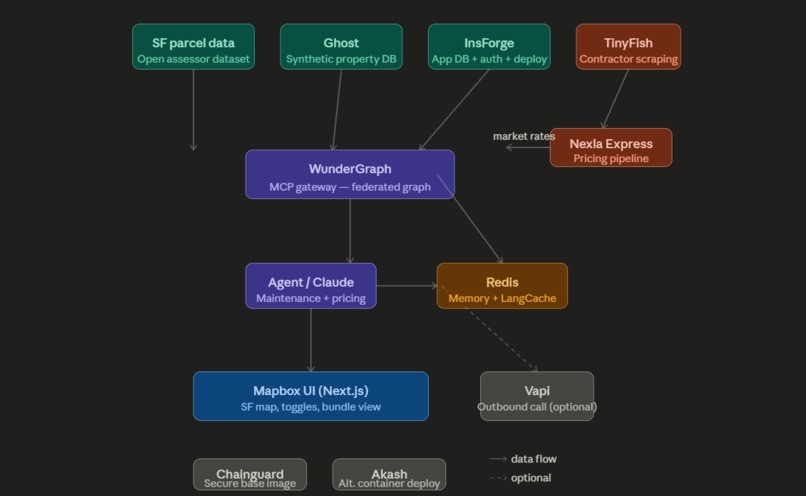
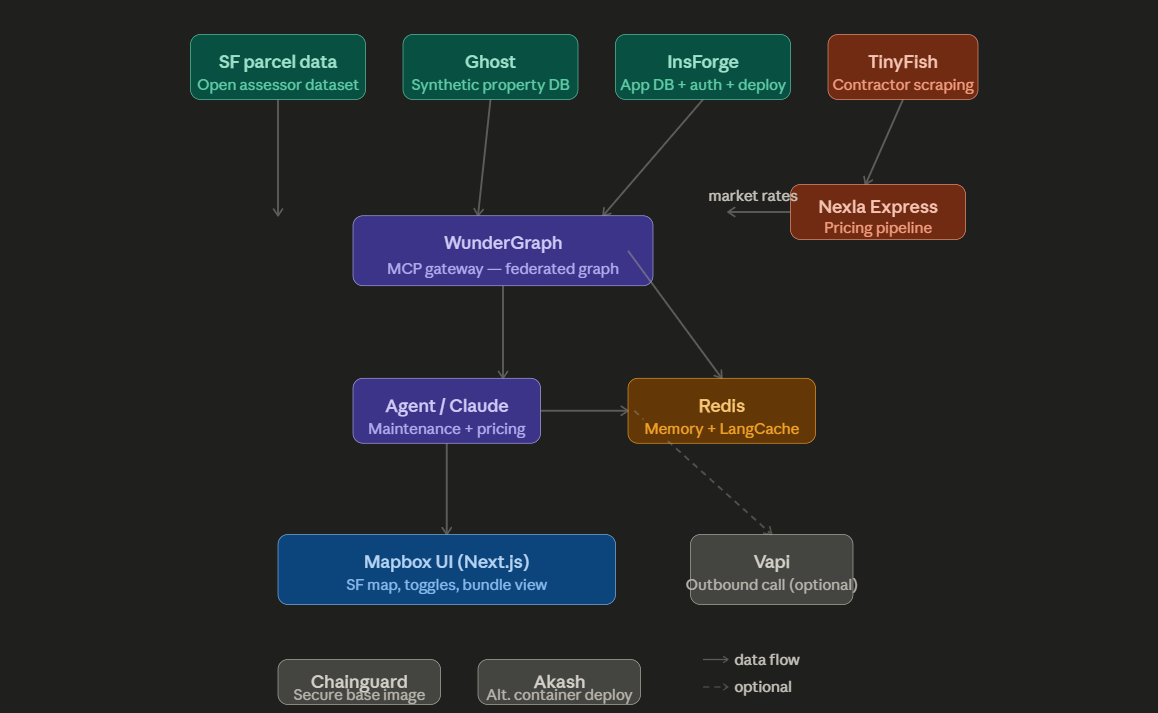
Flow diagram of some
-
-
-
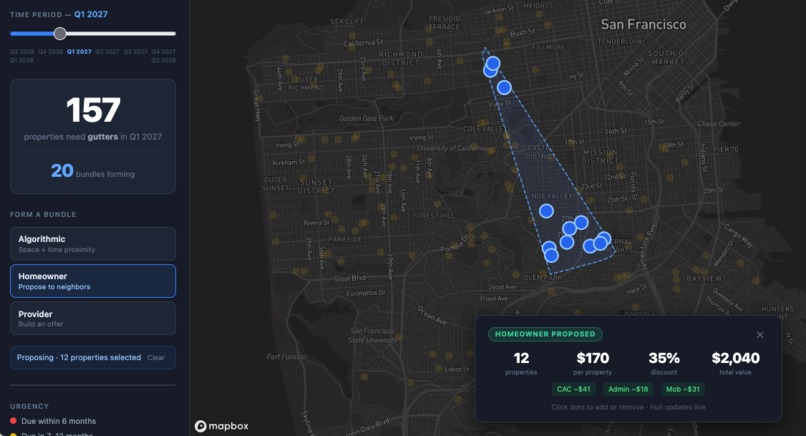
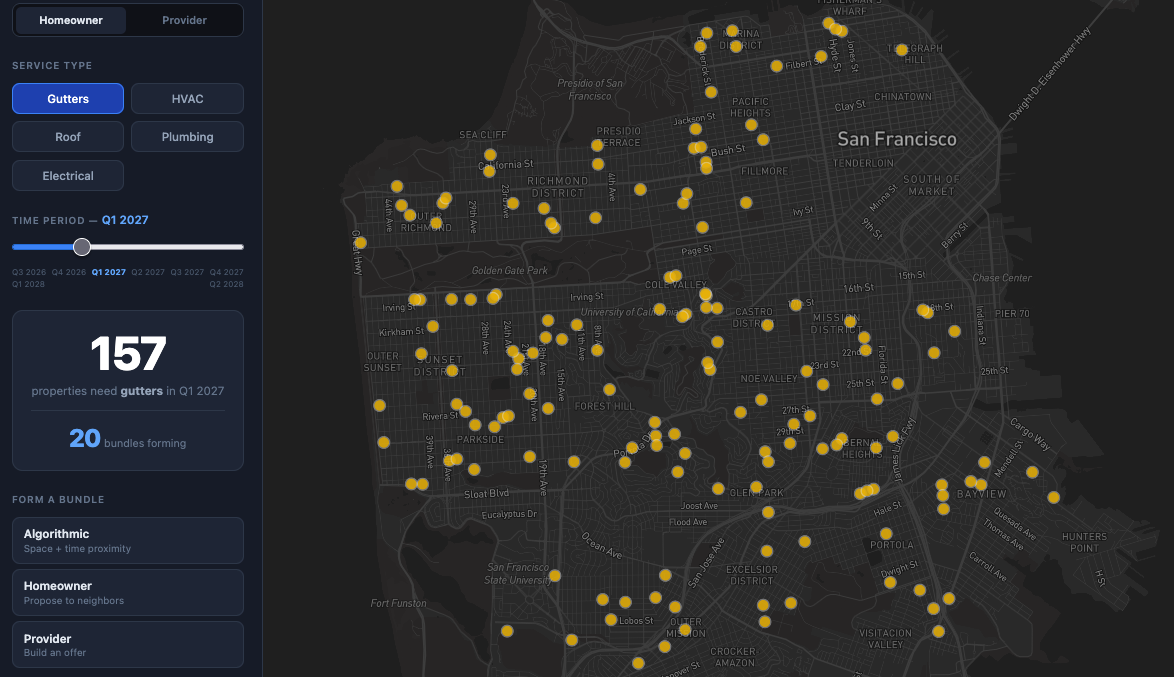
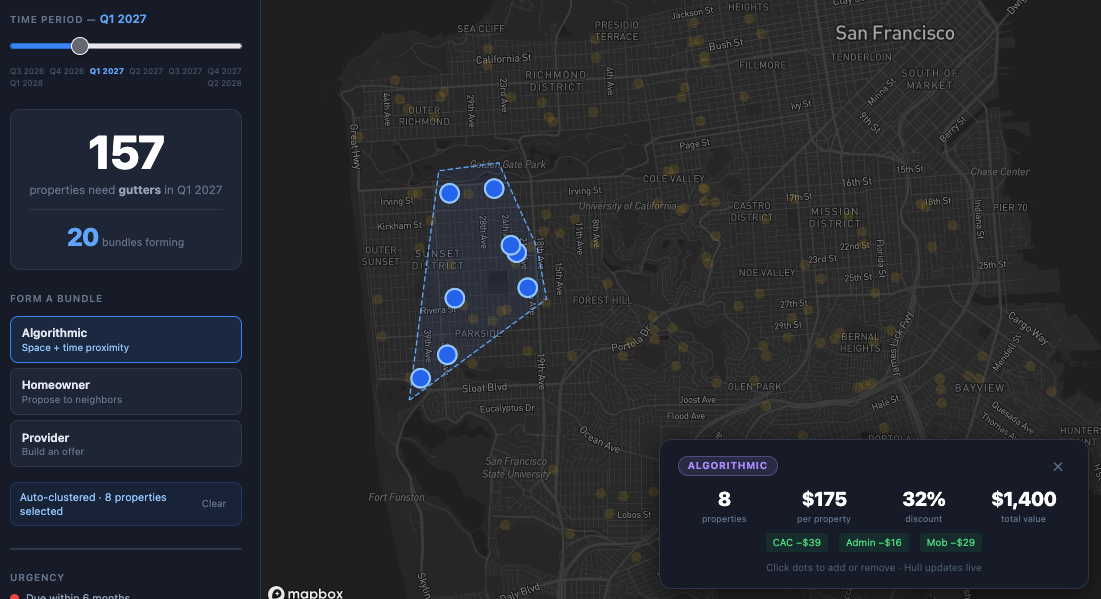
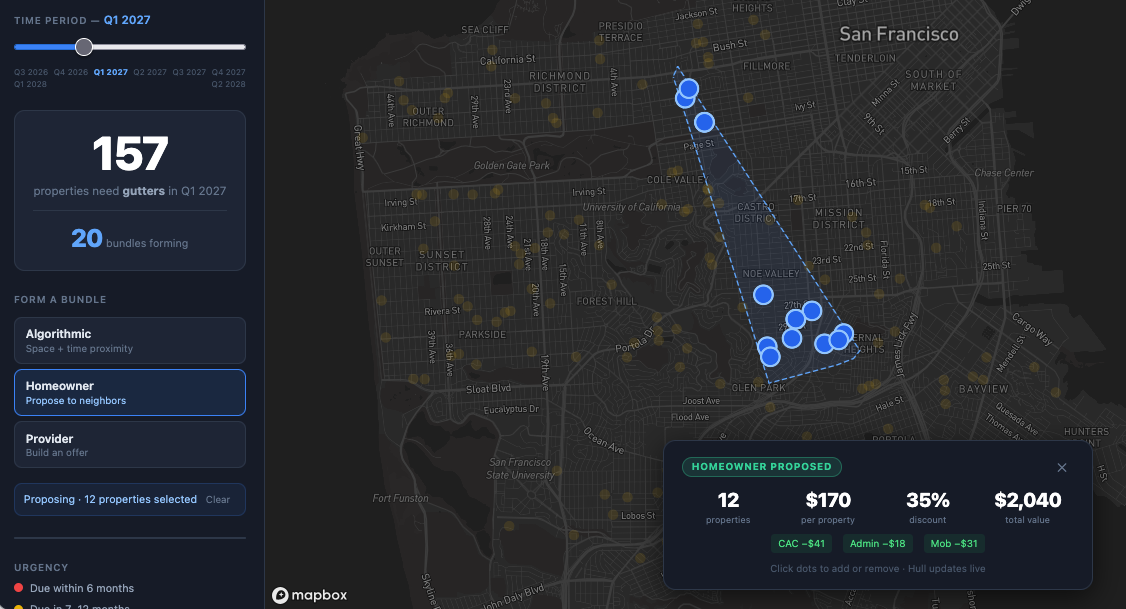
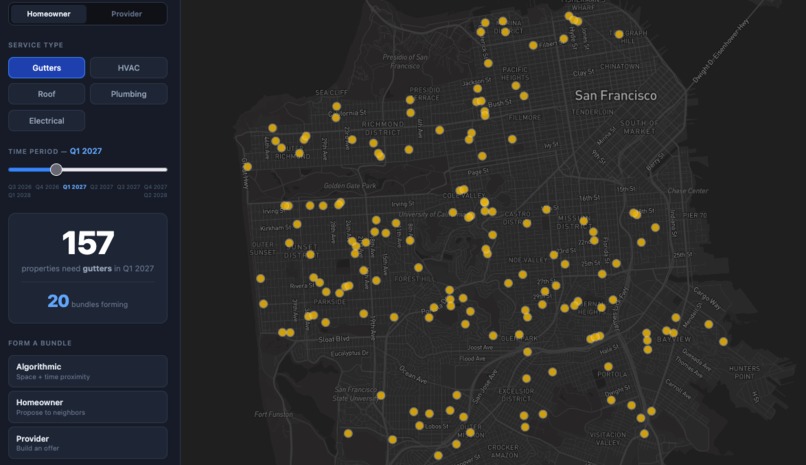
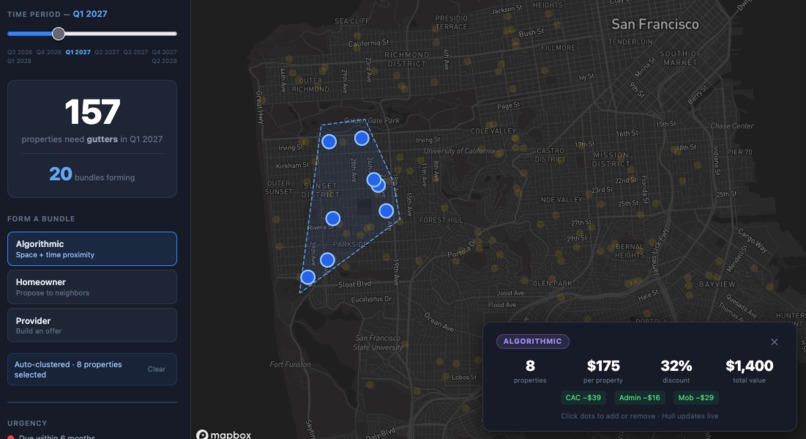
HEARTH was inspired by a simple problem: home maintenance is fragmented, reactive, and expensive for homeowners, while service providers struggle with inefficient demand and scattered jobs. We wanted to build a dual-facing marketplace that works for both sides. For homeowners, HEARTH acts like an operating system for the home, tracking assets, predicting repairs and replacements, and automating the contracting process. For service providers, it creates access to bundled demand packets: pre-qualified, geographically clustered homeowners who need the same service in the same timeframe, while still preserving one-to-one contracts so the work stays personalized.
The biggest thing we learned is that the real opportunity is not just better scheduling or better lead generation, but procurement design. Our key insight is that when enough similar demand is bundled together, homeowners can unlock per-unit discounts without turning the experience into a generic group-buy. The contract remains one-to-one, which means personalization and service quality are preserved. That distinction became the core of the project and the moat we think is worth protecting.
We built the project as a full-stack marketplace system with separate layers for data collection, pipeline ingestion, and app experiences. TinyFish was used to gather market-facing pricing data, Nexla handled the data pipeline and webhook ingestion, and the app logic was structured around translating that data into homeowner maintenance intelligence and provider-side demand visibility. The goal was to connect predictive home operations on one side with clustered service demand on the other.
One of the main challenges we faced was making the concept operational rather than just conceptual. It was easy to describe the marketplace, but much harder to define the exact data flows, pricing logic, and automation required to make it believable. Another challenge was integrating external tooling and making the local project environment work reliably enough to test the pipeline. We also had to think carefully about how to preserve provider personalization while still designing around bundled demand. That tension ended up shaping the product more than anything else.
In the end, everything in HEARTH serves one idea: bundled procurement can reduce costs for homeowners without sacrificing the individualized service relationship. That insight is the foundation of the project, and the rest of the system exists to make it real.


Log in or sign up for Devpost to join the conversation.