Inspiration
Cardiovascular disease is one of the leading causes of death globally. Many patients only discover heart conditions after symptoms become severe. Early prediction of cardiovascular risk can significantly improve prevention and treatment outcomes.
The inspiration behind HeartGuard AI was to explore how artificial intelligence can help detect cardiovascular risk earlier by analyzing biomedical data. By combining clinical features, ECG signals, and machine learning models, we aimed to build a system that not only predicts heart disease risk but also explains the factors influencing those predictions.
Our goal was to design an intelligent system that supports healthcare decision-making while remaining transparent and interpretable.
What the Project Does
HeartGuard AI is a multimodal AI system that predicts cardiovascular disease risk using multiple sources of medical data.
The system performs three key functions:
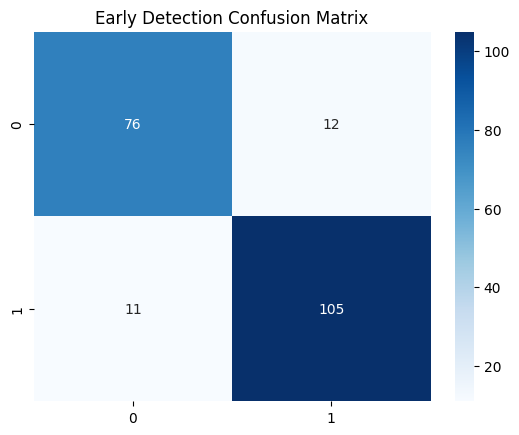
1. Early Heart Disease Detection
Using patient clinical features such as blood pressure, cholesterol levels, heart rate, and ECG indicators, a machine learning ensemble model predicts the probability of heart disease.
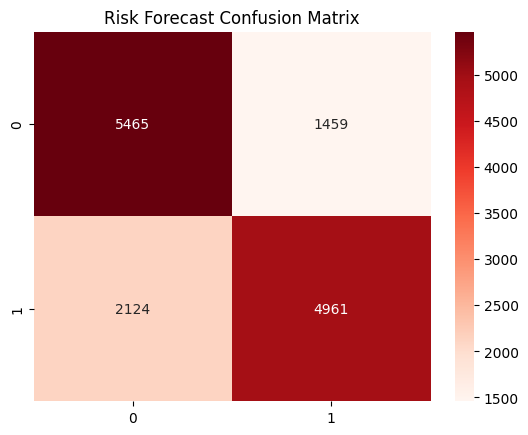
2. Cardiovascular Risk Forecasting
A second predictive model analyzes large-scale cardiovascular health datasets to estimate long-term cardiovascular risk patterns.
3. ECG Signal Analysis Using Deep Learning
A convolutional neural network processes ECG waveform data to detect abnormal heart patterns associated with cardiovascular conditions.
The predictions from these models are combined into a Unified Cardiovascular Risk Score, providing a comprehensive health assessment.
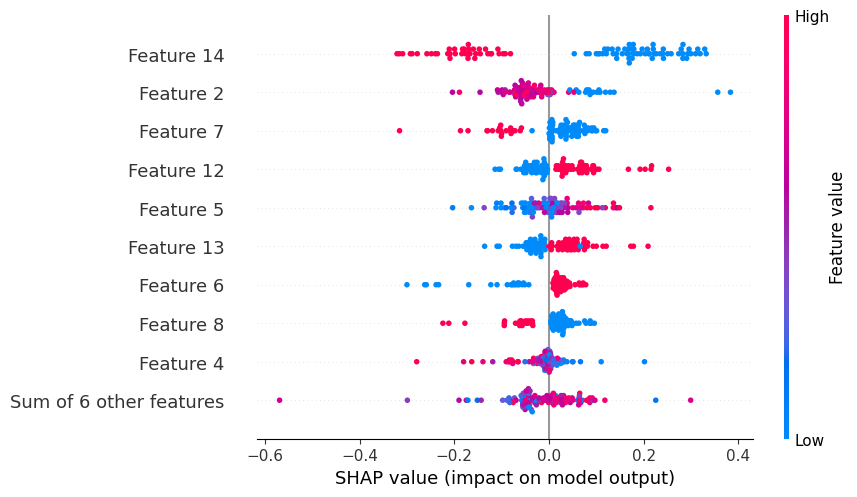
To ensure transparency, the system uses Explainable AI (SHAP) to highlight the most important factors influencing predictions.
The final output includes a patient-friendly risk report showing:
- Estimated cardiovascular risk percentage
- Risk category (Low, Moderate, High, Critical)
- Key clinical factors contributing to the prediction
How We Built It
HeartGuard AI combines several machine learning and deep learning techniques.
Data Processing
Multiple cardiovascular datasets were cleaned and preprocessed. Feature normalization and class balancing techniques such as SMOTE were applied to improve model training.
Early Detection Model
A stacking ensemble model was implemented using:
- Random Forest
- XGBoost
- LightGBM
These algorithms work together to improve prediction accuracy.
Risk Forecast Model
An XGBoost model was trained on a large cardiovascular dataset to estimate long-term risk probability.
ECG Deep Learning Model
A 1D Convolutional Neural Network (CNN) was developed to analyze ECG time-series signals and detect abnormal cardiac patterns.
Explainable AI
To improve interpretability, SHAP (Shapley Additive Explanations) was used to determine the most influential features contributing to predictions.
Multimodal Risk Integration
Predictions from the clinical model, population risk model, and ECG model are combined into a unified risk score for a more comprehensive assessment.
Challenges We Faced
One challenge was handling large ECG time-series datasets, which contain thousands of signal points per sample. To address this, we implemented signal downsampling and normalization techniques.
Another challenge was class imbalance in medical datasets. We applied SMOTE oversampling to balance the training data.
Ensuring interpretability was also important, since healthcare AI systems should not function as black boxes. Integrating explainable AI helped provide meaningful insights into predictions.
What We Learned
Through this project we gained experience in:
- Ensemble machine learning methods
- Deep learning for biomedical signal analysis
- Handling large healthcare datasets
- Implementing explainable AI techniques
- Designing multimodal AI systems
This project demonstrated how AI can support healthcare by combining predictive accuracy with interpretability.
Future Improvements
Future work could include:
- Integration with wearable health devices
- Real-time ECG monitoring
- Larger clinical datasets for improved generalization
- A web or mobile interface for healthcare professionals
- Clinical validation in real-world medical environments
HeartGuard AI has the potential to evolve into a practical decision-support tool for early cardiovascular disease detection.
Built With
- ai
- colab
- deeplearning
- keras
- lightgbm
- machine-learning
- matplotlib
- numpy
- pandas
- python
- scikit-learn
- seaborn
- shap
- tensorflow
- xgboost

Log in or sign up for Devpost to join the conversation.