Inspiration
As people age, heart problems become one of the biggest health risks, yet many elderly individuals do not have access to expensive medical devices or regular checkups. We wanted to build something simple, affordable, and user-friendly that could help seniors monitor their heart health and live a longer, healthier life. Our inspiration came from the desire to give both seniors and their families peace of mind by bringing hospital-grade monitoring into the home. At its core, HeartGuard is about empowering older adults to age with grace, comfort, and dignity while staying connected to the people who care for them.
What it does
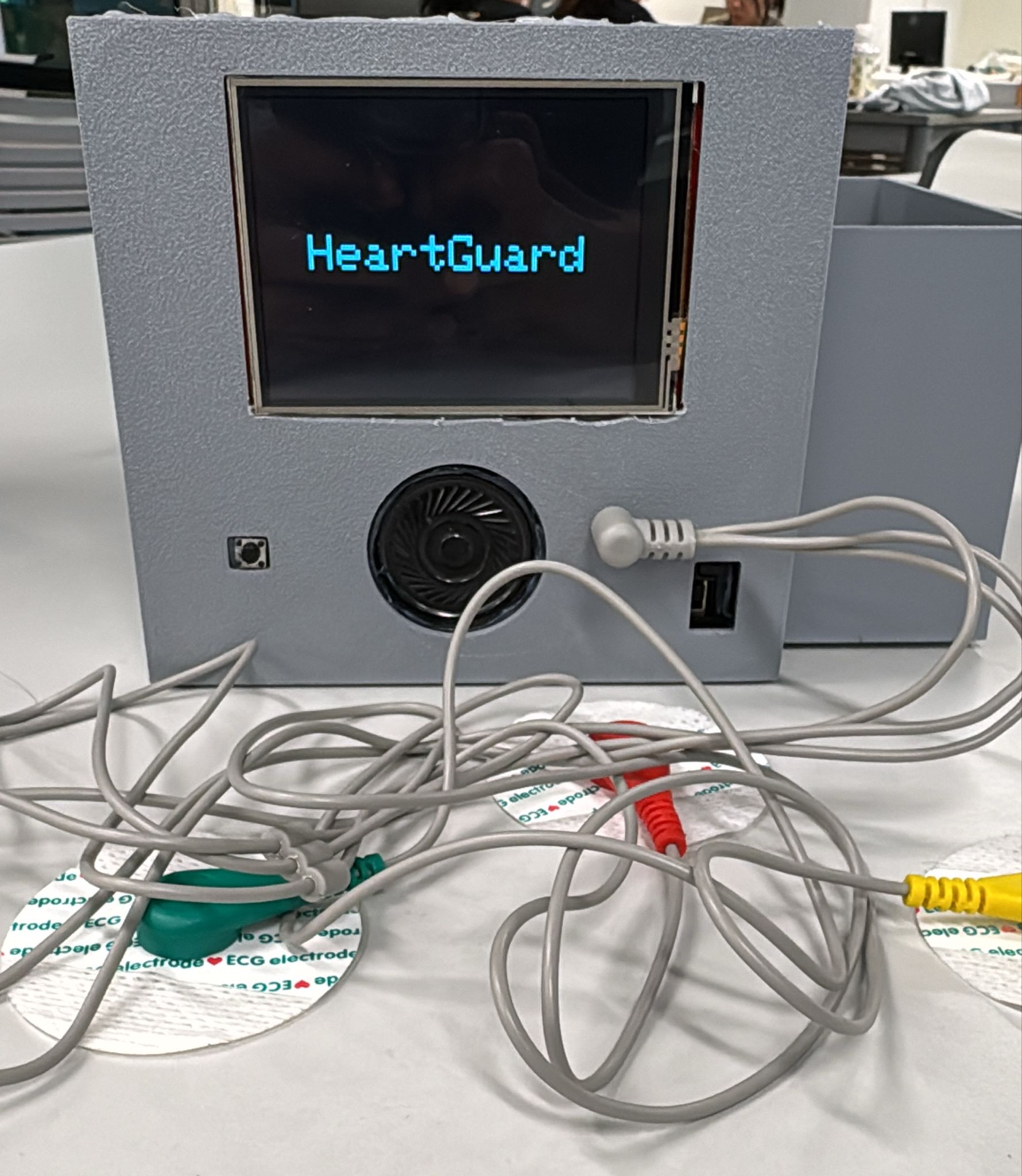
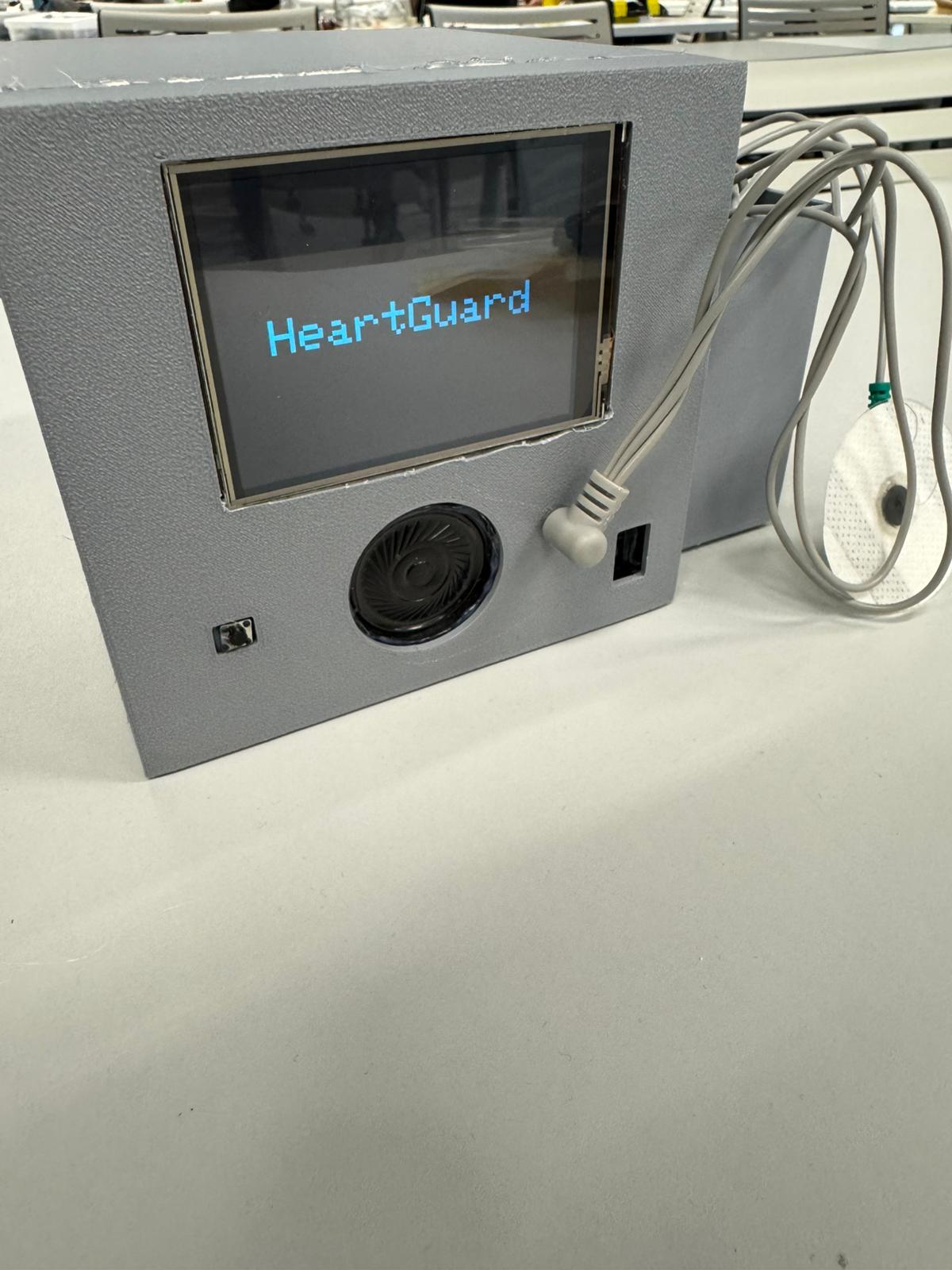
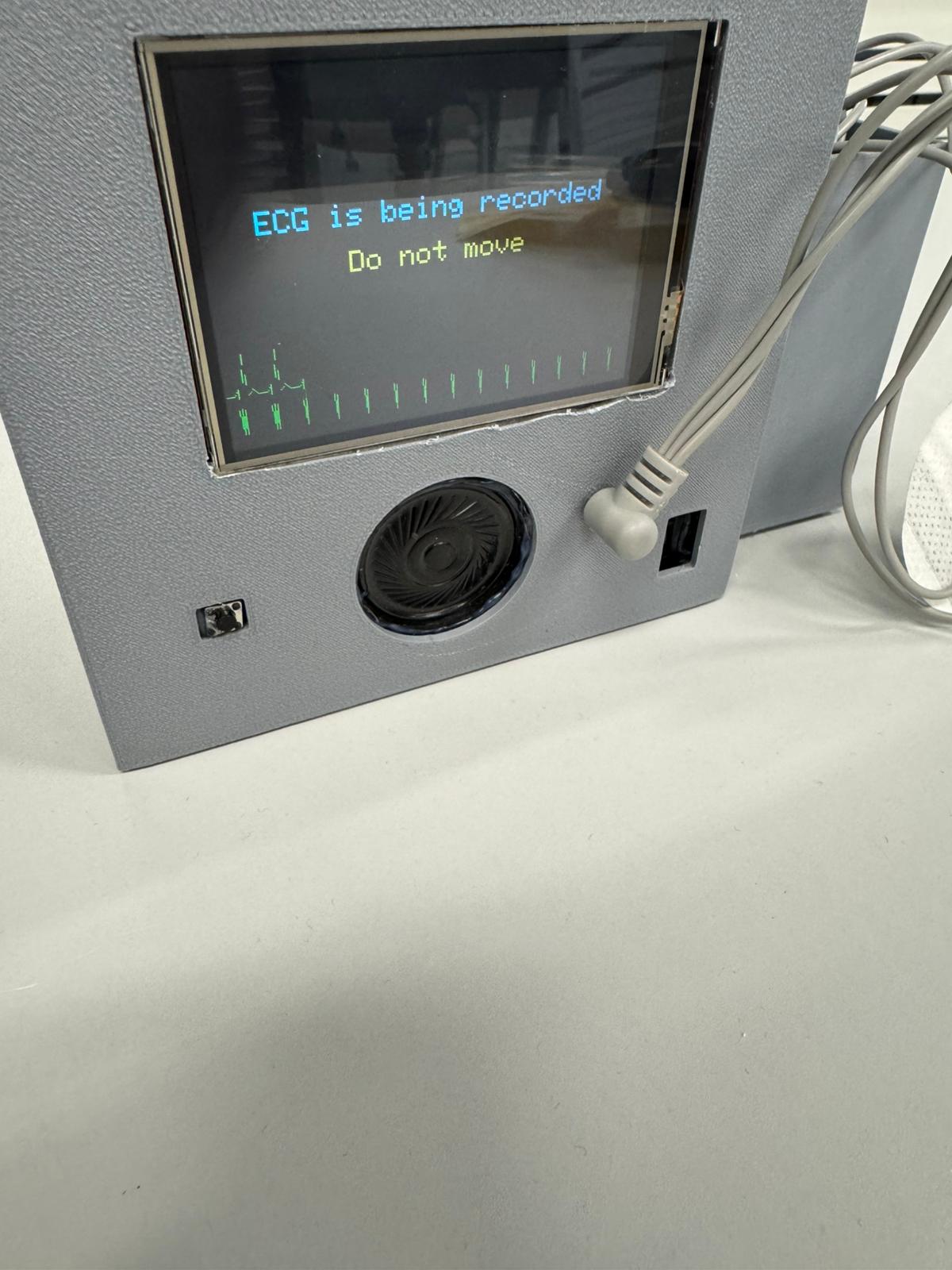
HeartGuard is a homemade ECG device powered by AI and designed specifically with elderly users in mind. With just a single button press, seniors can measure their heart activity and follow step-by-step voice instructions, making it easy for anyone to use regardless of their familiarity with technology. Once the ECG signals are collected, they are processed and analyzed by our AI model, which is capable of detecting several important conditions including normal rhythms, myocardial infarction, ST/T changes, conduction disturbances, and hypertrophy.
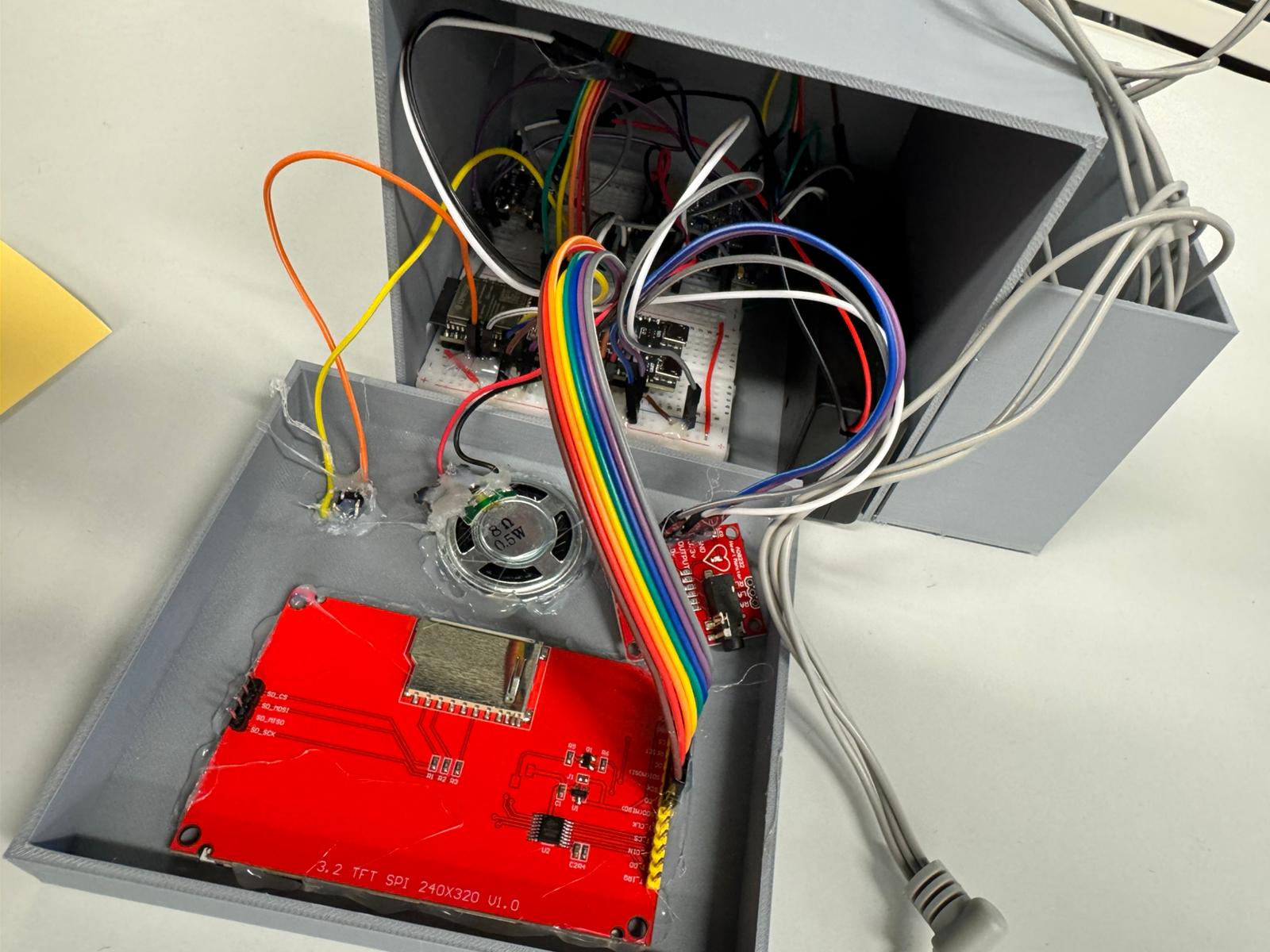
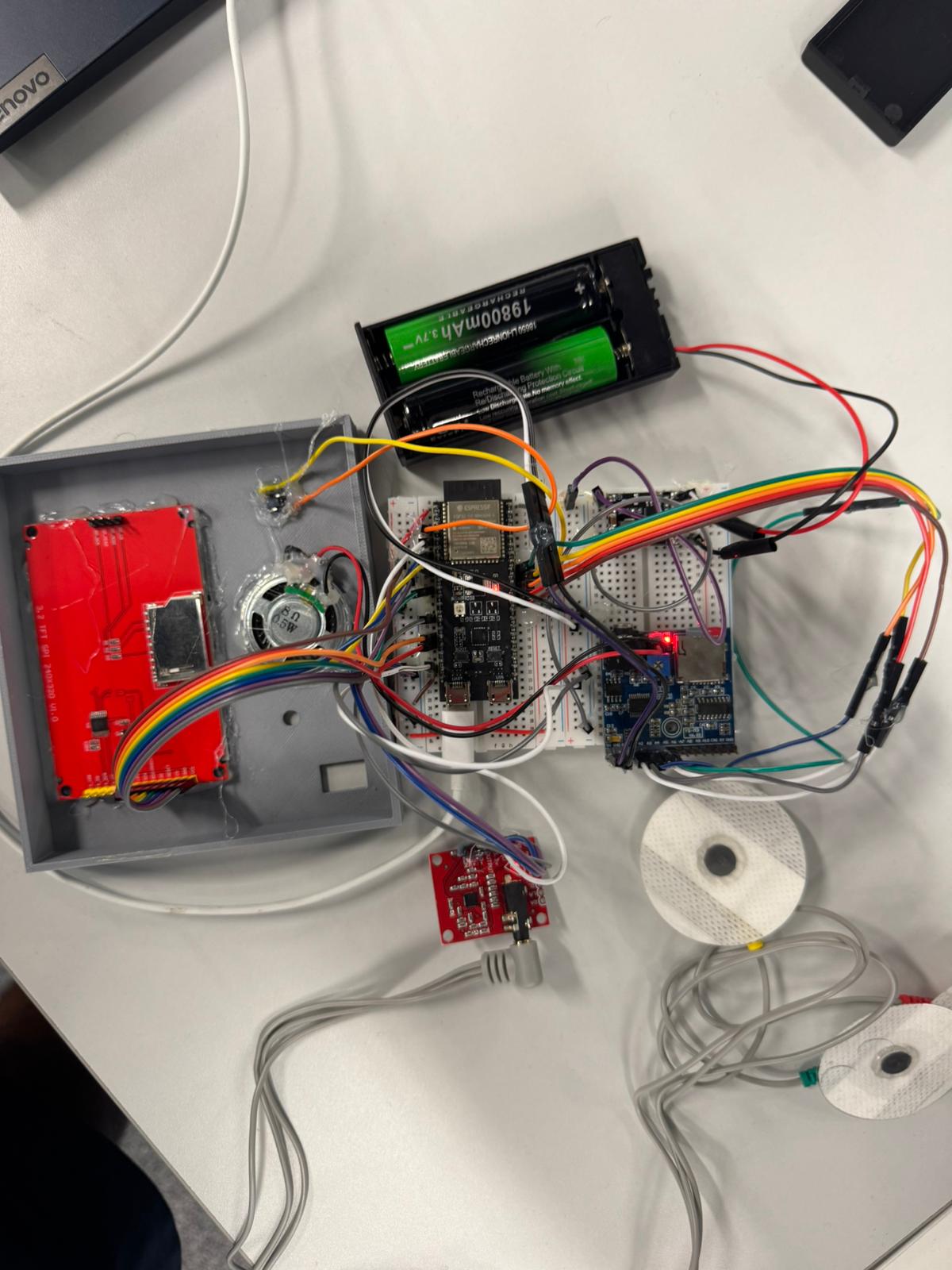
To achieve this, we fine-tuned a pre-trained HuBERT model using the PTB-XL dataset, which contains more than twenty-one thousand high-resolution, annotated ECG recordings. We loaded HuBERT-ECG as a feature extractor, added a classification head to map signal patterns to diseases, and trained the model on labeled ECGs until it could recognize key abnormalities. On the hardware side, HeartGuard runs on an ESP32 and is paired with a 3.2-inch LCD display, an MP3 module for audio guidance, a push button for easy activation, and an AD8232 ECG sensor for data collection. ECG readings are stored in an InfluxDB database, which feeds the AI for real-time diagnosis. The device casing was 3D-modeled and printed using a Bambu Lab A1 Mini, and it is powered by two 18650 lithium-ion batteries regulated with a buck converter to ensure stable operation. Together, these elements create a compact device with clean visuals and clear voice instructions, making the experience accessible for seniors.
How we built it
Building HeartGuard required us to bridge multiple areas of technology in a very short period of time. We started by designing and 3D-printing a custom enclosure to house the electronics, then carefully wired together the ESP32 microcontroller, ECG sensor, LCD display, MP3 module, and battery system. We implemented real-time data collection and ensured the ECG signals could be transmitted to InfluxDB for storage and processing. On the AI side, we fine-tuned the HuBERT-ECG model using the PTB-XL dataset and integrated the results back into the device so that the output could be both displayed on the screen and spoken aloud through voice prompts. The entire build required balancing embedded hardware, signal processing, and AI model deployment into a single working system within the hackathon’s tight timeframe.
Challenges we ran into
The process of creating HeartGuard was far from simple. One of the biggest challenges was integrating the hardware and software smoothly within only two days. Sending raw ECG data to the server required extensive debugging, and ensuring power stability across multiple modules proved difficult. Another major challenge was the quality of the ECG signals themselves; low-cost sensors like the AD8232 produce noisy readings, making it difficult to obtain clean data for the AI model to analyze. Despite these obstacles, our team pushed through, and although the project was ambitious for the time available, we managed to build a working prototype that combined all these complex elements.
Accomplishments that we’re proud of
We are proud that we managed to build a fully functional ECG device powered by real AI diagnosis in such a short time. The fact that we were able to integrate hardware, AI, data pipelines, and 3D design into one cohesive product is an achievement on its own. We are especially proud of the accessibility features we built in, such as voice instructions and simple visuals, which make the device elderly-friendly. More importantly, we proved that hospital-level monitoring can be made affordable and accessible to everyday people, opening the door for a future where advanced health technology can exist inside every home.
What we learned
Through this project, we learned how complex it can be to integrate AI with live biomedical signals and how critical signal quality and preprocessing are for medical applications. We also learned the importance of designing hardware not just for functionality, but for accessibility, especially when the end users are elderly. Finally, the experience highlighted the value of rapid prototyping, teamwork, and persistence under time pressure.
What’s next for HeartGuard
Looking ahead, we want to improve the quality of the ECG signals by using better electrodes and implementing stronger filtering methods. We also plan to add cloud connectivity so that caregivers and doctors can monitor patients remotely in real time. Another step will be miniaturizing the device to make it even more portable, and expanding the AI model to detect a broader range of heart conditions. Ultimately, we hope to refine HeartGuard into a medically certified product that can be deployed in real homes to truly make a difference in people’s lives.
Real-world Impact
HeartGuard has the potential to create meaningful impact beyond the hackathon. By providing affordable and accessible heart monitoring, it allows seniors to detect issues earlier, reduces unnecessary hospital visits, and gives families peace of mind. For healthcare systems, it can help ease the growing strain caused by Singapore’s aging population by shifting some of the monitoring burden away from hospitals and into homes. Most importantly, it empowers older adults to remain independent, healthy, and confident in their daily lives. By combining AI, hardware, and user-friendly design, HeartGuard represents a step toward a future where technology enables people to age with dignity and security.
Built With
- 18650s
- 3dprinting
- ad8232
- ai
- api
- cloud
- cpp
- esp32-s3
- influxdb
- iot
- lcd
- mp3-module
- python
- speaker
- sql

Log in or sign up for Devpost to join the conversation.