Inspiration
What it does
How we built it
Challenges we ran into
Accomplishments that we're proud of
What we learned
What's next for Heartdiseaseproject
Inspiration
HeartDiseaseProject was inspired by the growing role of machine learning in healthcare and the need to make health-related data easier to understand. We wanted to explore how machine learning could analyze cardiovascular-related information and provide an educational prediction that helps users understand how different health measurements can be used by an ML model.
The project is designed as an educational and research-focused application rather than a replacement for doctors or professional medical diagnosis.
What it does
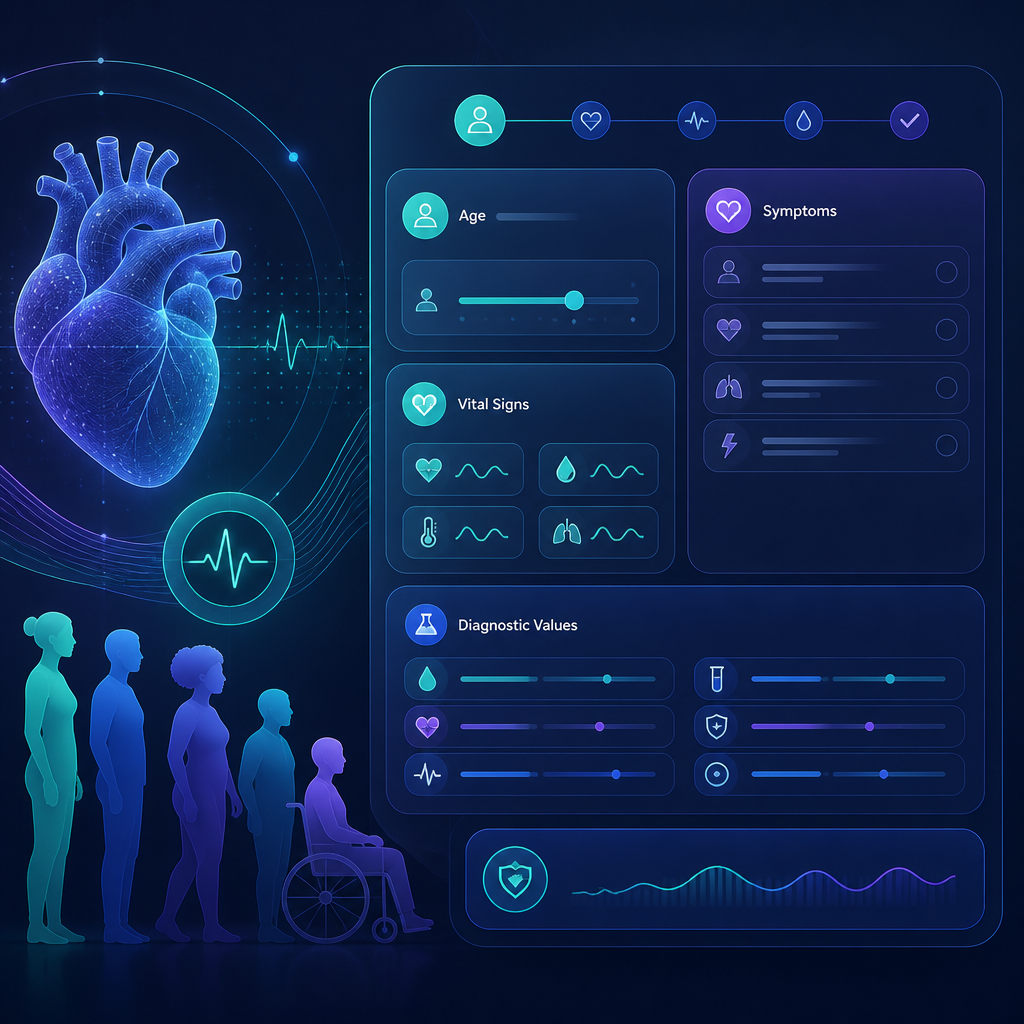
HeartDiseaseProject is a machine-learning web application that analyzes selected cardiovascular health-related inputs and produces a model prediction.
Users can enter information such as:
- Age
- Gender
- Chest pain type
- Resting blood pressure
- Cholesterol
- Fasting blood sugar
- Resting ECG
- Maximum heart rate
- Exercise-induced angina
- ST depression
- ST slope
- Number of major vessels
- Thalassemia
The application processes these inputs through a Random Forest machine-learning model and displays the resulting prediction.
The platform is also being developed with features such as:
- Prediction results
- Explainable AI
- Assessment history
- Advanced analytics
- Health education
- AI-powered educational assistance
- User accounts and authentication
- Admin dashboard
- Model monitoring
- APIs and integrations
- Reports and data visualization
All predictions are presented as educational/research outputs and are not medical diagnoses.
How we built it
We built HeartDiseaseProject as a full-stack machine-learning web application.
The core system uses:
- Python
- Flask
- Scikit-learn
- Random Forest
- HTML
- CSS
- JavaScript
- Database technologies
- REST APIs
- Data visualization
The machine-learning component uses cardiovascular-related data to train a Random Forest classifier. The web application collects the required inputs, sends them to the backend, processes them through the existing ML pipeline, and returns the prediction to the user interface.
We developed the project progressively, starting with the prediction system and then expanding it into a broader platform with analytics, explainability, authentication, education, APIs, and administration.
Challenges we ran into
One of our biggest challenges was connecting machine-learning functionality with a user-friendly web interface.
We also had to consider:
- Correctly processing user inputs
- Maintaining consistent feature mappings
- Connecting the frontend to the Flask backend
- Handling invalid or missing data
- Making predictions understandable
- Designing useful visualizations
- Protecting user accounts and assessment information
- Implementing role-based access
- Building secure APIs
- Keeping the application responsive
- Making sure the application does not present an ML prediction as a medical diagnosis
Another challenge was expanding the project without breaking the original prediction system. This required careful planning and testing at every development stage.
Accomplishments that we're proud of
We are proud of turning a machine-learning experiment into a much more complete healthcare technology prototype.
Some of our major accomplishments include:
- Building a working heart-disease prediction application
- Integrating a Random Forest ML model with a web application
- Creating a structured healthcare assessment interface
- Developing explainable AI functionality
- Building assessment history and analytics
- Creating health education features
- Designing an AI Health Assistant concept
- Developing user, educator, and administrator roles
- Creating professional dashboards
- Designing a Model Center for ML monitoring
- Developing secure API architecture
- Adding reporting and data visualization capabilities
- Planning security, privacy, testing, and production deployment
Most importantly, the project helped us understand how machine learning, software engineering, data analysis, security, and user experience can work together in one application.
What we learned
Through HeartDiseaseProject, we learned that building an ML application involves much more than training a model.
We learned about:
- Machine learning
- Random Forest classification
- Data preprocessing
- Feature engineering and feature interpretation
- Model evaluation
- Backend development
- Frontend development
- REST APIs
- Databases
- Authentication
- Authorization
- Cybersecurity
- Data privacy
- Data visualization
- Explainable AI
- Software testing
- Deployment
- Product design
We also learned the importance of being transparent about what a machine-learning model can and cannot tell us. A prediction from a research model should not be presented as a confirmed medical diagnosis.
What's next for HeartDiseaseProject
Our next goal is to continue improving HeartDiseaseProject as a secure, educational, and research-focused healthcare ML platform.
Future development may include:
- Improved model evaluation
- Additional model versions for research comparison
- Better explainability
- More advanced analytics
- Expanded health education
- Improved AI educational assistance
- Mobile-friendly experiences
- Better accessibility
- Secure API integrations
- Stronger monitoring
- Improved reporting
- Performance optimization
- Continuous security testing
- Production deployment
In the long term, HeartDiseaseProject can become a broader platform for learning about the intersection of healthcare, data science, artificial intelligence, and software engineering.
The project will continue to prioritize transparency, privacy, security, and responsible use of AI in healthcare.
Built With
- ai
- analytics
- api
- artificial
- data
- development
- disease
- explainable
- flask
- forest
- healthcare
- healthtech
- heart
- intelligence
- learning
- machine
- predictive
- python
- random
- rest
- science
- scikit-learn
- technology
- visualization
- web

Log in or sign up for Devpost to join the conversation.