-
-
Crisis Outreach LA Map
-
Transcription of Calls
-
Patient's Information
Inspiration
For older adults and people recovering at home, a missed check in can leave caregivers unsure of what's changed or who needs help. During a wildfire or power outage, those same people may also need help leaving home or keeping medical equipment running.
We wanted to connect those two situations. The information a care team gathers during everyday check ins can help them respond when normal routines break down. They already know the resident, their care needs, and the concerns that still need follow up.
That became Heartbeat: one system for daily care and crisis outreach, built around a familiar phone call. Patients don't need to download an app, and care teams can carry what they know about each person into an emergency.
We called it Heartbeat for care that never misses a beat.
What it does
Heartbeat has two connected uses: ongoing care at home and outreach during a crisis. Both use the same resident records, call history, and follow up tasks.
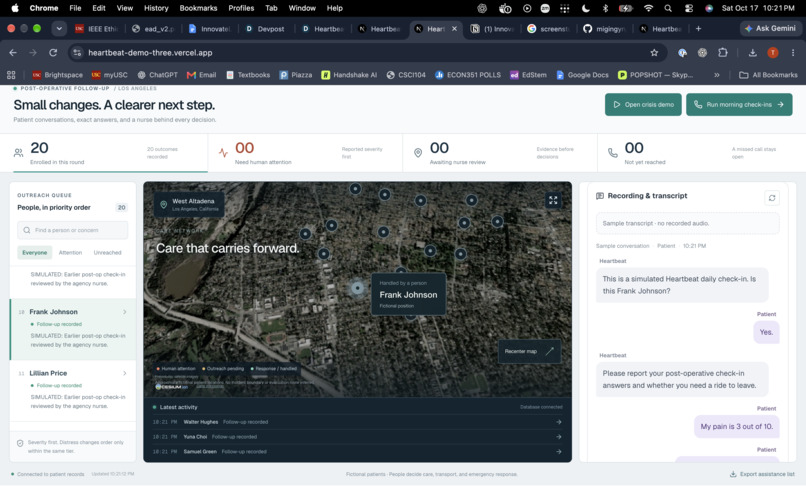
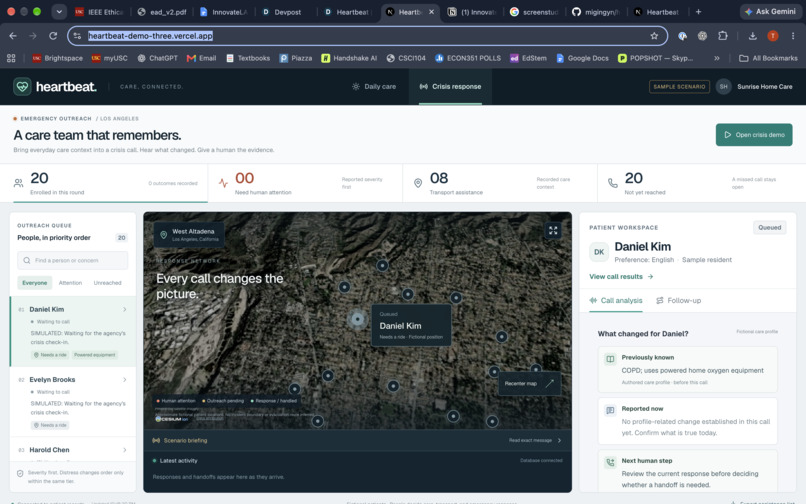
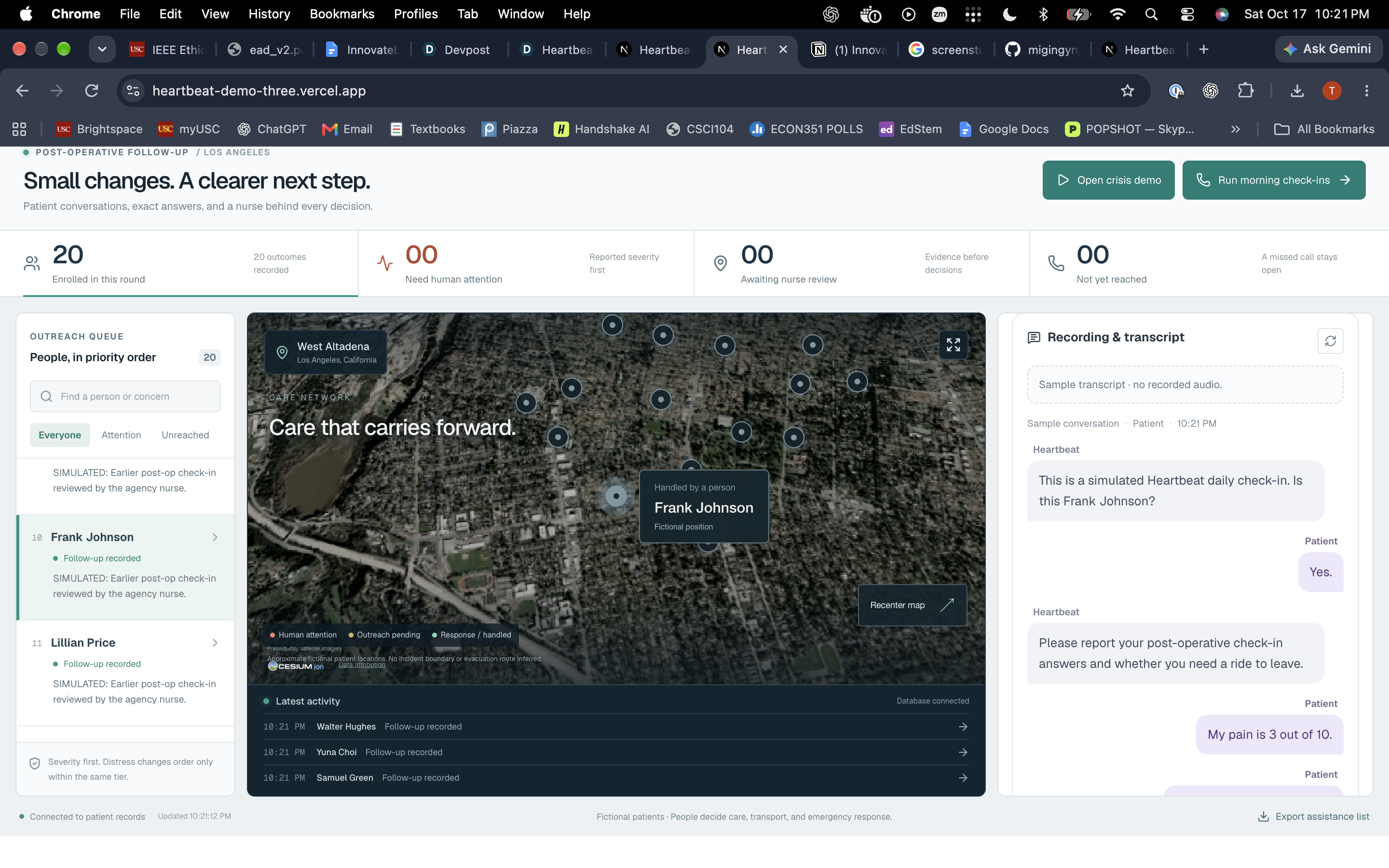
For daily care, staff can review assigned residents, enter vitals, track measurement trends, update care notes, and assign follow up tasks. Phone check ins collect updates that staff can review alongside transcripts and previous care information.
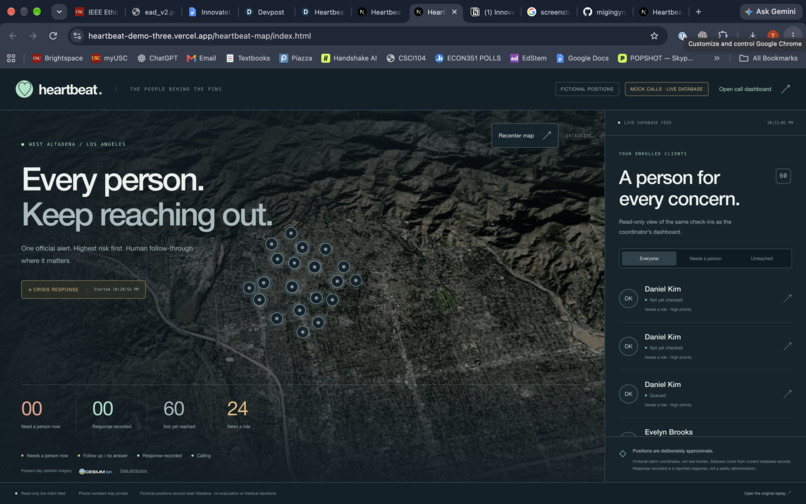
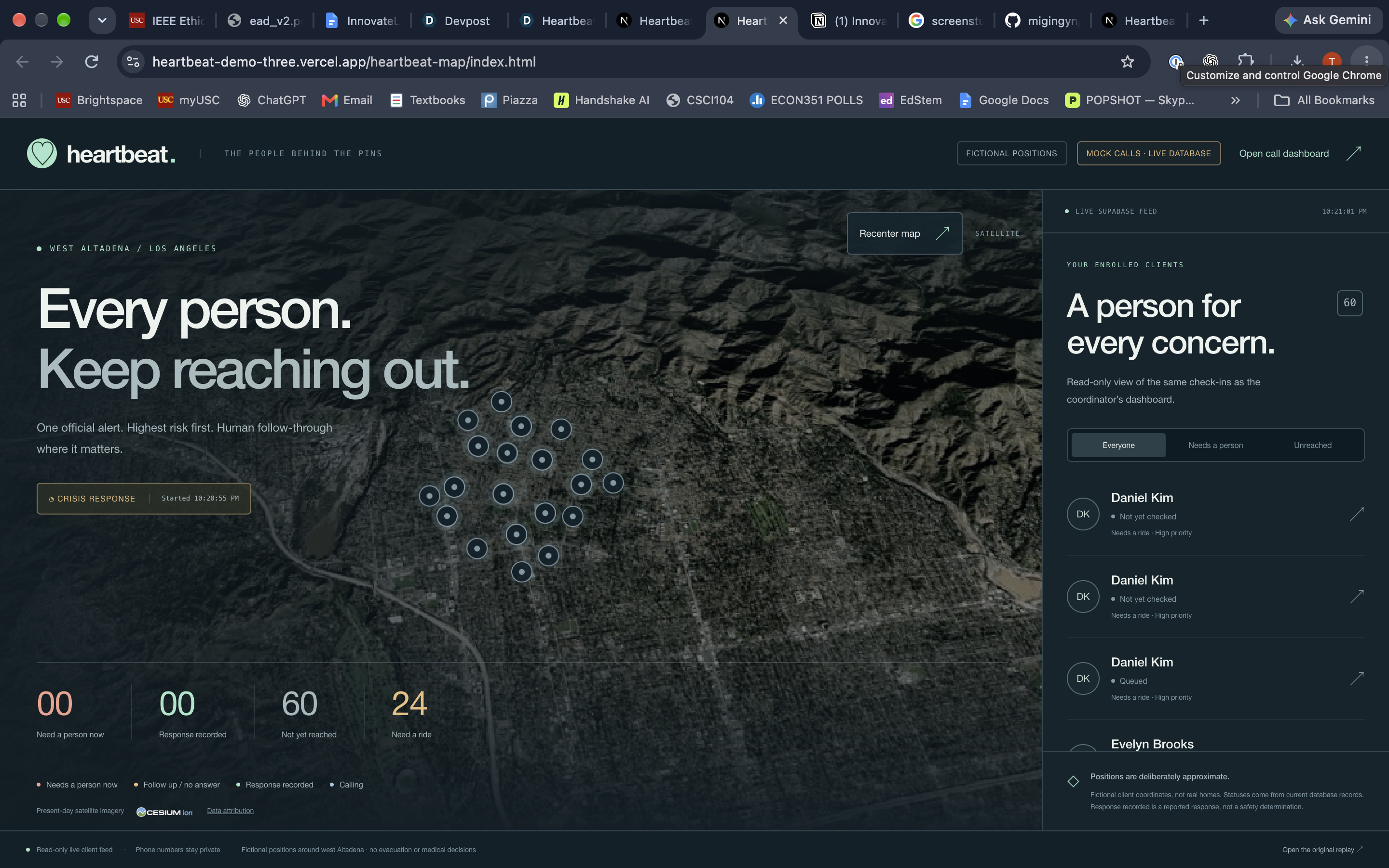
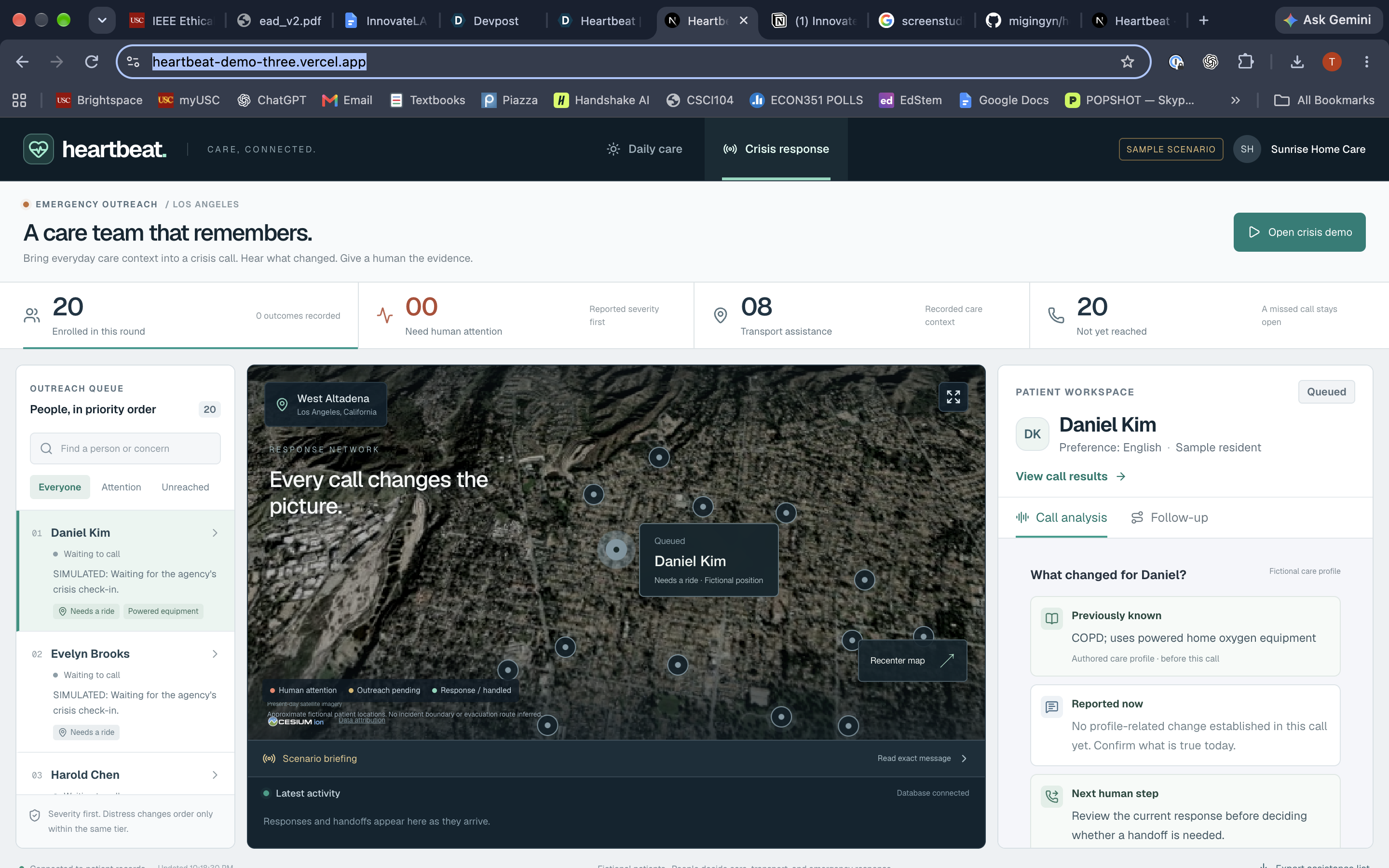
During a crisis, an interactive satellite map helps coordinators locate those same residents and decide who to reach first. The dashboard tracks unanswered calls, retries, transportation needs, and cases waiting on nurse review.
The connection matters at the individual level. If a resident relies on powered oxygen equipment, that detail belongs in their everyday care record. During a power outage, it also helps the team know what to ask and what support may need urgent attention. Daily care builds the context that crisis outreach relies on.
The app shows reported symptom severity and expressed distress as separate signals. Each call also saves a snapshot of what the app knew when the call started, so staff can read the results against that information.
Heartbeat helps caregivers find cases that need attention and follow through. Care decisions stay with them.
How we built it
We used Next.js, React, and TypeScript for the app, with Supabase and PostgreSQL for resident records, measurements, calls, and tasks. The satellite map uses CesiumJS.
We built separate daily check in and crisis outreach flows on Retell AI, connected to the same resident context. Call results link to transcripts, review queues, and follow up actions.
Much of the work was combining two existing apps: a map centered outreach dashboard and a care management workspace. We kept the outreach app's visual identity and connected the two through shared navigation and data. That shared foundation lets staff move from routine care to crisis outreach with the resident's history still in view.
The demo uses fictional residents and simulated call outcomes, with real local persistence and application routes. We haven't verified live phone and SMS delivery yet.
Challenges we ran into
Making daily care and crisis outreach work together meant more than putting their screens together. Opening a resident from the map, the outreach queue, or the directory had to lead to the same record, and measurement and task updates had to show up the same way in every view.
We also had to preserve what staff knew at the time of a call. New measurements should inform future calls without rewriting earlier ones, so we saved a context snapshot with each call and made corrections keep the original measurement.
Unanswered calls, missing measurements, incomplete answers, and unresolved concerns all had to stay visible until someone followed up.
Accomplishments we're proud of
- Building a dual-use workflow where everyday care records also support crisis outreach for the same residents.
- Connecting the satellite map, resident profiles, and nurse workspaces through shared data.
- Preserving measurement history with traceable corrections and saved call context snapshots.
- Supporting task assignment, acceptance, progress, and completion across resident profiles and nurse workspaces.
- Verifying facility selection, vitals entry, task completion, and nurse review with automated checks and browser testing.
What we learned
The strongest connection between daily care and crisis response is knowing the person before the crisis. A detail recorded during routine care can change the questions a coordinator needs to ask when conditions change.
We also learned to be precise about what the app actually knows. A missing answer leaves an open question, and acknowledging an alert doesn't mean the concern is resolved. Corrections need a record of what changed.
A screen is only useful if staff can trust that the same information appears everywhere else in the app, especially when moving between routine care and emergency outreach.
What's next for Heartbeat
We want nurses and care coordinators to test both the daily workflows and the transition into crisis outreach, then help us improve prioritization, accessibility, and handoffs.
We still need to verify live calling and SMS, add reliable background scheduling, and test expanded language support in real conversations.
Before a real world pilot, we'd replace the demo login with production authentication and facility level access controls. We'd also strengthen privacy and audit protections and look at integrating with the care systems facilities already use.
Built With
- next.js
- ngrok
- retell
- shadcn/ui
- supabase
- tailwind
- twilio
- vercel


Log in or sign up for Devpost to join the conversation.