Inspiration
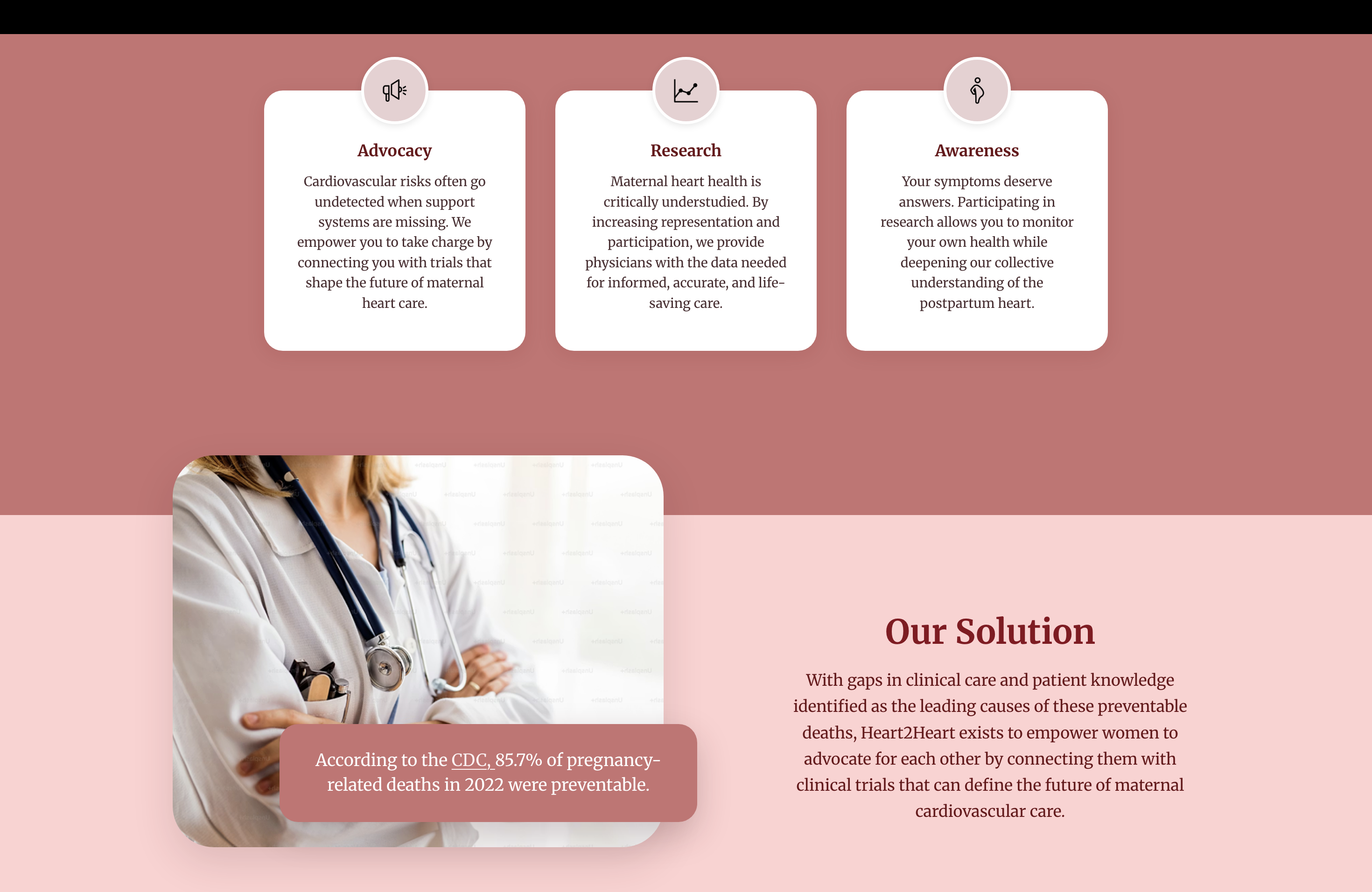
Cardiovascular disease is a leading cause of pregnancy-related death, and staggeringly, over 80% of these deaths are preventable (Centers for Disease Control and Prevention [CDC], 2026). This crisis disproportionately impacts Black, Indigenous, and underrepresented birthing people, yet the underlying healthcare systems remain disconnected from them. Furthermore, historical biases in medical research mean that pregnant and postpartum individuals are routinely excluded from clinical trials. When the tech and medical fields rely on datasets that exclude these populations, the resulting tools and treatments fail the people who need them most.
We built Heart2Heart because an equitable tech field requires equitable data. Our goal is to break down the barriers that keep marginalized communities out of clinical research, which increases awareness of cardiovascular risk factors (like a 63% increased risk following high blood pressure in pregnancy (National Heart, Lung, and Blood Institute [NHLBI], 2022)) and fosters a direct support system between patients, researchers, and providers.
What it does
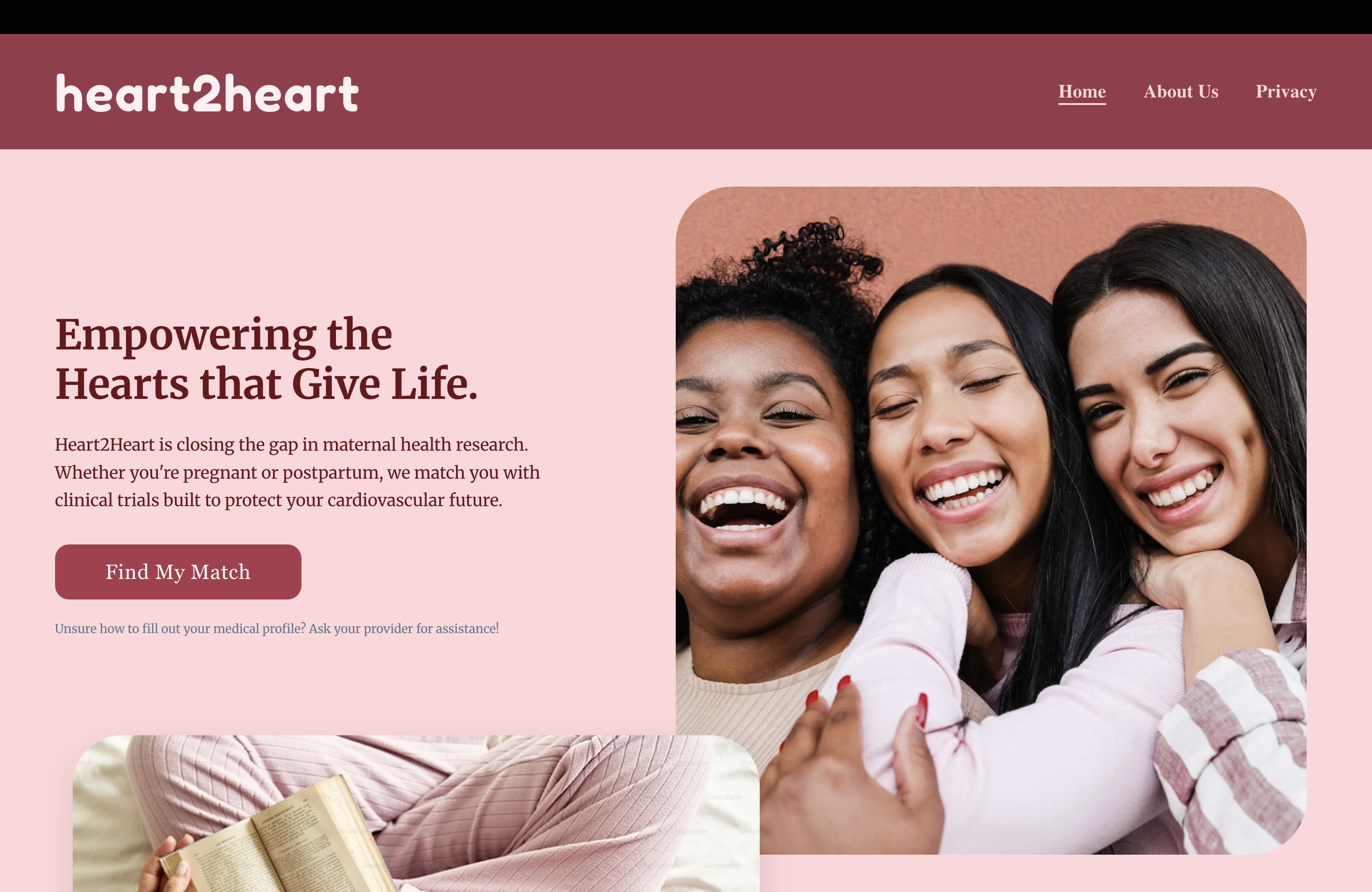
Heart2Heart is a privacy-first, highly accessible clinical trial matching platform designed to make women's maternal cardiovascular research accessible. It empowers users of all backgrounds and medical literacy levels to participate in shaping the future of healthcare:
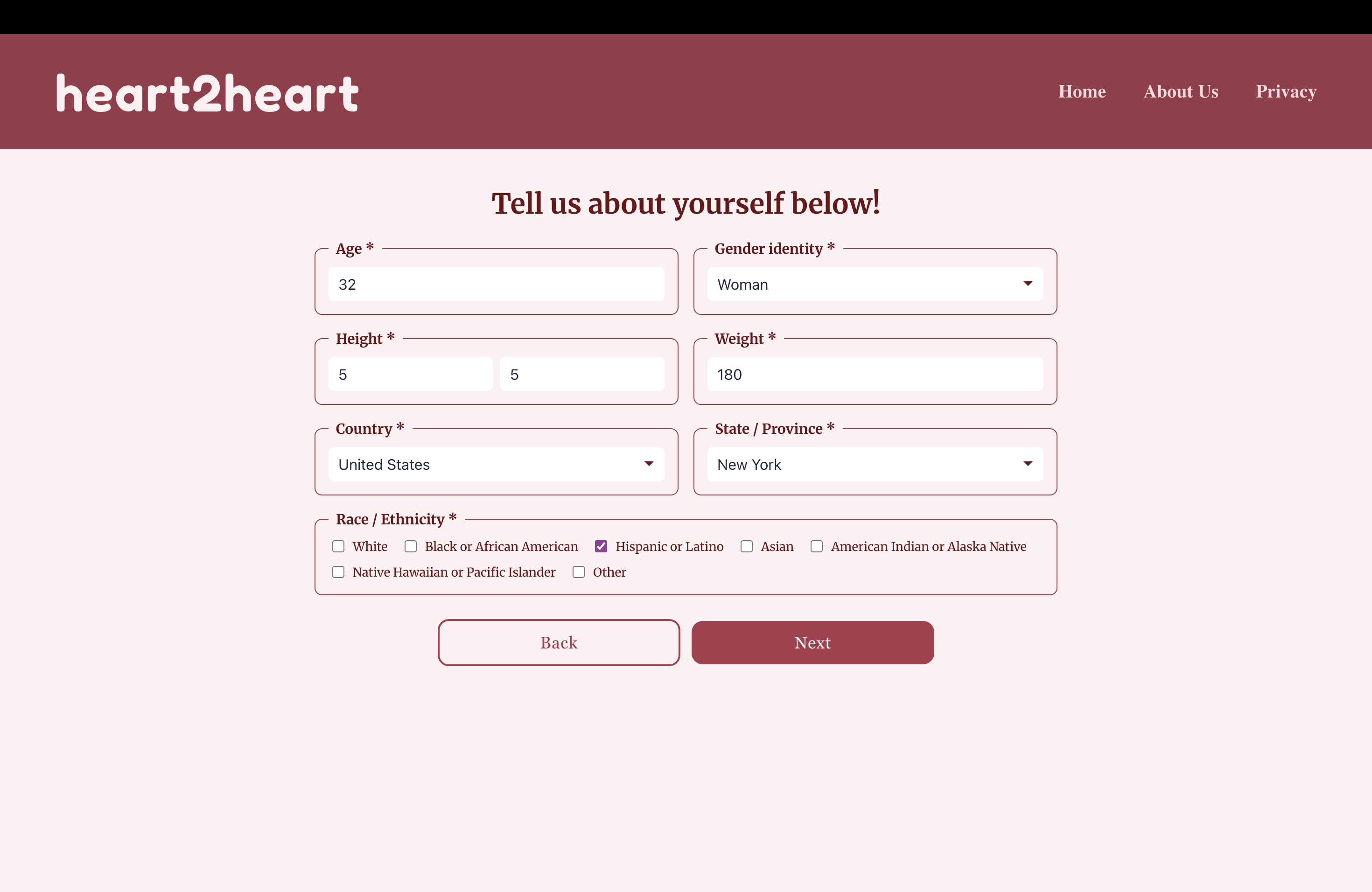
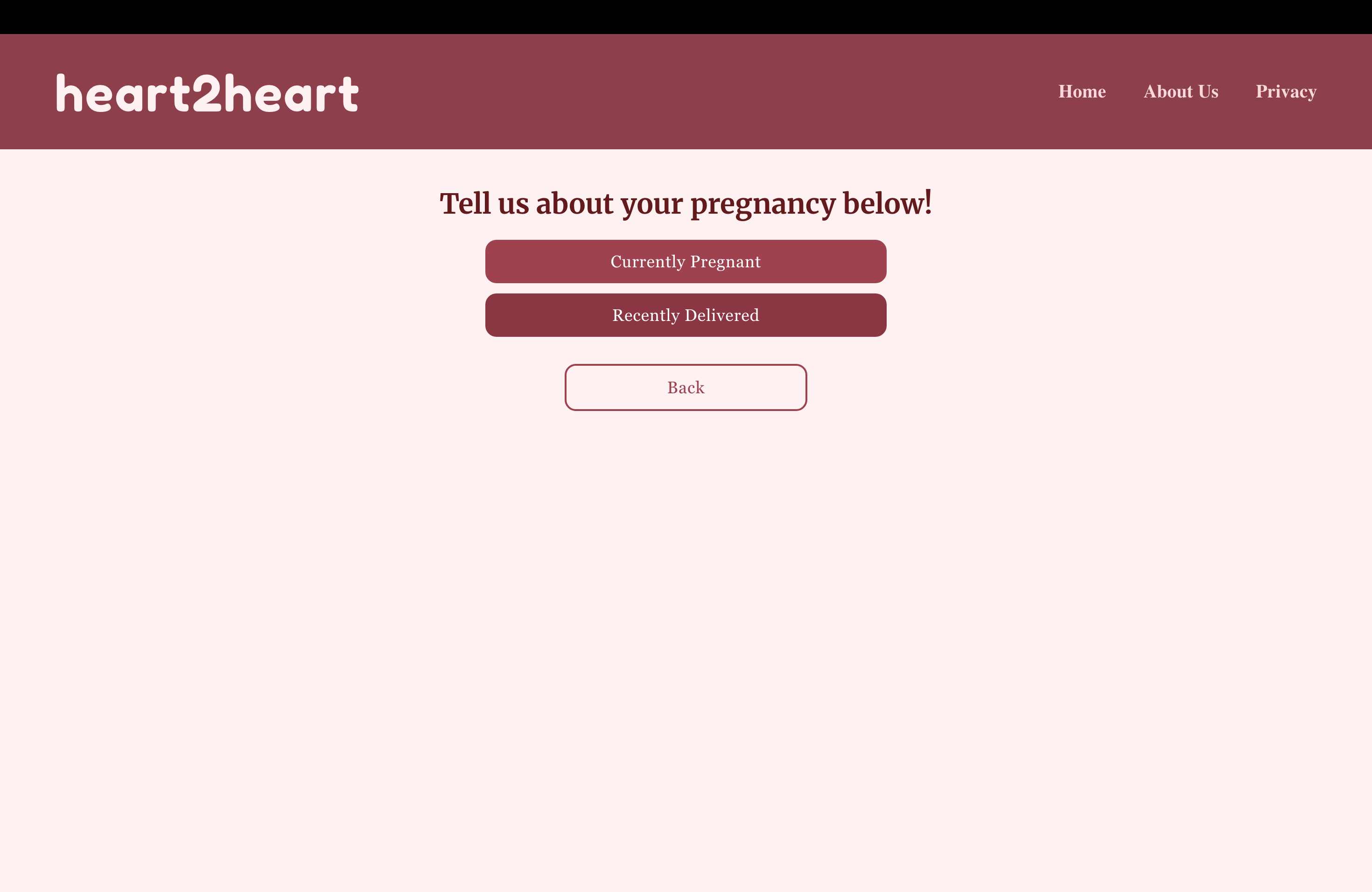
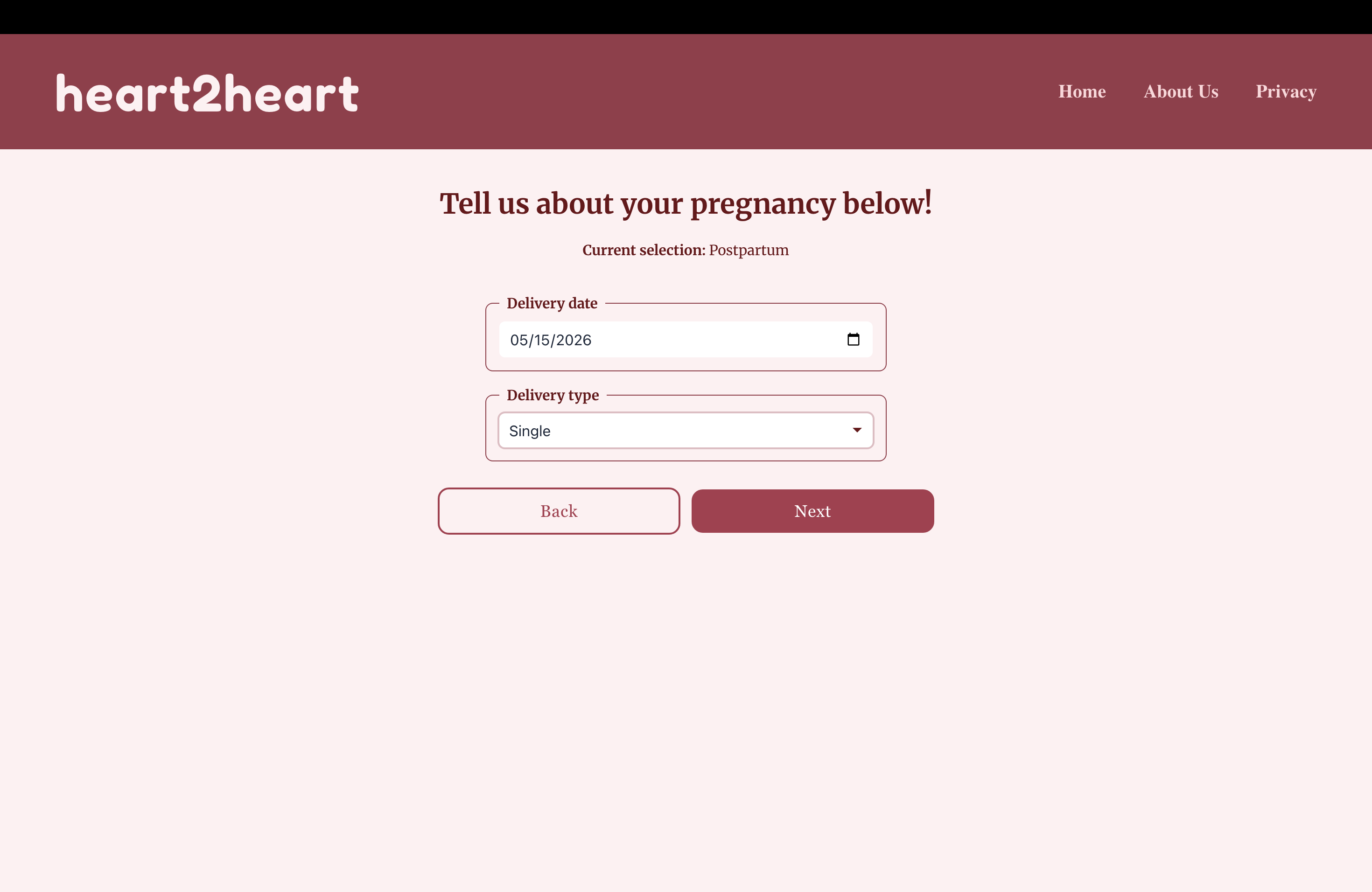
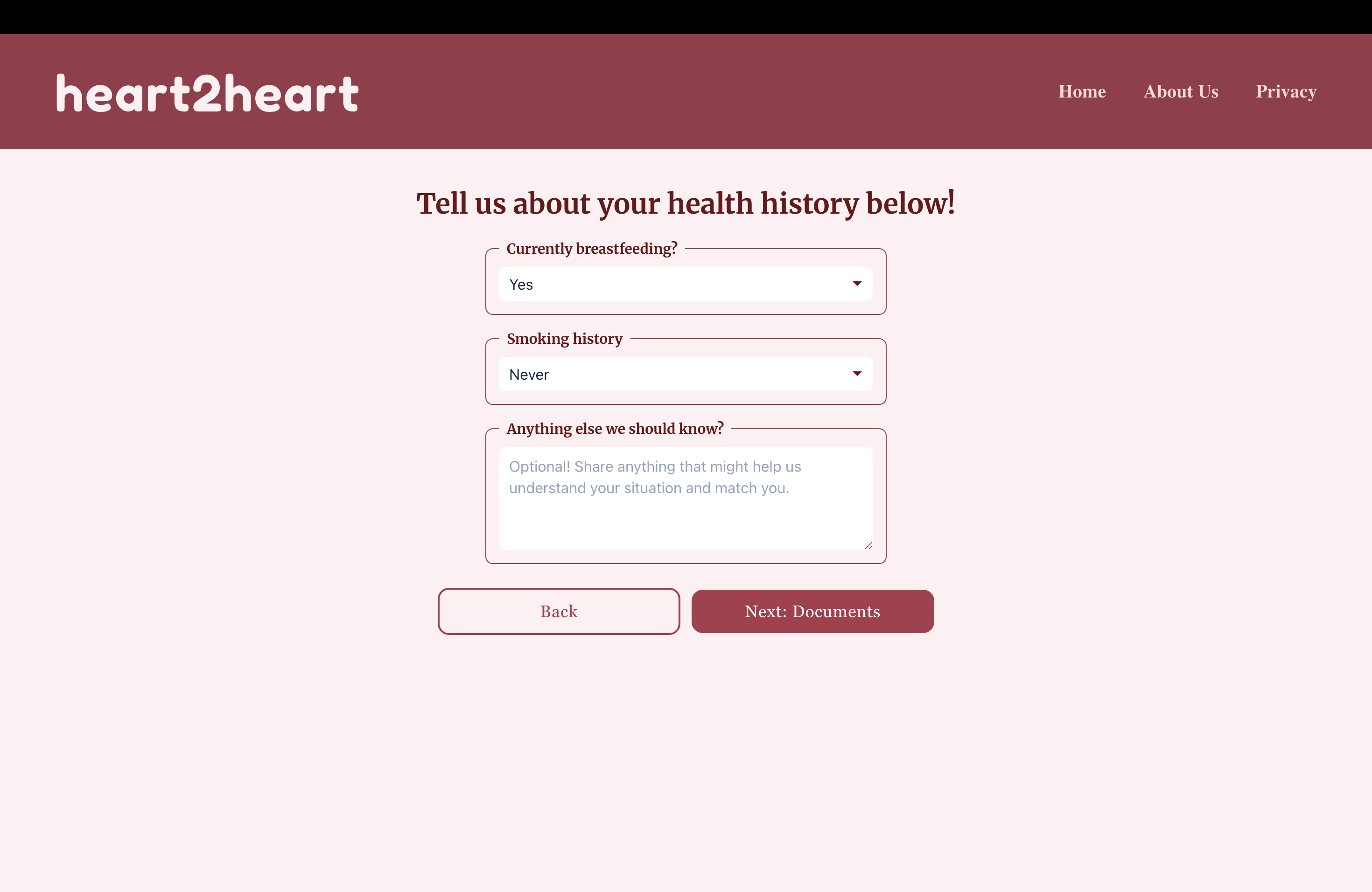
- Accessible Onboarding: Users complete an inclusive health profile that captures pre-existing conditions without judgment or complex jargon.
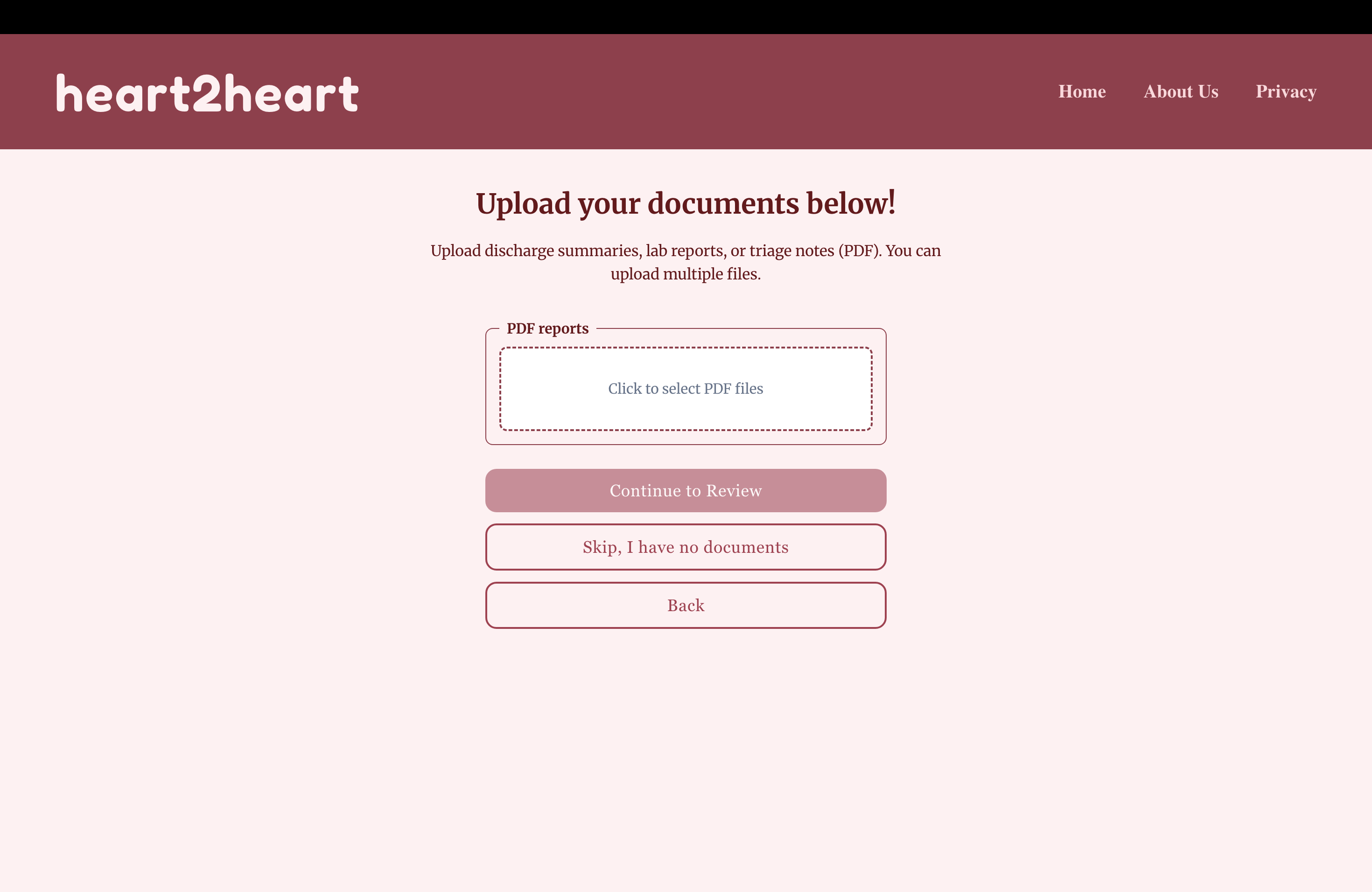
- Overcoming the Literacy Barrier: The app extracts critical biomarkers (like sFlt-1/PlGF ratios) and vital signs directly from standard hospital discharge summaries and lab reports. Users don't need to understand complex medical terminology to know if they qualify for a trial.
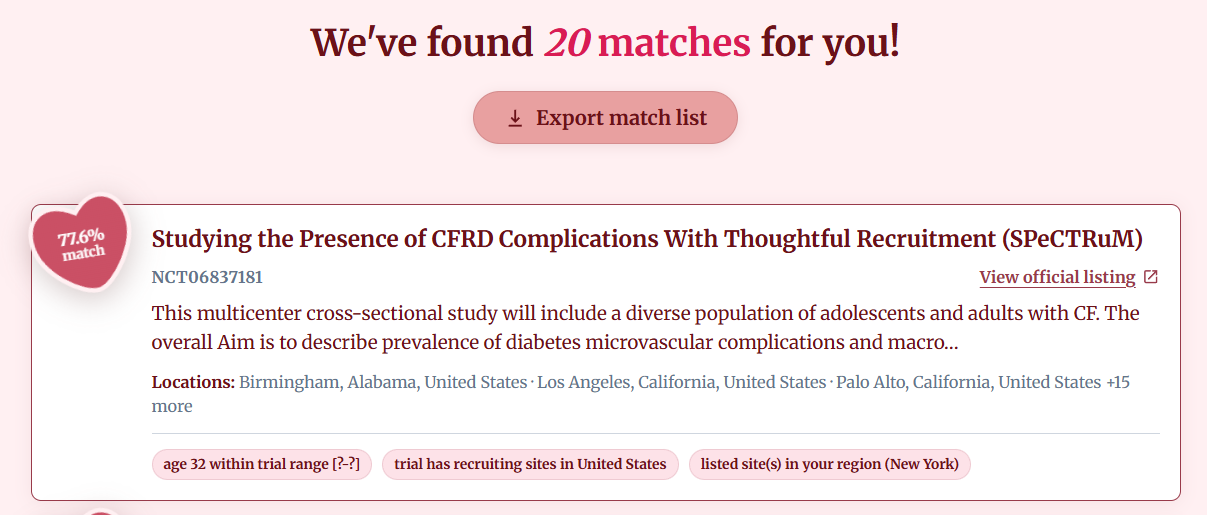
- Equitable Matching: The platform automatically matches pregnant and postpartum individuals with active clinical trials, democratizing access to cutting-edge cardiovascular care and early detection systems.
- Advocacy & Support: With more awareness about their cardiovascular health, users can translate their lived experiences and symptoms into clinical terms, validating their pain and empowering them to self-advocate in medical settings.
How we built it
To meet a high standard of technical and creative execution, we intentionally designed our architecture around user safety and accessibility:
- Frontend Design: We built a highly responsive, welcoming interface using React and Tailwind CSS, ensuring the platform is easily navigable and accessible.
- Privacy as Equity: Sensitive medical documents are parsed via pdfplumber (layout text and tables); if there isn’t enough text, it falls back to Tesseract OCR via pdf2image. All uploaded content is anonymized with Microsoft Presidio before structured extraction runs, and no data is ever stored during this process.
- Complex Logic Engine: We developed a robust algorithm that parses unstructured OCR text and maps it against the strict inclusion/exclusion criteria of cardiovascular clinical trials, successfully bridging the gap between raw patient data and researcher needs.
Challenges we ran into
Our primary technical challenge was figuring out how to use OCR when medical documentation can differ so much. Discharge summaries rely on keywords and overall impressions, while lab reports often list symptoms or raw numbers without explicitly categorizing the risk. We had to engineer our logic to recognize raw data, such as high-risk thresholds, specific bio-markers, and certain keywords, as high-signal features while accurately matching documents with clinical trials. Additionally, executing a complex OCR pipeline on the client side required significant optimization to ensure the app remained fast and accessible for users with older devices, without compromising accuracy.
Accomplishments that we're proud of
We are incredibly proud to have built a tool that actively makes the health-tech ecosystem more welcoming and equal. By prioritizing early detection and seamless trial matching, we successfully engineered a pipeline that takes an intimidating PDF and transforms it into an empowering, life-saving opportunity. We proved that complex technology can be executed with deep intentionality and care for the end user.
What we learned
Advocating for your health as a woman is already hard enough when postpartum symptoms can be passed off as new mom exhaustion. We learned that the symptoms of cardiovascular distress are often present but systemically ignored, especially for gender-expansive and BIPOC individuals. Building Heart2Heart taught us that accessible technology needs to decrease friction by actively translating and advocating. Technically, we worked through the integration of client-side machine learning tools and learned how to navigate the strict intersections of medical data privacy and modern web development.
What's next for Heart2Heart
To further our mission of accessible, equitable, and inclusive tech, our roadmap includes:
- Economic Inclusion: Adding compensation values to trial matches to transparently show financial incentives, acknowledging that time is a barrier to entry for working-class participants.
- Language & Accessibility Expansion: Extending the OCR parsing system and UI to support multiple languages (Spanish, Arabic, Mandarin) and implementing advanced screen-reader compatibility.
- System Integration: Integrating with Epic MyChart via SMART on FHIR to allow users to securely sync their data, breaking down institutional silos.
- Cloud Security: Deploying the platform in a fully HIPAA-compliant environment to safely scale our impact while maintaining our strict commitment to user privacy.


Log in or sign up for Devpost to join the conversation.